Mid Life – What’s The Crisis?: Why Self Esteem Peaks In The Middle-Aged
Credit: LiveScience
Read the original research article HERE (PDF)
Bad vision and other physical ailmen ts aren’t the only things that seem to get worse as people grow old. Self-esteem also declines around the age of retirement, a new study finds.
The study involved 3,617 American men and women ranging in age from 25 to 104. Self-esteem was lowest among young adults, but increased throughout adulthood, peaking at age 60, before it started to decline.
Several factors might explain this trend, the researchers say.
“Midlife is a time of highly stable work, family and romantic relationships. People increasingly occupy positions of power and status, which might promote feelings of self-esteem,” said study author Richard Robins of the University of California, Davis. “In contrast, older adults may be experiencing a change in roles such as an empty nest, retirement and obsolete work skills in addition to declining health.”
Measuring self-esteem
The participants were surveyed four times between 1986 and 2002. They were asked to rate their level of agreement with statements such as: “I take a positive attitude toward myself,” which suggests high self-esteem; “At times I think I am no good at all,” and “All in all, I am inclined to feel that I am a failure,” which both suggest low self-esteem.
Subjects also indicated their demographics, relationship satisfaction, and whether they had experienced stressful life events, including suddenly losing a job, being the victim of a violent crime, or experiencing the death of a parent or child.
On average, women had lower self-esteem than men throughout most of adulthood, but self-esteem levels converged as men and women reached their 80s and 90s. Blacks and whites had similar self-esteem levels throughout young adulthood and middle age. In old age, average self-esteem among blacks dropped much more sharply than self-esteem among whites. This result held even after accounting for differences in income and health.
Future research should further explore these ethnic differences, which might lead to better interventions aimed at improving self-esteem, the study authors say.
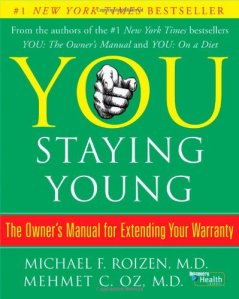
Click on image to read reviews
More self-esteem factors
Education, income, health and employment status all had some effect on the self-esteem trajectories, especially as people aged.
“People who have higher incomes and better health in later life tend to maintain their self-esteem as they age,” Orth said.
“We cannot know for certain that more wealth and better health directly lead to higher self-esteem, but it does appear to be linked in some way. For example, it is possible that wealth and health are related to feeling more independent and better able to contribute to one’s family and society, which in turn bolsters self-esteem.”
People of all ages in satisfying and supportive relationships tend to have higher self-esteem, according to the findings.
However, despite maintaining higher self-esteem throughout their lives, people in happy relationships experienced the same drop in self-esteem during old age as people in unhappy relationships.
“Thus, being in a happy relationship does not protect a person against the decline in self-esteem that typically occurs in old age,” said study author Kali H. Trzesniewski of the University of Western Ontario.
With medical advances, the drop in self-esteem might occur later for baby boomers, Orth said. Boomers might be healthier for longer and, therefore, able to work and earn money longer.
Read the original research article HERE (PDF)

Related articles by Zemanta
- Self-Esteem And Self-Respect (andrewsullivan.theatlantic.com)
- Aging Health Strongly Affected by How You Feel About Aging (seniormemorysource.com)
- Parenting: Signs of Low Self-Esteem in Children (abcnews.go.com)
![Reblog this post [with Zemanta]](https://i0.wp.com/img.zemanta.com/reblog_e.png)
Only As Young Or Old As You Feel?: When Does Youth End & Old Age Start?
Source: University of Kent, UK: 15 March 2010Professor Dominic Abrams and Dr Melanie Vauclair from the School of Psychology at the University of Kent will present findings from the European Social Survey’s research project ‘Attitudes to Age in the UK and Europe’ during an event at City University, London, on Monday 15 March.
Titled What do the British think about… ageism, political institutions and welfare?, this Economic and Social Research Council (ESRC) event will consist of an information seminar and an online demonstration of how to access and use the European Social Survey (ESS) data archive, currently comprising 21 European countries and more than 40,000 respondents.
With a steadily growing proportion of older people in the UK and Europe, the 2008 ESS included a module that examined how people perceive and feel about their own and other age groups.
Professor Abra ms explained: ‘The survey showed that age prejudice – being treated as ‘too young’ or ‘too old’ – is perceived to be a serious or very serious issue by 63 per cent of respondents, so it is obviously important to know what these age labels mean to people’. To find out, the survey asked when does ‘youth’ end and ‘old age’ begin? For the UK, the average response to this question was that youth ends at the age of 35 and old age begins at 58.
However, the survey also revealed that people’s judgements depend strongly on the ‘age of the beholder’. On average, the youngest respondents (15 to 24-year old) judged that youth ends at 28 and old age starts at 54, whereas the oldest age group (80 and older) judged that youth ends at 42 and old age starts at 67.
In the UK, there is a gap of almost 40 years between young people’s judgement of the end of youth and older people’s judgement of the beginning of old age. However, more startlingly, there is a gap of only 12 years between older people’s judgement of the end of youth and younger people’s judgement of the start of old age.
In general, men regarded the end of youth and start of old age to begin two years earlier than women did.
There were also large differences between European countries. Youth was perceived to end earliest among respondents in Portugal (at the age of 29) and latest by those in Cyprus (at the age of 45). Portugal scored lowest for the belief when old age starts (at the age of 51), whereas Belgium ranked highest (at the age 64).
The findings illustrate that when people discover another person’s age, their judgement of whether that person is young or old is highly subjective and this may have important implications in influencing people’s assumptions about the person’s responsibilities, rights and capabilities.
Professor Abrams said: ‘This evidence shows that what counts as young and old is very largely down to the age of the beholder.’
Amongst other findings, the survey also showed that 28 per cent of UK respondents reported that they had been treated with prejudice because of their age in the past year and that the youngest age group were more likely to report experiences of prejudice than any other. Across the European countries in the survey, age prejudice was most widely reported in Finland (47 per cent) and least so in Cyprus and Portugal (19 per cent). The UK ranked 16 out of 21 countries in regard to this question.
About Peter
Peter Brown BHMS (Hons) MPsychClin MAPS
I’m a Clinical Psychologist and have a private practice and consultancy in Brisbane Australia. I have 24 years experience in child, adult and family clinical psychology. I have a wonderful wife and three kids.
I am co-founder of Christian Wholeness Counselling Services.
I like researching issues of the brain & mind, reading and seeking out new books and resources for myself and my clients. I thought that others might be interested in some of what I have found also, hence this blog…

Subscribe to My Blog Posts & Updates
-

Blog Surfer
Alphainventions


Recent Comments


 Peter H Brown Clinical Psychologist