Spare the Rod & Spare your Child’s IQ: Can Spanking Cause Intellectual Harm?
SMACKING or spanking, long used by parents to discipline naughty children, could cause more than tears.
Research revealed it can also lower a child’s IQ, with those smacked up to three times a week having a lower IQ due to psychological stress.
US-based sociologist Professor Murray Straus, who studied the impact of smacking for 40 years, likened the effects of corporal punishment to post-traumatic stress, affecting a child’s mental development.
He called on governments to outlaw corporal punishment
After studying 800 toddlers aged between two and four over a four-year period, he found those who were subjected to smacking had an IQ five points lower than that of a child who wasn’t physically disciplined.
“The results of this research have major implications for the well-being of children across the globe,” he said.
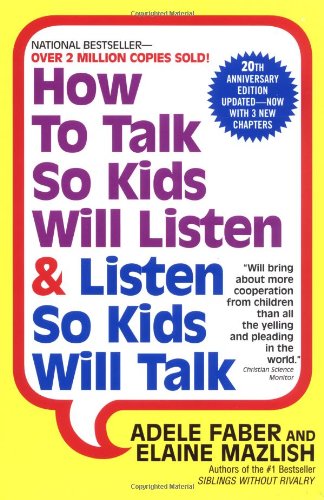 “All parents want smart children. This research shows that avoiding smacking and correcting misbehaviour in other ways can help that.”
Children aged five to nine years who were smacked regularly had an IQ 2.8 points lower. Dr Straus said children who constantly faced physical punishment lived in fear and suffered stress, which was associated with poorer academic performance.
While not an advocate of smacking, Sydney psychologist Dr Judith Kennedy said parents who gave an occasional tap on the bottom should not fear damaging their child.
“But a child who is suppressed through physical punishment regularly is going to behave differently,” Dr Kennedy said.
Melbourne child psychologist Michael Carr-Gregg said many factors contributed to intelligence and he found it hard to believe that spanking was one, the Herald Sun reports.
Dr Carr-Gregg said hitting children should never be the main disciplinary tool – giving them time out was the best option.
“But while parents should never whack their kids on the head, I don’t believe the odd tap on the bum traumatises them,” he said.
“I can’t come at this politically correct stuff that says that a little smack on the bum makes parents child abusers.”
Father of three Con Zoumis said spanking should be used only as a last resort.
“It’s not to hurt them, it’s just to make them snap out of a tantrum or stubborn behaviour,” he said. “And if you threaten to spank someone you have to carry it through.”

Related articles by Zemanta
- Spank Your Kids, Make Them Dumb (blisstree.com)
- A spanked child may be a better adult: study (nationalpost.com)
- Should Parents Spank Their Kids? (scientificamerican.com)
![Reblog this post [with Zemanta]](https://i0.wp.com/img.zemanta.com/reblog_e.png)
Trick or Treat?:The Truth about Parental Lying to Get Your Way
Parents say that honesty is the best policy, but they regularly lie to their children as a way of influencing their behaviour and emotions, finds new research from the University of Toronto and the University of California, San Diego.
Surprisingly little scholarship has been published on the subject of parental lying, so Gail Heyman, professor of psychology at UC San Diego, Diem Luu, a former UCSD student, and Kang Lee, professor at the University of Toronto and director of the Institute of Child Study at OISE, set out to explore the under-researched phenomenon. They asked U.S. participants in two related studies about parents lying to their children – either for the purpose of promoting appropriate behaviour or to make them happy.
 In one of the studies, many parents reported they told their young children that bad things would happen if they didn’t go to bed or eat what they were supposed to. For example, one mother said she told her child that if he didn’t finish all of his food he would get pimples all over his face. Other parents reported inventing magical creatures. One explained, “We told our daughter that if she wrapped up all her pacifiers like gifts, the ‘paci-fairy’ would come and give them to children who needed them…I thought it was healthier to get rid of the pacifiers, and it was a way for her to feel proud and special.”
In the other study, the researchers surveyed college students’ recollections about their parents’ lying and obtained similar results: parents often lie to their children even as they tell them that lying is unacceptable.
The researchers refer to this practice as “parenting by lying.” “We are surprised by how often parenting by lying takes place,” said Lee. “Moreover, our findings showed that even the parents who most strongly promoted the importance of honesty with their children engaged in parenting by lying.”
Though Heyman thinks that there are occasions when it is appropriate to be less than truthful with a child – “telling a two-year-old you don’t like their drawing is just cruel,” she said – she urges parents to think through the issues and consider alternatives before resorting to the expedient lie.
“Children sometimes behave in ways that are disruptive or are likely to harm their long-term interests,” said Heyman. “It is common for parents to try out a range of strategies, including lying, to gain compliance. When parents are juggling the demands of getting through the day, concerns about possible long-term negative consequences to children’s beliefs about honesty are not necessarily at the forefront.”
The research also examined “parenting by lying” among Asian-American and European-American parents. Asian-American parents were more likely to report lying to their children for the purpose of influencing their behaviour. According to the researchers, one possible explanation for this finding is that as compared to European-American parents, Asian-American parents tend to place a greater emphasis on the importance of teaching children to be respectful and obedient, and they use a range of parenting strategies to meet these ends.
The research is published in the current edition of the Journal of Moral Education and was supported by a grant from the National Institute of Child Health and Human Development.
Heyman and Lee are now preparing an international study to explore the subject further, and they are also beginning to study the possible consequences of “parenting by lying”: Does it create confusion about right and wrong? Does it undermine a child’s trust?
Related articles by Zemanta
- Parenting Tips : How to Encourage Good Behavior in Children (parenting-success.com)
The Decline of Civilty:Guest Appearance on 96.5 FM’s Talking Life
Last Sunday night I took part in a discussion on the Decline of Civility as a part of the panel on Peter Jan etzki’s terrific “Talking Life” radio program on which I have been a regular guest over its nine year history. The other guest was Ken Francis from the Australian Families Association. It was a terrific program with some fascinating discussion and phone calls.

Peter Janetzki
A podcast of the entire show and recent shows can be found here or by clicking on the 96.5 logo.You can listen to the podcast from your browser or with iTunes, The show streams live every Sunday night from from 8-10pm Australian Eastern Standard Time (GMT+10) and you can listen by going to the 96.5 website @ 96five.com and clicking on the home page media player.
Landmark US study finds Australia’s Triple P-Positive Parenting program lowers child abuse injuries and fosters placements
This news article from the University Of Queensland News pages is very exciting, as I was involved in the original research of the efficacy of Triple P as a graduate student in the early ’90’s!
A landmark US study has found that The University of Queensland’s Triple P – Positive Parenting Program can significantly lower rates of child abuse injuries and foster care placements when offered to parents community-wide.
Results of the five-year study, which was funded by the prestigious Center for Disease Control and Prevention and led by Dr Ron Prinz at the University of South Carolina, were published today in the online edition of the Prevention Science journal.

Professor Matthew Sanders
It is the first large-scale study to show that providing all families – not just families at risk – with access to proven parenting information and support can reduce rates of child maltreatment.
The study found that making Triple P available to all parents led to significantly lower rates of confirmed child abuse, fewer out-of-home placements and fewer hospitalisations from child abuse injuries, when compared to communities without access to Triple P.
Researchers estimate for every 100,000 children under the age of eight, the results could translate annually into 688 fewer cases of child maltreatment, 240 fewer children in care and 60 fewer children being admitted to hospital or emergency departments with abuse injuries.
Study co-author, UQ’s Professor Matt Sanders said the research added to the already-strong evidence base of Triple P.
“We already know Triple P can alleviate parents’ stress and depression and help prevent and reduce child emotional and behavioural problems,” said Professor Sanders, who is the founder of Triple P and director of the Parenting and Family Support Centre at The University of Queensland.
“But this research shows that by providing all parents – not just those at risk – with parenting support through evidence-based programs, we can have a major impact on child maltreatment.
“We can hold back the growth in child abuse, keep kids out of foster care and in their own homes and see fewer injured children in hospitals.”
The US study was conducted in 18 counties in South Carolina, nine of which were chosen randomly to receive Triple P. Parents of children from birth to 12 years could easily access Triple P information through a variety of methods, include mainstream media, brief public seminars and trained counsellors at clinics, schools, churches and community centres.
“We would expect similar results in Australia if all families here were offered easy access to Triple P.
“Parents are looking for practical solutions to parenting problems that work,” Professor Sanders said.
The CDC chose Triple P as its preferred parenting method for the study because of its solid evidence base and its flexibility for parents seeking support.
Triple P was developed at The University of Queensland by Professor Sanders and colleagues and is based on 30 years’ clinical research. The program is now used by governments and health authorities in 17 countries – The United States, England, Scotland, Ireland, Canada, Sweden, New Zealand, Hong Kong, Iran, Japan, Germany, Belgium, Singapore, Switzerland, The Netherlands, Curacao and Australia
(Sourced from http://www.uq.edu.au/news/)
About Peter
Peter Brown BHMS (Hons) MPsychClin MAPS
I’m a Clinical Psychologist and have a private practice and consultancy in Brisbane Australia. I have 24 years experience in child, adult and family clinical psychology. I have a wonderful wife and three kids.
I am co-founder of Christian Wholeness Counselling Services.
I like researching issues of the brain & mind, reading and seeking out new books and resources for myself and my clients. I thought that others might be interested in some of what I have found also, hence this blog…

Subscribe to My Blog Posts & Updates
-

Blog Surfer
Alphainventions


Recent Comments


 Peter H Brown Clinical Psychologist