Love the One You’re With: The Pitfalls of Seeking a “Soul Mate”
Has the quest for that one perfect partner, the never-ending search for the ideal done us more harm than good? There is growing evidence that an idealistic search for love can hinder the enjoyment and fulfilment of what you already have. The following is excerpted from Polly Schulman’s article at Psychology Today (http://psychologytoday.com ).
The divorce rate has stayed constant at nearly 50 percent for the last two decades. The ease with which we enter and dissolve unions makes marriage seem like a prime-time spectator sport, whether it’s Britney Spears in Vegas or bimbos chasing after the Bachelor.
Long live the new marriage! We once prized the institution for the practical pairing of a cash-producing father and a home-building mother. Now we want it all—a partner who reflects our taste and status, who sees us for who we are, who loves us for all the “right” reasons, who helps us become the person we want to be. We’ve done away with a rigid social order, adopting instead an even more onerous obligation: the mandate to find a perfect match. Anything short of this ideal prompts us to ask: Is this all there is? Am I as happy as I should be? Could there be somebody out there who’s better for me? As often as not, we answer yes to that last question and fall victim to our own great expectations.
 That somebody is, of course, our soul mate, the man or woman who will counter our weaknesses, amplify our strengths and provide the unflagging support and respect that is the essence of a contemporary relationship. The reality is that few marriages or partnerships consistently live up to this ideal. The result is a commitment limbo, in which we care deeply for our partner but keep one stealthy foot out the door of our hearts. In so doing, we subject the relationship to constant review: Would I be happier, smarter, a better person with someone else? It’s a painful modern quandary. “Nothing has produced more unhappiness than the concept of the soul mate,” says Atlanta psychiatrist Frank Pittman [….
… ] Many of us either dodge the decision to commit or commit without fully relinquishing the right to keep looking—opting for an arrangement psychotherapist Terrence Real terms “stable ambiguity.” “You park on the border of the relationship, so you’re in it but not of it,” he says. There are a million ways to do that: You can be in a relationship but not be sure it’s really the right one, have an eye open for a better deal or something on the side, choose someone impossible or far away.
Yet commitment and marriage offer real physical and financial rewards. Touting the benefits of marriage may sound like conservative policy rhetoric, but nonpartisan sociological research backs it up: Committed partners have it all over singles, at least on average. Married people are more financially stable, according to Linda Waite, a sociologist at the University of Chicago and a coauthor of The Case for Marriage: Why Married People Are Happier, Healthier, and Better Off Financially
The benefits go beyond the piggy bank. Married people, particularly men, tend to live longer than people who aren’t married. Couples also live better: When people expect to stay together, says Waite, they pool their resources, increasing their individual standard of living. They also pool their expertise—in cooking, say, or financial management. In general, women improve men’s health by putting a stop to stupid bachelor tricks and bugging their husbands to exercise and eat their vegetables. Plus, people who aren’t comparing their partners to someone else in bed have less trouble performing and are more emotionally satisfied with sex. The relationship doesn’t have to be wonderful for life to get better, says Waite: The statistics hold true for mediocre marriages as well as for passionate ones.
The pragmatic benefits of partnership used to be foremost in our minds. The idea of marriage as a vehicle for self-fulfillment and happiness is relatively new, says Paul Amato, professor of sociology, demography and family studies at Penn State University. Surveys of high school and college students 50 or 60 years ago found that most wanted to get married in order to have children or own a home. Now, most report that they plan to get married for love. This increased emphasis on emotional fulfillment within marriage leaves couples ill-prepared for the realities they will probably face.
Because the early phase of a relationship is marked by excitement and idealization, “many romantic, passionate couples expect to have that excitement forever,” says Barry McCarthy, a clinical psychologist and coauthor—with his wife, Emily McCarthy—of Getting It Right the First Time: Creating a Healthy Marriage
Flagging passion is often interpreted as the death knell of a relationship. You begin to wonder whether you’re really right for each other after all. You’re comfortable together, but you don’t really connect the way you used to. Wouldn’t it be more honest—and braver—to just admit that it’s not working and call it off? “People are made to feel that remaining in a marriage that doesn’t make you blissfully happy is an act of existential cowardice,” says Joshua Coleman, a San Francisco psychologist.
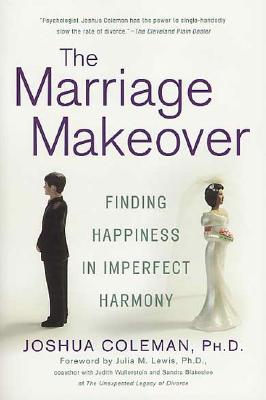 Coleman says that the constant cultural pressure to have it all—a great sex life, a wonderful family—has made people ashamed of their less-than-perfect relationships and question whether such unions are worth hanging on to. Feelings of dissatisfaction or disappointment are natural, but they can seem intolerable when standards are sky-high. “It’s a recent historical event that people expect to get so much from individual partners,” says Coleman, author of The Marriage Makeover: Finding Happiness in Imperfect Harmony
…] In fact, argue psychologists and marital advocates, there’s no such thing as true compatibility. “Marriage is a disagreement machine,” says Diane Sollee, founder of the Coalition for Marriage, Family and Couples Education. “All couples disagree about all the same things. We have a highly romanticized notion that if we were with the right person, we wouldn’t fight.” Discord springs eternal over money, kids, sex and leisure time, but psychologist John Gottman has shown that long-term, happily married couples disagree about these things just as much as couples who divorce.
“There is a mythology of ‘the wrong person,'” agrees Pittman. “All marriages are incompatible. All marriages are between people from different families, people who have a different view of things. The magic is to develop binocular vision, to see life through your partner’s eyes as well as through your own.”
The realization that we’re not going to get everything we want from a partner is not just sobering, it’s downright miserable. But it is also a necessary step in building a mature relationship, according to Real, who has written about the subject in How Can I Get Through to You? Closing the Intimacy Gap Between Men and Women
. “The paradox of intimacy is that our ability to stay close rests on our ability to tolerate solitude inside a relationship,” he says. “A central aspect of grown-up love is grief. All of us long for—and think we deserve—perfection.” We can hardly be blamed for striving for bliss and self-fulfillment in our romantic lives—our inalienable right to the pursuit of happiness is guaranteed in the first blueprint of [..modern] society.

This same respect for our own needs spurred the divorce-law reforms of the 1960s and 1970s. During that era, “The culture shifted to emphasize individual satisfaction, and marriage was part of that,” explains Paul Amato, who has followed more than 2,000 families for 20 years in a long-term study of marriage and divorce. Amato says that this shift did some good by freeing people from abusive and intolerable marriages. But it had an unintended side effect: encouraging people to abandon relationships that may be worth salvaging. In a society hell-bent on individual achievement and autonomy, working on a difficult relationship may get short shrift, says psychiatrist Peter Kramer, author of Should You Leave?

“So much of what we learn has to do with the self, the ego, rather than giving over the self to things like a relationship,” Kramer says. In our competitive world, we’re rewarded for our individual achievements rather than for how we help others. We value independence over cooperation, and sacrifices for values like loyalty and continuity seem foolish. “I think we get the divorce rate that we deserve as a culture.”
 The steadfast focus on our own potential may turn a partner into an accessory in the quest for self-actualization, says Maggie Robbins, a therapist in New York City. “We think that this person should reflect the beauty and perfection that is the inner me—or, more often, that this person should compensate for the yuckiness and mess that is the inner me,” says Robbins. “This is what makes you tell your wife, ‘Lose some weight—you’re making me look bad,’ not ‘Lose some weight, you’re at risk for diabetes.'” […
…] The urge to find a soul mate is not fueled just by notions of romantic manifest destiny. Trends in the workforce and in the media create a sense of limitless romantic possibility. According to Scott South, a demographer at SUNY-Albany, proximity to potential partners has a powerful effect on relationships. South and his colleagues found higher divorce rates among people living in communities or working in professions where they encounter lots of potential partners—people who match them in age, race and education level. “These results hold true not just for unhappy marriages but also for happy ones,” says South.
The temptations aren’t always living, breathing people. According to research by psychologists Sara Gutierres and Douglas Kenrick, both of Arizona State University, we find reasonably attractive people less appealing when we’ve just seen a hunk or a hottie—and we’re bombarded daily by images of gorgeous models and actors. When we watch Lord of the Rings, Viggo Mortensen’s kingly mien and Liv Tyler’s elfin charm can make our husbands and wives look all too schlumpy.
Kramer sees a similar pull in the narratives that surround us. “The number of stories that tell us about other lives we could lead—in magazine articles, television shows, books—has increased enormously. We have an enormous reservoir of possibilities,” says Kramer.
And these possibilities can drive us to despair. Too many choices have been shown to stymie consumers, and an array of alternative mates is no exception. In an era when marriages were difficult to dissolve, couples rated their marriages as more satisfying than do today’s couples, for whom divorce is a clear option, according to the National Opinion Research Center at the University of Chicago.
While we expect marriage to be “happily ever after,” the truth is that for most people, neither marriage nor divorce seem to have a decisive impact on happiness. Although Waite’s research shows that married people are happier than their single counterparts, other studies have found that after a couple years of marriage, people are just about as happy (or unhappy) as they were before settling down. And assuming that marriage will automatically provide contentment is itself a surefire recipe for misery.
“Marriage is not supposed to make you happy. It is supposed to make you married,” says Pittman. “When you are all the way in your marriage, you are free to do useful things, become a better person.” A committed relationship allows you to drop pretenses and seductions, expose your weaknesses, be yourself—and know that you will be loved, warts and all. “A real relationship is the collision of my humanity and yours, in all its joy and limitations,” says Real. “How partners handle that collision is what determines the quality of their relationship.”
Such a down-to-earth view of marriage is hardly romantic, but that doesn’t mean it’s not profound: An authentic relationship with another person, says Pittman, is “one of the first steps toward connecting with the human condition—which is necessary if you’re going to become fulfilled as a human being.” If we accept these humble terms, the quest for a soul mate might just be a noble pursuit after all.

REPOST: Talking to Your Child About What’s in The News
I originally blogged this post on August 5th last year. With the recent natural disasters in places like Haiti and Chile, and also the very raw and terrible tragedies involving young children and youth closer to my home in southeast Queensland, Australia, I have decided to repost it. I have done so in case it is helpful for other parents who, like myself are dealing with kids who are concerned about what they see and hear and read about troubling local and world events…
My experience is that many children, particularly those who have generalised anxiety can become quite distressed by exposure to seemingly innocuous exposure to events that are a part of everyday life.
 Although news gleaned from television, radio, or the Internet often is a positive educational experience for kids, problems can arise when the images presented are violent or the stories touch on disturbing topics. While we worry about our childrens’ exposure to violence and sexual content in movies, on the internet, and on tv, we need to remember that news programs shpw often live and real images and media from real events which are often distressing and increasingly graphic.
News about a natural disaster, such as the devastating earthquake in China or cyclone in Myanmar, could make kids worry that something similar is going to hit home, or fear a part of daily life — such as rain and thunderstorms — that they’d never worried about before.
Reports on natural disasters, child abductions, homicides, terrorist attacks, and school violence can teach kids to view the world as a confusing, threatening, or unfriendly place.
How can you deal with these disturbing stories and images? Talking to your kids about what they watch or hear will help them put frightening information into a reasonable context.
How Kids Perceive the News
Unlike movies or entertainment programs, news is real. But depending on a child’s age or maturity level, he or she may not yet understand the distinctions between fact and fantasy. By the time kids reach 7 or 8, however, what they see on TV can seem all too real. For some youngsters, the vividness of a sensational news story can be internalized and transformed into something that might happen to them. A child watching a news story about a bombing on a bus or a subway might worry, “Could I be next? Could that happen to me?”Natural disasters or
stories of other types of devastation can be personalized in the same manner. A child in Massachusetts who sees a house being swallowed by floods from a hurricane in Louisiana may spend a sleepless night worrying about whether his home will be OK in a rainstorm. A child in Chicago, seeing news about an attack on subways in London, might get scared about using public transportation around town. TV has the effect of shrinking the world and bringing it into our own living rooms.
By concentrating on violent stories, TV news also can promote a “mean-world” syndrome and give kids an inaccurate view of what the world and society are actually like.
Talking About the News
To calm children’s fears about the news, parents should be prepared to deliver what psychologists call “calm, unequivocal, but limited information.” This means delivering the truth, but only as much truth as a child needs to know. The key is to be as truthful yet as inexplicit as you can be. There’s no need to go into more details than your child is interested in. Although it’s true that some things — like a natural disaster — can’t be controlled, parents should still give kids space to share their fears. Encourage them to talk openly about what scares them.
Older kids are less likely to accept an explanation at face value. Their budding skepticism about the news and how it’s produced and sold might mask anxieties they have about the stories it covers. If older kids are bothered about a story, help them cope with these fears. An adult’s willingness to listen sends a powerful message.
Teens also can be encouraged to consider why a frightening or disturbing story was on the air: Was it to increase the program’s ratings because of its sensational value or because it was truly newsworthy? In this way, a scary story can be turned into a worthwhile discussion about the role and mission of the news.
Tips for Parents
Keeping an eye on kids’ TV news habits can go a long way toward monitoring the content of what they hear and see. Other tips:
- Recognize that news doesn’t have to be driven by disturbing pictures. Public TV programs, newspapers, or newsmagazines specifically designed for kids can be less sensational — and less upsetting — ways of getting information to children.
- Discuss current events with your child regularly. It’s important to help kids think through stories they hear about. Ask questions: What do you think about these events? How do you think these things happen? These questions can encourage conversation about non-news topics too.
- Put news stories in proper context. Showing that certain events are isolated or explaining how one event relates to another helps kids make better sense of what they hear. Broaden the discussion from a disturbing news item to a larger conversation: Use the story of a natural disaster as an opportunity to talk about philanthropy, cooperation, and the ability of people to cope with overwhelming hardship.
- Watch the news with your kids to filter inappropriate or frightening stories.
- Anticipate when guidance will be necessary and avoid shows that aren’t appropriate for your child’s age or level of development.
- If you’re uncomfortable with the content of the news or if it’s inappropriate for your child’s age, turn it off.
- Talk about what you can do to help. In the case of a news event like a natural disaster, kids may gain a sense of control and feel more secure if you find ways to help those who have been affected.
sourced from http://www.kidshealth.org
reviewed by: Mary L. Gavin, MD
The Decline of Civilty:Guest Appearance on 96.5 FM’s Talking Life
Last Sunday night I took part in a discussion on the Decline of Civility as a part of the panel on Peter Jan etzki’s terrific “Talking Life” radio program on which I have been a regular guest over its nine year history. The other guest was Ken Francis from the Australian Families Association. It was a terrific program with some fascinating discussion and phone calls.

Peter Janetzki
A podcast of the entire show and recent shows can be found here or by clicking on the 96.5 logo.You can listen to the podcast from your browser or with iTunes, The show streams live every Sunday night from from 8-10pm Australian Eastern Standard Time (GMT+10) and you can listen by going to the 96.5 website @ 96five.com and clicking on the home page media player.
Sex After Marriage?: Resurrecting Sex & Developing Passionate Intimacy in your Relationship
In July 2002 I had a ( and I know I am sounding melodramatic here) life-changing and career rattling experience when I attended a two day workshop with Colorado-area Marriage and Family Health Center director and psychotherapist Dr David Schnarch, in Sydney,Australia. (UPDATE: also see a related post HERE)

Dr David Schnarch
Schnarch is plugged as the “rightful heir” to sex science pioneers Masters and Johnson. But he’s not their disciple. In the 1950s they introduced the idea that sex was a natural function and should be regarded as such. At one level, that was tremendously liberating, he says. But at another level it was an inherently pathological model in which sexual difficulties (or dysfunction, as they became known post-Masters and Johnson) were treated as abnormal. In fact, says Schnarch, sexual difficulties are a normal part of the healthy development of an emotional relationship between adults.
We were a mixed group that arrived at the Mary McKillop Centre for the workshop. Dr. Schnarch went to some trouble to make us all feel at home (even forsaking his tie, as is the custom in this part of the world).
He warned us it would be “like drinking from a fire hose” and he was right. There was so much practical wisdom in what he was saying that it was hard to take it all in. But we did. People changed over those two days. I did.
At the same time I became more and more excited at the robust promise of Dr. Schnarch’s work. It is increasingly accepted that he is offering a new paradigm in sexual and marital therapy, however I see this paradigm as offering new approaches to all forms of psychotherapy. To be able to approach clients from a genuinely non-pathologizing stance, and to work in such a way that I am speaking to and drawing on the best of them is a goal often promised but rarely, if ever, delivered on till now.
Materials in Dr Schnarch’s Passionate Marriage series highlight how common issues about intimate sexual relationships and common problems with sex and intimacy are really part of a system: Marriage is a natural  “people-growing process” and the inevitable sexual boredom, lack of passion, and communication difficulties are the drive wheels and grindstones of adult development. Relationships are shaped by more than unresolved childhood issues, past “wounds,” and family-of-origin problems. Even when these are non-existent, marriage becomes contentious because the growth processes in emotionally committed relationships surface in sexual interactions and other intimate exchanges. These are not situational problems to be solved and avoided. Rather, they are dilemmas to go through because they make us grow capable of the intimate sexual relationships and eroticism we seek. Common sexual and relationship difficulties are midpoints in the evolution of healthy relationships rather than signs of personal inadequacy, incompatibility, or falling out of love.
Passionate Marriage focuses on life-long sexual development rather than merely curing sexual dysfunctions or improving sexual relationships (it does this too). Most people never reach their sexual potential–and those who do are generally well into their 40s, 50s, and 60s. This is a pleasant surprise to many people because it’s common to confuse genital prime with sexual prime. In reality, we are more capable of intensely intimate sexual relationships and blatant eroticism as we mature. Most people are much better in bed as they get older. Sexual potential and cellulite are highly correlated!
Instead of emphasizing listening skills, communication, compromise, or negotiation, Passionate Marriage shows how “your relationship with yourself” controls both intimate connection and sexual desire for your partner. This revolutionary approach offers concrete ways to use your sexuality to build a stronger sense of yourself while getting closer to your partner. Most marital enrichment approaches emphasize other-validated intimacy: expecting empathy, reciprocity, and validation from your partner when you disclose. Passionate Marriage emphasizes self-validated intimacy: validating and accepting your own disclosures, and learning to soothe your own heart. This shift allows you to use emotional gridlock, difficulties being intimate, and problems in your sexual relationship like sexual boredom, and low desire to develop yourself while creating a more intimate, passionate, loving relationship with your partner.
 This approach has lots of practical applications. Passionate Marriage decodes the “language” of sex, showing how your interactions in your sexual relationship reveal you, your partner, and your relationship. Discover new psychological “styles” of having sex and dimensions of sexual experience. Learn how eyes-open sex (and orgasms) can bring hot passion and new intimacy to your relationship–and make you grow. What partners learn about maintaining themselves in their intimate sexual relationships has immediate application outside the bedroom too. Although better sex doesn’t automatically make for a better relationship, the personal growth required to enhance the sexual and intimate aspects of relationship is the same growth that improves relationships in other ways, often at the same time.
Rather than focusing on “touch techniques,” the book Passionate Marriage and associated workshops emphasize intimate and emotional connection during sexual interaction. Expect explicit discussion of sexual behavior, practical tips, and details of couples’ going through the “people-growing” crucibles inherent in emotionally committed relationships.
These books are essential resources for all married or committed couples, not just those who think they are in trouble. More over the next few weeks.
Questions? Leave them in the comments. email me via the link on the right or tweet them.
Related articles by Zemanta
- Good Health Equal Good Sex, Researchers Say (medhealthwriter.blogspot.com)
![Reblog this post [with Zemanta]](https://i0.wp.com/img.zemanta.com/reblog_e.png)
About Peter
Peter Brown BHMS (Hons) MPsychClin MAPS
I’m a Clinical Psychologist and have a private practice and consultancy in Brisbane Australia. I have 24 years experience in child, adult and family clinical psychology. I have a wonderful wife and three kids.
I am co-founder of Christian Wholeness Counselling Services.
I like researching issues of the brain & mind, reading and seeking out new books and resources for myself and my clients. I thought that others might be interested in some of what I have found also, hence this blog…

Subscribe to My Blog Posts & Updates
-

Blog Surfer
Alphainventions


Recent Comments


 Peter H Brown Clinical Psychologist