“Willy Wonky & The Chocolate Fetish”: Why Do Depressed People Eat More Chocolate?
 People who are depressed appear to eat more chocolate than those who aren’t
Researchers at UC San Diego and UC Davis examined chocolate consumption and other dietary intake patterns among 931 men and women who were not using antidepressants. The participants were also given a depression screening test. Those who screened positive for possible depression consumed an average of 8.4 servings of chocolate — defined as one ounce of chocolate candy — per month. That compared with 5.4 servings per month among people who were not depressed.
Those who scored highest on the mood tests, indicating possible major depression, consumed an average of 11.8 servings per month. The findings were similar among women and men.
When the researchers controlled for other dietary factors that could be linked to mood — such as caffeine, fat and carbohydrate intake — they found only chocolate consumption correlated with mood.
It’s not clear how the two are linked, the authors wrote. It could be that depression stimulates chocolate cravings as a form of self-treatment. Chocolate prompts the release of certain chemicals in the brain, such as dopamine, that produce feelings of pleasure.
There is no evidence, however, that chocolate has a sustained benefit on improving mood. Like alcohol, chocolate may contribute a short-term boost in mood followed by a return to depression or a worsened mood. A study published in 2007 in the journal Appetite found that eating chocolate improved mood but only for about three minutes.
It’s also possible that depressed people seek chocolate to improve mood but that the trans fats in some chocolate counteract the effect of omega-3 fatty acid production in the body, the authors said in the paper. Omega-3 fatty acids are thought to improve mental health.
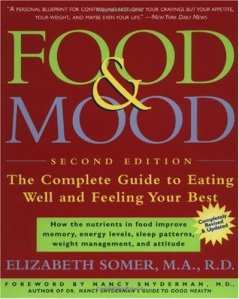
Click image to read reviews
Another theory is that chocolate consumption contributes to depression or that some physiological mechanism, such as stress, drives both depression and chocolate cravings.
“It’s unlikely that chocolate makes people depressed,” said Marcia Levin Pelchat, a psychologist who studies food cravings at the Monell Chemical Senses Center in Philadelphia. She was not involved in the new study. “Most people believe the beneficial effects of chocolate are on mood and that they are learned. You eat chocolate; it makes you feel good, and sometime when you’re feeling badly it occurs to you, ‘Gee, if I eat some chocolate I might feel better.’ ”
Chocolate is popular in North America and Britain, she said. But in other cultures, different foods are considered pleasure-inducing pick-me-ups.
“In the United States, people consider chocolate really tasty,” Pelchat said. “It has a high cultural value. It’s an appropriate gift for Valentine’s Day. But in China, you might give stuffed snails to someone you really like.”
Source: LA Times

Related articles by Zemanta
- Depressed? You must like chocolate (msnbc.msn.com)
- Compulsive Collecting: Finding Hope In The Misunderstood Mess of Hoarding (peterhbrown.wordpress.com)
- Anxiety & Depression: Self-Help Internet Interventions Work! (peterhbrown.wordpress.com)
![Reblog this post [with Zemanta]](https://i0.wp.com/img.zemanta.com/reblog_e.png)
“I Saw It Happen”: Children Who Witness Bullying Can Be Traumatized Too
 Students who witness bullying of their peers may suffer more psychologically than the victim or the bullies.
Read The Original Research Paper (PDF)
2002 students ages 12 to 16 were surveyed at public schools in England. The survey asked them whether they’d committed, witnessed, or been the victim of several types of bullying behavior (e.g., kicking, name-calling, threatening, etc.) and whether they had experienced psychological stress symptoms such as anxiety, depression, or hostility.
Why bystanders suffer more than victims of bullying
As reported in the article, previous research shows that children who witness bullying feel guilty, presumably for not doing anything to help the victim.
In addition, they may have felt more stressed by vacillating between doing what they thought they should do (i.e., help the victim) on the one hand, and being afraid of being victimized themselves, on the other. Being in this type of “approach/avoidance” conflict has been shown in numerous studies to create high levels of stress.
The combination of guilt and fear among witnesses that they will experience the same thing may be another reason why they are more affected by bullying than the actual victims.

Click image to read reviews
Uncertainty, especially combined with feelings of fear or guilt, contributes to stress. Stress leads to depression, anxiety, and other mental disorders.
Sitting down and discussing feelings of fear and guilt with your child may help to minimize the destructive force and ultimate impact of those emotions on mental health. Practical “survival” tips about how to avoid, distract, or other means of handling bullies would help, too, giving kids options if they are cornered by or are a witness to bullies in action.
Read The Original Research Paper (PDF)
Source: Psychological Association (2009, December 15). Witnesses to bullying may face more mental health risks than bullies and victims. ScienceDaily.
Related articles by Zemanta
- Online help for victims of bullying (guardian.co.uk)
- Witnesses to Bullying May Suffer Most of All (nlm.nih.gov)
Too Sexy Too Soon! PART I – Should Girls As Young As 9 Be Taken To Get Their Legs Waxed?

Video still of an children's fashion shoot image which was released as part of a report into the sexualisation of children.
There has been an increasing amount of concern amongst health professionals regarding the rise of “tweenage” culture, the target marketing of pre-adolescent children, particularly girls, with clothing and cultural images that seem to be pushing them towards adulthood way too early. The following newspaper articles from this weekend’s newspapers highlight this disturbing trend, and offer up some food for thought for parents.
Source for both articles: news.com.au
PARENTS are sending girls as young as nine to have painful beauty treatments.
Beauticians say that young children are being brought into salons by parents to undergo painful hair removal treatments.
NSW Community Services Minister Linda Burney criticised the paractice, and although she stopped short of calling it abuse, she said that mothers should not force their daughters to mature too quickly.
“Most people would be pretty aghast that girls as young as nine would feel that they need to have their legs waxed,” Ms Burney said.
“It raises the broader issue of children growing up too quickly and brings up the issue of sexualisation of children. Children should be allowed to be children and not feel they need to emulate what they see in gossip magazines and the advertising industry.”
Too young, too painful
She warned that the sexualisation of young girls through such beauty treatments could lead to depression, anxiety and eating disorders.
Parents needed to use common sense in deciding when the right time was to allow their child to wax, but there was also an onus on the beauty industry, although regulation was not the answer, she said.
“At the end of the day, it is really on the proprietor to make a particular decision about whether they will allow that client in the salon,” Ms Burney said.
Bullied
Ms Burney said that there may be exceptional circumstances, for example, if a child was being teased or bullied because they were particularly hairy.
Child sexualisation expert and humanities and social science lecturer at Charles Sturt University, Emma Rush, said she was “disturbed” parents were taking young children to have the procedure.
“It might seem like a nice thing to do for a little girl, but not at that age. Mid-teens, sure. Children aged nine or younger have not got the cognitive (capacity). They don’t have the need for it. There is the question of whether they are ready to cope with the attention that can attract,” Dr Rush said.
She said girls in primary schools were now exhibiting depression, anxiety and eating disorders, which had all been strongly linked to sexualisation.
“Parents also need to think about the message that this is sending to their children,” she said.
“It is very limiting for a child how much focus there is on looks.”
She said children should never be pressured to undergo such beauty treatments and discouraged from starting them until at least 14.

Click image to read reviews
Click image to read reviews
Leg waxes for nine year olds?
Alison Godfrey
Sunday, April 18, 2010 at 11:17am
THE Sunday Telegraph this weekend reported that parents were forcing girls as young as nine to get leg waxes.
In the article NSW Community Services Minister Linda Burney said mothers should not force their daughters to mature too quickly.
“Most people would be pretty aghast that girls as young as nine would feel that they need to have their legs waxed,” Ms Burney said.
“It raises the broader issue of children growing up too quickly and brings up the issue of sexualisation of children. Children should be allowed to be children and not feel they need to emulate what they see in gossip magazines and the advertising industry.”
She warned that the sexualisation of young girls through such beauty treatments could lead to depression, anxiety and eating disorders.
Firstly I was horrified, then I wondered – are they really forcing them? Or are nine-year-old girls asking their parents if they can shave their legs and mums are taking them to the salon instead? Are mums just buckling to pester power?
Either way, it does raise the issue of sexualisation of young children. The story about leg waxing follows a run of other stories of inappropriate products aimed at children. Take a look at this padded bra for seven-year-olds which a UK retailer was forced to remove from sale after The Sun called the bra a “paedo (pedophile) bikini”.
Last month, Professor Newman, the president of The Royal Australian and New Zealand College of Psychiatrist said she had seen four-year-olds who wanted to go on diets. She said the overt sexualisation of society was pushing teenage concerns about body image, “sexiness” and of being a “worthwhile individual” well into a child’s first years of life.
If you need any more proof of the issue – there’s this article about Noah Cyrus, Mylie’s 10-year-old sister selling fishnet stockings and knee high dominatrix boots.
Last week I was shopping for clothes for my soon to be born baby girl. I was shocked by the by the rock star style mini-skirts and leather jackets in Best and Less. I just wanted something cute, simple, elegant and baby like. What girl under one wears black leather and studs? What are they thinking?
But then, we should also be asking what are the parents thinking? Because ultimately it is the parents that agree to buy these items for children. It is parents who say yes, rather than no.
Yesterday I made my husband turn off Video Hits because CJ was watching a scantily clad woman gyrating to hip hop music. It made me uncomfortable. It wasn’t appropriate for a two-year-old. I can only imagine the conversations that must generate in families with older children.
When my baby girl is born in, hopefully just over 10 weeks, I know that I will probably be even more protective with her. And leg waxing will have to wait until I am ready for it.
Related articles by Zemanta
Sally Thibault: Author Of ‘David’s Gift’ On Tips For Parents Of Children With Aspergers Syndrome

For More Information Click Image Or Visit davidsgift.com
On April 2nd, World Autism Day, I blogged this post about the amazing new book “David’s Gift” by author, speaker and mother Sally Thibault. On Friday 16th, Sally was interviewed on the Nine Network Show ‘Today’,During the 4 minute interview she provided a number of practical tips for parents. Here’s the Video. Make sure you visit http://www.davidsgift.com !
Credit: “Today” Nine Network Australia
Related articles by Zemanta
- Cool entry on another blog: Voices of Autism: a “lucky” mother’s perspective (leftbrainrightbrain.co.uk)
Anxiety & Depression: Self-Help Internet Interventions Work!
 A little while ago I posted a list of free interactive self-help web sites, all research based, which have been shown to effective in the treatment of anxiety & depression. A recent study adds to the body of evidence which supports web based intervention as a viable treatment option or adjunct.
Cognitive behaviour therapy (CBT) via the internet is just as effective in treating panic disorder (recurring panic attacks) as traditional group-based CBT. It is also efficacious in the treatment of mild and moderate depression. This according to a new doctoral thesis soon to be presented at Karolinska Institutet.
Read the original research thesis here (PDF)
It is estimated that depression affects some 15 per cent and panic disorder 4 per cent of all people during their lifetime. Depression can include a number of symptoms, such as low mood, lack of joy, guilt, lethargy, concentration difficulties, insomnia and a low zest for life. Panic disorder involves debilitating panic attacks that deter a person from entering places or situations previously associated with panic. Common symptoms include palpitations, shaking, nausea and a sense that something dangerous is about to happen (e.g. a heart attack or that one is going mad ).
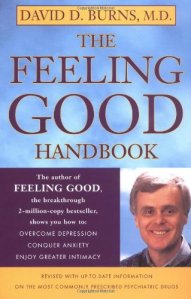
Click image to read reviews
It is known from previous studies that CBT is an effective treatment for both panic disorder and depression. However, there is a lack of psychologists and psychotherapists that use CBT methods, and access to them varies greatly in Sweden as well as in many other countries. Internet-based CBT has therefore been developed, in which the patient undergoes an Internet-based self-help programme and has contact with a therapist by email.
The present doctoral thesis includes a randomised clinical trial of 104 patients with panic disorder and compares the effectiveness of Internet-based CBT and group CBT within a regular healthcare service. The study shows that both treatments worked very well and that there was no significant difference between them, either immediately after treatment or at a six-month follow-up. Analyses of the results for the treatment of depression show that Internet-based CBT is most effective if it is administered as early as possible. Patients with a higher severity of depression and/or a history of more frequent depressive episodes benefited less well from the Internet treatment.
Jan Bergström works as a clinical psychologist at the Anxiety Disorders Unit of the Psychiatry Northwest division of the Stockholm County Council. This research was also financed by the Stockholm County Council.
“Thanks to our research, Internet treatment is now implemented within regular healthcare in Stockholm, at the unit Internetpsykiatri.se of Psychiatry Southwest, which probably makes the Stockholm County Council the first in the world to offer such treatment in its regular psychiatric services,” says Jan Bergström.
Read the original research thesis here (PDF)
Credit: Adapted from materials provided by Karolinska Institutet.
Related articles by Zemanta
- CBT Via the URLs – Treatment for Depression Online May Be as Effective as Group-Based Therapy IRL (healthmgmtrx.blogspot.com)
- Study: Treating panic disorder works as well online (news.cnet.com)
Bipolar Mood Disorder: How Long Does An Episode Last?
 Credit:John M Grohol PsyD PsychCentral
Bipolar disorder is characterized by a cycling from depression to mania, and back again over time (hence the reason it used to be called manic depression, because it includes both mania and depression). One of the commonly asked questions […] is, “How long does a typical bipolar episode last?”
Credit:John M Grohol PsyD PsychCentral
Bipolar disorder is characterized by a cycling from depression to mania, and back again over time (hence the reason it used to be called manic depression, because it includes both mania and depression). One of the commonly asked questions […] is, “How long does a typical bipolar episode last?”
The answer has traditionally been, “Well, it varies considerably from person to person. Some may have rapid cycling bipolar disorder where that person can cycle back and forth between depression and mania in the course of a day or multiple times a week. Others may be stuck in one mood or the other for weeks or months at a time.”
New research (Solomon et al., 2010) published in The Archives of General Psychiatry sheds a little more empirical light onto this question.
In a study of 219 patients with bipolar I disorder (the more serious kind of bipolar disorder), researchers asked patients to fill out an evaluation every 6 months for five years. The evaluation survey asked a number of questions to determine the length, type and severity of the person’s mood episodes.
They discovered that for patients with Bipolar I disorder, the median duration for any type of mood episode — either mania or depression — was 13 weeks.
They also found that “more than 75% of the subjects recovered from their mood episodes within 1 year of onset. The probability of recovery was significantly less for an episode with severe onset” and for those who had a greater number of years spent ill with a mood episode.
The researchers also discovered that manic episodes or mild depressive episodes were easier to recover from than severe depressive episodes for people with Bipolar I disorder in this study. They also found that those who have a cycling episode — switching from depression to mania or vice-a-versa without an intervening period of recovery — fared worse.
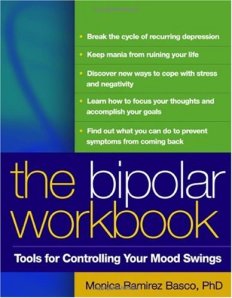
Click image to read reviews
So there you have it. The average length of time someone with Bipolar I disorder spends either depressed or manic is about 13 weeks. Of course, as always, your mileage may vary and individual differences will mean that very few people will actually have this exact average. But it’s a good, rough yardstick in which to measure your own mood episode lengths.
Reference:
Solomon, DA, Andrew C. Leon; William H. Coryell; Jean Endicott; Chunshan Li; Jess G. Fiedorowicz; Lara Boyken; Martin B. Keller. (2010). Arch Gen Psychiatry — Abstract: Longitudinal Course of Bipolar I Disorder: Duration of Mood Episodes. Arch Gen Psychiatry, 67, 339-347.
//
Related articles by Zemanta
- Fry urges help for bipolar study (news.bbc.co.uk)
- Is It Bipolar Disorder or Depression? Learn the Signs (untreatableonline.com)
Teen Myths Busted: New Science Reveals That Common Assumptions Are Wrong
 A new book, The Teen Years Explained: A Guide to Healthy Adolescent Development, dispels many common myths about adolescence with the latest scientific findings on the physical, emotional, cognitive, sexual and spiritual development of teens. [Book is available for download through the Center of Adolescent Health website at Johns Hopkins Center for Adolescent Health (CURRENTLY FREE).] Authors Clea McNeely and Jayne Blanchard from the Center for Adolescent Health at the Johns Hopkins Bloomberg School of Public Health, provide useful tips and strategies for real-life situations and experiences from bullying, to nutrition and sexuality.
Created in partnership with an alliance of youth-serving professionals, The Teen Years Explained is science-based and accessible. The practical and colorful guide to healthy adolescent development is an essential resource for parents and all people who work with young people.
“Whether you have five minutes or five hours, you will find something useful in the guide,” said McNeely. “We want both adults and young people to understand the changes – what is happening and why – so everyone can enjoy this second decade of life.”
Popular Myths about Teenagers:
Myth: Teens are bigger risk-takers and thrill-seekers than adults. Fact: Teens perceive more risk than adults do in certain areas, such as the chance of getting into an accident if they drive with a drunk driver.
Myth: Young people only listen to their friends. Fact: Young people report that their parents or a caring adult are their greatest influence – especially when it comes to sexual behavior.
Myth: Adolescents live to push your buttons. Fact: Adolescents may view conflict as a way of expressing themselves, while adults take arguments personally.
Myth: When you’re a teenager, you can eat whatever you want and burn it off. Fact: Obesity rates have tripled for adolescents since 1980.
Myth: Teens don’t need sleep. Fact: Teens need as much sleep or more than they got as children – 9 to 10 hours is optimum.
Three years in the making, the guide came about initially at the request of two of the Center’s partners, the Maryland Mentoring Partnership and the Maryland Department of Health and Mental Hygiene, who felt there was a need in the community for an easily navigated and engaging look at adolescent development.
“Add The Teen Years Explained to the ‘must-read’ list,” said Karen Pittman, director of the Forum for Youth Investment. “In plain English, the book explains the science behind adolescent development and challenges and empowers adults to invest more attention and more time to young people.”

Click Image to read reviews
The Teen Years Explained: A Guide to Healthy Adolescent Development will be available for purchase on April 10 through Amazon.com. Electronic copies will also be available for download through the Center of Adolescent Health website atJohns Hopkins Center for Adolescent Health (CURRENTLY FREE).
The Center for Adolescent Health is a Prevention Research Center at the Bloomberg School of Public Health funded by the Centers for Disease Control and Prevention (CDC) that is committed to assisting urban youth in becoming healthy and productive adults. Together with community partners, the Center conducts research to identify the needs and strengths of young people, and evaluates and assists programs to promote their health and well-being. The Center’s mission is to work in partnership with youth, people who work with youth, public policymakers and program administrators to help urban adolescents develop healthy adult lifestyles.
Source:
Johns Hopkins University Bloomberg School of Public Health
Related articles by Zemanta
- Teenagers Are Programmed for Risk, Study Finds (nlm.nih.gov)
- The best way to guide your teenager through the high-risk years. (slate.com)
- The Kids Are Alright: Why Hooking Up Won’t Damage Our Youth [Fornication Nation] (jezebel.com)
Compulsive Collecting: Finding Hope In The Misunderstood Mess of Hoarding
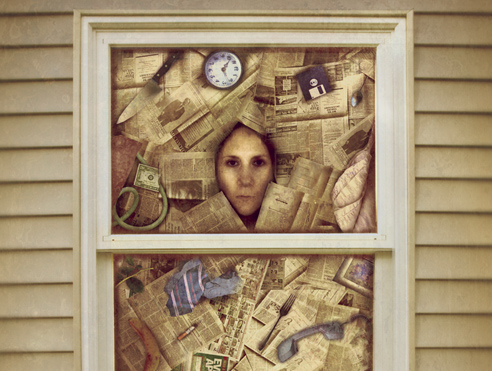 Compulsive collecting or Hoarding is a misunderstood and debilitating mental health issue. Many psychologists and counsellors never see someone with this condition as they very rarely present for help. This article from an Australian newspaper provides an excellent overview of the condition and issues underlying hoarding, and I have included links to two brilliant books co-authored by the researchers discussed in the article, who have developed a wholistic and novel approach to it’s treatment.
Credit: Kate Benson, Sydney Morning Herald April 8 2010
They may dress well or hold down a good job. But hoarders are unhappy people who suffer from a debilitating condition.
Every suburb has one. The elderly woman weaving through an overgrown backyard full of cardboard boxes, old tyres and discarded furniture. Cats perch on every surface; kittens roll about among the rusted drums and long grass.
Inside, behind closed curtains, the rooms are piled high with papers, cups, plates and bottles. Broken toys, old clothes and shopping bags spill across kitchen benches and floor, smothering the stove and filling the sink, neither of which has been used in years.
The stench of cat faeces, urine and food scraps fill the house.
To her neighbours, she is an oddity. Or a pest, bringing down house values and encouraging vermin.
But to therapists she is one of a growing band across Australia suffering from a debilitating condition known as compulsive hoarding, where people feel a need to collect and store items that seem useless to others.
Their homes become havens of insurmountable clutter and junk, often leaving them unable to sleep in their beds or use appliances. Many end up with electricity or gas supplies disconnected or their fridge and washing machines unusable because they fear their lifestyle will be revealed if they contact a tradesmen to make repairs.
This secrecy and shame make it difficult to know exactly how many people have the disorder.
Some experts think between 200,000 and 500,000 Australians compulsively hoard, but others put the figure closer to 800,000.
“It’s a sleeping giant,” Chris Mogan, a clinical psychologist and expert on hoarding, says. “There is no systematic estimate of how many hoarders there are in any Australian setting. I suspect there are many, many more out there than we are aware of.”
Louise Newman, the president of the Royal Australian and New Zealand College of Psychiatrists, agrees.

Click image to read reviews
“I’ve only seen one case in my career [because] these people usually only come to light when the council steps in and orders a clean-up. Hoarders desperately want to keep hoarding. They don’t want to be stopped.”
There is little research on the condition in Australia and not much in the way of funding or treatment programs, but experts are hopeful hoarding will be included in the next (fifth) edition of the Diagnostic and Statistical Manual of Mental Disorders, the bible used by mental health experts to diagnose psychiatric conditions.
Many sufferers fall between the cracks because hoarding is not a clinical diagnosis in its own right, but is seen more as an offshoot of obsessive compulsive disorder, muddled with depression, anxiety, panic disorder and low self-esteem.
“But it is different to OCD and once we get it in the DSM-V, therapists, psychiatrists, psychologists and social workers can then be trained in the management of it [and] we can attract funding for research,” Mogan says.
Jessica Grisham, a clinical psychologist who specialises in obsessive compulsive disorder, also believes compulsive hoarding should be included in the next edition as it requires specialised treatment.
She cites recent neural imaging studies in the US that showed that different parts of the brain were activated in hoarders than in obsessive compulsive disorder patients.
Mogan and Grisham agree that cognitive behaviour therapy, where sufferers are slowly taught to change their thought patterns, is more effective than medication alone.
But hoarders responded better to a specially adapted version of the therapy, developed by the American hoarding experts Gail Steketee and Randy Frost. It had been achieving success with about 60 per cent of hoarders – far more than standard cognitive behaviour therapy.
“But it has to be a long-term project. You don’t go in to someone’s place and do a sudden excavation against their will,” Grisham says.
“That’s a violation and it’s very traumatic for them. It might make great TV, but it’s not good clinically.”
Mogan agrees. A pay TV show, Hoarders, was damaging to the public’s understanding of the illness, because it focused on forcefully cleaning houses in three days.
“Within six to 12 months that house will be recluttered because it is a compulsion … they suffer a lot of grief after things are taken away.”
Mogan makes weekly home visits to hoarders, and focuses on getting them to reduce the associated dangers by ensuring their home has two exits for safety, and working appliances and smoke alarms.
“Just as we do with drugs and alcohol, we’re into harm minimisation. Once the house is safe, we gradually set more goals. If they are comfortable with that, they will continue to stay in touch and not reject us.”
Sometimes the problem extends beyond mounds of paperwork and clothes. Mogan and Grisham know patients who hoarded urine or fingernail clippings. Some stored their own faeces or collected one particular item, such as bicycles. One sufferer was hoarding so much junk, the only access to the house was a 30-centimetre gap at the top of the front door.
But for Allie Jalbert, of the RSPCA, the most distressing hoarders are those who keep scores of cats and dogs, all battling for attention and food on a crowded suburban block.
She has been calling for years to have hoarding classified as an illness in its own right to allow more people to receive treatment and put an end to the 100 per cent recidivism rate.
“Often, we find that hoarders might be treated for peripheral symptoms such as anxiety or depression, but their core problem, the hoarding, is not addressed. So once we have cleaned out the house, they reoffend, which is very, very frustrating for everyone involved,” Jalbert says.
Some people threatened suicide and had to be removed by police when faced with the prospect of giving up their animals or clutter.
“There’s a mixed bag of emotion when you deal with hoarders. Firstly, there is the concern for your personal safety but there is also a degree of empathy because often these people are quite emotional and attached to the animals. But it’s quite frustrating to see animals living in such horrific situations,” she says.
“I’ve seen bathtubs full of faeces and rubbish, sinks that no longer work, homes with no heating or cooling. Sometimes it’s quite an overwhelming experience.”

Click image to view reviews
Who develops the condition and why?
Some studies have shown that many hoarders have been brought up in households where chaos reigned. Some were neglected as children and witnessed pets being treated poorly.
Mogan accepts the aetiology is mostly unknown, but cites an Australian study that found sufferers reported failing to connect with their parents or growing up in households lacking emotional warmth.
“The lack of attachment causes them to become ambivalent about their identity and about other people. As a compensatory mechanism, they link with things, which they find more compelling, more predictable and dependable and less rejecting.”
But Grisham believes there is no real trigger, apart from children of hoarders being rewarded for saving things and getting punished for discarding. “Sometimes there is a traumatic head injury but those cases are very rare.”
The condition affects slightly more women than men but is found across all occupations, age groups and ethnicities. “And they are in relationships,” Mogan says. “Albeit strained ones.
“Some are going out to work, but they make sure no one comes to their house. They’re not agoraphobic. On the contrary, many hoarders go out a lot to escape. But their children’s lives can’t be normalised because they can never sit down for a meal or find space to do homework. It’s a real impost on the family experience.”
Mogan runs group therapy sessions in Melbourne and says that many patients do want to be cured.
“This condition is a disability and the source of quite a lot of human suffering and neglect. A lot of these people are quite relieved to get help.”
//
Related articles by Zemanta
- Are You Developing Hoarding Behaviors? (blisstree.com)
- How to handle the hoarding habit (nationalpost.com)
Video: A Conversation With Temple Grandin
Not long ago I posted a video of a lecture by Temple Grandin. Temple is autistic, a designer of livestock handling facilities and a Professor of Animal Science at Colorado State University. She is an icon in the Autistic Community. Her life has been a beacon and an inspirational story and recently her story was told in a biopic produced by HBO. She is the author of several books on autism and the autistic spectrum.
Yesterday I came across this amazing one-on-one interview with Temple. The video is a re-broadcast of an hour long intimate discussion with Temple about her life, her work and her journey with autism. If you are at all interested in the area of ASD you will want to watch this!
//
Related articles by Zemanta
- America’s best-known autistic person, Temple Grandin, talks about her new biopic (time.com)
- Temple Grandin: Why Autism is a gift (cnn.com)
ADHD Treatment: Behavior Therapy & Medication Seem To Positively Affect The Brain In The Same Way
(Information provided by The Wellcome Trust 1 April 2010)
Read the original research paper HERE (PDF)
 Medication and behavioural interventions help children with attention deficit hyperactivity disorder (ADHD) better maintain attention and self-control by normalising activity in the same brain systems, according to research funded by the Wellcome Trust.
In a study published today in the journal ‘Biological Psychiatry’, researchers from the University of Nottingham show that medication has the most significant effect on brain function in children with ADHD, but this effect can be boosted by complementary use of rewards and incentives, which appear to mimic the effects of medication on brain systems.
ADHD is the most common mental health disorder in childhood, affecting around one in 20 children in the UK. Children with ADHD are excessively restless, impulsive and distractible, and experience difficulties at home and in school. Although no cure exists for the condition, symptoms can be reduced by a combination of medication and behaviour therapy.
Methylphenidate, a drug commonly used to treat ADHD, is believed to increase levels of dopamine in the brain. Dopamine is a chemical messenger associated with attention, learning and the brain’s reward and pleasure systems. This increase amplifies certain brain signals and can be measured using an electroencephalogram (EEG). Until now it has been unclear how rewards and incentives affect the brain, either with or without the additional use of medication.
To answer these questions, researchers at Nottingham’s Motivation, Inhibition and Development in ADHD Study (MIDAS) used EEG to measure brain activity while children played a simple game. They compared two particular markers of brain activity that relate to attention and impulsivity, and looked at how these were affected by medication and motivational incentives.

Click Image to view reviews
The team worked with two groups of children aged nine to 15: one group of 28 children with ADHD and a control group of 28. The children played a computer game in which green aliens were randomly interspersed with less frequent black aliens, each appearing for a short interval. Their task was to ‘catch’ as many green aliens as possible, while avoiding catching black aliens. For each slow or missed response, they would lose one point; they would gain one point for each timely response.
In a test designed to study the effect of incentives, the reward for avoiding catching the black alien was increased to five points; a follow-up test replaced this reward with a five-point penalty for catching the wrong alien.
The researchers found that when given their usual dose of methylphenidate, children with ADHD performed significantly better at the tasks than when given no medication, with better attention and reduced impulsivity. Their brain activity appeared to normalise, becoming similar to that of the control group.
Similarly, motivational incentives also helped to normalise brain activity on the two EEG markers and improved attention and reduced impulsivity, though its effect was much smaller than that of medication.
“When the children were given rewards or penalties, their attention and self-control was much improved,” says Dr Maddie Groom, first author of the study. “We suspect that both medication and motivational incentives work by making a task more appealing, capturing the child’s attention and engaging his or her brain response control systems.”
Professor Chris Hollis, who led the study, believes the findings may help to reconcile the often-polarised debate between those who advocate either medication on the one hand, or psychological/behavioural therapy on the other.
“Although medication and behaviour therapy appear to be two very different approaches of treating ADHD, our study suggests that both types of intervention may have much in common in terms of their affect on the brain,” he says. “Both help normalise similar components of brain function and improve performance. What’s more, their effect

Click Image to view reviews
is additive, meaning they can be more effective when used together.”
The researchers believe that the results lend support from neuroscience to current treatment guidelines
for ADHD as set out by the National Institute for Health and Clinical Excellence (NICE). These recommend that behavioural interventions, which have a smaller effect size, are appropriate for moderate ADHD, while medication, with its larger effect size, is added for severe ADHD.
Although the findings suggest that a combination of incentives and medication might work most effectively, and potentially enable children to take lower doses of medication, Professor Hollis believes more work is needed before the results can be applied to everyday clinical practice or classroom situations.
“The incentives and rewards in our study were immediate and consistent, but we know that children with ADHD respond disproportionately less well to delayed rewards,” he says. “This could mean that in the ‘real world’ of the classroom or home, the neural effects of behavioural approaches using reinforcement and rewards may be less effective.”
Read the original research paper HERE (PDF)
Related articles by Zemanta
- Mount Sinai finds meta-cognitive therapy more effective for adult ADHD patients (scienceblog.com)
- What Do Girls with ADHD Look Like As Adults? (psychcentral.com)
About Peter
Peter Brown BHMS (Hons) MPsychClin MAPS
I’m a Clinical Psychologist and have a private practice and consultancy in Brisbane Australia. I have 24 years experience in child, adult and family clinical psychology. I have a wonderful wife and three kids.
I am co-founder of Christian Wholeness Counselling Services.
I like researching issues of the brain & mind, reading and seeking out new books and resources for myself and my clients. I thought that others might be interested in some of what I have found also, hence this blog…

Subscribe to My Blog Posts & Updates
-

Blog Surfer
Alphainventions


Recent Comments


 Peter H Brown Clinical Psychologist