Youth Today: The “Me” Generation Or More Of The Same?
Read the original research paper HERE (Free PDF)
Today’s youth are generally not the self-centered, antisocial slackers that previous research has made them out to be, according to a provocative new study co-authored by a Michigan State University psychologist.
In a scientific analysis of nearly a half-million high-school seniors spread over three decades, MSU’s Brent Donnellan and Kali Trzesniewski of the University of Western Ontario argue teens today are no more egotistical – and just as happy and satisfied – as previous generations.
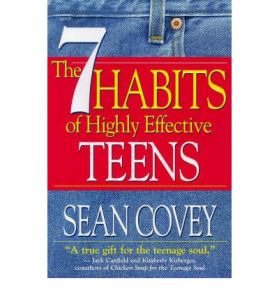 “We concluded that, more often than not, kids these days are about the same as they were back in the mid-1970s,” said Donnellan, associate professor of psychology.
The study appears in the research journal Perspectives on Psychological Science. Donnellan acknowledges that many people will be surprised by the findings, which refute previous studies classifying today’s youth as selfish loafers with extremely high levels of self-esteem.
But while much previous research has relied on “convenience studies” of relatively small samples of young adults, Donnellan said, the current study analyzes the psychological profile data of 477,380 high school seniors from 1976 to 2006. The data comes from the University of Michigan’s federally funded Monitoring the Future survey, which each year tracks the behaviors, attitudes and values of American students.
In other findings:
* Today’s youth are more cynical and less trusting of institutions than previous generations. But Donnellan said this is generally true of the broader population.
* The current generation is less fearful of social problems such as race relations, hunger, poverty and energy shortages.
* Today’s youth have higher educational expectations.
Ultimately, Donnellan said, it’s common for older generations to paint youth in a negative light – as lazy and self-absorbed, for example – which can perpetuate stereotypes. It can be easy, he added, to forget what it’s like to grow up.
“Kids today are like they were 30 years ago – they’re trying to find their place in the world, they’re trying to carve out an identity, and it can be difficult,” Donnellan said. “But lots of research shows that the stereotypes of all groups are much more overdrawn than the reality.”
Read the original research paper HERE (Free PDF)
Source: Brent Donnellan
Michigan State University

Violence and Young People: An Enlightening & Alarming Discussion
On Sunday 27th Feb. I took part in a rich and informed discussion on Violence and Young People on Peter Jan etzki’s “Talking Life” radio program on which I am a regular guest. I was very much a “third wheel” in this discussion, with the key guests being Dr Steven Stathis, Psychiatrist and Paediatrician, who is a consultant at Royal Children’s Hospital in Brisbane. Steven is also Director of the Child and Family Therapy Unit (CAFTU), and consults at the Youth Detention Centre, Wacol. The other key guest was Dr Mubarak Ali, a researcher in Social Work at Flinders University in Adelaide. Mubarak has done extensive and ground-breaking international research examining child and youth use of the internet and digital technology, and how this usage correlates with violent behaviour. It was a rich discussion with some interesting content and phone calls. If this is a topic which in any way interests you, I would encourage you to take the time to have a listen.
UPDATE: You can now listen to the entire podcast by selecting the links below. These files are now stored in my library internally for easy access: (Free – mp3-internal links) click to play or right click and “save link /target as” to download.
OR

Peter Janetzki
A podcast of the entire show in easy to listen parts, and podcasts of recent shows can be found here or by clicking on the 96.5 logo.You can listen to the podcast from your browser or with iTunes, Talking Life streams live every Sunday night from from 8-10pm Australian Eastern Standard Time (GMT+10) and you can listen by going to the 96.5 website @ 96five.com and clicking on the home page media player.
Related articles by Zemanta
- ‘8% rise’ in violence against children (news.bbc.co.uk)
![Reblog this post [with Zemanta]](https://i0.wp.com/img.zemanta.com/reblog_e.png)
About Peter
Peter Brown BHMS (Hons) MPsychClin MAPS
I’m a Clinical Psychologist and have a private practice and consultancy in Brisbane Australia. I have 24 years experience in child, adult and family clinical psychology. I have a wonderful wife and three kids.
I am co-founder of Christian Wholeness Counselling Services.
I like researching issues of the brain & mind, reading and seeking out new books and resources for myself and my clients. I thought that others might be interested in some of what I have found also, hence this blog…

Subscribe to My Blog Posts & Updates
-

Blog Surfer
Alphainventions


Recent Comments


 Peter H Brown Clinical Psychologist