Martin Seligman: Author Of “Learned Optimism” Speaks About Positive Psychology And Authentic Happiness
Martin Seligman was originally best known for his classic psychology studies and theory of “Learned Helplessness” (1967) and it’s relationship to depression.
These days he is considered to be a founder of positive psychology, a field of study that examines healthy states, such as authentic happiness, strength of character and optimism, and is the author of “Learned Optimism”.
This is a terrific talk on Positive Psychology and what it means to be happy. It’s about 20 mins. long but definitely worth a watch!

You Can Trust Me More Than You Can Trust Them: Cynicism & The Trust Gap
Read the original research paper HERE (PDF)
Credit: Jeremy Dean from Psyblog
How do people come to believe that others are so much less trustworthy than themselves?
Much as we might prefer otherwise, there’s solid evidence that, on average, people are quite cynical. When thinking about strangers, studies have shown that people think others are more selfishly motivated than they really are and that others are less helpful than they really are.
 Similarly in financial games psychologists have run in the lab, people are remarkably cynical about the trustworthiness of others. In one experiment people honored the trust placed in them between 80 and 90 percent of the time, but only estimated that others would honor their trust about 50 percent of the time.
Our cynicism towards strangers may develop as early as 7 years old (Mills & Keil, 2005). Surprisingly people are even overly cynical about their loved ones, assuming they will behave more selfishly than they really do (Kruger & Gilovich, 1999).
What could create such a huge gap between how people behave themselves and how they think others behave?
Trust me
People often say that it’s experience that breeds this cynicism rather than a failing in human nature. This is true, but only in a special way.
Think about it like this: the first time you trust a stranger and are betrayed, it makes sense to avoid trusting other strangers in the future. The problem is that when we don’t ever trust strangers, we never find out how trustworthy people in general really are. As a result our estimation of them is governed by fear.
If this argument is correct, it is lack of experience that leads to people’s cynicism, specifically not enough positive experiences of trusting strangers. This idea is tested in a new study published in Psychological Science. Fetchenhauer and Dunning (2010) set up a kind of ideal world in the lab where people were given accurate information about the trustworthiness of strangers to see if that would reduce their cynicism.
They recruited 120 participants to take part in a game of economic trust. Each person was given €7.50 and asked if they’d like to hand it to another person. If the other person made the same decision the pot would increase to €30. They were then asked to estimate whether the other person would opt to give them their half of the total winnings.

Click image to read reviews
The participants watched 56 short videos of the people they were playing against. The researchers set up two experimental conditions, one to mimic what happens in the real world and one to test an ideal world scenario:
1. Real life condition: in this group participants were only told about the other person’s decision when they decided to trust them. The idea is that this condition simulates real life. You only find out if others are trustworthy when you decide to trust them. If you don’t trust someone you never find out whether or not they are trustworthy.
2. Ideal world condition: here participants were given feedback about the trustworthiness of other people whether or not they decided to trust them. This simulates an ideal-world condition where we all know from experience just how trustworthy people are (i.e. much more trustworthy than we think!)
Breaking down cynicism
Once again this study showed that people are remarkably cynical about strangers. Participants in this study thought that only 52 percent of the people they saw in the videos could be trusted to share their winnings. But the actual level of trustworthiness was a solid 80 percent. There’s the cynicism.
That cynicism was quickly broken down, though, by giving participants accurate feedback about others’ trustworthiness. People in the ideal world condition noticed that others could be trusted (they upped their estimate to 71 percent) and were also more trusting themselves, handing over the money 70.1 percent of the time.
People in the ideal world condition could even be seen shedding their cynicism as the study went on, becoming more trusting as they noticed that others were trustworthy. This suggests people aren’t inherently cynical, it’s just that we don’t get enough practice at trusting.
Self-fulfilling prophecy
Unfortunately we don’t live in the ideal world condition and have to put up with only receiving feedback when we decide to trust others. This leaves us in the position of trusting to psychology studies like this one to tell us that other people are more trustworthy than we imagine (or at least people who take part in psychology studies are!).
Trusting others is also a kind of self-fulfilling prophecy, just as we find in interpersonal attraction. If you try trusting others you’ll find they frequently repay that trust, leading you to be more trusting. On the other hand if you never trust anyone, except those nearest and dearest, then you’ll end up more cynical about strangers.
Visit Psyblog
Read the original research paper HERE (PDF)
Multitasking: New Study Challenges Previous Cognitive Theory But Shows That Only A Few “Supertaskers” Can Drive And Phone
Read The Original Research Paper HERE (PDF – internal link)
A new study from University of Utah psychologists found a small group of people with an extraordinary ability to multitask: Unlike 97.5 percent of those studied, they can safely drive while chatting on a cell phone.
These individuals – described by the researchers as “supertaskers” – constitute only 2.5 percent of the population. They are so named for their ability to successfully do two things at once: in this case, talk on a cell phone while operating a driving simulator without noticeable impairment.

Jason Watson, a University of Utah psychologist, negotiates cybertraffic in a driving simulator used to study driver distractions such as cell phones and testing. While many people think they can safely drive and talk on a cell phone at the same time, Watson's new study shows only one in 40 is a "supertasker" who can perform both tasks at once without impairment of abilities measured in the study. Credit: Valoree Dowell, University of Utah
The study, conducted by psychologists Jason Watson and David Strayer, is now in press for publication later this year in the journal Psychonomic Bulletin and Review.
This finding is important not because it shows people can drive well while on the phone – the study confirms that the vast majority cannot – but because it challenges current theories of multitasking. Further research may lead eventually to new understanding of regions of the brain that are responsible for supertaskers’ extraordinary performance.
“According to cognitive theory, these individuals ought not to exist,” says Watson. “Yet, clearly they do, so we use the supertasker term as a convenient way to describe their exceptional multitasking ability. Given the number of individuals who routinely talk on the phone while driving, one would have hoped that there would be a greater percentage of supertaskers. And while we’d probably all like to think we are the exception to the rule, the odds are overwhelmingly against it. In fact, the odds of being a supertasker are about as good as your chances of flipping a coin and getting five heads in a row.”
The researchers assessed the performance of 200 participants over a single task (simulated freeway driving), and again with a second demanding activity added (a cell phone conversation that involved memorizing words and solving math problems). Performance was then measured in four areas—braking reaction time, following distance, memory, and math execution.
As expected, results showed that for the group, performance suffered across the board while driving and talking on a hands-free cell phone.
For those who were not supertaskers and who talked on a cell phone while driving the simulators, it took 20 percent longer to hit the brakes when needed and following distances increased 30 percent as the drivers failed to keep pace with simulated traffic while driving. Memory performance declined 11 percent, and the ability to do math problems fell 3 percent.

Click image to read reviews
However, when supertaskers talked while driving, they displayed no change in their normal braking times, following distances or math ability, and their memory abilities actually improved 3 percent.
The results are in line with Strayer’s prior studies showing that driving performance routinely declines under “dual-task conditions” – namely talking on a cell phone while driving – and is comparable to the impairment seen in drunken drivers.
Yet contrary to current understanding in this area, the small number of supertaskers showed no impairment on the measurements of either driving or cell conversation when in combination. Further, researchers found that these individuals’ performance even on the single tasks was markedly better than the control group.
“There is clearly something special about the supertaskers,” says Strayer. “Why can they do something that most of us cannot? Psychologists may need to rethink what they know about multitasking in light of this new evidence. We may learn from these very rare individuals that the multitasking regions of the brain are different and that there may be a genetic basis for this difference. That is very exciting. Stay tuned.”
Watson and Strayer are now studying expert fighter pilots under the assumption that those who can pilot a jet aircraft are also likely to have extraordinary multitasking ability.
The current value society puts on multitasking is relatively new, note the authors. As technology expands throughout our environment and daily lives, it may be that everyone – perhaps even supertaskers – eventually will reach the limits of their ability to divide attention across several tasks.
“As technology spreads, it will be very useful to better understand the brain’s processing capabilities, and perhaps to isolate potential markers that predict extraordinary ability, especially for high-performance professions,” Watson concludes.
Information from University of Utah
Read The Original Research Paper HERE (PDF – internal link)
//
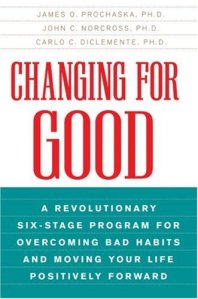
Sticking To The Status Quo: Why Habits Are So Tough To Break
Read the original Research Paper HERE (PDF internal link)
Kelly McGonigal, Ph.D. @ Psychology Today (excerpted)
A new study from the Proceedings of the National Academy of Sciences confirms what many confused shoppers, dieters, and investors know first-hand: when a decision is difficult, we go with the status quo or choose to do nothing. [..
..] Researchers from the Wellcome Trust Centre for Neuroimaging at University College London created a computerized decision-making task. Participants viewed a series of visual tests that asked them to play a referee making a sports call (e.g., whether a tennis ball bounced in our out of bounds).
Click image to read reviews
Before each test, participants were told that one of the responses (in or out) was the “default” for this round. They were asked to hold down a key while they watched. If they continued to hold down the key, they were choosing the default. If they lifted their finger, they were choosing the non-default. Importantly, the default response (in or out) switched randomly between rounds, so that a participant’s response bias (to make a call in or out) would not be confused with their tendency to stick with the status quo.
The researchers were interested in two questions:
1) Does the difficulty of the decision influence the participants’ likelihood of choosing the default?
2) Is there a neural signature for choosing the default vs. overriding the status quo? [..
As the researchers].. predicted, participants were more likely to stick with the default when the decision was difficult. It didn’t matter whether the default was in or out. If they couldn’t make a confident choice, they essentially chose to do nothing. And as the researchers point out, this tendency led to more errors.
What was happening in the participants’ brains as they chose? The researchers observed an interesting pattern when participants went against the default in a difficult decision. There was increased activity in, and increased connectivity between, two regions: the prefrontal cortex (PFC) and an area of the midbrain called the subthalamic nucleus (STN). The PFC is well-known to be involved in decision-making and self-control. The STN is thought to be important for motivating action.
The researcher’s analyses couldn’t determine for sure what the relationship between the PFC and STN was, but the observations were consistent with the idea that the PFC was driving, or boosting, activity in the STN.
These brain analyses suggest that going against the default in difficult decisions requires some kind of extra motivation or confidence. Otherwise, the decider in our mind is puzzled, and the doer in our mind is paralyzed
Knowing this can help explain why changing habits can be so difficult. If you aren’t sure why you’re changing, don’t fully believe you’re making the right choice, or question whether what you’re doing will work, you’re likely to settle back on your automatic behaviors. That’s why self-efficacy-the belief that you can make a change and overcome obstacles-is one of the best predictors of successful change. The decider and the doer need a boost of confidence.
It also helps explain why we love formulaic diets, investment strategies, and other decision aids. Formulas feel scientific, tested, and promising. They also give us a new default. We can rely on the rules (no eating after 7 PM, automatically invest X% of your income in mutual funds twice a month) when we’re feeling overwhelmed. A new automatic makes change much easier.
So next time you’re trying to make a change, figure out what your current default is, and remind yourself exactly why it isn’t working. Then look for ways to change your default (clean out your fridge, set up direct deposit) so you don’t have to fight the old default as often. And feel free to be your own cheerleader when the going gets rough. Look for the first evidence (a pound lost here, a dwindling credit card statement there) that what you’re doing is paying off. The status quo is seductive, and we all need a little encouragement to lift our fingers off the keyboard..
Study cited:
Fleming, S.M., Thomas, C.L., & Dolan, R.J. Overcoming status quo bias in the human brain. PNAS. Published online before print March 15, 2010. doi:10.1073/pnas.0910380107
Read the original Research Paper HERE (PDF internal link)
Pack Up Your Troubles And (Apparently) Smile: Physical Enclosure Helps Psychological Closure
Read the original research paper HERE (Free PDF-internal link)
ScienceDaily (Mar. 25, 2010) — Finding it hard to get over a failed love interest? Just can’t get details of a bad financial move out of your head.
A new study from the Rotman School of Management suggests you might want to stick something related to your disappointment in a box or envelope if you want to feel better. In four separate experiments researchers found that the physical act of enclosing materials related to an unpleasant experience, such as a written recollection about it, improved people’s negative feelings towards the event and created psychological closure. Enclosing materials unrelated to the experience did not work as well.

Click image to read reviews
“If you tell people, ‘You’ve got to move on,’ that doesn’t work,” said Dilip Soman, who holds the Corus Chair in Communication Strategy at the Rotman School and is also a professor of marketing, who co-wrote the paper with colleagues Xiuping Li from the National University of Singapore and Liyuan Wei from City University of Hong Kong. “What works is when people enclose materials that are relevant to the negative memories they have. It works because people aren’t trying to explicitly control their emotions.”
While the market implications might not be immediately obvious, Prof. Soman believes the findings point to new angles on such things as fast pick-up courier services and pre-paid mortgage deals that relieve people’s sense of debt burden. If people realize that the memory of past events or tasks can be distracting, perhaps there is a market for products and services that can enclose or take away memories of that task.
The paper is to be published in Psychological Science.
Read the original research paper HERE (Free PDF-internal link)
Jodi Picoult Author of “House Rules” Discusses Her Personal Experience With Autism
Jodi Picoult is the author of a number of topical novels including “My Sister’s Keeper” and the recently released “House Rules“, a murder-mystery in which the main character is Jacob, a young man with Aperger’s Syndrome. I have just finished reading this novel and thoroughly enjoyed it. Picoult’s understanding of ASD is extensive and well researched, although Jacob’s character probably represents a conglomerate of austistic features in one character. I wondered where she might have drawn her inspiration for the book’s protagonist. As the podcast below reveals, she has some personal experience. Thought it was interesting. Have a watch
Vodpod videos no longer available.
Here’s a review of the book if you’re interested:

Related articles by Zemanta
- Picoult keys on a teen with Asperger’s (boston.com)
- Jodi Picoult’s ‘House Rules’: a novel about a family ruled by Asperger’s syndrome (seattletimes.nwsource.com)
![Reblog this post [with Zemanta]](https://i0.wp.com/img.zemanta.com/reblog_e.png)
Kids Who Bully Want Status But Long For Affection
Read The Original Research Paper HERE (Free PDF-internal link)
From ScienceDaily (Mar. 27, 2010) — Bullying is common in classrooms around the world: About 15 percent of children are victimized, leading to depression, anxiety, loneliness, and other negative outcomes. What’s driving bullies to behave the way they do? According to a new large-scale Dutch study, most bullies are motivated by the pursuit of status and affection.

Briliant Book! Click to read reviews at Amazon
The longitudinal study was conducted by researchers at the University of Groningen in the Netherlands. It appears in the March/April 2010 issue of the journal Child Development.
In their work, the researchers questioned almost 500 elementary-school children ages 9 to 12. Based on their findings, they conclude that bullies generally choose to gain status by dominating their victims. But at the same time, they try to reduce the chances that they’ll end up on the outs with other classmates by choosing as victims children who are weak and not well-liked by others. In short, even bullies care a lot about others’ affection and don’t want to lose it.
Gender also plays a role. For example, the study finds that at this age, bullies only care about not losing affection from classmates of their own gender. So when boys bully boys, it doesn’t matter whether girls approve or disapprove. The same holds for girls. Moreover, boys will bully only those girls that aren’t well liked by other boys, regardless of what girls think about it, and girls will do the same in their bullying of boys.
“To understand the complex nature of acceptance and rejection, it’s necessary to distinguish the gender of the bully, the gender of the target, and the gender of the classmates who accept and reject bullies and victims,” according to René Veenstra, professor of sociology at the University of Groningen, who led the study.
Read The Original Research Paper HERE (Free PDF-internal link)
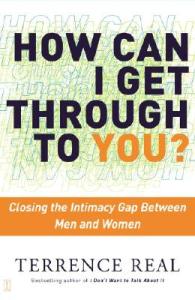
An Attractive Lady Makes The Boys Go Gaga:Testosterone And Risk Taking Behavior
Read The Original Research Paper HERE (Free PDF-internal link)
From UNIS : University of Queensland research suggests that the presence of a beautiful woman can lead men to throw caution to the wind. Professor Bill von Hippel and doctoral student Richard Ronay, from UQ’s School of Psychology, have been examining the links between physical risk-taking in young men and the presence of attractive women.
To examine this issue, they conducted a field experiment with young male skateboarders and found the skateboarders took more risks at the skate park when they were observed by an attractive female experimenter than when they were observed by a male experimenter.
This increased risk-taking led to more successes but also more crash landings in front of the female observer.
Click image to view reviews
Professor von Hippel and Mr Ronay also measured testosterone from participants’ saliva, and found that the skateboarders’ increased risk taking was caused by elevated testosterone levels brought about by the presence of the attractive female.
According to the researchers these findings suggest an evolutionary basis for male risk-taking.
“Historically, men have competed with each other for access to fertile women and the winners of those competitions are the ones who pass on their genes to future generations. Risk-taking would have been inherent in such a competitive mating strategy,” said Professor von Hippel.
“Our results suggest that displays of physical risk-taking might best be understood as hormonally fuelled advertisements of health and vigour aimed at potential mates, and signals of strength, fitness, and daring intended to intimidate potential rivals.”
The researchers point out that although evolution may have favoured males who engage in risky behaviour to attract females, such behaviours can also be detrimental in terms of survival.
“Other instances of physical risk-taking that contribute to men’s early mortality, such as dangerous driving and physical aggression, might also be influenced by increases in testosterone brought about by the presence of attractive women.”
Read The Original Research Paper HERE (Free PDF-internal link)
Video : Lecture By Temple Grandin – Focus on Autism and Asperger’s Syndrome
I came across this fascinating lecture by Temple Grandin. Enjoy!
Vodpod videos no longer available.
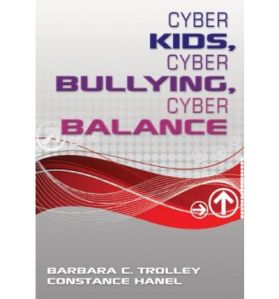
Online ‘Cold Shoulder’ Shown To Effect Kids Self-Esteem
Read the original Research Paper HERE (Free PDF-internal link)
From ScienceDaily (Mar. 22, 2010) — Research by psychologists at the University of Kent has revealed that online ostracism is a threat to children’s self-esteem.
The study, the results of which are published March 22 in the British Journal of Developmental Psychology, looked at how children, adolescents and adults react to being ostracised by other players during an online computer game. This is the first time the effect of online ostracism on children has been investigated.
The study was carried out by a team at the University’s Centre for the Study of Group Processes and was led by Professor Dominic Abrams. Professor Abrams explained that research into cyber-bullying usually focuses on direct abuse and insults. ‘However, a more indirect and perhaps common form of bullying is ostracism — when people are purposefully ignored by others,’ he said. Professor Abrams also explained that ‘online ostracism affects adults by threatening their basic needs for self-esteem, sense of belonging, sense of meaning and sense of control. We wanted to discover whether children and adolescents have similar reactions.’
Click image to read reviews
Three groups of participants took part in the study: 41 eight and nine-year-old children, 79 thirteen and fourteen-year-olds and 46 twenty-year-old adults. All were asked to play a game of online ‘cyberball’ in which three online players — depicted on screen by their names — passed a ball to one another. In games where the participant was included, they threw and received the ball four times within the trial. However, in a game when they were ostracised they received the ball only twice at the start, and then the other two players continued to play only passing the ball between themselves.
After each game participants’ basic needs were assessed, as well as how much they had enjoyed the game.
Professor Abrams said: ‘For all age groups, online ostracism substantially threatened the four basic needs — esteem, belonging, meaning and control — and also lowered their mood, showing that social exclusion online is very powerful even among children.’
However, there were also differences between the three age groups in their responses to cyber-ostracism. Ostracism affected the self-esteem of the eight and nine-year-old children more than the other groups. This suggests that the adolescents and adults have developed better buffers against threats to self-esteem.
Among the thirteen to fourteen-year-olds ostracism had the largest effect on feelings of belonging, strongly suggesting that adolescents may place a higher value on inclusion in peer networks than do children or adults.
The good news is that the negative reactions were cancelled out when children were included in a later game. Professor Abrams added: ‘Whereas adults might be quite skilled at finding a relationship in which to be included after having been ostracised, it could be a bigger challenge for children. This suggests that parents and schools need to be vigilant in case children in their care are experiencing sustained ostracism.
Read the original Research Paper HERE (Free PDF-internal link)
//
About Peter
Peter Brown BHMS (Hons) MPsychClin MAPS
I’m a Clinical Psychologist and have a private practice and consultancy in Brisbane Australia. I have 24 years experience in child, adult and family clinical psychology. I have a wonderful wife and three kids.
I am co-founder of Christian Wholeness Counselling Services.
I like researching issues of the brain & mind, reading and seeking out new books and resources for myself and my clients. I thought that others might be interested in some of what I have found also, hence this blog…

Subscribe to My Blog Posts & Updates
-

Blog Surfer
Alphainventions


Recent Comments


 Peter H Brown Clinical Psychologist