“Have The Time Of Your Life” Or “Beat It”: The Dance Moves That Make Men Attractive
 The key dance moves that make men attractive to women have been discovered by psychologists at Northumbria University.
Credit: Medical News Today:
Using 3D motion-capture technology to create uniform avatar figures, researchers have identified the key movement areas of the male dancer’s body that influence female perceptions of whether their dance skills are “good” or “bad”.
The study, led by psychologist Dr Nick Neave and researcher Kristofor McCarty, has for the first time identified potential biomechanical differences between “good” and “bad” male dancers. Its findings are published in the Royal Society Journal Biology Letters on Wednesday 8th September.
Dr Neave believes that such dance movements may form honest signals of a man’s reproductive quality, in terms of health, vigour or strength, and will carry out further research to fully grasp the implications.
Researchers, at Northumbria’s School of Life Sciences, filmed 19 male volunteers, aged 18–35, with a 3-D camera system as they danced to a basic rhythm. Their real-life movements were mapped onto feature-less, white, gender-neutral humanoid characters, or avatars, so that 35 heterosexual women could rate their dance moves without being prejudiced by each male’s individual level of physical attractiveness.
The results showed that eight movement variables made the difference between a “good” and a “bad” dancer. These were the size of movement of the neck, trunk, left shoulder and wrist, the variability of movement size of the neck, trunk and left wrist, and the speed of movement of the right knee.
Female perceptions of good dance quality were influenced most greatly by large and varied movements involving the neck and trunk.
Dr Neave said: “This is the first study to show objectively what differentiates a good dancer from a bad one. Men all over the world will be interested to know what moves they can throw to attract women.
“We now know which area of the body females are looking at when they are making a judgement about male dance attractiveness. If a man knows what the key moves are, he can get some training and improve his chances of attracting a female through his dance style.”
Kristofor McCarty said: “The methods we have used here have allowed us to make some preliminary predictions as to why dance has evolved. Our results clearly show that there seems to be a strong general consensus as to what is seen as a good and bad dance, and that women appear to like and look for the same sort of moves.
“From this, we predict that those observations have underlying traits associated with them but further research must be conducted to support such claims.”
Dr Neave and Kristofor McCarty also worked with fellow Northumbria researchers Dr Nick Caplan and Dr Johannes Hönekopp, and Jeanette Freynik and Dr Bernhard Fink, from the University of Goettingen, on the landmark study.
Sources: Northumbria University, AlphaGalileo Foundation.

Be Active, Sleep Better! Aerobic Exercise Helps Beat Insomnia
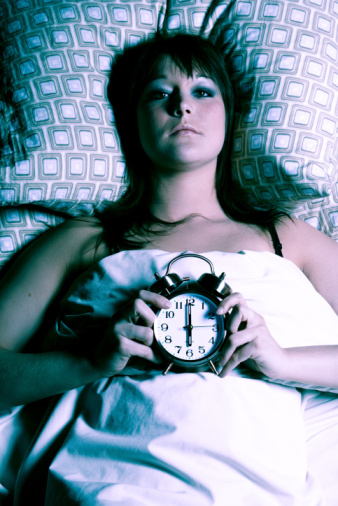 Source: ScienceDaily (Sep. 15, 2010) — The millions of middle-aged and older adults who suffer from insomnia have a new drug-free prescription for a more restful night’s sleep. Regular aerobic exercise improves the quality of sleep, mood and vitality, according to a small but significant new study from Northwestern Medicine.
The study is the first to examine the effect of aerobic exercise on middle-aged and older adults with a diagnosis of insomnia. About 50 percent of people in these age groups complain of chronic insomnia symptoms.
The aerobic exercise trial resulted in the most dramatic improvement in patients’ reported quality of sleep, including sleep duration, compared to any other non-pharmacological intervention.
“This is relevant to a huge portion of the population,” said Phyllis Zee, M.D., director of the Sleep Disorders Center at Northwestern Medicine and senior author of a paper to be published in the October issue of Sleep Medicine. The lead author is Kathryn Reid, research assistant professor at Feinberg.
“Insomnia increases with age,” Zee said. “Around middle age, sleep begins to change dramatically. It is essential that we identify behavioral ways to improve sleep. Now we have promising results showing aerobic exercise is a simple strategy to help people sleep better and feel more vigorous.”
The drug-free strategy also is desirable, because it eliminates the potential of a sleeping medication interacting with other drugs a person may be taking, Reid said.
Sleep is an essential part of a healthy lifestyle, like nutrition and exercise, noted Zee, a professor of neurology, neurobiology, and physiology at Northwestern University Feinberg School of Medicine and a physician at Northwestern Memorial Hospital.

Click image to read reviews
“By improving a person’s sleep, you can improve their physical and mental health,” Zee said. “Sleep is a barometer of health, like someone’s temperature. It should be the fifth vital sign. If a person says he or she isn’t sleeping well, we know they are more likely to be in poor health with problems managing their hypertension or diabetes.” The study included 23 sedentary adults, primarily women, 55 and older who had difficulty falling sleep and/or staying asleep and impaired daytime functioning. Women have the highest prevalence of insomnia. After a conditioning period, the aerobic physical activity group exercised for two 20-minute sessions four times per week or one 30-to-40-minute session four times per week, both for 16 weeks. Participants worked at 75 percent of their maximum heart rate on at least two activities including walking or using a stationary bicycle or treadmill. Participants in the non-physical activity group participated in recreational or educational activities, such as a cooking class or a museum lecture, which met for about 45 minutes three to five times per week for 16 weeks. Both groups received education about good sleep hygiene, which includes sleeping in a cool, dark and quiet room, going to bed the same time every night and not staying in bed too long, if you can’t fall asleep. Exercise improved the participants’ self-reported sleep quality, elevating them from a diagnosis of poor sleeper to good sleeper. They also reported fewer depressive symptoms, more vitality and less daytime sleepiness. “Better sleep gave them pep, that magical ingredient that makes you want to get up and get out into the world to do things,” Reid said. The participants’ scores on the Pittsburgh Sleep Quality Index dropped an average of 4.8 points. (A higher score indicates worse sleep.) In a prior study using t’ai chi as a sleep intervention, for example, participants’ average scores dropped 1.8 points. “Exercise is good for metabolism, weight management and cardiovascular health and now it’s good for sleep,” Zee said. The research was funded by the National Institute on Aging

Related articles by Zemanta
- Sleep Well: Why You Need To Fight For Good Sleep (peterhbrown.wordpress.com)
Sleep Well: Why You Need To Fight For Good Sleep
 A collection of studies published last Wednesday in the journal Sleep tackled some important questions: What are the health effects of not getting enough sleep? How does sleep deprivation affect teens? Does insomnia have long-term consequences?
Credit: Time Magazine
Given that past research has shown that short sleepers (and unusually long sleepers) die younger than people who get 6.5 to 7.5 hours per night, a new Penn State study looked at the impact of insomnia on mortality. The consequences could be dire: the study of 1,741 men and women in Pennsylvania found that insomniac men who slept less than 6 hours per day were four times more likely to die than those who got a full night’s rest. The study even adjusted for other medical conditions that affect sleep (and death rates), such as obesity, alcohol and depression. Of note, sleep deprivation did not affect women’s mortality.
In another study in Sleep, University of Sydney researchers focused on adolescents and young adults who weren’t getting enough sleep — an increasingly common problem among the digital generation, who stays up late plugged into their computers and smart phones. Turns out, burning the midnight oil can have long-term consequences. Researchers found that for each hour of lost sleep, levels of psychological distress rose by 5% in nearly 3,000 17-to-24-year-olds who were followed for 12 to 18 months. Overall, short sleepers were 14% more likely to report symptoms of psychological distress on a standard test, compared with people who got adequate sleep. The effect was especially pronounced among young people who already suffered from anxiety; in this group, lack of sleep triggered more serious mental health problems like full-blown depression and even bipolar disorder, according to the study’s lead author, Professor Nick Glozier. But even among those who began the study in good health, less than five hours of sleep meant tripling their odds of psychological distress.
A third Sleep study this week found that teens who didn’t get enough z’s consumed more calories than their well-rested peers. The study of 240 adolescents, average age 18, revealed that teenagers who slept less than 8 hours a night on weeknights ate 2% more calories from fat per day and 3% more calories from carbs than teens who slept longer. They also tended to get their calories from snacks instead of healthful meals. Cumulatively, this behavior increases the risk of obesity and, in turn, the chances of developing cardiovascular disease later in life.
Click image to read reviews
The American Academy of Sleep Medicine suggests that adults get an average of seven to eight hours of sleep per night, while the National Sleep Foundation recommends that adolescents need at least 8.5 hours, though only 15% of them get enough.
“Sleep disorders are common in the general population and even more so in clinical practice, yet are relatively poorly understood by doctors and other health care practitioners,” wrote Sue Wilson, the lead author of new guidelines published today by the British Association of Psychopharmacology to help doctors treat insomnia and other sleep disorders. Her advice: get a diagnosis from a sleep specialist for patients, then try behavioral therapy to improve their sleep before jumping to prescription medication. Most of all, pay attention to who you are treating: postmenopausal women might need hormone therapy, small children with ADHD might require melatonin treatment.
And if you suffer from disordered sleep patterns, consider these tips from the National Sleep Foundation:
Avoid caffeine. Tea, coffee, soda and energy drinks can keep you awake for up to 12 hours. Instead, when your mid-afternoon slump hits, try an energizing snack like nuts or yogurt.
Nest. Make your bed as comfortable as possible. Keep your sleep environment dark, cool and work-free.
Establish a routine. About an hour before bedtime, start a nightly relaxation routine that can include reading, taking a bath or anything else that soothes you. Complete all exercise at least three hours before bedtime. Don’t look at screens before you go to sleep, which can stimulate your brain.
//
Related articles by Zemanta
- Feeling Stuck? 10 Important Tips For Changing Your Life (peterhbrown.wordpress.com)
Feeling Stuck? 10 Important Tips For Changing Your Life
 Credit: excerpted from psychologytoday.com
Self-change is tough, but it’s not impossible, nor does it have to be traumatic, according to change expert Stan Goldberg, Ph.D. Here, he lays out the 10 principles he deems necessary for successful change. [………]Many of us want to change but simply don’t know how to do it. After 25 years of researching how people change, I’ve discovered 10 major principles that encompass all self-change strategies. I’ve broken down those principles and, using one example—a man’s desire to be more punctual—I demonstrate strategies for implementing change in your own life.
All Behaviors Are Complex
Research by psychologist James O. Prochaska, Ph.D., an internationally renowned expert on planned change, has repeatedly found that change occurs in stages. To increase the overall probability of success, divide a behavior into parts and learn each part successively.
Strategy: Break down the behavior
Almost all behaviors can be broken down. Separate your desired behavior into smaller, self-contained units.
He wanted to be on time for work, so he wrote down what that would entail: waking up, showering, dressing, preparing breakfast, eating, driving, parking and buying coffee—all before 9 a.m.
Change Is Frightening
We resist change, but fear of the unknown can result in clinging to status quo behaviors—no matter how bad they are.
Strategy: Examine the consequences
Compare all possible consequences of both your status quo and desired behaviors. If there are more positive results associated with the new behavior, your fears of the unknown are unwarranted.
If he didn’t become more punctual, the next thing he’d be late for is the unemployment office. There was definitely a greater benefit to changing than to not changing.
Strategy: Prepare your observers
New behaviors can frighten the people observing them, so introduce them slowly.
Becoming timely overnight would make co-workers suspicious. He started arriving by 9 a.m. only on important days.
Strategy: Be realistic
Unrealistic goals increase fear. Fear increases the probability of failure.
Mornings found him sluggish, so he began preparing the night before and doubled his morning time.
Change Must Be Positive
As B.F. Skinner’s early research demonstrates, reinforcement-not punishment-is necessary for permanent change. Reinforcement can be intrinsic, extrinsic or extraneous. According to Carol Sansone, Ph.D., a psychology professor at the University of Utah, one type of reinforcement must be present for self-change, two would be better than one, and three would be best.
Strategy: Enjoy the act
Intrinsic reinforcement occurs when the act is reinforcing.
He loved dressing well. Seeing his clothes laid out at night was a joyful experience.
Strategy: Admire the outcome
An act doesn’t have to be enjoyable when the end result is extrinsically reinforcing. For instance, I hate cleaning my kitchen, but I do it because I like the sight of a clean kitchen.
After dressing, he looked in the mirror and enjoyed the payoff from his evening preparation: He looked impeccable.
Strategy: Reward yourself
Extraneous reinforcement isn’t directly connected to the act or its completion. A worker may despise his manufacturing job but will continue working for a good paycheck.
Whenever he met his target, he put $20 into his Hawaii vacation fund.

Click Image to view reviews
Click Image to view reviews
Being Is Easier Than Becoming
In my karate class of 20 students, the instructor yelled, “No pain, no gain,” amid grueling instructions. After four weeks, only three students remained. Uncomfortable change becomes punishing, and rational people don’t continue activities that are more painful than they are rewarding.
Strategy: Take baby steps
In one San Francisco State University study, researchers found that participants were more successful when their goals were gradually approximated. Write down the behavior you want to change. Then to the right, write your goal. Draw four lines between the two and write a progressive step on each that takes you closer to your goal.
The first week, he would arrive by 9:20 a.m., then five minutes earlier each subsequent week until he achieved his goal.
Strategy: Simplify the process
Methods of changing are often unnecessarily complicated and frenetic. Through simplicity, clarity arises.
Instead of waiting in line at Starbucks, he would buy coffee in his office building.
Strategy: Prepare for problems
Perfect worlds don’t exist, and neither do perfect learning situations. Pamela Dunston, Ph.D., of Clemson University, found cueing to be an effective strategy.
His alarm clock failed to rouse him, so for the first month he’d use a telephone wake-up service.
Slower Is Better
Everything has its own natural speed; when altered, unpleasant things happen. Change is most effective when it occurs slowly, allowing behaviors to become automatic.
Strategy: Establish calm
Life is like a stirred-up lake: Allow it to calm and the mud will settle, clearing the water. The same is true for change.
To make mornings less harried, he no longer ran errands on his way to work.
Strategy: Appreciate the path
Author Ursula LeGuin once said, “It’s good to have an end to journey toward; but it is the journey that matters, in the end.” Don’t devise an arduous path; it should be as rewarding as the goal.
He enjoyed almost everything involved in being punctual. The coffee could be better, but it was a small price to pay.
Know More, Do Better
Surprise spells disaster for people seeking change. Knowing more about the process allows more control over it.
Strategy: Monitor your behaviors
Some therapists insist on awareness of both current and desired behaviors, but research suggests it’s sufficient to be aware of just the new one.
In a journal, he recorded the time taken for each step of work preparation.
Strategy: Request feedback
A study in the British Journal of Psychology found that reflecting on personal experiences with others is key to successful change. But because complimenting new behavior implies that the observer disliked the old one, it can make observers feel uncomfortable. If, for example, you were once demeaning to people, few would now say, “It’s nice talking with you since you stopped being a jerk.” Give the observer permission, suggests Paul Schutz, Ph.D., of the University of Georgia, and you will receive feedback.
Every Friday he asked a friend how well he was doing with his time problem.
Strategy: Understand the outcome
Success is satisfying, and if you know why you succeeded or failed, similar strategies can be applied when changing other behaviors.
Every morning, he analyzed why he did or did not arrive to work on time.
Change Requires Structure
Many people view structure as restrictive, something that inhibits spontaneity. While spontaneity is wonderful for some activities, it’s a surefire method for sabotaging change.
Strategy: Identify what works
Classify all activities and materials you’re using as either helpful, neutral or unhelpful in achieving your goal. Eliminate unhelpful ones, make neutrals into positives and keep or increase the positives.
After evaluating his morning routine, he replaced time-consuming breakfasts with quick protein drinks.
Strategy: Revisit your plan regularly
Review every day how and why you’re changing and the consequences of success and failure. Research by Daniel Willingham, Ph.D., a psychology professor at the University of Virginia, showed that repetition increases the probability of success.
Each night he reviewed his plan, smiled and said, “Hawaii, here I come.”
Strategy: Logically sequence events
According to behavior expert Richard Foxx, Ph.D., a psychology professor at Penn State University at Harrisburg, it’s important to sequence the aspects associated with learning a new behavior in order of level of difficulty or timing.
He completed all bathroom activities, then ate breakfast.
Practice Is Necessary
Practice is another key approach to change, suggests one study on changing conscious experience published recently in the British Journal of Psychology. I’ve found that the majority of failures occur because this principle is ignored. Practice makes new behaviors automatic and a natural part of who we are.
Strategy: Use helpers
Not all behaviors can be learned on your own. Sometimes it’s useful to enlist the help of a trusted friend.
When even the telephone answering service failed to wake him up, he asked his secretary to call.
Strategy: Practice in many settings
If you want to use a new behavior in different environments, practice it in those or similar settings. Dubbing this “generalization,” psychologists T.F. Stokes and D.M. Baer found it critical in maintaining new behaviors.
During the first week he would try to be punctual for work. The following week, he would try to be on time for his regularly scheduled tennis game.
New Behaviors Must Be Protected
Even when flawlessly performed, new behaviors are fragile and disappear if unprotected.
Strategy: Control your environment
Environmental issues such as noise and level of alertness may interfere with learning new behaviors. After identifying what helps and what hinders, increase the helpers and eliminate the rest.
Having a nightcap before bed made it difficult to wake up in the morning, so he avoided alcohol after 7 p.m.
Strategy: Use memory aides
Because a new behavior is neither familiar nor automatic, it’s easy to forget. Anything that helps memory is beneficial.
He kept a list in each room of his apartment describing the sequence of things to be done and the maximum allowable time to complete them.
Small Successes Are Big
Unfortunately, plans for big successes often result in big failures. Focus instead on a series of small successes. Each little success builds your reservoir of self-esteem; one big failure devastates it.
Strategy: Map your success
Approach each step as a separate mission and you’ll eventually arrive at the end goal.
For each morning activity he completed within his self-allotted time limit, he rewarded himself by putting money into his Hawaii-getaway fund.
The process of changing from what you are to what you would like to become can be either arduous and frustrating or easy and rewarding. The effort required for both paths is the same. Choose the first and you’ll probably recycle yourself endlessly. Apply my 10 principles, and change, once only a slight possibility, becomes an absolute certainty. The choice is yours.
Stan Goldberg, Ph.D., is a private speech therapist (www.speechstrategies.com), a change consultant and the author of four books on change.
//
Related articles by Zemanta
- Narcissism, Self-Esteem & Facebook (peterhbrown.wordpress.com)
- How to Banish Bad Habits and Control Temptations (spring.org.uk)
People Vs Possessions: What Matters The Most?
 Credit: Sciencedaily.com
In the first study of its kind, researchers have found compelling evidence that our best and worst experiences in life are likely to involve not individual accomplishments, but interaction with other people and the fulfillment of an urge for social connection.
The findings, which run contrary to implications of previous research, are reported in “What Makes Us Feel the Best Also Makes Us Feel the Worst: The Emotional Impact of Independent and Interdependent Experiences.” The study reports on research conducted at the University at Buffalo and will appear in the forthcoming print issue of Self and Identity.
Co-author Shira Gabriel, PhD, associate professor of psychology at UB, says, “Most of us spend much of our time and effort focused on individual achievements such as work, hobbies and schooling.
“However this research suggests that the events that end up being most important in our lives, the events that bring us the most happiness and also carry the potential for the most pain, are social events — moments of connecting to others and feeling their connections to us.”
Gabriel says that much research in social psychology has explicitly or implicitly implied that events experienced independent of other individuals are central to explaining our most intense emotional experiences.
“We found, however, “she says, “that it was not independent events or individual achievements like winning awards or completing tasks that affected participants the most, but the moments when close relationships began or ended; when people fell in love or found a new friend; when a loved one died or broke their hearts. In short, it was the moments of connecting to others that that touched peoples’ lives the most.”
The researchers included principal author Lisa Jaremka, a doctoral student in psychology at the University of California, Santa Barbara, and Mauricio Cavallo, PhD, assistant professor of psychology at the University of Oklahoma, Norman, both graduates of UB.
A total of 376 subjects participated in the four studies that formed the basis of the researchers’ conclusions.
Study 1 involved college students who were asked to describe the most positive and negative emotional experiences of their lives. Overwhelmingly, and without regard for the sex of participants, they were much more likely to describe social events as the most positive and negative thing they had ever experienced (as compared to independent events).

Click image to read reviews
Study 2, replicated and extended Study 1, with similar results, and focused on middle-aged participants who were asked to report on a recent intense emotional experience.
Study 3 provided evidence that the strong emotional impact of interdependent (i.e., social) events reported in the first two studies was not due to the fact that social events were more salient than independent events.
Study 4 demonstrated that when thinking about both social and independent events, participants rate the social events as far more impactful than independent events. Study 4 also demonstrated that social events gain their emotional punch from our need to belong.
Gabriel’s research and expertise focuses on the social nature of the self, including social aspects of self-construal, the social functions of the self, the need to belong and gender differences in strategies for connecting to others.
Related articles by Zemanta
- Why Do Some Friends Disappear When The Going Gets Tough? (peterhbrown.wordpress.com)
- What Were You Thinking? The Causes Of Online Disinhibition (peterhbrown.wordpress.com)
What Were You Thinking? The Causes Of Online Disinhibition
 The online disinhibition effect has cost people their jobs, their income and their relationships, yet many are still oblivious to it.
Credit: Re-posted from PsyBlog
The first famous case of someone allegedly losing their job from indiscreet remarks made online was in 2002. Heather Armstrong, author of the blog ‘dooce’, claimed she was fired after her colleagues discovered she’d been lampooning them online.
In internet terms getting fired for a blog rant is ancient news; to make the headlines now your indiscretions have to be on Twitter or Facebook. One recent example was this girl who was ‘Facebook fired’ after she said exactly what she thought of her boss on Facebook after a bad day at work.
What she’d forgotten was they were Facebook friends, so the update would appear front and centre the next time he logged into Facebook. She might as well have said it straight to his face and, for good measure, kicked him in the shins.
These are two examples of what psychologists call the ‘online disinhibition effect’, the idea that when online people feel less inhibited by social conventions. Compared with face-to-face interactions, online we feel freer to do and say what we want and, as a result, often do and say things we shouldn’t.
Internet psychologist John Suler has written about six characteristics of the internet which lead to radical changes in our online behaviour (Suler, 2004):
1. Anonymity
Online people feel they can’t be identified in the same way they can when they’re in public. It’s similar to going out in a costume at night with a mask on to cover the face (see research on deindividuation). That sense of disconnection from our normal personality allows new ways of behaving. People may even consider their online behaviours to arise from an online alter ego.
Ironically, though, some people are far less anonymous online than offline. Because of the online disinhibition effect some share too much on their social networking profiles, sometimes even things they wouldn’t admit to their closest friends. It’s easy to forget that you don’t need espionage training to type someone’s name into Google.
2. Invisibility
Because others can’t see us online, we don’t have to worry about how we look to others and what emotional signals we are sending through facial expressions.
Imagine, for example, that you’re telling a friend about a distressing experience face-to-face. You may feel the urge to try and hide the depth of your emotion from them, which stops you telling the story. Online, however, you can continue to tell the story without giving away how bad it really is.
It can allow us to open up about things that we can’t discuss face-to-face. Online support groups rely on this openness to allow members to discuss their deepest hopes and fears. This is one of the potentially positive aspects of the online disinhibition effect, as long as users protect their privacy and identity.
Click image to read reviews
3. Stop/start communication
Face-to-face we see people’s reactions to what we’ve said or done immediately. That tends to put us off upsetting them or risking their judgement.
Online there are no such restrictions: because of online asynchronicity it’s possible to say something and wait 24 hours before reading the response, or never read it at all.
This cuts both ways. So-called ‘internet trolls’ are people who post to discussion forums or other online groups with the express purpose of stirring up controversy (known online as flame wars). They are experts in a kind of emotional hit-and-run. On the other hand, people who have difficulty when communicating face-to-face can become eloquent and courteous when online.
The majority of us probably fall somewhere in between these two extreme positions. Nevertheless the lack of instant feedback from other people’s body language causes all sorts of communication failures online. One of the most common causes of these failures is jokes. Without the accompanying body language, friendly jibes are easily misunderstood and interactions can quickly take a turn for the worse.
4. Voices in your head
The very act of reading online can create a surprisingly intimate connection. Because other people’s words are in our heads, we may merge them with our own internal monologues.
While humans have been reading novels and letters for centuries, these are relatively formal modes of communication, and it’s only in the last decade that online communication has brought the intimacy of a letter to informal, everyday conversation.
5. An imaginary world
The anonymity, invisibility and fantasy elements of online activities encourage us to think that the usual rules don’t apply. Like a science fiction escape fantasy, the net allows us to be who we want and do what we want, both good and bad.
The problem is that when life becomes a game that can be left behind at the flick of a switch, it’s easy to throw responsibility out of the window.
6. No police
We all fear disapproval and punishment, but this imaginary world appears to have no police and no authority figures. Although there are people with authority online, it’s difficult to tell who they are. There is no internet government, no one person in charge of it all. So people feel freer online: away from authority, social convention and conformity.
Of course the idea that authority doesn’t exist online is fantasy because the policeman exists inside all of us, to a greater or lesser extent.
Wing it
These factors work together to create a world in which we can feel freer. But this freedom is an illusion maintained by the online experience of invisibility, anonymity and lack of immediate, visceral, emotional feedback from others, or at least our ability to turn that feedback off.
Perhaps this is freedom: some people do report feeling closer to their real selves when online. But there’s a reason we developed all those social inhibitions in the old-fashioned, offline world. They stop us offending other people, which helps us keep our jobs and maintain our relationships. That’s not to say that the internet can’t help us build relationships with others or find jobs, it clearly can. It’s just that we tend to be less aware of both how much our behaviour can change online and the potential drawbacks to these changes.
Every now and then we need reminding that the internet is still a relatively fresh invention and, socially, we are still coming to terms with it. Long-established niceties of face-to-face behaviour haven’t yet taken hold online and, in the absence of precedent, we have to wing it.
Related articles by Zemanta
- Faking It: The Psychological Cost (spring.org.uk)
- Why Do Some Friends Disappear When The Going Gets Tough? (peterhbrown.wordpress.com)
- How To Effectively Manage Your Online Reputation (dumblittleman.com)
Why Do Some Friends Disappear When The Going Gets Tough?

Image by Getty Images via @daylife
It’s a question that many of us ask when terrible things happen. Where are the people who call themselves your friends when the going gets tough?
This reposted article from Harriet Brown of the New York Times may help you understand some of the possible answers.
Over the last few years, my family has weathered our share of crises. First our younger daughter was hospitalized for a week with Kawasaki disease, a rare condition in children that involves inflammation of the blood vessels, and spent several months convalescing at home. Soon after she recovered, our older daughter landed in the hospital with anorexia, which proved to be the start of a yearlong fight for her life.
Somewhere in the middle of that process, my mother-in-law was given a diagnosis of advanced lung cancer, and died less than 11 months later.
So we’ve had plenty of opportunities to observe not only how we dealt with trauma but how our friends, family and community did, too. For the most part, we were blessed with support and love; friends ran errands for us, delivered meals, sat in hospital waiting rooms, walked, talked and cried with us.
But a couple of friends disappeared entirely. During the year we spent in eating-disorder hell, they called once or twice but otherwise behaved as though we had been transported to Mongolia with no telephones or e-mail.
At first, I barely noticed; I was overwhelmed with getting through each day. As the year wore on, though, and life settled in to a new if unpleasant version of normal, I began to wonder what had happened. Given our preoccupation with our daughter’s recovery and my husband’s mother’s illness, we were no doubt lousy company. Maybe we’d somehow offended our friends. Or maybe they were just sick of the disasters that now consumed our lives; just because we were stuck with them didn’t mean our friends had to go there, too.
Even if they were completely fed up with us, though, they had to know that my husband and I were going through the toughest year of our lives. I would have understood their defection if our friendship had been less close; as it was, I couldn’t stop wondering what had happened.
In the wake of 9/11, two wars and the seemingly ever-rising tide of natural disasters, we’ve come to understand the various ways in which people cope with crisis when it happens to them. But psychologists are just beginning to explore the ways we respond to other people’s traumas.
“We all live in some degree of terror of bad things happening to us,” said Barbara M. Sourkes, associate professor of pediatrics at the Stanford University School of Medicine. “When you’re confronted by someone else’s horror, there’s a sense that it’s close to home.”
Dr. Sourkes works with families confronted with the unfolding trauma of a child’s serious, and possibly fatal, illness. “Other people’s reactions are multifaceted,” she said. “There’s no formula, and it’ll change from person to person.” The only certainty is that traumatic events change relationships outside the family as well as within it.

Click image to read review
Often the closer one feels to the family in crisis, the harder it is to cope. “Most people cannot tolerate the feeling of helplessness,” said Jackson Rainer, a professor of psychology at Georgia Southern University who has studied grief and relationships. “And in the presence of another’s crisis, there’s always the sense of helplessness.”
Feelings of vulnerability can lead to a kind of survivor’s guilt: People are grateful that the trauma didn’t happen to them, but they feel deeply ashamed of their reactions. Such emotional discomfort often leads them to avoid the family in crisis; as Dr. Sourkes put it, “They might, for instance, make sure they’re never in a situation where they have to talk to the family directly.”
Awkwardness is another common reaction — not knowing what to say or do. Some people say nothing; others, in a rush to relieve the feelings of awkwardness, blurt out well-intentioned but thoughtless comments, like telling the parent of a child with cancer, “My grandmother went through this, so I understand.”
“We have more of a societal framework for what to say and do around bereavement than we do when you’re in the midst of it,” Dr. Sourkes said. “Families say over and over, ‘It’s such a lonely time and I don’t have the energy to educate my friends and family, yet they don’t have a clue.’ ”
The more vulnerable people feel, the harder it may be to connect. A friend whose son suffered brain damage in an accident told me that the families who dropped them afterward had children the same age as her son. They could picture all too vividly the same thing happening to their children; they felt too much empathy rather than not enough.
That was true for us, too, I realized. The friends who had disappeared had daughters exactly the same age as ours.
Dr. Rainer describes this kind of distancing as “stiff-arming” — creating as much space as possible from the possibility of trauma. It’s magical thinking in the service of denial: If bad things are happening to you and I stay away from you, then I’ll be safe.
Such people often wind up offering what Dr. Rainer calls pseudo-care, asking vaguely if there’s anything they can do but never following up. Or they might say they’re praying for the family in crisis, a response he dismisses as ineffectual at best. “A more compassionate response,” he said, “is ‘I am praying for myself to have the courage to help you.
True empathy inspires what sociologists call instrumental aid. “There are any number of tasks to be done, and they’re as personal as your thumbprint,” Dr. Rainer said. If you really want to help a family in crisis, offer to do something specific: drive the carpool, weed the garden, bring a meal, do the laundry, go for a walk.
I tested that theory recently, when a friend’s mother went through a series of medical crises and moved to an assisted-living facility in our town. Normally, I might have been guilty of pseudo-care, asking if I could do anything but never really stepping up. Instead, I e-mailed her a list of tasks I could do, and asked if any of them would be helpful.
To my surprise, my friend responded by asking if I’d visit her mother on a day she couldn’t. Her mother was glad for the company, and my friend felt reassured, knowing that her mother wasn’t alone.
And I had the chance to do something truly useful for my friend, which in turn let me show her how much I cared about her. The time I spent with her mother turned out to be a gift for me.
Thinking back to my own years of crisis, I wondered why I’d focused on the friends who didn’t come through when so many others had. In retrospect, I wished I’d taken a slightly more Zen-like attitud
“The human condition is that traumatic events occur,” said David B. Adams, a psychologist in private practice in Atlanta. “The reality is that we are equipped to deal with them. The challenge that lies before us is quite often more important than the disappointment that surrounds us.”
Harriet Brown is the author of “Brave Girl Eating: A Family’s Struggle With Anorexia,” being published next week.
Related articles by Zemanta
- Helicopter Parenting? New Book Advocates That Firmer But Fair Is The Way To Go (peterhbrown.wordpress.com)
- Persuasion: The Third-Person Effect (spring.org.uk)
Mum’s The Word: Pregnant Mums Prefer Their Mother’s Advice To Their Doctor’s Advice
 Researchers from Royal Holloway, University of London have found that pregnant and postnatal women, while wanting to do the best for their baby, do not follow medical advice without question and are more likely to adopt practices their mothers and grandmothers carried out during their pregnancies.
The study by Professor Paula Nicolson and Dr Rebekah Fox from the Department of Health and Social Care at Royal Holloway is published in the Journal of Health Psychology and explores three recent generations of women’s experiences of pregnancy, questioning those who gave birth in the 1970s, 1980s and 2000s.
The women who were interviewed said they knew their mothers and grandmothers had their best interests at heart when they offered them advice. For the older women questioned, the advice from their female relations was their main source of information.
The 1980s and 2000s group, however, had to reconcile what they heard from older generations with direct advice from their doctors, midwives and health visitors as well as the numerous health messages on the web and self-help books.
Professor Nicolson says, “It is much to the credit of contemporary women that despite the unprecedented pressures from the media, medicine and the ‘pregnancy police’ that they are still able to filter-in the advice that really suits them from all these sources. Each of the three generations found ways to ‘resist’ what they considered inappropriate pressures from advisors and were more likely to follow advice given to them from their mothers and grandmothers even if it went against the medical professions advice.

Click to view reviews
“Women tend to discuss the advice they are given with their female relatives and this leads to resistance to some types of advice. For example, despite being advised to cut down on caffeine during pregnancy one woman we questioned said she continued to drink tea because her grandmother told her it relieved her morning sickness.”
Professor Nicolson says women who take notice of general public health information about what is a healthy lifestyle, i.e not smoking, taking regular exercise, not taking drugs and drinking alcohol in moderation are those who are most likely to be in-tune with their bodies and can therefore ‘use’ guidelines but not be constrained by them.
She added: “Taking all the guidelines too seriously leads to anxieties. Lack of self-confidence also can lead to worry about ‘doing the wrong thing’ which is potentially more harmful than taking the odd glass of wine or eating soft cheese.”
Source: Sciencedaily
Related articles by Zemanta
- Learning To Love: The Importance Of Empathy & How To Teach It To Your Kids (peterhbrown.wordpress.com)
- Too Sexy Too Soon! PART ll – Are Sexual Images Are Now An Inescapable Part Of Children’s Lives? (peterhbrown.wordpress.com)
- Online Snooping: Is Your Partner Secretly Watching You? (spring.org.uk)
![Reblog this post [with Zemanta]](https://i0.wp.com/img.zemanta.com/reblog_e.png)
Down By The River: 5 Minutes Of “Green Exercise” Boosts Your Mood
 Just five minutes of exercise a day in the great outdoors can improve mental health, according to a new study, and policymakers should encourage more people to spend time in parks and gardens.
Read The Original Article (PDF)
Researchers from the University of Essex found that as little as five minutes of a “green activity” such as walking, gardening, cycling or farming can boost mood and self esteem.
“We believe that there would be a large potential benefit to individuals, society and to the costs of the health service if all groups of people were to self-medicate more with green exercise,” Barton said in a statement about the study, which was published in the journal Environmental Science & Technology.
Barton and Pretty looked at data from 1,252 people of different ages, genders and mental health status taken from 10 existing studies in Britain.
They analyzed activities such as walking, gardening, cycling, fishing, boating, horse-riding and farming.
They found that the greatest health changes occurred in the young and the mentally ill, although people of all ages and social groups benefited. The largest positive effect on self-esteem came from a five-minute dose of “green exercise.”
All natural environments were beneficial, including parks in towns or cities, they said, but green areas with water appeared to have a more positive effect.
Read The Original Article (PDF)
Source: msnbc
Emotional Binge Eating: Dealing With The Emotions Is Just As Important As Dealing With The Eating
 This article highlights how Acceptance and Commitment Therapy (ACT) is being integrated into weight loss programs for emotional eaters.
How many times have you, after a particularly hard day, reached for some chocolate or ice cream? It’s common for many people, but for those trying to lose weight, it can be detrimental to their long term success, and most weight-loss programs never even address it.
Researchers at Temple’s Center for Obesity Research are trying to figure out the answer as part of a new, NIH-funded weight loss study. The new treatment incorporates skills that directly address the emotional eating, and essentially adds those skills to a state-of-the art behavioral weight loss treatment.
“The problem that we’re trying to address is that the success rates for long-term weight loss are not as good as we would like them to be,” said Edie Goldbacher, a postdoctoral fellow at CORE. “Emotional eating may be one reason why people don’t do as well in behavioral weight loss groups, because these groups don’t address emotional eating or any of its contributing factors.”
The study has already had one wave of participants come through, and many participants have seen some success in the short term, but have also learned the skills to help them achieve long term success.

Click Image to read reviews
Janet Williams, part of that first cohort, said she lost about 17 pounds over 22 weeks, and still uses some of the techniques she learned in the study to help maintain her weight, which has not fluctuated.
“The program doesn’t just help you identify when you eat,” said Williams. “It helps you recognize triggers that make you eat, to help you break that cycle of reaching for food every time you feel bored, or frustrated, or sad.”
Williams said that the program teaches various techniques to help break that cycle, such as the “conveyor belt,” in which participants, when overcome with a specific emotion, can recognize it and take a step back, before reaching for chips or cookies, and put those feelings on their mental “conveyor belt” and watch them go away.
“I still use the skills I learned in the study,” she said. “I’ve learned to say, ‘I will not allow this emotional episode to control my eating habits.'”
Source:eurekalert
Related articles by Zemanta
- Fast Food, Fast You! How Fast Food Makes You Impatient (peterhbrown.wordpress.com)
- How to Increase Your Self-Control Without Really Trying (spring.org.uk)
- “Willy Wonky & The Chocolate Fetish”: Why Do Depressed People Eat More Chocolate? (peterhbrown.wordpress.com)
About Peter
Peter Brown BHMS (Hons) MPsychClin MAPS
I’m a Clinical Psychologist and have a private practice and consultancy in Brisbane Australia. I have 24 years experience in child, adult and family clinical psychology. I have a wonderful wife and three kids.
I am co-founder of Christian Wholeness Counselling Services.
I like researching issues of the brain & mind, reading and seeking out new books and resources for myself and my clients. I thought that others might be interested in some of what I have found also, hence this blog…

Subscribe to My Blog Posts & Updates
-

Blog Surfer
Alphainventions


Recent Comments


 Peter H Brown Clinical Psychologist