Borderline Personality Disorder: What’s with the Name & Just What Is It?
I have continued to receive a number of requests by email and on Twitter about Borderline Personality Disorder, its name, its presentation, its treatment and its psycho-genesis. Below is a brief post which I think covers most of these questions in outline form. I am open to suggestions as to which, if any areas readers would like to discuss in more detail. A small collection of books on BPD which I recommend to patients, carers, significant others and counsellors can be found here, most with reader reviews. I would be happy to hear of others.
What’s with the name?
The term “borderline” was first used by early psychiatrists to describe people who were thought to be on the “border” between diagnoses. At the time, the system for diagnosing mental illness was far less sophisticated than it is today, and “borderline” referred to individuals who did not fit neatly into the two broad categories of mental disorder: psychosis or neurosis.
Today, far more is known about BPD, and it is no longer thought of as being related to psychotic disorders (and the term “neurosis” is no longer used in our diagnostic system). Instead, BPD is recognized as a disorder characterized by intense emotional experiences and instability in relationships and behavior.
Many experts are now calling for BPD to be renamed, because the term “borderline” is outdated and because, unfortunately, the name has been used in a stigmatizing way in the past. Suggestions for the new name have included: “Emotion Dysregulation Disorder,” Unstable Personality Disorder,” and “Complex Posttraumatic Stress Disorder.”
Borderline personality disorder (BPD) is a serious mental illness characterized by pervasive instability in moods, interpersonal relationships, self-image, and behavior. This instability often disrupts family and work life, long-term planning, and the individual’s sense of self-identity. Originally thought to be at the “borderline” of psychosis, people with BPD suffer from a disorder of emotion regulation. While less well known than schizophrenia or bipolar disorder (manic-depressive illness), BPD is more common, affecting 2 percent of adults, mostly young women.1 There is a high rate of self-injury without suicide intent, as well as a significant rate of suicide attempts and completed suicide in severe cases.2,3 Patients often need extensive mental health services, and account for 20 percent of psychiatric hospitalizations.4 Yet, with help, many improve over time and are eventually able to lead productive lives.
Symptoms
While a person with depression or bipolar disorder typically endures the same mood for weeks, a person with BPD may experience intense bouts of anger, depression, and anxiety that may last only hours, or at most a day.5 These may be associated with episodes of impulsive aggression, self-injury, and drug or alcohol abuse. Distortions in cognition and sense of self can lead to frequent changes in long-term goals, career plans, jobs, friendships, gender identity, and values. Sometimes people with BPD view themselves as fundamentally bad, or unworthy. They may feel unfairly misunderstood or mistreated, bored, empty, and have little idea who they are. Such symptoms are most acute when people with BPD feel isolated and lacking in social support, and may result in frantic efforts to avoid being alone.
 People with BPD often have highly unstable patterns of social relationships. While they can develop intense but stormy attachments, their attitudes towards family, friends, and loved ones may suddenly shift from idealization (great admiration and love) to devaluation (intense anger and dislike). Thus, they may form an immediate attachment and idealize the other person, but when a slight separation or conflict occurs, they switch unexpectedly to the other extreme and angrily accuse the other person of not caring for them at all. Even with family members, individuals with BPD are highly sensitive to rejection, reacting with anger and distress to such mild separations as a vacation, a business trip, or a sudden change in plans. These fears of abandonment seem to be related to difficulties feeling emotionally connected to important persons when they are physically absent, leaving the individual with BPD feeling lost and perhaps worthless. Suicide threats and attempts may occur along with anger at perceived abandonment and disappointments.
People with BPD exhibit other impulsive behaviors, such as excessive spending, binge eating and risky sex. BPD often occurs together with other psychiatric problems, particularly bipolar disorder, depression, anxiety disorders, substance abuse, and other personality disorders.
Treatment
Treatments for BPD have improved in recent years. Group and individual psychotherapy are at least partially effective for many patients. Within the past 15 years, a new psychosocial treatment termed dialectical behavior therapy (DBT) was developed specifically to treat BPD, and this technique has looked promising in treatment studies.6 Pharmacological treatments are often prescribed based on specific target symptoms shown by the individual patient. Antidepressant drugs and mood stabilizers may be helpful for depressed and/or labile mood. Antipsychotic drugs may also be used when there are distortions in thinking.7
Recent Research Findings
Although the cause of BPD is unknown, both environmental and genetic factors are thought to play a role in predisposing patients to BPD symptoms and traits. Studies show that many, but not all individuals with BPD report a history of abuse, neglect, or separation as young children.8 Forty to 71 percent of BPD patients report having been sexually abused, usually by a non-caregiver.9 Researchers believe that BPD results from a combination of individual vulnerability to environmental stress, neglect or abuse as young children, and a series of events that trigger the onset of the disorder as young adults. Adults with BPD are also considerably more likely to be the victim of violence, including rape and other crimes. This may result from both harmful environments as well as impulsivity and poor judgement in choosing partners and lifestyles.
NIMH-funded neuroscience research is revealing brain mechanisms underlying the impulsivity, mood instability, aggression, anger, and negative emotion seen in BPD. Studies suggest that people predisposed to impulsive aggression have impaired regulation of the neural circuits that modulate emotion.10 The amygdala, a small almond-shaped structure deep inside the brain, is an important component of the circuit that regulates negative emotion. In response to signals from other brain centers indicating a perceived threat, it marshals fear and arousal. This might be more pronounced under the influence of drugs like alcohol, or stress. Areas in the front of the brain (pre-frontal area) act to dampen the activity of this circuit. Recent brain imaging studies show that individual differences in the ability to activate regions of the prefrontal cerebral cortex thought to be involved in inhibitory activity predict the ability to suppress negative emotion.11
Serotonin, norepinephrine and acetylcholine are among the chemical messengers in these circuits that play a role in the regulation of emotions, including sadness, anger, anxiety, and irritability. Drugs that enhance brain serotonin function may improve emotional symptoms in BPD. Likewise, mood-stabilizing drugs that are known to enhance the activity of GABA, the brain’s major inhibitory neurotransmitter, may help people who experience BPD-like mood swings. Such brain-based vulnerabilities can be managed with help from behavioral interventions and medications, much like people manage susceptibility to diabetes or high blood pressure.7
Future Progress
Studies that translate basic findings about the neural basis of temperament, mood regulation, and cognition into clinically relevant insights which bear directly on BPD represent a growing area of NIMH-supported research. Research is also underway to test the efficacy of combining medications with behavioral treatments like DBT, and gauging the effect of childhood abuse and other stress in BPD on brain hormones. Data from the first prospective, longitudinal study of BPD, which began in the early 1990s, is expected to reveal how treatment affects the course of the illness. It will also pinpoint specific environmental factors and personality traits that predict a more favorable outcome. The Institute is also collaborating with a private foundation to help attract new researchers to develop a better understanding and better treatment for BPD.
References
1Swartz M, Blazer D, George L, Winfield I. Estimating the prevalence of borderline personality disorder in the community. Journal of Personality Disorders, 1990; 4(3): 257-72.
2Soloff PH, Lis JA, Kelly T, Cornelius J, Ulrich R. Self-mutilation and suicidal behavior in borderline personality disorder. Journal of Personality Disorders, 1994; 8(4): 257-67.
3Gardner DL, Cowdry RW. Suicidal and parasuicidal behavior in borderline personality disorder. Psychiatric Clinics of North America, 1985; 8(2): 389-403.
4Zanarini MC, Frankenburg FR. Treatment histories of borderline inpatients. Comprehensive Psychiatry, in press.
5Zanarini MC, Frankenburg FR, DeLuca CJ, Hennen J, Khera GS, Gunderson JG. The pain of being borderline: dysphoric states specific to borderline personality disorder. Harvard Review of Psychiatry, 1998; 6(4): 201-7.
6Koerner K, Linehan MM. Research on dialectical behavior therapy for patients with borderline personality disorder. Psychiatric Clinics of North America, 2000; 23(1): 151-67.
7Siever LJ, Koenigsberg HW. The frustrating no-mans-land of borderline personality disorder. Cerebrum, The Dana Forum on Brain Science, 2000; 2(4).
8Zanarini MC, Frankenburg. Pathways to the development of borderline personality disorder. Journal of Personality Disorders, 1997; 11(1): 93-104.
9Zanarini MC. Childhood experiences associated with the development of borderline personality disorder. Psychiatric Clinics of North America, 2000; 23(1): 89-101.
10Davidson RJ, Jackson DC, Kalin NH. Emotion, plasticity, context and regulation: perspectives from affective neuroscience. Psychological Bulletin, 2000; 126(6): 873-89.
11Davidson RJ, Putnam KM, Larson CL. Dysfunction in the neural circuitry of emotion regulation – a possible prelude to violence. Science, 2000; 289(5479): 591-4.
Bernstein, PhD, David P., Iscan, MD, Cuneyt, Maser, PhD, Jack, Board of Directors, Association for Research in Personality Disorder, & Board of Directors, International Society for the Study of Personality Disorders. “Opinions of personality disorder experts regarding the DSM-IV Personality Disorders classification system.” Journal of Personality Disorders, 21: 536-551, October 2007.

Sources: about.com and nimh.gov.org
The Book Depository: Very Cheap Prices, FREE SHIPPING WORLDWIDE
I have just come across this site. The book prices are as good or better than Amazon and they ship free to any address worldwide no matter the size of the order. The Book Depository

I will be using this site for my blog links for highly recommended books from now on as I believe it provides the best value for most of my readers. I will continue to provide Amazon links in my Highly Recommended Books Library accessible from the menu on the right.
Cyber Safety and Social Networking: Don’t Let Your Kids Play Roulette Online
* Alex Dickinson From: The Courier-Mail http://couriermail.com.au* March 05, 2010 11:00AM <break>
A NEW website dubbed “a predator’s paradise” has become an internet sensation in Australia but there is almost nothing that Queensland authorities can do to track those preying on children.
 Chat Roulette, http://chatroulette.com launched online in November, instantly puts users face-to-face with a stranger anywhere in the world
In a concept Queensland Police say is one of the most dangerous on the web, the site shows webcam footage of the stranger – one of more than 20,000 on the site at one time – and has an option to “spin the wheel” to the next stranger.Users don’t have to register any identifying information and the site has already been flooded with users exposing themselves and sharing intimate details.
Some reports suggest 20 per cent of the webcams show masturbating men. The Courier-Mail logged on to the site for 15 minutes last night and was connected to 10 users from across the globe – three were shirtless men hiding their faces, another man was showing his penis while a woman with a US accent started stripping. The website mixes the most dangerous aspects of social networking, chat rooms and web cameras, according to police.
“Predators seek out and chat to children with webcams and can place enormous pressure on them to transmit indecent images of themselves,” a police spokeswoman said. Queensland Council of Parents and Citizens’ Associations president Margaret Black said the concept was extremely risky for children. We are quite horrified about where social networking sites are going,” Ms Black said.
US-based psychiatrist Dr Keith Ablow has labelled the site a “predator’s paradise”. “Parents should keep all children off (Chat Roulette) because it’s much too dangerous,” Dr Ablow said. The site, hosted in Germany, was created by 17-year-old Moscow high school student Andrey Ternovskiy.
But unlike the millions who use Facebook, offenders on http://www.chatroulette.com are a lot harder to track, according to Associate Professor of Law at the University of South Australia, Melissa deZwart. “You don’t have to be a member or register details so the service provider doesn’t have the same control over its users that Facebook does,” Ms deZwart said.
Technology website CNET suggests most parental filtering programs will be able to block the website.
So here are a couple of sites that I would deem unsafe or unhealthy for children and adolescents to access. These are specifically sites that may well slip through the net of your parental control software. I will add to them as I receive your comments and as I do more research
Chat Roulette: http://chatroulette.comSee article above.
Answerbag: http://answerbag.comThis site invites users to post questions, than engages users by starting a discussion around those questions. Seems innocuous enough on face value, but a sample of questions posted include:
Is it odd that I let Freddy Krueger perform a C-section on me?
Aspergers in the News: “Temple Grandin” & “House Rules”
An HBO biopic about Temple Grandin starring Claire Danes, and a new Jodi Picoult novel bring the issues and experiences of people with ASD to the general public this month. Reviews below:
Temple Grandin
By ALESSANDRA STANLEY http://www.nytimes.com Published: February 4, 2010
In her autobiography, “Thinking in Pictures: My Life With Autism,” Temple Grandin explains that she values “positive, measurable results more than emotion.” The HBO movie “Temple Grandin” honors its heroine’s priorities, stressing deeds over tearful setbacks and joyous breakthroughs.
That restraint, unusual in a portrait of a person who heroically overcomes a handicap, is oddly captivating and makes the story all the more touching. “Temple Grandin,” which has its debut on Saturday and stars Claire Danes in the title role, is a made-for-television biopic that avoids the mawkish clichés of the genre without draining the narrative of color and feeling.
Ms. Grandin was born in 1947 in Boston, and her autism was diagnosed when she was a child. At that time most psychiatrists considered it a mental disorder caused by cold, withholding “refrigerator mothers.” Helped by a mother who was anything but, Ms. Grandin was nurtured at home and by a few farsighted teachers who helped her unlock her talents. Most comfortable around animals, she grew up to become a sought after animal behaviorist and livestock consultant, world famous for designing humane slaughterhouses.
 In some ways her story is harder to tell than other, similar tales of valor, be they “The Miracle Worker,” “My Left Foot” or “The Diving Bell and the Butterfly,” in which success is so intimately linked to disability. Helen Keller, Christy Brown and Jean-Dominique Bauby, the subjects of those movies, became famous because of their extraordinary personal histories; in all three cases their most lasting work is autobiographical.
Ms. Grandin credits autism for her achievements, arguing that she would never have been so attuned to animal sensibilities or the fine points of agricultural engineering without the distinctive vision and hypersensitivity that comes with autism.
But to the outside world her eminence and inner workings are incongruent. Ranchers don’t commission her stockyard designs because they are moved by her life story; parents and teachers of autistic children don’t care about her theories on curved cattle chutes, but view her accomplishments as a yardstick for their own hopes.
“Temple Grandin” fuses the two with a wonderstruck look at feedlots and loading ramps and a practical, pragmatic view of autism.
Viewers are thrown into the mindset of the teenage Temple with little introduction or fanfare, experiencing the world as she does: in blisteringly vivid images that pop into her head faster than a Google search and that she describes in her book as “full-color movies, complete with sound, which run like a VCR tape in my head.” In that sense, at least, her condition is ideally suited to moviemaking.
In an early scene in which Temple goes to visit her aunt on a ranch in Arizona, she gets off the airplane as startled and fearful as a feral animal. Sounds and sights are heightened — the screeching whirr of the propeller, shouted greetings, the flaming desert heat — to capture how overwhelming and unbearable they are to an autistic girl who flinches at the squeak of a felt-tip marker and cannot bear to be touched.
Ms. Danes is completely at ease in her subject’s lumbering gait and unmodulated voice. She makes Temple’s anxiety as immediate and contagious as her rarer bursts of merriment, laughing too loudly and over and over, as she re-enacts a scene from a favorite television show, “The Man From U.N.C.L.E.” And as the character ages and learns more social graces, Ms. Danes seamlessly captures Temple’s progress.
Julia Ormond looms surprisingly large in the small role of Eustacia, Temple’s mother, a fighter who insists that people treat her daughter as “different, but not less.” Ms. Grandin’s autobiography didn’t go into the family background — proper Bostonians with old money. Eustacia Cutler gives an account of it in her own, highly emotive autobiography, “A Thorn in My Pocket,” which has all the makings of a more lurid Lifetime movie and is perhaps wisely left out of the HBO film. But Ms. Ormond conveys the back story elliptically, adding a slight upper class inflection to her voice and showing Yankee stubbornness just beneath her sorrowed beauty. When a psychiatrist patronizingly tells Eustacia that her child has infantile schizophrenia brought on by maternal coldness, she snaps, “I’m supposed to have done this, well then, I can undo it.”
She sends Temple, who loves horseback riding, to Arizona for a summer, which introduces her to her life’s work, as well as a device to relieve her panic and anxiety: seeing how cows appear to calm down in squeeze chutes — metal stalls that press against the sides of animals to still them for inoculation — Temple tries it on herself, and finds comfort in the pressure. She designs a squeeze chute for herself, and that plywood contraption is just one of the many eccentricities that set her apart.
Temple finds a mentor, her high school science teacher, Dr. Carlock (David Strathairn), one of the first to train Temple to expand her intellect rather than merely control her impulses.
Students and other teachers were less kind. So were many of the ranchers and meat growers who stood in Temple’s way — and threw bull testicles at her car — when she began her studies in animal husbandry.
Hers is a tale that could be easily be played up for drama, intrigue and weepy reconciliations, but this narrative is loyal to Ms. Grandin’s credo: emotions are secondary to tangible results. And the result is a movie that is funny, instructive and also intangibly charming.
HBO, Saturday night at 8, Eastern and Pacific times; 7, Central time.
Directed by Mick Jackson; written by Christopher Monger and William Merritt Johnson; based on the books “Emergence” by Temple Grandin and Margaret Scariano, and “Thinking in Pictures” by Ms. Grandin; Emily Gerson Saines, Gil Bellows, Anthony Edwards, Dante Di Loreto, Paul Lister and Alison Owen, executive producers; Scott Ferguson, producer. Produced by Ruby Films and Gerson Saines Productions.
WITH: Claire Danes (Temple Grandin), Catherine O’Hara (Aunt Ann), Julia Ormond (Eustacia) and David Strathairn (Dr. Carlock).
House Rules
by Jodi Picoult

Love the One You’re With: The Pitfalls of Seeking a “Soul Mate”
Has the quest for that one perfect partner, the never-ending search for the ideal done us more harm than good? There is growing evidence that an idealistic search for love can hinder the enjoyment and fulfilment of what you already have. The following is excerpted from Polly Schulman’s article at Psychology Today (http://psychologytoday.com ).
The divorce rate has stayed constant at nearly 50 percent for the last two decades. The ease with which we enter and dissolve unions makes marriage seem like a prime-time spectator sport, whether it’s Britney Spears in Vegas or bimbos chasing after the Bachelor.
Long live the new marriage! We once prized the institution for the practical pairing of a cash-producing father and a home-building mother. Now we want it all—a partner who reflects our taste and status, who sees us for who we are, who loves us for all the “right” reasons, who helps us become the person we want to be. We’ve done away with a rigid social order, adopting instead an even more onerous obligation: the mandate to find a perfect match. Anything short of this ideal prompts us to ask: Is this all there is? Am I as happy as I should be? Could there be somebody out there who’s better for me? As often as not, we answer yes to that last question and fall victim to our own great expectations.
 That somebody is, of course, our soul mate, the man or woman who will counter our weaknesses, amplify our strengths and provide the unflagging support and respect that is the essence of a contemporary relationship. The reality is that few marriages or partnerships consistently live up to this ideal. The result is a commitment limbo, in which we care deeply for our partner but keep one stealthy foot out the door of our hearts. In so doing, we subject the relationship to constant review: Would I be happier, smarter, a better person with someone else? It’s a painful modern quandary. “Nothing has produced more unhappiness than the concept of the soul mate,” says Atlanta psychiatrist Frank Pittman [….
… ] Many of us either dodge the decision to commit or commit without fully relinquishing the right to keep looking—opting for an arrangement psychotherapist Terrence Real terms “stable ambiguity.” “You park on the border of the relationship, so you’re in it but not of it,” he says. There are a million ways to do that: You can be in a relationship but not be sure it’s really the right one, have an eye open for a better deal or something on the side, choose someone impossible or far away.
Yet commitment and marriage offer real physical and financial rewards. Touting the benefits of marriage may sound like conservative policy rhetoric, but nonpartisan sociological research backs it up: Committed partners have it all over singles, at least on average. Married people are more financially stable, according to Linda Waite, a sociologist at the University of Chicago and a coauthor of The Case for Marriage: Why Married People Are Happier, Healthier, and Better Off Financially
The benefits go beyond the piggy bank. Married people, particularly men, tend to live longer than people who aren’t married. Couples also live better: When people expect to stay together, says Waite, they pool their resources, increasing their individual standard of living. They also pool their expertise—in cooking, say, or financial management. In general, women improve men’s health by putting a stop to stupid bachelor tricks and bugging their husbands to exercise and eat their vegetables. Plus, people who aren’t comparing their partners to someone else in bed have less trouble performing and are more emotionally satisfied with sex. The relationship doesn’t have to be wonderful for life to get better, says Waite: The statistics hold true for mediocre marriages as well as for passionate ones.
The pragmatic benefits of partnership used to be foremost in our minds. The idea of marriage as a vehicle for self-fulfillment and happiness is relatively new, says Paul Amato, professor of sociology, demography and family studies at Penn State University. Surveys of high school and college students 50 or 60 years ago found that most wanted to get married in order to have children or own a home. Now, most report that they plan to get married for love. This increased emphasis on emotional fulfillment within marriage leaves couples ill-prepared for the realities they will probably face.
Because the early phase of a relationship is marked by excitement and idealization, “many romantic, passionate couples expect to have that excitement forever,” says Barry McCarthy, a clinical psychologist and coauthor—with his wife, Emily McCarthy—of Getting It Right the First Time: Creating a Healthy Marriage
Flagging passion is often interpreted as the death knell of a relationship. You begin to wonder whether you’re really right for each other after all. You’re comfortable together, but you don’t really connect the way you used to. Wouldn’t it be more honest—and braver—to just admit that it’s not working and call it off? “People are made to feel that remaining in a marriage that doesn’t make you blissfully happy is an act of existential cowardice,” says Joshua Coleman, a San Francisco psychologist.
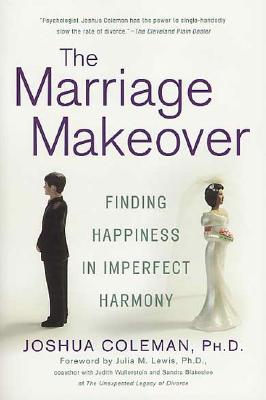 Coleman says that the constant cultural pressure to have it all—a great sex life, a wonderful family—has made people ashamed of their less-than-perfect relationships and question whether such unions are worth hanging on to. Feelings of dissatisfaction or disappointment are natural, but they can seem intolerable when standards are sky-high. “It’s a recent historical event that people expect to get so much from individual partners,” says Coleman, author of The Marriage Makeover: Finding Happiness in Imperfect Harmony
…] In fact, argue psychologists and marital advocates, there’s no such thing as true compatibility. “Marriage is a disagreement machine,” says Diane Sollee, founder of the Coalition for Marriage, Family and Couples Education. “All couples disagree about all the same things. We have a highly romanticized notion that if we were with the right person, we wouldn’t fight.” Discord springs eternal over money, kids, sex and leisure time, but psychologist John Gottman has shown that long-term, happily married couples disagree about these things just as much as couples who divorce.
“There is a mythology of ‘the wrong person,'” agrees Pittman. “All marriages are incompatible. All marriages are between people from different families, people who have a different view of things. The magic is to develop binocular vision, to see life through your partner’s eyes as well as through your own.”
The realization that we’re not going to get everything we want from a partner is not just sobering, it’s downright miserable. But it is also a necessary step in building a mature relationship, according to Real, who has written about the subject in How Can I Get Through to You? Closing the Intimacy Gap Between Men and Women
. “The paradox of intimacy is that our ability to stay close rests on our ability to tolerate solitude inside a relationship,” he says. “A central aspect of grown-up love is grief. All of us long for—and think we deserve—perfection.” We can hardly be blamed for striving for bliss and self-fulfillment in our romantic lives—our inalienable right to the pursuit of happiness is guaranteed in the first blueprint of [..modern] society.

This same respect for our own needs spurred the divorce-law reforms of the 1960s and 1970s. During that era, “The culture shifted to emphasize individual satisfaction, and marriage was part of that,” explains Paul Amato, who has followed more than 2,000 families for 20 years in a long-term study of marriage and divorce. Amato says that this shift did some good by freeing people from abusive and intolerable marriages. But it had an unintended side effect: encouraging people to abandon relationships that may be worth salvaging. In a society hell-bent on individual achievement and autonomy, working on a difficult relationship may get short shrift, says psychiatrist Peter Kramer, author of Should You Leave?

“So much of what we learn has to do with the self, the ego, rather than giving over the self to things like a relationship,” Kramer says. In our competitive world, we’re rewarded for our individual achievements rather than for how we help others. We value independence over cooperation, and sacrifices for values like loyalty and continuity seem foolish. “I think we get the divorce rate that we deserve as a culture.”
 The steadfast focus on our own potential may turn a partner into an accessory in the quest for self-actualization, says Maggie Robbins, a therapist in New York City. “We think that this person should reflect the beauty and perfection that is the inner me—or, more often, that this person should compensate for the yuckiness and mess that is the inner me,” says Robbins. “This is what makes you tell your wife, ‘Lose some weight—you’re making me look bad,’ not ‘Lose some weight, you’re at risk for diabetes.'” […
…] The urge to find a soul mate is not fueled just by notions of romantic manifest destiny. Trends in the workforce and in the media create a sense of limitless romantic possibility. According to Scott South, a demographer at SUNY-Albany, proximity to potential partners has a powerful effect on relationships. South and his colleagues found higher divorce rates among people living in communities or working in professions where they encounter lots of potential partners—people who match them in age, race and education level. “These results hold true not just for unhappy marriages but also for happy ones,” says South.
The temptations aren’t always living, breathing people. According to research by psychologists Sara Gutierres and Douglas Kenrick, both of Arizona State University, we find reasonably attractive people less appealing when we’ve just seen a hunk or a hottie—and we’re bombarded daily by images of gorgeous models and actors. When we watch Lord of the Rings, Viggo Mortensen’s kingly mien and Liv Tyler’s elfin charm can make our husbands and wives look all too schlumpy.
Kramer sees a similar pull in the narratives that surround us. “The number of stories that tell us about other lives we could lead—in magazine articles, television shows, books—has increased enormously. We have an enormous reservoir of possibilities,” says Kramer.
And these possibilities can drive us to despair. Too many choices have been shown to stymie consumers, and an array of alternative mates is no exception. In an era when marriages were difficult to dissolve, couples rated their marriages as more satisfying than do today’s couples, for whom divorce is a clear option, according to the National Opinion Research Center at the University of Chicago.
While we expect marriage to be “happily ever after,” the truth is that for most people, neither marriage nor divorce seem to have a decisive impact on happiness. Although Waite’s research shows that married people are happier than their single counterparts, other studies have found that after a couple years of marriage, people are just about as happy (or unhappy) as they were before settling down. And assuming that marriage will automatically provide contentment is itself a surefire recipe for misery.
“Marriage is not supposed to make you happy. It is supposed to make you married,” says Pittman. “When you are all the way in your marriage, you are free to do useful things, become a better person.” A committed relationship allows you to drop pretenses and seductions, expose your weaknesses, be yourself—and know that you will be loved, warts and all. “A real relationship is the collision of my humanity and yours, in all its joy and limitations,” says Real. “How partners handle that collision is what determines the quality of their relationship.”
Such a down-to-earth view of marriage is hardly romantic, but that doesn’t mean it’s not profound: An authentic relationship with another person, says Pittman, is “one of the first steps toward connecting with the human condition—which is necessary if you’re going to become fulfilled as a human being.” If we accept these humble terms, the quest for a soul mate might just be a noble pursuit after all.
School Related Issues: Guest apearance on 96.5 FM’s “Talking Life”
On Sunday 14th February I took part in a discussion on School related issues from preschool to Secondary school as a guest on Peter Jan etzki’s terrific “Talking Life” radio program on which I have been a regular guest over its nine year history. It was a great discussion with some interesting content and phone calls.

Peter Janetzki
A podcast of the entire show and recent shows can be found here or by clicking on the 96.5 logo.You can listen to the podcast from your browser or with iTunes, The show streams live every Sunday night from from 8-10pm Australian Eastern Standard Time (GMT+10) and you can listen by going to the 96.5 website @ 96five.com and clicking on the home page media player.
Asperger’s, PDD-NOS may no longer receive separate diagnoses in DSM-V
Recently, the American Psychiatric Association released some preliminary draft changes to the Diagnostic and  Statistical Manual of Mental Disorders (DSM-V) that may affect those diagnosed on the autism spectrum. There are several significant changes proposed that are now posted for public view, including: Asperger’s Syndrome and Pervasive Developmental Disorder-Not Otherwise Specified (PDD-NOS) would both be subsumed into the Autistic Disorder category, meaning that they would no longer be considered a separate diagnosis from autism, and the inclusion of potential co-morbidities with ADHD and other medical conditions.
The Autism Society is currently investigating the implications this change could have for the service and support systems currently in place for those with autism spectrum disorders. We will also be holding a town hall meeting at the Autism Society’s National Conference on Autism Spectrum Disorders in Dallas July 7–10, 2010 (learn more about the conference or register at www.autism-society.org/conference). You can also give your feedback on the changes at the Web site www.DSM5.org – look for the diagnoses on the autism spectrum under “Disorders Usually First Diagnosed in Infancy, Childhood, or Adolescence.”
These changes are not yet official – they are proposed for the update to the manual, which is expected to be published in May 2013. Whatever changes do go into effect surrounding autism spectrum disorders, the Autism Society will continue to work as we have always done to improve the lives of people across the entire spectrum of autism.
Aspergers and Ipods: Reaching into the Hearts & Minds of ASD Youth
I love using technology to engage and reach people in therapy. For me, it started with the relaxation cassette tape! I frequently use the internet,email, PowerPoint narratives and mp3’s and even Twitter and this Blog with clients. A Minneapolis center is experimenting with Ipods as an intervention tool with ASD youth. The wonderful book “Getting IT” is a must for anyone interested in using technology with children and youth in the areas of mental heath and disability. I thoroughly recommend it.
This story from Reuters

Sue Pederson knows that the teenage boys in her treatment program have trouble making conversation. They may not know what to talk about; or once they get started, when to shut up.
That’s one of the striking features of people with Asperger’s syndrome: they struggle with the social skills that come so naturally to others.
But about a year ago, Pederson, a psychologist, and her colleagues at the Fraser Child & Family Center in Minneapolis found a new way to reach these students — right through their headphones.
They’re using iPods, which play music and videos, to teach them how to fit in.
It may have started out as a form of entertainment, but Pederson says this kind of technology is turning into an unexpected boon for children and teenagers with special needs. The devices, it turns out, can be crammed with the kind of information they need to get through the day. While it’s still experimental, she said, “I think it’s going to spread like wildfire.”
With Asperger’s, a form of autism, people lack the inner voice that tells them what is, or is not, appropriate behavior. At Fraser, Pederson’s staff came up with the idea of programming iPods to act as an electronic substitute for that missing voice.
In this case, the staff helped students create a series of short videos and slide shows on how to behave in different social settings. Some are barely 30 seconds long: How to carry on a conversation (“Let the other person talk AND change the topic…”); how to respect other people’s boundaries, and think before they speak (“Use your filter!”)
In the world of special education, these scripts are known as “social stories,” used to teach basic social skills. “It’s a mental checklist for things to think about when you’re interacting with other people,” explained Mandy Henderson, who works with Fraser’s Asperger’s program.
As part of the Fraser project, the students can transfer the videos onto their iPods, and replay them over and over, to drive the lessons home.
Jack O’Riley, of Eagan, said it’s just what his 15-year-old son P.J. needed. “This really hit the mark,” he said. Like many kids with Asperger’s, P.J. is baffled by the normal rhythms of social interaction: in conversation, he may blurt out too much information, or say nothing at all, his father says.
At the same time, P.J. is easily distracted and has a hard time staying on task, another common trait of Asperger’s. For years, O’Riley posted laminated signs around the house to remind his son how to get through the day — take a shower, brush his teeth, get ready for school.
Now, with the videos developed at Fraser, “we can plug this stuff into his little ‘extended memory,'” O’Riley said. P.J. is building a library of videos on his iPhone, so they’ll be at his fingertips. “He can pull up a topic on his ‘to do list’ and find everything he needs to know,” his father said.
Sixteen-year-old Myles Lund of Lakeville, another student in the Fraser program, said he’s learned to use the iPod to help control his emotions by playing his favorite music. “It helps take my mind off of it,” he said. At the same time, Myles, who says he rarely initiates a conversation, agrees the videos can help in social situations. “I just pull out my iPod and go through a list of things to talk about.”
The staffers at Fraser came up with the idea after they noticed how students with Asperger’s would use iPods as a calming device, to block out noise or other distractions. “We just started thinking how else can we use this technology,” said Pederson. They got a $7,500 private grant to buy the iPods and other equipment, and started experimenting.
Jim Ball, an adviser to the Autism Society of America, said similar projects are popping up around the country. Some people are designing adaptations for smart phones, Palm Pilots and other devices to fill the same need, he said.
“This is just another way of prompting kids when they’re in situations when they don’t know what to do,” said Ball, who works with autistic children in New Jersey. “The technology gives them the ability to be independent.”
Ball noted the devices could work especially well with Asperger’s kids, because they’re often far more comfortable with electronic gadgets than they are with people. “It’s a machine; they don’t have to react to it, they don’t have to understand it,” Ball said. “They just need to know how to work it. And they do.”
Another advantage, especially for teenagers, is that they won’t stand out using this kind of device, noted Pederson. “If you walk into a family reunion and you’ve got a teenager with an iPod, nobody bats an eye,” she said.
Barbara Luskin, a psychologist with the Autism Society of Minnesota, agrees. “Adolescents with Asperger’s, like all adolescents, don’t want to look different,” she said. If the device just blends in with everyone else’s, she said, “you’re much more likely to use it.”
So far, there appear to be few commercial products aimed at this market, but that may be changing. The Conover Co., a special-education software company in Appleton, Wis., recently adapted its “Functional Skills System” for the iPod Touch. But the package, which sells for $3,500, is mainly marketed to schools and other organizations.
Fraser, meanwhile, is hoping to get another grant to expand its iPod program.
Ball, of the Autism Society, predicts this is just the beginning. “I think that technology is limitless in its potential for working with kids,” he said.

40 Superb Psychology Blogs from Psyblog UK
I’ve had so may retweets of this find from Psyblog at www.spring.org.uk that I’ve decided to repost it here. This is a great list. Enjoy!

Forty of the best psychology blogs, chosen to give you a broad sweep of the most interesting content being produced online right now.
The list is split into three sections: first are more general psychological blogs, followed by those with an academic slant, followed by condition specific and patient perspective blogs. Other than that the blogs are presented in no particular order:
- MindHacks: links to psychological goodness from all around the web.
- Cognitive Daily: in-depth coverage of cognitive psychology research.
- The Last Psychiatrist: thoughtful, iconoclastic perspective from a practising psychiatrist.
- Channel N: brain and behaviour videos.
- BPS Research Digest: accessibly covers new psychological research.
- Encephalon: neuroscience/psychology ‘blog carnival’.
- Neurophilosophy: about molecules, minds and everything inbetween.
- Neuromarketing: brain science in marketing and sales.
- PsychCentral Blog: team blog, focusing more on clinical topics: depression, anxiety etc..
- The Situationist: links to articles on social psychology.
- We’re Only Human: journalist Wray Herbert writes about the quirks of human nature.
- Psychology Today Blogs: ‘essential reads’ from Psychology Today’s stable of bloggers.
- The Frontal Cortex: by author and journalist Jonah Lehrer.
- All In The Mind Blog: companion to good Australian radio show covering mind matters.
- Frontier Psychiatrist: anonymous London-based psychiatrist critical of the profession.
- Neuronarrative: psychology with a public health slant.
- Jena Pincott: science of love, sex and attraction.
- Research Blogging: posts collected from variety of blogs but all peer-reviewed research.
- In the News: forensic psychologist Karen Franklin on the intersection between psychology and law.
- The Mouse Trap: musings on cognitive and developmental psychology.
- The Trouble with Spikol: mental health policy issues discussed by writer Liz Spikol.
- Bad Science: Covers more than psychology but Dr Ben Goldacre is such good value we’ll let him off.
- PsyBlog: In case you didn’t notice, the blog you’re reading right now!
- Dr Petra Boynton: sex educator and academic exposes media misrepresentations of science.
- Babel’s Dawn: exploring the origins of language.
- The Neurocritic: anonymous, critical, mischievous.
- Advances in the History of Psychology: it’s all in the title.
- Deric Bounds’ MindBlog: biological view of the brain from an Emeritus Professor.
- Brain Stimulant: neurotechnology methods of brain stimulation.
- Social Psychology Eye: written by contributors to the journal Social and Personality Psychology Compass.
- Child Psychology Research Blog: by clinical child psychologist, an expert on mood disorders.
- Panic!: writer who’s been dealing with panic disorder for 20 years.
- The Tangled Neuron: layperson reports on memory loss, Alzheimer’s & dementia.
- Furious Seasons: journalist with bipolar disorder who rattles the cage of Big Pharma.
- Beyond Blue: author provides guidance on how to get through depression.
- Walking the Black Dog: one person’s battle with ‘the black dog’.
- Postpartum Progress: advocate for women, Katherine Stone, on postpartum mental health problems.
- The Secret Life of a Manic Depressive: Seaneen is a twenty-three year old Irish girl writing about her life.
- Autism Blog: autism research described by Lisa Jo Rudy, who has first-hand experience of the condition.
- The Reality of Anxiety: Aimee, who suffers from social anxiety, promoting understanding of the condition
General:
More academic:
Condition specific/patient perspective blogs:

About Peter
Peter Brown BHMS (Hons) MPsychClin MAPS
I’m a Clinical Psychologist and have a private practice and consultancy in Brisbane Australia. I have 24 years experience in child, adult and family clinical psychology. I have a wonderful wife and three kids.
I am co-founder of Christian Wholeness Counselling Services.
I like researching issues of the brain & mind, reading and seeking out new books and resources for myself and my clients. I thought that others might be interested in some of what I have found also, hence this blog…

Subscribe to My Blog Posts & Updates
-

Blog Surfer
Alphainventions


Recent Comments


 Peter H Brown Clinical Psychologist