An Attractive Lady Makes The Boys Go Gaga:Testosterone And Risk Taking Behavior
Read The Original Research Paper HERE (Free PDF-internal link)
From UNIS : University of Queensland research suggests that the presence of a beautiful woman can lead men to throw caution to the wind. Professor Bill von Hippel and doctoral student Richard Ronay, from UQ’s School of Psychology, have been examining the links between physical risk-taking in young men and the presence of attractive women.
To examine this issue, they conducted a field experiment with young male skateboarders and found the skateboarders took more risks at the skate park when they were observed by an attractive female experimenter than when they were observed by a male experimenter.
This increased risk-taking led to more successes but also more crash landings in front of the female observer.
Click image to view reviews
Professor von Hippel and Mr Ronay also measured testosterone from participants’ saliva, and found that the skateboarders’ increased risk taking was caused by elevated testosterone levels brought about by the presence of the attractive female.
According to the researchers these findings suggest an evolutionary basis for male risk-taking.
“Historically, men have competed with each other for access to fertile women and the winners of those competitions are the ones who pass on their genes to future generations. Risk-taking would have been inherent in such a competitive mating strategy,” said Professor von Hippel.
“Our results suggest that displays of physical risk-taking might best be understood as hormonally fuelled advertisements of health and vigour aimed at potential mates, and signals of strength, fitness, and daring intended to intimidate potential rivals.”
The researchers point out that although evolution may have favoured males who engage in risky behaviour to attract females, such behaviours can also be detrimental in terms of survival.
“Other instances of physical risk-taking that contribute to men’s early mortality, such as dangerous driving and physical aggression, might also be influenced by increases in testosterone brought about by the presence of attractive women.”
Read The Original Research Paper HERE (Free PDF-internal link)

A Tired Woman’s Guide to Passionate Sex: Research Shows 6 Step Program To Be Effective
 http://www.medicalnewstoday.com
According to the Journal of Sexual Medicine, people who engage in regular sexual activity gain several health benefits, such as longer lives, healthier hearts, lower blood pressure, and lower risk of breast cancer. However, approximately 33 percent of women may not receive these benefits due to low sexual desire. Also, the marriages of women with low sexual desire may also be at risk, given a recent statistic that 25 percent of divorce is due to sexual dissatisfaction.
Some doctors are prescribing testosterone patches for women with low sexual desire. However, research shows that testosterone patches might increase the risk of breast cancer when used for just a year. Researchers are currently testing a new drug, flibanserin, which was developed as an antidepressant and affects neurotransmitters in the brain, to treat women with low sexual desire. However, experts are concerned about the side effects of this possible treatment. Now, a University of Missouri researcher has found evidence that a low-cost, risk-free psychological treatment is effective and may be a better alternative to drugs that have adverse side effects.
 “Low sexual desire is the number one problem women bring to sex therapists,” said Laurie Mintz, associate professor of educational, school and counseling psychology in the MU College of Education. “Drugs to treat low sexual desire may take the focus away from the most common culprits of diminished desire in women, including lack of information on how our own bodies work, body image issues, relationship issues and a stressful lifestyle. Indeed, research demonstrates that relationship issues are far more important in predicting women’s sexual desire than are hormone levels. Before women seek medical treatments, they should consider psychological treatment.”
Mintz has authored a book, A Tired Woman’s Guide to Passionate Sex: Reclaim Your Desire and Reignite Your Relationship
In a study demonstrating the effectiveness of her treatment, Mintz recruited married women between the ages of 28 to 65, who said they were uninterested in sexual activity. All the women were employed and a majority had children. All participants completed an online survey that measured sexual desire and sexual functioning. Then half of the participants were selected randomly to read her book and perform the exercises outlined in her book. After six weeks, they were emailed the same survey again. The control group did not read the book. Mintz found that the intervention group who read the book made significant gains in sexual desire and sexual functioning, compared to the control group who did not read the book. On average, women who read the book increased their level of sexual desire by almost 30 percent.
“This finding is especially exciting because low sexual desire among women has been not only the most common, but the least successfully treated of all the sexual problems brought to therapists” Mintz said. “Also, although other books have been written on the topic, this is the first to be tested for its effectiveness. In addition, unlike medical treatments such as testosterone, there are certainly no known negative medical side effects associated with the treatment strategies in my book.”
Mintz will present her findings at the American Association of Sexuality Educators, Counselors and Therapists (AASECT) annual conference.
Source:
Laurie Mintz, A Tired Woman’s Guide to Passionate Sex: Reclaim Your Desire and Reignite Your Relationship
University of Missouri-Columbia
Love the One You’re With: The Pitfalls of Seeking a “Soul Mate”
Has the quest for that one perfect partner, the never-ending search for the ideal done us more harm than good? There is growing evidence that an idealistic search for love can hinder the enjoyment and fulfilment of what you already have. The following is excerpted from Polly Schulman’s article at Psychology Today (http://psychologytoday.com ).
The divorce rate has stayed constant at nearly 50 percent for the last two decades. The ease with which we enter and dissolve unions makes marriage seem like a prime-time spectator sport, whether it’s Britney Spears in Vegas or bimbos chasing after the Bachelor.
Long live the new marriage! We once prized the institution for the practical pairing of a cash-producing father and a home-building mother. Now we want it all—a partner who reflects our taste and status, who sees us for who we are, who loves us for all the “right” reasons, who helps us become the person we want to be. We’ve done away with a rigid social order, adopting instead an even more onerous obligation: the mandate to find a perfect match. Anything short of this ideal prompts us to ask: Is this all there is? Am I as happy as I should be? Could there be somebody out there who’s better for me? As often as not, we answer yes to that last question and fall victim to our own great expectations.
 That somebody is, of course, our soul mate, the man or woman who will counter our weaknesses, amplify our strengths and provide the unflagging support and respect that is the essence of a contemporary relationship. The reality is that few marriages or partnerships consistently live up to this ideal. The result is a commitment limbo, in which we care deeply for our partner but keep one stealthy foot out the door of our hearts. In so doing, we subject the relationship to constant review: Would I be happier, smarter, a better person with someone else? It’s a painful modern quandary. “Nothing has produced more unhappiness than the concept of the soul mate,” says Atlanta psychiatrist Frank Pittman [….
… ] Many of us either dodge the decision to commit or commit without fully relinquishing the right to keep looking—opting for an arrangement psychotherapist Terrence Real terms “stable ambiguity.” “You park on the border of the relationship, so you’re in it but not of it,” he says. There are a million ways to do that: You can be in a relationship but not be sure it’s really the right one, have an eye open for a better deal or something on the side, choose someone impossible or far away.
Yet commitment and marriage offer real physical and financial rewards. Touting the benefits of marriage may sound like conservative policy rhetoric, but nonpartisan sociological research backs it up: Committed partners have it all over singles, at least on average. Married people are more financially stable, according to Linda Waite, a sociologist at the University of Chicago and a coauthor of The Case for Marriage: Why Married People Are Happier, Healthier, and Better Off Financially
The benefits go beyond the piggy bank. Married people, particularly men, tend to live longer than people who aren’t married. Couples also live better: When people expect to stay together, says Waite, they pool their resources, increasing their individual standard of living. They also pool their expertise—in cooking, say, or financial management. In general, women improve men’s health by putting a stop to stupid bachelor tricks and bugging their husbands to exercise and eat their vegetables. Plus, people who aren’t comparing their partners to someone else in bed have less trouble performing and are more emotionally satisfied with sex. The relationship doesn’t have to be wonderful for life to get better, says Waite: The statistics hold true for mediocre marriages as well as for passionate ones.
The pragmatic benefits of partnership used to be foremost in our minds. The idea of marriage as a vehicle for self-fulfillment and happiness is relatively new, says Paul Amato, professor of sociology, demography and family studies at Penn State University. Surveys of high school and college students 50 or 60 years ago found that most wanted to get married in order to have children or own a home. Now, most report that they plan to get married for love. This increased emphasis on emotional fulfillment within marriage leaves couples ill-prepared for the realities they will probably face.
Because the early phase of a relationship is marked by excitement and idealization, “many romantic, passionate couples expect to have that excitement forever,” says Barry McCarthy, a clinical psychologist and coauthor—with his wife, Emily McCarthy—of Getting It Right the First Time: Creating a Healthy Marriage
Flagging passion is often interpreted as the death knell of a relationship. You begin to wonder whether you’re really right for each other after all. You’re comfortable together, but you don’t really connect the way you used to. Wouldn’t it be more honest—and braver—to just admit that it’s not working and call it off? “People are made to feel that remaining in a marriage that doesn’t make you blissfully happy is an act of existential cowardice,” says Joshua Coleman, a San Francisco psychologist.
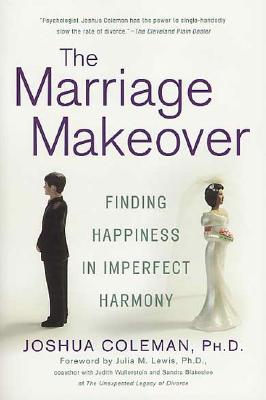 Coleman says that the constant cultural pressure to have it all—a great sex life, a wonderful family—has made people ashamed of their less-than-perfect relationships and question whether such unions are worth hanging on to. Feelings of dissatisfaction or disappointment are natural, but they can seem intolerable when standards are sky-high. “It’s a recent historical event that people expect to get so much from individual partners,” says Coleman, author of The Marriage Makeover: Finding Happiness in Imperfect Harmony
…] In fact, argue psychologists and marital advocates, there’s no such thing as true compatibility. “Marriage is a disagreement machine,” says Diane Sollee, founder of the Coalition for Marriage, Family and Couples Education. “All couples disagree about all the same things. We have a highly romanticized notion that if we were with the right person, we wouldn’t fight.” Discord springs eternal over money, kids, sex and leisure time, but psychologist John Gottman has shown that long-term, happily married couples disagree about these things just as much as couples who divorce.
“There is a mythology of ‘the wrong person,'” agrees Pittman. “All marriages are incompatible. All marriages are between people from different families, people who have a different view of things. The magic is to develop binocular vision, to see life through your partner’s eyes as well as through your own.”
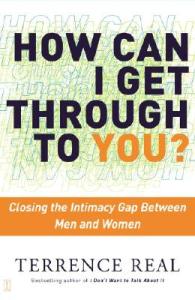
The realization that we’re not going to get everything we want from a partner is not just sobering, it’s downright miserable. But it is also a necessary step in building a mature relationship, according to Real, who has written about the subject in How Can I Get Through to You? Closing the Intimacy Gap Between Men and Women
. “The paradox of intimacy is that our ability to stay close rests on our ability to tolerate solitude inside a relationship,” he says. “A central aspect of grown-up love is grief. All of us long for—and think we deserve—perfection.” We can hardly be blamed for striving for bliss and self-fulfillment in our romantic lives—our inalienable right to the pursuit of happiness is guaranteed in the first blueprint of [..modern] society.

This same respect for our own needs spurred the divorce-law reforms of the 1960s and 1970s. During that era, “The culture shifted to emphasize individual satisfaction, and marriage was part of that,” explains Paul Amato, who has followed more than 2,000 families for 20 years in a long-term study of marriage and divorce. Amato says that this shift did some good by freeing people from abusive and intolerable marriages. But it had an unintended side effect: encouraging people to abandon relationships that may be worth salvaging. In a society hell-bent on individual achievement and autonomy, working on a difficult relationship may get short shrift, says psychiatrist Peter Kramer, author of Should You Leave?

“So much of what we learn has to do with the self, the ego, rather than giving over the self to things like a relationship,” Kramer says. In our competitive world, we’re rewarded for our individual achievements rather than for how we help others. We value independence over cooperation, and sacrifices for values like loyalty and continuity seem foolish. “I think we get the divorce rate that we deserve as a culture.”
 The steadfast focus on our own potential may turn a partner into an accessory in the quest for self-actualization, says Maggie Robbins, a therapist in New York City. “We think that this person should reflect the beauty and perfection that is the inner me—or, more often, that this person should compensate for the yuckiness and mess that is the inner me,” says Robbins. “This is what makes you tell your wife, ‘Lose some weight—you’re making me look bad,’ not ‘Lose some weight, you’re at risk for diabetes.'” […
…] The urge to find a soul mate is not fueled just by notions of romantic manifest destiny. Trends in the workforce and in the media create a sense of limitless romantic possibility. According to Scott South, a demographer at SUNY-Albany, proximity to potential partners has a powerful effect on relationships. South and his colleagues found higher divorce rates among people living in communities or working in professions where they encounter lots of potential partners—people who match them in age, race and education level. “These results hold true not just for unhappy marriages but also for happy ones,” says South.
The temptations aren’t always living, breathing people. According to research by psychologists Sara Gutierres and Douglas Kenrick, both of Arizona State University, we find reasonably attractive people less appealing when we’ve just seen a hunk or a hottie—and we’re bombarded daily by images of gorgeous models and actors. When we watch Lord of the Rings, Viggo Mortensen’s kingly mien and Liv Tyler’s elfin charm can make our husbands and wives look all too schlumpy.
Kramer sees a similar pull in the narratives that surround us. “The number of stories that tell us about other lives we could lead—in magazine articles, television shows, books—has increased enormously. We have an enormous reservoir of possibilities,” says Kramer.
And these possibilities can drive us to despair. Too many choices have been shown to stymie consumers, and an array of alternative mates is no exception. In an era when marriages were difficult to dissolve, couples rated their marriages as more satisfying than do today’s couples, for whom divorce is a clear option, according to the National Opinion Research Center at the University of Chicago.
While we expect marriage to be “happily ever after,” the truth is that for most people, neither marriage nor divorce seem to have a decisive impact on happiness. Although Waite’s research shows that married people are happier than their single counterparts, other studies have found that after a couple years of marriage, people are just about as happy (or unhappy) as they were before settling down. And assuming that marriage will automatically provide contentment is itself a surefire recipe for misery.
“Marriage is not supposed to make you happy. It is supposed to make you married,” says Pittman. “When you are all the way in your marriage, you are free to do useful things, become a better person.” A committed relationship allows you to drop pretenses and seductions, expose your weaknesses, be yourself—and know that you will be loved, warts and all. “A real relationship is the collision of my humanity and yours, in all its joy and limitations,” says Real. “How partners handle that collision is what determines the quality of their relationship.”
Such a down-to-earth view of marriage is hardly romantic, but that doesn’t mean it’s not profound: An authentic relationship with another person, says Pittman, is “one of the first steps toward connecting with the human condition—which is necessary if you’re going to become fulfilled as a human being.” If we accept these humble terms, the quest for a soul mate might just be a noble pursuit after all.
Sex: Is that all that men want?…NOPE!
A study from the Kinsey Institute strongly challenges the myth that men value sex more highly than other things. The findings relating to what men value and how they rate their sense of masculinity are robust across age, nationality and erectile function. Diana KirschnerPhD. has summarised the findings on the Psychology Today site (http://psychologytoday.com ) as follows:
View The Original Research Paper HERE (Free PDF -internal link)
“(The) data … came out of an eight country random survey of 27,839 men ages 20-752. Using a questionnaire called the Men’s Attitudes to Life Events and Sexuality(MALES), the authors found men’s attitudes towards two key areas, masculinity and quality of life, differed markedly from the cultural stereotypes of guys as shallow creatures who are driven primarily by lust.
In the masculinity section of the study and across all countries, being seen as a “man of honor” was the single highest ideal for men, far more important than “being physically attractive,” “having success with women,” or “having an active sex life.” Together with “being in control of your own life” these two attributes accounted for about 60% of the responses. These findings held across all nationalities and across all age groups.
In the MALES section called Quality of Life, men were asked to rate the following seven
• Being in good health
• Satisfying sex life
• Harmonious family life
• Good relationship with partner/wife
• Enjoying life to the fullest
• Satisfying
• Having a nice home
Again, the findings were quite surprising. The top three answers were: “being in good health”; “a harmonious family life”; and “good relationship with partner/wife.” “A satisfying sex life” was last, tied with “a nice home.” While there was definitely variability in the top answersdepending on country, “a satisfying sex life” always came last. Even more astonishing were the findings in regard to age and marital/partner status. Younger men, age 20-39 still rated the same three goals as most important. When comparing single vs. married men, the only difference was that singles rated “enjoying live to the fullest” in second placealong with “a harmonious family life”-while “a good relationship with their partner” was ranked fourth. Again “a satisfying sex life” was rated last.
Amazingly enough men who had erectile dysfunction (ED) as well as those who did not, still rated “a satisfying sex life” the same way-dead last. Understandably, men with ED reported having a less satisfying sexual life than those without ED.”
View The Original Research Paper HERE (Free PDF -internal link)
Here’s the abstract:

Sex God: Exploring the Endless Connections Between Sexuality and Spirituality
Introduction. The Men’s Attitudes to Life Events and Sexuality (MALES) study assessed the prevalence of erectile dysfunction, and examined men’s attitudes and behavior in relation to this dysfunction.
Aim. To report on the attitudes of men, with and without self-reported erectile dysfunction, concerning masculine identity and quality of life.
Methods. The MALES Phase I study included 27,839 randomly selected men (aged 20–75 years) from eight countries (United States, United Kingdom, Germany, France, Italy, Spain, Mexico, and Brazil) who responded to a standardized computer-assisted telephone interview.Main Outcome Measure. Perceptions of masculinity and quality of life in men with and without erectile dysfunction.
Results. Men’s perceptions of masculinity differed substantially from stereotypes in the literature. Men reported that being seen as honorable, self-reliant, and respected by friends were important determinants of self-perceived masculinity. In contrast, factors stereotypically associated with masculinity, such as being physically attractive,sexually active, and successful with women, were deemed to be less important to men’s sense of masculinity. These findings appeared consistently across all nationalities and all age groups studied. For quality of life, factors that men deemed of significant importance included good health, harmonious family life, and a good relationship with their wife/partner. Such factors had significantly greater importance to quality of life than concerns such as having a good job, having a nice home, living life to the full, or having a satisfying sex life. Of note, rankings of constructs of masculinity and quality of life did not meaningfully differ in men with or without erectile dysfunction, and men with erectile dysfunction who did or did not seek treatment for their sexual dysfunction.
Conclusions. The present findings highlight the significance of partnered relationships and interpersonal factors in the management of erectile dysfunction, and empirically challenge a number of widely held stereotypes concerning men, masculinity, sex, and quality of life.
Sand MS, Fisher W, Rosen R, Heiman J, and Eardley I. Erectile dysfunction and constructs of masculinity and quality of life in the multinational Men’s Attitudes to Life Events and Sexuality (MALES) study. J Sex Med 2008;5:583–594.Key Words. Erectile Dysfunction; Quality of Life; Masculinity; Gender Identity
Faking Orgasm: Women AND Men do it! WHY?
Chances are that if you’ve been in a relationship, and you’re a woman, you’ve probably faked an orgasm. But did you know that men fake them too?
The research that brings us this important sexual discovery was conducted at the University of Kansas on 180 male and 101 female college students. The students completed an anonymous survey about their sexual habits.
Not surprisingly, some of the college students were still virgins — 15 percent of men and 32 percent of women surveyed had not yet had intercourse.
Of the students who had had sex, nearly 30 percent of men reported faking an orgasm, compared to 67 percent of women. Some of the participants admitted they also faked orgasm not only during regular sex, but during oral sex, manual stimulation and phone sex as well. The 67 percent number is comparable to past research, that has reported a similar percentage among women.
So why do we do it? Why fake an orgasm during intimacy, a time when you’d think we be putting our social masks aside
The researchers asked these college students that question, and the most frequently reported reasons were:
* Orgasm was unlikely. — Sometimes it’s just not going to happen, and although this seems to be a more common issue amongst women, it can also happen with men. Especially if alcohol is involved.
* They wanted sex to end. — Closely linked to an orgasm is unlikely, sometimes a partner will want to keep having sex until their partner finishes. A fake orgasm brings sex to an end quickly.
* They wanted to avoid negative consequences. — Most people don’t want to hurt another person’s feelings, and that’s no more the case than with our romantic partner. A fake orgasm avoids the negative consequences of having another person feel badly that they didn’t perform “well enough” to bring the other person to climax.
* They wanted to please their partner. — Faking an orgasm shows that you care about your partner’s feelings of performance and self-esteem. Or so said the people who filled out the survey.
Why would an orgasm be unlikely or why would one want sex to end more quickly? Well, sometimes we’re not always in the same place sexually as our partner. So we agree to sex because we feel guilty or to put an end to the nagging. Or perhaps we agreed to have sex to help relieve stress, only to find it didn’t quite help in the way we had hoped. An orgasm is unlikely if your partner is stressed, not turned on, feels tired, or is put off by you or the relationship in some way. A faked orgasm during such times helps end the sex more quickly, without making your partner feel bad.
The researchers found that the responses suggested a sexual “script” that most of us follow, or would like to follow. Boy meets girl, girl takes boy to bed, girl has an orgasm before the boy. And the boy is response for the girl’s orgasm (although not as much, vice-a-versa). Faking an orgasm is a predictable response to this set of expectations, to ensure the “script” goes as smoothly as possible.
Reference:
Muehlenhard CL. & Shippee SK. (2009). Men’s and Women’s Reports of Pretending Orgasm. J Sex Res, 5, 1-16.
Related articles by Zemanta
- Cerebral Orgasm Dr. Shriniwas Kashalikar (slideshare.net)
- Avoid These 7 Mistakes In Bed (slideshare.net)
![Reblog this post [with Zemanta]](https://i0.wp.com/img.zemanta.com/reblog_e.png)
Watch What They’re Watching:Children Viewing Adult-targeted TV May Become Sexually Active Earlier In Life
Early onset of sexual activity among teens may relate to the amount of adult content children were exposed to during their childhood, according to a new study released by Children’s Hospital Boston. Based on a longitudinal study tracking children from age six to eighteen, researchers found that the younger children are exposed to content intended for adults in television and movies, the earlier they become sexually active during adolescence. The findings are being presented at the Pediatric Academic Societies meetings on Monday, May 4 in Baltimore.
“Television and movies are among the leading sources of information about sex and relationships for adolescents,” says Hernan Delgado, MD, fellow in the Division of Adolescent/Young Adult Medicine at Children’s Hospital Boston and lead author of the study. “Our research shows that their sexual attitudes and expectations are influenced much earlier in life.”
The study consisted of 754 participants, 365 males and 389 females, who were tracked during two stages in life: first during childhood, and again five years later when their ages ranged from 12 to 18-years-old. At each stage, the television programs and movies viewed, and the amount of time spent watching them over a sample weekday and weekend day were logged. The program titles were used to determine what content was intended for adults. The participants’ onset of sexual activity was then tracked during the second stage.
According to the findings, when the youngest children in the sample–ages 6 to 8-years-old–were exposed to adult-targeted television and movies, they were more likely to have sex earlier when compared those who watched less adult-targeted content. The study found that for every hour the youngest group of children watched adult-targeted content over the two sample days, their chances of having sex during early adolescence increased by 33 percent. Meanwhile, the reverse was not found to be true that is, becoming sexually active in adolescence did not subsequently increase youth’s viewing of adult-targeted television and movies.
“Adult entertainment often deals with issues and challenges that adults face, including the complexities of sexual relationships. Children have neither the life experience nor the brain development to fully differentiate between a reality they are moving toward and a fiction meant solely to entertain,” adds David Bickham, PhD, staff scientist in the Center on Media and Child Health and co-author of the study. “Children learn from media, and when they watch media with sexual references and innuendos, our research suggests they are more likely to engage in sexual activity earlier in life.”
The researchers encourage parents to follow current American Academy of Pediatrics viewing guidelines such as no television in the bedroom, no more than 1 to 2 hours of screen time a day, and to co-view television programs and have an open dialogue about its content with your children. They also suggest that–while the results demonstrate a longitudinal relationship–more research needs be done to understand how media influences children’s growing awareness of human relationships and sexual behavior.
“Adolescent sexual behaviors may be influenced at a younger age, but this is just one area we studied,” adds Dr. Delgado. “We showed how adult media impacts children into adolescence, yet there are a number of other themes in adult television shows and movies, like violence and language, whose influence also needs to be tracked from childhood to adolescence.”
The study was funded by support by grants from the Maternal and Child Health Bureau and the Center on Media and Child Health.
Children’s Hospital Boston is home to the world’s largest research enterprise based at a pediatric medical center, where its discoveries have benefited both children and adults since 1869. More than 500 scientists, including eight members of the National Academy of Sciences, 11 members of the Institute of Medicine and 13 members of the Howard Hughes Medical Institute comprise Children’s research community. Founded as a 20-bed hospital for children, Children’s Hospital Boston today is a 397-bed comprehensive center for pediatric and adolescent health care grounded in the values of excellence in patient care and sensitivity to the complex needs and diversity of children and families. Children’s also is the primary pediatric teaching affiliate of Harvard Medical School.
Source: MedicalNewsToday.com, Children’s Hospital Boston//
Don’t Just Sit There..Do Something: Why Men Prefer Direct Pick-Up Lines
(Reposted from the excellent psyblog at spring.org.uk )

Both sexes know men prefer a direct approach from woman, but is it just because men can’t read the signs?
Men and women’s attitudes to relationships have become remarkably similar — when dating women are now much more likely to make the first move.
It will come as no surprise that research finds men prefer this first move to be direct. But do men and women agree on what a direct approach is and why such directness is necessary in the first place?
These questions are addressed in a new study published recently in the journal Personality and Individual Differences (Wade et al., 2009). Forty women aged between 19 and 22 were asked to list the types of opening lines they might use to signal their interest in dating a man.
Researchers sorted these into 10 categories, then 40 men and women rated them in order of perceived directness. Here are the 10 categories (with examples) from most to least direct:
- Directly ask out on a date: Want to go get dinner?
- Ask if single: Do you have a girlfriend?
- Give out phone number, or ask for a call: You should call me.
- Give a compliment: I like your hair.
- Ask about shared interests: Do you watch The Wire?
- Indirectly hint at a date: What are you doing later this weekend?
- Say something funny/sexual humour: Wanna make out?
- Suggest familiarity: Have we met before?
- Personal interest questions: How was your weekend?
- Subtle hello: Hey, what’s your name?
Then men were asked which lines they thought would be most effective for women to use on them. They pretty much put the chat-up lines in order of directness, with the most direct also perceived as the most effective.
When women were asked to do the same they produced a similar list with one exception. Women didn’t rate as highly giving out phone numbers or asking for a call. Overall, though, women clearly understand that men prefer the direct approach.
The only surprise is the low ranking of funny or sexual humour. Men don’t seem to appreciate the lewd come-ons suggested by gender stereotypes. This relatively low rating for a jokey approach is another thing shared by both sexes. Previous work by Bale et al. (2006) found that women weren’t particularly impressed with men trying to be funny, despite what we are often told. It seems opening lines are a serious business for both sexes.
Ambiguous signals
The interesting question, although it may seem easy to answer, is why do men prefer a direct approach? Two obvious answers are men’s purported inability to read body language or an assumed distaste for reading situational subtleties (in other words: too stupid or can’t be bothered).
But researchers in Germany provide us with evidence for an alternative explanation. Grammer et al. (2000) videotaped opposite sex pairs meeting for the first time to catch the nuances of body language in the first 10 minutes of an interaction. Afterwards women were asked how much interest they had in the man they’d been talking to. The researchers revealed two counter-intuitive results:
- In the first minute women behaved no differently to men they fancied than those they didn’t. They sent many positive nonverbal signals to all the men and hardly any negative signals.
- It is only between the 4th and 10th minute that any correlation was seen between an increased sending of positive nonverbal behaviours and wanting to date the man. But even then the difference was only between some positive signals and slightly more positive signals. Again negative signals were very rare.
The reason men prefer a direct approach becomes clearer. Women may think they are sending out all the right nonverbal signals and may blame men for failing to pick up on them. But from a man’s perspective there may often be little to pick up on because women, being polite, are always sending positive nonverbal signals.
While it’s not good practice to generalise too much from one relatively small study of 45 participants whose age

At Amazon.com
ranged from 18 to 23, the results accord with what men say anecdotally: they often can’t tell if women are interested or not because the signals are too ambiguous.
So subtlety is out and it’s back to the age-old problem for both men and women: who has the guts to risk rejection with the direct approach?
Related articles by Zemanta
- The ‘Male Brain’: So that explains it (cnn.com)
- ‘To Thine Own Self be True’ for Better Romance (grantlawrence.blogspot.com)
About Peter
Peter Brown BHMS (Hons) MPsychClin MAPS
I’m a Clinical Psychologist and have a private practice and consultancy in Brisbane Australia. I have 24 years experience in child, adult and family clinical psychology. I have a wonderful wife and three kids.
I am co-founder of Christian Wholeness Counselling Services.
I like researching issues of the brain & mind, reading and seeking out new books and resources for myself and my clients. I thought that others might be interested in some of what I have found also, hence this blog…

Subscribe to My Blog Posts & Updates
-

Blog Surfer
Alphainventions


Recent Comments


 Peter H Brown Clinical Psychologist