Social Anxiety: Another Side To The Struggle
Read Original Research Paper HERE (Free PDF internal link)
From ScienceDaily (Mar. 19, 2010) — When you think of people suffering from social anxiety, you probably characterize them as shy, inhibitive and submissive. However, new research from psychologists Todd Kashdan and Patrick McKnight at George Mason University suggests that there is a subset of socially anxious people who act out in aggressive, risky ways — and that their behavior patterns are often misunderstood.
In the new study published in Current Directions in Psychological Science, Kashdan and McKnight found evidence that a subset of adults diagnosed with Social Anxiety Disorder were prone to behaviors such as violence, substance abuse, unprotected sex and other risk-prone actions. These actions caused positive experiences in the short-term, yet detracted from their quality of life in the longer-term.
“We often miss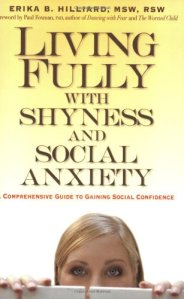 the underlying problems of people around us. Parents and teachers might think their kid is a bully, acts out and is a behavior problem because they have a conduct disorder or antisocial tendencies,” says Kashdan. “However, sometimes when we dive into the motive for their actions, we will find that they show extreme social anxiety and extreme fears of being judged. If social anxiety was the reason for their behavior, this would suggest an entirely different intervention.”
Kashdan and McKnight suggest that looking at the underlying cause of extreme behavior can help us understand the way people interact within society.
“In the adult world, the same can be said for managers, co-workers, romantic partners and friends. It is easy to misunderstand why people are behaving the way we do and far too often we assume that the aggressive, impulsive behaviors are the problem. What we are finding is that for a large minority of people, social anxiety underlies the problem,” says Kashdan.
The researchers suggest that further studies of this subset group can help psychologists better understand and treat the behaviors. “Recent laboratory experiments suggest that people can be trained to enhance their self-control capacities and thus better inhibit impulsive urges and regulate emotions and attention,” says McKnight. “Essentially, training people to be more self-disciplined — whether in physical workout routines or finances or eating habits — improves willpower when their self-control is tested.”
Credit: George Mason University
Read Original Research Paper HERE (Free PDF internal link)

‘Quirky Yes,Hopeless No’:Making Quirky Cool & Helping Kids With Aspergers Learn Social Skills
By PATRICIA MORRIS BUCKLEY – For the North County Times | Posted: March 17, 2010Beth Wagner Brust knows there are few things more difficult than watching your child struggle to make friends. Her youngest son, Ben, was diagnosed with ADHD in kindergarten, but by third grade he still didn’t have any friends.
“My pediatrician said he had Asperger’s,” explained Brust, a Carmel Valley resident. Asperger’s is considered a higher form of autism that makes social interaction, among other things, difficult. “Like any parent, I was thrown for a loop. Then I heard about the Friends Club in Carlsbad.”
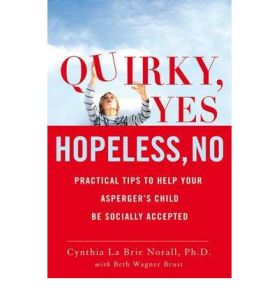
The Friends Club is a safe, non-threatening and non-stressful environment where kids with Asperger’s get together to learn the “unwritten” social skills. Now it’s inspired Brust and Cynthia La Brie Norall, Ph.D., to write “Quirky, Yes — Hopeless, No: Practical Tips to Help Your Child with Asperger’s Syndrome Be More Socially Accepted” (St. Martin’s Griffin).
Asperger’s children are often the kids who are bullied, sit alone at lunch and rarely get an invitation to a birthday party. But at the club, they learn such skills as making eye contact, greeting people, letting others talk about their interests and being less rigid through games, breaking skills into baby steps and role playing.
By learning the subtle social cues that typical children take for granted, they can begin making friends. And that’s exactly what happened with Ben.
“By the end of the first year, I heard him ask another kid, ‘Am I boring you?’ and I almost fell over,” recalled Brust. “I’d never heard him say that before. It was amazing to see that growth in six months.”
 The Friends Club was the brainchild of Norall, an educational behavior psychologist. While working at a preschool in Valley Center in 1992, she first encountered children with autism. That’s around the time that autism diagnoses began to rise dramatically. Today, the Centers for Disease Control and Prevention estimates that 1 out of every 100 8-year-olds is autistic.
“I just found this population fascinating,” Norall said. “I went to every seminar and conference I could on autism. I really wanted to help them.”
In 1999, she opened her own practice, Comprehensive Autism Services and Education (CASE). A year later, she started the Friends Club when her mentor, Dr. B.J. Freeman, a child psychologist who founded the Autism Clinic at UCLA, suggested that she do something to help those higher on the autistic spectrum.
The Friends Club broke the commonly held professional belief that social groups should also contain typical children.
“I got a lot of negative criticism over that decision,” she said. “But these kids know that they are different and if I brought in typical kids, the Aspies (kids with Asperger’s) would stand out. They needed a place to connect.”
Norall likes to tell the story of a teenage girl on her first time at Friends Club who said, “Well, Cynthia, it’s about time you put this together for my species.”
Nine years later, thousands of Aspies have been through the Friends Club. In addition to the branch in Carlsbad, there are Friends Club satellites in Napa, Vancouver, Canada and Oahu, Hawaii, and also a camp during the summer. Twenty-two groups have approximately 150 kids. Groups are broken into age categories; from very young (age 3 to 7), to tweeners, teens and young adults. Norall’s staff now numbers 50, a few of whom are Friends Club graduates. Each group contains six kids and two leaders.
Parents, amazed at the results, kept encouraging Norall to write a book. With that goal in mind, she’d kept extensive summaries of each activity as a report for the parents, but also to remind herself what the kids had taught her. Still, it took Brust, a children’s author herself, to persuade Norall to really get writing.
They decided they wanted the book, originally titled “Decoding Your Asperger’s Children: Lessons Learned at the Friends Club,” to be a practical parenting guide rather than a book on what Asperger’s is or how to “cure it.”
The book is organized alphabetically by topic, such as cooperation, discipline, bullying, perfectionism, anxiety or meltdowns. The lessons teach “people skills,” including how to greet others, how to make eye contact, how to pay compliments, how to cooperate and ask for help and how not to be rude.
Ultimately, Norall and Brust wanted their readers to understand how the Aspie’s brain is wired differently. Then they can not only help the youngsters, but also be less frustrated overall and enjoy the differences these kids bring to the world.
“We wanted a book that had no jargon, but written in a conversational tone like Dr. Spock,” said Brust. “We also wanted readers to be able to skip around in it. There’s always a ‘trouble du jour,’ and you can read just about that. Parents of special needs kids have no time and it doesn’t take a big time commitment to read this book. We’ve made it as accessible as possible.”
The finished manuscript quickly sold to mainstream publisher St. Martin’s Griffin. “Quirky, Yes — Hopeless, No” hit stores in August. Alyse Diamond, the book’s editor, believes there’s nothing like it in a market filled with technical books by doctors or memoirs by mothers.
“What gripped me was that this wasn’t just another book written by a doctor,” said Diamond. “The co-writer is a mom and she’s been in the trenches with her son, so together they bring a unique perspective that you don’t normally see. More and more kids are being diagnosed with autism every year. It’s not going away. That’s why it’s important to us to get a book like this in the hands of people who need it.”
Reaction to the book has been highly positive. Publisher’s Weekly said, “Although a dozen or more experts are cited, the book is conversational in tone, full of insights and will help and encourage parents and their Aspie or high-functioning autistic kids alike.”
Temple Grandin, the author of “Unwritten Rules of Social Relationships” and “Thinking in Pictures,” and perhaps the most famous person with autism, said in her review, “This is a fantastic book for helping people on the autism spectrum learn social skills. Great for individuals on the spectrum, teachers, and social skills training specialists.”
While good reviews from major publications and notable names in the autism field are welcome, the ones that mean the most to Norall and Brust are those from parents and professionals who work with the children.
“I want everyone to read this book so that the teasing will stop,” said Brust. “These kids can be creative and fun. I love being around Ben because he thinks differently. But that can also be frustrating because we don’t understand how they think.”
The good news is that Ben, now a senior at Canyon Crest High School, is doing so well that he plans to attend community college soon. While he just stopped going to Friends Club, Brust sees the lasting value of what he learned there and hopes that people who read their book will experience some of the same social connections he’s had.
“This book is about helping Aspie kids navigate the world better,” Brust said. “Every chapter has something specific and concrete that parents can do to make a difference. Our goal is to help as many of these kids as possible.”
Borderline Personality Disorder: What’s with the Name & Just What Is It?
I have continued to receive a number of requests by email and on Twitter about Borderline Personality Disorder, its name, its presentation, its treatment and its psycho-genesis. Below is a brief post which I think covers most of these questions in outline form. I am open to suggestions as to which, if any areas readers would like to discuss in more detail. A small collection of books on BPD which I recommend to patients, carers, significant others and counsellors can be found here, most with reader reviews. I would be happy to hear of others.
What’s with the name?
The term “borderline” was first used by early psychiatrists to describe people who were thought to be on the “border” between diagnoses. At the time, the system for diagnosing mental illness was far less sophisticated than it is today, and “borderline” referred to individuals who did not fit neatly into the two broad categories of mental disorder: psychosis or neurosis.
Today, far more is known about BPD, and it is no longer thought of as being related to psychotic disorders (and the term “neurosis” is no longer used in our diagnostic system). Instead, BPD is recognized as a disorder characterized by intense emotional experiences and instability in relationships and behavior.
Many experts are now calling for BPD to be renamed, because the term “borderline” is outdated and because, unfortunately, the name has been used in a stigmatizing way in the past. Suggestions for the new name have included: “Emotion Dysregulation Disorder,” Unstable Personality Disorder,” and “Complex Posttraumatic Stress Disorder.”
Borderline personality disorder (BPD) is a serious mental illness characterized by pervasive instability in moods, interpersonal relationships, self-image, and behavior. This instability often disrupts family and work life, long-term planning, and the individual’s sense of self-identity. Originally thought to be at the “borderline” of psychosis, people with BPD suffer from a disorder of emotion regulation. While less well known than schizophrenia or bipolar disorder (manic-depressive illness), BPD is more common, affecting 2 percent of adults, mostly young women.1 There is a high rate of self-injury without suicide intent, as well as a significant rate of suicide attempts and completed suicide in severe cases.2,3 Patients often need extensive mental health services, and account for 20 percent of psychiatric hospitalizations.4 Yet, with help, many improve over time and are eventually able to lead productive lives.
Symptoms
While a person with depression or bipolar disorder typically endures the same mood for weeks, a person with BPD may experience intense bouts of anger, depression, and anxiety that may last only hours, or at most a day.5 These may be associated with episodes of impulsive aggression, self-injury, and drug or alcohol abuse. Distortions in cognition and sense of self can lead to frequent changes in long-term goals, career plans, jobs, friendships, gender identity, and values. Sometimes people with BPD view themselves as fundamentally bad, or unworthy. They may feel unfairly misunderstood or mistreated, bored, empty, and have little idea who they are. Such symptoms are most acute when people with BPD feel isolated and lacking in social support, and may result in frantic efforts to avoid being alone.
 People with BPD often have highly unstable patterns of social relationships. While they can develop intense but stormy attachments, their attitudes towards family, friends, and loved ones may suddenly shift from idealization (great admiration and love) to devaluation (intense anger and dislike). Thus, they may form an immediate attachment and idealize the other person, but when a slight separation or conflict occurs, they switch unexpectedly to the other extreme and angrily accuse the other person of not caring for them at all. Even with family members, individuals with BPD are highly sensitive to rejection, reacting with anger and distress to such mild separations as a vacation, a business trip, or a sudden change in plans. These fears of abandonment seem to be related to difficulties feeling emotionally connected to important persons when they are physically absent, leaving the individual with BPD feeling lost and perhaps worthless. Suicide threats and attempts may occur along with anger at perceived abandonment and disappointments.
People with BPD exhibit other impulsive behaviors, such as excessive spending, binge eating and risky sex. BPD often occurs together with other psychiatric problems, particularly bipolar disorder, depression, anxiety disorders, substance abuse, and other personality disorders.
Treatment
Treatments for BPD have improved in recent years. Group and individual psychotherapy are at least partially effective for many patients. Within the past 15 years, a new psychosocial treatment termed dialectical behavior therapy (DBT) was developed specifically to treat BPD, and this technique has looked promising in treatment studies.6 Pharmacological treatments are often prescribed based on specific target symptoms shown by the individual patient. Antidepressant drugs and mood stabilizers may be helpful for depressed and/or labile mood. Antipsychotic drugs may also be used when there are distortions in thinking.7
Recent Research Findings
Although the cause of BPD is unknown, both environmental and genetic factors are thought to play a role in predisposing patients to BPD symptoms and traits. Studies show that many, but not all individuals with BPD report a history of abuse, neglect, or separation as young children.8 Forty to 71 percent of BPD patients report having been sexually abused, usually by a non-caregiver.9 Researchers believe that BPD results from a combination of individual vulnerability to environmental stress, neglect or abuse as young children, and a series of events that trigger the onset of the disorder as young adults. Adults with BPD are also considerably more likely to be the victim of violence, including rape and other crimes. This may result from both harmful environments as well as impulsivity and poor judgement in choosing partners and lifestyles.
NIMH-funded neuroscience research is revealing brain mechanisms underlying the impulsivity, mood instability, aggression, anger, and negative emotion seen in BPD. Studies suggest that people predisposed to impulsive aggression have impaired regulation of the neural circuits that modulate emotion.10 The amygdala, a small almond-shaped structure deep inside the brain, is an important component of the circuit that regulates negative emotion. In response to signals from other brain centers indicating a perceived threat, it marshals fear and arousal. This might be more pronounced under the influence of drugs like alcohol, or stress. Areas in the front of the brain (pre-frontal area) act to dampen the activity of this circuit. Recent brain imaging studies show that individual differences in the ability to activate regions of the prefrontal cerebral cortex thought to be involved in inhibitory activity predict the ability to suppress negative emotion.11
Serotonin, norepinephrine and acetylcholine are among the chemical messengers in these circuits that play a role in the regulation of emotions, including sadness, anger, anxiety, and irritability. Drugs that enhance brain serotonin function may improve emotional symptoms in BPD. Likewise, mood-stabilizing drugs that are known to enhance the activity of GABA, the brain’s major inhibitory neurotransmitter, may help people who experience BPD-like mood swings. Such brain-based vulnerabilities can be managed with help from behavioral interventions and medications, much like people manage susceptibility to diabetes or high blood pressure.7
Future Progress
Studies that translate basic findings about the neural basis of temperament, mood regulation, and cognition into clinically relevant insights which bear directly on BPD represent a growing area of NIMH-supported research. Research is also underway to test the efficacy of combining medications with behavioral treatments like DBT, and gauging the effect of childhood abuse and other stress in BPD on brain hormones. Data from the first prospective, longitudinal study of BPD, which began in the early 1990s, is expected to reveal how treatment affects the course of the illness. It will also pinpoint specific environmental factors and personality traits that predict a more favorable outcome. The Institute is also collaborating with a private foundation to help attract new researchers to develop a better understanding and better treatment for BPD.
References
1Swartz M, Blazer D, George L, Winfield I. Estimating the prevalence of borderline personality disorder in the community. Journal of Personality Disorders, 1990; 4(3): 257-72.
2Soloff PH, Lis JA, Kelly T, Cornelius J, Ulrich R. Self-mutilation and suicidal behavior in borderline personality disorder. Journal of Personality Disorders, 1994; 8(4): 257-67.
3Gardner DL, Cowdry RW. Suicidal and parasuicidal behavior in borderline personality disorder. Psychiatric Clinics of North America, 1985; 8(2): 389-403.
4Zanarini MC, Frankenburg FR. Treatment histories of borderline inpatients. Comprehensive Psychiatry, in press.
5Zanarini MC, Frankenburg FR, DeLuca CJ, Hennen J, Khera GS, Gunderson JG. The pain of being borderline: dysphoric states specific to borderline personality disorder. Harvard Review of Psychiatry, 1998; 6(4): 201-7.
6Koerner K, Linehan MM. Research on dialectical behavior therapy for patients with borderline personality disorder. Psychiatric Clinics of North America, 2000; 23(1): 151-67.
7Siever LJ, Koenigsberg HW. The frustrating no-mans-land of borderline personality disorder. Cerebrum, The Dana Forum on Brain Science, 2000; 2(4).
8Zanarini MC, Frankenburg. Pathways to the development of borderline personality disorder. Journal of Personality Disorders, 1997; 11(1): 93-104.
9Zanarini MC. Childhood experiences associated with the development of borderline personality disorder. Psychiatric Clinics of North America, 2000; 23(1): 89-101.
10Davidson RJ, Jackson DC, Kalin NH. Emotion, plasticity, context and regulation: perspectives from affective neuroscience. Psychological Bulletin, 2000; 126(6): 873-89.
11Davidson RJ, Putnam KM, Larson CL. Dysfunction in the neural circuitry of emotion regulation – a possible prelude to violence. Science, 2000; 289(5479): 591-4.
Bernstein, PhD, David P., Iscan, MD, Cuneyt, Maser, PhD, Jack, Board of Directors, Association for Research in Personality Disorder, & Board of Directors, International Society for the Study of Personality Disorders. “Opinions of personality disorder experts regarding the DSM-IV Personality Disorders classification system.” Journal of Personality Disorders, 21: 536-551, October 2007.
Sources: about.com and nimh.gov.org
Exercise and Mood: Healthy Activity Can Help Beat Depression and Anxiety
 es appear to have significant effects in terms of elevating mood,” says Dr. Andrew Leuchter, professor of psychiatry at the UCLA Semel Institute for Neuroscience and Human Behavior. Physical activity, he adds, is often used to augment treatments such as medication and cognitive behavioral therapy. “If people are on medication or in treatment and haven’t had a complete recovery from depression, exercise is useful in getting them all the way there.” Exercise affects the brain in several ways. “People with depression tend to become somewhat inert, and they don’t engage in their usual activities, and exercise gets people back to their usual level of activity,” Leuchter says. That can prompt an upward cycle, inspiring people to return to work and connect again with friends and family, ultimately providing motivation to stay on course. Such connections are crucial for depressed people.
“The psychological benefits make a big difference from my perspective,” says James Blumenthal, professor of medical psychology at Duke University in Durham, N.C. “People have a greater sense of being in control. They feel better about themselves and have more self-confidence.”
A physical change can instigate a mental change, says Vaccaro, director of development at Moonview Sanctuary, a psychological treatment center in Santa Monica. “When you’re getting somebody to move and getting them to change a pattern in their life, just that little bit of pattern change can relate to a mood change, and they start to see themselves as a person who is active, not just a couch potato. They change their perception.” There may be direct physical effects on the brain as well. The treatment center encourages exercise — yoga in particular — as a way to manage many types of mood disorders. Besides having a strong mind-body connection, “yoga is something that can be modified to someone’s activity level and is something they can do throughout their life,” Vaccaro says.
Mood elevation
Several studies illustrate the benefits of exercise.In one, published in the journal Psychosomatic Medicine in 2007, 202 men and women with major depression were randomly assigned to participate in a supervised exercise program in a group setting, do home-based exercise, take an antidepressant medication or take a placebo pill. After 16 weeks, 41% were in remission, meaning they no longer had major depressive disorder. Those who were in the exercise and medication groups tended to have higher remission rates than the placebo group.
Another study examined how much cardiovascular exercise was needed to see changes in mood among those with mild to moderate major depressive disorder. The 80 men and women who took part in the research were randomly placed in four exercise groups that varied in the number of calories burned and the frequency of the activity. A placebo group did flexibility exercises three days a week. Those in the group that exercised at moderate intensity three to five days a week for about 40 minutes (consistent with public health recommendations) showed the biggest decrease in depressive symptoms compared with those who exercised less, or just did stretching.
The 2005 study appeared in the American Journal of Preventive Medicine. Other pieces of the puzzle are still missing, however. Scientists aren’t sure what changes happen in the brain — and why — when people exercise. Many scientists and physicians believe that exercise increases levels of serotonin, a neurotransmitter thought to be linked to mood regulation. However, most of the studies supporting this have been done on animals. “It’s hard to quantify it in humans for a number of reasons,” Leuchter says. “We don’t entirely understand exactly why patients get depressed in the first place. We have theories, but it’s hard to know in individual cases. And we don’t have a good way of looking at [changes] in the brain.” Scientists do know that exercise causes an increase in blood flow to the brain and raises the amount of energy the brain uses. And even though the link between blood flow and mood isn’t known, Leuchter says, “the brain in general seems to be in a healthier state.”
Activity is key
Exercise may be key in fighting depression, but no generic prescription fits everyone. Overall health and exercise history factor into what kind of regimen might be prescribed. “If someone was a runner, I’d get them back to running,” Leuchter says. “If not, I’m not going to have the goal of turning someone into a major athlete. I’d simply want to get them active, and even walking around the block might be good.” Those who aren’t currently in treatment for depression should consult with a physician before exercising to make sure they have no underlying health problems. Patients who are on medication or in therapy for depression shouldn’t consider exercise a substitute for either treatment. “The key,” Blumenthal says, “is really maintenance. You have to do it on an ongoing basis. You should find something you enjoy, but doing something is better than nothing.”
“I Just Want to be Happy!” The Struggle for Happiness PART 1: The Complete First Chapter of “The Happiness Trap”
If you’ve read some previous posts, you’ll be aware that I’m a huge fan of Australian MD Dr Russell Harris’ book “The Happiness Trap”. “The Happiness Trap” is a book which outlines the key principles of Acceptance and Commitment Therapy (ACT). I have said previously that I would come back to this topic so here goes!
 ACT is a relatively new (mid to late 1990’s) approach to cognitive therapy, based around the principles of “mindfulness” and acceptance of the difference between the realities of what is going on around you as opposed to your evaluation or judgment of what is going on around you. These evaluations and judgments are often dependent on how your thoughts and assumptions are attached to or “fused” to your emotions and perceptions of yourself and others. It is a well researched model which is widely becoming more and more accepted as an effective intervention for anxiety,depression and other mental health and wellness issues.
Sound complicated and confusing? Well actually it’s not. And to prove it I am providing a link here to The full first Chapter of Dr Harris’ book in PDF format. You will need acrobat reader (free) or another free PDF reader to access this chapter which you can find by clicking on the link below.
I will be coming back to the principle of ACT and mindulness hopefully once or twice a week, and my aim is to walk you through the rationale of this approach and show you some tools,worksheets and strategies to help you to explore and implement some of basics of ACT, so subscribe to my RSS or come back regularly to keep up!
Here’s the link!
Chapter 1 of “The Happiness Trap” – Dr Russell Harris (No catches or tricks..it’s free!)
You will probably find a copy of The Happiness Trap and other ACT Books in your local library. You can also purchase a copy Here, and if you are in Australasia, Here. You can read more about it at Dr Harris’ website and there are customer reviews in My Highly Recommended Books.
Enjoy
Part Two coming soon!
//
Using Music to Help Children with Autism Understand Emotions (Plus Some Favorite ASD Resources)
This post got so many Retweets on my Twitter Timeline that I decided to repost it here. The original source is examiner.com, and the author is Sharon GillsonMusic affects all of us, and we can attest to it’s appeal to our emotions. Now researchers have developed a program designed to help children with ASD better understand emotions, and learn to recognize emotions in other people.
 The children use a method of music education known as the Orff-Schulwerk (schulwerk is German for schooling) approach, which was developed by 20th-century German composer Carl Orff. This approach to music learning uses movement and is based on things that kids intuitively like to do, such as sing, chant rhymes, clap, dance and keep a beat or play a rhythm on anything near at hand.
The 12-week program uses elements from the Orff method — including games, instruments and teamwork — and combines them with musical games. The idea is to pair emotional musical excerpts with matching displays of social emotion (happy with happy, sad with sad, etc.) in a social, interactive setting.
Istvan Molnar-Szakacs, a researcher at the UCLA Tennenbaum Center for the Biology of Creativity and member of the of the Help Group–UCLA Autism Research Alliance, stated, “The purpose of this work is to provide a means for awakening the potential in every child for being ‘musical’ — that is, to be able to understand and use music and movement as forms of expression and, through that, to develop a recognition and understanding of emotions.”
Molnar-Szakacs also said that participating in musical activities has the potential to scaffold and enhance all other learning and development, from timing and language to social skills. “Beyond these more concrete intellectual benefits, the extraordinary power of music to trigger memories and emotions and join us together as an emotional, empathic and compassionate humanity are invaluable”
The goal of the research is to evaluate the effect of the music education program on outcomes in social communication and emotional functioning, as well as the children’s musical development.
————————————————————
I am constantly delighted and enthralled by the children, young people and adults with ASD with whom I have the opportunity to work. There is a frankness and depth in these conversations that blows my socks off just about every time we get together.
Here are some of the ASD resources that I use and recommend to my clients and patients as well as my colleagues.
This is not an exhaustive list by any means, but rather some of those I have found most useful or been described as most helpful. Please have a look and see if you think they may be of use to you or someone you know. There are others listed in my “Highly Recommended Books and Resources” Link to the right of this page.
Tony Atwood‘s Brilliant The Complete Guide to Asperger’s Syndrome


Freaks, Geeks & Asperger Syndrome: A User Guide to Adolescence

and there are so many others! I’m just realising that this is an entire post topic in itself. Stay tuned. Any others you like” Any questions? Leave a comment!
![Reblog this post [with Zemanta]](https://i0.wp.com/img.zemanta.com/reblog_e.png)
About Peter
Peter Brown BHMS (Hons) MPsychClin MAPS
I’m a Clinical Psychologist and have a private practice and consultancy in Brisbane Australia. I have 24 years experience in child, adult and family clinical psychology. I have a wonderful wife and three kids.
I am co-founder of Christian Wholeness Counselling Services.
I like researching issues of the brain & mind, reading and seeking out new books and resources for myself and my clients. I thought that others might be interested in some of what I have found also, hence this blog…

Subscribe to My Blog Posts & Updates
-

Blog Surfer
Alphainventions


Recent Comments


 Peter H Brown Clinical Psychologist