Aspergers in the News: “Temple Grandin” & “House Rules”
An HBO biopic about Temple Grandin starring Claire Danes, and a new Jodi Picoult novel bring the issues and experiences of people with ASD to the general public this month. Reviews below:
Temple Grandin
By ALESSANDRA STANLEY http://www.nytimes.com Published: February 4, 2010
In her autobiography, “Thinking in Pictures: My Life With Autism,” Temple Grandin explains that she values “positive, measurable results more than emotion.” The HBO movie “Temple Grandin” honors its heroine’s priorities, stressing deeds over tearful setbacks and joyous breakthroughs.
That restraint, unusual in a portrait of a person who heroically overcomes a handicap, is oddly captivating and makes the story all the more touching. “Temple Grandin,” which has its debut on Saturday and stars Claire Danes in the title role, is a made-for-television biopic that avoids the mawkish clichés of the genre without draining the narrative of color and feeling.
Ms. Grandin was born in 1947 in Boston, and her autism was diagnosed when she was a child. At that time most psychiatrists considered it a mental disorder caused by cold, withholding “refrigerator mothers.” Helped by a mother who was anything but, Ms. Grandin was nurtured at home and by a few farsighted teachers who helped her unlock her talents. Most comfortable around animals, she grew up to become a sought after animal behaviorist and livestock consultant, world famous for designing humane slaughterhouses.
 In some ways her story is harder to tell than other, similar tales of valor, be they “The Miracle Worker,” “My Left Foot” or “The Diving Bell and the Butterfly,” in which success is so intimately linked to disability. Helen Keller, Christy Brown and Jean-Dominique Bauby, the subjects of those movies, became famous because of their extraordinary personal histories; in all three cases their most lasting work is autobiographical.
Ms. Grandin credits autism for her achievements, arguing that she would never have been so attuned to animal sensibilities or the fine points of agricultural engineering without the distinctive vision and hypersensitivity that comes with autism.
But to the outside world her eminence and inner workings are incongruent. Ranchers don’t commission her stockyard designs because they are moved by her life story; parents and teachers of autistic children don’t care about her theories on curved cattle chutes, but view her accomplishments as a yardstick for their own hopes.
“Temple Grandin” fuses the two with a wonderstruck look at feedlots and loading ramps and a practical, pragmatic view of autism.
Viewers are thrown into the mindset of the teenage Temple with little introduction or fanfare, experiencing the world as she does: in blisteringly vivid images that pop into her head faster than a Google search and that she describes in her book as “full-color movies, complete with sound, which run like a VCR tape in my head.” In that sense, at least, her condition is ideally suited to moviemaking.
In an early scene in which Temple goes to visit her aunt on a ranch in Arizona, she gets off the airplane as startled and fearful as a feral animal. Sounds and sights are heightened — the screeching whirr of the propeller, shouted greetings, the flaming desert heat — to capture how overwhelming and unbearable they are to an autistic girl who flinches at the squeak of a felt-tip marker and cannot bear to be touched.
Ms. Danes is completely at ease in her subject’s lumbering gait and unmodulated voice. She makes Temple’s anxiety as immediate and contagious as her rarer bursts of merriment, laughing too loudly and over and over, as she re-enacts a scene from a favorite television show, “The Man From U.N.C.L.E.” And as the character ages and learns more social graces, Ms. Danes seamlessly captures Temple’s progress.
Julia Ormond looms surprisingly large in the small role of Eustacia, Temple’s mother, a fighter who insists that people treat her daughter as “different, but not less.” Ms. Grandin’s autobiography didn’t go into the family background — proper Bostonians with old money. Eustacia Cutler gives an account of it in her own, highly emotive autobiography, “A Thorn in My Pocket,” which has all the makings of a more lurid Lifetime movie and is perhaps wisely left out of the HBO film. But Ms. Ormond conveys the back story elliptically, adding a slight upper class inflection to her voice and showing Yankee stubbornness just beneath her sorrowed beauty. When a psychiatrist patronizingly tells Eustacia that her child has infantile schizophrenia brought on by maternal coldness, she snaps, “I’m supposed to have done this, well then, I can undo it.”
She sends Temple, who loves horseback riding, to Arizona for a summer, which introduces her to her life’s work, as well as a device to relieve her panic and anxiety: seeing how cows appear to calm down in squeeze chutes — metal stalls that press against the sides of animals to still them for inoculation — Temple tries it on herself, and finds comfort in the pressure. She designs a squeeze chute for herself, and that plywood contraption is just one of the many eccentricities that set her apart.
Temple finds a mentor, her high school science teacher, Dr. Carlock (David Strathairn), one of the first to train Temple to expand her intellect rather than merely control her impulses.
Students and other teachers were less kind. So were many of the ranchers and meat growers who stood in Temple’s way — and threw bull testicles at her car — when she began her studies in animal husbandry.
Hers is a tale that could be easily be played up for drama, intrigue and weepy reconciliations, but this narrative is loyal to Ms. Grandin’s credo: emotions are secondary to tangible results. And the result is a movie that is funny, instructive and also intangibly charming.
HBO, Saturday night at 8, Eastern and Pacific times; 7, Central time.
Directed by Mick Jackson; written by Christopher Monger and William Merritt Johnson; based on the books “Emergence” by Temple Grandin and Margaret Scariano, and “Thinking in Pictures” by Ms. Grandin; Emily Gerson Saines, Gil Bellows, Anthony Edwards, Dante Di Loreto, Paul Lister and Alison Owen, executive producers; Scott Ferguson, producer. Produced by Ruby Films and Gerson Saines Productions.
WITH: Claire Danes (Temple Grandin), Catherine O’Hara (Aunt Ann), Julia Ormond (Eustacia) and David Strathairn (Dr. Carlock).
House Rules
by Jodi Picoult


Violence and Young People: An Enlightening & Alarming Discussion
On Sunday 27th Feb. I took part in a rich and informed discussion on Violence and Young People on Peter Jan etzki’s “Talking Life” radio program on which I am a regular guest. I was very much a “third wheel” in this discussion, with the key guests being Dr Steven Stathis, Psychiatrist and Paediatrician, who is a consultant at Royal Children’s Hospital in Brisbane. Steven is also Director of the Child and Family Therapy Unit (CAFTU), and consults at the Youth Detention Centre, Wacol. The other key guest was Dr Mubarak Ali, a researcher in Social Work at Flinders University in Adelaide. Mubarak has done extensive and ground-breaking international research examining child and youth use of the internet and digital technology, and how this usage correlates with violent behaviour. It was a rich discussion with some interesting content and phone calls. If this is a topic which in any way interests you, I would encourage you to take the time to have a listen.
UPDATE: You can now listen to the entire podcast by selecting the links below. These files are now stored in my library internally for easy access: (Free – mp3-internal links) click to play or right click and “save link /target as” to download.
OR

Peter Janetzki
A podcast of the entire show in easy to listen parts, and podcasts of recent shows can be found here or by clicking on the 96.5 logo.You can listen to the podcast from your browser or with iTunes, Talking Life streams live every Sunday night from from 8-10pm Australian Eastern Standard Time (GMT+10) and you can listen by going to the 96.5 website @ 96five.com and clicking on the home page media player.
Related articles by Zemanta
- ‘8% rise’ in violence against children (news.bbc.co.uk)
![Reblog this post [with Zemanta]](https://i0.wp.com/img.zemanta.com/reblog_e.png)
Love the One You’re With: The Pitfalls of Seeking a “Soul Mate”
Has the quest for that one perfect partner, the never-ending search for the ideal done us more harm than good? There is growing evidence that an idealistic search for love can hinder the enjoyment and fulfilment of what you already have. The following is excerpted from Polly Schulman’s article at Psychology Today (http://psychologytoday.com ).
The divorce rate has stayed constant at nearly 50 percent for the last two decades. The ease with which we enter and dissolve unions makes marriage seem like a prime-time spectator sport, whether it’s Britney Spears in Vegas or bimbos chasing after the Bachelor.
Long live the new marriage! We once prized the institution for the practical pairing of a cash-producing father and a home-building mother. Now we want it all—a partner who reflects our taste and status, who sees us for who we are, who loves us for all the “right” reasons, who helps us become the person we want to be. We’ve done away with a rigid social order, adopting instead an even more onerous obligation: the mandate to find a perfect match. Anything short of this ideal prompts us to ask: Is this all there is? Am I as happy as I should be? Could there be somebody out there who’s better for me? As often as not, we answer yes to that last question and fall victim to our own great expectations.
 That somebody is, of course, our soul mate, the man or woman who will counter our weaknesses, amplify our strengths and provide the unflagging support and respect that is the essence of a contemporary relationship. The reality is that few marriages or partnerships consistently live up to this ideal. The result is a commitment limbo, in which we care deeply for our partner but keep one stealthy foot out the door of our hearts. In so doing, we subject the relationship to constant review: Would I be happier, smarter, a better person with someone else? It’s a painful modern quandary. “Nothing has produced more unhappiness than the concept of the soul mate,” says Atlanta psychiatrist Frank Pittman [….
… ] Many of us either dodge the decision to commit or commit without fully relinquishing the right to keep looking—opting for an arrangement psychotherapist Terrence Real terms “stable ambiguity.” “You park on the border of the relationship, so you’re in it but not of it,” he says. There are a million ways to do that: You can be in a relationship but not be sure it’s really the right one, have an eye open for a better deal or something on the side, choose someone impossible or far away.
Yet commitment and marriage offer real physical and financial rewards. Touting the benefits of marriage may sound like conservative policy rhetoric, but nonpartisan sociological research backs it up: Committed partners have it all over singles, at least on average. Married people are more financially stable, according to Linda Waite, a sociologist at the University of Chicago and a coauthor of The Case for Marriage: Why Married People Are Happier, Healthier, and Better Off Financially
The benefits go beyond the piggy bank. Married people, particularly men, tend to live longer than people who aren’t married. Couples also live better: When people expect to stay together, says Waite, they pool their resources, increasing their individual standard of living. They also pool their expertise—in cooking, say, or financial management. In general, women improve men’s health by putting a stop to stupid bachelor tricks and bugging their husbands to exercise and eat their vegetables. Plus, people who aren’t comparing their partners to someone else in bed have less trouble performing and are more emotionally satisfied with sex. The relationship doesn’t have to be wonderful for life to get better, says Waite: The statistics hold true for mediocre marriages as well as for passionate ones.
The pragmatic benefits of partnership used to be foremost in our minds. The idea of marriage as a vehicle for self-fulfillment and happiness is relatively new, says Paul Amato, professor of sociology, demography and family studies at Penn State University. Surveys of high school and college students 50 or 60 years ago found that most wanted to get married in order to have children or own a home. Now, most report that they plan to get married for love. This increased emphasis on emotional fulfillment within marriage leaves couples ill-prepared for the realities they will probably face.
Because the early phase of a relationship is marked by excitement and idealization, “many romantic, passionate couples expect to have that excitement forever,” says Barry McCarthy, a clinical psychologist and coauthor—with his wife, Emily McCarthy—of Getting It Right the First Time: Creating a Healthy Marriage
Flagging passion is often interpreted as the death knell of a relationship. You begin to wonder whether you’re really right for each other after all. You’re comfortable together, but you don’t really connect the way you used to. Wouldn’t it be more honest—and braver—to just admit that it’s not working and call it off? “People are made to feel that remaining in a marriage that doesn’t make you blissfully happy is an act of existential cowardice,” says Joshua Coleman, a San Francisco psychologist.
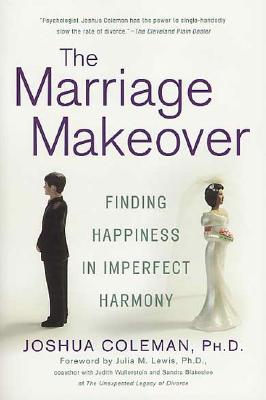 Coleman says that the constant cultural pressure to have it all—a great sex life, a wonderful family—has made people ashamed of their less-than-perfect relationships and question whether such unions are worth hanging on to. Feelings of dissatisfaction or disappointment are natural, but they can seem intolerable when standards are sky-high. “It’s a recent historical event that people expect to get so much from individual partners,” says Coleman, author of The Marriage Makeover: Finding Happiness in Imperfect Harmony
…] In fact, argue psychologists and marital advocates, there’s no such thing as true compatibility. “Marriage is a disagreement machine,” says Diane Sollee, founder of the Coalition for Marriage, Family and Couples Education. “All couples disagree about all the same things. We have a highly romanticized notion that if we were with the right person, we wouldn’t fight.” Discord springs eternal over money, kids, sex and leisure time, but psychologist John Gottman has shown that long-term, happily married couples disagree about these things just as much as couples who divorce.
“There is a mythology of ‘the wrong person,'” agrees Pittman. “All marriages are incompatible. All marriages are between people from different families, people who have a different view of things. The magic is to develop binocular vision, to see life through your partner’s eyes as well as through your own.”
The realization that we’re not going to get everything we want from a partner is not just sobering, it’s downright miserable. But it is also a necessary step in building a mature relationship, according to Real, who has written about the subject in How Can I Get Through to You? Closing the Intimacy Gap Between Men and Women
. “The paradox of intimacy is that our ability to stay close rests on our ability to tolerate solitude inside a relationship,” he says. “A central aspect of grown-up love is grief. All of us long for—and think we deserve—perfection.” We can hardly be blamed for striving for bliss and self-fulfillment in our romantic lives—our inalienable right to the pursuit of happiness is guaranteed in the first blueprint of [..modern] society.

This same respect for our own needs spurred the divorce-law reforms of the 1960s and 1970s. During that era, “The culture shifted to emphasize individual satisfaction, and marriage was part of that,” explains Paul Amato, who has followed more than 2,000 families for 20 years in a long-term study of marriage and divorce. Amato says that this shift did some good by freeing people from abusive and intolerable marriages. But it had an unintended side effect: encouraging people to abandon relationships that may be worth salvaging. In a society hell-bent on individual achievement and autonomy, working on a difficult relationship may get short shrift, says psychiatrist Peter Kramer, author of Should You Leave?

“So much of what we learn has to do with the self, the ego, rather than giving over the self to things like a relationship,” Kramer says. In our competitive world, we’re rewarded for our individual achievements rather than for how we help others. We value independence over cooperation, and sacrifices for values like loyalty and continuity seem foolish. “I think we get the divorce rate that we deserve as a culture.”
 The steadfast focus on our own potential may turn a partner into an accessory in the quest for self-actualization, says Maggie Robbins, a therapist in New York City. “We think that this person should reflect the beauty and perfection that is the inner me—or, more often, that this person should compensate for the yuckiness and mess that is the inner me,” says Robbins. “This is what makes you tell your wife, ‘Lose some weight—you’re making me look bad,’ not ‘Lose some weight, you’re at risk for diabetes.'” […
…] The urge to find a soul mate is not fueled just by notions of romantic manifest destiny. Trends in the workforce and in the media create a sense of limitless romantic possibility. According to Scott South, a demographer at SUNY-Albany, proximity to potential partners has a powerful effect on relationships. South and his colleagues found higher divorce rates among people living in communities or working in professions where they encounter lots of potential partners—people who match them in age, race and education level. “These results hold true not just for unhappy marriages but also for happy ones,” says South.
The temptations aren’t always living, breathing people. According to research by psychologists Sara Gutierres and Douglas Kenrick, both of Arizona State University, we find reasonably attractive people less appealing when we’ve just seen a hunk or a hottie—and we’re bombarded daily by images of gorgeous models and actors. When we watch Lord of the Rings, Viggo Mortensen’s kingly mien and Liv Tyler’s elfin charm can make our husbands and wives look all too schlumpy.
Kramer sees a similar pull in the narratives that surround us. “The number of stories that tell us about other lives we could lead—in magazine articles, television shows, books—has increased enormously. We have an enormous reservoir of possibilities,” says Kramer.
And these possibilities can drive us to despair. Too many choices have been shown to stymie consumers, and an array of alternative mates is no exception. In an era when marriages were difficult to dissolve, couples rated their marriages as more satisfying than do today’s couples, for whom divorce is a clear option, according to the National Opinion Research Center at the University of Chicago.
While we expect marriage to be “happily ever after,” the truth is that for most people, neither marriage nor divorce seem to have a decisive impact on happiness. Although Waite’s research shows that married people are happier than their single counterparts, other studies have found that after a couple years of marriage, people are just about as happy (or unhappy) as they were before settling down. And assuming that marriage will automatically provide contentment is itself a surefire recipe for misery.
“Marriage is not supposed to make you happy. It is supposed to make you married,” says Pittman. “When you are all the way in your marriage, you are free to do useful things, become a better person.” A committed relationship allows you to drop pretenses and seductions, expose your weaknesses, be yourself—and know that you will be loved, warts and all. “A real relationship is the collision of my humanity and yours, in all its joy and limitations,” says Real. “How partners handle that collision is what determines the quality of their relationship.”
Such a down-to-earth view of marriage is hardly romantic, but that doesn’t mean it’s not profound: An authentic relationship with another person, says Pittman, is “one of the first steps toward connecting with the human condition—which is necessary if you’re going to become fulfilled as a human being.” If we accept these humble terms, the quest for a soul mate might just be a noble pursuit after all.
Sex: Is that all that men want?…NOPE!
A study from the Kinsey Institute strongly challenges the myth that men value sex more highly than other things. The findings relating to what men value and how they rate their sense of masculinity are robust across age, nationality and erectile function. Diana KirschnerPhD. has summarised the findings on the Psychology Today site (http://psychologytoday.com ) as follows:
View The Original Research Paper HERE (Free PDF -internal link)
“(The) data … came out of an eight country random survey of 27,839 men ages 20-752. Using a questionnaire called the Men’s Attitudes to Life Events and Sexuality(MALES), the authors found men’s attitudes towards two key areas, masculinity and quality of life, differed markedly from the cultural stereotypes of guys as shallow creatures who are driven primarily by lust.
In the masculinity section of the study and across all countries, being seen as a “man of honor” was the single highest ideal for men, far more important than “being physically attractive,” “having success with women,” or “having an active sex life.” Together with “being in control of your own life” these two attributes accounted for about 60% of the responses. These findings held across all nationalities and across all age groups.
In the MALES section called Quality of Life, men were asked to rate the following seven
• Being in good health
• Satisfying sex life
• Harmonious family life
• Good relationship with partner/wife
• Enjoying life to the fullest
• Satisfying
• Having a nice home
Again, the findings were quite surprising. The top three answers were: “being in good health”; “a harmonious family life”; and “good relationship with partner/wife.” “A satisfying sex life” was last, tied with “a nice home.” While there was definitely variability in the top answersdepending on country, “a satisfying sex life” always came last. Even more astonishing were the findings in regard to age and marital/partner status. Younger men, age 20-39 still rated the same three goals as most important. When comparing single vs. married men, the only difference was that singles rated “enjoying live to the fullest” in second placealong with “a harmonious family life”-while “a good relationship with their partner” was ranked fourth. Again “a satisfying sex life” was rated last.
Amazingly enough men who had erectile dysfunction (ED) as well as those who did not, still rated “a satisfying sex life” the same way-dead last. Understandably, men with ED reported having a less satisfying sexual life than those without ED.”
View The Original Research Paper HERE (Free PDF -internal link)
Here’s the abstract:

Sex God: Exploring the Endless Connections Between Sexuality and Spirituality
Introduction. The Men’s Attitudes to Life Events and Sexuality (MALES) study assessed the prevalence of erectile dysfunction, and examined men’s attitudes and behavior in relation to this dysfunction.
Aim. To report on the attitudes of men, with and without self-reported erectile dysfunction, concerning masculine identity and quality of life.
Methods. The MALES Phase I study included 27,839 randomly selected men (aged 20–75 years) from eight countries (United States, United Kingdom, Germany, France, Italy, Spain, Mexico, and Brazil) who responded to a standardized computer-assisted telephone interview.Main Outcome Measure. Perceptions of masculinity and quality of life in men with and without erectile dysfunction.
Results. Men’s perceptions of masculinity differed substantially from stereotypes in the literature. Men reported that being seen as honorable, self-reliant, and respected by friends were important determinants of self-perceived masculinity. In contrast, factors stereotypically associated with masculinity, such as being physically attractive,sexually active, and successful with women, were deemed to be less important to men’s sense of masculinity. These findings appeared consistently across all nationalities and all age groups studied. For quality of life, factors that men deemed of significant importance included good health, harmonious family life, and a good relationship with their wife/partner. Such factors had significantly greater importance to quality of life than concerns such as having a good job, having a nice home, living life to the full, or having a satisfying sex life. Of note, rankings of constructs of masculinity and quality of life did not meaningfully differ in men with or without erectile dysfunction, and men with erectile dysfunction who did or did not seek treatment for their sexual dysfunction.
Conclusions. The present findings highlight the significance of partnered relationships and interpersonal factors in the management of erectile dysfunction, and empirically challenge a number of widely held stereotypes concerning men, masculinity, sex, and quality of life.
Sand MS, Fisher W, Rosen R, Heiman J, and Eardley I. Erectile dysfunction and constructs of masculinity and quality of life in the multinational Men’s Attitudes to Life Events and Sexuality (MALES) study. J Sex Med 2008;5:583–594.Key Words. Erectile Dysfunction; Quality of Life; Masculinity; Gender Identity
REPOST: Talking to Your Child About What’s in The News
I originally blogged this post on August 5th last year. With the recent natural disasters in places like Haiti and Chile, and also the very raw and terrible tragedies involving young children and youth closer to my home in southeast Queensland, Australia, I have decided to repost it. I have done so in case it is helpful for other parents who, like myself are dealing with kids who are concerned about what they see and hear and read about troubling local and world events…
My experience is that many children, particularly those who have generalised anxiety can become quite distressed by exposure to seemingly innocuous exposure to events that are a part of everyday life.
 Although news gleaned from television, radio, or the Internet often is a positive educational experience for kids, problems can arise when the images presented are violent or the stories touch on disturbing topics. While we worry about our childrens’ exposure to violence and sexual content in movies, on the internet, and on tv, we need to remember that news programs shpw often live and real images and media from real events which are often distressing and increasingly graphic.
News about a natural disaster, such as the devastating earthquake in China or cyclone in Myanmar, could make kids worry that something similar is going to hit home, or fear a part of daily life — such as rain and thunderstorms — that they’d never worried about before.
Reports on natural disasters, child abductions, homicides, terrorist attacks, and school violence can teach kids to view the world as a confusing, threatening, or unfriendly place.
How can you deal with these disturbing stories and images? Talking to your kids about what they watch or hear will help them put frightening information into a reasonable context.
How Kids Perceive the News
Unlike movies or entertainment programs, news is real. But depending on a child’s age or maturity level, he or she may not yet understand the distinctions between fact and fantasy. By the time kids reach 7 or 8, however, what they see on TV can seem all too real. For some youngsters, the vividness of a sensational news story can be internalized and transformed into something that might happen to them. A child watching a news story about a bombing on a bus or a subway might worry, “Could I be next? Could that happen to me?”Natural disasters or
stories of other types of devastation can be personalized in the same manner. A child in Massachusetts who sees a house being swallowed by floods from a hurricane in Louisiana may spend a sleepless night worrying about whether his home will be OK in a rainstorm. A child in Chicago, seeing news about an attack on subways in London, might get scared about using public transportation around town. TV has the effect of shrinking the world and bringing it into our own living rooms.
By concentrating on violent stories, TV news also can promote a “mean-world” syndrome and give kids an inaccurate view of what the world and society are actually like.
Talking About the News
To calm children’s fears about the news, parents should be prepared to deliver what psychologists call “calm, unequivocal, but limited information.” This means delivering the truth, but only as much truth as a child needs to know. The key is to be as truthful yet as inexplicit as you can be. There’s no need to go into more details than your child is interested in. Although it’s true that some things — like a natural disaster — can’t be controlled, parents should still give kids space to share their fears. Encourage them to talk openly about what scares them.
Older kids are less likely to accept an explanation at face value. Their budding skepticism about the news and how it’s produced and sold might mask anxieties they have about the stories it covers. If older kids are bothered about a story, help them cope with these fears. An adult’s willingness to listen sends a powerful message.
Teens also can be encouraged to consider why a frightening or disturbing story was on the air: Was it to increase the program’s ratings because of its sensational value or because it was truly newsworthy? In this way, a scary story can be turned into a worthwhile discussion about the role and mission of the news.
Tips for Parents
Keeping an eye on kids’ TV news habits can go a long way toward monitoring the content of what they hear and see. Other tips:
- Recognize that news doesn’t have to be driven by disturbing pictures. Public TV programs, newspapers, or newsmagazines specifically designed for kids can be less sensational — and less upsetting — ways of getting information to children.
- Discuss current events with your child regularly. It’s important to help kids think through stories they hear about. Ask questions: What do you think about these events? How do you think these things happen? These questions can encourage conversation about non-news topics too.
- Put news stories in proper context. Showing that certain events are isolated or explaining how one event relates to another helps kids make better sense of what they hear. Broaden the discussion from a disturbing news item to a larger conversation: Use the story of a natural disaster as an opportunity to talk about philanthropy, cooperation, and the ability of people to cope with overwhelming hardship.
- Watch the news with your kids to filter inappropriate or frightening stories.
- Anticipate when guidance will be necessary and avoid shows that aren’t appropriate for your child’s age or level of development.
- If you’re uncomfortable with the content of the news or if it’s inappropriate for your child’s age, turn it off.
- Talk about what you can do to help. In the case of a news event like a natural disaster, kids may gain a sense of control and feel more secure if you find ways to help those who have been affected.
sourced from http://www.kidshealth.org
reviewed by: Mary L. Gavin, MD
Facebook: Is it Really your Face or Someone Else’s?
Do people display their actual or idealised personalities on social networking sites? This interesting article from PsyBlog reports that recent research addressed this issue with surprising results. I wonder if similar research on role playing and avatar based environments like World of Warcraft and Second Life would yield different findings…
There are now over 700 million people around the world with profiles on social networking sites like Facebook and MySpace. In the US 75% of those between 18 and 24 who have access to the internet use social networking sites. And over the past four years, across all adult age-groups, their use has quadrupled.
 But do these profiles tell us anything about people’s real-life personalities? Online it is very easy to display an idealised version of the self to others so surely the temptation to exaggerate or even give a completely misleading impression is just too great?
Actual versus idealised personality
To find out psychologists recruited 236 US and German students who use social networking sites and had them complete personality measures (Back et al., 2010).
These measured first their actual personalities on what psychologists call the ‘Big 5‘ personality traits (extraversion, agreeableness, conscientiousness, neuroticism and openness to experience).
Secondly it measured their idealised personalities: who they would like to be. Then independent observers were shown their real social networking profiles and asked to rate participants’ personalities.
The surprising truth
After comparing the actual personalities with the idealised and observed, the researchers found that, on average, people were much more likely to display their real personality on the social networking sites rather than their idealised selves.
Overall people were remarkably honest in representing themselves. People were honest—we don’t read those words often enough.
In line with other findings, this study found that, when looking at a stranger’s profile for the first time, some aspects of personality are more difficult to discern. Neuroticism in others is particularly difficult to gauge, whereas people find extraversion and openness to experience relatively easily to assess, even in strangers.

Todd Kashdan's Book "Curious?: Discover the Missing Ingredient to a Fulfilling Life"
Lying online?
This study is another blow for that old stereotype that the web is some kind of scary hinterland, an untrustworthy place where anything goes and nothing is what it appears, peopled by adolescent boys pretending to be anything but adolescent boys.
Contrary to the received wisdom, as well as academic theorising that the internet encourages people to project an idealised self, this research suggests that people are remarkably honest in displaying their true personalities online.
Whatever the cause, this fact may help to explain the phenomenal popularity of social networking sites: the truth draws people in.
Source: http://www.PsyBlog.com
Related articles by Zemanta
- The Psychology of Facebook Profiles (wellness.blogs.time.com)
- Self-Reporting (ezrasf.com)
About Peter
Peter Brown BHMS (Hons) MPsychClin MAPS
I’m a Clinical Psychologist and have a private practice and consultancy in Brisbane Australia. I have 24 years experience in child, adult and family clinical psychology. I have a wonderful wife and three kids.
I am co-founder of Christian Wholeness Counselling Services.
I like researching issues of the brain & mind, reading and seeking out new books and resources for myself and my clients. I thought that others might be interested in some of what I have found also, hence this blog…

Subscribe to My Blog Posts & Updates
-

Blog Surfer
Alphainventions


Recent Comments


 Peter H Brown Clinical Psychologist