Clicking For The Cause: Does Online Activism Transfer To Real-Life Action?

People believe that social media, such as Facebook and Twitter, can help promote real political change. But do people actually do anything political outside of Facebook?
A team of researchers from Michigan State University led by Jessica Vitak set to find out, by looking at how young adults interacted with Facebook and in real life politics during the 2008 election.
According to background information in the new study, during the 2008 election, both Republican and Democratic presidential candidates utilized Facebook to maintain pages that allowed users to post comments, share news and videos, and connect with other users.
Furthermore, Facebook members had access to various site features that allowed them to share their political views and interact with others on the site, including both their “friends” on the site, as well as other users to whom they connected with through shared use of political groups and pages.
“But did these efforts make a difference to the political participation of Facebook users?” the researchers asked.
Recruiting students from the University of Michigan campus, a survey email was sent to a random sample of 4,000 students, with 683 usable responses. Participants took a number of surveys about their use of Facebook — including the Facebook Intensity quiz — as well as their political activities outside of Facebook.
Respondents tended to be female (68 percent) and white (86 percent), with a mean age of 20 years. Most participants reported having a Facebook account (96 percent) and being registered to vote (96 percent).
After analyzing the data, the researchers discovered that there is a complex relationship between young people’s use of Facebook and their political participation.
Researchers found that while young voters participate in political activity, the degree of this participation is somewhat superficial. The most common forms of general political participation tended to be informational and low in resource intensity (e.g., watching a debate), whereas political actions that required a greater commitment of resources (e.g., volunteering) were less frequent.
“This finding in isolation lends credibility to the concern that young citizens are becoming “slacktivists,” engaging in feel-good forms of political participation that have little or no impact on effecting change,” note the researchers.
“While there are a variety of ways to participate, our sample indicated they overwhelmingly engaged in the least intrusive, least time-consuming activities.”
But the researchers suggested an alternative interpretation of their data, too. “As we age, our political participation inevitably increases, in part due to the accumulation of civic skills. By this line of reasoning, any political activity — whether occurring on Facebook or in other venues — facilitates the development of civic skills, which in turn increases political participation.”

Click on Image to Read Reviews
“One advantage to the more lightweight political activity enabled via Facebook is the opportunity to “practice” civic skills with a minimal commitment of time and effort. Not only is Facebook accessible at any time of the day, but activities such as joining a political group or sharing a link can be accomplished with a few clicks of the mouse. These site characteristics create unique opportunities for participants to develop skills in their own time, representing a lower threshold for informal civic-engagement education.”
The study found that as the number of political activities people engage in on Facebook increases, so does political participation in other venues, and vice versa.
The researchers found a strong negative relationship between Facebook Intensity and general political participation.
The negative relationship between Facebook Intensity and general political participation is more difficult to explain. One interpretation of this relationship is that the most intense users of Facebook are classic “slacktivists,” — they do not translate their political activities on the site into other more commonly valued forms of political participation.
However, a number of alternative explanations are also possible. It may be that politically active users are only accessing Facebook to supplement their political participation in other venues.
Most importantly, this study has revealed that political activity on Facebook is significantly related to more general political participation.
“Facebook and other social networking services may offer young citizens an opportunity to experiment with their political opinions and beliefs while also being exposed to those of their peers, which could, in turn, stimulate their own interest and knowledge,” the researchers say.
“While Facebook may not be the cure-all to lagging political participation among young adults in the United States, this research provides support to the Internet-as-supplement argument that other researchers have made in regards to general communication.”
The study appears in the July 2010 issue of Cyberpsychology, Behavior, and Social Networking.
Source: Cyberpsychology, Behavior, and Social Networking
Reference:
Vitak, J., Zube, P., Smock, A., Carr, C.T., Ellison, N., Lampe, C. (2010). It’s Complicated: Facebook Users’ Political Participation in the 2008 Election. Cyberpsychology, Behavior, and Social Networking.

Related articles
- Narcissism, Self-Esteem & Facebook (peterhbrown.wordpress.com)
- What Were You Thinking? The Causes Of Online Disinhibition (peterhbrown.wordpress.com)

Bucket List Or Boredom?: Building Your “Experience Resume”
 If sleeping on a bed of ice or eating bacon-flavored ice cream doesn’t sound too appealing, consider the tale you’ll have to tell about it later. According to a new study in the Journal of Consumer Research, some people can’t resist a chance to collect experiences.
“Recent marketing trends suggest that many consumers are attracted to unusual and novel consumption experiences and choose vacations, leisure activities, and celebrations that are predicted to be less pleasurable and enjoyable,” write authors Anat Keinan (Harvard Business School) and Ran Kivetz (Columbia Business School).
“A fascinating example is the increasing popularity of Ice Hotels, where visitors sleep on beds made of ice in frigid temperatures of 25° F. A similar trend is observed in consumers’ dining preferences: many restaurants are trying to attract consumers by offering unusual entrees and desserts. Such gastronomic innovations include tequila-mustard sorbet, bacon-flavored ice cream, and chocolate truffles with vinegar and anchovies.”
Consumers are attracted to these activities and products because they view them as opportunities to collect new experiences and build their “experiential CV,” the authors write. And this desire is connected to people’s continual striving to use time efficiently and productively.
“This desire to accomplish more in less time is so powerful that it not only affects consumers’ performance in vocational (or “production”) settings, but can also influence their leisure preferences and consumption choices,” the authors write.

Click on image to read reviews
In a series of experiments, the researchers found that a “productivity orientation” made participants more inclined to desire collectible experiences. They examined revelers celebrating New Year’s Eve in New York City’s Times Square, AARP members attending conferences on retirement and aging, park visitors, train and airport travelers, and people who are trying to visit all 50 states.
“Our findings suggest that marketers of unusual consumption experiences and innovative products should target consumers who are concerned with being productive (and collecting experiences),” the authors write.
Anat Keinan and Ran Kivetz. “Productivity Orientation and the Consumption of
Collectable Experiences.” Journal of Consumer Research. Contact
JCR@bus.wisc.edu to receive a preprint of this study. See http://ejcr.org for
further information.
Related articles
- Feeling Stuck? 10 Important Tips For Changing Your Life (peterhbrown.wordpress.com)
- What Were You Thinking? The Causes Of Online Disinhibition (peterhbrown.wordpress.com)
- People Vs Possessions: What Matters The Most? (peterhbrown.wordpress.com)
Do Big People Need “Blankies” Too ?
 Who is willing to admit that they still have what some psychological theories call a “transitional object“. Think it over after reading this and you will probably be surprised…
Source: Stephanie Pappas, LiveScience Senior Writer
When Kaitlin Lipe was 6 months old, someone gave her a Puffalump. The stuffed pink cow is more than two decades old now, but Lipe, 24, a social media manager in New York, can’t part with Puff. She gets comfort wrapping her arms around the childhood toy without all the meowing that comes from her real cat or the sassy comments she might get from her boyfriend.
“She is a reminder of my childhood, has always been a comfort to me, and is in every way a symbol for the happier times in life,” Lipe told LiveScience.
Lipe isn’t alone in her affection for what psychologists call a “security” or “transitional” object. These are objects that people feel a bond with, despite the fact that the relationship is, by definition, one-sided.
And while it may not be the social norm for grown-ups to lug around teddy bears, adults regularly become attached to inanimate objects in a manner similar to a child’s grip on a security blanket, researchers say.
Plush security
There are no precise numbers on how many people carry a love for their childhood blankie into adulthood, but a survey of 6,000 British adults by the hotel chain Travelodge in August found that 35 percent admitted to sleeping with stuffed animals.
The survey is perhaps not the most scientific, but the phenomenon of adults with security objects is “a lot more common than people realize,” University of Bristol psychologist Bruce Hood told LiveScience. Hood has studied people’s sentimental attachments to objects, and he said the studies never lack for participants.
“We’ve had no problem finding adults, especially females, who have their child sentimental objects with them,” Hood said.
A 1979 study by psychologist and security object expert Richard Passman, now retired from the University of Wisconsin at Milwaukee, found that around 60 percent of kids are attached to a toy, blanket, or pacifier during the first three years of life. Until kids reach school age, there is no gender difference in attachment, but girls tend to pull ahead around age 5 or 6, probably because of social pressure on boys to put away soft toys, Hood said.
Until the 1970s, psychologists believed that these attachments were bad, reflecting a failing by the child’s mother.
But research by Passman and others began to contradict that notion. One study published in the Journal of Consulting and Clinical Psychology in 2000, for example, found that kids who had their beloved blankets with them at the doctor’s office experienced less distress, as measured by blood pressure and heart rate. Apparently, security blankets really do live up to their name.
Even as the need for a security object fades, the attachment may linger. One small study of 230 middle-school students, published in the Journal of the American Academy of Child Psychiatry in 1986, found that while 21 percent of girls and 12 percent of boys still used their security object at age 13 or 14, 73 percent of the girls and 45 percent of the boys still knew where the object was.
The essence of an object
Click on image to read reviews
So why might grown-ups harbor affection for a ratty old blanket or well-worn stuffed dog? Part of the reason is probably nostalgia, Hood said, but there seems to be a deep emotional attachment to the objects as well.
It’s called “essentialism,” or the idea that objects are more than just their physical properties.
Consider: If someone offered to replace a cherished item, like your wedding ring, with an exact, indistinguishable replica, would you accept? Most people refuse, Hood said, because they believe there is something special about their particular ring. It’s the same reason we might feel revulsion at wearing a shirt owned by a murderer. Objects are emotional.
Belief in essentialism starts early. In a 2007 study published in the journal Cognition, Hood and his colleagues told 3– to 6-year-old children that they could put their toys in a “copy box” that would exchange them for duplicates. The kids didn’t care whether they played with originals or duplicates of most toys, but when offered the chance to duplicate their most cherished item, 25 percent refused. Most of those who did agree to duplicate their beloved toy wanted the original back right away, Hood reported. The kids had an emotional connection to that blanket, or that teddy bear, not one that looked just like it.
Even in adulthood, those emotions don’t fade. In a study published in August 2010 in the Journal of Cognition and Culture, Hood and his fellow researchers asked people to cut up photographs of a cherished item. While the participants cut, the researchers recorded their galvanic skin response, a measure of tiny changes in sweat production on the skin. The more sweat, the more agitated the person.
The results showed that participants had a significant stress response to cutting up pictures of their beloved item compared with cutting up a picture of a valuable or neutral item. People even became distressed when researchers had them cut up a picture of their cherished item that was blurred past recognition.
Mine, mine, mine
Researchers know little about what’s going on in the brain to bond us to certain objects. Hood is now using brain imaging to investigate what goes on when people watch videos of what looks like their cherished objects being destroyed.
However, studies on marketing and purchasing decisions suggest that our tendency to love objects goes beyond the soft and cuddly. [World’s Cutest Baby Animals]
A 2008 study in the Journal of Judgment and Decision Making revealed that people who held onto a mug for 30 seconds before bidding for it in an auction offered an average of 83 cents more for it than people who held the mug for 10 seconds.
The effect is even greater when the item is fun to touch, said Suzanne Shu, a professor of behavioral sciences in the school of management at the University of California, Los Angeles. She’s done studies finding that people get more attached to a pen with a “nice, smooshy grip” than an identical, gripless pen.
The findings seem to be an extension of what’s called the “endowment effect,” or people’s tendency to value things more when they feel ownership over it, Shu said.
“Part of the story of what happens with touch is it almost becomes an extension of yourself,” she said. “You feel like it’s more a part of you, and you just have this deeper attachment to it.”
Whether this touch-based attachment might relate to the love people feel for snuggly childhood teddy bears, no one yet knows. But human relationships to objects can certainly be long-running and deep.
“She’s been there for me when I’ve been sick, when I’ve been lonely and when I really needed a hug and no one was around,” Lipe said of her stuffed cow, citing the characters from Pixar’s Toy Story movies: “She’s the Woody and Buzz to my adulthood, really, a reminder of my past and definitely a connection to my family.”
Related articles
“That’s One Small Step…”: Up To 92% Of Parents Plant Their Child’s First Digital Footprint Before They Are 2 Years Old
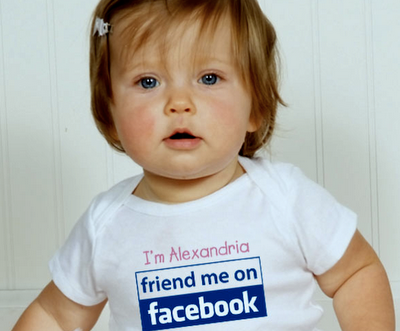 It seems like many of our children will no longer have to worry about those embarrassing photos popping up at 16,18th or 21st birthdays anymore. Many of them will have their lives broadcast as they grow via the internet, some before they are even born! The following article, based on research undertaken by internet security company AVG raises some interesting and concerning questions about how we publicly share our childrens’ lives, beginning before they are even old enough to speak, let alone protest…
Digital Birth: Welcome to the Online World
AVG Study Finds a Quarter of Children Have Online Births Before Their Actual Birth Dates
Source:AMSTERDAM–(BUSINESS WIRE)
Uploading prenatal sonogram photographs, tweeting pregnancy experiences, making online photo albums of children from birth, and even creating email addresses for babies – today’s parents are increasingly building digital footprints for their children prior to and from the moment they are born.
“Secondly, it reinforces the need for parents to be aware of the privacy settings they have set on their social network and other profiles. Otherwise, sharing a baby’s picture and specific information may not only be shared with friends and family but with the whole online world.”
Internet security company AVG surveyed mothers in North America (USA and Canada), the EU5 (UK, France, Germany, Italy and Spain), Australia/New Zealand and Japan, and found that 81 percent of children under the age of two currently have some kind of digital profile or footprint, with images of them posted online. In the US, 92 percent of children have an online presence by the time they are two compared to 73 percent of children in the EU5.
According to the research, the average digital birth of children happens at around six months with a third (33%) of children’s photos and information posted online within weeks of being born. In the UK, 37 percent of newborns have an online life from birth, whereas in Australia and New Zealand the figure is 41 percent.
Almost a quarter (23%) of children begin their digital lives when parents upload their prenatal sonogram scans to the Internet. This figure is higher in the US, where 34 percent have posted sonograms online, while in Canada the figure is even higher at 37 percent. Fewer parents share sonograms of their children in France (13%), Italy (14%) and Germany (15%). Likewise only 14 percent of parents share these online in Japan.
Seven percent of babies and toddlers have an email address created for them by their parents, and five percent have a social network profile.
When asked what motivates parents to post images of their babies on the Internet, more than 70 percent of all mothers surveyed said it was to share with friends and family. However, more than a fifth (22%) of mothers in the US said they wanted to add more content to their social network profiles, while 18 percent of US mothers said they were simply following their peers.
Lastly, AVG asked mothers how concerned they are (on a scale of one to five with five being very concerned) about the amount of online information available on their children in future years. Mothers were moderately concerned (average 3.5), with Spanish mothers being the most concerned.

Click image to read reviews
According to AVG CEO JR Smith, “It’s shocking to think that a 30-year-old has an online footprint stretching back 10–15 years at most, while the vast majority of children today will have online presence by the time they are two-years-old – a presence that will continue to build throughout their whole lives.
“Our research shows that the trend is increasing for a child’s digital birth to coincide with and in many cases pre-date their real birth date. A quarter of babies have sonogram photos posted online before they have even physically entered into the world.
“It’s completely understandable why proud parents would want to upload and share images of very young children with friends and families. At the same time, we urge parents to think about two things:
“First, you are creating a digital history for a human being that will follow him or her for the rest of their life. What kind of footprint do you actually want to start for your child, and what will they think about the information you’ve uploaded in future?
“Secondly, it reinforces the need for parents to be aware of the privacy settings they have set on their social network and other profiles. Otherwise, sharing a baby’s picture and specific information may not only be shared with friends and family but with the whole online world.”
The research was conducted by Research Now among 2200 mothers with young (under two) children during the week of 27 September. Mothers in the EU5 (UK, Germany, France, Italy, Spain), Canada, the USA, Australia, New Zealand and Japan were polled.
Key results
1 – Mothers with children aged under two that have uploaded images of their child
Overall – 81%
USA – 92%
Canada – 84%
UK – 81%
France – 74%
Italy – 68%
Germany – 71%
Spain – 71%
(EU5 – 73%)
Australia – 84%
New Zealand – 91%
Japan – 43%
2 – Mothers that uploaded images of their newborn
Overall – 33%
USA – 33%
Canada – 37%
UK – 37%
France – 26%
Italy – 26%
Germany – 30%
Spain – 24%
(EU5 – 28.6%)
Australia – 41%
New Zealand – 41%
Japan – 19%
3 – Mothers that have uploaded antenatal scans online
Overall – 23%
USA – 34%
Canada – 37%
UK – 23%
France – 13%
Italy – 14%
Germany – 15%
Spain – 24%
(EU5 – 20%)
Australia – 26%
New Zealand – 30%
Japan – 14%
4 – Mothers that gave their baby an email address
Overall – 7%
USA – 6%
Canada – 9%
UK – 4%
France – 7%
Italy – 7%
Germany – 7%
Spain – 12%
(EU5 – 7%)
Australia – 7%
New Zealand – 4%
Japan – 7%
5 – Mothers that gave their baby a social network profile
Overall – 5%
USA – 6%
Canada – 8%
UK – 4%
France – 2%
Italy – 5%
Germany – 5%
Spain – 7%
(EU5 – 5%)
Australia – 5%
New Zealand – 6%
Japan – 8%
Related articles
- Good Parenting? Thousands of Babies Are on Facebook (bettyconfidential.com)
- Look Both Ways: Keeping Your Kids Safe On Facebook (peterhbrown.wordpress.com)
Helicopter Parenting? Why There Are No Medals In The Parenting Olympics
 The following is re-posted from Psychcentral’s Dr John M Grohol, and poses some interesting questions about some trends towards over-parenting or “Helicopter Parenting” and it’s possible impacts on our kids. While there are many children who come from situations of parental neglect and laxity, there are also concerns regarding over protection. See what you think about what he has to say…
Let Your Children Be Children
Everyday, the same scene plays itself out across American neighborhoods across the United States. Mothers pull up in their Suburbans and Lexus SUVs at the entrance to their housing development. Even though the families live in perfectly safe, middle-class (or better) neighborhoods, parents feel the need to chauffeur their children the few blocks from the bus stop to home. Why?
This behavior may be understandable if the child is 5 or 6. But at 8 or 10, this behavior is ludicrous and symptomatic of a dangerous infection that has spread throughout this country in the latest generation of parents.
If not stopped, we may end up raising a whole generation or two of children who have little effective life coping skills and no connection or understanding to the world around them.
If you’re around 30 or older, think back to your own childhood. How much time was scheduled by your parents, and how much free time did you have on your own, to do with as you please? You may be surprised at the contrast between the scripted lives you as a parent plan for your children versus your own unscripted, imagination-driven childhood.
Here’s another scene from modern parenting. A child holds their 8th birthday party at a local birthday party place. All the parents not only arrive to drop off their child to attend the party, but also stay to supervise the child during the entire time they are at the party.
This isn’t just one or two worried parents — this appears to be very much the norm in many towns throughout middle-class America now. When it’s time to eat the cake, the birthday song is sung, the cake is cut, and then all the kids sit down at long rows of tables and begin eating. Their parents stand, like a prison lineup, along the outside walls of the room, keeping a close eye on their child.
At the first sign of a child’s conflict, parents are quick to intervene nowadays. “I just want everyone to play nicely,” they may explain. But they’re depriving their child of the opportunity to learn invaluable problem-solving skills. Especially if a child has no siblings, how else are they going to learn such skills except through trial-and-error interaction with their peers?

Click image to read reviews
There are many rationales for these kinds of parenting behaviors. But if we look at some of the most common ones, they all don’t stand up to tests of data, reasoning or logic.
One rationale is safety. “I’ll do anything to protect my child!” Okay, then why are you driving them home from the bus stop a few blocks away? Because statistics show that your child (age 15 years or younger) is 5 to 7 times more likely to die in your car than they are to be abducted by a stranger. And put into perspective, both are highly unlikely occurrences to begin with. With approximately 78 million children in the U.S., only 1,638 children died in car accidents in 2008, compared with only 200 who were abducted by a stranger.
Still another excuse for this behavior is a sense that there’s no reason not to help out our children or placate them with this thing or that. Why not buy them that toy while we’re out shopping for some new clothes? Why not pick them up at the entrance to our housing development?
Because it teaches our children that every outing is a chance for a reward. So much like a mouse in a cage pressing a button to receive a pellet of food, our children can inadvertently learn that any type of outing results in a toy and all of life is just another opportunity for a reward. When a reward isn’t granted, it’s an excuse to act out or punish those who grant the rewards.
Another rationale is wanting to provide our children with all the benefits we didn’t have. If our parents seemed uninterested or didn’t spend as much time with us as we may have wished, we’re going to ensure we’re there every minute for our children.
But somehow this has become twisted to trying to smooth over every life bump our child experiences, so that they experience virtually none at all. By the time they go off to college, they have had only this womb-like protected life that little prepares them for the realities of life — people who treat us badly, failure at something we want to be good at, rejection by others, and honest hardship.
Understandably, there may be times where a parent has good reason to need to pick up their child at their bus-stop, or attend a birthday party with them. But these should be exceptions, not the rule.
Click image to read reviews
If you see yourself in this entry, it’s not too late. I highly recommend one of the following books, either Richard Weissbourd’s The Parents We Mean To Be: How Well-Intentioned Adults Undermine Children’s Moral and Emotional Development or Free Range Kids by Lenore Skenazy. These books talk about the importance of letting children be children, exploring their imagination on their own, on their own unscripted and unscheduled time. The research we have on child development suggests this results not only in happier children, but children who grow up to be more well-adjusted adults.
There is no “right way” to parent (contrary to what the hundreds of parenting books suggest). The right way is to find the way that works for you and your partner, while respecting the needs of your child. Those needs include the need to be connected with nature, to be connected and learn how to interact with other children who aren’t their siblings, with no adults around.
What if your child doesn’t want to play outside or walk from the bus stop? Well, they often don’t want to learn arithmetic or do their chores, and yet we still find a way to have them understand the value of each. And if you’re feeling pressure from other moms, well, now’s the time to take a stand for what you believe in and what the research shows. Your child will thank you in the end.
Children — like adults — learn by doing, as much as they learn through formal teaching. If we take those informal learning opportunities away from our children, we ultimately hurt them while ironically trying to help them. We hurt their ability to learn the way they were intrinsically built to learn — through natural experiences, through interactive experiences with their peers, and through unscripted, unstructured play time.
If you want to help your child today, give them time to be a child.
Related articles
- Look Both Ways: Keeping Your Kids Safe On Facebook (peterhbrown.wordpress.com)
- Why do so many parents put their kids’ lives online? Study reveals disturbing statistics (techvibes.com)
The “Science” Of Physical Attractiveness: Now You Can Participate In The Research Online
 Scientists in Australia and Hong Kong have conducted a comprehensive study to discover how different body measurements correspond with ratings of female attractiveness.
The study, published in the Journal of Evolutionary Biology, found that across cultural divides young, tall and long armed women were considered the most attractive.
“Physical attractiveness is an important determining factor for evolutionary, social and economic success,” said lead author Robert Brooks from the University of New South Wales. “The dimensions of someone’s body can tell observers if that person is suitable as a potential mate, a long term partner or perhaps the threat they pose as a sexual competitor.”
Traditional studies of attractiveness have been bound to the Darwinian idea of natural selection, which argues that an individual will always choose the best possible mate that circumstances will allow. Such studies have focused on torso, waist, bust and hip measurements. In this study the team measured the attractiveness of scans of 96 bodies of Chinese women who were either students or volunteers, aged between 20–49 years of age.

Click image to read reviews
Videos of the models were shown to a sample of 92 Australian adults, 40 men and 52 women, aged between 18 to 58 years of age, and mostly of European descent. They then compared the attractiveness ratings given by the Australian group to the ratings from a group in Hong Kong to avoid cultural bias.
Both sample groups were asked to rate the models’ attractiveness on a 7 point scale; on average the raters took just 5.35 seconds to rate each model. The team then explored the statistical results, focusing on age, body weight and a range of length and girth measurements.
The results showed that there was a strong level of agreement between the 4 groups of Australian men and women, and Hong Kong men and women, with scans of younger, taller and lighter women being rated as more attractive. Women with narrow waists, especially relative to their height, were also considered much more attractive.
The study also revealed that BMI (Body mass index) and HWR (Hip to waist ratio) were both strong predictors of attractiveness. Scans of taller women who had longer arms were also rated highly, however leg size did not contribute significantly to the ratings.
“Our results showed consistent attractiveness ratings by men and women and by Hong Kong Chinese and Australian raters, suggesting considerable cross cultural consistency,” concluded Brooks. “In part this may be due to shared media experiences. Nonetheless when models are stripped of their most obvious racial and cultural features, the features that make bodies attractive tend to be shared by men and women across cultural divides.”
Brooks and his colleagues have taken their studies of the complexities of male and female attractiveness online at www.bodylab.biz.
Source: Wiley Blackwell
Related articles by Zemanta
- Have “The Time Of Your Life” Or “Beat It”: The Dance Moves That Make Men Attractive (peterhbrown.wordpress.com)
- People Vs Possessions: What Matters The Most? (peterhbrown.wordpress.com)
- Online Dating: 10 Psychological Insights (spring.org.uk)
Look Both Ways: Keeping Your Kids Safe On Facebook
 With a bit of strategic parental guidance, you can educate your kids about the potential hazards of social media and give them the tools they need to protect themselves from online predators, guard their personal information, preserve their online reputation, and avoid suspicious downloads that could harm your PC.
Source: http://www.pcworld.com
Facebook and Kids
An iStrategyLabs study documents the growth rates of Facebook profiles in the United States based on age, gender, location, education level, and interests. The study shows that from January 2009 to January 2010, the 13-to-17-year-old age group grew about 88 percent in the U.S., jumping from about 5.7 million teenage Facebook users to almost 10.7 million. Those figures, of course, don’t include minors who lied about their age upon creating their profile.
Despite a legal requirement that kids must be 13 or older to sign up for Facebook, many younger children are using the service. Because no perfect age-verification system exists, younger kids are able to slip by unnoticed through falsifying their age. (For instance, I have one friend whose 12-year-old daughter listed her birth year as 1991 on Facebook, thereby claiming that she was 19 years old.)
The safety and public-policy teams at Facebook are aware of their young audience, and the site has rolled out privacy settings specifically for the under-18 set. Users between the ages of 13 and 17 get what Facebook’s privacy policy calls a “slightly different experience.” Minors do not have public search listings created for them when they sign up for Facebook, meaning their accounts cannot be found on general search engines outside of Facebook.
The “Everyone” setting is not quite as open for minors as it is for adults. If a minor’s privacy settings are set to “Everyone,” that includes only friends, friends of friends, and people within the child’s verified school or work network. However, the “Everyone” setting still allows adults to search for minors by name and send them friend requests (and vice versa), unless the account owner manually changes that. Also, only people within a minor’s “Friends of Friends” network can message them.
Facebook recently premiered a new location-based service called Places, which has some restrictions for minors as well. Minors can share their location through Places only with people on their Friends lists, even if their privacy settings are set to “Everyone.”
As for the teens who lie about how old they are, Facebook does have a way of verifying age. If, for instance, a 19-year-old is mostly friends with 13- and 14-year-olds, and they seem to be taking lots of photos together, then Facebook might suspect that the user is actually 12 or 13–and then it may flag the user’s page for removal or give the user a warning.
The Basics: Protecting Personal Information
Even with Facebook’s privacy policy for minors, a child’s personal information is still widely on display. A young person’s Facebook account is just the beginning of their online footprint, and they need to take that fact seriously, since it can affect their reputation today and potentially come into play later in life when they’re applying for college and for jobs.
Facebook public-policy representative Nicky Jackson Colaco advises parents to sit down with their kids and talk about the importance of protecting one’s online identity. Maintaining open communication with your children is the key to understanding exactly how they’re using Facebook.
“I’d never send my son onto the football field without pads and knowledge of the game,” Colaco says, “and it’s exactly the same with Facebook.”
If you have a Facebook profile, consider sending your child a friend request–not necessarily as a spying tool, but to remind your child of your own online presence. If you don’t have a Facebook account, ask your child to show you their profile. It helps to familiarize yourself as much as possible with the site’s privacy controls and other settings, because the more you know about Facebook, the better equipped you can be if something serious ever arises.
It’s also a good idea to take a look at your child’s photos and wall posts to make sure they are age appropriate. Remind your child that the Internet in general, but especially Facebook, is not a kids-only zone, and that adults can see what’s on their profile as well. Maintaining an appropriate online presence as a teenager will help your child build a respectable online footprint. Remember: The Internet never forgets.
If your kid really has something to hide, they might make a Facebook profile behind your back, or have one account that’s parent-friendly and a separate account for their friends. If they show you a profile that seems skimpy on content, that could be a red flag. That’s where PC and Web-monitoring tools could come into play (see the “Monitoring Behavior” section on the next page).
Finally, go over Facebook’s privacy settings with your child, and show them how to activate the highest level of security. Emphasize that Facebook is a place for friends and not strangers, and then change their profile to “friends only.” Again, remind your child to be wary of what they post in their status updates, since oversharing online can lead to consequences in the real world.
“As the site gets bigger, it’s important to have everyone working together–us, parents, kids, our safety advisory board–to make sure the site remains a safe place,” Colaco says.
Cyberbullying
The suicides of 13-year-old Megan Meier and 15-year-old Phoebe Prince have brought media attention to the potentially devastating effects of cyberbullying. A study performed as part of the Pew Internet & American Life Project, a division of the Pew Research center, reports that “32 percent of online teens have experienced some sort of harassment via the Internet,” including private material being forwarded without permission, threatening messages, and embarrassing photos posted without their consent.

Click image to read reviews
The best way to deal with a cyberbully is to report them and block them from your kid’s Facebook profile.
Research performed at the Massachusetts Aggression Reduction Center shows that, while adults are inclined to moderate their online behavior, children and teens are “significantly more willing to ‘go further’ and to type very shocking things that they would never say in person… Kids believe that online statements simply ‘don’t count’ because they’re not being said to someone’s face.”
Because young people tend to believe that they aren’t accountable for their online actions, Facebook becomes a convenient place to target victims for bullying. Although you can’t do much to prevent your child from being bullied online, you can help them end the harassment if it starts.
The MARC Center has several guides offering tips on how to handle cyberbullying, and all of them start with communicating directly with your child–don’t be afraid to get involved. If you think your child is being bullied, advise your child to spend less time on the site in question, or flag the bully by notifying the Website. If the behavior is also happening at school, notify the school’s administrators so that they, too, can get involved.
Facebook also makes it easy to report harassment issues, and encourages users to do so. But what if you find out that your child is the one doing the bullying? Both scenarios are possible, and both should be dealt with.
In a New York Times Q&A session on cyberbullying, expert Elizabeth K. Englander of the MARC Center addresses an approach that parents should take if they discover that their child is the bully. She first recommends that you discuss with your child why cyberbullying is hurtful, and bring up some of the tragic cases of teen suicide related to online harassment. Try to understand that your child could be reacting to pressure from friends, or that your child may be retaliating against someone who hurt their feelings in a similar manner. Although such circumstances don’t excuse the behavior, learning about them could bring a larger issue to your attention.
Finally, establish a set of rules for your teen to follow when using Facebook and other social networking sites, and monitor your child’s usage, perhaps even placing a daily time limit.
Stranger Danger
Earlier this year, 33-year-old Peter Chapman was sentenced to life in prison for kidnapping, raping, and murdering a 17-year-old girl he met through Facebook. Chapman, a registered sex offender, had created a fake profile and pretended to be 17 years old to gain the victim’s trust.

Despite Facebook’s valiant efforts to rid its site of online predators, the system isn’t foolproof. The site has banned convicted sex offenders from joining, and in 2008 all of the known sex offenders already on the site were removed. However, considering the case of Peter Chapman, predators are still finding ways to cheat the system.
As mentioned earlier, you can limit privacy settings so that your child is directly interacting only with people they know–and more important, you can hide information such as your child’s age, school, and full name from people who are not direct friends.
Stress to your child the importance of avoiding people they do not know in real life. Even if the stranger’s profile says that they are the same age as your child and that they go to a nearby school, the profile could be a decoy. Your child can report to Facebook any stranger who tries to contact them or engage in inappropriate activity.
Third-Party Applications
Many third-party applications on Facebook are aimed directly at teens–often they involve games, establishing crushes, or sprucing up profiles. But many kids don’t quite grasp that these Facebook components are not actually created by Facebook, and that therefore they have different terms of service.

Even worse, some of these external downloads could contain malware. Sunbelt Software has reported several suspicious Facebook scams, from a Texas Hold’em poker app containing adware to various phishing scams under similar disguises.
Make sure you have an up-to-date antivirus program and ad-blocking software that could catch these threats. Talk to your kids about skimming through the terms of service and privacy policies for applications before they accept the download. Also advise them never to open a link posted on their wall from someone they don’t know–it could point to a malicious site.
Monitoring Behavior
If you want to keep a more watchful eye on your kids’ online behavior, you can use any of several effective tools.
SafetyWeb is an online service geared toward parents who wish to keep tabs on what their kids are doing online. It checks across 45 different social networking sites to see if your child has a registered public profile, and it monitors those accounts for any potentially threatening activities. Monitored platforms include Facebook, Flickr, MySpace, Twitter, and YouTube. It also recognizes LiveJournal as a social network and will monitor that site, but it has yet to include other blogging platforms such as Tumblr.

The service will notify you, the parent, if your child has posted anything potentially unsafe or inappropriate, within categories related to drugs and alcohol, sex, depression, profanity, and cyberbullying. That way, you can check your child’s public activity without having to join every site or read every post they make.
McGruff Safeguard software takes online monitoring a step further: It can record every move your child makes on the Internet, covering everything from instant-message logs to search terms on Google. Parents can keep a close eye on their children and discuss any behavior found to be dangerous or inappropriate.
Whether you use a software monitoring tool or not, experts agree that having regular conversations with your children about their online usage is the most important element to keeping them safe and aware of the dangers of the Web.
Related articles by Zemanta
- Sugar & Spite: Bullying and Young Girls (peterhbrown.wordpress.com)
- Six Facebook, Twitter mistakes that can get you fired (macworld.com)
Under Pressure: Why We “Choke” At The Critical Moment
 A star golfer misses a critical putt; a brilliant student fails to ace a test; a savvy salesperson blows a key presentation. Each of these people has suffered the same bump in mental processing: They have just choked under pressure.
Credit: and Source: ScienceDaily
It’s tempting to dismiss such failures as “just nerves.” But to University of Chicago psychologist Sian Beilock, they are preventable results of information logjams in the brain. By studying how the brain works when we are doing our best — and when we choke — Beilock has formulated practical ideas about how to overcome performance lapses at critical moments.
“Choking is suboptimal performance, not just poor performance. It’s a performance that is inferior to what you can do and have done in the past and occurs when you feel pressure to get everything right,” said Beilock, an associate professor in psychology.
Preventing choking in sports Some of the most spectacular and memorable moments of choking occur in sports when the whole world is watching. Many remember golfer Greg Norman’s choke at the 1996 U.S. Masters. Norman had played brilliantly for the first three days of the tournament, taking a huge lead. But on the final day, his performance took a dive, and he ended the Masters five shots out of first place.
Choking in such cases happens when the polished programs executed by the brains of extremely accomplished athletes go awry. In “Choke,” Beilock recounts famous examples of these malfunctions in the context of brain science to tell the story of why people choke and what can be done to alleviate it.
Thinking too much about what you are doing, because you are worried about losing the lead (as in Norman’s case) or worrying about failing in general, can lead to “paralysis by analysis.” In a nutshell, paralysis by analysis occurs when people try to control every aspect of what they are doing in an attempt to ensure success.
Unfortunately, this increased control can backfire, disrupting what was once a fluid, flawless performance.
“My research team and I have found that highly skilled golfers are more likely to hole a simple 3-foot putt when we give them the tools to stop analyzing their shot, to stop thinking,” Beilock said. “Highly practiced putts run better when you don’t try to control every aspect of performance.” Even a simple trick of singing helps prevent portions of the brain that might interfere with performance from taking over, Beilock’s research shows.
Preventing choking on tests and in business The brain also can work to sabotage performance in ways other than paralysis by analysis. For instance, pressure-filled situations can deplete a part of the brain’s processing power known as working memory, which is critical to many everyday activities.
Beilock’s work has shown the importance of working memory in helping people perform their best, in academics and in business. Working memory is lodged in the prefrontal cortex and is a sort of mental scratch pad that is temporary storage for information relevant to the task at hand, whether that task is doing a math problem at the board or responding to tough, on-the-spot questions from a client. Talented people often have the most working memory, but when worries creep up, the working memory they normally use to succeed becomes overburdened. People lose the brain power necessary to excel.
One example is the phenomenon of “stereotype threat.” This is when otherwise talented people don’t perform up to their abilities because they are worried about confirming popular cultural myths that contend, for instance, that boys and girls naturally perform differently in math or that a person’s race determines his or her test performance.
Beilock’s research is the basis of her new book, “Choke: What the Secrets of the Brain Reveal About Getting it Right When You Have To,” published Sept. 21 by Simon and Schuster, Free Press.
In Choke, Beilock describes research demonstrating that high-achieving people underperform when they are worried about confirming a stereotype about the racial group or gender to which they belong. These worries deplete the working memory necessary for success. The perceptions take hold early in schooling and can be either reinforced or abolished by powerful role models.
In one study, researchers gave standardized tests to black and white students, both before and after President Obama was elected. Black test takers performed worse than white test takers before the election. Immediately after Obama’s election, however, blacks’ performance improved so much that their scores were nearly equal with whites. When black students can overcome the worries brought on by stereotypes, because they see someone like President Obama who directly counters myths about racial variation in intelligence, their performance improves.
Beilock and her colleagues also have shown that when first-grade girls believe that boys are better than girls at math, they perform more poorly on math tests. One big source of this belief? The girls’ female teachers. It turns out that elementary school teachers are often highly anxious about their own math abilities, and this anxiety is modeled from teacher to student. When the teachers serve as positive role models in math, their male and female students perform equally well.

click image to read reviews
Meditation and practice can help Even when a student is not a member of a stereotyped group, tests can be challenging for the brightest people, who can clutch if anxiety taps out their mental resources. In that instance, relaxation techniques can help.
In tests in her lab, Beilock and her research team gave people with no meditation experience 10 minutes of meditation training before they took a high-stakes test. Students with meditation preparation scored 87, or B+, versus the 82 or B- score of those without meditation training. This difference in performance occurred despite the fact that all students were of equal ability.
Stress can undermine performance in the world of business, where competition for sales, giving high-stakes presentations or even meeting your boss in the elevator are occasions when choking can squander opportunities.
Practice helps people navigate through these tosses on life’s ocean. But, more importantly, practicing under stress — even a moderate amount — helps a person feel comfortable when they find themselves standing in the line of fire, Beilock said. The experience of having dealt with stress makes those situations seem like old hat. The goal is to close the gap between practice and performance.
A person also can overcome anxiety by thinking about what to say, not what not to say, said Beilock, who added that staying positive is always a good idea.
“Think about the journey, not the outcome,” Beilock advised. “Remind yourself that you have the background to succeed and that you are in control of the situation. This can be the confidence boost you need to ace your pitch or to succeed in other ways when facing life’s challenges.”
Related articles by Zemanta
- Feeling Stuck? 10 Important Tips For Changing Your Life (peterhbrown.wordpress.com)
- The Type A B C’s Of How Your Personality Effects Your Health (peterhbrown.wordpress.com)
- What Happens Under Pressure (online.wsj.com)
The Type A B C’s Of How Your Personality Effects Your Health
 Could your personality kill you—or might it make you live longer? Could it give you heart disease, or protect you from illness? Could it push you toward or away from doctor appointments?
Credit: Angela Haupt , health.usnews.com
Personality traits play a distinct role in determining how healthy we are, psychologists say. “Everything is related to everything else. How stressed or angry you are, and how you interact with the world, is contingent in large part on your personality style,” says Michael Miller, editor in chief of the Harvard Mental Health Letter. “And that is going to have an enormous impact on your health.”
Here’s a look at common personality types and traits and how each can help or hurt your health (sometimes both):
Hostile
One of the aspects of the impatient, hard-charging Type A personality that is known to increase heart disease risk is hostility. Hostile people eat and smoke more and exercise less than other personality types, says Redford Williams, head of behavioral medicine at Duke University Medical Center and author of Anger Kills. They’re likelier to be overweight in middle age and have higher cholesterol and blood pressure. Williams’s past research suggests hostile people are also more likely to develop irregular heart rhythms, and to die before reaching their 50s. Most of these problems can be traced back to elevated levels of the stress hormone cortisol, as well as increased inflammation in the walls of the coronary arteries, which leads to a greater risk of heart attack.
No personality is set in stone, however, and Type A’s can be taught how to take the edge off their hostility. Hostile heart patients who attend workshops that teach coping skills, for instance, have a lower incidence of depression and healthier blood pressure than Type A’s who don’t go. The key, Williams says, is learning how to communicate more clearly and how to control anger and other negative emotions. He suggests asking yourself four questions when you get angry: Is this issue truly important? Is what I’m feeling appropriate to the facts? Can I modify the situation in a positive way? Is taking such action worth it? Meditation, deep breathing, and yoga can damp hostility with a layer of calm.
Impulsive
Because Type A personalities are defined by competitiveness, a drive to succeed, and a sense of urgency, they are prone to take risks and act without thinking, neither of which is likely to improve health. Non-Type A’s can be impulsive, too. Such people are often not as well-grounded as others, says Robin Belamaric, a clinical psychologist in Bethesda, Md.: “They’ll look at an opportunity that comes along and say, ‘Hmm, that sounds like fun,’ whereas another, more thoughtful person, will say, ‘I’m going to pass, because I’m not sure it’s the best idea.’ ”
Relaxed
If you’re a Type B, you roll with the punches. You’re relaxed, take life a day a time, and handle stress without cracking. That translates to a higher quality of life and lower likelihood of heart disease—less anxiety strengthens the immune system. The more we chill, the better off we are, says Miller: “You don’t want to get locked into a stressful, tense state of mind.” Over the long term, he adds, relaxing and managing stress effectively will lengthen your life, help your heart and gastrointestinal system, and just make you feel better overall.
Extrovert
People who are outgoing, involved in their communities, and have strong social connections reap health benefits. An analysis of 148 studies published in the online journal PLoS medicine in July found that on average, adults enrolled in a study with many close friendships were 50 percent likelier to survive until their study ended than were those with few friendships. And a 2009 study published in Perspectives in Psychological Science suggests that social support leads to improved coping skills, healthy behavior, and adherence to medical regimens. Bonding with others also reduces stress and improves the immune system—so making friends and getting involved becomes, in effect, a well-being tonic.
What drives at least some of the health benefits goes beyond biology, Miller says. “It may have to do with the fact that when you’re around people, you think, ‘Oh, Martha has gone for her mammogram—that reminds me, I should, too.’ ”
Eager to please
People-pleasers—Type C’s—are conforming, passive, and want to accommodate. That can be a good thing when it comes to patient compliance: They’re more likely to take the right medicines in the right doses at the right times, for instance—once they see a doctor, that is. Making and following through on appointments can be challenging for Type C’s, who tend to accept their fate as inevitable and fall readily into hopelessness and helplessness. That means others must push them to take care of themselves. “They may be less likely to maintain their health on their own,” Belamaric says. “If they develop a problem, they may just complain about it, hoping somebody says, ‘I have a good doctor, I’ll make you an appointment.’ ”
Some Type C’s may be so mired that they don’t seek medical attention—even when it’s clearly necessary—and slough off preventive behaviors, like watching what they eat. “If they get a serious diagnosis, they may be passive, throw their hands up, and say, ‘Well, there’s nothing I can do about it, anyway. If it’s my time, it’s my time,’ ” Belamaric says.

Click image to read reviews
Stressed and distressed
Type D’s—D is for distressed—dwell on negative emotions and are afraid to express themselves in social situations. Compared to more optimistic sorts, a Type D may face three times the risk for future heart problems, according to a recent study in the journal Circulation: Cardiovascular Quality and Outcomes. Type D’s also face a higher likelihood of compulsive overeating and substance abuse. “If you’re a person who is prone to depression or anxiety, or if you’re overly self-critical, there’s more of a chance of turning to gratifying behavior to feel better,” Miller says.
Optimistic versus pessimistic
Optimism “heavily influences physical and mental health,” concluded a study published in May in the journal Clinical Practice & Epidemiology in Mental Health after researchers followed more than 500 males for 15 years. The rate of heart-related deaths was 50 percent lower among optimists than among pessimists. “Optimists have a higher quality of life, and they may be more resilient in the way they deal with stress,” Miller says. “So if a problem comes along, they’re able to handle it better, and they become less symptomatic.” Glass-half-empty types harbor little hope for the future and tend more toward depression and anxiety disorders.
But there’s a catch for those at the extreme end of the optimism spectrum: They think of themselves as impervious to risks. Extreme optimists who smoke are the best examples. They believe they won’t develop lung cancer. Why give up smoking to prevent a nonexistent risk?
The “self-healing personality”
That is the name Howard Friedman, a professor of psychology at the University of California-Riverside, attaches to people who are curious, secure, constructive, responsive, and conscientious. These traits translate to enthusiasm for life, emotional balance, and strong social relationships. “Positive emotions buffer hormonal responses to stress,” says Friedman, who studies the relationship between personality and longevity. Self-healers, he says, “have healthier behavior patterns: more physical activity, a better diet, and less smoking and substance abuse.”
Related articles by Zemanta
- Be Active, Sleep Better! Aerobic Exercise Helps Beat Insomnia (peterhbrown.wordpress.com)
- What Were You Thinking? The Causes Of Online Disinhibition (peterhbrown.wordpress.com)
“Have The Time Of Your Life” Or “Beat It”: The Dance Moves That Make Men Attractive
 The key dance moves that make men attractive to women have been discovered by psychologists at Northumbria University.
Credit: Medical News Today:
Using 3D motion-capture technology to create uniform avatar figures, researchers have identified the key movement areas of the male dancer’s body that influence female perceptions of whether their dance skills are “good” or “bad”.
The study, led by psychologist Dr Nick Neave and researcher Kristofor McCarty, has for the first time identified potential biomechanical differences between “good” and “bad” male dancers. Its findings are published in the Royal Society Journal Biology Letters on Wednesday 8th September.
Dr Neave believes that such dance movements may form honest signals of a man’s reproductive quality, in terms of health, vigour or strength, and will carry out further research to fully grasp the implications.
Researchers, at Northumbria’s School of Life Sciences, filmed 19 male volunteers, aged 18–35, with a 3-D camera system as they danced to a basic rhythm. Their real-life movements were mapped onto feature-less, white, gender-neutral humanoid characters, or avatars, so that 35 heterosexual women could rate their dance moves without being prejudiced by each male’s individual level of physical attractiveness.
The results showed that eight movement variables made the difference between a “good” and a “bad” dancer. These were the size of movement of the neck, trunk, left shoulder and wrist, the variability of movement size of the neck, trunk and left wrist, and the speed of movement of the right knee.
Female perceptions of good dance quality were influenced most greatly by large and varied movements involving the neck and trunk.
Dr Neave said: “This is the first study to show objectively what differentiates a good dancer from a bad one. Men all over the world will be interested to know what moves they can throw to attract women.
“We now know which area of the body females are looking at when they are making a judgement about male dance attractiveness. If a man knows what the key moves are, he can get some training and improve his chances of attracting a female through his dance style.”
Kristofor McCarty said: “The methods we have used here have allowed us to make some preliminary predictions as to why dance has evolved. Our results clearly show that there seems to be a strong general consensus as to what is seen as a good and bad dance, and that women appear to like and look for the same sort of moves.
“From this, we predict that those observations have underlying traits associated with them but further research must be conducted to support such claims.”
Dr Neave and Kristofor McCarty also worked with fellow Northumbria researchers Dr Nick Caplan and Dr Johannes Hönekopp, and Jeanette Freynik and Dr Bernhard Fink, from the University of Goettingen, on the landmark study.
Sources: Northumbria University, AlphaGalileo Foundation.
About Peter
Peter Brown BHMS (Hons) MPsychClin MAPS
I’m a Clinical Psychologist and have a private practice and consultancy in Brisbane Australia. I have 24 years experience in child, adult and family clinical psychology. I have a wonderful wife and three kids.
I am co-founder of Christian Wholeness Counselling Services.
I like researching issues of the brain & mind, reading and seeking out new books and resources for myself and my clients. I thought that others might be interested in some of what I have found also, hence this blog…

Subscribe to My Blog Posts & Updates
-

Blog Surfer
Alphainventions


Recent Comments


 Peter H Brown Clinical Psychologist