Anxiety & Depression: Self-Help Internet Interventions Work!
 A little while ago I posted a list of free interactive self-help web sites, all research based, which have been shown to effective in the treatment of anxiety & depression. A recent study adds to the body of evidence which supports web based intervention as a viable treatment option or adjunct.
Cognitive behaviour therapy (CBT) via the internet is just as effective in treating panic disorder (recurring panic attacks) as traditional group-based CBT. It is also efficacious in the treatment of mild and moderate depression. This according to a new doctoral thesis soon to be presented at Karolinska Institutet.
Read the original research thesis here (PDF)
It is estimated that depression affects some 15 per cent and panic disorder 4 per cent of all people during their lifetime. Depression can include a number of symptoms, such as low mood, lack of joy, guilt, lethargy, concentration difficulties, insomnia and a low zest for life. Panic disorder involves debilitating panic attacks that deter a person from entering places or situations previously associated with panic. Common symptoms include palpitations, shaking, nausea and a sense that something dangerous is about to happen (e.g. a heart attack or that one is going mad ).
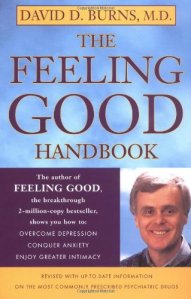
Click image to read reviews
It is known from previous studies that CBT is an effective treatment for both panic disorder and depression. However, there is a lack of psychologists and psychotherapists that use CBT methods, and access to them varies greatly in Sweden as well as in many other countries. Internet-based CBT has therefore been developed, in which the patient undergoes an Internet-based self-help programme and has contact with a therapist by email.
The present doctoral thesis includes a randomised clinical trial of 104 patients with panic disorder and compares the effectiveness of Internet-based CBT and group CBT within a regular healthcare service. The study shows that both treatments worked very well and that there was no significant difference between them, either immediately after treatment or at a six-month follow-up. Analyses of the results for the treatment of depression show that Internet-based CBT is most effective if it is administered as early as possible. Patients with a higher severity of depression and/or a history of more frequent depressive episodes benefited less well from the Internet treatment.
Jan Bergström works as a clinical psychologist at the Anxiety Disorders Unit of the Psychiatry Northwest division of the Stockholm County Council. This research was also financed by the Stockholm County Council.
“Thanks to our research, Internet treatment is now implemented within regular healthcare in Stockholm, at the unit Internetpsykiatri.se of Psychiatry Southwest, which probably makes the Stockholm County Council the first in the world to offer such treatment in its regular psychiatric services,” says Jan Bergström.
Read the original research thesis here (PDF)
Credit: Adapted from materials provided by Karolinska Institutet.

Related articles by Zemanta
- CBT Via the URLs – Treatment for Depression Online May Be as Effective as Group-Based Therapy IRL (healthmgmtrx.blogspot.com)
- Study: Treating panic disorder works as well online (news.cnet.com)
![Reblog this post [with Zemanta]](https://i0.wp.com/img.zemanta.com/reblog_e.png)
Fast Food, Fast You! How Fast Food Makes You Impatient
 Like it or not, the golden arches of McDonalds are one of the most easily recognised icons of the modern world. The culture they represent is one of instant gratification and saved time, of ready-made food that can be bought cheaply and eaten immediately. Many studies have looked at the effects of these foods on our waistlines, but their symbols and brands are such a pervasive part of our lives that you’d expect them to influence the way we think too.
Read the original research paper (PDF)
And so they do – Chen-Bo Zhong and Sanford DeVoe have found that fast food can actually induce haste and impatience, in ways that have nothing to do with eating. They showed that subliminal exposure to fast food symbols, such as McDonalds’ golden arches, can actually increase people’s reading speed. Just thinking about these foods can boost our preferences for time-saving goods and even nudge us towards financial decisions that value immediate gains over future returns. Fast food, it seems, is very appropriately named.
Zhong and DeVoe asked 57 students to stare at the centre of a computer screen while ignoring a stream of objects flashing past in the corners. For some of the students, these flashes included the logos of McDonald’s, KFC, Subway, Taco Bell, Burger King and Wendy’s, all appearing for just 12 milliseconds. We can’t consciously recognise images that appear this quickly and, indeed, none of the students said that they saw anything other than blocks of colour.
The students were then asked to read out a 320-word description of Toronto and those who had subconsciously seen the fast food logos were faster. Even though they had no time limit, they whizzed through the text in just 70 seconds. The other students, who were shown blocks of colours in place of the logos, took a more leisurely 84 seconds.
Zhong and DeVoe also found that thoughts of fast food could sway students towards more efficient, time-saving products. They asked 91 students to complete a marketing survey by saying how much they wanted each of five product pairs. One option in each pair was more time-efficient (as rated by an independent panel of 54 people), such as 2-in-1 shampoo rather than regular shampoo or a four-slice toaster versus a one-slice one.
If the students had previously thought about the last time they ate at a fast food joint, they were more likely to prefer the time-saving products that students who had thought about their last visit to the grocery store. Zhong and DeVoe say that this supports their idea that thinking about fast-food makes people impatient. [This seems to be] the weakest part of their study, for products like 2-in-1 shampoo are as much about saving money (perhaps more so) as they are about saving time. Fast food is not only served quickly but priced cheaply, and it may be this aspect that altered the students’ preference.

Click image to read reviews
However, the duo addressed this issue in their third experiment. They randomly asked 58 students to judge one of four different logos on their aesthetic qualities, including those of McDonald’s, KFC and two cheap diners. Later, they were told that they could either have $3 immediately or a larger sum in a week. They had to say how much it would take to make them delay their windfall.
As predicted, those who considered the fast food logos were more impatient, and demanded significantly more money to forego their smaller immediate payment in favour of a larger future one. It seems that they put a greater price on instant gratification over larger future returns
Of course, these results can’t tell us if fast food actually contributes to a culture of impatience and hurry, or if it’s just a symptom of it. Nor do they say anything about whether this effect is good or bad. That would all depend on context. As Zhong and DeVoe note, a brisk walking speed is a good thing if you’re trying to get to a meeting but it would be a sign of impatience if you’re aiming for a leisurely stroll in the park.
Their study does, however, suggest that fast food and the need to save time are inextricably linked in our minds so that even familiar brands can make us behave more hastily. They could even affect our economic decisions, harming our finances in the long run. As Zhong and DeVoe say, even our leisure activites are “experienced through the coloured glasses of impatience” and “it is possible that a fast food culture that extols saving time not only changes the way people eat, but also fundamentally alters the way they experience events”
Read the original research paper (PDF)
Credit: discovermagazine
Related articles by Zemanta
- How a fast-food sign changes your day (thestar.com)
- Rotman Paper Finds Exposure To Fast Food Can Make Us Impatient (lockergnome.com)
Spank Now, Pay Later? Children Spanked At 3yrs More Likely To Be Aggressive At 5
 April 12, 2010 — Mums who spank their 3-year-olds may be increasing their children’s risk of aggressive behavior, such as bullying, by the time they turn 5, a study shows.
The study, published in the May issue of Pediatrics, adds to evidence suggesting that spanking and other types of corporal punishment set kids up for aggressive behaviors later in life.
“Children need guidance and discipline; however, parents should focus on positive, non-physical forms of discipline and avoid the use of spanking,” study researcher Catherine A. Taylor, PhD, an assistant professor of community health sciences at Tulane University School of Public Health and Tropical Medicine in New Orleans, tells WebMD in an email. “This message is consistent with that of the American Academy of Pediatrics, which ‘strongly opposes striking a child for any reason.'”
Taylor and colleagues asked about 2,500 mothers how often they had spanked their 3-year-old child in the past month. Nearly half of the moms said they had not spanked their child during the previous month, 27.9% said they spanked their 3-year-old once or twice within the last month, and 26.5% percent said they spanked their child more than twice in the past month.
The researchers also asked moms questions about their child’s aggressive behavior, such as whether they were bullies, cruel, mean, destructive, and/or prone to getting into fights with others at age 3 and again at age 5.
Although other studies have shown a link between spanking and aggressive behavior, the new study solidifies the connection because the researchers controlled for other maternal risk factors that might have explained the link, such as neglect, maternal use of drugs and alcohol, maternal stress and depression, and the physical or psychological maltreatment of the child.
“This study reinforces that any kind of violence or physical aggression in the home is another risk factor for kids being more aggressive in the future,” says Patricia Hametz, MD, director of the Injury and Violence Prevention Center and assistant clinical professor of pediatrics at Columbia University and director of the general pediatrics inpatient service at New York-Presbyterian Morgan Stanley Children’s Hospital in New York City.
Age-Appropriate Discipline
“The way you discipline depends on the age of the child, and pediatricians should give age-appropriate suggestions about how to discipline toddlers,” Hametz [says]. “Some people like time-outs, which remove a child from whatever it is that is overstimulating them.”
Another tactic is to reward good behavior. “Praising, pointing out, and literally rewarding good behavior is a better discipline strategy than punishing bad behavior after it happens,” she says.
Jennifer E. Lansford, PhD, a research scientist at the Duke University Center for Child and Family Policy in Durham, N.C., agrees. “These findings suggest that spanking has the unintended consequence of increasing children’s aggressive behavior, so the implication for parents would be that they should not use corporal punishment, but find other ways of managing their children’s misbehavior and promoting good behavior,” she says in an email.
This may include teaching about good and bad behavior and trying to prevent misbehavior rather than just reacting to it once it has occurred, she suggests. “Parents can use reward systems such as sticker charts, where a child earns a sticker or something else for good behavior, and special privileges such as extra time with mom or dad can be offered for completing the sticker chart.”s

Click image to read reviews
Click image to read reviews
Learning Aggressive Attitudes
The new findings make sense to child psychologist Vincent J. Barone, PhD, an associate professor of pediatrics at the University of Missouri-Kansas City School of Medicine and the director of Developmental and Behavioral Sciences South Clinic at Children’s Mercy Hospital and Clinics, also in Kansas City.
“The findings in this research are consistent with what we know about violent experiences for children. Whether a violent video game or corporal punishment, children learn aggressive attitudes and act them out when they are exposed to violence,” he says. “Children don’t learn peaceful ways of solving conflict when they are exposed to violence.”
Barone usually suggests that parents briefly describe the inappropriate behavior and then use a time-out.
Also, he suggests, “use your attention and passion to describe and praise positive behaviors such as cooperation, thoughtfulness, and respect for others.”
Sources
American Academy of Pediatrics
Related articles by Zemanta
- Spanking and Kids’ Aggression: 3 Alternatives to Spanking That Work for Parents and Kids (health.usnews.com)
- Study: Spanking Kids Leads to More Aggressive Behavior (time.com)
Teen Myths Busted: New Science Reveals That Common Assumptions Are Wrong
 A new book, The Teen Years Explained: A Guide to Healthy Adolescent Development, dispels many common myths about adolescence with the latest scientific findings on the physical, emotional, cognitive, sexual and spiritual development of teens. [Book is available for download through the Center of Adolescent Health website at Johns Hopkins Center for Adolescent Health (CURRENTLY FREE).] Authors Clea McNeely and Jayne Blanchard from the Center for Adolescent Health at the Johns Hopkins Bloomberg School of Public Health, provide useful tips and strategies for real-life situations and experiences from bullying, to nutrition and sexuality.
Created in partnership with an alliance of youth-serving professionals, The Teen Years Explained is science-based and accessible. The practical and colorful guide to healthy adolescent development is an essential resource for parents and all people who work with young people.
“Whether you have five minutes or five hours, you will find something useful in the guide,” said McNeely. “We want both adults and young people to understand the changes – what is happening and why – so everyone can enjoy this second decade of life.”
Popular Myths about Teenagers:
Myth: Teens are bigger risk-takers and thrill-seekers than adults. Fact: Teens perceive more risk than adults do in certain areas, such as the chance of getting into an accident if they drive with a drunk driver.
Myth: Young people only listen to their friends. Fact: Young people report that their parents or a caring adult are their greatest influence – especially when it comes to sexual behavior.
Myth: Adolescents live to push your buttons. Fact: Adolescents may view conflict as a way of expressing themselves, while adults take arguments personally.
Myth: When you’re a teenager, you can eat whatever you want and burn it off. Fact: Obesity rates have tripled for adolescents since 1980.
Myth: Teens don’t need sleep. Fact: Teens need as much sleep or more than they got as children – 9 to 10 hours is optimum.
Three years in the making, the guide came about initially at the request of two of the Center’s partners, the Maryland Mentoring Partnership and the Maryland Department of Health and Mental Hygiene, who felt there was a need in the community for an easily navigated and engaging look at adolescent development.
“Add The Teen Years Explained to the ‘must-read’ list,” said Karen Pittman, director of the Forum for Youth Investment. “In plain English, the book explains the science behind adolescent development and challenges and empowers adults to invest more attention and more time to young people.”

Click Image to read reviews
The Teen Years Explained: A Guide to Healthy Adolescent Development will be available for purchase on April 10 through Amazon.com. Electronic copies will also be available for download through the Center of Adolescent Health website atJohns Hopkins Center for Adolescent Health (CURRENTLY FREE).
The Center for Adolescent Health is a Prevention Research Center at the Bloomberg School of Public Health funded by the Centers for Disease Control and Prevention (CDC) that is committed to assisting urban youth in becoming healthy and productive adults. Together with community partners, the Center conducts research to identify the needs and strengths of young people, and evaluates and assists programs to promote their health and well-being. The Center’s mission is to work in partnership with youth, people who work with youth, public policymakers and program administrators to help urban adolescents develop healthy adult lifestyles.
Source:
Johns Hopkins University Bloomberg School of Public Health
Related articles by Zemanta
- Teenagers Are Programmed for Risk, Study Finds (nlm.nih.gov)
- The best way to guide your teenager through the high-risk years. (slate.com)
- The Kids Are Alright: Why Hooking Up Won’t Damage Our Youth [Fornication Nation] (jezebel.com)
“Out Of The Way People…I Want Stuff!”: How Materialism Affects The Work-Family Conflict & Marital Satisfaction
 The more materialistic individuals are, the more likely they are to view their family as an obstacle to work. This is the finding of a study published online on 8th April 2010, in the Journal of Occupational and Organizational Psychology.
Mark Promislo from Temple University, Philadelphia, USA and colleagues John Deckop, Robert Giacalone and Carole Jurkiewicz, carried out the study to investigate to what extent a person’s materialistic values were linked to their experience of work-family conflict. Mark Promislo said: “Needs associated with materialistic values are far more likely to be attained through work, so it is possible that people who place a high value on income and material possessions feel that the family demands get in the way of their work time.”
A total of 274 people replied to a questionnaire which asked to what extent their work demands interfered with their family responsibilities, and to what extent their family demands interfered with their work. They were also asked to complete a questionnaire that assessed how materialistic they were.
Materialism was significantly associated with the measures of family interference with work, and also their experience of work-overload – the perception of having too many things to do and not enough time to do them.
Mark Promislo continued: “Highly materialistic people pour their efforts into work as this produces tangible materialistic rewards – money and possessions. They therefore see any obstacle to work -including their family, as disruptive. This finding adds ‘work-family conflict’ to the already long list of the negative effects of materialistic values on personal well-being.”
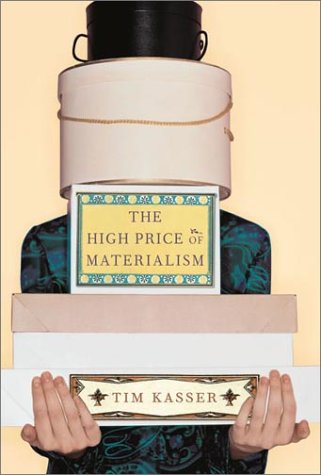
Click Image to read reviews
Materialism is also related to Marital Dissatisfaction
While there has been a relatively large number of studies conducted to investigate associations between financial problems and marital outcomes, little research has been done to examine possible relationships between materialistic attitudes, perceived financial problems, and marital outcomes.
A 2005 study by Lukas Dean of Brigham Young University was designed to examine a conceptual model linking materialism, perceived financial problems, and relationship satisfaction among married couples.
Data was obtained from 600 married heterosexual couples who took the RELATE test; a multidimensional couple assessment instrument that contains 271 questions that are designed to measure respondents’ perceptions about themselves and their partners in four main contexts of premarital and marital relationships.
His findings indicate that wives’ materialism is negatively related to husbands’ marital satisfaction. Husbands’ and wives’ materialism is positively related with increased perception of financial problems which is in turn negatively associated with marital satisfaction. As expected, income was positively related to marital satisfaction, however, income had no relation to perception of financial problems. Materialism had a stronger impact on perception of financial problems than income.
Distinct gender findings indicate that although husbands’ variables had no significant relation with wives’ outcomes, wives’ variables were significantly related to husbands’ outcomes. Specifically, wives’ materialism is positively related with husbands’ increased perception of financial problems, and wives’ perceived financial problems is negatively associated with husbands’ marital satisfaction.
These findings support the notion that materialism is indirectly related to marital satisfaction, and in some ways directly related to marital satisfaction.
Both these studies add to a growing body of work which demonstrates the negative psychosocial impacts of materialism.
Sources:
British Psychological Society
Dean, L.R. (2005) MATERIALISM, PERCEIVED FINANCIAL PROBLEMS,
AND MARITAL SATISFACTION (Unpublished Thesis) Brigham Young University, Provo, Utah
Related articles by Zemanta
- Counteracting teens’ logo lust (scienceblog.com)
- Happy marriages: The benefits of going from ‘me’ to ‘we’ (thestar.com)
- How To Build A Materialistic Teen (laist.com)
Learning To Love: The Importance Of Empathy & How To Teach It To Your Kids
Credit: Maia Szalavitz: neuroscience journalist The Huffington Post 29 March 2010
 One of the least-praised pleasures in life — and yet one that is probably most likely to bring lasting happiness — is the ability to be happy for others. When we think about empathy, we tend to think of feeling other people’s pain — but feeling other people’s joy gets short shrift That must change if we want to have a more empathetic society.
While working on our forthcoming book, Born for Love: Why Empathy Is Essential — and Endangered (my co-author is leading child trauma expert Bruce Perry, MD, PhD), one of the most common questions I’ve gotten is, “What can parents do to raise more empathetic children?”
And, as I talked about sharing joy with a friend last week, I thought again about just how important the pleasurable part of empathy is in parenting. Sharing pleasure is actually one of our earliest experiences: consider the way a baby’s smile lights up a room and all the silly things adults will do to elicit these little expressions of happiness and connection. Videos of laughing babies delight us for the same reason. [I dare you to resist the laughing quads!]
Cuteness is nature’s way of getting us through the most difficult and demanding parts of parenting: if babies weren’t so darn cute, few people would be able to take the dirty diapers and other drudgery of caring for them. But their smiles and laughs are overwhelmingly infectious.
It’s this same early dance between parent and child that instills empathy in the first place. We all have the natural capacity (in the absence of some brain disorders) for empathy. However, like language, empathy requires particular experiences to promote learning. The ‘words” and “grammar” of empathy are taught first via early nurturing experiences.
Without responsive parenting, though, babies don’t learn to connect people with pleasure. If your smiles aren’t returned with joy, it’s as though you are being asked to learn to speak without anyone ever talking to you. The brain expects certain experiences to guide its development — if these don’t occur at the right time, the capacity to learn them can be reduced or even lost.
So, most of us come into the world and receive parenting that implicitly teaches us that joy is shared. Babies don’t just smile spontaneously — they also smile radiantly back when people smile at them. The back and forth of these smiles, the connection, disconnection, reconnection and its rhythm teaches us that your happiness is mine, too.
Over time, unfortunately, we learn that we are separate beings and sometimes come to see other people’s happiness as a threat or a sign that we’ve lost a competition, rather than something we can share.
This, of course, is natural, too: we are also normally born with an acute sense of fairness and justice that makes us sensitive to say, whether our older brother’s toys are nicer than ours. While cries of “that’s not fair” are the bane of many parents’ existence, they’re not just selfish. They’re part of a social sense that we should

Click image to read reviews
receive equal treatment.
How, then, can we help kids to develop both their sense of justice and the ability to share joy?
One key is making the implicit explicit. When we see kids smiling in response to others, point out how seeing someone else smile made them feel good; when we see that they enjoy our reaction to their artwork and gifts, praise them for being happy for us. Saying that “it’s better to give than receive,” may ring hollow — pointing out when children are actually experiencing the feeling of taking joy in giving is much more powerful.
Allowing children to own this ability and recognize it in themselves will also encourage it — helping them to define themselves as the kind of people who are happy for other people will make them feel like good people, too. Encouraging such an identity will reinforce other positive behaviors as well. Changing behavior to suit an identity you prefer is actually one of the easiest ways to make changes.
Further, rather than calling kids selfish or self-interested when they protest about someone else getting what seems like something better, reframe this as a concern for justice and ask them to look out for when what seems unfair is unfair in their own favor, too. Children who see themselves as being “bad” or “selfish” will unfortunately take on that identity, too — if they don’t recognize their own prosocial behavior, they can’t enhance it and may embrace a very negative view of their own desires and drives.
Sadly, as a society, for centuries we have embraced a view of human nature that is selfish and competitive — with evolution being described as a contest in which the most ruthless are always likely to be the winners. In fact, research is now showing that, at least in humans, kindness is also a critical part of fitness.
For one, both men and women typically describe kindness as one of the top three characteristics they seek in a mate (sense of humor and intelligence are the other top two picks; gender differences in valuing attractiveness and resources come lower on the list).
Second, the ability to nurture and connect is critical for the survival of human children: in hunter/gatherer societies, the presence of older siblings and grandmothers can be even more important to child survival than the presence of fathers according to Sarah Hrdy’s research, suggesting that cooperation in childrearing made genetic survival more likely — not competition.
This means that human nature isn’t the selfish, sociopathic murk we’ve been told it is. While we are certainly no angels, our altruistic side is equally real. To create a more empathetic world, we need to own this as adults as we teach it to our kids.
Related articles by Zemanta
- The Little Hearts Project (digitalphilanthropy.blogspot.com)
- Personal Health: Empathy’s Natural, but Nurturing It Helps (nytimes.com)
Compulsive Collecting: Finding Hope In The Misunderstood Mess of Hoarding
 Compulsive collecting or Hoarding is a misunderstood and debilitating mental health issue. Many psychologists and counsellors never see someone with this condition as they very rarely present for help. This article from an Australian newspaper provides an excellent overview of the condition and issues underlying hoarding, and I have included links to two brilliant books co-authored by the researchers discussed in the article, who have developed a wholistic and novel approach to it’s treatment.
Credit: Kate Benson, Sydney Morning Herald April 8 2010
They may dress well or hold down a good job. But hoarders are unhappy people who suffer from a debilitating condition.
Every suburb has one. The elderly woman weaving through an overgrown backyard full of cardboard boxes, old tyres and discarded furniture. Cats perch on every surface; kittens roll about among the rusted drums and long grass.
Inside, behind closed curtains, the rooms are piled high with papers, cups, plates and bottles. Broken toys, old clothes and shopping bags spill across kitchen benches and floor, smothering the stove and filling the sink, neither of which has been used in years.
The stench of cat faeces, urine and food scraps fill the house.
To her neighbours, she is an oddity. Or a pest, bringing down house values and encouraging vermin.
But to therapists she is one of a growing band across Australia suffering from a debilitating condition known as compulsive hoarding, where people feel a need to collect and store items that seem useless to others.
Their homes become havens of insurmountable clutter and junk, often leaving them unable to sleep in their beds or use appliances. Many end up with electricity or gas supplies disconnected or their fridge and washing machines unusable because they fear their lifestyle will be revealed if they contact a tradesmen to make repairs.
This secrecy and shame make it difficult to know exactly how many people have the disorder.
Some experts think between 200,000 and 500,000 Australians compulsively hoard, but others put the figure closer to 800,000.
“It’s a sleeping giant,” Chris Mogan, a clinical psychologist and expert on hoarding, says. “There is no systematic estimate of how many hoarders there are in any Australian setting. I suspect there are many, many more out there than we are aware of.”
Louise Newman, the president of the Royal Australian and New Zealand College of Psychiatrists, agrees.

Click image to read reviews
“I’ve only seen one case in my career [because] these people usually only come to light when the council steps in and orders a clean-up. Hoarders desperately want to keep hoarding. They don’t want to be stopped.”
There is little research on the condition in Australia and not much in the way of funding or treatment programs, but experts are hopeful hoarding will be included in the next (fifth) edition of the Diagnostic and Statistical Manual of Mental Disorders, the bible used by mental health experts to diagnose psychiatric conditions.
Many sufferers fall between the cracks because hoarding is not a clinical diagnosis in its own right, but is seen more as an offshoot of obsessive compulsive disorder, muddled with depression, anxiety, panic disorder and low self-esteem.
“But it is different to OCD and once we get it in the DSM-V, therapists, psychiatrists, psychologists and social workers can then be trained in the management of it [and] we can attract funding for research,” Mogan says.
Jessica Grisham, a clinical psychologist who specialises in obsessive compulsive disorder, also believes compulsive hoarding should be included in the next edition as it requires specialised treatment.
She cites recent neural imaging studies in the US that showed that different parts of the brain were activated in hoarders than in obsessive compulsive disorder patients.
Mogan and Grisham agree that cognitive behaviour therapy, where sufferers are slowly taught to change their thought patterns, is more effective than medication alone.
But hoarders responded better to a specially adapted version of the therapy, developed by the American hoarding experts Gail Steketee and Randy Frost. It had been achieving success with about 60 per cent of hoarders – far more than standard cognitive behaviour therapy.
“But it has to be a long-term project. You don’t go in to someone’s place and do a sudden excavation against their will,” Grisham says.
“That’s a violation and it’s very traumatic for them. It might make great TV, but it’s not good clinically.”
Mogan agrees. A pay TV show, Hoarders, was damaging to the public’s understanding of the illness, because it focused on forcefully cleaning houses in three days.
“Within six to 12 months that house will be recluttered because it is a compulsion … they suffer a lot of grief after things are taken away.”
Mogan makes weekly home visits to hoarders, and focuses on getting them to reduce the associated dangers by ensuring their home has two exits for safety, and working appliances and smoke alarms.
“Just as we do with drugs and alcohol, we’re into harm minimisation. Once the house is safe, we gradually set more goals. If they are comfortable with that, they will continue to stay in touch and not reject us.”
Sometimes the problem extends beyond mounds of paperwork and clothes. Mogan and Grisham know patients who hoarded urine or fingernail clippings. Some stored their own faeces or collected one particular item, such as bicycles. One sufferer was hoarding so much junk, the only access to the house was a 30-centimetre gap at the top of the front door.
But for Allie Jalbert, of the RSPCA, the most distressing hoarders are those who keep scores of cats and dogs, all battling for attention and food on a crowded suburban block.
She has been calling for years to have hoarding classified as an illness in its own right to allow more people to receive treatment and put an end to the 100 per cent recidivism rate.
“Often, we find that hoarders might be treated for peripheral symptoms such as anxiety or depression, but their core problem, the hoarding, is not addressed. So once we have cleaned out the house, they reoffend, which is very, very frustrating for everyone involved,” Jalbert says.
Some people threatened suicide and had to be removed by police when faced with the prospect of giving up their animals or clutter.
“There’s a mixed bag of emotion when you deal with hoarders. Firstly, there is the concern for your personal safety but there is also a degree of empathy because often these people are quite emotional and attached to the animals. But it’s quite frustrating to see animals living in such horrific situations,” she says.
“I’ve seen bathtubs full of faeces and rubbish, sinks that no longer work, homes with no heating or cooling. Sometimes it’s quite an overwhelming experience.”

Click image to view reviews
Who develops the condition and why?
Some studies have shown that many hoarders have been brought up in households where chaos reigned. Some were neglected as children and witnessed pets being treated poorly.
Mogan accepts the aetiology is mostly unknown, but cites an Australian study that found sufferers reported failing to connect with their parents or growing up in households lacking emotional warmth.
“The lack of attachment causes them to become ambivalent about their identity and about other people. As a compensatory mechanism, they link with things, which they find more compelling, more predictable and dependable and less rejecting.”
But Grisham believes there is no real trigger, apart from children of hoarders being rewarded for saving things and getting punished for discarding. “Sometimes there is a traumatic head injury but those cases are very rare.”
The condition affects slightly more women than men but is found across all occupations, age groups and ethnicities. “And they are in relationships,” Mogan says. “Albeit strained ones.
“Some are going out to work, but they make sure no one comes to their house. They’re not agoraphobic. On the contrary, many hoarders go out a lot to escape. But their children’s lives can’t be normalised because they can never sit down for a meal or find space to do homework. It’s a real impost on the family experience.”
Mogan runs group therapy sessions in Melbourne and says that many patients do want to be cured.
“This condition is a disability and the source of quite a lot of human suffering and neglect. A lot of these people are quite relieved to get help.”
//
Related articles by Zemanta
- Are You Developing Hoarding Behaviors? (blisstree.com)
- How to handle the hoarding habit (nationalpost.com)
Ripped Off!: The Psychological Cost Of Wearing A Fake Rolex (Or Other Knockoffs)
Credit: Wray Herbert: The Huffington Post April 7 2010:
Read the original research paper HERE (PDF)
 Within just a few blocks of my office, street vendors will sell me a Versace t-shirt or a silk tie from Prada, cheap. Or I could get a deal on a Rolex, or a chic pair of Ray Ban shades. These aren’t authentic brand name products, of course. They’re inexpensive replicas. But they make me look and feel good, and I doubt any of my friends can tell the difference.
That’s why we buy knockoffs, isn’t it? To polish our self-image–and broadcast that polished version of our personality to the world–at half the price? But does it work? After all, we first have to convince ourselves of our idealized image if we are going to sway anyone else. Can we really become Ray Ban-wearing, Versace-bedecked sophisticates in our own mind–just by dressing up?
New research suggests that knockoffs may not work as magically as we’d like–and indeed may backfire. Three psychological scientists–Francesca Gino of Chapel Hill, Michael Norton of Harvard Business School, and Dan Ariely of Duke–have been exploring the power and pitfalls of fake adornment in the lab. They wanted to see if counterfeit stuff might have hidden psychological costs, warping our actions and attitudes in undesirable ways.
Here’s an example of their work. The scientists recruited a large sample of young women and had them wear pricey Chloe sunglasses. The glasses were the real thing, but half the women thought they were wearing knockoffs. They wanted to see if wearing counterfeit shades–a form of dishonesty–might actually make the women act dishonestly in other ways.
So they had them perform a couple tasks–tasks that presented opportunities for lying and cheating. In one, for example, the women worked on a complicated set of mathematical puzzles–a task they couldn’t possibly complete in the time allowed. When time elapsed, the women were told to score themselves on the honor system–and to take money for each correct score. Unbeknownst to them, the scientists were monitoring both their work and their scoring.
And guess what. The women wearing the fake Chloe shades cheated more–considerably more. Fully 70 percent inflated their performance when they thought nobody was checking on them–and in effect stole cash from the coffer. To double-check this distressing result, the scientists put the women through a completely different task, one that forced a choice between the right answer and the more profitable answer. And again the Chloe-wearing women pocketed the petty cash. Notably, the women cheated not only when they expressed a preference for the cheap knockoffs, but also when the real and fake designer glasses were randomly handed out. So it appears that the very act of wearing the counterfeit eyewear triggered the lying and cheating.

Click image to read reviews
This is bizarre and disturbing, but it gets worse. The psychologists wondered if inauthentic image-making might not only corrupt personal ethics, but also lead to a generally cynical attitude toward other people. In other words, if wearing counterfeit stuff makes people feel inauthentic and behave unethically, might they see others as phony and unethical, too? To test this, they again handed out genuine and counterfeit Chloe shades, but this time they had the volunteers complete a survey about “someone they knew.” Would this person use an express line with too many groceries? Pad an expense report? Take home office supplies? There were also more elaborate scenarios involving business ethics. The idea was that all the answers taken together would characterize each volunteer as having a generally positive view of others–or a generally cynical view.
Cynical, without question. Compared to volunteers who were wearing authentic Chloe glasses, those wearing the knockoffs saw other people as more dishonest, less truthful, and more likely to act unethically in business dealings.
So what’s going on here? Well, the scientists ran a final experiment to answer this question, and here are the ironic results they report on-line this week in the journal Psychological Science: Wearing counterfeit glasses not only fails to bolster our ego and self-image the way we hope, it actually undermines our internal sense of authenticity. “Faking it” makes us feel like phonies and cheaters on the inside, and this alienated, counterfeit “self” leads to cheating and cynicism in the real world.
Counterfeiting is a serious economic and social problem, epidemic in scale. Most people buy these fake brands because they are a lot cheaper, but this research suggests there may be a hidden moral cost yet to be tallied.
Read the original research paper HERE (PDF)
Related articles by Zemanta
- The Most Counterfeited Products (images.businessweek.com)
- A Question of Authenticity and Designer Sunglasses (outspokenmedia.com)
Why Your Job Doesn’t Make You Happy
Information supplied by T he British Psychological Society
Read the original research paper here (PDF)
People who are unhappy in life are unlikely to find satisfaction at work. This is the finding of a study published online last thursday, 1st April 2010, in the Journal of Occupational and Organizational Psychology.
Assistant Professor Nathan Bowling of Wright State University, USA, and colleagues Kevin Eschleman and Qiang Wang undertook a meta-analysis on the results of 223 studies carried out between 1967 and 2008. All of the studies had investigated some combination of job satisfaction and life satisfaction (or subjective well-being).
Assistant Professor Nathan Bowling said: “We used studies that assessed these factors at two time points so that we could better understand the causal links between job satisfaction and life satisfaction. If people are satisfied at work, does this mean they will be more satisfied and happier in life overall? Or is the causal effect the opposite way around?”

Click image to read reviews
The causal link between subjective well-being and subsequent levels of job satisfaction was found to be stronger than the link between job satisfaction and subsequent levels of subjective well-being.
“These results suggest that if people are, or are predisposed to be, happy and satisfied in life generally, then they will be likely to be happy and satisfied in their work,” said Nathan Bowling.
“However, the flipside of this finding could be that those people who are dissatisfied generally and who seek happiness through their work, may not find job satisfaction. Nor might they increase their levels of overall happiness by pursuing it.”
Read the original research paper here (PDF)
Related articles by Zemanta
- Those Who Enjoy Life More Likely to Be Happy at Work (nlm.nih.gov)
ADHD Treatment: Behavior Therapy & Medication Seem To Positively Affect The Brain In The Same Way
(Information provided by The Wellcome Trust 1 April 2010)
Read the original research paper HERE (PDF)
 Medication and behavioural interventions help children with attention deficit hyperactivity disorder (ADHD) better maintain attention and self-control by normalising activity in the same brain systems, according to research funded by the Wellcome Trust.
In a study published today in the journal ‘Biological Psychiatry’, researchers from the University of Nottingham show that medication has the most significant effect on brain function in children with ADHD, but this effect can be boosted by complementary use of rewards and incentives, which appear to mimic the effects of medication on brain systems.
ADHD is the most common mental health disorder in childhood, affecting around one in 20 children in the UK. Children with ADHD are excessively restless, impulsive and distractible, and experience difficulties at home and in school. Although no cure exists for the condition, symptoms can be reduced by a combination of medication and behaviour therapy.
Methylphenidate, a drug commonly used to treat ADHD, is believed to increase levels of dopamine in the brain. Dopamine is a chemical messenger associated with attention, learning and the brain’s reward and pleasure systems. This increase amplifies certain brain signals and can be measured using an electroencephalogram (EEG). Until now it has been unclear how rewards and incentives affect the brain, either with or without the additional use of medication.
To answer these questions, researchers at Nottingham’s Motivation, Inhibition and Development in ADHD Study (MIDAS) used EEG to measure brain activity while children played a simple game. They compared two particular markers of brain activity that relate to attention and impulsivity, and looked at how these were affected by medication and motivational incentives.

Click Image to view reviews
The team worked with two groups of children aged nine to 15: one group of 28 children with ADHD and a control group of 28. The children played a computer game in which green aliens were randomly interspersed with less frequent black aliens, each appearing for a short interval. Their task was to ‘catch’ as many green aliens as possible, while avoiding catching black aliens. For each slow or missed response, they would lose one point; they would gain one point for each timely response.
In a test designed to study the effect of incentives, the reward for avoiding catching the black alien was increased to five points; a follow-up test replaced this reward with a five-point penalty for catching the wrong alien.
The researchers found that when given their usual dose of methylphenidate, children with ADHD performed significantly better at the tasks than when given no medication, with better attention and reduced impulsivity. Their brain activity appeared to normalise, becoming similar to that of the control group.
Similarly, motivational incentives also helped to normalise brain activity on the two EEG markers and improved attention and reduced impulsivity, though its effect was much smaller than that of medication.
“When the children were given rewards or penalties, their attention and self-control was much improved,” says Dr Maddie Groom, first author of the study. “We suspect that both medication and motivational incentives work by making a task more appealing, capturing the child’s attention and engaging his or her brain response control systems.”
Professor Chris Hollis, who led the study, believes the findings may help to reconcile the often-polarised debate between those who advocate either medication on the one hand, or psychological/behavioural therapy on the other.
“Although medication and behaviour therapy appear to be two very different approaches of treating ADHD, our study suggests that both types of intervention may have much in common in terms of their affect on the brain,” he says. “Both help normalise similar components of brain function and improve performance. What’s more, their effect

Click Image to view reviews
is additive, meaning they can be more effective when used together.”
The researchers believe that the results lend support from neuroscience to current treatment guidelines
for ADHD as set out by the National Institute for Health and Clinical Excellence (NICE). These recommend that behavioural interventions, which have a smaller effect size, are appropriate for moderate ADHD, while medication, with its larger effect size, is added for severe ADHD.
Although the findings suggest that a combination of incentives and medication might work most effectively, and potentially enable children to take lower doses of medication, Professor Hollis believes more work is needed before the results can be applied to everyday clinical practice or classroom situations.
“The incentives and rewards in our study were immediate and consistent, but we know that children with ADHD respond disproportionately less well to delayed rewards,” he says. “This could mean that in the ‘real world’ of the classroom or home, the neural effects of behavioural approaches using reinforcement and rewards may be less effective.”
Read the original research paper HERE (PDF)
Related articles by Zemanta
- Mount Sinai finds meta-cognitive therapy more effective for adult ADHD patients (scienceblog.com)
- What Do Girls with ADHD Look Like As Adults? (psychcentral.com)
About Peter
Peter Brown BHMS (Hons) MPsychClin MAPS
I’m a Clinical Psychologist and have a private practice and consultancy in Brisbane Australia. I have 24 years experience in child, adult and family clinical psychology. I have a wonderful wife and three kids.
I am co-founder of Christian Wholeness Counselling Services.
I like researching issues of the brain & mind, reading and seeking out new books and resources for myself and my clients. I thought that others might be interested in some of what I have found also, hence this blog…

Subscribe to My Blog Posts & Updates
-

Blog Surfer
Alphainventions


Recent Comments


 Peter H Brown Clinical Psychologist