Self Help For Anxiety & Depression: A List Of FREE Interactive Self Help Websites
Today I wanted to get around to doing what I have been meaning to do for a while and post a list of free access interactive and/or educational websites which I have come across. These sites are fantastic resources and each one offers a different way to get involved with your recovery. Please note I am not affiliated with any of these sites and they are not affiliate sites. I hope you find one or more useful as I know many of my clients have.
Click Image to Read Reviews
Click Image to Read Reviews
Self Help / Educational Websites
Updated 27th March 2010
- Anxiety Online
- Beyond Blue
- Depnet
- Bipolar Disorder Education Program
- Blackdoginstitute
- BlueBoard
- BluePages
- CRUfAD – Self Help
- Depression Education Program
- e-couch
- Feardrop – online exposure therapy for phobias
- Living Well Working Well
- MoodSwings
- Multicultural Information on Depression online (MIDonline)
- Virtual Clinic
- Added 27th March 2010
- Depressioncenter.net
- Beatingtheblues (UK)
There you have it! Check them out and let me know what you think. Know of any others? (No affiliate sites please).

Academic Dishonesty = Fail: Procrastination & Copying Homework Increases Failure Rate Irrespective of Aptitude
Read The Original Research Paper HERE (PDF)
From ScienceDaily (Mar. 21, 2010) — The history of students who copy homework from classmates may be as old as school itself. But in today’s age of lecture-hall laptops and online coursework, how prevalent and damaging to the education of students has such academic dishonesty become?
According to research published online March 18 in Physical Review Special Topics: Physics Education Research, it turns out that unnoticed student cheating is a significant cause of course failure nationally.
A researcher from the University of Kansas has teamed up with colleagues from the Massachusetts Institute of Technology to get a better handle on copying in college in the 21st century.
Young-Jin Lee, assistant professor of educational technology at KU, and the Research in Learning, Assessing and Tutoring Effectively group at MIT spent four years seeing how many copied answers MIT students submitted to MasteringPhysics, an online homework tutoring system.
“MIT freshmen are required to take physics,” said Lee. “Homework was given through a Web-based tutor that our group had developed. We analyzed when they logged in, when they logged out, what kind of problems they solved and what kinds of hints they used.”

Click Image to View
Lee said that it was easy to spot students who had obtained answers from classmates before completing the homework.
“We ran into very interesting students who could solve the problems — very hard problems — in less than one minute, without making any mistakes,” said Lee.
Students also were asked to complete an anonymous survey about the frequency of their homework copying. (According to the survey, students nationally admit to engaging in more academic dishonesty than MIT students.)
Among the researchers’ most notable findings:
* Students who procrastinated also copied more often. Those who started their homework three days ahead of deadline copied less than 10 percent of their problems, while those who drug their feet until the last minute were repetitive copiers.
The students who copied frequently had about three times the chance of failing the course.
* Results of the survey show that students are twice as likely to copy on written homework than on online homework.
* This study showed that doing all the homework assigned is “a surer route to exam success” than a preexisting aptitude for physics.
“People believe that students copy because of their poor academic skills,” Lee said. “But we found that repetitive copiers — students who copy over 30 percent of their homework problems — had enough knowledge, at least at the beginning of the semester. But they didn’t put enough effort in. They didn’t start their homework long enough ahead of time, as compared to noncopiers.”
Because repetitive copiers don’t adequately learn physics topics on which they copy the homework, Lee said, the research strongly implies that copying caused declining performance on analytic test problems later in the semester.
“Even though everyone knows not doing homework is bad for learning, no one knows how bad it is,” said Lee. “Now we have a quantitative measurement. It could make an A student get B or even C.”
At the beginning of a semester, the researchers found that copying was not as widespread as it was late in the semester.
“Obviously, the amount of copying was not so prevalent because the academic load was not as much at the beginning of the semester,” said Lee. “In order to copy solutions, the students need to build their networks. They need to get to know each other so that they can ask for the answers.”
But the KU researcher and his MIT colleagues also demonstrated that changes to college course formats — such as breaking up large lecture classes into smaller “studio” classes, increasing interactions between teaching staff and students, changing the grading system — could reduce student copying fourfold.
Read The Original Research Paper HERE (PDF)
Adapted from materials provided by University of Kansas
‘Quirky Yes,Hopeless No’:Making Quirky Cool & Helping Kids With Aspergers Learn Social Skills
By PATRICIA MORRIS BUCKLEY – For the North County Times | Posted: March 17, 2010Beth Wagner Brust knows there are few things more difficult than watching your child struggle to make friends. Her youngest son, Ben, was diagnosed with ADHD in kindergarten, but by third grade he still didn’t have any friends.
“My pediatrician said he had Asperger’s,” explained Brust, a Carmel Valley resident. Asperger’s is considered a higher form of autism that makes social interaction, among other things, difficult. “Like any parent, I was thrown for a loop. Then I heard about the Friends Club in Carlsbad.”
The Friends Club is a safe, non-threatening and non-stressful environment where kids with Asperger’s get together to learn the “unwritten” social skills. Now it’s inspired Brust and Cynthia La Brie Norall, Ph.D., to write “Quirky, Yes — Hopeless, No: Practical Tips to Help Your Child with Asperger’s Syndrome Be More Socially Accepted” (St. Martin’s Griffin).
Asperger’s children are often the kids who are bullied, sit alone at lunch and rarely get an invitation to a birthday party. But at the club, they learn such skills as making eye contact, greeting people, letting others talk about their interests and being less rigid through games, breaking skills into baby steps and role playing.
By learning the subtle social cues that typical children take for granted, they can begin making friends. And that’s exactly what happened with Ben.
“By the end of the first year, I heard him ask another kid, ‘Am I boring you?’ and I almost fell over,” recalled Brust. “I’d never heard him say that before. It was amazing to see that growth in six months.”
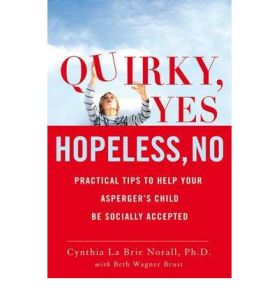 The Friends Club was the brainchild of Norall, an educational behavior psychologist. While working at a preschool in Valley Center in 1992, she first encountered children with autism. That’s around the time that autism diagnoses began to rise dramatically. Today, the Centers for Disease Control and Prevention estimates that 1 out of every 100 8-year-olds is autistic.
“I just found this population fascinating,” Norall said. “I went to every seminar and conference I could on autism. I really wanted to help them.”
In 1999, she opened her own practice, Comprehensive Autism Services and Education (CASE). A year later, she started the Friends Club when her mentor, Dr. B.J. Freeman, a child psychologist who founded the Autism Clinic at UCLA, suggested that she do something to help those higher on the autistic spectrum.
The Friends Club broke the commonly held professional belief that social groups should also contain typical children.
“I got a lot of negative criticism over that decision,” she said. “But these kids know that they are different and if I brought in typical kids, the Aspies (kids with Asperger’s) would stand out. They needed a place to connect.”
Norall likes to tell the story of a teenage girl on her first time at Friends Club who said, “Well, Cynthia, it’s about time you put this together for my species.”
Nine years later, thousands of Aspies have been through the Friends Club. In addition to the branch in Carlsbad, there are Friends Club satellites in Napa, Vancouver, Canada and Oahu, Hawaii, and also a camp during the summer. Twenty-two groups have approximately 150 kids. Groups are broken into age categories; from very young (age 3 to 7), to tweeners, teens and young adults. Norall’s staff now numbers 50, a few of whom are Friends Club graduates. Each group contains six kids and two leaders.
Parents, amazed at the results, kept encouraging Norall to write a book. With that goal in mind, she’d kept extensive summaries of each activity as a report for the parents, but also to remind herself what the kids had taught her. Still, it took Brust, a children’s author herself, to persuade Norall to really get writing.
They decided they wanted the book, originally titled “Decoding Your Asperger’s Children: Lessons Learned at the Friends Club,” to be a practical parenting guide rather than a book on what Asperger’s is or how to “cure it.”
The book is organized alphabetically by topic, such as cooperation, discipline, bullying, perfectionism, anxiety or meltdowns. The lessons teach “people skills,” including how to greet others, how to make eye contact, how to pay compliments, how to cooperate and ask for help and how not to be rude.
Ultimately, Norall and Brust wanted their readers to understand how the Aspie’s brain is wired differently. Then they can not only help the youngsters, but also be less frustrated overall and enjoy the differences these kids bring to the world.
“We wanted a book that had no jargon, but written in a conversational tone like Dr. Spock,” said Brust. “We also wanted readers to be able to skip around in it. There’s always a ‘trouble du jour,’ and you can read just about that. Parents of special needs kids have no time and it doesn’t take a big time commitment to read this book. We’ve made it as accessible as possible.”
The finished manuscript quickly sold to mainstream publisher St. Martin’s Griffin. “Quirky, Yes — Hopeless, No” hit stores in August. Alyse Diamond, the book’s editor, believes there’s nothing like it in a market filled with technical books by doctors or memoirs by mothers.
“What gripped me was that this wasn’t just another book written by a doctor,” said Diamond. “The co-writer is a mom and she’s been in the trenches with her son, so together they bring a unique perspective that you don’t normally see. More and more kids are being diagnosed with autism every year. It’s not going away. That’s why it’s important to us to get a book like this in the hands of people who need it.”
Reaction to the book has been highly positive. Publisher’s Weekly said, “Although a dozen or more experts are cited, the book is conversational in tone, full of insights and will help and encourage parents and their Aspie or high-functioning autistic kids alike.”
Temple Grandin, the author of “Unwritten Rules of Social Relationships” and “Thinking in Pictures,” and perhaps the most famous person with autism, said in her review, “This is a fantastic book for helping people on the autism spectrum learn social skills. Great for individuals on the spectrum, teachers, and social skills training specialists.”
While good reviews from major publications and notable names in the autism field are welcome, the ones that mean the most to Norall and Brust are those from parents and professionals who work with the children.
“I want everyone to read this book so that the teasing will stop,” said Brust. “These kids can be creative and fun. I love being around Ben because he thinks differently. But that can also be frustrating because we don’t understand how they think.”
The good news is that Ben, now a senior at Canyon Crest High School, is doing so well that he plans to attend community college soon. While he just stopped going to Friends Club, Brust sees the lasting value of what he learned there and hopes that people who read their book will experience some of the same social connections he’s had.
“This book is about helping Aspie kids navigate the world better,” Brust said. “Every chapter has something specific and concrete that parents can do to make a difference. Our goal is to help as many of these kids as possible.”
Only As Young Or Old As You Feel?: When Does Youth End & Old Age Start?
Source: University of Kent, UK: 15 March 2010Professor Dominic Abrams and Dr Melanie Vauclair from the School of Psychology at the University of Kent will present findings from the European Social Survey’s research project ‘Attitudes to Age in the UK and Europe’ during an event at City University, London, on Monday 15 March.
Titled What do the British think about… ageism, political institutions and welfare?, this Economic and Social Research Council (ESRC) event will consist of an information seminar and an online demonstration of how to access and use the European Social Survey (ESS) data archive, currently comprising 21 European countries and more than 40,000 respondents.
With a steadily growing proportion of older people in the UK and Europe, the 2008 ESS included a module that examined how people perceive and feel about their own and other age groups.
Professor Abra ms explained: ‘The survey showed that age prejudice – being treated as ‘too young’ or ‘too old’ – is perceived to be a serious or very serious issue by 63 per cent of respondents, so it is obviously important to know what these age labels mean to people’. To find out, the survey asked when does ‘youth’ end and ‘old age’ begin? For the UK, the average response to this question was that youth ends at the age of 35 and old age begins at 58.
However, the survey also revealed that people’s judgements depend strongly on the ‘age of the beholder’. On average, the youngest respondents (15 to 24-year old) judged that youth ends at 28 and old age starts at 54, whereas the oldest age group (80 and older) judged that youth ends at 42 and old age starts at 67.
In the UK, there is a gap of almost 40 years between young people’s judgement of the end of youth and older people’s judgement of the beginning of old age. However, more startlingly, there is a gap of only 12 years between older people’s judgement of the end of youth and younger people’s judgement of the start of old age.
In general, men regarded the end of youth and start of old age to begin two years earlier than women did.
There were also large differences between European countries. Youth was perceived to end earliest among respondents in Portugal (at the age of 29) and latest by those in Cyprus (at the age of 45). Portugal scored lowest for the belief when old age starts (at the age of 51), whereas Belgium ranked highest (at the age 64).
The findings illustrate that when people discover another person’s age, their judgement of whether that person is young or old is highly subjective and this may have important implications in influencing people’s assumptions about the person’s responsibilities, rights and capabilities.
Professor Abrams said: ‘This evidence shows that what counts as young and old is very largely down to the age of the beholder.’
Amongst other findings, the survey also showed that 28 per cent of UK respondents reported that they had been treated with prejudice because of their age in the past year and that the youngest age group were more likely to report experiences of prejudice than any other. Across the European countries in the survey, age prejudice was most widely reported in Finland (47 per cent) and least so in Cyprus and Portugal (19 per cent). The UK ranked 16 out of 21 countries in regard to this question.
Borderline Personality Disorder: What’s with the Name & Just What Is It?
I have continued to receive a number of requests by email and on Twitter about Borderline Personality Disorder, its name, its presentation, its treatment and its psycho-genesis. Below is a brief post which I think covers most of these questions in outline form. I am open to suggestions as to which, if any areas readers would like to discuss in more detail. A small collection of books on BPD which I recommend to patients, carers, significant others and counsellors can be found here, most with reader reviews. I would be happy to hear of others.
What’s with the name?
The term “borderline” was first used by early psychiatrists to describe people who were thought to be on the “border” between diagnoses. At the time, the system for diagnosing mental illness was far less sophisticated than it is today, and “borderline” referred to individuals who did not fit neatly into the two broad categories of mental disorder: psychosis or neurosis.
Today, far more is known about BPD, and it is no longer thought of as being related to psychotic disorders (and the term “neurosis” is no longer used in our diagnostic system). Instead, BPD is recognized as a disorder characterized by intense emotional experiences and instability in relationships and behavior.
Many experts are now calling for BPD to be renamed, because the term “borderline” is outdated and because, unfortunately, the name has been used in a stigmatizing way in the past. Suggestions for the new name have included: “Emotion Dysregulation Disorder,” Unstable Personality Disorder,” and “Complex Posttraumatic Stress Disorder.”
Borderline personality disorder (BPD) is a serious mental illness characterized by pervasive instability in moods, interpersonal relationships, self-image, and behavior. This instability often disrupts family and work life, long-term planning, and the individual’s sense of self-identity. Originally thought to be at the “borderline” of psychosis, people with BPD suffer from a disorder of emotion regulation. While less well known than schizophrenia or bipolar disorder (manic-depressive illness), BPD is more common, affecting 2 percent of adults, mostly young women.1 There is a high rate of self-injury without suicide intent, as well as a significant rate of suicide attempts and completed suicide in severe cases.2,3 Patients often need extensive mental health services, and account for 20 percent of psychiatric hospitalizations.4 Yet, with help, many improve over time and are eventually able to lead productive lives.
Symptoms
While a person with depression or bipolar disorder typically endures the same mood for weeks, a person with BPD may experience intense bouts of anger, depression, and anxiety that may last only hours, or at most a day.5 These may be associated with episodes of impulsive aggression, self-injury, and drug or alcohol abuse. Distortions in cognition and sense of self can lead to frequent changes in long-term goals, career plans, jobs, friendships, gender identity, and values. Sometimes people with BPD view themselves as fundamentally bad, or unworthy. They may feel unfairly misunderstood or mistreated, bored, empty, and have little idea who they are. Such symptoms are most acute when people with BPD feel isolated and lacking in social support, and may result in frantic efforts to avoid being alone.
 People with BPD often have highly unstable patterns of social relationships. While they can develop intense but stormy attachments, their attitudes towards family, friends, and loved ones may suddenly shift from idealization (great admiration and love) to devaluation (intense anger and dislike). Thus, they may form an immediate attachment and idealize the other person, but when a slight separation or conflict occurs, they switch unexpectedly to the other extreme and angrily accuse the other person of not caring for them at all. Even with family members, individuals with BPD are highly sensitive to rejection, reacting with anger and distress to such mild separations as a vacation, a business trip, or a sudden change in plans. These fears of abandonment seem to be related to difficulties feeling emotionally connected to important persons when they are physically absent, leaving the individual with BPD feeling lost and perhaps worthless. Suicide threats and attempts may occur along with anger at perceived abandonment and disappointments.
People with BPD exhibit other impulsive behaviors, such as excessive spending, binge eating and risky sex. BPD often occurs together with other psychiatric problems, particularly bipolar disorder, depression, anxiety disorders, substance abuse, and other personality disorders.
Treatment
Treatments for BPD have improved in recent years. Group and individual psychotherapy are at least partially effective for many patients. Within the past 15 years, a new psychosocial treatment termed dialectical behavior therapy (DBT) was developed specifically to treat BPD, and this technique has looked promising in treatment studies.6 Pharmacological treatments are often prescribed based on specific target symptoms shown by the individual patient. Antidepressant drugs and mood stabilizers may be helpful for depressed and/or labile mood. Antipsychotic drugs may also be used when there are distortions in thinking.7
Recent Research Findings
Although the cause of BPD is unknown, both environmental and genetic factors are thought to play a role in predisposing patients to BPD symptoms and traits. Studies show that many, but not all individuals with BPD report a history of abuse, neglect, or separation as young children.8 Forty to 71 percent of BPD patients report having been sexually abused, usually by a non-caregiver.9 Researchers believe that BPD results from a combination of individual vulnerability to environmental stress, neglect or abuse as young children, and a series of events that trigger the onset of the disorder as young adults. Adults with BPD are also considerably more likely to be the victim of violence, including rape and other crimes. This may result from both harmful environments as well as impulsivity and poor judgement in choosing partners and lifestyles.
NIMH-funded neuroscience research is revealing brain mechanisms underlying the impulsivity, mood instability, aggression, anger, and negative emotion seen in BPD. Studies suggest that people predisposed to impulsive aggression have impaired regulation of the neural circuits that modulate emotion.10 The amygdala, a small almond-shaped structure deep inside the brain, is an important component of the circuit that regulates negative emotion. In response to signals from other brain centers indicating a perceived threat, it marshals fear and arousal. This might be more pronounced under the influence of drugs like alcohol, or stress. Areas in the front of the brain (pre-frontal area) act to dampen the activity of this circuit. Recent brain imaging studies show that individual differences in the ability to activate regions of the prefrontal cerebral cortex thought to be involved in inhibitory activity predict the ability to suppress negative emotion.11
Serotonin, norepinephrine and acetylcholine are among the chemical messengers in these circuits that play a role in the regulation of emotions, including sadness, anger, anxiety, and irritability. Drugs that enhance brain serotonin function may improve emotional symptoms in BPD. Likewise, mood-stabilizing drugs that are known to enhance the activity of GABA, the brain’s major inhibitory neurotransmitter, may help people who experience BPD-like mood swings. Such brain-based vulnerabilities can be managed with help from behavioral interventions and medications, much like people manage susceptibility to diabetes or high blood pressure.7
Future Progress
Studies that translate basic findings about the neural basis of temperament, mood regulation, and cognition into clinically relevant insights which bear directly on BPD represent a growing area of NIMH-supported research. Research is also underway to test the efficacy of combining medications with behavioral treatments like DBT, and gauging the effect of childhood abuse and other stress in BPD on brain hormones. Data from the first prospective, longitudinal study of BPD, which began in the early 1990s, is expected to reveal how treatment affects the course of the illness. It will also pinpoint specific environmental factors and personality traits that predict a more favorable outcome. The Institute is also collaborating with a private foundation to help attract new researchers to develop a better understanding and better treatment for BPD.
References
1Swartz M, Blazer D, George L, Winfield I. Estimating the prevalence of borderline personality disorder in the community. Journal of Personality Disorders, 1990; 4(3): 257-72.
2Soloff PH, Lis JA, Kelly T, Cornelius J, Ulrich R. Self-mutilation and suicidal behavior in borderline personality disorder. Journal of Personality Disorders, 1994; 8(4): 257-67.
3Gardner DL, Cowdry RW. Suicidal and parasuicidal behavior in borderline personality disorder. Psychiatric Clinics of North America, 1985; 8(2): 389-403.
4Zanarini MC, Frankenburg FR. Treatment histories of borderline inpatients. Comprehensive Psychiatry, in press.
5Zanarini MC, Frankenburg FR, DeLuca CJ, Hennen J, Khera GS, Gunderson JG. The pain of being borderline: dysphoric states specific to borderline personality disorder. Harvard Review of Psychiatry, 1998; 6(4): 201-7.
6Koerner K, Linehan MM. Research on dialectical behavior therapy for patients with borderline personality disorder. Psychiatric Clinics of North America, 2000; 23(1): 151-67.
7Siever LJ, Koenigsberg HW. The frustrating no-mans-land of borderline personality disorder. Cerebrum, The Dana Forum on Brain Science, 2000; 2(4).
8Zanarini MC, Frankenburg. Pathways to the development of borderline personality disorder. Journal of Personality Disorders, 1997; 11(1): 93-104.
9Zanarini MC. Childhood experiences associated with the development of borderline personality disorder. Psychiatric Clinics of North America, 2000; 23(1): 89-101.
10Davidson RJ, Jackson DC, Kalin NH. Emotion, plasticity, context and regulation: perspectives from affective neuroscience. Psychological Bulletin, 2000; 126(6): 873-89.
11Davidson RJ, Putnam KM, Larson CL. Dysfunction in the neural circuitry of emotion regulation – a possible prelude to violence. Science, 2000; 289(5479): 591-4.
Bernstein, PhD, David P., Iscan, MD, Cuneyt, Maser, PhD, Jack, Board of Directors, Association for Research in Personality Disorder, & Board of Directors, International Society for the Study of Personality Disorders. “Opinions of personality disorder experts regarding the DSM-IV Personality Disorders classification system.” Journal of Personality Disorders, 21: 536-551, October 2007.
Sources: about.com and nimh.gov.org
Men Are From Earth, Women are from Earth: Do Studies Show That Gender Has Little Or No Bearing on Personality, Cognition and Leadership?
From American Psychogical Association http://www.apa.orgThe Truth about Gender “Differences”
Mars-Venus sex differences appear to be as mythical as the Man in the Moon. A 2005 analysis of 46 meta-analyses that were conducted during the last two decades of the 20th century underscores that men and women are basically alike in terms of personality, cognitive ability and leadership. Psychologist Janet Shibley Hyde, PhD, of the University of Wisconsin in Madison, discovered that males and females from childhood to adulthood are more alike than different on most psychological variables, resulting in what she calls a gender similarities hypothesis. Using meta-analytical techniques that revolutionized the study of gender differences starting in the 1980s, she analyzed how prior research assessed the impact of gender on many psychological traits and abilities, including cognitive abilities, verbal and nonverbal communication, aggression, leadership, self-esteem, moral reasoning and motor behaviors.
Hyde observed that across the dozens of studies, consistent with the gender similarities hypothesis, gender differences had either no or a very small effect on most of the psychological variables examined. Only a few main differences appeared: Compared with women, men could throw farther, were more physically aggressive, masturbated more, and held more positive attitudes about sex in uncommitted relationships.
Furthermore, Hyde found that gender differences seem to depend on the context in which they were measured. In studies designed to eliminate gender norms, researchers demonstrated that gender roles and social context strongly determined a person’s actions. For example, after participants in one experiment were told that they would not be identified as male or female, nor did they wear any identification, none conformed to stereotypes about their sex when given the chance to be aggressive. In fact, they did the opposite of what would be expected – women were more aggressive and men were more passive.
Finally, Hyde’s 2005 report looked into the developmental course of possible gender differences – how any apparent gap may open or close over time. The analysis presented evidence that gender differences fluctuate with age, growing smaller or larger at different times in the life span. This fluctuation indicates again that any differences are not stable.
 Learning Gender-Difference Myths
Media depictions of men and women as fundamentally “different” appear to perpetuate misconceptions – despite the lack of evidence. The resulting “urban legends” of gender difference can affect men and women at work and at home, as parents and as partners. As an example, workplace studies show that women who go against the caring, nurturing feminine stereotype may pay dearly for it when being hired or evaluated. And when it comes to personal relationships, best-selling books and popular magazines often claim that women and men don’t get along because they communicate too differently. Hyde suggests instead that men and women stop talking prematurely because they have been led to believe that they can’t change supposedly “innate” sex-based traits.
Hyde has observed that children also suffer the consequences of exaggerated claims of gender difference — for example, the widespread belief that boys are better than girls in math. However, according to her meta-analysis, boys and girls perform equally well in math until high school, at which point boys do gain a small advantage. That may not reflect biology as much as social expectations, many psychologists believe. For example, the original Teen Talk Barbie ™, before she was pulled from the market after consumer protest, said, “Math class is tough.”
As a result of stereotyped thinking, mathematically talented elementary-school girls may be overlooked by parents who have lower expectations for a daughter’s success in math. Hyde cites prior research showing that parents’ expectations of their children’s success in math relate strongly to the children’s self-confidence and performance.
Moving Past Myth
Hyde and her colleagues hope that people use the consistent evidence that males and females are basically alike to alleviate misunderstanding and correct unequal treatment. Hyde is far from alone in her observation that the clear misrepresentation of sex differences, given the lack of evidence, harms men and women of all ages. In a September 2005 press release on her research issued by the American Psychological Association (APA), she said, “The claims [of gender difference] can hurt women’s opportunities in the workplace, dissuade couples from trying to resolve conflict and communication problems and cause unnecessary obstacles that hurt children and adolescents’ self-esteem.”
Psychologist Diane Halpern, PhD, a professor at Claremont College and past-president (2005) of the American Psychological Association, points out that even where there are patterns of cognitive differences between males and females, “differences are not deficiencies.” She continues, “Even when differences are found, we cannot conclude that they are immutable because the continuous interplay of biological and environmental influences can change the size and direction of the effects some time in the future.”
The differences that are supported by the evidence cause concern, she believes, because they are sometimes used to support prejudicial beliefs and discriminatory actions against girls and women. She suggests that anyone reading about gender differences consider whether the size of the differences are large enough to be meaningful, recognize that biological and environmental variables interact and influence one other, and remember that the conclusions that we accept today could change in the future.
Cited Research
Archer, J. (2004). Sex differences in aggression in real-world settings: A meta-analytic review. Review of General Psychology, 8, 291-322.
Barnett, R. & Rivers, C. (2004). Same difference: How gender myths are hurting our relationships, our children, and our jobs. New York: Basic Books.
Eaton, W. O., & Enns, L. R. (1986). Sex differences in human motor activity level. Psychological Bulletin, 100, 19-28.
Feingold, A. (1994). Gender differences in personality: A meta-analysis. Psychological Bulletin, 116, 429-456.
Halpern, D. F. (2000). Sex Differences in Cognitive Abilities (3rd Edition). Mahwah, NJ: Lawrence Erlbaum, Associates, Inc. Publishers.
Halpern, D. F. (2004). A cognitive-process taxonomy for sex differences in cognitive abilities. Current Directions in Psychological Science, 13 (4), 135-139.
Hyde, J. S., Fennema, E., & Lamon, S. (1990). Gender differences in mathematics performance: A meta-analysis. Psychological Bulletin, 107, 139-155.
Hyde, J. S. (2005). The Gender Similarities Hypothesis. American Psychologist, Vol. 60, No. 6.
Leaper, C. & Smith, T. E. (2004). A meta-analytic review of gender variations in children’s language use: Talkativeness, affiliative speech, and assertive speech. Developmental Psychology, 40, 993-1027.
Oliver, M. B. & Hyde, J. S. (1993). Gender differences in sexuality: A meta-analysis. Psychological Bulletin, 114, 29-51.
Spencer, S. J., Steele, C. M. & Quinn, D. M. (1999). Stereotype threat and women’s math performance. Journal of Experimental Social Psychology, 35, 4-28.
Voyer, D., Voyer, S., & Bryden, M. P., (1995). Magnitude of sex differences in spatial abilities: A meta-analysis and consideration of critical variables. Psychological Bulletin, 117, 250-270.
The Book Depository: Very Cheap Prices, FREE SHIPPING WORLDWIDE
I have just come across this site. The book prices are as good or better than Amazon and they ship free to any address worldwide no matter the size of the order. The Book Depository

I will be using this site for my blog links for highly recommended books from now on as I believe it provides the best value for most of my readers. I will continue to provide Amazon links in my Highly Recommended Books Library accessible from the menu on the right.
The Smile: A Super-Powered Facial Expression
John M Grohol PsyD http://www.psychcentral.com
 What’s In a Smile? For decades, psychology and its researchers have focused on the negative side of humanity — the things that bring dysfunction into our lives. Depression, sadness, anxiety, you name it. More recently, psychologists have also begun to better understand the value of positive emotions too. This understanding has resulted in a new field of research called “positive psychology” or “happiness research.”
So how do we recognize a positive emotion? Or put more simply, “What’s in a smile?”
A new paper just published by Disa Sauter (2010) helps us answer this question.
Happiness is In Your Smile
Psychological research into happiness has, for the most part, focused on facial expressions. It’s no wonder: most of our communication — both verbal and nonverbal — comes from our face. People across cultures understand the value of a smile and other facial expressions that point toward the emotion we call “being happy” or happiness. And we know that smiling itself can help increase positive, pro-social behaviors.
But how much research has examined more specific positive emotions in facial expressions? Surprisingly, only one study has been conducted that examined how the face displays specific positive emotions. The researchers in that study found:
[…] that displays of amusement and pride were signaled by smiles, but that amused smiles tended to be open-mouthed, whereas smiles of pride had compressed lips. In contrast, awe was typically expressed with raised eyebrows and a slightly open mouth, but not with smiles.
This study highlights that there is likely more than one kind of smile and that different smile configurations may communicate different affective states.
Smiles are more complicated that the simple communication of happiness. They can communicate a wide range of positive emotions, depending upon their specific makeup.
Pride
What about expressions of pride? Pride is considered a “secondary emotion” behind more basic emotions such as happiness and fear. Surprisingly, expressions of pride across cultures shares some specific characteristics:
Using photographs of participants from over 30 nations, Tracy and Matsumoto showed that individuals who won a fight produced a number of behaviors typically associated with pride expressions, including raising their arms, tilting their head back, smiling, and expanding their chest. This configuration of cues is recognized by observers as communicating pride.
Happy Noises & Touching
Just as with pride, there are apparently a number of universally recognized human sounds that express positive emotion. Research has shown that specific emotions recognized from sounds alone include amusement, triumph, sensual pleasure (the one we’re all most familiar with!) and relief.
You’d think that touch would be a sense that has been well-studied, given how important touch is to our emotional needs. But there has been very little research conducted examining the effects of human touch. What little research that has been done has found that certain positive emotions can sometimes be detected through touch:
They found that participants from two cultures (USA and Spain) could decode affective states from tactile stimulation on the arm. Emotions that were well recognized included several positive states, such as love, gratitude, and sympathy. Hertenstein et al. also showed that love was typically signaled with stroking, gratitude was communicated with a handshake, and sympathy was expressed with a patting movement.
Of course, some positive emotions are not well communicated through touch, including the general sense of “happiness.” Notice that only specific positive emotions — and only certain ones — are well-communicated through touch. Pride is an example of a positive emotion that has no equivalent touch sense.
Conclusions
What’s in a smile? A lot of information, telling the receiver of the smile whether you meant you were happy, amused, or proud. Research into human expression of positive emotions is ongoing and will explore more of these areas in years to come.
What we have found so far is that not every specific positive emotion — for instance, pride — is expressed through every type of sense.
As the researcher notes, “It will be interesting to consider whether ease of communication via different types of signals may relate to different “families” of emotions, such as self-conscious emotions including pride, and prosocial emotions like love.” If happiness can only be communicated through facial expressions, and not through touch, that’s good information to know when we think we’re communicating our happiness to a loved one through a specific gesture.
Happiness is a core component of life and living, and is associated with helping protect us against heart disease and enhancing our overall health. We also know that gratitude tends to lead to more happiness. The better we understand how happiness is expressed to others, perhaps the more clearly we’ll be able to communicate such emotions in the future.
Reference:
Sauter, D. (2010). More Than Happy: The Need for Disentangling Positive Emotions. Current Directions in Psychological Science, 19.Original paper can be found HERE
Dr. John Grohol is the CEO and founder of Psych Central. He has been writing about online behavior, mental health and psychology issues, and the intersection of technology and psychology since 1992.//
Aspergers in the News: “Temple Grandin” & “House Rules”
An HBO biopic about Temple Grandin starring Claire Danes, and a new Jodi Picoult novel bring the issues and experiences of people with ASD to the general public this month. Reviews below:
Temple Grandin
By ALESSANDRA STANLEY http://www.nytimes.com Published: February 4, 2010
In her autobiography, “Thinking in Pictures: My Life With Autism,” Temple Grandin explains that she values “positive, measurable results more than emotion.” The HBO movie “Temple Grandin” honors its heroine’s priorities, stressing deeds over tearful setbacks and joyous breakthroughs.
That restraint, unusual in a portrait of a person who heroically overcomes a handicap, is oddly captivating and makes the story all the more touching. “Temple Grandin,” which has its debut on Saturday and stars Claire Danes in the title role, is a made-for-television biopic that avoids the mawkish clichés of the genre without draining the narrative of color and feeling.
Ms. Grandin was born in 1947 in Boston, and her autism was diagnosed when she was a child. At that time most psychiatrists considered it a mental disorder caused by cold, withholding “refrigerator mothers.” Helped by a mother who was anything but, Ms. Grandin was nurtured at home and by a few farsighted teachers who helped her unlock her talents. Most comfortable around animals, she grew up to become a sought after animal behaviorist and livestock consultant, world famous for designing humane slaughterhouses.
 In some ways her story is harder to tell than other, similar tales of valor, be they “The Miracle Worker,” “My Left Foot” or “The Diving Bell and the Butterfly,” in which success is so intimately linked to disability. Helen Keller, Christy Brown and Jean-Dominique Bauby, the subjects of those movies, became famous because of their extraordinary personal histories; in all three cases their most lasting work is autobiographical.
Ms. Grandin credits autism for her achievements, arguing that she would never have been so attuned to animal sensibilities or the fine points of agricultural engineering without the distinctive vision and hypersensitivity that comes with autism.
But to the outside world her eminence and inner workings are incongruent. Ranchers don’t commission her stockyard designs because they are moved by her life story; parents and teachers of autistic children don’t care about her theories on curved cattle chutes, but view her accomplishments as a yardstick for their own hopes.
“Temple Grandin” fuses the two with a wonderstruck look at feedlots and loading ramps and a practical, pragmatic view of autism.
Viewers are thrown into the mindset of the teenage Temple with little introduction or fanfare, experiencing the world as she does: in blisteringly vivid images that pop into her head faster than a Google search and that she describes in her book as “full-color movies, complete with sound, which run like a VCR tape in my head.” In that sense, at least, her condition is ideally suited to moviemaking.
In an early scene in which Temple goes to visit her aunt on a ranch in Arizona, she gets off the airplane as startled and fearful as a feral animal. Sounds and sights are heightened — the screeching whirr of the propeller, shouted greetings, the flaming desert heat — to capture how overwhelming and unbearable they are to an autistic girl who flinches at the squeak of a felt-tip marker and cannot bear to be touched.
Ms. Danes is completely at ease in her subject’s lumbering gait and unmodulated voice. She makes Temple’s anxiety as immediate and contagious as her rarer bursts of merriment, laughing too loudly and over and over, as she re-enacts a scene from a favorite television show, “The Man From U.N.C.L.E.” And as the character ages and learns more social graces, Ms. Danes seamlessly captures Temple’s progress.
Julia Ormond looms surprisingly large in the small role of Eustacia, Temple’s mother, a fighter who insists that people treat her daughter as “different, but not less.” Ms. Grandin’s autobiography didn’t go into the family background — proper Bostonians with old money. Eustacia Cutler gives an account of it in her own, highly emotive autobiography, “A Thorn in My Pocket,” which has all the makings of a more lurid Lifetime movie and is perhaps wisely left out of the HBO film. But Ms. Ormond conveys the back story elliptically, adding a slight upper class inflection to her voice and showing Yankee stubbornness just beneath her sorrowed beauty. When a psychiatrist patronizingly tells Eustacia that her child has infantile schizophrenia brought on by maternal coldness, she snaps, “I’m supposed to have done this, well then, I can undo it.”
She sends Temple, who loves horseback riding, to Arizona for a summer, which introduces her to her life’s work, as well as a device to relieve her panic and anxiety: seeing how cows appear to calm down in squeeze chutes — metal stalls that press against the sides of animals to still them for inoculation — Temple tries it on herself, and finds comfort in the pressure. She designs a squeeze chute for herself, and that plywood contraption is just one of the many eccentricities that set her apart.
Temple finds a mentor, her high school science teacher, Dr. Carlock (David Strathairn), one of the first to train Temple to expand her intellect rather than merely control her impulses.
Students and other teachers were less kind. So were many of the ranchers and meat growers who stood in Temple’s way — and threw bull testicles at her car — when she began her studies in animal husbandry.
Hers is a tale that could be easily be played up for drama, intrigue and weepy reconciliations, but this narrative is loyal to Ms. Grandin’s credo: emotions are secondary to tangible results. And the result is a movie that is funny, instructive and also intangibly charming.
HBO, Saturday night at 8, Eastern and Pacific times; 7, Central time.
Directed by Mick Jackson; written by Christopher Monger and William Merritt Johnson; based on the books “Emergence” by Temple Grandin and Margaret Scariano, and “Thinking in Pictures” by Ms. Grandin; Emily Gerson Saines, Gil Bellows, Anthony Edwards, Dante Di Loreto, Paul Lister and Alison Owen, executive producers; Scott Ferguson, producer. Produced by Ruby Films and Gerson Saines Productions.
WITH: Claire Danes (Temple Grandin), Catherine O’Hara (Aunt Ann), Julia Ormond (Eustacia) and David Strathairn (Dr. Carlock).
House Rules
by Jodi Picoult

Violence and Young People: An Enlightening & Alarming Discussion
On Sunday 27th Feb. I took part in a rich and informed discussion on Violence and Young People on Peter Jan etzki’s “Talking Life” radio program on which I am a regular guest. I was very much a “third wheel” in this discussion, with the key guests being Dr Steven Stathis, Psychiatrist and Paediatrician, who is a consultant at Royal Children’s Hospital in Brisbane. Steven is also Director of the Child and Family Therapy Unit (CAFTU), and consults at the Youth Detention Centre, Wacol. The other key guest was Dr Mubarak Ali, a researcher in Social Work at Flinders University in Adelaide. Mubarak has done extensive and ground-breaking international research examining child and youth use of the internet and digital technology, and how this usage correlates with violent behaviour. It was a rich discussion with some interesting content and phone calls. If this is a topic which in any way interests you, I would encourage you to take the time to have a listen.
UPDATE: You can now listen to the entire podcast by selecting the links below. These files are now stored in my library internally for easy access: (Free – mp3-internal links) click to play or right click and “save link /target as” to download.
OR

Peter Janetzki
A podcast of the entire show in easy to listen parts, and podcasts of recent shows can be found here or by clicking on the 96.5 logo.You can listen to the podcast from your browser or with iTunes, Talking Life streams live every Sunday night from from 8-10pm Australian Eastern Standard Time (GMT+10) and you can listen by going to the 96.5 website @ 96five.com and clicking on the home page media player.
Related articles by Zemanta
- ‘8% rise’ in violence against children (news.bbc.co.uk)
![Reblog this post [with Zemanta]](https://i0.wp.com/img.zemanta.com/reblog_e.png)
About Peter
Peter Brown BHMS (Hons) MPsychClin MAPS
I’m a Clinical Psychologist and have a private practice and consultancy in Brisbane Australia. I have 24 years experience in child, adult and family clinical psychology. I have a wonderful wife and three kids.
I am co-founder of Christian Wholeness Counselling Services.
I like researching issues of the brain & mind, reading and seeking out new books and resources for myself and my clients. I thought that others might be interested in some of what I have found also, hence this blog…

Subscribe to My Blog Posts & Updates
-

Blog Surfer
Alphainventions


Recent Comments


 Peter H Brown Clinical Psychologist