Emotional Intelligence: Learning To Roll With The Punches
 It’s a hot-buzz topic that covers everything from improving workplace performance and successfully climbing the corporate ladder to building the happiest of marriages to ending school bullying. But what exactly is Emotional Intelligence (EI)? If we lack it, can we learn it? And how do we know if our EI is high or low? Is it only high if we’re really, really nice?
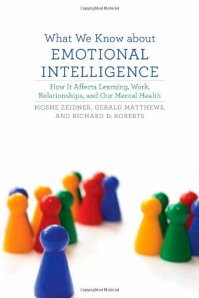
Three scholarly researchers – including University of Cincinnati Psychology Professor Gerry Matthews – delved into the science of EI and published “What We Know About Emotional Intelligence: How it Affects Learning, Work, Relationships, and Our Mental Health.”
Published by MIT Press (2009), the book was recently awarded the American Publishers Award for Professional and Scholarly Excellence – the PROSE Awards – in the biological and life sciences category of biomedicine and neuroscience. The book, co-authored by Matthews, Moshe Zeidner (University of Haifa) and Richard D. Roberts (Center for New Constructs, Educational Testing Service, Princeton, N.J.), was also on display at the UC Libraries’ Authors, Editors and Composers Reception and Program from 3:30-5 p.m., Thursday, April 22, in the Russell C. Myers Alumni Center.
MIT Press promotions describe EI as the “ability to perceive, regulate and communicate emotions – to understand emotions in ourselves and others.” Workplaces want to test for it to find the most EI-talented employees, and consultants are touting training and EI tests to improve productivity. “In the popular writings, EI tends to be defined very broadly and one can’t proceed with scientific research with such a vague and broad definition,” Matthews says.
Matthews’ research interests have explored how stress, mood and coping ability can affect performance on tests, in the workplace and on the highway. He adds that amid the grim economy, even the people who have jobs are feeling high levels of stress in the workplace and are feeling more challenged by workplace demands and concerns about job security. In general terms, those who can roll with the punches – with a shrug and a smile – may have higher Emotional Intelligence.
Click image to read reviews
Then again, “The intimate association of personality and emotion sets a trap for researchers interested in Emotional Intelligence,” writes Matthews. “It might seem that happy, calm states of mind should be seen as the person imbued with high Emotional Intelligence. However, such emotional tendencies may be no more than a consequence of biases in brain functioning or information-processing routines operating without insight or ‘intelligence.’ Some individuals – in part because of their DNA – are simply fortunate in being prone to pleasant moods, so it follows that emotional states do not alone provide an index of Emotional Intelligence,” Matthews states in the book.
In fact, Matthews says he’s skeptical that people who are better at managing stress hold higher Emotional Intelligence, but as the researchers found as they tried to narrow down the science of Emotional Intelligence, more research is needed. For instance, is someone with higher EI in the workplace more productive, or are they just better at self-promotion and forming positive relationships with co-workers? Matthews says he believes EI appears to be very modestly related to workplace performance, and could turn out to be nothing more than a business fad.
He adds the researchers are also skeptical about all of those EI tests, particularly those self-assessments. After all, people could be rating themselves the way they see themselves or the way they would like to be seen, and not like they actually are.
Currently, authors Matthews and Roberts are researching the testing of EI through video scenarios. The situation judgment test involves watching the videos unfold a challenging situation, and then the video comes to a stop and offers different options for resolving the problem. Matthews is building on his earlier research which explored whether negative moods affected good decision making abilities. “Through the video project, the idea is to see if emotionally intelligent people are better able to make rational decisions under stress,” he says.
The researchers are also examining the link between EI and school social and emotional learning programs.
Source:
Dawn Fuller
University of Cincinnati
Related articles by Zemanta
- Learning beyond the classroom (boston.com)
- “The Importance of Emotional Intelligence in Small Business Owners” :The Cross-cultural Connector (translatorpower.wordpress.com)
- Brain Training Or Just Brain Straining?: The Benefits Of Brain Exercise Software Are Unclear (peterhbrown.wordpress.com)
- Winners Are Grinners: Even If There’s Nothing to Win! (peterhbrown.wordpress.com)
![Reblog this post [with Zemanta]](https://i0.wp.com/img.zemanta.com/reblog_e.png)
“Willy Wonky & The Chocolate Fetish”: Why Do Depressed People Eat More Chocolate?
 People who are depressed appear to eat more chocolate than those who aren’t
Researchers at UC San Diego and UC Davis examined chocolate consumption and other dietary intake patterns among 931 men and women who were not using antidepressants. The participants were also given a depression screening test. Those who screened positive for possible depression consumed an average of 8.4 servings of chocolate — defined as one ounce of chocolate candy — per month. That compared with 5.4 servings per month among people who were not depressed.
Those who scored highest on the mood tests, indicating possible major depression, consumed an average of 11.8 servings per month. The findings were similar among women and men.
When the researchers controlled for other dietary factors that could be linked to mood — such as caffeine, fat and carbohydrate intake — they found only chocolate consumption correlated with mood.
It’s not clear how the two are linked, the authors wrote. It could be that depression stimulates chocolate cravings as a form of self-treatment. Chocolate prompts the release of certain chemicals in the brain, such as dopamine, that produce feelings of pleasure.
There is no evidence, however, that chocolate has a sustained benefit on improving mood. Like alcohol, chocolate may contribute a short-term boost in mood followed by a return to depression or a worsened mood. A study published in 2007 in the journal Appetite found that eating chocolate improved mood but only for about three minutes.
It’s also possible that depressed people seek chocolate to improve mood but that the trans fats in some chocolate counteract the effect of omega-3 fatty acid production in the body, the authors said in the paper. Omega-3 fatty acids are thought to improve mental health.
Click image to read reviews
Another theory is that chocolate consumption contributes to depression or that some physiological mechanism, such as stress, drives both depression and chocolate cravings.
“It’s unlikely that chocolate makes people depressed,” said Marcia Levin Pelchat, a psychologist who studies food cravings at the Monell Chemical Senses Center in Philadelphia. She was not involved in the new study. “Most people believe the beneficial effects of chocolate are on mood and that they are learned. You eat chocolate; it makes you feel good, and sometime when you’re feeling badly it occurs to you, ‘Gee, if I eat some chocolate I might feel better.’ ”
Chocolate is popular in North America and Britain, she said. But in other cultures, different foods are considered pleasure-inducing pick-me-ups.
“In the United States, people consider chocolate really tasty,” Pelchat said. “It has a high cultural value. It’s an appropriate gift for Valentine’s Day. But in China, you might give stuffed snails to someone you really like.”
Source: LA Times

Related articles by Zemanta
- Depressed? You must like chocolate (msnbc.msn.com)
- Compulsive Collecting: Finding Hope In The Misunderstood Mess of Hoarding (peterhbrown.wordpress.com)
- Anxiety & Depression: Self-Help Internet Interventions Work! (peterhbrown.wordpress.com)
All By Myself…The Tyranny of The Loneliness Epidemic
 Credit Dr Ronald Pies, M.D. via psychcentral.com
The recent controversy over the still-developing DSM-5 — that compendium of mental disorders the media love to call, inappropriately, “The Bible of Psychiatry” –has gotten me thinking about loneliness. Now, thankfully, nobody has seriously proposed including loneliness in the DSM-5. Indeed, loneliness is usually thought of as simply an unpleasant part of life — one of the “slings and arrows” that pierce almost all of us from time to time. Loneliness, in some ways, remains enmeshed in a web of literary and cultural clichés, born of such works as Nathaniel West’s darkly comic novel, Miss Lonelyhearts, and the Beatles’ whimsical anthem, “Sgt. Pepper’s Lonely Hearts Club Band.”
But loneliness turns out to be a serious matter. And as psychiatry debates the diagnostic minutiae of DSM-5, all of us may need to remind ourselves that millions in this country struggle against the downward tug of loneliness. Yet even among health care professionals, few seem aware that loneliness is closely linked with numerous emotional and physical ills, particular among the elderly and infirm.
It’s easy to assume that loneliness is simply a matter of mind and mood. Yet recent evidence suggests that loneliness may injure the body in surprising ways. Researchers at the University of Pittsburgh School of Medicine studied the risk of coronary heart disease over a 19-year period, in a community sample of men and women. The study found that among women, high degrees of loneliness were associated with increased risk of heart disease, even after controlling for age, race, marital status, depression and several other confounding variables. (In an email message to me, the lead author, Dr. Rebecca C. Thurston, PhD, speculated that the male subjects might have been more reluctant to acknowledge their feelings of loneliness).
Similarly, Dr. Dara Sorkin and her colleagues at the University of California, Irvine, found that for every increase in the level of loneliness in a sample of 180 older adults, there was a threefold increase in the odds of having heart disease. Conversely, among individuals who felt they had companionship or social support, the likelihood of having heart disease decreased.
The young, of course, are far from immune to loneliness. Researchers at Aarhus University in Denmark studied loneliness in a population of adolescent boys with autism spectrum disorders (an area of great controversy in the proposed DSM-5 criteria). More than a fifth of the sample described themselves as “often or always” feeling lonely—a finding that seems to run counter to the notion that those with autism are emotionally disconnected from other people. Furthermore, the study found that the more social support these boys received, the lower their degree of loneliness. We have no cure for autism in adolescents–but the remedy for loneliness in these kids may be as close as the nearest friend.
And lest there be any doubt that loneliness has far ranging effects on the health of the body, consider the intriguing findings from Dr. S.W. Cole and colleagues, at the UCLA School of Medicine. These researchers looked at levels of gene activity in the white blood cells of individuals with either high or low levels of loneliness. Subjects with high levels of subjective social isolation—basically, loneliness — showed evidence of an over-active inflammatory response. These same lonely subjects showed reduced activity in genes that normally suppress inflammation. Such gene effects could explain reports of higher rates of inflammatory disease in those experiencing loneliness.

Click image to read reviews
Could inflammatory changes, in turn, explain the correlation between loneliness and heart disease? Inflammation is known to play an important role in coronary artery disease. But loneliness by itself may be just one domino in the chain of causation. According to Dr. Heather S. Lett and colleagues at Duke University Medical Center, the perception of poor social support — in effect, loneliness — is a risk factor for development, or worsening, of clinical depression. Depression may in turn bring about inflammatory changes in the heart that lead to frank heart disease. This complicated pathway is still speculative, but plausible.
Loneliness, of course, is not synonymous with “being alone.” Many individuals who live alone do not feel “lonely.” Indeed, some seem to revel in their aloneness. Perhaps this is what theologian Paul Tillich had in mind when he observed that language “… has created the word “loneliness” to express the pain of being alone. And it has created the word “solitude” to express the glory of being alone.” Conversely, some people feel “alone” or disconnected from others, even when surrounded with people.
Let’s admit that not everybody is capable of experiencing the “glory of being alone” or of transforming loneliness into “solitude.” So what can a socially-isolated person do to avoid loneliness and its associated health problems? Joining a local support group can help decrease isolation; allow friendships to form; and give the lonely person an opportunity both to receive and to provide help. This reciprocity can bolster the lonely person’s ego and improve overall well-being. Support groups geared to particular medical conditions can also help reduce disease-related complications. Although there are always risks in going “on line” to find support, Daily Strength appears to be a legitimate and helpful website for locating support groups of all types, including those for loneliness. Psych Central also provides opportunities to exchange ideas and “connect” with many individuals who feel isolated or alone. For those who feel lonely even in the midst of friends, individual psychotherapy may be helpful, since this paradoxical feeling often stems from a fear of “getting close” to others.
No, loneliness is not a disease or disorder. It certainly shouldn’t appear in the DSM-5 — but it should be on our minds, as a serious public health problem. Fortunately, the “treatment” may be as simple as reaching out to another human being, with compassion and understanding.
Related articles by Zemanta
- “I Saw It Happen”: Children Who Witness Bullying Can Be Traumatized Too (peterhbrown.wordpress.com)
- Sticks & Stones AND Words Can Hurt You: How Words Can Cause Physical Pain (peterhbrown.wordpress.com)
- Anxiety & Depression: Self-Help Internet Interventions Work! (peterhbrown.wordpress.com)
- How true is the one-in-four mental health statistic? | Jamie Horder (guardian.co.uk)
Remember What Happened? Only In Your Dreams!
 It is by now well established that sleep can be an important tool when it comes to enhancing memory and learning skills. And now, a new study sheds light on the role that dreams play in this important process.
Led by scientists at Beth Israel Deaconess Medical Center (BIDMC), the new findings suggest that dreams may be the sleeping brain’s way of telling us that it is hard at work on the process of memory consolidation, integrating our recent experiences to help us with performance-related tasks in the short run and, in the long run, translating this material into information that will have widespread application to our lives. The study is reported in the April 22 On-line issue of Current Biology.
“What’s got us really excited, is that after nearly 100 years of debate about the function of dreams, this study tells us that dreams are the brain’s way of processing, integrating and really understanding new information,” explains senior author Robert Stickgold, PhD, Director of the Center for Sleep and Cognition at BIDMC and Associate Professor of Psychiatry at Harvard Medical School. “Dreams are a clear indication that the sleeping brain is working on memories at multiple levels, including ways that will directly improve performance.”
At the outset, the authors hypothesized that dreaming about a learning experience during nonrapid eye movement (NREM) sleep would lead to improved performance on a hippocampus-dependent spatial memory task. (The hippocampus is a region of the brain responsible for storing spatial memory.)
To test this hypothesis, the investigators had 99 subjects spend an hour training on a “virtual maze task,” a computer exercise in which they were asked to navigate through and learn the layout of a complex 3D maze with the goal of reaching an endpoint as quickly as possible. Following this initial training, participants were assigned to either take a 90-minute nap or to engage in quiet activities but remain awake. At various times, subjects were also asked to describe what was going through their minds, or in the case of the nappers, what they had been dreaming about. Five hours after the initial exercise, the subjects were retested on the maze task.
The results were striking.
The non-nappers showed no signs of improvement on the second test – even if they had reported thinking about the maze during their rest period. Similarly, the subjects who napped, but who did not report experiencing any maze-related dreams or thoughts during their sleep period, showed little, if any, improvement. But, the nappers who described dreaming about the task showed dramatic improvement, 10 times more than that shown by those nappers who reported having no maze-related dreams.
“These dreamers described various scenarios – seeing people at checkpoints in a maze, being lost in a bat cave, or even just hearing the background music from the computer game,” explains first author Erin Wamsley, PhD, a postdoctoral fellow at BIDMC and Harvard Medical School. These interpretations suggest that not only was sleep necessary to “consolidate” the information, but that the dreams were an outward reflection that the brain had been busy at work on this very task.
Of particular note, say the authors, the subjects who performed better were not more interested or motivated than the other subjects. But, they say, there was one distinct difference that was noted.
“The subjects who dreamed about the maze had done relatively poorly during training,” explains Wamsley. “Our findings suggest that if something is difficult for you, it’s more meaningful to you and the sleeping brain therefore focuses on that subject – it ‘knows’ you need to work on it to get better, and this seems to be where dreaming can be of most benefit.”
Furthermore, this memory processing was dependent on being in a sleeping state. Even when a waking subject “rehearsed and reviewed” the path of the maze in his mind, if he did not sleep, then he did not see any improvement, suggesting that there is something unique about the brain’s physiology during sleep that permits this memory processing.
“In fact,” says Stickgold, “this may be one of the main goals that led to the evolution of sleep. If you remain awake [following the test] you perform worse on the subsequent task. Your memory actually decays, no matter how much you might think about the maze.
“We’re not saying that when you learn something it is dreaming that causes you to remember it,” he adds. “Rather, it appears that when you have a new experience it sets in motion a series of parallel events that allow the brain to consolidate and process memories.”
Ultimately, say the authors, the sleeping brain seems to be accomplishing two separate functions: While the hippocampus is processing information that is readily understandable (i.e. navigating the maze), at the same time, the brain’s higher cortical areas are applying this information to an issue that is more complex and less concrete (i.e. how to navigate through a maze of job application forms).

Click image to read reviews
“Our [nonconscious] brain works on the things that it deems are most important,” adds Wamsley. “Every day, we are gathering and encountering tremendous amounts of information and new experiences,” she adds. “It would seem that our dreams are asking the question, ‘How do I use this information to inform my life?’”
Study coauthors include BIDMC investigators Matthew Tucker, Joseph Benavides and Jessica Payne (currently of the University of Notre Dame).
This study was supported by grants from the National Institutes of Health.
BIDMC is a patient care, teaching and research affiliate of Harvard Medical School, and consistently ranks in the top four in National Institutes of Health funding among independent hospitals nationwide. BIDMC is a clinical partner of the Joslin Diabetes Center and a research partner of the Dana-Farber/Harvard Cancer Center. BIDMC is the official hospital of the Boston Red Sox.
Source: BIDMC
Related articles by Zemanta
- Study: Naps Greatly Boost Memory If You Dream (shoppingblog.com)
- Sticks & Stones AND Words Can Hurt You: How Words Can Cause Physical Pain (peterhbrown.wordpress.com)
- Brain Training Or Just Brain Straining?: The Benefits Of Brain Exercise Software Are Unclear (peterhbrown.wordpress.com)
Families, Alcohol, Recovery & ‘The Limits Of Love’
 I have re-posted this article from psych central as it is a thorough, well written and balanced view of the impact of alcoholism in families, the hope for recovery and the role of families and the community in helping those with substance over-use illnesses: Please read!
Gredit: psychcentral.com
On April 25th, Hallmark Hall of Fame will broadcast the movie “When Love Is Not Enough — The Lois Wilson Story,” starring Winona Ryder and Barry Pepper (CBS, 9:00 pm ET). The movie, which portrays the life of Lois Wilson, co-founder of Al-Anon Family Groups and wife of Alcoholics Anonymous co-founder Bill Wilson, is based on William G. Borchert’s 2005 book, The Lois Wilson Story: When Love Is Not Enough.
Borchert’s earlier screenplay was the basis of the acclaimed movie My Name is Bill W. which starred James Woods, James Garner, and JoBeth Williams. The premiere of the movie also falls during the National Council on Alcoholism and Drug Dependence, Inc.’s (NCADD) 24th Annual Alcohol Awareness Month with its theme, “When Love Is Not Enough: Helping Families Coping With Alcoholism.”
Lois Wilson fell in love with a man whose alcoholism brought his life and their relationship to the brink before he began his personal recovery and helped found Alcoholics Anonymous. Lois and many of the other wives of early AA members also began to band together for mutual support, formalizing these meetings into Al-Anon Family Groups in 1951.
When Love is Not Enough is the story of Lois Wilson and her life with Bill Wilson. The reach of her and their stories is unfathomable and inseparable from the larger stories of AA and Al-Anon and the influence their lives would exert on the larger story of the professional treatment and recovery of individuals and families affected by addiction to alcohol and other drugs. As William Borchert suggests:
“In the end, Bill Wilson’s alcoholism proved not to be the tragic undoing of this brilliant and loving couple, but rather the beginning of two of the twentieth century’s most important social and spiritual movements- Alcoholics Anonymous and Al-Anon Family Groups.”
There are presently more than 114,500 Alcoholics Anonymous groups (with a combined membership of more than 2 million) and more than 25,000 Al-Anon/Alateen groups (with a combined membership estimated at more than 340,000) hosting local meetings worldwide.
When Love is Not Enough is clearly more than a love story, though it is surely that. Readers of Psych Central and the people they serve will discover in this movie six profound lessons about the impact of alcoholism and alcoholism recovery on intimate relationships and the family.
1. Prolonged cultural misunderstandings about the nature of alcoholism have left a legacy of family shame and secrecy. Centuries of debates between those advocating religious, moral, criminal, psychiatric, psychological, medical and sociological theories of alcoholism failed to offer clear guidance to individuals and families affected by alcoholism. When Love is Not Enough is in part a poignant history of the hidden desperation many families experienced before the birth of Alcoholics Anonymous, Al-Anon, and modern alcoholism treatment. Lois Wilson and Anne Bingham helped change that history in 1951 when they organized 87 groups of wives of AA members into the Al-Anon Family Groups.
2. Alcoholism is a family disease in the sense that it also wounds those closest to the alcohol dependent person; transforms family relationships, roles, rules, and rituals; and isolates the family from potential sources of extended family, social, and community support. And, it has far reaching, long-lasting effects on the physical and emotional health of the family and children. When Love is Not Enough conveys the physical and emotional distress of those struggling to understand a loved one who has lost control of drinking and its consequences.
It vividly portrays the disappointment, confusion, frustration, anger, resentment, jealousy, fear, guilt, shame, anxiety and depression family members experience in the face of alcoholism. The recognition that significant others and their children become as sick as the person addicted and are in need of a parallel pathway of recovery were the seeds from which Al-Anon and Alateen grew.
3. The family experience of alcoholism is often one of extreme duality. When Love is Not Enough poignantly conveys this duality: brief hope-inspiring interludes of abstinence or moderated drinking, periods of peacefulness, moments of love and shared dreams for the future — all relentlessly violated by explosive bouts of drinking and their devastating aftereffects. Memories of that lost person and those moments and dreams co-exist even in the face of the worst effects of alcoholism on the family.
It is only in recognizing this duality of experience and the character duality of the alcoholic that one can answer the enigmatic question that is so often posed about Lois Wilson’s contemporary counterparts, “Why does she/he stay with him/her?” As clinicians, we can too often forget that these family stories contain much more than the pathology of alcohol or drug dependence (White, 2006).

Click image to read reviews
4. Family recovery from alcoholism is a turbulent, threatening and life-changing experience. The hope of all families and children wounded by alcoholism is that the drinking will stop and with it, the arrival of an idyllic family life. Lois Wilson’s story confirms what research on family recovery from addiction is revealing: recovery from alcoholism can destabilize intimate and family relationships. Stephanie Brown and Virginia Lewis (1999), in their studies of the impact of alcoholism recovery on the family, speak of this as the “trauma of recovery.”
People recovering from alcoholism, their families, and their children can and often do achieve optimum levels of health and functioning, but this achievement is best measured in years rather than days, weeks, or months. That recognition in the life of Lois Wilson underscored the need for sustained support for families as they went through this process.
5. We cannot change another person, only ourselves. If there is a central, singular message from Lois Wilson’s life and from the Al-Anon Family Groups program, this may well be it. Al-Anon’s defining moments came when family members stopped focusing on how they could change and control their addicted family member and focused instead on their own need for regeneration and spiritual growth, the overall health of their families and the comfort and help they could offer each other and other families similarly affected.
Their further discovery that AA’s twelve step program of recovery could also guide the healing of family members marks the birth of the modern conceptualization of family recovery. The 2009 Al-Anon Membership Survey confirms the wide and enduring benefits members report experiencing as a result of their sustained involvement in Al-Anon—irrespective of the drinking status of their family members.
6. The wonder of family recovery. As a direct result of Lois’s groundbreaking work in co-founding Al-Anon and the impact it has had on the field of alcohol and drug treatment, family recovery from alcoholism is a reality for millions of Americans today, and the hope, help, and healing of family recovery has become the most powerful way to break the intergenerational cycle of alcoholism and addiction in the family.
The growing interest in the lives of Bill and Lois Wilson — as indicated by a stream of memoirs, biographies, plays, and films — is testimony to the contributions that Alcoholics Anonymous and Al-Anon Family Groups have made to personal and family recovery from alcoholism and to the ever-widening adaptation of the Twelve Steps to other problems of living (Wilson, 1994).
Psych Central readers will find much of value in “When Love Is Not Enough — The Lois Wilson Story,” including the power of Al-Anon as a tool of support for clients living with someone else’s alcoholism. A DVD of the movie and a Viewer’s Guide, for use as a tool in family and community education, will be available at www.hallmarkhalloffame.com on April 25th, the day of the movie’s premiere.
References
Al-Anon membership survey. (Fall, 2009). Virginia Beach, VA: Al-Anon Family Headquarters, Inc.
Borchert, W.G. (2005). The Lois Wilson story: When love is not enough. Center City, MN: Hazelden.
Brown, S., & Lewis, V. (1999). The alcoholic family in recovery: A developmental model. New York & London: Guilford Press.
White, W. (2006). [Review of the book The Lois Wilson Story: When Love is Not Enough, by W. G. Borchert]. Alcoholism Treatment Quarterly, 24(4), 159-162.
Wilson, L. (1979). Lois remembers: Memoir of the co-founder of Al-Anon and wife of the co-founder of Alcoholics Anonymous. New York: Al-Anon Family Group Headquarters, Inc.
Additional Resources
Al-Anon Family Group Headquarters, 800-4AL-ANON (888-425-2666), Monday-Friday, 8 a.m. to 6 p.m., ET.
National Council on Alcoholism and Drug Dependence (NCADD).
Related articles by Zemanta
- Characteristics Of Alcholics Anonymous (stepbysteptips.com)
- Jackie K. Cooper: When Love Is Not Enough Explores the Story of the Founder of Al-Anon (huffingtonpost.com)
- Compulsive Collecting: Finding Hope In The Misunderstood Mess of Hoarding (peterhbrown.wordpress.com)
Brain Training Or Just Brain Straining?: The Benefits Of Brain Exercise Software Are Unclear
 You’ve probably heard it before: the brain is a muscle that can be strengthened. It’s an assumption that has spawned a multimillion-dollar computer game industry of electronic brain-teasers and memory games. But in the largest study of such brain games to date, a team of British researchers has found that healthy adults who undertake computer-based “brain-training” do not improve their mental fitness in any significant way.
Read The Original Research Paper (Draft POF)
The study, published online Tuesday by the journal Nature, tracked 11,430 participants through a six-week online study. The participants were divided into three groups: the first group undertook basic reasoning, planning and problem-solving activities (such as choosing the “odd one out” of a group of four objects); the second completed more complex exercises of memory, attention, math and visual-spatial processing, which were designed to mimic popular “brain-training” computer games and programs; and the control group was asked to use the Internet to research answers to trivia questions.
All participants were given a battery of unrelated “benchmark” cognitive-assessment tests before and after the six-week program. These tests, designed to measure overall mental fitness, were adapted from reasoning and memory tests that are commonly used to gauge brain function in patients with brain injury or dementia. All three study groups showed marginal — and identical — improvement on these benchmark exams.
But the improvement had nothing to do with the interim brain-training, says study co-author Jessica Grahn of the Cognition and Brain Sciences Unit in Cambridge. Grahn says the results confirm what she and other neuroscientists have long suspected: people who practice a certain mental task — for instance, remembering a series of numbers in sequence, a popular brain-teaser used by many video games — improve dramatically on that task, but the improvement does not carry over to cognitive function in general. (Indeed, all the study participants improved in the tasks they were given; even the control group got better at looking up answers to obscure questions.) The “practice makes perfect” phenomenon probably explains why the study participants improved on the benchmark exams, says Grahn — they had all had taken it once before. “People who practiced a certain test improved at that test, but improvement does not translate beyond anything other than that specific test,” she says.
The authors believe the study, which was run in conjuction with a BBC television program called “Bang Goes the Theory,” undermines the sometimes outlandish claims of many brain-boosting websites and digital games. According to a past TIME.com article by Anita Hamilton, HAPPYneuron, an example not cited by Grahn, is a $100 Web-based brain-training site that invites visitors to “give the gift of brain fitness” and claims its users saw “16%+ improvement” through exercises such as learning to associate a bird’s song with its species and shooting basketballs through virtual hoops. Hamilton also notes Nintendo’s best-selling Brain Age game, which promises to “give your brain the workout it needs” through exercises like solving math problems and playing rock, paper, scissors on the handheld DS. “The widely held belief that commercially available computerized brain-training programs improve general cognitive function in the wider population lacks empirical support,” the paper concludes.
Click on image to read reviews
Not all neuroscientists agree with that conclusion, however. In 2005, Torkel Klingberg, a professor of cognitive neuroscience at the Karolinska Institute in Sweden, used brain imaging to show that brain-training can alter the number of dopamine receptors in the brain — dopamine is a neurotransmitter involved in learning and other important cognitive functions. Other studies have suggested that brain-training can help improve cognitive function in elderly patients and those in the early stages of Alzheimer’s disease, but the literature is contradictory.
Klingberg has developed a brain-training program called Cogmed Working Memory Training, and owns shares in the company that distributes it. He tells TIME that the Nature study “draws a large conclusion from a single negative finding” and that it is “incorrect to generalize from one specific training study to cognitive training in general.” He also criticizes the design of the study and points to two factors that may have skewed the results.
On average the study volunteers completed 24 training sessions, each about 10 minutes long — for a total of three hours spent on different tasks over six weeks. “The amount of training was low,” says Klingberg. “Ours and others’ research suggests that 8 to 12 hours of training on one specific test is needed to get a [general improvement in cognition].”
Second, he notes that the participants were asked to complete their training by logging onto the BBC Lab UK website from home. “There was no quality control. Asking subjects to sit at home and do tests online, perhaps with the TV on or other distractions around, is likely to result in bad quality of the training and unreliable outcome measures. Noisy data often gives negative findings,” Klingberg says.
Brain-training research has received generous funding in recent years — and not just from computer game companies — as a result of the proven effect of neuroplasticity, the brain’s ability to remodel its nerve connections after experience. The stakes are high. If humans could control that process and bolster cognition, it could have a transformative effect on society, says Nick Bostrom of Oxford University‘s Future of Humanity Institute. “Even a small enhancement in human cognition could have a profound effect,” he says. “There are approximately 10 million scientists in the world. If you could improve their cognition by 1%, the gain would hardly be noticeable in a single individual. But it could be equivalent to instantly creating 100,000 new scientists.”
For now, there is no nifty computer game that will turn you into Einstein, Grahn says. But there are other proven ways to improve cognition, albeit only by small margins. Consistently getting a good night’s sleep, exercising vigorously, eating right and maintaining healthy social activity have all been shown to help maximize a brain’s potential over the long term.
What’s more, says Grahn, neuroscientists and psychologists have yet to even agree on what constitutes high mental aptitude. Some experts argue that physical skill, which stems from neural pathways, should be considered a form of intelligence — so, masterful ballet dancers and basketball players would be considered geniuses.
Jason Allaire, co-director of the Games through Gaming lab at North Carolina State University says the Nature study makes sense; rather than finding a silver bullet for brain enhancement, he says, “it’s really time for researchers to think about a broad or holistic approach that exercises or trains the mind in general in order to start to improve cognition more broadly.”
Or, as Grahn puts it, when it comes to mental fitness, “there are no shortcuts.”
Credit: Time.com
Related articles by Zemanta
- Brain games don’t make you smarter, study finds (healthzone.ca)
- Brain training ‘boost’ questioned (news.bbc.co.uk)
Fast Food, Fast You! How Fast Food Makes You Impatient
 Like it or not, the golden arches of McDonalds are one of the most easily recognised icons of the modern world. The culture they represent is one of instant gratification and saved time, of ready-made food that can be bought cheaply and eaten immediately. Many studies have looked at the effects of these foods on our waistlines, but their symbols and brands are such a pervasive part of our lives that you’d expect them to influence the way we think too.
Read the original research paper (PDF)
And so they do – Chen-Bo Zhong and Sanford DeVoe have found that fast food can actually induce haste and impatience, in ways that have nothing to do with eating. They showed that subliminal exposure to fast food symbols, such as McDonalds’ golden arches, can actually increase people’s reading speed. Just thinking about these foods can boost our preferences for time-saving goods and even nudge us towards financial decisions that value immediate gains over future returns. Fast food, it seems, is very appropriately named.
Zhong and DeVoe asked 57 students to stare at the centre of a computer screen while ignoring a stream of objects flashing past in the corners. For some of the students, these flashes included the logos of McDonald’s, KFC, Subway, Taco Bell, Burger King and Wendy’s, all appearing for just 12 milliseconds. We can’t consciously recognise images that appear this quickly and, indeed, none of the students said that they saw anything other than blocks of colour.
The students were then asked to read out a 320-word description of Toronto and those who had subconsciously seen the fast food logos were faster. Even though they had no time limit, they whizzed through the text in just 70 seconds. The other students, who were shown blocks of colours in place of the logos, took a more leisurely 84 seconds.
Zhong and DeVoe also found that thoughts of fast food could sway students towards more efficient, time-saving products. They asked 91 students to complete a marketing survey by saying how much they wanted each of five product pairs. One option in each pair was more time-efficient (as rated by an independent panel of 54 people), such as 2-in-1 shampoo rather than regular shampoo or a four-slice toaster versus a one-slice one.
If the students had previously thought about the last time they ate at a fast food joint, they were more likely to prefer the time-saving products that students who had thought about their last visit to the grocery store. Zhong and DeVoe say that this supports their idea that thinking about fast-food makes people impatient. [This seems to be] the weakest part of their study, for products like 2-in-1 shampoo are as much about saving money (perhaps more so) as they are about saving time. Fast food is not only served quickly but priced cheaply, and it may be this aspect that altered the students’ preference.

Click image to read reviews
However, the duo addressed this issue in their third experiment. They randomly asked 58 students to judge one of four different logos on their aesthetic qualities, including those of McDonald’s, KFC and two cheap diners. Later, they were told that they could either have $3 immediately or a larger sum in a week. They had to say how much it would take to make them delay their windfall.
As predicted, those who considered the fast food logos were more impatient, and demanded significantly more money to forego their smaller immediate payment in favour of a larger future one. It seems that they put a greater price on instant gratification over larger future returns
Of course, these results can’t tell us if fast food actually contributes to a culture of impatience and hurry, or if it’s just a symptom of it. Nor do they say anything about whether this effect is good or bad. That would all depend on context. As Zhong and DeVoe note, a brisk walking speed is a good thing if you’re trying to get to a meeting but it would be a sign of impatience if you’re aiming for a leisurely stroll in the park.
Their study does, however, suggest that fast food and the need to save time are inextricably linked in our minds so that even familiar brands can make us behave more hastily. They could even affect our economic decisions, harming our finances in the long run. As Zhong and DeVoe say, even our leisure activites are “experienced through the coloured glasses of impatience” and “it is possible that a fast food culture that extols saving time not only changes the way people eat, but also fundamentally alters the way they experience events”
Read the original research paper (PDF)
Credit: discovermagazine
Related articles by Zemanta
- How a fast-food sign changes your day (thestar.com)
- Rotman Paper Finds Exposure To Fast Food Can Make Us Impatient (lockergnome.com)
Teen Myths Busted: New Science Reveals That Common Assumptions Are Wrong
 A new book, The Teen Years Explained: A Guide to Healthy Adolescent Development, dispels many common myths about adolescence with the latest scientific findings on the physical, emotional, cognitive, sexual and spiritual development of teens. [Book is available for download through the Center of Adolescent Health website at Johns Hopkins Center for Adolescent Health (CURRENTLY FREE).] Authors Clea McNeely and Jayne Blanchard from the Center for Adolescent Health at the Johns Hopkins Bloomberg School of Public Health, provide useful tips and strategies for real-life situations and experiences from bullying, to nutrition and sexuality.
Created in partnership with an alliance of youth-serving professionals, The Teen Years Explained is science-based and accessible. The practical and colorful guide to healthy adolescent development is an essential resource for parents and all people who work with young people.
“Whether you have five minutes or five hours, you will find something useful in the guide,” said McNeely. “We want both adults and young people to understand the changes – what is happening and why – so everyone can enjoy this second decade of life.”
Popular Myths about Teenagers:
Myth: Teens are bigger risk-takers and thrill-seekers than adults. Fact: Teens perceive more risk than adults do in certain areas, such as the chance of getting into an accident if they drive with a drunk driver.
Myth: Young people only listen to their friends. Fact: Young people report that their parents or a caring adult are their greatest influence – especially when it comes to sexual behavior.
Myth: Adolescents live to push your buttons. Fact: Adolescents may view conflict as a way of expressing themselves, while adults take arguments personally.
Myth: When you’re a teenager, you can eat whatever you want and burn it off. Fact: Obesity rates have tripled for adolescents since 1980.
Myth: Teens don’t need sleep. Fact: Teens need as much sleep or more than they got as children – 9 to 10 hours is optimum.
Three years in the making, the guide came about initially at the request of two of the Center’s partners, the Maryland Mentoring Partnership and the Maryland Department of Health and Mental Hygiene, who felt there was a need in the community for an easily navigated and engaging look at adolescent development.
“Add The Teen Years Explained to the ‘must-read’ list,” said Karen Pittman, director of the Forum for Youth Investment. “In plain English, the book explains the science behind adolescent development and challenges and empowers adults to invest more attention and more time to young people.”

Click Image to read reviews
The Teen Years Explained: A Guide to Healthy Adolescent Development will be available for purchase on April 10 through Amazon.com. Electronic copies will also be available for download through the Center of Adolescent Health website atJohns Hopkins Center for Adolescent Health (CURRENTLY FREE).
The Center for Adolescent Health is a Prevention Research Center at the Bloomberg School of Public Health funded by the Centers for Disease Control and Prevention (CDC) that is committed to assisting urban youth in becoming healthy and productive adults. Together with community partners, the Center conducts research to identify the needs and strengths of young people, and evaluates and assists programs to promote their health and well-being. The Center’s mission is to work in partnership with youth, people who work with youth, public policymakers and program administrators to help urban adolescents develop healthy adult lifestyles.
Source:
Johns Hopkins University Bloomberg School of Public Health
Related articles by Zemanta
- Teenagers Are Programmed for Risk, Study Finds (nlm.nih.gov)
- The best way to guide your teenager through the high-risk years. (slate.com)
- The Kids Are Alright: Why Hooking Up Won’t Damage Our Youth [Fornication Nation] (jezebel.com)
“Out Of The Way People…I Want Stuff!”: How Materialism Affects The Work-Family Conflict & Marital Satisfaction
 The more materialistic individuals are, the more likely they are to view their family as an obstacle to work. This is the finding of a study published online on 8th April 2010, in the Journal of Occupational and Organizational Psychology.
Mark Promislo from Temple University, Philadelphia, USA and colleagues John Deckop, Robert Giacalone and Carole Jurkiewicz, carried out the study to investigate to what extent a person’s materialistic values were linked to their experience of work-family conflict. Mark Promislo said: “Needs associated with materialistic values are far more likely to be attained through work, so it is possible that people who place a high value on income and material possessions feel that the family demands get in the way of their work time.”
A total of 274 people replied to a questionnaire which asked to what extent their work demands interfered with their family responsibilities, and to what extent their family demands interfered with their work. They were also asked to complete a questionnaire that assessed how materialistic they were.
Materialism was significantly associated with the measures of family interference with work, and also their experience of work-overload – the perception of having too many things to do and not enough time to do them.
Mark Promislo continued: “Highly materialistic people pour their efforts into work as this produces tangible materialistic rewards – money and possessions. They therefore see any obstacle to work -including their family, as disruptive. This finding adds ‘work-family conflict’ to the already long list of the negative effects of materialistic values on personal well-being.”
Click Image to read reviews
Materialism is also related to Marital Dissatisfaction
While there has been a relatively large number of studies conducted to investigate associations between financial problems and marital outcomes, little research has been done to examine possible relationships between materialistic attitudes, perceived financial problems, and marital outcomes.
A 2005 study by Lukas Dean of Brigham Young University was designed to examine a conceptual model linking materialism, perceived financial problems, and relationship satisfaction among married couples.
Data was obtained from 600 married heterosexual couples who took the RELATE test; a multidimensional couple assessment instrument that contains 271 questions that are designed to measure respondents’ perceptions about themselves and their partners in four main contexts of premarital and marital relationships.
His findings indicate that wives’ materialism is negatively related to husbands’ marital satisfaction. Husbands’ and wives’ materialism is positively related with increased perception of financial problems which is in turn negatively associated with marital satisfaction. As expected, income was positively related to marital satisfaction, however, income had no relation to perception of financial problems. Materialism had a stronger impact on perception of financial problems than income.
Distinct gender findings indicate that although husbands’ variables had no significant relation with wives’ outcomes, wives’ variables were significantly related to husbands’ outcomes. Specifically, wives’ materialism is positively related with husbands’ increased perception of financial problems, and wives’ perceived financial problems is negatively associated with husbands’ marital satisfaction.
These findings support the notion that materialism is indirectly related to marital satisfaction, and in some ways directly related to marital satisfaction.
Both these studies add to a growing body of work which demonstrates the negative psychosocial impacts of materialism.
Sources:
British Psychological Society
Dean, L.R. (2005) MATERIALISM, PERCEIVED FINANCIAL PROBLEMS,
AND MARITAL SATISFACTION (Unpublished Thesis) Brigham Young University, Provo, Utah
Related articles by Zemanta
- Counteracting teens’ logo lust (scienceblog.com)
- Happy marriages: The benefits of going from ‘me’ to ‘we’ (thestar.com)
- How To Build A Materialistic Teen (laist.com)
Learning To Love: The Importance Of Empathy & How To Teach It To Your Kids
Credit: Maia Szalavitz: neuroscience journalist The Huffington Post 29 March 2010
 One of the least-praised pleasures in life — and yet one that is probably most likely to bring lasting happiness — is the ability to be happy for others. When we think about empathy, we tend to think of feeling other people’s pain — but feeling other people’s joy gets short shrift That must change if we want to have a more empathetic society.
While working on our forthcoming book, Born for Love: Why Empathy Is Essential — and Endangered (my co-author is leading child trauma expert Bruce Perry, MD, PhD), one of the most common questions I’ve gotten is, “What can parents do to raise more empathetic children?”
And, as I talked about sharing joy with a friend last week, I thought again about just how important the pleasurable part of empathy is in parenting. Sharing pleasure is actually one of our earliest experiences: consider the way a baby’s smile lights up a room and all the silly things adults will do to elicit these little expressions of happiness and connection. Videos of laughing babies delight us for the same reason. [I dare you to resist the laughing quads!]
Cuteness is nature’s way of getting us through the most difficult and demanding parts of parenting: if babies weren’t so darn cute, few people would be able to take the dirty diapers and other drudgery of caring for them. But their smiles and laughs are overwhelmingly infectious.
It’s this same early dance between parent and child that instills empathy in the first place. We all have the natural capacity (in the absence of some brain disorders) for empathy. However, like language, empathy requires particular experiences to promote learning. The ‘words” and “grammar” of empathy are taught first via early nurturing experiences.
Without responsive parenting, though, babies don’t learn to connect people with pleasure. If your smiles aren’t returned with joy, it’s as though you are being asked to learn to speak without anyone ever talking to you. The brain expects certain experiences to guide its development — if these don’t occur at the right time, the capacity to learn them can be reduced or even lost.
So, most of us come into the world and receive parenting that implicitly teaches us that joy is shared. Babies don’t just smile spontaneously — they also smile radiantly back when people smile at them. The back and forth of these smiles, the connection, disconnection, reconnection and its rhythm teaches us that your happiness is mine, too.
Over time, unfortunately, we learn that we are separate beings and sometimes come to see other people’s happiness as a threat or a sign that we’ve lost a competition, rather than something we can share.
This, of course, is natural, too: we are also normally born with an acute sense of fairness and justice that makes us sensitive to say, whether our older brother’s toys are nicer than ours. While cries of “that’s not fair” are the bane of many parents’ existence, they’re not just selfish. They’re part of a social sense that we should

Click image to read reviews
receive equal treatment.
How, then, can we help kids to develop both their sense of justice and the ability to share joy?
One key is making the implicit explicit. When we see kids smiling in response to others, point out how seeing someone else smile made them feel good; when we see that they enjoy our reaction to their artwork and gifts, praise them for being happy for us. Saying that “it’s better to give than receive,” may ring hollow — pointing out when children are actually experiencing the feeling of taking joy in giving is much more powerful.
Allowing children to own this ability and recognize it in themselves will also encourage it — helping them to define themselves as the kind of people who are happy for other people will make them feel like good people, too. Encouraging such an identity will reinforce other positive behaviors as well. Changing behavior to suit an identity you prefer is actually one of the easiest ways to make changes.
Further, rather than calling kids selfish or self-interested when they protest about someone else getting what seems like something better, reframe this as a concern for justice and ask them to look out for when what seems unfair is unfair in their own favor, too. Children who see themselves as being “bad” or “selfish” will unfortunately take on that identity, too — if they don’t recognize their own prosocial behavior, they can’t enhance it and may embrace a very negative view of their own desires and drives.
Sadly, as a society, for centuries we have embraced a view of human nature that is selfish and competitive — with evolution being described as a contest in which the most ruthless are always likely to be the winners. In fact, research is now showing that, at least in humans, kindness is also a critical part of fitness.
For one, both men and women typically describe kindness as one of the top three characteristics they seek in a mate (sense of humor and intelligence are the other top two picks; gender differences in valuing attractiveness and resources come lower on the list).
Second, the ability to nurture and connect is critical for the survival of human children: in hunter/gatherer societies, the presence of older siblings and grandmothers can be even more important to child survival than the presence of fathers according to Sarah Hrdy’s research, suggesting that cooperation in childrearing made genetic survival more likely — not competition.
This means that human nature isn’t the selfish, sociopathic murk we’ve been told it is. While we are certainly no angels, our altruistic side is equally real. To create a more empathetic world, we need to own this as adults as we teach it to our kids.
Related articles by Zemanta
- The Little Hearts Project (digitalphilanthropy.blogspot.com)
- Personal Health: Empathy’s Natural, but Nurturing It Helps (nytimes.com)
About Peter
Peter Brown BHMS (Hons) MPsychClin MAPS
I’m a Clinical Psychologist and have a private practice and consultancy in Brisbane Australia. I have 24 years experience in child, adult and family clinical psychology. I have a wonderful wife and three kids.
I am co-founder of Christian Wholeness Counselling Services.
I like researching issues of the brain & mind, reading and seeking out new books and resources for myself and my clients. I thought that others might be interested in some of what I have found also, hence this blog…

Subscribe to My Blog Posts & Updates
-

Blog Surfer
Alphainventions


Recent Comments


 Peter H Brown Clinical Psychologist