More than Words: The Importance of Physical Touch
 Psychologists have long studied the grunts and winks of nonverbal communication, the vocal tones and facial expressions that carry emotion. A warm tone of voice, a hostile stare — both have the same meaning in Terre Haute or Timbuktu, and are among dozens of signals that form a universal human vocabulary.
But in recent years some researchers have begun to focus on a different, often more subtle kind of wordless communication: physical contact. Momentary touches, they say — whether an exuberant high five, a warm hand on the shoulder, or a creepy touch to the arm — can communicate an even wider range of emotion than gestures or expressions, and sometimes do so more quickly and accurately than words.
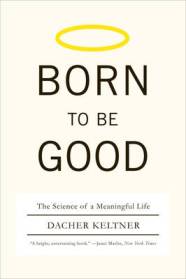 “It is the first language we learn,” said Dacher Keltner, a professor of psychology at the University of California, Berkeley, and the author of “Born to Be Good: The Science of a Meaningful Life” (Norton, 2009), and remains, he said, “our richest means of emotional expression” throughout life.
The evidence that such messages can lead to clear, almost immediate changes in how people think and behave is accumulating fast. Students who received a supportive touch on the back or arm from a teacher were nearly twice as likely to volunteer in class as those who did not, studies have found. A sympathetic touch from a doctor leaves people with the impression that the visit lasted twice as long, compared with estimates from people who were untouched. Research by Tiffany Field of the Touch Research Institute in Miami has found that a massage from a loved one can not only ease pain but also soothe depression and strengthen a relationship.
In a series of experiments led by Matthew Hertenstein, a psychologist at DePauw University in Indiana, volunteers tried to communicate a list of emotions by touching a blindfolded stranger. The participants were able to communicate eight distinct emotions, from gratitude to disgust to love, some with about 70 percent accuracy.
“We used to think that touch only served to intensify communicated emotions,” Dr. Hertenstein said. Now it turns out to be “a much more differentiated signaling system than we had imagined.”
To see whether a rich vocabulary of supportive touch is in fact related to performance, scientists at Berkeley recently analyzed interactions in one of the most physically expressive arenas on earth: professional basketball. Michael W. Kraus led a research team that coded every bump, hug and high five in a single game played by each team in the National Basketball Association early last season.
In a paper due out this year in the journal Emotion, Mr. Kraus and his co-authors, Cassy Huang and Dr. Keltner, report that with a few exceptions, good teams tended to be touchier than bad ones. The most touch-bonded teams were the Boston Celtics and the Los Angeles Lakers, currently two of the league’s top teams; at the bottom were the mediocre Sacramento Kings and Charlotte Bobcats.
The same was true, more or less, for players. The touchiest player was Kevin Garnett, the Celtics’ star big man, followed by star forwards Chris Bosh of the Toronto Raptors and Carlos Boozer of the Utah Jazz. “Within 600 milliseconds of shooting a free throw, Garnett has reached out and touched four guys,” Dr. Keltner said.
To correct for the possibility that the better teams touch more often simply because they are winning, the researchers rated performance based not on points or victories but on a sophisticated measure of how efficiently players and teams managed the ball — their ratio of assists to giveaways, for example. And even after the high expectations surrounding the more talented teams were taken into account, the correlation persisted. Players who made contact with teammates most consistently and longest tended to rate highest on measures of performance, and the teams with those players seemed to get the most out of their talent.
The study fell short of showing that touch caused the better performance, Dr. Kraus acknowledged. “We still have to test this in a controlled lab environment,” he said.
If a high five or an equivalent can in fact enhance performance, on the field or in the office, that may be because it reduces stress. A warm touch seems to set off the release of oxytocin, a hormone that helps create a sensation of trust, and to reduce levels of the stress hormone cortisol.
In the brain, prefrontal areas, which help regulate emotion, can relax, freeing them for another of their primary purposes: problem solving. In effect, the body interprets a supportive touch as “I’ll share the load.”
“We think that humans build relationships precisely for this reason, to distribute problem solving across brains,” said James A. Coan, a a psychologist at the University of Virginia. “We are wired to literally share the processing load, and this is the signal we’re getting when we receive support through touch.”
The same is certainly true of partnerships, and especially the romantic kind, psychologists say. In a recent experiment, researchers led by Christopher Oveis of Harvard conducted five-minute interviews with 69 couples, prompting each pair to discuss difficult periods in their relationship.
The investigators scored the frequency and length of touching that each couple, seated side by side, engaged in. In an interview, Dr. Oveis said that the results were preliminary.
“But it looks so far like the couples who touch more are reporting more satisfaction in the relationship,” he said. Again, it’s not clear which came first, the touching or the satisfaction. But in romantic relationships, one has been known to lead to the other. Or at least, so the anecdotal evidence suggests.


Faking Orgasm: Women AND Men do it! WHY?
Chances are that if you’ve been in a relationship, and you’re a woman, you’ve probably faked an orgasm. But did you know that men fake them too?
The research that brings us this important sexual discovery was conducted at the University of Kansas on 180 male and 101 female college students. The students completed an anonymous survey about their sexual habits.
Not surprisingly, some of the college students were still virgins — 15 percent of men and 32 percent of women surveyed had not yet had intercourse.
Of the students who had had sex, nearly 30 percent of men reported faking an orgasm, compared to 67 percent of women. Some of the participants admitted they also faked orgasm not only during regular sex, but during oral sex, manual stimulation and phone sex as well. The 67 percent number is comparable to past research, that has reported a similar percentage among women.
So why do we do it? Why fake an orgasm during intimacy, a time when you’d think we be putting our social masks aside
The researchers asked these college students that question, and the most frequently reported reasons were:
* Orgasm was unlikely. — Sometimes it’s just not going to happen, and although this seems to be a more common issue amongst women, it can also happen with men. Especially if alcohol is involved.
* They wanted sex to end. — Closely linked to an orgasm is unlikely, sometimes a partner will want to keep having sex until their partner finishes. A fake orgasm brings sex to an end quickly.
* They wanted to avoid negative consequences. — Most people don’t want to hurt another person’s feelings, and that’s no more the case than with our romantic partner. A fake orgasm avoids the negative consequences of having another person feel badly that they didn’t perform “well enough” to bring the other person to climax.
* They wanted to please their partner. — Faking an orgasm shows that you care about your partner’s feelings of performance and self-esteem. Or so said the people who filled out the survey.
Why would an orgasm be unlikely or why would one want sex to end more quickly? Well, sometimes we’re not always in the same place sexually as our partner. So we agree to sex because we feel guilty or to put an end to the nagging. Or perhaps we agreed to have sex to help relieve stress, only to find it didn’t quite help in the way we had hoped. An orgasm is unlikely if your partner is stressed, not turned on, feels tired, or is put off by you or the relationship in some way. A faked orgasm during such times helps end the sex more quickly, without making your partner feel bad.
The researchers found that the responses suggested a sexual “script” that most of us follow, or would like to follow. Boy meets girl, girl takes boy to bed, girl has an orgasm before the boy. And the boy is response for the girl’s orgasm (although not as much, vice-a-versa). Faking an orgasm is a predictable response to this set of expectations, to ensure the “script” goes as smoothly as possible.
Reference:
Muehlenhard CL. & Shippee SK. (2009). Men’s and Women’s Reports of Pretending Orgasm. J Sex Res, 5, 1-16.
Related articles by Zemanta
- Cerebral Orgasm Dr. Shriniwas Kashalikar (slideshare.net)
- Avoid These 7 Mistakes In Bed (slideshare.net)
![Reblog this post [with Zemanta]](https://i0.wp.com/img.zemanta.com/reblog_e.png)
Sex After Marriage?: Resurrecting Sex & Developing Passionate Intimacy in your Relationship
In July 2002 I had a ( and I know I am sounding melodramatic here) life-changing and career rattling experience when I attended a two day workshop with Colorado-area Marriage and Family Health Center director and psychotherapist Dr David Schnarch, in Sydney,Australia. (UPDATE: also see a related post HERE)

Dr David Schnarch
Schnarch is plugged as the “rightful heir” to sex science pioneers Masters and Johnson. But he’s not their disciple. In the 1950s they introduced the idea that sex was a natural function and should be regarded as such. At one level, that was tremendously liberating, he says. But at another level it was an inherently pathological model in which sexual difficulties (or dysfunction, as they became known post-Masters and Johnson) were treated as abnormal. In fact, says Schnarch, sexual difficulties are a normal part of the healthy development of an emotional relationship between adults.
We were a mixed group that arrived at the Mary McKillop Centre for the workshop. Dr. Schnarch went to some trouble to make us all feel at home (even forsaking his tie, as is the custom in this part of the world).
He warned us it would be “like drinking from a fire hose” and he was right. There was so much practical wisdom in what he was saying that it was hard to take it all in. But we did. People changed over those two days. I did.
At the same time I became more and more excited at the robust promise of Dr. Schnarch’s work. It is increasingly accepted that he is offering a new paradigm in sexual and marital therapy, however I see this paradigm as offering new approaches to all forms of psychotherapy. To be able to approach clients from a genuinely non-pathologizing stance, and to work in such a way that I am speaking to and drawing on the best of them is a goal often promised but rarely, if ever, delivered on till now.
Materials in Dr Schnarch’s Passionate Marriage series highlight how common issues about intimate sexual relationships and common problems with sex and intimacy are really part of a system: Marriage is a natural  “people-growing process” and the inevitable sexual boredom, lack of passion, and communication difficulties are the drive wheels and grindstones of adult development. Relationships are shaped by more than unresolved childhood issues, past “wounds,” and family-of-origin problems. Even when these are non-existent, marriage becomes contentious because the growth processes in emotionally committed relationships surface in sexual interactions and other intimate exchanges. These are not situational problems to be solved and avoided. Rather, they are dilemmas to go through because they make us grow capable of the intimate sexual relationships and eroticism we seek. Common sexual and relationship difficulties are midpoints in the evolution of healthy relationships rather than signs of personal inadequacy, incompatibility, or falling out of love.
Passionate Marriage focuses on life-long sexual development rather than merely curing sexual dysfunctions or improving sexual relationships (it does this too). Most people never reach their sexual potential–and those who do are generally well into their 40s, 50s, and 60s. This is a pleasant surprise to many people because it’s common to confuse genital prime with sexual prime. In reality, we are more capable of intensely intimate sexual relationships and blatant eroticism as we mature. Most people are much better in bed as they get older. Sexual potential and cellulite are highly correlated!
Instead of emphasizing listening skills, communication, compromise, or negotiation, Passionate Marriage shows how “your relationship with yourself” controls both intimate connection and sexual desire for your partner. This revolutionary approach offers concrete ways to use your sexuality to build a stronger sense of yourself while getting closer to your partner. Most marital enrichment approaches emphasize other-validated intimacy: expecting empathy, reciprocity, and validation from your partner when you disclose. Passionate Marriage emphasizes self-validated intimacy: validating and accepting your own disclosures, and learning to soothe your own heart. This shift allows you to use emotional gridlock, difficulties being intimate, and problems in your sexual relationship like sexual boredom, and low desire to develop yourself while creating a more intimate, passionate, loving relationship with your partner.
 This approach has lots of practical applications. Passionate Marriage decodes the “language” of sex, showing how your interactions in your sexual relationship reveal you, your partner, and your relationship. Discover new psychological “styles” of having sex and dimensions of sexual experience. Learn how eyes-open sex (and orgasms) can bring hot passion and new intimacy to your relationship–and make you grow. What partners learn about maintaining themselves in their intimate sexual relationships has immediate application outside the bedroom too. Although better sex doesn’t automatically make for a better relationship, the personal growth required to enhance the sexual and intimate aspects of relationship is the same growth that improves relationships in other ways, often at the same time.
Rather than focusing on “touch techniques,” the book Passionate Marriage and associated workshops emphasize intimate and emotional connection during sexual interaction. Expect explicit discussion of sexual behavior, practical tips, and details of couples’ going through the “people-growing” crucibles inherent in emotionally committed relationships.
These books are essential resources for all married or committed couples, not just those who think they are in trouble. More over the next few weeks.
Questions? Leave them in the comments. email me via the link on the right or tweet them.
Related articles by Zemanta
- Good Health Equal Good Sex, Researchers Say (medhealthwriter.blogspot.com)
About Peter
Peter Brown BHMS (Hons) MPsychClin MAPS
I’m a Clinical Psychologist and have a private practice and consultancy in Brisbane Australia. I have 24 years experience in child, adult and family clinical psychology. I have a wonderful wife and three kids.
I am co-founder of Christian Wholeness Counselling Services.
I like researching issues of the brain & mind, reading and seeking out new books and resources for myself and my clients. I thought that others might be interested in some of what I have found also, hence this blog…

Subscribe to My Blog Posts & Updates
-

Blog Surfer
Alphainventions


Recent Comments


 Peter H Brown Clinical Psychologist