Helicopter Parenting? New Book Advocates That Firmer But Fair Is The Way To Go
There are times when parents have to stay tough and Nigel Latta explains how best to do it
A COMMON question among parents of young children is: ‘‘ When does raising children start to get better?’’ The answer could be that it doesn’t get any better, it just gets different.
MADE TO ORDER: Keeping a firm hand but not rule by fear is the recommended way to go.It’s a theme Nigel Latta explores in his new book, Politically Incorrect Parenting. Latta will soon present a show of the same name on Channel 9.
While the issues he explores are hardly new, this is not your average parenting book. It doesn’t trade on a parent’s fear but on the reassurance that there are ways you can survive, keep a semblance of sanity and still enjoy the company of your little home-grown terrorist.
It’s battlefield wisdom from a therapist who’s seen more than most of us could handle and has some commonsense tools to help ordinary parents who need a hand.
Some of the chapter headings might give you a clue to his approach.
The preface ‘‘Never Mind the Kids . . . Save Yourself’’ is a pretty good hint, but there are also gems such as ‘‘How to Make Time Out and Sticker Charts Actually Work’’. Then there’s ‘‘Why You Should Never Negotiate with a Terrorist’’.
‘‘I just think parenting is such bloody hard work and the last thing you want to do is read a book on raising your children that’s boring and just makes you feel worse,’’ Latta says.
‘‘You want to read something that feels like a bit of time off.
‘‘What I try to do in the TV show and the book is to give people useful things that they can actually use to make things better but also just reassure people that life is not that complicated.
‘‘We all worry about damaging our children if we say the wrong thing, or send them to the wrong school, or don’t read them enough stories. It’s not about any of that stuff because it’s not stuff that matters.’’
Latta fears the modern world has done away with a lot of common sense. ‘‘I understand common sense as wise thinking,’’ he says. ‘‘If people have a problem with their children most will Google it and they come up with 26 million different opinions . . . and a lot of scare tactics.
‘‘Scaring people is a way to sell books because it works, but I just think it sucks. You don’t need to make parents any more afraid because as soon as you have children you start to worry and it never stops.’’

Click Image to read reviews
After helping thousands of people crawl out of what they feared were bottomless pits, Latta has found a common theme running through the vast majority of cases.
‘‘By far the biggest issue is that people just need to toughen up and that invariably gets it sorted,’’ he says.
‘‘People come to me and say they have a four-year-old they just can’t control and I’m wondering if he’s a mutant six foot high fouryear-old.
‘‘And they become paralysed with all this modern doubt stuff that makes them wonder if they’re doing the right thing when really it’s pretty straightforward.’’
For example, what to do with a fussy eater.
Hungry children eat, Latta says, it’s as simple as that.
He has a key message for parents who are doing it tough. ‘‘Get tough on the behaviours you don’t like and praise them for stuff you do.
‘‘Do that and it fixes anything – a few simple things and it’ll all be fine.’’
Source: Tony Bartlett: The Courier Mail news.com.au
Related articles by Zemanta
- Learning To Love: The Importance Of Empathy & How To Teach It To Your Kids (peterhbrown.wordpress.com)
- Spank Now, Pay Later? Children Spanked At 3yrs More Likely To Be Aggressive At 5 (peterhbrown.wordpress.com)
- TV For Toddlers: “The Wiggles” Or The Wobbles? (peterhbrown.wordpress.com)
![Reblog this post [with Zemanta]](https://i0.wp.com/img.zemanta.com/reblog_e.png)
Mum’s The Word: Pregnant Mums Prefer Their Mother’s Advice To Their Doctor’s Advice
 Researchers from Royal Holloway, University of London have found that pregnant and postnatal women, while wanting to do the best for their baby, do not follow medical advice without question and are more likely to adopt practices their mothers and grandmothers carried out during their pregnancies.
The study by Professor Paula Nicolson and Dr Rebekah Fox from the Department of Health and Social Care at Royal Holloway is published in the Journal of Health Psychology and explores three recent generations of women’s experiences of pregnancy, questioning those who gave birth in the 1970s, 1980s and 2000s.
The women who were interviewed said they knew their mothers and grandmothers had their best interests at heart when they offered them advice. For the older women questioned, the advice from their female relations was their main source of information.
The 1980s and 2000s group, however, had to reconcile what they heard from older generations with direct advice from their doctors, midwives and health visitors as well as the numerous health messages on the web and self-help books.
Professor Nicolson says, “It is much to the credit of contemporary women that despite the unprecedented pressures from the media, medicine and the ‘pregnancy police’ that they are still able to filter-in the advice that really suits them from all these sources. Each of the three generations found ways to ‘resist’ what they considered inappropriate pressures from advisors and were more likely to follow advice given to them from their mothers and grandmothers even if it went against the medical professions advice.

Click to view reviews
“Women tend to discuss the advice they are given with their female relatives and this leads to resistance to some types of advice. For example, despite being advised to cut down on caffeine during pregnancy one woman we questioned said she continued to drink tea because her grandmother told her it relieved her morning sickness.”
Professor Nicolson says women who take notice of general public health information about what is a healthy lifestyle, i.e not smoking, taking regular exercise, not taking drugs and drinking alcohol in moderation are those who are most likely to be in-tune with their bodies and can therefore ‘use’ guidelines but not be constrained by them.
She added: “Taking all the guidelines too seriously leads to anxieties. Lack of self-confidence also can lead to worry about ‘doing the wrong thing’ which is potentially more harmful than taking the odd glass of wine or eating soft cheese.”
Source: Sciencedaily

Related articles by Zemanta
- Learning To Love: The Importance Of Empathy & How To Teach It To Your Kids (peterhbrown.wordpress.com)
- Too Sexy Too Soon! PART ll – Are Sexual Images Are Now An Inescapable Part Of Children’s Lives? (peterhbrown.wordpress.com)
- Online Snooping: Is Your Partner Secretly Watching You? (spring.org.uk)
Bullying: Why Do Girls Tend To Become Violent & Agressive Later Than Boys?
 Girls appear to be “protected” from showing antisocial behaviour until their teenage years, new research from the University of Cambridge has found.
The study sheds new light on antisocial behaviour in girls compared with boys and suggests that rather than violence or antisocial behaviour simply reflecting bad choices, the brains of people with antisocial behaviour may work differently from those who behave normally.
Until now, little research has been done on antisocial behaviour (Conduct Disorder) in girls. According to Cambridge Neuroscientist Dr Graeme Fairchild of the Department of Psychiatry, lead author of the study:
“Almost nothing is known about the neuropsychology of severe antisocial behaviour in girls. Although less common in girls than boys, UK crime figures show that serious violence is increasing sharply in female adolescents.”
The study, published online this month in Biological Psychiatry, compared a group of 25 girls, aged 14–18 years-old, with high levels of antisocial and/or violent behaviour with a group of 30 healthy controls.
“Most of our participants had major difficulties controlling their temper, lashing out and breaking things around their homes when they got angry, and had often been involved in serious fights. Several had convictions for violent offences and some had been to prison for assault,” Dr Fairchild explains.
Dr Fairchild and colleagues measured the girls’ ability to recognise the six primary facial expressions – anger, disgust, sadness, fear, surprise and happiness. They found that girls with antisocial behaviour made a large number of errors when asked to recognise anger and disgust, but had no problems recognising other facial expressions.
According to Dr Fairchild: “Our findings suggest that antisocial behaviour or violence may not simply reflect bad choices but that, at some level, the brains of individuals with antisocial behaviour may work differently. This might make it harder for them to read emotions in others – particularly to realise that someone is angry with them – and to learn from punishment.”

Click Image to read reviews
The study also shows that although girls and boys with severe antisocial behaviour have the same problems recognising emotions, the girls – whose problems began when they were teenagers – more closely resembled boys whose antisocial behaviour began in childhood.
Boys with childhood-onset Conduct Disorder have difficulties recognising anger and disgust, but those with adolescence-onset Conduct Disorder do not.
“This suggests that there are interesting differences in antisocial behaviour between girls and boys, with girls being protected from showing antisocial behaviour until their teenage years for reasons we don’t yet understand,” Dr Fairchild says.
The next phase of the research involves a brain scanning study. “As far as we know, this will be the first functional neuroimaging study ever carried out in girls with severe antisocial behaviour,” Dr Fairchild says.
Around five percent of school-age children would meet criteria for Conduct Disorder, but it is approximately three to four times more common in boys than girls. A range of factors – ranging from physical abuse in childhood to being diagnosed with Attention-Deficit/Hyperactivity Disorder – make it more likely that someone will develop Conduct Disorder.
It is difficult to treat using psychological therapy, and there are no effective drug treatments, but a new form of therapy called Multi-Systemic Therapy is currently being trialled in the UK and shows promise in treating antisocial behaviour.
The research was funded by the Wellcome Trust.
Source: the University of Cambridge
Research Article: Facial Expression Recognition, Fear Conditioning, and Startle Modulation in Female Subjects with Conduct Disorder.
Fairchild G, Stobbe Y, van Goozen SH, Calder AJ, Goodyer IM.
Biol Psychiatry. 2010 May 4.
Related articles by Zemanta
- “My Kid Wouldn’t Go There”: Teens & Teen Sexuality (peterhbrown.wordpress.com)
- Teen Myths Busted: New Science Reveals That Common Assumptions Are Wrong (peterhbrown.wordpress.com)
- Bad behaviour among boys linked to early or late puberty (telegraph.co.uk)
A Spoonful Of Sugar DOES Makes The Medicine Go Down! Sweet Solutions Reduce Kids Experience Of Pain From Needles
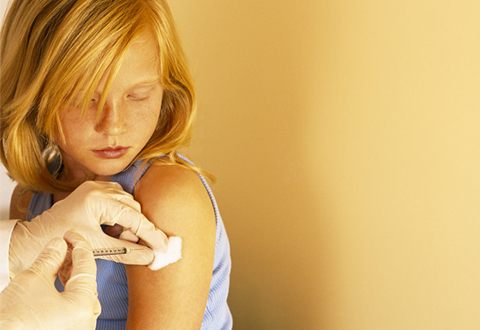 Infants who receive sweet solutions before being immunised experience less pain and are more comfortable, reveals research published ahead of print in the Archives of Disease in Childhood.
Healthcare professionals should consider giving infants aged 1–12 months a sweet solution of sucrose or glucose before immunising a child, the international team of researchers recommended, because of the child’s improved reaction to injections.
Existing research shows the effectiveness of giving newborn infants and those beyond the newborn period, a small amount (e.g. a few drops to about half a teaspoon) of sucrose and glucose as analgesics during minor painful procedures.
Little is known, however, about the effect of such solutions on pain, so a team of researchers from Toronto in Canada, Melbourne in Australia and Sao Paulo in Brazil, funded by a Canadian Institutes of Health Research Knowledge Synthesis grant, collected the findings from 14 relevant trials involving 1,674 injections given to children aged 1–12 months.
They found that giving a child a small amount of sweet solution, compared to water or no treatment moderately decreased crying in the child during or following immunisation in 13 of the 14 studies (92.9%).
The authors conclude that infants aged 1–12 months given sucrose or glucose before immunisation had cried less often and for less time.
The amount of glucose or sucrose given made a difference and the researchers found that infants receiving 30% glucose in some trials were almost half as likely to cry following immunisation.
Click Image to read reviews
The researchers could not identify the ideal dose of sucrose or glucose because of the variety of volumes and concentrations used in the various trials.
Analgesic effects of sweet solutions given to older infants were more moderate than those in newborn infants.
They conclude: “Healthcare professionals responsible for administering immunisations should consider using sucrose or glucose during painful procedures.
“This information is important for healthcare professionals working with infants in both inpatient and out-patient settings, as sweet solutions are readily available, have a very short onset of time to analgesia, are inexpensive and are easy to administer.”
Source: Eurekalert
Related articles by Zemanta
- TV For Toddlers: “The Wiggles” Or The Wobbles? (peterhbrown.wordpress.com)
- Sticks & Stones AND Words Can Hurt You: How Words Can Cause Physical Pain (peterhbrown.wordpress.com)
- Cool School Where Peace Rules: FREE Downloadable PC Video Game Teaches Kids Conflict Resolution Skills (peterhbrown.wordpress.com)
Cool School Where Peace Rules: FREE Downloadable PC Video Game Teaches Kids Conflict Resolution Skills
Human development scientists and computer game developers designed a video game that teaches kids how to resolve conflicts peacefully amongst themselves. Inanimate objects, such as pencils and erasers, come to life to lead players through a series of common scenarios in which arguments are about to occur. The player is prompted for the non-violent solution and is rewarded for choosing correctly
Amid growing concern surrounding the effects violent video games have on children, a new computer game could be the alternative parents have been waiting for.
You can download it HERE for free
Kids who play together also argue together. Fights over games, toys and friendships are common, but when arguments heat up, it’s time to solve them before things get out of hand. A new computer game teaches kids how to solve playground and classroom quarrels that kids face every day in a positive way — without fists and fights.
“It helps them resolve conflicts by giving them a chance to think about what happens in the course of an actual conflict episode,” said Melanie Killen, Ph.D., a human development expert at the University of Maryland in College Park, Md.
The game, called “Cool School: Where Peace Rules” — designed by a team of human development scientists, teachers, government mediators, computer game developers and animators — helps kids solve school violence and bullying while still having fun.
“You’re learning things, but at the same time it’s having fun with it,” said student Ellen Yaffe.
Animated objects come to life and depict common conflicts. Kids experiment on how to settle each argument. Players have the option of threatening the peer, telling the teacher, forgetting about it or talking things through.
Players are rewarded for choosing positive solutions to resolve conflicts with letters they collect to win.
“What this game is doing is it’s empowering children to make choices and decisions and to see what unfolds based on their own decisions,” Dr. Killen said.
Parents and teachers praise the new game, and kids love it for their own reasons.
“I think they make it very realistic with like the names and how the school looks,” student Jacob Tycko told Ivanhoe.
The best part is the game is totally free. You can download it HERE for free
Source: Sciencedaily
Related articles by Zemanta
- Violent Video Games & Kids: Definitive Study Shows Both Short & Long Term Harmful Effects (peterhbrown.wordpress.com)
- Brain Training Or Just Brain Straining?: The Benefits Of Brain Exercise Software Are Unclear (peterhbrown.wordpress.com)
- And They All Lived Together In a Little Row Boat…Clap! Clap!: How Clapping Games Improve Cognition And Motor Skills In Children (peterhbrown.wordpress.com)
TV For Toddlers: “The Wiggles” Or The Wobbles?
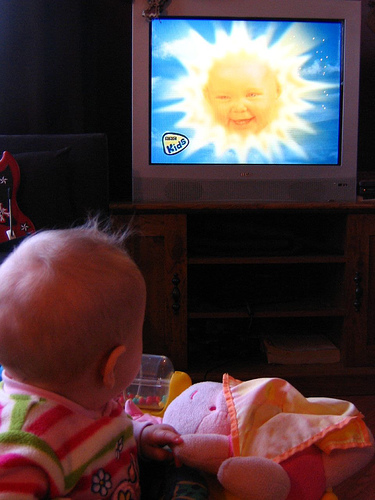 Want kids who are smarter and thinner? Keep them away from the television set as toddlers. A shocking study from child experts at the Université de Montréal, the Sainte-Justine University Hospital Research Center and the University of Michigan, published in the Archives of Pediatrics & Adolescent Medicine, has found that television exposure at age two forecasts negative consequences for kids, ranging from poor school adjustment to unhealthy habits.
“We found every additional hour of TV exposure among toddlers corresponded to a future decrease in classroom engagement and success at math, increased victimization by classmates, have a more sedentary lifestyle, higher consumption of junk food and, ultimately, higher body mass index,” says lead author Dr. Linda S. Pagani, a psychosocial professor at the Université de Montréal and researcher at the Sainte-Justine University Hospital Research Center.
The goal of the study was to determine the impact of TV exposure at age 2 on future academic success, lifestyle choices and general well being among children. “Between the ages of two and four, even incremental exposure to television delayed development,” says Dr. Pagani.
A total of 1,314 kids took part in the investigation, which was part of the Quebec Longitudinal Study of Child Development Main Exposure. Parents were asked to report how much TV their kids watched at 29 months and at 53 months in age. Teachers were asked to evaluate academic, psychosocial and health habits, while body mass index (BMI) was measured at 10 years old.
“Early childhood is a critical period for brain development and formation of behaviour,” warns Dr. Pagani. “High levels of TV consumption during this period can lead to future unhealthy habits. Despite clear recommendations from the American Academy of Pediatrics suggesting less than two hours of TV per day — beyond the age of two — parents show poor factual knowledge and awareness of such existing guidelines.”
According to the investigation, watching too much TV as toddlers later forecasted:
- a seven percent decrease in classroom engagement;
- a six percent decrease in math achievement (with no harmful effects on later reading);
- a 10 percent increase in victimization by classmates (peer rejection, being teased, assaulted or insulted by other students);
- a 13 percent decrease in weekend physical activity;
- a nine percent decrease in general physical activity;
- a none percent higher consumption of soft drinks;
- a 10 percent peak in snacks intake;
- a five percent increase in BMI.
“Although we expected the impact of early TV viewing to disappear after seven and a half years of childhood, the fact that negative outcomes remained is quite daunting,” says Dr. Pagani. “Our findings make a compelling public health argument against excessive TV viewing in early childhood and for parents to heed guidelines on TV exposure from the American Academy of Pediatrics.”

Click Image to read reviews
Since TV exposure encourages a sedentary lifestyle, Dr. Pagani says, television viewing must be curbed for toddlers to avoid the maintenance of passive mental and physical habits in later childhood: “Common sense would have it that TV exposure replaces time that could be spent engaging in other developmentally enriching activities and tasks which foster cognitive, behavioral, and motor development.”
“What’s special about this study is how it confirms suspicions that have been out there and shown by smaller projects on one outcome or another. This study takes a comprehensive approach and considers many parental, pediatric and societal factors simultaneously,” she adds.
This research was funded by the Social Science and Humanities Research Council of Canada.
The article, published in the Archives of Pediatrics & Adolescent Medicine, was authored by Linda S. Pagani, Caroline Fitzpatrick and Tracie A. Barnett of the Université de Montréal and its affiliated Sainte-Justine University Hospital Research Center in Canada in collaboration with Eric Dubow of the University of Michigan in the United States.
Source: Sciencedaily
Related articles by Zemanta
- Violent Video Games & Kids: Definitive Study Shows Both Short & Long Term Harmful Effects (peterhbrown.wordpress.com)
- And They All Lived Together In a Little Row Boat…Clap! Clap!: How Clapping Games Improve Cognition And Motor Skills In Children (peterhbrown.wordpress.com)
- Too Sexy Too Soon! PART I – Should Girls As Young As 9 Be Taken To Get Their Legs Waxed? (peterhbrown.wordpress.com)
“My Kid Wouldn’t Go There”: Teens & Teen Sexuality
 It can be difficult for parents of teenagers to come to terms with the fact their kids may have sex, particularly given widespread concerns about the consequences of teen sexual activity. In fact, a new study from North Carolina State University shows that many parents think that their children aren’t interested in sex – but that everyone else’s kids are.
“Parents I interviewed had a very hard time thinking about their own teen children as sexually desiring subjects,” says Dr. Sinikka Elliott, an assistant professor of sociology at NC State and author of the study. In other words, parents find it difficult to think that their teenagers want to have sex.
“At the same time,” Elliott says, “parents view their teens’ peers as highly sexual, even sexually predatory.” By taking this stance, the parents shift the responsibility for potential sexual activity to others – attributing any such behavior to peer pressure, coercion or even entrapment.
For example, Elliott says, parents of teenage boys were often concerned that their sons may be lured into sexual situations by teenage girls who, the parents felt, may use sex in an effort to solidify a relationship. The parents of teenage girls, meanwhile, expressed fears that their daughters would be taken advantage of by sexually driven teenage boys.
These beliefs contribute to stereotypes of sexual behavior that aren’t helpful to parents or kids.

Click image to read reviews
“By using sexual stereotypes to absolve their children of responsibility for sexual activity, the parents effectively reinforce those same stereotypes,” Elliott says.
Parents’ use of these stereotypes also paints teen heterosexual relationships in an unflattering, adversarial light, Elliott says and notes the irony of this: “Although parents assume their kids are heterosexual, they don’t make heterosexual relationships sound very appealing.”
A paper describing the study is published in the May issue of Symbolic Interaction. Elliott is also the author of the forthcoming book, Not My Kid: Parents and Teen Sexuality, which will by published by New York University Press.
Source: ScienceDaily (May 3, 2010)
Related articles by Zemanta
- Explicit teen tweets a clue for parents it may be time to talk sex: study (canada.com)
- Teen Myths Busted: New Science Reveals That Common Assumptions Are Wrong (peterhbrown.wordpress.com)
- Too Sexy Too Soon! PART I – Should Girls As Young As 9 Be Taken To Get Their Legs Waxed? (peterhbrown.wordpress.com)
Preventing Child Bullying: The Important Role Of Parents
 Getting to know friends, helping with homework are among the things parents can do to decrease the likelihood that their child will become a bully
Communities across the United States are developing programs to address child bullying. New research shows that parents can play an important role in preventing their children from becoming bullies in the first place.
“Improving parent-child communication and parental involvement with their children could have a substantial impact on child bullying,” said Rashmi Shetgiri, MD, MSHS, lead author of a study to be presented Monday, May 3 at the Pediatric Academic Societies (PAS) annual meeting in Vancouver, British Columbia, Canada.
Dr. Shetgiri, a pediatrician and researcher at the University of Texas Southwestern Medical Center and Children’s Medical Center Dallas, and colleagues analyzed data from the 2007 National Survey of Children’s Health. Among the questions asked of 45,897 parents with children 10-17 years old was whether their child bullies or is cruel or mean to others. Researchers then identified factors that increased or reduced the risk of a child being a bully.
Results showed the prevalence of bullying was 15 percent. Factors increasing the risk included race, emotional/behavioral problems and mothers’ mental health.
African-American and Latino children had a higher likelihood of being bullies compared to white children. In addition, children with emotional, developmental or behavioral problems and those whose mothers reported having less than “very good” mental health also were more likely to be bullies. Other parental characteristics that increased the likelihood of child bullying were getting angry with their child frequently and feeling that their child often did things to bother them.

Click image to view reviews
There also were factors that decreased the likelihood that a child will become a bully. Older children, those living in a home where the primary language spoken is not English and those who consistently did their homework were less likely to be bullies.
Parents also played a protective role. Those who shared ideas and talked with their child, and those who met most of their child’s friends were less likely to have children who bully.
“Parents can also work with health care providers to make sure any emotional or behavioral concerns they have about their child, as well as their own mental health, are addressed,” Dr. Shetgiri said. “Lastly, parents can take advantage of parenting programs that can help them become aware of and manage negative feelings, such as anger, and respond to their child in a non-aggressive manner.
Source: Eurekalert
Related articles by Zemanta
- Bullying can be a red flag for depression (msnbc.msn.com)
- “I Saw It Happen”: Children Who Witness Bullying Can Be Traumatized Too (peterhbrown.wordpress.com)
- Violent Video Games & Kids: Definitive Study Shows Both Short & Long Term Harmful Effects (peterhbrown.wordpress.com)
And They All Lived Together In a Little Row Boat…Clap! Clap!: How Clapping Games Improve Cognition And Motor Skills In Children
 BEER-SHEVA, ISRAEL, April 28, 2010 – A researcher at Ben-Gurion University of the Negev (BGU) conducted the first study of hand-clapping songs, revealing a direct link between those activities and the development of important skills in children and young adults, including university students.
“We found that children in the first, second and third grades who sing these songs demonstrate skills absent in children who don’t take part in similar activities,” explains Dr. Idit Sulkin a member of BGU’s Music Science Lab in the Department of the Arts.
“We also found that children who spontaneously perform hand-clapping songs in the yard during recess have neater handwriting, write better and make fewer spelling errors.”
Dr. Warren Brodsky, the music psychologist who supervised her doctoral dissertation, said Sulkin’s findings lead to the presumption that “children who don’t participate in such games may be more at risk for developmental learning problems like dyslexia and dyscalculia.
“There’s no doubt such activities train the brain and influence development in other areas. The children’s teachers also believe that social integration is better for these children than those who don’t take part in these songs.”
As part of the study, Sulkin went to several elementary school classrooms and engaged the children in either a board of education sanctioned music appreciation program or hand-clapping songs training – each lasting a period of 10 weeks.
“Within a very short period of time, the children who until then hadn’t taken part in such activities caught up in their cognitive abilities to those who did,” she said. But this finding only surfaced for the group of children undergoing hand-clapping songs training. The result led Sulkin to conclude that hand-clapping songs should be made an integral part of education for children aged six to 10, for the purpose of motor and cognitive training.
During the study, “Impact of Hand-clapping Songs on Cognitive and Motor Tasks,” Dr. Sulkin interviewed school and kindergarten teachers, visited their classrooms and joined the children in singing. Her original goal, as part of her thesis, was to figure out why children are fascinated by singing and clapping up until the end of third grade, when these pastimes are abruptly abandoned and replaced with sports.
“This fact explains a developmental process the children are going through,” Dr. Sulkin observes. “The hand-clapping songs appear naturally in children’s lives around the age of seven, and disappear around the age of 10. In this narrow window, these activities serve as a developmental platform to enhance children’s needs — emotional, sociological, physiological and cognitive. It’s a transition stage that leads them to the next phases of growing up.”
Sulkin says that no in-depth, long-term study has been conducted on the effects that hand-clapping songs have on children’s motor and cognitive skills. However, the relationship between music and intellectual development in children has been studied extensively, prompting countless parents to obtain a “Baby Mozart” CD for their children.
Click image to read reviews
Nevertheless, the BGU study demonstrates that listening to 10 minutes of Mozart music (.i.e., the ‘Mozart Effect’) does not improve spatial task performance compared to 10 minutes of hand-clapping songs training or 10 minutes of exposure to silence.
Lastly, Sulkin discovered that hand-clapping song activity has a positive effect on adults: University students who filled out her questionnaires reported that after taking up such games, they became more focused and less tense.
“These techniques are associated with childhood, and many adults treat them as a joke,” she said. “But once they start clapping, they report feeling more alert and in a better mood.”
Sulkin grew up in a musical home. Her father, Dr. Adi Sulkin, is a well-known music educator who, in the 1970s and 1980s, recorded and published over 50 cassettes and videos depicting Israeli children’s play-songs, street-songs, holiday and seasonal songs, and singing games targeting academic skills.
“So quite apart from the research experience, working on this was like a second childhood,” she noted.
Source: American Associates, Ben-Gurion University of the Negev
Related articles by Zemanta
- Brain Training Or Just Brain Straining?: The Benefits Of Brain Exercise Software Are Unclear (peterhbrown.wordpress.com)
- Sticks & Stones AND Words Can Hurt You: How Words Can Cause Physical Pain (peterhbrown.wordpress.com)
- Classroom Creativity [The Frontal Cortex] (scienceblogs.com)
Violent Video Games & Kids: Definitive Study Shows Both Short & Long Term Harmful Effects
 Iowa State University Distinguished Professor of Psychology Craig Anderson has made much of his life’s work studying how violent video game play affects youth behavior. And he says a new study he led, analyzing 130 research reports on more than 130,000 subjects worldwide, proves conclusively that exposure to violent video games makes more aggressive, less caring kids — regardless of their age, sex or culture.
Read the original research paper (PDF)
“We can now say with utmost confidence that regardless of research method — that is experimental, correlational, or longitudinal — and regardless of the cultures tested in this study [East and West], you get the same effects,” said Anderson, who is also director of Iowa State’s Center for the Study of Violence. “And the effects are that exposure to violent video games increases the likelihood of aggressive behavior in both short-term and long-term contexts. Such exposure also increases aggressive thinking and aggressive affect, and decreases prosocial behavior.”
The study was conducted by a team of eight researchers, including ISU psychology graduate students Edward Swing and Muniba Saleem; and Brad Bushman, a former Iowa State psychology professor who now is on the faculty at the University of Michigan. Also on the team were the top video game researchers from Japan — Akiko Shibuya from Keio University and Nobuko Ihori from Ochanomizu University — and Hannah Rothstein, a noted scholar on meta-analytic review from the City University of New York.
Meta-analytic procedure used in research
The team used meta-analytic procedures — the statistical methods used to analyze and combine results from previous, related literature — to test the effects of violent video game play on the behaviors, thoughts and feelings of the individuals, ranging from elementary school-aged children to college undergraduates.
The research also included new longitudinal data which provided further confirmation that playing violent video games is a causal risk factor for long-term harmful outcomes.
“These are not huge effects — not on the order of joining a gang vs. not joining a gang,” said Anderson. “But these effects are also not trivial in size. It is one risk factor for future aggression and other sort of negative outcomes. And it’s a risk factor that’s easy for an individual parent to deal with — at least, easier than changing most other known risk factors for aggression and violence, such as poverty or one’s genetic structure.”
The analysis found that violent video game effects are significant in both Eastern and Western cultures, in males and females, and in all age groups. Although there are good theoretical reasons to expect the long-term harmful effects to be higher in younger, pre-teen youths, there was only weak evidence of such age effects.
Time to refocus the public policy debate
The researchers conclude that the study has important implications for public policy debates, including development and testing of potential intervention strategies designed to reduce the harmful effects of playing violent video games.
“From a public policy standpoint, it’s time to get off the question of, ‘Are there real and serious effects?’ That’s been answered and answered repeatedly,” Anderson said. “It’s now time to move on to a more constructive question like, ‘How do we make it easier for parents — within the limits of culture, society and law — to provide a healthier childhood for their kids?'”
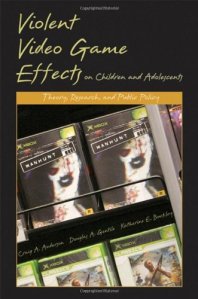
Click Image To Read Reviews
But Anderson knows it will take time for the creation and implementation of effective new policies. And until then, there is plenty parents can do to protect their kids at home.
“Just like your child’s diet and the foods you have available for them to eat in the house, you should be able to control the content of the video games they have available to play in your home,” he said. “And you should be able to explain to them why certain kinds of games are not allowed in the house — conveying your own values. You should convey the message that one should always be looking for more constructive solutions to disagreements and conflict.”
Anderson says the new study may be his last meta-analysis on violent video games because of its definitive findings. Largely because of his extensive work on violent video game effects, Anderson was chosen as one of the three 2010 American Psychological Association Distinguished Scientist Lecturers
Read the original research paper (PDF)
Source: Iowa State University
Related articles by Zemanta
- Study: Violent Video Game Play Makes More Aggressive Kids (usnews.com)
- Metastudy: Violent video games raise aggression (news.cnet.com)
- “I Saw It Happen”: Children Who Witness Bullying Can Be Traumatized Too (peterhbrown.wordpress.com)
About Peter
Peter Brown BHMS (Hons) MPsychClin MAPS
I’m a Clinical Psychologist and have a private practice and consultancy in Brisbane Australia. I have 24 years experience in child, adult and family clinical psychology. I have a wonderful wife and three kids.
I am co-founder of Christian Wholeness Counselling Services.
I like researching issues of the brain & mind, reading and seeking out new books and resources for myself and my clients. I thought that others might be interested in some of what I have found also, hence this blog…

Subscribe to My Blog Posts & Updates
-

Blog Surfer
Alphainventions


Recent Comments


 Peter H Brown Clinical Psychologist