World Autism Awareness Day: “David’s Gift” A Mother’s Journey
 As today is World Autism Awareness Day, I thought I’d highlight A new book by Australian author and mum Sally Thibault, whose son David, now 24 and studying at University, has Asperger’s Syndrome. Below is an interview with Sally and the story of “David’s Gift”
Credit : davidsgift.com.au: A new book called David’s Gift by Australian author Sally Thibault is a real-life story about her long struggle to cope with son David’s Asperger’s Syndrome – an autistic spectrum disorder. The book was released in mid March 2010 to help other parents facing challenging behaviours with children.
The message of the book is for everyone – that it’s not what happens to you in life that’s important, but how you handle it that matters.
Sally was a pioneering parent dealing with autistic spectrum disorder when it was unknown and first being diagnosed in Australia about 12 years ago. Now this complex neurological disorder is the most common developmental disorder in Australia. One in every 166 children in Australia has autism and that number has increased to one in every 91 children in the USA. Three out of every four are boys.
Interview with Sally Thibault ABC Queensland 1st April 2010 DownloadAlready being touted as a must read for all parents, teachers and health care professionals, David’s Gift helps others understand the pain and emotions parents deal with as they navigate the challenges of having a child with ASD.
Thibault’s story is inspirational and offers hope to people from all walks of life, especially those with disabilities. The book reveals useful information about Asperger’s Syndrome and autistic spectrum disorder (ASD), and gives parents real, tangible tools to assist them to come to terms with the diagnosis and create strategies to ensure their child grows to be a strong, self-actualised and confident young adult.
“When Asperger’s Syndrome first came into our lives it presented us with a challenge that, at the time, seemed sad, unfair and overwhelming. It is only now I can see that it was in fact an incredible gift,” said Mrs Thibault.
“As parents, we had to become the people we wanted David to be. What we learned about ourselves and who we became as people was David’s gift to us.”

Find Out More & Order The Book or eBook at davidsgift.com.au
“The book transcends the issue of autism and can be transferred to anyone’s life situation. The story has the potential to transform how people view the challenges they face, by helping readers see how those challenges are a gift offering them opportunity to grow and have a better life.”
Sally Thibault is a ‘wise mother’ of three children aged 24, 22 and 16, who has lived with autistic spectrum disorder for 24 years. She hopes her honest account of parenting a child with Asperger’s Syndrome will help other parents learn through her experiences.
When her eldest son David was a toddler, Sally knew he was different from other children. After searching for answers for many years, it wasn’t until David was 12 years old that he was finally diagnosed with Asperger’s Syndrome, an autistic spectrum disorder, in 1997.
“Back then, there wasn’t nearly as much information about Asperger’s as there is today, but judgements still haven’t changed in 12 years,” said Mrs Thibault. “One of the greatest challenges for children with ASD and their families is coping with a world that doesn’t accept difference very well.
As Barack Obama said: “My advice is to cultivate a sense of empathy – to put yourself in other people’s shoes – to see the world from their eyes. Empathy is a quality of character that can change the world.”
Asperger’s Syndrome is the mildest and highest function end of the autistic spectrum. People with Asperger’s find it difficult to understand social skills, often misunderstand the use of language and can be considered ‘obsessive’, focussing on one particular area of interest. People diagnosed with Asperger’s are generally intelligent, intense and self-focussed individuals who usually find success in a career that requires enormous amounts of attention to detail.
Steven Spielberg was diagnosed with Asperger’s as an adult. Today, David is following a similar career path and studying to be a digital video editor, which is perfect for his personality type.
Bill Gates is suspected to have Asperger’s Syndrome, along with Albert Einstein, Isaac Newton, Benjamin Franklin and Ludwig van Beethoven. David’s Gift has parallel themes to the award-winning book and film, The Horse Boy – a true story about a father’s quest to heal his autistic son by traveling with horses through Mongolia.

Related articles by Zemanta
- Today is World Autism Awareness Day (attachmentparenting.org)
- Company Only Hires People Who Have Autism (abcnews.go.com)
- Extraordinary Perception (scientificamerican.com)
![Reblog this post [with Zemanta]](https://i0.wp.com/img.zemanta.com/reblog_e.png)
Kids Who Bully Want Status But Long For Affection
Read The Original Research Paper HERE (Free PDF-internal link)
From ScienceDaily (Mar. 27, 2010) — Bullying is common in classrooms around the world: About 15 percent of children are victimized, leading to depression, anxiety, loneliness, and other negative outcomes. What’s driving bullies to behave the way they do? According to a new large-scale Dutch study, most bullies are motivated by the pursuit of status and affection.
Briliant Book! Click to read reviews at Amazon
The longitudinal study was conducted by researchers at the University of Groningen in the Netherlands. It appears in the March/April 2010 issue of the journal Child Development.
In their work, the researchers questioned almost 500 elementary-school children ages 9 to 12. Based on their findings, they conclude that bullies generally choose to gain status by dominating their victims. But at the same time, they try to reduce the chances that they’ll end up on the outs with other classmates by choosing as victims children who are weak and not well-liked by others. In short, even bullies care a lot about others’ affection and don’t want to lose it.
Gender also plays a role. For example, the study finds that at this age, bullies only care about not losing affection from classmates of their own gender. So when boys bully boys, it doesn’t matter whether girls approve or disapprove. The same holds for girls. Moreover, boys will bully only those girls that aren’t well liked by other boys, regardless of what girls think about it, and girls will do the same in their bullying of boys.
“To understand the complex nature of acceptance and rejection, it’s necessary to distinguish the gender of the bully, the gender of the target, and the gender of the classmates who accept and reject bullies and victims,” according to René Veenstra, professor of sociology at the University of Groningen, who led the study.
Read The Original Research Paper HERE (Free PDF-internal link)
Video : Lecture By Temple Grandin – Focus on Autism and Asperger’s Syndrome
I came across this fascinating lecture by Temple Grandin. Enjoy!
Vodpod videos no longer available.
Online ‘Cold Shoulder’ Shown To Effect Kids Self-Esteem
Read the original Research Paper HERE (Free PDF-internal link)
From ScienceDaily (Mar. 22, 2010) — Research by psychologists at the University of Kent has revealed that online ostracism is a threat to children’s self-esteem.
The study, the results of which are published March 22 in the British Journal of Developmental Psychology, looked at how children, adolescents and adults react to being ostracised by other players during an online computer game. This is the first time the effect of online ostracism on children has been investigated.
The study was carried out by a team at the University’s Centre for the Study of Group Processes and was led by Professor Dominic Abrams. Professor Abrams explained that research into cyber-bullying usually focuses on direct abuse and insults. ‘However, a more indirect and perhaps common form of bullying is ostracism — when people are purposefully ignored by others,’ he said. Professor Abrams also explained that ‘online ostracism affects adults by threatening their basic needs for self-esteem, sense of belonging, sense of meaning and sense of control. We wanted to discover whether children and adolescents have similar reactions.’
Click image to read reviews
Three groups of participants took part in the study: 41 eight and nine-year-old children, 79 thirteen and fourteen-year-olds and 46 twenty-year-old adults. All were asked to play a game of online ‘cyberball’ in which three online players — depicted on screen by their names — passed a ball to one another. In games where the participant was included, they threw and received the ball four times within the trial. However, in a game when they were ostracised they received the ball only twice at the start, and then the other two players continued to play only passing the ball between themselves.
After each game participants’ basic needs were assessed, as well as how much they had enjoyed the game.
Professor Abrams said: ‘For all age groups, online ostracism substantially threatened the four basic needs — esteem, belonging, meaning and control — and also lowered their mood, showing that social exclusion online is very powerful even among children.’
However, there were also differences between the three age groups in their responses to cyber-ostracism. Ostracism affected the self-esteem of the eight and nine-year-old children more than the other groups. This suggests that the adolescents and adults have developed better buffers against threats to self-esteem.
Among the thirteen to fourteen-year-olds ostracism had the largest effect on feelings of belonging, strongly suggesting that adolescents may place a higher value on inclusion in peer networks than do children or adults.
The good news is that the negative reactions were cancelled out when children were included in a later game. Professor Abrams added: ‘Whereas adults might be quite skilled at finding a relationship in which to be included after having been ostracised, it could be a bigger challenge for children. This suggests that parents and schools need to be vigilant in case children in their care are experiencing sustained ostracism.
Read the original Research Paper HERE (Free PDF-internal link)
//
Game On: The Decline of Backyard Play

Click Image to View Reviews
I found this post from Peter G. Stromberg @ Psychology Today. It really got me thinking about kids and the pressure that we may put on them as parents…What do you think?
A few weeks ago I flew to Denver with my younger daughter so that she could participate in a volleyball tournament; she has been travelling to tournaments for the last two years but this is the first time we had to fly. My daughter is 11 years old.
Shouldn’t my daughter be riding her bike around the neighborhood and jumping rope with her friends? Why is she, at age 11, playing on a team coached by a former Olympic-level athlete and competing against nationally-ranked teams based thousands of miles from our home? There is research to suggest that unstructured play and basic movement activities (running, jumping, balancing) are more beneficial for children of her age than specialized training in one particular sport. Why in the world should an 11 year old child be in year-round volleyball training? Well, let me explain.
I would guess that many readers who are older than 30 will share my own experience: at my daughter’s age and into my early teens, I spent every possible minute getting into pick-up games of basketball and football with my friends or just roaming around outside. This approach didn’t produce a skilled athlete, but it sure was fun (and cheap). Today, in most areas of the country, such activities are simply less available. One reason my daughter doesn’t head down to the park to play with her friends is that they aren’t there-they are at soccer practice, or piano lessons, or having pre-arranged play dates.
There has been a recent and enormous shift in the way children play in our society, away from unstructured outside play and towards organized competition under adult supervision. Why? One reason that will come quickly to mind is stranger danger. Many parents (including me, by the way) now believe it is unsafe for children-perhaps particularly girls-to be outside without adult supervision. Although neighborhoods vary, statistics that I have seen on this issue do not support the belief that in general accidents or attacks on children are more frequent now than, say, 30 years ago. It seems more likely that what has changed is extensive news coverage of issues such as attacks on children, which often fosters the belief that such events are frequent.
In short, actual danger from strangers is probably not the real reason for the decline in outside play. Well, how about this? Public funding for playgrounds, parks, and recreation centers has been declining since the 1980s. There aren’t as many places to go for public play anymore, and the ones that persist are likely not as well-maintained.
That’s relevant, but it still isn’t really at the heart of why my daughter plays highly competitive volleyball at such a young age. The fact is that if she doesn’t play now and decides to take up the sport at 14 or 15, the train will have left the station. Unless a child has extraordinary athletic gifts, she will be so far behind by that age that she will not be able to find a place on a team. It isn’t only that opportunities for unstructured public play have declined, it’s that opportunities for highly competitive play have expanded to such an extent that in some sports that is all that exists. There are simply no possibilities in my part of the country for recreational volleyball for children 10-18. And the situation is similar for many other sports as well: our focus on producing highly competitive teams with highly skilled participants leads to a lack of focus on producing opportunities for children who simply want to play a sport casually.
This, I think, gets us close to probably the most important reason that highly competitive sport for the few has begun to replace recreational sport for the many among children today. We as a society don’t care about recreational sport for the many. The logic of entertainment has come to control youth sports. Parents, kids, and the society as a whole are excited by the possibility of championships, cheering spectators, and (for the really elite) media coverage. And we aren’t really excited by our children playing disorganized touch football until they have to come in for dinner. What’s the point of that? Nobody is watching.
This isn’t anyone’s fault, it’s just the way our society works. I really wish my kids could play pick up games and intramurals the way their not-so-athletically-talented dad did. But the intramurals and pick up games are far fewer now. Strangely enough, childhood obesity rates have skyrocketed as they have faded. Or maybe that’s not strange at all.
This post reflects on issues I have been thinking about for years, but it is also heavily influenced by a recent book called Game On by ESPN writer Tom Farrey. To learn more about play in general, visit my website
from Peter G. Stromberg @ Psychology Today
Cyber-Bullying & LGBT Groups: Prevalence & Psychological Impact
 From http://www.medicalnewstoday.com
Schools are typically on guard against students who bully by inflicting repeated violence on other students. But technology has given rise to a relatively new form of bullying which inflicts emotional harm in a stealth manner, working through Web sites, chat rooms, e-mail, cell phones and instant messaging.
And according to a new national study by Iowa State University researchers, one out of every two lesbian, gay, bisexual, transgender (LGBT) and allied youths are regular victims of “cyberbullying,” which causes psychological and emotional distress to victims — producing thoughts of suicide in some who are repeatedly victimized.
In the online survey of 444 junior high, high school and college students between the ages of 11 and 22 — including 350 self-identified non-heterosexual subjects — 54 percent of the LGBT and allied youth reported being victims of cyberbullying in the 30 days prior to the survey. Cyberbullying includes attacks such as electronic distribution of humiliating photos, dissemination of false or private information, or targeting victims in cruel online polls.
Among the non-heterosexual respondents, 45 percent reported feeling depressed as a result of being cyberbullied, 38 percent felt embarrassed, and 28 percent felt anxious about attending school. More than a quarter (26 percent) had suicidal thoughts.
“There’s a saying that we’ve now changed to read, ‘Sticks and stones can break my bones, but words can kill,'” said Warren Blumenfeld, an Iowa State assistant professor of curriculum and instruction and the study’s lead author. “And especially at this age — pre-adolescence through adolescence — this is a time when peer influences are paramount in a young person’s life. If one is ostracized and attacked, that can have devastating consequences — not only physically, but on their emotional health for the rest of their lives.”
Co-authored by Robyn Cooper, a research and evaluation scientist at ISU’s Research Institute for Studies in Education (RISE), the study is being published in this month’s special LGBT-themed issue of the International Journal of Critical Pedagogy.
The results underscore the helplessness felt by victims of cyberbullying. Forty percent of the non-heterosexual respondents indicated that their parents wouldn’t believe them if they were being bullied online, while 55 percent reported that their parents couldn’t do anything to stop it. Fifty seven percent also indicated that they didn’t think a school official could do anything to stop it.
“They feared that there might be more retribution by ‘tattling,'” said Blumenfeld, who was bullied as a teen for being gay.
 “One of the things we found is that the LGBT students really want to make a difference,” said Cooper, who authored her doctoral dissertation on minority stress and the well-being of sexual minority college students. “They want their stories told. They want people to know what they’re going through, but they don’t want the repercussions of being bullied. So being able to respond to this survey was very helpful.”
One in four of the LGBT and allied students responded that they needed to learn how to deal with cyberbullying by themselves. More than half also feared telling their parents about the cyberbullying because they might restrict their use of technology, which Blumenfeld says is often the “lifeline to the outside world” for many young LGBT students who have been ostracized by their peers at school.
The ISU study also proposes strategies for cyberbullying prevention. Eighty percent of the survey’s respondents indicated that their peers should do more to stop it.
“One of the strategies coming out of this study – since respondents expect and want their peers to step in more – is that we should find ways on our campuses to empower young people to speak up and act as allies,” Blumenfeld said. “In bullying circles, it’s empowering the bystander to become the upstander to help eliminate the problem.”
Blumenfeld and Cooper recommend developing social norms programming at schools that focus on peer influences that correct misperceived societal norms.
The ISU researchers plan to author additional papers on their analysis from this survey. They also have submitted a new grant proposal to extend their research to a larger national sample that would include face-to-face interviews and focus groups.
Source: Mike Ferlazzo Iowa State University
REPOST: Talking to Your Child About What’s in The News
I originally blogged this post on August 5th last year. With the recent natural disasters in places like Haiti and Chile, and also the very raw and terrible tragedies involving young children and youth closer to my home in southeast Queensland, Australia, I have decided to repost it. I have done so in case it is helpful for other parents who, like myself are dealing with kids who are concerned about what they see and hear and read about troubling local and world events…
My experience is that many children, particularly those who have generalised anxiety can become quite distressed by exposure to seemingly innocuous exposure to events that are a part of everyday life.
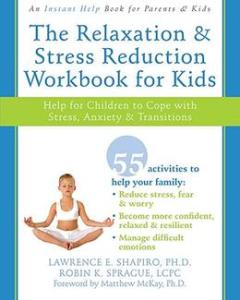 Although news gleaned from television, radio, or the Internet often is a positive educational experience for kids, problems can arise when the images presented are violent or the stories touch on disturbing topics. While we worry about our childrens’ exposure to violence and sexual content in movies, on the internet, and on tv, we need to remember that news programs shpw often live and real images and media from real events which are often distressing and increasingly graphic.
News about a natural disaster, such as the devastating earthquake in China or cyclone in Myanmar, could make kids worry that something similar is going to hit home, or fear a part of daily life — such as rain and thunderstorms — that they’d never worried about before.
Reports on natural disasters, child abductions, homicides, terrorist attacks, and school violence can teach kids to view the world as a confusing, threatening, or unfriendly place.
How can you deal with these disturbing stories and images? Talking to your kids about what they watch or hear will help them put frightening information into a reasonable context.
How Kids Perceive the News
Unlike movies or entertainment programs, news is real. But depending on a child’s age or maturity level, he or she may not yet understand the distinctions between fact and fantasy. By the time kids reach 7 or 8, however, what they see on TV can seem all too real. For some youngsters, the vividness of a sensational news story can be internalized and transformed into something that might happen to them. A child watching a news story about a bombing on a bus or a subway might worry, “Could I be next? Could that happen to me?”Natural disasters or
stories of other types of devastation can be personalized in the same manner. A child in Massachusetts who sees a house being swallowed by floods from a hurricane in Louisiana may spend a sleepless night worrying about whether his home will be OK in a rainstorm. A child in Chicago, seeing news about an attack on subways in London, might get scared about using public transportation around town. TV has the effect of shrinking the world and bringing it into our own living rooms.
By concentrating on violent stories, TV news also can promote a “mean-world” syndrome and give kids an inaccurate view of what the world and society are actually like.
Talking About the News
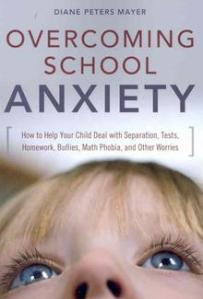
To calm children’s fears about the news, parents should be prepared to deliver what psychologists call “calm, unequivocal, but limited information.” This means delivering the truth, but only as much truth as a child needs to know. The key is to be as truthful yet as inexplicit as you can be. There’s no need to go into more details than your child is interested in. Although it’s true that some things — like a natural disaster — can’t be controlled, parents should still give kids space to share their fears. Encourage them to talk openly about what scares them.
Older kids are less likely to accept an explanation at face value. Their budding skepticism about the news and how it’s produced and sold might mask anxieties they have about the stories it covers. If older kids are bothered about a story, help them cope with these fears. An adult’s willingness to listen sends a powerful message.
Teens also can be encouraged to consider why a frightening or disturbing story was on the air: Was it to increase the program’s ratings because of its sensational value or because it was truly newsworthy? In this way, a scary story can be turned into a worthwhile discussion about the role and mission of the news.
Tips for Parents
Keeping an eye on kids’ TV news habits can go a long way toward monitoring the content of what they hear and see. Other tips:
- Recognize that news doesn’t have to be driven by disturbing pictures. Public TV programs, newspapers, or newsmagazines specifically designed for kids can be less sensational — and less upsetting — ways of getting information to children.
- Discuss current events with your child regularly. It’s important to help kids think through stories they hear about. Ask questions: What do you think about these events? How do you think these things happen? These questions can encourage conversation about non-news topics too.
- Put news stories in proper context. Showing that certain events are isolated or explaining how one event relates to another helps kids make better sense of what they hear. Broaden the discussion from a disturbing news item to a larger conversation: Use the story of a natural disaster as an opportunity to talk about philanthropy, cooperation, and the ability of people to cope with overwhelming hardship.
- Watch the news with your kids to filter inappropriate or frightening stories.
- Anticipate when guidance will be necessary and avoid shows that aren’t appropriate for your child’s age or level of development.
- If you’re uncomfortable with the content of the news or if it’s inappropriate for your child’s age, turn it off.
- Talk about what you can do to help. In the case of a news event like a natural disaster, kids may gain a sense of control and feel more secure if you find ways to help those who have been affected.
sourced from http://www.kidshealth.org
reviewed by: Mary L. Gavin, MD
Spare the Rod & Spare your Child’s IQ: Can Spanking Cause Intellectual Harm?
SMACKING or spanking, long used by parents to discipline naughty children, could cause more than tears.
Research revealed it can also lower a child’s IQ, with those smacked up to three times a week having a lower IQ due to psychological stress.
US-based sociologist Professor Murray Straus, who studied the impact of smacking for 40 years, likened the effects of corporal punishment to post-traumatic stress, affecting a child’s mental development.
He called on governments to outlaw corporal punishment
After studying 800 toddlers aged between two and four over a four-year period, he found those who were subjected to smacking had an IQ five points lower than that of a child who wasn’t physically disciplined.
“The results of this research have major implications for the well-being of children across the globe,” he said.
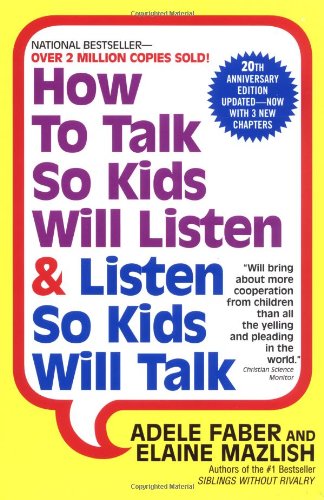 “All parents want smart children. This research shows that avoiding smacking and correcting misbehaviour in other ways can help that.”
Children aged five to nine years who were smacked regularly had an IQ 2.8 points lower. Dr Straus said children who constantly faced physical punishment lived in fear and suffered stress, which was associated with poorer academic performance.
While not an advocate of smacking, Sydney psychologist Dr Judith Kennedy said parents who gave an occasional tap on the bottom should not fear damaging their child.
“But a child who is suppressed through physical punishment regularly is going to behave differently,” Dr Kennedy said.
Melbourne child psychologist Michael Carr-Gregg said many factors contributed to intelligence and he found it hard to believe that spanking was one, the Herald Sun reports.
Dr Carr-Gregg said hitting children should never be the main disciplinary tool – giving them time out was the best option.
“But while parents should never whack their kids on the head, I don’t believe the odd tap on the bum traumatises them,” he said.
“I can’t come at this politically correct stuff that says that a little smack on the bum makes parents child abusers.”
Father of three Con Zoumis said spanking should be used only as a last resort.
“It’s not to hurt them, it’s just to make them snap out of a tantrum or stubborn behaviour,” he said. “And if you threaten to spank someone you have to carry it through.”
Related articles by Zemanta
- Spank Your Kids, Make Them Dumb (blisstree.com)
- A spanked child may be a better adult: study (nationalpost.com)
- Should Parents Spank Their Kids? (scientificamerican.com)
Trick or Treat?:The Truth about Parental Lying to Get Your Way
Parents say that honesty is the best policy, but they regularly lie to their children as a way of influencing their behaviour and emotions, finds new research from the University of Toronto and the University of California, San Diego.
Surprisingly little scholarship has been published on the subject of parental lying, so Gail Heyman, professor of psychology at UC San Diego, Diem Luu, a former UCSD student, and Kang Lee, professor at the University of Toronto and director of the Institute of Child Study at OISE, set out to explore the under-researched phenomenon. They asked U.S. participants in two related studies about parents lying to their children – either for the purpose of promoting appropriate behaviour or to make them happy.
 In one of the studies, many parents reported they told their young children that bad things would happen if they didn’t go to bed or eat what they were supposed to. For example, one mother said she told her child that if he didn’t finish all of his food he would get pimples all over his face. Other parents reported inventing magical creatures. One explained, “We told our daughter that if she wrapped up all her pacifiers like gifts, the ‘paci-fairy’ would come and give them to children who needed them…I thought it was healthier to get rid of the pacifiers, and it was a way for her to feel proud and special.”
In the other study, the researchers surveyed college students’ recollections about their parents’ lying and obtained similar results: parents often lie to their children even as they tell them that lying is unacceptable.
The researchers refer to this practice as “parenting by lying.” “We are surprised by how often parenting by lying takes place,” said Lee. “Moreover, our findings showed that even the parents who most strongly promoted the importance of honesty with their children engaged in parenting by lying.”
Though Heyman thinks that there are occasions when it is appropriate to be less than truthful with a child – “telling a two-year-old you don’t like their drawing is just cruel,” she said – she urges parents to think through the issues and consider alternatives before resorting to the expedient lie.
“Children sometimes behave in ways that are disruptive or are likely to harm their long-term interests,” said Heyman. “It is common for parents to try out a range of strategies, including lying, to gain compliance. When parents are juggling the demands of getting through the day, concerns about possible long-term negative consequences to children’s beliefs about honesty are not necessarily at the forefront.”
The research also examined “parenting by lying” among Asian-American and European-American parents. Asian-American parents were more likely to report lying to their children for the purpose of influencing their behaviour. According to the researchers, one possible explanation for this finding is that as compared to European-American parents, Asian-American parents tend to place a greater emphasis on the importance of teaching children to be respectful and obedient, and they use a range of parenting strategies to meet these ends.
The research is published in the current edition of the Journal of Moral Education and was supported by a grant from the National Institute of Child Health and Human Development.
Heyman and Lee are now preparing an international study to explore the subject further, and they are also beginning to study the possible consequences of “parenting by lying”: Does it create confusion about right and wrong? Does it undermine a child’s trust?
Related articles by Zemanta
- Parenting Tips : How to Encourage Good Behavior in Children (parenting-success.com)
About Peter
Peter Brown BHMS (Hons) MPsychClin MAPS
I’m a Clinical Psychologist and have a private practice and consultancy in Brisbane Australia. I have 24 years experience in child, adult and family clinical psychology. I have a wonderful wife and three kids.
I am co-founder of Christian Wholeness Counselling Services.
I like researching issues of the brain & mind, reading and seeking out new books and resources for myself and my clients. I thought that others might be interested in some of what I have found also, hence this blog…

Subscribe to My Blog Posts & Updates
-

Blog Surfer
Alphainventions


Recent Comments


 Peter H Brown Clinical Psychologist