Spare the Rod & Spare your Child’s IQ: Can Spanking Cause Intellectual Harm?
SMACKING or spanking, long used by parents to discipline naughty children, could cause more than tears.
Research revealed it can also lower a child’s IQ, with those smacked up to three times a week having a lower IQ due to psychological stress.
US-based sociologist Professor Murray Straus, who studied the impact of smacking for 40 years, likened the effects of corporal punishment to post-traumatic stress, affecting a child’s mental development.
He called on governments to outlaw corporal punishment
After studying 800 toddlers aged between two and four over a four-year period, he found those who were subjected to smacking had an IQ five points lower than that of a child who wasn’t physically disciplined.
“The results of this research have major implications for the well-being of children across the globe,” he said.
 “All parents want smart children. This research shows that avoiding smacking and correcting misbehaviour in other ways can help that.”
Children aged five to nine years who were smacked regularly had an IQ 2.8 points lower. Dr Straus said children who constantly faced physical punishment lived in fear and suffered stress, which was associated with poorer academic performance.
While not an advocate of smacking, Sydney psychologist Dr Judith Kennedy said parents who gave an occasional tap on the bottom should not fear damaging their child.
“But a child who is suppressed through physical punishment regularly is going to behave differently,” Dr Kennedy said.
Melbourne child psychologist Michael Carr-Gregg said many factors contributed to intelligence and he found it hard to believe that spanking was one, the Herald Sun reports.
Dr Carr-Gregg said hitting children should never be the main disciplinary tool – giving them time out was the best option.
“But while parents should never whack their kids on the head, I don’t believe the odd tap on the bum traumatises them,” he said.
“I can’t come at this politically correct stuff that says that a little smack on the bum makes parents child abusers.”
Father of three Con Zoumis said spanking should be used only as a last resort.
“It’s not to hurt them, it’s just to make them snap out of a tantrum or stubborn behaviour,” he said. “And if you threaten to spank someone you have to carry it through.”

Related articles by Zemanta
- Spank Your Kids, Make Them Dumb (blisstree.com)
- A spanked child may be a better adult: study (nationalpost.com)
- Should Parents Spank Their Kids? (scientificamerican.com)
![Reblog this post [with Zemanta]](https://i0.wp.com/img.zemanta.com/reblog_e.png)
Be Grateful and Be Happy!
The best way to achieve happiness according to several new studies conducted by Todd Kashdan, associate professor of psychology at George Mason University, is to be grateful.
Gratitude, the emotion of thankfulness and joy in response to receiving a gift, is one of the essential ingredients for living a good life, Kashdan says. Kashdan’s most recent paper, which was published online in March at the Journal of Personality, reveals that when it comes to achieving well-being, gender plays a role. He found that men are much less likely to feel and express gratitude than women.
 “Previous studies on gratitude have suggested that there might be a difference in gender, and so we wanted to explore this further – and find out why. Even if it is a small effect, it could make a huge difference in the long run,” says Kashdan.
In one study, Kashdan interviewed college-aged students and older adults, asking them to describe and evaluate a recent episode in which they received a gift. He found that women compared with men reported feeling less burden and obligation and greater levels of gratitude when presented with gifts. In addition, older men reported greater negative emotions when the gift giver was another man.
“The way that we get socialized as children affects what we do with our emotions as adults,” says Kashdan. “Because men are generally taught to control and conceal their softer emotions, this may be limiting their well-being.”
As director of the Laboratory for the Study of Social Anxiety, Character Strengths, and Related Phenomena at Mason, Kashdan is interested in the assessment and cultivation of well-being, curiosity, gratitude and meaning and purpose in life. He has been active in the positive psychology movement since 2000, when he taught one of the first college courses on the science of happiness.
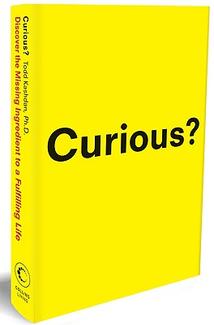
Kashdan says that if he had to name three elements that are essential for creating happiness and meaning in life it would be meaningful relationships, gratitude, and living in the present moment with an attitude of openness and curiosity. His book “Curious?,” which outlines ways people can enhance and maintain the various shades of well-being, was released in April 2009 with HarperCollins.
Source: Tara Laskowski
George Mason University
Positive Parenting: Your Children Can Catch It From You
A new study that looks at data on three generations of Oregon families shows that “positive parenting” – including factors such as warmth, monitoring children’s activities, involvement, and consistency of discipline – not only has positive impacts on adolescents, but on the way they parent their own children.
In the first study of its kind, David Kerr, assistant professor of psychology at Oregon State University, and project director Deborah Capaldi, and co-authors Katherine Pears and Lee Owen of the Eugene-based Oregon Social Learning Center, examined surveys from 206 boys who were considered “at-risk” for juvenile delinquency. The boys, then in elementary school, and their parents were interviewed and observed, which gave Kerr and colleagues information about how the boys were parented.
Starting in 1984, the boys met with researchers every year from age 9 to 33. As the boys grew up and started their own families, their partners and children began participating in the study. In this way, the researchers learned how the men’s childhood experiences influenced their own parenting.
“This study is especially exciting because we had already identified processes by which risk behaviors and poor parenting may be carried across generations,” Capaldi said. “Professor Kerr has now demonstrated that there is an additional pathway of intergenerational influence via positive parenting and development.”
 The study will be published in the September issue of the journal Developmental Psychology in a special issue devoted to findings of some of the few long-term studies of intergenerational family processes. The journal is published by the American Psychological Association.
Kerr said there is often an assumption that people learn parenting methods from their own parents. In fact, he said most research shows that a direct link between what a person experiences as a child and what she or he does as a parent is fairly weak.
“Instead, what we find is that ‘negative’ parenting such as hostility and lack of follow-through leads to ‘negative’ parenting in the next generation not through observation, but by allowing problem behavior to take hold in adolescence,” Kerr said. “For instance, if you try to control your child with anger and threats, he learns to deal in this way with peers, teachers, and eventually his own children. If you do not track where your child is, others will take over your job of teaching him about the world.
“But those lessons may involve delinquency and a lifestyle that is not compatible with becoming a positive parent,” Kerr pointed out.
The researchers’ prior work showed that children who experienced high levels of negative parenting were more likely to be antisocial and delinquent as adolescents. Boys who had these negative characteristics in adolescence more often grew up to be inconsistent and ineffective parents, and to have children with more negative and challenging behaviors.
“We knew that these negative pathways can be very strong,” Kerr said. “What surprised us is how strong positive parenting pathways are as well. Positive parenting is not just the absence of negative influences, but involves taking an active role in a child’s life.”
The researchers found that children who had parents who monitored their behavior, were consistent with rules and were warm and affectionate were more likely to have close relationships with their peers, be more engaged in school, and have better self-esteem.
“So part of what good parenting does is not only protect you against negative behaviors but instill positive connections with others during adolescence that then impact how you relate with your partner and your own child as an adult,” Kerr said
“This research shows that when we think about the value of prevention, we should consider an even wider lens than is typical,” he added. “We see now that changes in parenting can have an effect not just on children but even on grandchildren.”
The study was funded by grants from the National Institute on Drug Abuse and the National Institute of Child Health and Human Development.
//
The Decline of Civilty:Guest Appearance on 96.5 FM’s Talking Life
Last Sunday night I took part in a discussion on the Decline of Civility as a part of the panel on Peter Jan etzki’s terrific “Talking Life” radio program on which I have been a regular guest over its nine year history. The other guest was Ken Francis from the Australian Families Association. It was a terrific program with some fascinating discussion and phone calls.

Peter Janetzki
A podcast of the entire show and recent shows can be found here or by clicking on the 96.5 logo.You can listen to the podcast from your browser or with iTunes, The show streams live every Sunday night from from 8-10pm Australian Eastern Standard Time (GMT+10) and you can listen by going to the 96.5 website @ 96five.com and clicking on the home page media player.
Talking to Your Child About What’s in The News
My experience is that many children, particularly those who have generalised anxiety can become quite distressed by exposure toseemingly innocuous exposure to events that are a part of everyday life.
 Although news gleaned from television, radio, or the Internet often is a positive educational experience for kids, problems can arise when the images presented are violent or the stories touch on disturbing topics. While we worry about our childrens’ exposure to violence and sexual content in movies, on the internet, and on tv, we need to remember that news programs shpw often live and real images and media from real events which are often distressing and increasingly graphic.
News about a natural disaster, such as the devastating earthquake in China or cyclone in Myanmar, could make kids worry that something similar is going to hit home, or fear a part of daily life — such as rain and thunderstorms — that they’d never worried about before.
Reports on natural disasters, child abductions, homicides, terrorist attacks, and school violence can teach kids to view the world as a confusing, threatening, or unfriendly place.
How can you deal with these disturbing stories and images? Talking to your kids about what they watch or hear will help them put frightening information into a reasonable context.
How Kids Perceive the News
Unlike movies or entertainment programs, news is real. But depending on a child’s age or maturity level, he or she may not yet understand the distinctions between fact and fantasy. By the time kids reach 7 or 8, however, what they see on TV can seem all too real. For some youngsters, the vividness of a sensational news story can be internalized and transformed into something that might happen to them. A child watching a news story about a bombing on a bus or a subway might worry, “Could I be next? Could that happen to me?”Natural disasters or
stories of other types of devastation can be personalized in the same manner. A child in Massachusetts who sees a house being swallowed by floods from a hurricane in Louisiana may spend a sleepless night worrying about whether his home will be OK in a rainstorm. A child in Chicago, seeing news about an attack on subways in London, might get scared about using public transportation around town. TV has the effect of shrinking the world and bringing it into our own living rooms.
By concentrating on violent stories, TV news also can promote a “mean-world” syndrome and give kids an inaccurate view of what the world and society are actually like.
Talking About the News
To calm children’s fears about the news, parents should be prepared to deliver what psychologists call “calm, unequivocal, but limited information.” This means delivering the truth, but only as much truth as a child needs to know. The key is to be as truthful yet as inexplicit as you can be. There’s no need to go into more details than your child is interested in. Although it’s true that some things — like a natural disaster — can’t be controlled, parents should still give kids space to share their fears. Encourage them to talk openly about what scares them.
Older kids are less likely to accept an explanation at face value. Their budding skepticism about the news and how it’s produced and sold might mask anxieties they have about the stories it covers. If older kids are bothered about a story, help them cope with these fears. An adult’s willingness to listen sends a powerful message.
Teens also can be encouraged to consider why a frightening or disturbing story was on the air: Was it to increase the program’s ratings because of its sensational value or because it was truly newsworthy? In this way, a scary story can be turned into a worthwhile discussion about the role and mission of the news.
Tips for Parents
Keeping an eye on kids’ TV news habits can go a long way toward monitoring the content of what they hear and see. Other tips:
- Recognize that news doesn’t have to be driven by disturbing pictures. Public TV programs, newspapers, or newsmagazines specifically designed for kids can be less sensational — and less upsetting — ways of getting information to children.
- Discuss current events with your child regularly. It’s important to help kids think through stories they hear about. Ask questions: What do you think about these events? How do you think these things happen? These questions can encourage conversation about non-news topics too.
- Put news stories in proper context. Showing that certain events are isolated or explaining how one event relates to another helps kids make better sense of what they hear. Broaden the discussion from a disturbing news item to a larger conversation: Use the story of a natural disaster as an opportunity to talk about philanthropy, cooperation, and the ability of people to cope with overwhelming hardship.
- Watch the news with your kids to filter inappropriate or frightening stories.
- Anticipate when guidance will be necessary and avoid shows that aren’t appropriate for your child’s age or level of development.
- If you’re uncomfortable with the content of the news or if it’s inappropriate for your child’s age, turn it off.
- Talk about what you can do to help. In the case of a news event like a natural disaster, kids may gain a sense of control and feel more secure if you find ways to help those who have been affected.
sourced from kidshealth.org
reviewed by: Mary L. Gavin, MD
Related articles by Zemanta
- When headlines are rattling; How to talk to your children about bad news (bendbulletin.com)
This is Water: Are Persistence, Tolerance, Compassion and Mindfulness the Keys to Resilience and Happiness?
Today I have been re-reading the late David Foster Wallace’s 2005 Commencement Speech to Keny on College Students. David Foster Wallace, the brilliant American author who sadly suicided in late 2008, had a brilliant way of cutting through the ‘crap’ and his writings have a way of taking your mind to deeper places that would be obvious and evident if we actually took the time to notice what was going on not just within us, but for those around us. Aside from his award winning novel ‘Infinite Jest’, Foster Wallace’s Commencement Address remains one of his greatest legacys to us. As the text is is the public domain, I have taken the liberty of posting it in its entirety below. Read it, and I hope it reaches you the same way it has me and many of my patients and clients.
Transcription of the 2005 Kenyon Commencement Address – May 21, 2005
(If anybody feels like perspiring [cough], I’d advise you to go ahead, because I’m sure going to. In fact I’m gonna [mumbles while pulling up his gown and taking out a handkerchief from his pocket].) Greetings [“parents”?] and congratulations to Kenyon’s graduating class of 2005. There are these two young fish swimming along and they happen to meet an older fish swimming the other way, who nods at them and says “Morning, boys. How’s the water?” And the two young fish swim on for a bit, and then eventually one of them looks over at the other and goes “What the hell is water?”
This is a standard requirement of US commencement speeches, the deployment of didactic little parable-ish stories. The story [“thing”] turns out to be one of the better, less bullshitty conventions of the genre, but if you’re worried that I plan to present myself here as the wise, older fish explaining what water is to you younger fish, please don’t be. I am not the wise old fish. The point of the fish story is merely that the most obvious, important realities are often the ones that are hardest to see and talk about. Stated as an English sentence, of course, this is just a banal platitude, but the fact is that in the day to day trenches of adult existence, banal platitudes can have a life or death importance, or so I wish to suggest to you on this dry and lovely morning.
 Of course the main requirement of speeches like this is that I’m supposed to talk about your liberal arts education’s meaning, to try to explain why the degree you are about to receive has actual human value instead of just a material payoff. So let’s talk about the single most pervasive cliché in the commencement speech genre, which is that a liberal arts education is not so much about filling you up with knowledge as it is about quote teaching you how to think. If you’re like me as a student, you’ve never liked hearing this, and you tend to feel a bit insulted by the claim that you needed anybody to teach you how to think, since the fact that you even got admitted to a college this good seems like proof that you already know how to think. But I’m going to posit to you that the liberal arts cliché turns out not to be insulting at all, because the really significant education in thinking that we’re supposed to get in a place like this isn’t really about the capacity to think, but rather about the choice of what to think about. If your total freedom of choice regarding what to think about seems too obvious to waste time discussing, I’d ask you to think about fish and water, and to bracket for just a few minutes your skepticism about the value of the totally obvious.
Here’s another didactic little story. There are these two guys sitting together in a bar in the remote Alaskan wilderness. One of the guys is religious, the other is an atheist, and the two are arguing about the existence of God with that special intensity that comes after about the fourth beer. And the atheist says: “Look, it’s not like I don’t have actual reasons for not believing in God. It’s not like I haven’t ever experimented with the whole God and prayer thing. Just last month I got caught away from the camp in that terrible blizzard, and I was totally lost and I couldn’t see a thing, and it was fifty below, and so I tried it: I fell to my knees in the snow and cried out ‘Oh, God, if there is a God, I’m lost in this blizzard, and I’m gonna die if you don’t help me.'” And now, in the bar, the religious guy looks at the atheist all puzzled. “Well then you must believe now,” he says, “After all, here you are, alive.” The atheist just rolls his eyes. “No, man, all that was was a couple Eskimos happened to come wandering by and showed me the way back to camp.”
It’s easy to run this story through kind of a standard liberal arts analysis: the exact same experience can mean two totally different things to two different people, given those people’s two different belief templates and two different ways of constructing meaning from experience. Because we prize tolerance and diversity of belief, nowhere in our  liberal arts analysis do we want to claim that one guy’s interpretation is true and the other guy’s is false or bad. Which is fine, except we also never end up talking about just where these individual templates and beliefs come from. Meaning, where they come from INSIDE the two guys. As if a person’s most basic orientation toward the world, and the meaning of his experience were somehow just hard-wired, like height or shoe-size; or automatically absorbed from the culture, like language. As if how we construct meaning were not actually a matter of personal, intentional choice. Plus, there’s the whole matter of arrogance. The nonreligious guy is so totally certain in his dismissal of the possibility that the passing Eskimos had anything to do with his prayer for help. True, there are plenty of religious people who seem arrogant and certain of their own interpretations, too. They’re probably even more repulsive than atheists, at least to most of us. But religious dogmatists’ problem is exactly the same as the story’s unbeliever: blind certainty, a close-mindedness that amounts to an imprisonment so total that the prisoner doesn’t even know he’s locked up.
The point here is that I think this is one part of what teaching me how to think is really supposed to mean. To be just a little less arrogant. To have just a little critical awareness about myself and my certainties. Because a huge percentage of the stuff that I tend to be automatically certain of is, it turns out, totally wrong and deluded. I have learned this the hard way, as I predict you graduates will, too.
Here is just one example of the total wrongness of something I tend to be automatically sure of: everything in my own immediate experience supports my deep belief that I am the absolute center of the universe; the realest, most vivid and important person in existence. We rarely think about this sort of natural, basic self-centeredness because it’s so socially repulsive. But it’s pretty much the same for all of us. It is our default setting, hard-wired into our boards at birth. Think about it: there is no experience you have had that you are not the absolute center of. The world as you experience it is there in front of YOU or behind YOU, to the left or right of YOU, on YOUR TV or YOUR monitor. And so on. Other people’s thoughts and feelings have to be communicated to you somehow, but your own are so immediate, urgent, real.
Please don’t worry that I’m getting ready to lecture you about compassion or other-directedness or all the so-called virtues. This is not a matter of virtue. It’s a matter of my choosing to do the work of somehow altering or getting free of my natural, hard-wired default setting which is to be deeply and literally self-centered and to see and interpret everything through this lens of self. People who can adjust their natural default setting this way are often described as being “well-adjusted”, which I suggest to you is not an accidental term.
Given the triumphant academic setting here, an obvious question is how much of this work of adjusting our default setting involves actual knowledge or intellect. This question gets very tricky. Probably the most dangerous thing about an academic education — least in my own case — is that it enables my tendency to over-intellectualize stuff, to get lost in abstract argument inside my head, instead of simply paying attention to what is going on right in front of me, paying attention to what is going on inside me.
As I’m sure you guys know by now, it is extremely difficult to stay alert and attentive, instead of getting hypnotized by the constant monologue inside your own head (may be happening right now). Twenty years after my own graduation, I have come gradually to understand that the liberal arts cliché about teaching you how to think is actually shorthand for a much deeper, more serious idea: learning how to think really means learning how to exercise some control over how and what you think. It means being conscious and aware enough to choose what you pay attention to and to choose how you construct meaning from experience. Because if you cannot exercise this kind of choice in adult life, you will be totally hosed. Think of the old cliché about quote the mind being an excellent servant but a terrible master.
This, like many clichés, so lame and unexciting on the surface, actually expresses a great and terrible truth. It is not the least bit coincidental that adults who commit suicide with firearms almost always shoot themselves in: the head. They shoot the terrible master. And the truth is that most of these suicides are actually dead long before they pull the trigger.
And I submit that this is what the real, no bullshit value of your liberal arts education is supposed to be about: how to keep from going through your comfortable, prosperous, respectable adult life dead, unconscious, a slave to your head and to your natural default setting of being uniquely, completely, imperially alone day in and day out. That may sound like hyperbole, or abstract nonsense. Let’s get concrete. The plain fact is that you graduating seniors do not yet have any clue what “day in day out” really means. There happen to be whole, large parts of adult American life that nobody talks about in commencement speeches. One such part involves boredom, routine, and petty frustration. The parents and older folks here will know all too well what I’m talking about.
By way of example, let’s say it’s an average adult day, and you get up in the morning, go to your challenging, white-collar, college-graduate job, and you work hard for eight or ten hours, and at the end of the day you’re tired and somewhat stressed and all you want is to go home and have a good supper and maybe unwind for an hour, and then hit the sack early because, of course, you have to get up the next day and do it all again. But then you remember there’s no food at home. You haven’t had time to shop this week because of your challenging job, and so now after work you have to get in your car and drive to the supermarket. It’s the end of the work day and the traffic is apt to be: very bad. So getting to the store takes way longer than it should, and when you finally get there, the supermarket is very crowded, because of course it’s the time of day when all the other people with jobs also try to squeeze in some grocery shopping. And the store is hideously lit and infused with soul-killing muzak or corporate pop and it’s pretty much the last place you want to be but you can’t just get in and quickly out; you have to wander all over the huge, over-lit store’s confusing aisles to find the stuff you want and you have to maneuver your junky cart through all these other tired, hurried people with carts (et cetera, et cetera, cutting stuff out because this is a long ceremony) and eventually you get all your supper supplies, except now it turns out there aren’t enough check-out lanes open even though it’s the end-of-the-day rush. So the checkout line is incredibly long, which is stupid and infuriating. But you can’t take your frustration out on the frantic lady working the register, who is overworked at a job whose daily tedium and meaninglessness surpasses the imagination of any of us here at a prestigious college.
But anyway, yo u finally get to the checkout line’s front, and you pay for your food, and you get told to “Have a nice day” in a voice that is the absolute voice of death. Then you have to take your creepy, flimsy, plastic bags of groceries in your cart with the one crazy wheel that pulls maddeningly to the left, all the way out through the crowded, bumpy, littery parking lot, and then you have to drive all the way home through slow, heavy, SUV-intensive, rush-hour traffic, et cetera et cetera.
Everyone here has done this, of course. But it hasn’t yet been part of you graduates’ actual life routine, day after week after month after year.
But it will be. And many more dreary, annoying, seemingly meaningless routines besides. But that is not the point. The point is that petty, frustrating crap like this is exactly where the work of choosing is gonna come in. Because the traffic jams and crowded aisles and long checkout lines give me time to think, and if I don’t make a conscious decision about how to think and what to pay attention to, I’m gonna be pissed and miserable every time I have to shop. Because my natural default setting is the certainty that situations like this are really all about me. About MY hungriness and MY fatigue and MY desire to just get home, and it’s going to seem for all the world like everybody else is just in my way. And who are all these people in my way? And look at how repulsive most of them are, and how stupid and cow-like and dead-eyed and nonhuman they seem in the checkout line, or at how annoying and rude it is that people are talking loudly on cell phones in the middle of the line. And look at how deeply and personally unfair this is.
Or, of course, if I’m in a more socially conscious liberal arts form of my default setting, I can spend time in the end-of-the-day traffic being disgusted about all the huge, stupid, lane-blocking SUV’s and Hummers and V-12 pickup trucks, burning their wasteful, selfish, forty-gallon tanks of gas, and I can dwell on the fact that the patriotic or religious bumper-stickers always seem to be on the biggest, most disgustingly selfish vehicles, driven by the ugliest [responding here to loud applause] (this is an example of how NOT to think, though) most disgustingly selfish vehicles, driven by the ugliest, most inconsiderate and aggressive drivers. And I can think about how our children’s children will despise us for wasting all the future’s fuel, and probably screwing up the climate, and how spoiled and stupid and selfish and disgusting we all are, and how modern consumer society just sucks, and so forth and so on.
You get the idea.
If I choose to think this way in a store and on the freeway, fine. Lots of us do. Except thinking this way tends to be so easy and automatic that it doesn’t have to be a choice. It is my natural default setting. It’s the automatic way that I experience the boring, frustrating, crowded parts of adult life when I’m operating on the automatic, unconscious belief that I am the center of the world, and that my immediate needs and feelings are what should determine the world’s priorities.
The thing is that, of course, there are totally different ways to think about these kinds of situations. In this traffic, all these vehicles stopped and idling in my way, it’s not impossible that some of these people in SUV’s have been in horrible auto accidents in the past, and now find driving so terrifying that their therapist has all but ordered them to get a huge, heavy SUV so they can feel safe enough to drive. Or that the Hummer that just cut me off is maybe being driven by a father whose little child is hurt or sick in the seat next to him, and he’s trying to get this kid to the hospital, and he’s in a bigger, more legitimate hurry than I am: it is actually I who am in HIS way.
Or I can choose to force myself to consider the likelihood that everyone else in the supermarket’s checkout line is just as bored and frustrated as I am, and that some of these people probably have harder, more tedious and painful lives than I do.
Again, please don’t think that I’m giving you moral advice, or that I’m saying you are supposed to think this way, or that anyone expects you to just automatically do it. Because it’s hard. It takes will and effort, and if you are like me, some days you won’t be able to do it, or you just flat out won’t want to.
 But most days, if you’re aware enough to give yourself a choice, you can choose to look differently at this fat, dead-eyed, over-made-up lady who just screamed at her kid in the checkout line. Maybe she’s not usually like this. Maybe she’s been up three straight nights holding the hand of a husband who is dying of bone cancer. Or maybe this very lady is the low-wage clerk at the motor vehicle department, who just yesterday helped your spouse resolve a horrific, infuriating, red-tape problem through some small act of bureaucratic kindness. Of course, none of this is likely, but it’s also not impossible. It just depends what you what to consider. If you’re automatically sure that you know what reality is, and you are operating on your default setting, then you, like me, probably won’t consider possibilities that aren’t annoying and miserable. But if you really learn how to pay attention, then you will know there are other options. It will actually be within your power to experience a crowded, hot, slow, consumer-hell type situation as not only meaningful, but sacred, on fire with the same force that made the stars: love, fellowship, the mystical oneness of all things deep down.
Not that that mystical stuff is necessarily true. The only thing that’s capital-T True is that you get to decide how you’re gonna try to see it.
This, I submit, is the freedom of a real education, of learning how to be well-adjusted. You get to consciously decide what has meaning and what doesn’t. You get to decide what to worship.
Because here’s something else that’s weird but true: in the day-to day trenches of adult life, there is actually no such thing as atheism. There is no such thing as not worshipping. Everybody worships. The only choice we get is what to worship. And the compelling reason for maybe choosing some sort of god or spiritual-type thing to worship — be it JC or Allah, bet it YHWH or the Wiccan Mother Goddess, or the Four Noble Truths, or some inviolable set of ethical principles — is that pretty much anything else you worship will eat you alive. If you worship money and things, if they are where you tap real meaning in life, then you will never have enough, never feel you have enough. It’s the truth. Worship your body and beauty and sexual allure and you will always feel ugly. And when time and age start showing, you will die a million deaths before they finally grieve you. On one level, we all know this stuff already. It’s been codified as myths, proverbs, clichés, epigrams, parables; the skeleton of every great story. The whole trick is keeping the truth up front in daily consciousness.
Worship power, you will end up feeling weak and afraid, and you will need ever more power over others to numb you to your own fear. Worship your intellect, being seen as smart, you will end up feeling stupid, a fraud, always on the verge of being found out. But the insidious thing about these forms of worship is not that they’re evil or sinful, it’s that they’re unconscious. They are default settings.
They’re the kind of worship you just gradually slip into, day after day, getting more and more selective about what you see and how you measure value without ever being fully aware that that’s what you’re doing.
And the so-called real world will not discourage you from operating on your default settings, because the so-called real world of men and money and power hums merrily along in a pool of fear and anger and frustration and craving and worship of self. Our own present culture has harnessed these forces in ways that have yielded extraordinary wealth and comfort and personal freedom. The freedom all to be lords of our tiny skull-sized kingdoms, alone at the center of all creation. This kind of freedom has much to recommend it. But of course there are all different kinds of freedom, and the kind that is most precious you will not hear much talk about much in the great outside world of wanting and achieving and [unintelligible — sounds like “displayal”]. The really important kind of freedom involves attention and awareness and discipline, and being able truly to care about other people and to sacrifice for them over and over in myriad petty, unsexy ways every day.
That is real freedom. That is being educated, and understanding how to think. The alternative is unconsciousness, the default setting, the rat race, the constant gnawing sense of having had, and lost, some infinite thing.
I know that this stuff probably doesn’t sound fun and breezy or grandly inspirational the way a commencement speech is supposed to sound. What it is, as far as I can see, is the capital-T Truth, with a whole lot of rhetorical niceties stripped away. You are, of course, free to think of it whatever you wish. But please don’t just dismiss it as just some finger-wagging Dr. Laura sermon. None of this stuff is really about morality or religion or dogma or big fancy questions of life after death.
The capital-T Truth is about life BEFORE death.
It is about the real value of a real education, which has almost nothing to do with knowledge, and everything to do with simple awareness; awareness of what is so real and essential, so hidden in plain sight all around us, all the time, that we have to keep reminding ourselves over and over:
“This is water.”
“This is water.”
It is unimaginably hard to do this, to stay conscious and alive in the adult world day in and day out. Which means yet another grand cliché turns out to be true: your education really IS the job of a lifetime. And it commences: now.
I wish you way more than luck.
DAVID FOSTER WALLACE
Buy the full text in Hardcover Form Here or if you are an Australasian Resident you might like to Purchase Here: This Is Water: Some Thoughts, Delivered on a Significant Occasion, about Living a Compassionate Life
Harry Potter Parenting: “Geek Dad” on Tips Embedded in the Tomes
I love reading Geek Dad’s blog at Wired.com. If you haven’t caught up with the jottings of Kevin Makice (www.wired.com/geekdad) make sure you do so soon. Once you’ve read his lighthearted and insightful parenting posts, you’ll more than likely add him to your favorites. As this blog is about resources as much as it is about rants, I’ve taken the liberty of reposting his latest offering below. I’ve done this because it’s timely, it’s humorous, it’s wise and…It’s Harry. Enjoy!

Harry Potter
The sixth film in the Harry Potter series—Harry Potter and the Half-Blood Prince—enjoyed a record-setting Wednesday opening, netting $22.2 million to top The Dark Knight’s $18.5 million in 2008. Once again, we are transported to J. K. Rowling’s magical world of wizards, monsters, and the wisdom of Headmaster Albus Percival Wulfric Brian Dumbledore. As much as his students at Hogwarts, we parents are enchanted by how relevant his words are to our own struggles, particularly those surrounding raising our Muggles. Here are five such gems and the parenting themes they inspire.
SPOILER WARNING: Although I’ve restricted the content to the first five novels (so, no Half-Blood Prince or Deathly Hallows), some information below might reveal plot points to anyone who has never read the books nor seen the previous movies.
The Truth is a Beautiful and Terrible Thing
After Harry survived his encounter with Professor Quirrel in Philosopher’s Stone, Dumbledore told the young wizard to be cautious with the truth. As parents, we play around with evolving notions of truth all the time. Whether it’s perpetuating a childlike belief in a generous fat man or choosing to explain birth and death in different ways as kids grow up, the spirit of what is true is linked to what is necessary and what is helpful.
For kids, however, truth is who they are, sometimes painfully so. (Even when they do lie, they’re truthful about it.) Kids say the darndest things. My wife once shattered the passenger-side mirror pulling out of a driveway into a mailbox, leaving the mailbox in similar shape. Several weeks later, our then 3-year-old son noticed another damaged mailbox and speculated, “Our car must have been there.” Multiply that by every time toddlers walk by someone who has an undesirable physical feature, and it’s easy to recognize the terrible in truth.
Fear of a Name Increases Fear of the Thing Itself
The main bad guy in Harry Potter mythology is Lord Voldemort, aka Tom Riddle, aka He Who Must Not Be Named. So scary is this dude, the mere mention of his name turns pink cheeks white. Dumbledore, though, encourages Harry to use his proper name. The corollary to that advice is that we shouldn’t put too much power in a label.
In her book When the Labels Don’t Fit, clinical social worker Barbara Probst describes ways to reject disease-based labels of children in favor of identifying the unmet needs influencing their behavior. In an interview, Probst said many parents run from label to label, looking for one that works, but their kids are not really helped by that. Most behavioral plans reward a child for not meeting his needs. Just as Dumbledore wanted to make Voldemort less threatening by using his name (ok, he’s still evil), we can limit the prescriptive damage that labels do by treating each child as someone with a fundamental goodness who is struggling to make sense of the world.
We All Face the Choice Between What is Right and What is Easy
Dumbledore defied the Ministry of Magic by supporting Harry’s claim that the popular Cedric Diggory died at the hand of Voldemort in Goblet of Fire. Cedric becomes a cautionary tale for how dangerous HWMNBN can be, whether or not he’s called by name. In eulogizing the boy, Dumbledore makes a distinction between right and easy. That also describes the difficulties of remaining engaged with your child during a tantrum, either hers or yours.
When someone is angry or upset, emotions dominate the moment. That person can’t hear rational arguments or respond in ways they would otherwise. It is much easier to separate yourself from the child with a bedroom door than stay in the room with him, where you have to hear the noise. It is much easier to justify some snippy retort or bark an order than it is to continue to communicate effectively with those emotions flying around the room. Eventually, calmer heads do prevail, but it is important for both parent and child to stay present as that journey takes place.
The Best of Us Must Sometimes Eat Our Words
When the Headmaster toyed with Ron Weasley about his expulsion in Chamber of Secrets, Dumbledore reminded us all that even adults aren’t perfect. In fact, the mistakes we make and the failures we display can become some of our best parenting opportunities.
Parenting is a lot like social media in this sense. It’s one thing for people to hate Comcast. It’s quite another to see how Frank Eliason responds to those kinds of messages and the effect it has on his customers. When we make mistakes as parents, eating our words models how we can deal with the gaffes we make. Teaching kids to respectfully disagree and compromise—traits most parents covet in their offspring—requires that we be willing to do the same.
Old Men are Guilty if They Forget What it Was to Be Young
In the Order of the Phoenix, Harry gets an apology from Dumbledore for his part in manipulating Harry’s dangerous path to power, observing that while young people have never experienced age, old men have simply forgotten what it’s like to be young. The old wizard isn’t alone. Being older and wiser, we parents are sometimes so far removed from our experiences as kids we can be blind to the perspective of our children. We listen to them talk about their feelings (in those rare moments of sharing) and then tell them they don’t feel that way. We watch them play and hear the noise instead of the story.
My eldest inhaled all of my Calvin & Hobbes comics, which was one of my favorite strips as a teenager. Until my son started narrating our interactions in the voice of Spaceman Spiff, I had always identified with Calvin. Now, I’m the Dad, wanting to tell him to quit throwing things at me instead of playfully dodging the Death Ray Blaster, in character as a Zealous Zarch. In these situations, it is like someone cast Obliviate on me and removed my childhood.
Related articles by Zemanta
- Muggles rejoice! Harry Potter park opening in June (msnbc.msn.com)
About Peter
Peter Brown BHMS (Hons) MPsychClin MAPS
I’m a Clinical Psychologist and have a private practice and consultancy in Brisbane Australia. I have 24 years experience in child, adult and family clinical psychology. I have a wonderful wife and three kids.
I am co-founder of Christian Wholeness Counselling Services.
I like researching issues of the brain & mind, reading and seeking out new books and resources for myself and my clients. I thought that others might be interested in some of what I have found also, hence this blog…

Subscribe to My Blog Posts & Updates
-

Blog Surfer
Alphainventions


Recent Comments


 Peter H Brown Clinical Psychologist
