School Related Issues: Guest apearance on 96.5 FM’s “Talking Life”
On Sunday 14th February I took part in a discussion on School related issues from preschool to Secondary school as a guest on Peter Jan etzki’s terrific “Talking Life” radio program on which I have been a regular guest over its nine year history. It was a great discussion with some interesting content and phone calls.

Peter Janetzki
A podcast of the entire show and recent shows can be found here or by clicking on the 96.5 logo.You can listen to the podcast from your browser or with iTunes, The show streams live every Sunday night from from 8-10pm Australian Eastern Standard Time (GMT+10) and you can listen by going to the 96.5 website @ 96five.com and clicking on the home page media player.

Asperger’s, PDD-NOS may no longer receive separate diagnoses in DSM-V
Recently, the American Psychiatric Association released some preliminary draft changes to the Diagnostic and  Statistical Manual of Mental Disorders (DSM-V) that may affect those diagnosed on the autism spectrum. There are several significant changes proposed that are now posted for public view, including: Asperger’s Syndrome and Pervasive Developmental Disorder-Not Otherwise Specified (PDD-NOS) would both be subsumed into the Autistic Disorder category, meaning that they would no longer be considered a separate diagnosis from autism, and the inclusion of potential co-morbidities with ADHD and other medical conditions.
The Autism Society is currently investigating the implications this change could have for the service and support systems currently in place for those with autism spectrum disorders. We will also be holding a town hall meeting at the Autism Society’s National Conference on Autism Spectrum Disorders in Dallas July 7–10, 2010 (learn more about the conference or register at www.autism-society.org/conference). You can also give your feedback on the changes at the Web site www.DSM5.org – look for the diagnoses on the autism spectrum under “Disorders Usually First Diagnosed in Infancy, Childhood, or Adolescence.”
These changes are not yet official – they are proposed for the update to the manual, which is expected to be published in May 2013. Whatever changes do go into effect surrounding autism spectrum disorders, the Autism Society will continue to work as we have always done to improve the lives of people across the entire spectrum of autism.
It Takes HOW Long to Form a Habit?: Research Shows a Curved Relationship Between Practice and Automaticity.
Say you want to create a new habit, whether it’s taking more exercise, eating more healthily or writing a blog post every day, how often does it need to be performed before it no longer requires Herculean self control?
Clearly it’s going to depend on the type of habit you’re trying to form and how single-minded you are in pursuing your goal. But are there any general guidelines for how long it takes before behaviours become automatic?
Ask Google and you’ll get a figure of somewhere between 21 and 28 days. In fact there’s no solid evidence for this number at all. The 21 day myth may well come from a book published in 1960 by a plastic surgeon. Dr Maxwell Maltz noticed that amputees took, on average, 21 days to adjust to the loss of a limb and he argued that people take 21 days to adjust to any major life changes.
Unless you’re in the habit of sawing off your own arm, this is not particularly relevant.
Doing without thinking
Now, however, there is some psychological research on this question in a paper recently published in the European Journal of Social Psychology. Phillippa Lally and colleagues from University College London recruited 96 people who were interested in forming a new habit such as eating a piece of fruit with lunch or doing a 15 minute run each day Lally et al. (2009). Participants were then asked daily how automatic their chosen behaviours felt. These questions included things like whether the behaviour was ‘hard not to do’ and could be done ‘without thinking’.
When the researchers examined the different habits, many of the participants showed a curved relationship between practice and automaticity of the form depicted below (solid line). On average a plateau in automaticity was reached after 66 days. In other words it had become as much of a habit as it was ever going to become.

This graph shows that early practice was rewarded with greater increases in automaticity and gains tailed off as participants reached their maximum automaticity for that behaviour.
Although the average was 66 days, there was marked variation in how long habits took to form, anywhere from 18 days up to 254 days in the habits examined in this study. As you’d imagine, drinking a daily glass of water became automatic very quickly but doing 50 sit-ups before breakfast required more dedication (above, dotted lines). The researchers also noted that:
- Missing a single day did not reduce the chance of forming a habit.
- A sub-group took much longer than the others to form their habits, perhaps suggesting some people are ‘habit-resistant’.
- Other types of habits may well take much longer.
No small change
What this study reveals is that when we want to develop a relatively simple habit like eating a piece of fruit each day or taking a 10 minute walk, it could take us over two months of daily repetitions before the behaviour becomes a habit. And, while this research suggests that skipping single days isn’t detrimental in the long-term, it’s those early repetitions that give us the greatest boost in automaticity.
Unfortunately it seems there’s no such thing as small change: the much-repeated 21 days to form a habit is a considerable underestimation unless your only goal in life is drinking glasses of water.
Spare the Rod & Spare your Child’s IQ: Can Spanking Cause Intellectual Harm?
SMACKING or spanking, long used by parents to discipline naughty children, could cause more than tears.
Research revealed it can also lower a child’s IQ, with those smacked up to three times a week having a lower IQ due to psychological stress.
US-based sociologist Professor Murray Straus, who studied the impact of smacking for 40 years, likened the effects of corporal punishment to post-traumatic stress, affecting a child’s mental development.
He called on governments to outlaw corporal punishment
After studying 800 toddlers aged between two and four over a four-year period, he found those who were subjected to smacking had an IQ five points lower than that of a child who wasn’t physically disciplined.
“The results of this research have major implications for the well-being of children across the globe,” he said.
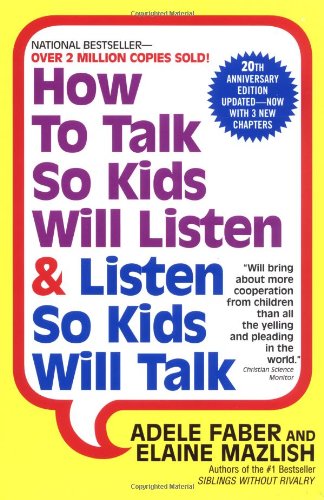 “All parents want smart children. This research shows that avoiding smacking and correcting misbehaviour in other ways can help that.”
Children aged five to nine years who were smacked regularly had an IQ 2.8 points lower. Dr Straus said children who constantly faced physical punishment lived in fear and suffered stress, which was associated with poorer academic performance.
While not an advocate of smacking, Sydney psychologist Dr Judith Kennedy said parents who gave an occasional tap on the bottom should not fear damaging their child.
“But a child who is suppressed through physical punishment regularly is going to behave differently,” Dr Kennedy said.
Melbourne child psychologist Michael Carr-Gregg said many factors contributed to intelligence and he found it hard to believe that spanking was one, the Herald Sun reports.
Dr Carr-Gregg said hitting children should never be the main disciplinary tool – giving them time out was the best option.
“But while parents should never whack their kids on the head, I don’t believe the odd tap on the bum traumatises them,” he said.
“I can’t come at this politically correct stuff that says that a little smack on the bum makes parents child abusers.”
Father of three Con Zoumis said spanking should be used only as a last resort.
“It’s not to hurt them, it’s just to make them snap out of a tantrum or stubborn behaviour,” he said. “And if you threaten to spank someone you have to carry it through.”
Related articles by Zemanta
- Spank Your Kids, Make Them Dumb (blisstree.com)
- A spanked child may be a better adult: study (nationalpost.com)
- Should Parents Spank Their Kids? (scientificamerican.com)
![Reblog this post [with Zemanta]](https://i0.wp.com/img.zemanta.com/reblog_e.png)
Trick or Treat?:The Truth about Parental Lying to Get Your Way
Parents say that honesty is the best policy, but they regularly lie to their children as a way of influencing their behaviour and emotions, finds new research from the University of Toronto and the University of California, San Diego.
Surprisingly little scholarship has been published on the subject of parental lying, so Gail Heyman, professor of psychology at UC San Diego, Diem Luu, a former UCSD student, and Kang Lee, professor at the University of Toronto and director of the Institute of Child Study at OISE, set out to explore the under-researched phenomenon. They asked U.S. participants in two related studies about parents lying to their children – either for the purpose of promoting appropriate behaviour or to make them happy.
 In one of the studies, many parents reported they told their young children that bad things would happen if they didn’t go to bed or eat what they were supposed to. For example, one mother said she told her child that if he didn’t finish all of his food he would get pimples all over his face. Other parents reported inventing magical creatures. One explained, “We told our daughter that if she wrapped up all her pacifiers like gifts, the ‘paci-fairy’ would come and give them to children who needed them…I thought it was healthier to get rid of the pacifiers, and it was a way for her to feel proud and special.”
In the other study, the researchers surveyed college students’ recollections about their parents’ lying and obtained similar results: parents often lie to their children even as they tell them that lying is unacceptable.
The researchers refer to this practice as “parenting by lying.” “We are surprised by how often parenting by lying takes place,” said Lee. “Moreover, our findings showed that even the parents who most strongly promoted the importance of honesty with their children engaged in parenting by lying.”
Though Heyman thinks that there are occasions when it is appropriate to be less than truthful with a child – “telling a two-year-old you don’t like their drawing is just cruel,” she said – she urges parents to think through the issues and consider alternatives before resorting to the expedient lie.
“Children sometimes behave in ways that are disruptive or are likely to harm their long-term interests,” said Heyman. “It is common for parents to try out a range of strategies, including lying, to gain compliance. When parents are juggling the demands of getting through the day, concerns about possible long-term negative consequences to children’s beliefs about honesty are not necessarily at the forefront.”
The research also examined “parenting by lying” among Asian-American and European-American parents. Asian-American parents were more likely to report lying to their children for the purpose of influencing their behaviour. According to the researchers, one possible explanation for this finding is that as compared to European-American parents, Asian-American parents tend to place a greater emphasis on the importance of teaching children to be respectful and obedient, and they use a range of parenting strategies to meet these ends.
The research is published in the current edition of the Journal of Moral Education and was supported by a grant from the National Institute of Child Health and Human Development.
Heyman and Lee are now preparing an international study to explore the subject further, and they are also beginning to study the possible consequences of “parenting by lying”: Does it create confusion about right and wrong? Does it undermine a child’s trust?
Related articles by Zemanta
- Parenting Tips : How to Encourage Good Behavior in Children (parenting-success.com)
Faking Orgasm: Women AND Men do it! WHY?
Chances are that if you’ve been in a relationship, and you’re a woman, you’ve probably faked an orgasm. But did you know that men fake them too?
The research that brings us this important sexual discovery was conducted at the University of Kansas on 180 male and 101 female college students. The students completed an anonymous survey about their sexual habits.
Not surprisingly, some of the college students were still virgins — 15 percent of men and 32 percent of women surveyed had not yet had intercourse.
Of the students who had had sex, nearly 30 percent of men reported faking an orgasm, compared to 67 percent of women. Some of the participants admitted they also faked orgasm not only during regular sex, but during oral sex, manual stimulation and phone sex as well. The 67 percent number is comparable to past research, that has reported a similar percentage among women.
So why do we do it? Why fake an orgasm during intimacy, a time when you’d think we be putting our social masks aside
The researchers asked these college students that question, and the most frequently reported reasons were:
* Orgasm was unlikely. — Sometimes it’s just not going to happen, and although this seems to be a more common issue amongst women, it can also happen with men. Especially if alcohol is involved.
* They wanted sex to end. — Closely linked to an orgasm is unlikely, sometimes a partner will want to keep having sex until their partner finishes. A fake orgasm brings sex to an end quickly.
* They wanted to avoid negative consequences. — Most people don’t want to hurt another person’s feelings, and that’s no more the case than with our romantic partner. A fake orgasm avoids the negative consequences of having another person feel badly that they didn’t perform “well enough” to bring the other person to climax.
* They wanted to please their partner. — Faking an orgasm shows that you care about your partner’s feelings of performance and self-esteem. Or so said the people who filled out the survey.
Why would an orgasm be unlikely or why would one want sex to end more quickly? Well, sometimes we’re not always in the same place sexually as our partner. So we agree to sex because we feel guilty or to put an end to the nagging. Or perhaps we agreed to have sex to help relieve stress, only to find it didn’t quite help in the way we had hoped. An orgasm is unlikely if your partner is stressed, not turned on, feels tired, or is put off by you or the relationship in some way. A faked orgasm during such times helps end the sex more quickly, without making your partner feel bad.
The researchers found that the responses suggested a sexual “script” that most of us follow, or would like to follow. Boy meets girl, girl takes boy to bed, girl has an orgasm before the boy. And the boy is response for the girl’s orgasm (although not as much, vice-a-versa). Faking an orgasm is a predictable response to this set of expectations, to ensure the “script” goes as smoothly as possible.
Reference:
Muehlenhard CL. & Shippee SK. (2009). Men’s and Women’s Reports of Pretending Orgasm. J Sex Res, 5, 1-16.
Related articles by Zemanta
- Cerebral Orgasm Dr. Shriniwas Kashalikar (slideshare.net)
- Avoid These 7 Mistakes In Bed (slideshare.net)
Be Grateful and Be Happy!
The best way to achieve happiness according to several new studies conducted by Todd Kashdan, associate professor of psychology at George Mason University, is to be grateful.
Gratitude, the emotion of thankfulness and joy in response to receiving a gift, is one of the essential ingredients for living a good life, Kashdan says. Kashdan’s most recent paper, which was published online in March at the Journal of Personality, reveals that when it comes to achieving well-being, gender plays a role. He found that men are much less likely to feel and express gratitude than women.
 “Previous studies on gratitude have suggested that there might be a difference in gender, and so we wanted to explore this further – and find out why. Even if it is a small effect, it could make a huge difference in the long run,” says Kashdan.
In one study, Kashdan interviewed college-aged students and older adults, asking them to describe and evaluate a recent episode in which they received a gift. He found that women compared with men reported feeling less burden and obligation and greater levels of gratitude when presented with gifts. In addition, older men reported greater negative emotions when the gift giver was another man.
“The way that we get socialized as children affects what we do with our emotions as adults,” says Kashdan. “Because men are generally taught to control and conceal their softer emotions, this may be limiting their well-being.”
As director of the Laboratory for the Study of Social Anxiety, Character Strengths, and Related Phenomena at Mason, Kashdan is interested in the assessment and cultivation of well-being, curiosity, gratitude and meaning and purpose in life. He has been active in the positive psychology movement since 2000, when he taught one of the first college courses on the science of happiness.
Kashdan says that if he had to name three elements that are essential for creating happiness and meaning in life it would be meaningful relationships, gratitude, and living in the present moment with an attitude of openness and curiosity. His book “Curious?,” which outlines ways people can enhance and maintain the various shades of well-being, was released in April 2009 with HarperCollins.
Source: Tara Laskowski
George Mason University
Watch What They’re Watching:Children Viewing Adult-targeted TV May Become Sexually Active Earlier In Life
Early onset of sexual activity among teens may relate to the amount of adult content children were exposed to during their childhood, according to a new study released by Children’s Hospital Boston. Based on a longitudinal study tracking children from age six to eighteen, researchers found that the younger children are exposed to content intended for adults in television and movies, the earlier they become sexually active during adolescence. The findings are being presented at the Pediatric Academic Societies meetings on Monday, May 4 in Baltimore.
“Television and movies are among the leading sources of information about sex and relationships for adolescents,” says Hernan Delgado, MD, fellow in the Division of Adolescent/Young Adult Medicine at Children’s Hospital Boston and lead author of the study. “Our research shows that their sexual attitudes and expectations are influenced much earlier in life.”
The study consisted of 754 participants, 365 males and 389 females, who were tracked during two stages in life: first during childhood, and again five years later when their ages ranged from 12 to 18-years-old. At each stage, the television programs and movies viewed, and the amount of time spent watching them over a sample weekday and weekend day were logged. The program titles were used to determine what content was intended for adults. The participants’ onset of sexual activity was then tracked during the second stage.
According to the findings, when the youngest children in the sample–ages 6 to 8-years-old–were exposed to adult-targeted television and movies, they were more likely to have sex earlier when compared those who watched less adult-targeted content. The study found that for every hour the youngest group of children watched adult-targeted content over the two sample days, their chances of having sex during early adolescence increased by 33 percent. Meanwhile, the reverse was not found to be true that is, becoming sexually active in adolescence did not subsequently increase youth’s viewing of adult-targeted television and movies.
“Adult entertainment often deals with issues and challenges that adults face, including the complexities of sexual relationships. Children have neither the life experience nor the brain development to fully differentiate between a reality they are moving toward and a fiction meant solely to entertain,” adds David Bickham, PhD, staff scientist in the Center on Media and Child Health and co-author of the study. “Children learn from media, and when they watch media with sexual references and innuendos, our research suggests they are more likely to engage in sexual activity earlier in life.”
The researchers encourage parents to follow current American Academy of Pediatrics viewing guidelines such as no television in the bedroom, no more than 1 to 2 hours of screen time a day, and to co-view television programs and have an open dialogue about its content with your children. They also suggest that–while the results demonstrate a longitudinal relationship–more research needs be done to understand how media influences children’s growing awareness of human relationships and sexual behavior.
“Adolescent sexual behaviors may be influenced at a younger age, but this is just one area we studied,” adds Dr. Delgado. “We showed how adult media impacts children into adolescence, yet there are a number of other themes in adult television shows and movies, like violence and language, whose influence also needs to be tracked from childhood to adolescence.”
The study was funded by support by grants from the Maternal and Child Health Bureau and the Center on Media and Child Health.
Children’s Hospital Boston is home to the world’s largest research enterprise based at a pediatric medical center, where its discoveries have benefited both children and adults since 1869. More than 500 scientists, including eight members of the National Academy of Sciences, 11 members of the Institute of Medicine and 13 members of the Howard Hughes Medical Institute comprise Children’s research community. Founded as a 20-bed hospital for children, Children’s Hospital Boston today is a 397-bed comprehensive center for pediatric and adolescent health care grounded in the values of excellence in patient care and sensitivity to the complex needs and diversity of children and families. Children’s also is the primary pediatric teaching affiliate of Harvard Medical School.
Source: MedicalNewsToday.com, Children’s Hospital Boston//
Positive Parenting: Your Children Can Catch It From You
A new study that looks at data on three generations of Oregon families shows that “positive parenting” – including factors such as warmth, monitoring children’s activities, involvement, and consistency of discipline – not only has positive impacts on adolescents, but on the way they parent their own children.
In the first study of its kind, David Kerr, assistant professor of psychology at Oregon State University, and project director Deborah Capaldi, and co-authors Katherine Pears and Lee Owen of the Eugene-based Oregon Social Learning Center, examined surveys from 206 boys who were considered “at-risk” for juvenile delinquency. The boys, then in elementary school, and their parents were interviewed and observed, which gave Kerr and colleagues information about how the boys were parented.
Starting in 1984, the boys met with researchers every year from age 9 to 33. As the boys grew up and started their own families, their partners and children began participating in the study. In this way, the researchers learned how the men’s childhood experiences influenced their own parenting.
“This study is especially exciting because we had already identified processes by which risk behaviors and poor parenting may be carried across generations,” Capaldi said. “Professor Kerr has now demonstrated that there is an additional pathway of intergenerational influence via positive parenting and development.”
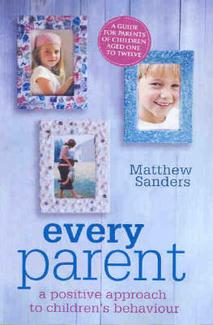 The study will be published in the September issue of the journal Developmental Psychology in a special issue devoted to findings of some of the few long-term studies of intergenerational family processes. The journal is published by the American Psychological Association.
Kerr said there is often an assumption that people learn parenting methods from their own parents. In fact, he said most research shows that a direct link between what a person experiences as a child and what she or he does as a parent is fairly weak.
“Instead, what we find is that ‘negative’ parenting such as hostility and lack of follow-through leads to ‘negative’ parenting in the next generation not through observation, but by allowing problem behavior to take hold in adolescence,” Kerr said. “For instance, if you try to control your child with anger and threats, he learns to deal in this way with peers, teachers, and eventually his own children. If you do not track where your child is, others will take over your job of teaching him about the world.
“But those lessons may involve delinquency and a lifestyle that is not compatible with becoming a positive parent,” Kerr pointed out.
The researchers’ prior work showed that children who experienced high levels of negative parenting were more likely to be antisocial and delinquent as adolescents. Boys who had these negative characteristics in adolescence more often grew up to be inconsistent and ineffective parents, and to have children with more negative and challenging behaviors.
“We knew that these negative pathways can be very strong,” Kerr said. “What surprised us is how strong positive parenting pathways are as well. Positive parenting is not just the absence of negative influences, but involves taking an active role in a child’s life.”
The researchers found that children who had parents who monitored their behavior, were consistent with rules and were warm and affectionate were more likely to have close relationships with their peers, be more engaged in school, and have better self-esteem.
“So part of what good parenting does is not only protect you against negative behaviors but instill positive connections with others during adolescence that then impact how you relate with your partner and your own child as an adult,” Kerr said
“This research shows that when we think about the value of prevention, we should consider an even wider lens than is typical,” he added. “We see now that changes in parenting can have an effect not just on children but even on grandchildren.”
The study was funded by grants from the National Institute on Drug Abuse and the National Institute of Child Health and Human Development.
//
About Peter
Peter Brown BHMS (Hons) MPsychClin MAPS
I’m a Clinical Psychologist and have a private practice and consultancy in Brisbane Australia. I have 24 years experience in child, adult and family clinical psychology. I have a wonderful wife and three kids.
I am co-founder of Christian Wholeness Counselling Services.
I like researching issues of the brain & mind, reading and seeking out new books and resources for myself and my clients. I thought that others might be interested in some of what I have found also, hence this blog…

Subscribe to My Blog Posts & Updates
-

Blog Surfer
Alphainventions


Recent Comments


 Peter H Brown Clinical Psychologist