Under Pressure: Why We “Choke” At The Critical Moment
 A star golfer misses a critical putt; a brilliant student fails to ace a test; a savvy salesperson blows a key presentation. Each of these people has suffered the same bump in mental processing: They have just choked under pressure.
Credit: and Source: ScienceDaily
It’s tempting to dismiss such failures as “just nerves.” But to University of Chicago psychologist Sian Beilock, they are preventable results of information logjams in the brain. By studying how the brain works when we are doing our best — and when we choke — Beilock has formulated practical ideas about how to overcome performance lapses at critical moments.
“Choking is suboptimal performance, not just poor performance. It’s a performance that is inferior to what you can do and have done in the past and occurs when you feel pressure to get everything right,” said Beilock, an associate professor in psychology.
Preventing choking in sports Some of the most spectacular and memorable moments of choking occur in sports when the whole world is watching. Many remember golfer Greg Norman’s choke at the 1996 U.S. Masters. Norman had played brilliantly for the first three days of the tournament, taking a huge lead. But on the final day, his performance took a dive, and he ended the Masters five shots out of first place.
Choking in such cases happens when the polished programs executed by the brains of extremely accomplished athletes go awry. In “Choke,” Beilock recounts famous examples of these malfunctions in the context of brain science to tell the story of why people choke and what can be done to alleviate it.
Thinking too much about what you are doing, because you are worried about losing the lead (as in Norman’s case) or worrying about failing in general, can lead to “paralysis by analysis.” In a nutshell, paralysis by analysis occurs when people try to control every aspect of what they are doing in an attempt to ensure success.
Unfortunately, this increased control can backfire, disrupting what was once a fluid, flawless performance.
“My research team and I have found that highly skilled golfers are more likely to hole a simple 3-foot putt when we give them the tools to stop analyzing their shot, to stop thinking,” Beilock said. “Highly practiced putts run better when you don’t try to control every aspect of performance.” Even a simple trick of singing helps prevent portions of the brain that might interfere with performance from taking over, Beilock’s research shows.
Preventing choking on tests and in business The brain also can work to sabotage performance in ways other than paralysis by analysis. For instance, pressure-filled situations can deplete a part of the brain’s processing power known as working memory, which is critical to many everyday activities.
Beilock’s work has shown the importance of working memory in helping people perform their best, in academics and in business. Working memory is lodged in the prefrontal cortex and is a sort of mental scratch pad that is temporary storage for information relevant to the task at hand, whether that task is doing a math problem at the board or responding to tough, on-the-spot questions from a client. Talented people often have the most working memory, but when worries creep up, the working memory they normally use to succeed becomes overburdened. People lose the brain power necessary to excel.
One example is the phenomenon of “stereotype threat.” This is when otherwise talented people don’t perform up to their abilities because they are worried about confirming popular cultural myths that contend, for instance, that boys and girls naturally perform differently in math or that a person’s race determines his or her test performance.
Beilock’s research is the basis of her new book, “Choke: What the Secrets of the Brain Reveal About Getting it Right When You Have To,” published Sept. 21 by Simon and Schuster, Free Press.
In Choke, Beilock describes research demonstrating that high-achieving people underperform when they are worried about confirming a stereotype about the racial group or gender to which they belong. These worries deplete the working memory necessary for success. The perceptions take hold early in schooling and can be either reinforced or abolished by powerful role models.
In one study, researchers gave standardized tests to black and white students, both before and after President Obama was elected. Black test takers performed worse than white test takers before the election. Immediately after Obama’s election, however, blacks’ performance improved so much that their scores were nearly equal with whites. When black students can overcome the worries brought on by stereotypes, because they see someone like President Obama who directly counters myths about racial variation in intelligence, their performance improves.
Beilock and her colleagues also have shown that when first-grade girls believe that boys are better than girls at math, they perform more poorly on math tests. One big source of this belief? The girls’ female teachers. It turns out that elementary school teachers are often highly anxious about their own math abilities, and this anxiety is modeled from teacher to student. When the teachers serve as positive role models in math, their male and female students perform equally well.

click image to read reviews
Meditation and practice can help Even when a student is not a member of a stereotyped group, tests can be challenging for the brightest people, who can clutch if anxiety taps out their mental resources. In that instance, relaxation techniques can help.
In tests in her lab, Beilock and her research team gave people with no meditation experience 10 minutes of meditation training before they took a high-stakes test. Students with meditation preparation scored 87, or B+, versus the 82 or B- score of those without meditation training. This difference in performance occurred despite the fact that all students were of equal ability.
Stress can undermine performance in the world of business, where competition for sales, giving high-stakes presentations or even meeting your boss in the elevator are occasions when choking can squander opportunities.
Practice helps people navigate through these tosses on life’s ocean. But, more importantly, practicing under stress — even a moderate amount — helps a person feel comfortable when they find themselves standing in the line of fire, Beilock said. The experience of having dealt with stress makes those situations seem like old hat. The goal is to close the gap between practice and performance.
A person also can overcome anxiety by thinking about what to say, not what not to say, said Beilock, who added that staying positive is always a good idea.
“Think about the journey, not the outcome,” Beilock advised. “Remind yourself that you have the background to succeed and that you are in control of the situation. This can be the confidence boost you need to ace your pitch or to succeed in other ways when facing life’s challenges.”

Related articles by Zemanta
- Feeling Stuck? 10 Important Tips For Changing Your Life (peterhbrown.wordpress.com)
- The Type A B C’s Of How Your Personality Effects Your Health (peterhbrown.wordpress.com)
- What Happens Under Pressure (online.wsj.com)

The Type A B C’s Of How Your Personality Effects Your Health
 Could your personality kill you—or might it make you live longer? Could it give you heart disease, or protect you from illness? Could it push you toward or away from doctor appointments?
Credit: Angela Haupt , health.usnews.com
Personality traits play a distinct role in determining how healthy we are, psychologists say. “Everything is related to everything else. How stressed or angry you are, and how you interact with the world, is contingent in large part on your personality style,” says Michael Miller, editor in chief of the Harvard Mental Health Letter. “And that is going to have an enormous impact on your health.”
Here’s a look at common personality types and traits and how each can help or hurt your health (sometimes both):
Hostile
One of the aspects of the impatient, hard-charging Type A personality that is known to increase heart disease risk is hostility. Hostile people eat and smoke more and exercise less than other personality types, says Redford Williams, head of behavioral medicine at Duke University Medical Center and author of Anger Kills. They’re likelier to be overweight in middle age and have higher cholesterol and blood pressure. Williams’s past research suggests hostile people are also more likely to develop irregular heart rhythms, and to die before reaching their 50s. Most of these problems can be traced back to elevated levels of the stress hormone cortisol, as well as increased inflammation in the walls of the coronary arteries, which leads to a greater risk of heart attack.
No personality is set in stone, however, and Type A’s can be taught how to take the edge off their hostility. Hostile heart patients who attend workshops that teach coping skills, for instance, have a lower incidence of depression and healthier blood pressure than Type A’s who don’t go. The key, Williams says, is learning how to communicate more clearly and how to control anger and other negative emotions. He suggests asking yourself four questions when you get angry: Is this issue truly important? Is what I’m feeling appropriate to the facts? Can I modify the situation in a positive way? Is taking such action worth it? Meditation, deep breathing, and yoga can damp hostility with a layer of calm.
Impulsive
Because Type A personalities are defined by competitiveness, a drive to succeed, and a sense of urgency, they are prone to take risks and act without thinking, neither of which is likely to improve health. Non-Type A’s can be impulsive, too. Such people are often not as well-grounded as others, says Robin Belamaric, a clinical psychologist in Bethesda, Md.: “They’ll look at an opportunity that comes along and say, ‘Hmm, that sounds like fun,’ whereas another, more thoughtful person, will say, ‘I’m going to pass, because I’m not sure it’s the best idea.’ ”
Relaxed
If you’re a Type B, you roll with the punches. You’re relaxed, take life a day a time, and handle stress without cracking. That translates to a higher quality of life and lower likelihood of heart disease—less anxiety strengthens the immune system. The more we chill, the better off we are, says Miller: “You don’t want to get locked into a stressful, tense state of mind.” Over the long term, he adds, relaxing and managing stress effectively will lengthen your life, help your heart and gastrointestinal system, and just make you feel better overall.
Extrovert
People who are outgoing, involved in their communities, and have strong social connections reap health benefits. An analysis of 148 studies published in the online journal PLoS medicine in July found that on average, adults enrolled in a study with many close friendships were 50 percent likelier to survive until their study ended than were those with few friendships. And a 2009 study published in Perspectives in Psychological Science suggests that social support leads to improved coping skills, healthy behavior, and adherence to medical regimens. Bonding with others also reduces stress and improves the immune system—so making friends and getting involved becomes, in effect, a well-being tonic.
What drives at least some of the health benefits goes beyond biology, Miller says. “It may have to do with the fact that when you’re around people, you think, ‘Oh, Martha has gone for her mammogram—that reminds me, I should, too.’ ”
Eager to please
People-pleasers—Type C’s—are conforming, passive, and want to accommodate. That can be a good thing when it comes to patient compliance: They’re more likely to take the right medicines in the right doses at the right times, for instance—once they see a doctor, that is. Making and following through on appointments can be challenging for Type C’s, who tend to accept their fate as inevitable and fall readily into hopelessness and helplessness. That means others must push them to take care of themselves. “They may be less likely to maintain their health on their own,” Belamaric says. “If they develop a problem, they may just complain about it, hoping somebody says, ‘I have a good doctor, I’ll make you an appointment.’ ”
Some Type C’s may be so mired that they don’t seek medical attention—even when it’s clearly necessary—and slough off preventive behaviors, like watching what they eat. “If they get a serious diagnosis, they may be passive, throw their hands up, and say, ‘Well, there’s nothing I can do about it, anyway. If it’s my time, it’s my time,’ ” Belamaric says.

Click image to read reviews
Stressed and distressed
Type D’s—D is for distressed—dwell on negative emotions and are afraid to express themselves in social situations. Compared to more optimistic sorts, a Type D may face three times the risk for future heart problems, according to a recent study in the journal Circulation: Cardiovascular Quality and Outcomes. Type D’s also face a higher likelihood of compulsive overeating and substance abuse. “If you’re a person who is prone to depression or anxiety, or if you’re overly self-critical, there’s more of a chance of turning to gratifying behavior to feel better,” Miller says.
Optimistic versus pessimistic
Optimism “heavily influences physical and mental health,” concluded a study published in May in the journal Clinical Practice & Epidemiology in Mental Health after researchers followed more than 500 males for 15 years. The rate of heart-related deaths was 50 percent lower among optimists than among pessimists. “Optimists have a higher quality of life, and they may be more resilient in the way they deal with stress,” Miller says. “So if a problem comes along, they’re able to handle it better, and they become less symptomatic.” Glass-half-empty types harbor little hope for the future and tend more toward depression and anxiety disorders.
But there’s a catch for those at the extreme end of the optimism spectrum: They think of themselves as impervious to risks. Extreme optimists who smoke are the best examples. They believe they won’t develop lung cancer. Why give up smoking to prevent a nonexistent risk?
The “self-healing personality”
That is the name Howard Friedman, a professor of psychology at the University of California-Riverside, attaches to people who are curious, secure, constructive, responsive, and conscientious. These traits translate to enthusiasm for life, emotional balance, and strong social relationships. “Positive emotions buffer hormonal responses to stress,” says Friedman, who studies the relationship between personality and longevity. Self-healers, he says, “have healthier behavior patterns: more physical activity, a better diet, and less smoking and substance abuse.”
Related articles by Zemanta
- Be Active, Sleep Better! Aerobic Exercise Helps Beat Insomnia (peterhbrown.wordpress.com)
- What Were You Thinking? The Causes Of Online Disinhibition (peterhbrown.wordpress.com)
Don’t Say “Don’t Panic”: How To Help Someone With A Panic Disorder
 Credit: From Sheryl Ankrom, former About.com Guide
The Experience of Recurring Panic Attacks
To understand panic disorder with agoraphobia, we must first talk about panic attacks. Sudden and recurring panic attacks are the hallmark symptoms of panic disorder. If you have never had recurring panic attacks, it may be hard to understand the difficulties your friend or loved one is going through. During a panic attack, the body’s alarm system is triggered without the presence of actual danger. The exact cause of why this happens is not known, but it is believed that there is a genetic and/or biological component.
Sufferers often use the terms fear, terror and horror to describe the frightening symptoms of a full-blown panic attack. But even these frightening words can’t convey the magnitude of the consuming nature of panic disorder. The fear becomes so intense that the thought of having another panic attack is never far from conscious thought. Incessant worry and feelings of overwhelming anxiety may become part of your loved one’s daily existence.
These Intense Symptoms Must Mean Something…Something Terrible
At the onset of panic disorder, your loved one may be quite certain they are suffering from a heart condition or other life-threatening illness. This may mean trips to the nearest emergency room and intensive testing to rule out physical disease. But, even when he or she is assured that these symptoms are not life-threatening, it does little to put his or her mind at ease. The feelings experienced during panic attacks are so overwhelming and uncontrollable, sufferers are convinced they are going to die or are going crazy.
A New Way of Life Emerges: Fear and Avoidance
So frightening are the symptoms of panic disorder, that your loved one may go to any and all lengths to avoid another attack from occurring. This may include many avoidant types of behavior and the development of agoraphobia. But, despite the efforts to avoid another panic episode, the attacks continue without rhyme or reason. There is no place to escape, and the sufferer becomes a prisoner of an insidious and illogical fear. Without appropriate treatment, your loved one may become so disabled that he or she is unable to leave his or her home at all.

click image to read reviews
click image to read reviews
Self Image Is Redefined
At times, we’ve all experienced nervousness, anxiousness, fear and, perhaps, even terror or horror. But in the midst of a catastrophic event, we understand these symptoms. Once the event is over, so, too, are the symptoms. But, imagine reliving these symptoms over and over again, without any warning or explanation.
This type of fear is life-changing. As abilities become inabilities, things once taken for granted, like going to into a store, become anxiety-filled events. Some enjoyable activities, like going to concerts or movies, may be avoided altogether. It is not uncommon for sufferers to experience a sense of shame, weakness and embarrassment as their self-image is redefined by fear.
Panic disorder is not just being nervous or anxious. Panic disorder is not just about the fear, terror and horror experienced during a full-blown panic attack because it does not end when the panic subsides. It is a disorder that is quick to invade and can alter one’s very essence, redefine one’s abilities and take over every aspect of one’s life.
Your Role As A Support Person
As a support person, you can play an important role in your loved one’s recovery process. Understanding what panic disorder is, and what it is not, will help you on this journey. Author Ken Strong provides a lot of information for supporting a person with panic disorder in his book, Anxiety:The Caregivers, Third Edition.
Related articles by Zemanta
- Sleep Well: Why You Need To Fight For Good Sleep (peterhbrown.wordpress.com)
- Sugar & Spite: Bullying and Young Girls (peterhbrown.wordpress.com)
Sleep Well: Why You Need To Fight For Good Sleep
 A collection of studies published last Wednesday in the journal Sleep tackled some important questions: What are the health effects of not getting enough sleep? How does sleep deprivation affect teens? Does insomnia have long-term consequences?
Credit: Time Magazine
Given that past research has shown that short sleepers (and unusually long sleepers) die younger than people who get 6.5 to 7.5 hours per night, a new Penn State study looked at the impact of insomnia on mortality. The consequences could be dire: the study of 1,741 men and women in Pennsylvania found that insomniac men who slept less than 6 hours per day were four times more likely to die than those who got a full night’s rest. The study even adjusted for other medical conditions that affect sleep (and death rates), such as obesity, alcohol and depression. Of note, sleep deprivation did not affect women’s mortality.
In another study in Sleep, University of Sydney researchers focused on adolescents and young adults who weren’t getting enough sleep — an increasingly common problem among the digital generation, who stays up late plugged into their computers and smart phones. Turns out, burning the midnight oil can have long-term consequences. Researchers found that for each hour of lost sleep, levels of psychological distress rose by 5% in nearly 3,000 17-to-24-year-olds who were followed for 12 to 18 months. Overall, short sleepers were 14% more likely to report symptoms of psychological distress on a standard test, compared with people who got adequate sleep. The effect was especially pronounced among young people who already suffered from anxiety; in this group, lack of sleep triggered more serious mental health problems like full-blown depression and even bipolar disorder, according to the study’s lead author, Professor Nick Glozier. But even among those who began the study in good health, less than five hours of sleep meant tripling their odds of psychological distress.
A third Sleep study this week found that teens who didn’t get enough z’s consumed more calories than their well-rested peers. The study of 240 adolescents, average age 18, revealed that teenagers who slept less than 8 hours a night on weeknights ate 2% more calories from fat per day and 3% more calories from carbs than teens who slept longer. They also tended to get their calories from snacks instead of healthful meals. Cumulatively, this behavior increases the risk of obesity and, in turn, the chances of developing cardiovascular disease later in life.
Click image to read reviews
The American Academy of Sleep Medicine suggests that adults get an average of seven to eight hours of sleep per night, while the National Sleep Foundation recommends that adolescents need at least 8.5 hours, though only 15% of them get enough.
“Sleep disorders are common in the general population and even more so in clinical practice, yet are relatively poorly understood by doctors and other health care practitioners,” wrote Sue Wilson, the lead author of new guidelines published today by the British Association of Psychopharmacology to help doctors treat insomnia and other sleep disorders. Her advice: get a diagnosis from a sleep specialist for patients, then try behavioral therapy to improve their sleep before jumping to prescription medication. Most of all, pay attention to who you are treating: postmenopausal women might need hormone therapy, small children with ADHD might require melatonin treatment.
And if you suffer from disordered sleep patterns, consider these tips from the National Sleep Foundation:
Avoid caffeine. Tea, coffee, soda and energy drinks can keep you awake for up to 12 hours. Instead, when your mid-afternoon slump hits, try an energizing snack like nuts or yogurt.
Nest. Make your bed as comfortable as possible. Keep your sleep environment dark, cool and work-free.
Establish a routine. About an hour before bedtime, start a nightly relaxation routine that can include reading, taking a bath or anything else that soothes you. Complete all exercise at least three hours before bedtime. Don’t look at screens before you go to sleep, which can stimulate your brain.
//
Related articles by Zemanta
- Feeling Stuck? 10 Important Tips For Changing Your Life (peterhbrown.wordpress.com)
Feeling Stuck? 10 Important Tips For Changing Your Life
 Credit: excerpted from psychologytoday.com
Self-change is tough, but it’s not impossible, nor does it have to be traumatic, according to change expert Stan Goldberg, Ph.D. Here, he lays out the 10 principles he deems necessary for successful change. [………]Many of us want to change but simply don’t know how to do it. After 25 years of researching how people change, I’ve discovered 10 major principles that encompass all self-change strategies. I’ve broken down those principles and, using one example—a man’s desire to be more punctual—I demonstrate strategies for implementing change in your own life.
All Behaviors Are Complex
Research by psychologist James O. Prochaska, Ph.D., an internationally renowned expert on planned change, has repeatedly found that change occurs in stages. To increase the overall probability of success, divide a behavior into parts and learn each part successively.
Strategy: Break down the behavior
Almost all behaviors can be broken down. Separate your desired behavior into smaller, self-contained units.
He wanted to be on time for work, so he wrote down what that would entail: waking up, showering, dressing, preparing breakfast, eating, driving, parking and buying coffee—all before 9 a.m.
Change Is Frightening
We resist change, but fear of the unknown can result in clinging to status quo behaviors—no matter how bad they are.
Strategy: Examine the consequences
Compare all possible consequences of both your status quo and desired behaviors. If there are more positive results associated with the new behavior, your fears of the unknown are unwarranted.
If he didn’t become more punctual, the next thing he’d be late for is the unemployment office. There was definitely a greater benefit to changing than to not changing.
Strategy: Prepare your observers
New behaviors can frighten the people observing them, so introduce them slowly.
Becoming timely overnight would make co-workers suspicious. He started arriving by 9 a.m. only on important days.
Strategy: Be realistic
Unrealistic goals increase fear. Fear increases the probability of failure.
Mornings found him sluggish, so he began preparing the night before and doubled his morning time.
Change Must Be Positive
As B.F. Skinner’s early research demonstrates, reinforcement-not punishment-is necessary for permanent change. Reinforcement can be intrinsic, extrinsic or extraneous. According to Carol Sansone, Ph.D., a psychology professor at the University of Utah, one type of reinforcement must be present for self-change, two would be better than one, and three would be best.
Strategy: Enjoy the act
Intrinsic reinforcement occurs when the act is reinforcing.
He loved dressing well. Seeing his clothes laid out at night was a joyful experience.
Strategy: Admire the outcome
An act doesn’t have to be enjoyable when the end result is extrinsically reinforcing. For instance, I hate cleaning my kitchen, but I do it because I like the sight of a clean kitchen.
After dressing, he looked in the mirror and enjoyed the payoff from his evening preparation: He looked impeccable.
Strategy: Reward yourself
Extraneous reinforcement isn’t directly connected to the act or its completion. A worker may despise his manufacturing job but will continue working for a good paycheck.
Whenever he met his target, he put $20 into his Hawaii vacation fund.

Click Image to view reviews
Click Image to view reviews
Being Is Easier Than Becoming
In my karate class of 20 students, the instructor yelled, “No pain, no gain,” amid grueling instructions. After four weeks, only three students remained. Uncomfortable change becomes punishing, and rational people don’t continue activities that are more painful than they are rewarding.
Strategy: Take baby steps
In one San Francisco State University study, researchers found that participants were more successful when their goals were gradually approximated. Write down the behavior you want to change. Then to the right, write your goal. Draw four lines between the two and write a progressive step on each that takes you closer to your goal.
The first week, he would arrive by 9:20 a.m., then five minutes earlier each subsequent week until he achieved his goal.
Strategy: Simplify the process
Methods of changing are often unnecessarily complicated and frenetic. Through simplicity, clarity arises.
Instead of waiting in line at Starbucks, he would buy coffee in his office building.
Strategy: Prepare for problems
Perfect worlds don’t exist, and neither do perfect learning situations. Pamela Dunston, Ph.D., of Clemson University, found cueing to be an effective strategy.
His alarm clock failed to rouse him, so for the first month he’d use a telephone wake-up service.
Slower Is Better
Everything has its own natural speed; when altered, unpleasant things happen. Change is most effective when it occurs slowly, allowing behaviors to become automatic.
Strategy: Establish calm
Life is like a stirred-up lake: Allow it to calm and the mud will settle, clearing the water. The same is true for change.
To make mornings less harried, he no longer ran errands on his way to work.
Strategy: Appreciate the path
Author Ursula LeGuin once said, “It’s good to have an end to journey toward; but it is the journey that matters, in the end.” Don’t devise an arduous path; it should be as rewarding as the goal.
He enjoyed almost everything involved in being punctual. The coffee could be better, but it was a small price to pay.
Know More, Do Better
Surprise spells disaster for people seeking change. Knowing more about the process allows more control over it.
Strategy: Monitor your behaviors
Some therapists insist on awareness of both current and desired behaviors, but research suggests it’s sufficient to be aware of just the new one.
In a journal, he recorded the time taken for each step of work preparation.
Strategy: Request feedback
A study in the British Journal of Psychology found that reflecting on personal experiences with others is key to successful change. But because complimenting new behavior implies that the observer disliked the old one, it can make observers feel uncomfortable. If, for example, you were once demeaning to people, few would now say, “It’s nice talking with you since you stopped being a jerk.” Give the observer permission, suggests Paul Schutz, Ph.D., of the University of Georgia, and you will receive feedback.
Every Friday he asked a friend how well he was doing with his time problem.
Strategy: Understand the outcome
Success is satisfying, and if you know why you succeeded or failed, similar strategies can be applied when changing other behaviors.
Every morning, he analyzed why he did or did not arrive to work on time.
Change Requires Structure
Many people view structure as restrictive, something that inhibits spontaneity. While spontaneity is wonderful for some activities, it’s a surefire method for sabotaging change.
Strategy: Identify what works
Classify all activities and materials you’re using as either helpful, neutral or unhelpful in achieving your goal. Eliminate unhelpful ones, make neutrals into positives and keep or increase the positives.
After evaluating his morning routine, he replaced time-consuming breakfasts with quick protein drinks.
Strategy: Revisit your plan regularly
Review every day how and why you’re changing and the consequences of success and failure. Research by Daniel Willingham, Ph.D., a psychology professor at the University of Virginia, showed that repetition increases the probability of success.
Each night he reviewed his plan, smiled and said, “Hawaii, here I come.”
Strategy: Logically sequence events
According to behavior expert Richard Foxx, Ph.D., a psychology professor at Penn State University at Harrisburg, it’s important to sequence the aspects associated with learning a new behavior in order of level of difficulty or timing.
He completed all bathroom activities, then ate breakfast.
Practice Is Necessary
Practice is another key approach to change, suggests one study on changing conscious experience published recently in the British Journal of Psychology. I’ve found that the majority of failures occur because this principle is ignored. Practice makes new behaviors automatic and a natural part of who we are.
Strategy: Use helpers
Not all behaviors can be learned on your own. Sometimes it’s useful to enlist the help of a trusted friend.
When even the telephone answering service failed to wake him up, he asked his secretary to call.
Strategy: Practice in many settings
If you want to use a new behavior in different environments, practice it in those or similar settings. Dubbing this “generalization,” psychologists T.F. Stokes and D.M. Baer found it critical in maintaining new behaviors.
During the first week he would try to be punctual for work. The following week, he would try to be on time for his regularly scheduled tennis game.
New Behaviors Must Be Protected
Even when flawlessly performed, new behaviors are fragile and disappear if unprotected.
Strategy: Control your environment
Environmental issues such as noise and level of alertness may interfere with learning new behaviors. After identifying what helps and what hinders, increase the helpers and eliminate the rest.
Having a nightcap before bed made it difficult to wake up in the morning, so he avoided alcohol after 7 p.m.
Strategy: Use memory aides
Because a new behavior is neither familiar nor automatic, it’s easy to forget. Anything that helps memory is beneficial.
He kept a list in each room of his apartment describing the sequence of things to be done and the maximum allowable time to complete them.
Small Successes Are Big
Unfortunately, plans for big successes often result in big failures. Focus instead on a series of small successes. Each little success builds your reservoir of self-esteem; one big failure devastates it.
Strategy: Map your success
Approach each step as a separate mission and you’ll eventually arrive at the end goal.
For each morning activity he completed within his self-allotted time limit, he rewarded himself by putting money into his Hawaii-getaway fund.
The process of changing from what you are to what you would like to become can be either arduous and frustrating or easy and rewarding. The effort required for both paths is the same. Choose the first and you’ll probably recycle yourself endlessly. Apply my 10 principles, and change, once only a slight possibility, becomes an absolute certainty. The choice is yours.
Stan Goldberg, Ph.D., is a private speech therapist (www.speechstrategies.com), a change consultant and the author of four books on change.
//
Related articles by Zemanta
- Narcissism, Self-Esteem & Facebook (peterhbrown.wordpress.com)
- How to Banish Bad Habits and Control Temptations (spring.org.uk)
People Vs Possessions: What Matters The Most?
 Credit: Sciencedaily.com
In the first study of its kind, researchers have found compelling evidence that our best and worst experiences in life are likely to involve not individual accomplishments, but interaction with other people and the fulfillment of an urge for social connection.
The findings, which run contrary to implications of previous research, are reported in “What Makes Us Feel the Best Also Makes Us Feel the Worst: The Emotional Impact of Independent and Interdependent Experiences.” The study reports on research conducted at the University at Buffalo and will appear in the forthcoming print issue of Self and Identity.
Co-author Shira Gabriel, PhD, associate professor of psychology at UB, says, “Most of us spend much of our time and effort focused on individual achievements such as work, hobbies and schooling.
“However this research suggests that the events that end up being most important in our lives, the events that bring us the most happiness and also carry the potential for the most pain, are social events — moments of connecting to others and feeling their connections to us.”
Gabriel says that much research in social psychology has explicitly or implicitly implied that events experienced independent of other individuals are central to explaining our most intense emotional experiences.
“We found, however, “she says, “that it was not independent events or individual achievements like winning awards or completing tasks that affected participants the most, but the moments when close relationships began or ended; when people fell in love or found a new friend; when a loved one died or broke their hearts. In short, it was the moments of connecting to others that that touched peoples’ lives the most.”
The researchers included principal author Lisa Jaremka, a doctoral student in psychology at the University of California, Santa Barbara, and Mauricio Cavallo, PhD, assistant professor of psychology at the University of Oklahoma, Norman, both graduates of UB.
A total of 376 subjects participated in the four studies that formed the basis of the researchers’ conclusions.
Study 1 involved college students who were asked to describe the most positive and negative emotional experiences of their lives. Overwhelmingly, and without regard for the sex of participants, they were much more likely to describe social events as the most positive and negative thing they had ever experienced (as compared to independent events).

Click image to read reviews
Study 2, replicated and extended Study 1, with similar results, and focused on middle-aged participants who were asked to report on a recent intense emotional experience.
Study 3 provided evidence that the strong emotional impact of interdependent (i.e., social) events reported in the first two studies was not due to the fact that social events were more salient than independent events.
Study 4 demonstrated that when thinking about both social and independent events, participants rate the social events as far more impactful than independent events. Study 4 also demonstrated that social events gain their emotional punch from our need to belong.
Gabriel’s research and expertise focuses on the social nature of the self, including social aspects of self-construal, the social functions of the self, the need to belong and gender differences in strategies for connecting to others.
Related articles by Zemanta
- Why Do Some Friends Disappear When The Going Gets Tough? (peterhbrown.wordpress.com)
- What Were You Thinking? The Causes Of Online Disinhibition (peterhbrown.wordpress.com)
Why Lucky Charms Sometimes Work: The Powerful Positive Performance Psychology Of Superstition
 Can luck really influence the outcome of events? That question has captivated otherwise rational people for centuries—and challenged scientists to somehow prove whether lucky charms, special shirts or ritualistic behaviors hold special powers.

Read The Original Research Dissertation
They do. (Sometimes.) New research coming out in June suggests that a belief in good luck can affect performance.
In a test conducted by researchers from the University of Cologne, participants on a putting green who were told they were playing with a “lucky ball” sank 6.4 putts out of 10, nearly two more putts, on average, than those who weren’t told the ball was lucky. That is a 35% improvement. The results suggest new thinking in how to view luck and are intriguing to behavorial psychologists.
“Our results suggest that the activation of a superstition can indeed yield performance-improving effects,” says Lysann Damisch, co-author of the Cologne study, set to be published in the journal Psychological Science. The sample size, just 28 university students, was small, but the effect was big enough to be statistically significant.
Believing in their own good fortune can help people only in situations where they can affect the outcome. It can’t, say, help people watching a horse race they have bet on.
While the findings have not been published, this study could prompt psychologists to explore ways to tap into people’s belief in good luck. “Simply being told this is a lucky ball is sufficient to affect performance,” Stuart Vyse, professor of psychology at Connecticut College and author of “Believing in Magic: The Psychology of Superstition,” says of the new study.
More Accuracy: Participants who were handed a golf ball and told, ‘Here is your ball. So far it has turned out to be a lucky ball,’ were 35% more likely to make a golf putt than participants who were told, ‘This is the ball everyone has used so far.’.
When Anthony Overfield rides his motorcycle, he carries two passengers on board: so-called gremlin bells. The 46-year-old runs a Web site, New York Biker, and sells merchandise at bike shows statewide. Gremlin bells are his best sellers. Many bikers believe these small brass bells, mounted near the back of his bike, help ward off accidents. “My bike’s in good shape,” he says. “I’m healthy. I haven’t been involved with any altercations with vehicles.” In short, his good-luck charms seem to be working.
Still, people often overestimate how much control they have over a situation. For a 2003 paper, researchers in the U.K. enlisted 107 traders at London investment banks to play a computer game simulating a live stock index. They were told that pressing the letters Z, X and C on the keyboard “may have some effect on the index,” when in fact it didn’t.
Nonetheless, many traders had an illusion of control. This characteristic could have detracted from their job performance. Traders in the study who held the strongest false belief in control had lower salaries in real life, suggesting that excessive belief in their own control of “luck” may have hurt their trading decisions.
“The idea that wearing a red shirt, saying some sort of incantation or prayer or carrying a lucky charm will bring good luck is very appealing because it gives people the illusion that they have some degree of control over future events in their lives,” says Peter Thall, a biostatistician at the University of Texas. “The painful truth is that we have little or no control over the most important events in our lives.”
Better Memory: with their ‘lucky charms’ on hand performed significantly better than those separated from their charms. Moreover, participants with their lucky charms reported that they felt 30% more capable than participants without the charms.
Mathematicians have demonstrated the role that randomness plays in life—”there are no long-term successful craps players,” says Harvey Mudd College mathematician Arthur Benjamin.
But don’t tell that to the people who believe they can shape their own luck. They’re well represented in games of chance, such as lotteries and casinos, and will be out in force at Saturday’s Kentucky Derby, in which a favorite is named, what else, Lookin At Lucky.
On a recent rainy Sunday afternoon at Aqueduct Race Track in Queens, N.Y., Dennis Canetty was wearing a brown suit. Not an everyday, run-of-the-mill, ordinary brown suit. The retired Wall Street trader, age 61, was sporting his lucky brown suit to help the horse he co-owns, Always a Party, win the second race. The power of the suit is real and proven: Mr. Canetty was wearing it at the Preakness Stakes two years ago when Macho Again, another horse he co-owns, finished second as a 40-to-1 long shot.
“It’s silly,” he said a few minutes before race time. “My wife thinks I’m nuts.”
Even some otherwise calculating mathematicians hold irrational beliefs about luck. “I tell my class, ‘Don’t bother entering sweepstakes; it’s so unlikely you’re going to win,” says Joseph Mazur, a mathematician at Marlboro College and author of the book “What’s Luck Got to Do with It?” coming out in July. But then his wife entered him in a sweepstakes and he won $20,000.
More Persistence: In an anagram game, in which participants had to make as many words as possible from a string of eight letters, participants with their lucky charms set higher goals (16 more words) and persisted longer (nearly 5½-minutes longer) than participants whose lucky charms had been removed.
“There I was for months afterwards, entering every sweepstakes contest I could find,” he says. It was futile—he never repeated.
Investors also are prone to superstitions. For example, during an eclipse, which many cultures view as a bad omen, major U.S. stock-market indexes typically fall, according to research conducted by Gabriele Lepori, assistant professor of finance at Copenhagen Business School in Denmark. This effect persists even after controlling for economic news and long-term trends. And the indexes usually bounce back soon afterward.
Dallas Mavericks owner Mark Cuban, known for basing personnel decisions on statistics, notes with bemusement the superstition of some of his highest-paid employees. “Every locker room has a comical procession of superstitions,” he said in an email. “We have things based on time, on speech intonations and on specific conversation exchanges. If you look at the introductions of any NBA team and what the players do, you have an anthropologist’s dream.”
But at Times False Confidence: In a stock-market simulation, 107 traders were told that pressing the letters Z, X and C on a keyboard ‘may have some effect on the index,’ when in fact it didn’t. Traders in the study who held the strongest belief that the keys made a difference had lower salaries in real life, suggesting that ‘luck’ may hurt their trading decisions.
But Mr. Cuban is sticking with his stats. “When it’s all said and done, it’s about performance and data,” he said. “Guys will change their superstitions, but the numbers don’t lie.”
Still, he says he has some superstitions of his own to give his Mavs a boost, “but there is no chance I tell you; that kills them.” These may not have helped his team in the playoffs: Dallas trails San Antonio, three games to two.
And did Mr. Canetty’s lucky brown suit prove to be lucky? His horse, Always a Party, was bumped early in the race and jockey Channing Hill went flying. “I threw the suit away,” Mr. Canetty said on Tuesday. “I’m not wearing that suit anymore.” For the next race, “I’ll try out a new suit, and see if it brings better luck.”
Read The Original Research Dissertation
Credit: CARL BIALIK : The Wall Street Journal
Related articles by Zemanta
- Winners Are Grinners: Even If There’s Nothing to Win! (peterhbrown.wordpress.com)
- How to Increase Your Self-Control Without Really Trying (spring.org.uk)
- The Trust Gap: Why People Are So Cynical (spring.org.uk)
- Brain Training Or Just Brain Straining?: The Benefits Of Brain Exercise Software Are Unclear (peterhbrown.wordpress.com)
![Reblog this post [with Zemanta]](https://i0.wp.com/img.zemanta.com/reblog_e.png)
TV For Toddlers: “The Wiggles” Or The Wobbles?
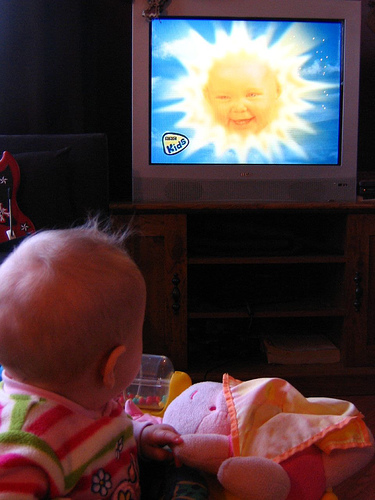 Want kids who are smarter and thinner? Keep them away from the television set as toddlers. A shocking study from child experts at the Université de Montréal, the Sainte-Justine University Hospital Research Center and the University of Michigan, published in the Archives of Pediatrics & Adolescent Medicine, has found that television exposure at age two forecasts negative consequences for kids, ranging from poor school adjustment to unhealthy habits.
“We found every additional hour of TV exposure among toddlers corresponded to a future decrease in classroom engagement and success at math, increased victimization by classmates, have a more sedentary lifestyle, higher consumption of junk food and, ultimately, higher body mass index,” says lead author Dr. Linda S. Pagani, a psychosocial professor at the Université de Montréal and researcher at the Sainte-Justine University Hospital Research Center.
The goal of the study was to determine the impact of TV exposure at age 2 on future academic success, lifestyle choices and general well being among children. “Between the ages of two and four, even incremental exposure to television delayed development,” says Dr. Pagani.
A total of 1,314 kids took part in the investigation, which was part of the Quebec Longitudinal Study of Child Development Main Exposure. Parents were asked to report how much TV their kids watched at 29 months and at 53 months in age. Teachers were asked to evaluate academic, psychosocial and health habits, while body mass index (BMI) was measured at 10 years old.
“Early childhood is a critical period for brain development and formation of behaviour,” warns Dr. Pagani. “High levels of TV consumption during this period can lead to future unhealthy habits. Despite clear recommendations from the American Academy of Pediatrics suggesting less than two hours of TV per day — beyond the age of two — parents show poor factual knowledge and awareness of such existing guidelines.”
According to the investigation, watching too much TV as toddlers later forecasted:
- a seven percent decrease in classroom engagement;
- a six percent decrease in math achievement (with no harmful effects on later reading);
- a 10 percent increase in victimization by classmates (peer rejection, being teased, assaulted or insulted by other students);
- a 13 percent decrease in weekend physical activity;
- a nine percent decrease in general physical activity;
- a none percent higher consumption of soft drinks;
- a 10 percent peak in snacks intake;
- a five percent increase in BMI.
“Although we expected the impact of early TV viewing to disappear after seven and a half years of childhood, the fact that negative outcomes remained is quite daunting,” says Dr. Pagani. “Our findings make a compelling public health argument against excessive TV viewing in early childhood and for parents to heed guidelines on TV exposure from the American Academy of Pediatrics.”

Click Image to read reviews
Since TV exposure encourages a sedentary lifestyle, Dr. Pagani says, television viewing must be curbed for toddlers to avoid the maintenance of passive mental and physical habits in later childhood: “Common sense would have it that TV exposure replaces time that could be spent engaging in other developmentally enriching activities and tasks which foster cognitive, behavioral, and motor development.”
“What’s special about this study is how it confirms suspicions that have been out there and shown by smaller projects on one outcome or another. This study takes a comprehensive approach and considers many parental, pediatric and societal factors simultaneously,” she adds.
This research was funded by the Social Science and Humanities Research Council of Canada.
The article, published in the Archives of Pediatrics & Adolescent Medicine, was authored by Linda S. Pagani, Caroline Fitzpatrick and Tracie A. Barnett of the Université de Montréal and its affiliated Sainte-Justine University Hospital Research Center in Canada in collaboration with Eric Dubow of the University of Michigan in the United States.
Source: Sciencedaily
Related articles by Zemanta
- Violent Video Games & Kids: Definitive Study Shows Both Short & Long Term Harmful Effects (peterhbrown.wordpress.com)
- And They All Lived Together In a Little Row Boat…Clap! Clap!: How Clapping Games Improve Cognition And Motor Skills In Children (peterhbrown.wordpress.com)
- Too Sexy Too Soon! PART I – Should Girls As Young As 9 Be Taken To Get Their Legs Waxed? (peterhbrown.wordpress.com)
Emotional Intelligence: Learning To Roll With The Punches
 It’s a hot-buzz topic that covers everything from improving workplace performance and successfully climbing the corporate ladder to building the happiest of marriages to ending school bullying. But what exactly is Emotional Intelligence (EI)? If we lack it, can we learn it? And how do we know if our EI is high or low? Is it only high if we’re really, really nice?
Three scholarly researchers – including University of Cincinnati Psychology Professor Gerry Matthews – delved into the science of EI and published “What We Know About Emotional Intelligence: How it Affects Learning, Work, Relationships, and Our Mental Health.”
Published by MIT Press (2009), the book was recently awarded the American Publishers Award for Professional and Scholarly Excellence – the PROSE Awards – in the biological and life sciences category of biomedicine and neuroscience. The book, co-authored by Matthews, Moshe Zeidner (University of Haifa) and Richard D. Roberts (Center for New Constructs, Educational Testing Service, Princeton, N.J.), was also on display at the UC Libraries’ Authors, Editors and Composers Reception and Program from 3:30-5 p.m., Thursday, April 22, in the Russell C. Myers Alumni Center.
MIT Press promotions describe EI as the “ability to perceive, regulate and communicate emotions – to understand emotions in ourselves and others.” Workplaces want to test for it to find the most EI-talented employees, and consultants are touting training and EI tests to improve productivity. “In the popular writings, EI tends to be defined very broadly and one can’t proceed with scientific research with such a vague and broad definition,” Matthews says.
Matthews’ research interests have explored how stress, mood and coping ability can affect performance on tests, in the workplace and on the highway. He adds that amid the grim economy, even the people who have jobs are feeling high levels of stress in the workplace and are feeling more challenged by workplace demands and concerns about job security. In general terms, those who can roll with the punches – with a shrug and a smile – may have higher Emotional Intelligence.
Click image to read reviews
Then again, “The intimate association of personality and emotion sets a trap for researchers interested in Emotional Intelligence,” writes Matthews. “It might seem that happy, calm states of mind should be seen as the person imbued with high Emotional Intelligence. However, such emotional tendencies may be no more than a consequence of biases in brain functioning or information-processing routines operating without insight or ‘intelligence.’ Some individuals – in part because of their DNA – are simply fortunate in being prone to pleasant moods, so it follows that emotional states do not alone provide an index of Emotional Intelligence,” Matthews states in the book.
In fact, Matthews says he’s skeptical that people who are better at managing stress hold higher Emotional Intelligence, but as the researchers found as they tried to narrow down the science of Emotional Intelligence, more research is needed. For instance, is someone with higher EI in the workplace more productive, or are they just better at self-promotion and forming positive relationships with co-workers? Matthews says he believes EI appears to be very modestly related to workplace performance, and could turn out to be nothing more than a business fad.
He adds the researchers are also skeptical about all of those EI tests, particularly those self-assessments. After all, people could be rating themselves the way they see themselves or the way they would like to be seen, and not like they actually are.
Currently, authors Matthews and Roberts are researching the testing of EI through video scenarios. The situation judgment test involves watching the videos unfold a challenging situation, and then the video comes to a stop and offers different options for resolving the problem. Matthews is building on his earlier research which explored whether negative moods affected good decision making abilities. “Through the video project, the idea is to see if emotionally intelligent people are better able to make rational decisions under stress,” he says.
The researchers are also examining the link between EI and school social and emotional learning programs.
Source:
Dawn Fuller
University of Cincinnati
Related articles by Zemanta
- Learning beyond the classroom (boston.com)
- “The Importance of Emotional Intelligence in Small Business Owners” :The Cross-cultural Connector (translatorpower.wordpress.com)
- Brain Training Or Just Brain Straining?: The Benefits Of Brain Exercise Software Are Unclear (peterhbrown.wordpress.com)
- Winners Are Grinners: Even If There’s Nothing to Win! (peterhbrown.wordpress.com)
And They All Lived Together In a Little Row Boat…Clap! Clap!: How Clapping Games Improve Cognition And Motor Skills In Children
 BEER-SHEVA, ISRAEL, April 28, 2010 – A researcher at Ben-Gurion University of the Negev (BGU) conducted the first study of hand-clapping songs, revealing a direct link between those activities and the development of important skills in children and young adults, including university students.
“We found that children in the first, second and third grades who sing these songs demonstrate skills absent in children who don’t take part in similar activities,” explains Dr. Idit Sulkin a member of BGU’s Music Science Lab in the Department of the Arts.
“We also found that children who spontaneously perform hand-clapping songs in the yard during recess have neater handwriting, write better and make fewer spelling errors.”
Dr. Warren Brodsky, the music psychologist who supervised her doctoral dissertation, said Sulkin’s findings lead to the presumption that “children who don’t participate in such games may be more at risk for developmental learning problems like dyslexia and dyscalculia.
“There’s no doubt such activities train the brain and influence development in other areas. The children’s teachers also believe that social integration is better for these children than those who don’t take part in these songs.”
As part of the study, Sulkin went to several elementary school classrooms and engaged the children in either a board of education sanctioned music appreciation program or hand-clapping songs training – each lasting a period of 10 weeks.
“Within a very short period of time, the children who until then hadn’t taken part in such activities caught up in their cognitive abilities to those who did,” she said. But this finding only surfaced for the group of children undergoing hand-clapping songs training. The result led Sulkin to conclude that hand-clapping songs should be made an integral part of education for children aged six to 10, for the purpose of motor and cognitive training.
During the study, “Impact of Hand-clapping Songs on Cognitive and Motor Tasks,” Dr. Sulkin interviewed school and kindergarten teachers, visited their classrooms and joined the children in singing. Her original goal, as part of her thesis, was to figure out why children are fascinated by singing and clapping up until the end of third grade, when these pastimes are abruptly abandoned and replaced with sports.
“This fact explains a developmental process the children are going through,” Dr. Sulkin observes. “The hand-clapping songs appear naturally in children’s lives around the age of seven, and disappear around the age of 10. In this narrow window, these activities serve as a developmental platform to enhance children’s needs — emotional, sociological, physiological and cognitive. It’s a transition stage that leads them to the next phases of growing up.”
Sulkin says that no in-depth, long-term study has been conducted on the effects that hand-clapping songs have on children’s motor and cognitive skills. However, the relationship between music and intellectual development in children has been studied extensively, prompting countless parents to obtain a “Baby Mozart” CD for their children.
Click image to read reviews
Nevertheless, the BGU study demonstrates that listening to 10 minutes of Mozart music (.i.e., the ‘Mozart Effect’) does not improve spatial task performance compared to 10 minutes of hand-clapping songs training or 10 minutes of exposure to silence.
Lastly, Sulkin discovered that hand-clapping song activity has a positive effect on adults: University students who filled out her questionnaires reported that after taking up such games, they became more focused and less tense.
“These techniques are associated with childhood, and many adults treat them as a joke,” she said. “But once they start clapping, they report feeling more alert and in a better mood.”
Sulkin grew up in a musical home. Her father, Dr. Adi Sulkin, is a well-known music educator who, in the 1970s and 1980s, recorded and published over 50 cassettes and videos depicting Israeli children’s play-songs, street-songs, holiday and seasonal songs, and singing games targeting academic skills.
“So quite apart from the research experience, working on this was like a second childhood,” she noted.
Source: American Associates, Ben-Gurion University of the Negev
Related articles by Zemanta
- Brain Training Or Just Brain Straining?: The Benefits Of Brain Exercise Software Are Unclear (peterhbrown.wordpress.com)
- Sticks & Stones AND Words Can Hurt You: How Words Can Cause Physical Pain (peterhbrown.wordpress.com)
- Classroom Creativity [The Frontal Cortex] (scienceblogs.com)
About Peter
Peter Brown BHMS (Hons) MPsychClin MAPS
I’m a Clinical Psychologist and have a private practice and consultancy in Brisbane Australia. I have 24 years experience in child, adult and family clinical psychology. I have a wonderful wife and three kids.
I am co-founder of Christian Wholeness Counselling Services.
I like researching issues of the brain & mind, reading and seeking out new books and resources for myself and my clients. I thought that others might be interested in some of what I have found also, hence this blog…

Subscribe to My Blog Posts & Updates
-

Blog Surfer
Alphainventions


Recent Comments


 Peter H Brown Clinical Psychologist