Emotional Binge Eating: Dealing With The Emotions Is Just As Important As Dealing With The Eating
 This article highlights how Acceptance and Commitment Therapy (ACT) is being integrated into weight loss programs for emotional eaters.
How many times have you, after a particularly hard day, reached for some chocolate or ice cream? It’s common for many people, but for those trying to lose weight, it can be detrimental to their long term success, and most weight-loss programs never even address it.
Researchers at Temple’s Center for Obesity Research are trying to figure out the answer as part of a new, NIH-funded weight loss study. The new treatment incorporates skills that directly address the emotional eating, and essentially adds those skills to a state-of-the art behavioral weight loss treatment.
“The problem that we’re trying to address is that the success rates for long-term weight loss are not as good as we would like them to be,” said Edie Goldbacher, a postdoctoral fellow at CORE. “Emotional eating may be one reason why people don’t do as well in behavioral weight loss groups, because these groups don’t address emotional eating or any of its contributing factors.”
The study has already had one wave of participants come through, and many participants have seen some success in the short term, but have also learned the skills to help them achieve long term success.

Click Image to read reviews
Janet Williams, part of that first cohort, said she lost about 17 pounds over 22 weeks, and still uses some of the techniques she learned in the study to help maintain her weight, which has not fluctuated.
“The program doesn’t just help you identify when you eat,” said Williams. “It helps you recognize triggers that make you eat, to help you break that cycle of reaching for food every time you feel bored, or frustrated, or sad.”
Williams said that the program teaches various techniques to help break that cycle, such as the “conveyor belt,” in which participants, when overcome with a specific emotion, can recognize it and take a step back, before reaching for chips or cookies, and put those feelings on their mental “conveyor belt” and watch them go away.
“I still use the skills I learned in the study,” she said. “I’ve learned to say, ‘I will not allow this emotional episode to control my eating habits.'”
Source:eurekalert

Related articles by Zemanta
- Fast Food, Fast You! How Fast Food Makes You Impatient (peterhbrown.wordpress.com)
- How to Increase Your Self-Control Without Really Trying (spring.org.uk)
- “Willy Wonky & The Chocolate Fetish”: Why Do Depressed People Eat More Chocolate? (peterhbrown.wordpress.com)
![Reblog this post [with Zemanta]](https://i0.wp.com/img.zemanta.com/reblog_e.png)
Should I Tell Or Not? Mood Disorders & The Workplace
 Credit: Therese J. Borchard via psychcentral
Just when I think our world has moved a baby step in the right direction regarding our understanding of mental illness, I get another blow that tells me otherwise. For example, awhile back I quoted an intelligent woman who wrote an article in a popular women’s magazine about dating a bipolar guy when she was bipolar herself. She recently discovered that she had jeopardized a job prospect because the article came up — as well as all those who referenced it, like Beyond Blue — when you Googled her name. So she requested everyone who picked up that article to go back and change her real name to a pseudonym.
Because talking about bipolar disorder in the workplace is pretty much like singing about AIDS at the office a hundred years ago or maybe championing civil rights in the 60s.
I totally get why this woman created a pseudonym. Trust me, I entertained that possibility when I decided to throw out my psychiatric chart to the public. It’s risky. Extremely risky. Each person’s situation is unique, so I can’t advise a general “yes ” or “no.” As much as I would love to say corporate America will embrace the person struggling with a mood disorder and wrap him around a set of loving hands, I know the reality is more like a bipolar or depressive being spit upon, blamed, and made fun of by his boss and co-workers. Because the majority of professionals today simply don’t get it.
Not at all.
They don’t get it even though the World Health Organization predicts that by 2020, mental illness will be the second leading cause of disability worldwide, after heart disease; that major mental disorders cost the nation at least $193 billion annually in lost earnings alone, according to a new study funded by the National Institute of Mental Health; that the direct cost of depression to the United States in terms of lost time at work is estimated at 172 million days yearly.
I realize every time I publish a personal blog post — one in which I describe my severe ruminations, death thoughts, and difficulty using the rational part of my brain — I jeopardize my possibilities for gainful employment in the future. I can pretty much write off all government work because, from what I’ve been told, you have to get a gaggle of people to testify that you have no history of psychiatric illnesses (and, again, all it takes is one Google search to prove I’m crazy).
It’s totally unfair.
Do we penalize diabetics for needing insulin or tell people with disabling arthritis to get over it? Do we advise cancer victims to use a pseudonym if they write about their chemo, for fear of being labeled as weak and pathetic? That they really should be able to pull themselves up by their bootstraps and heal themselves because it’s all in their heads?
But I don’t want to hide behind a pseudonym. I use my real name because, for me, the benefit of comforting someone who thinks they are all alone outweighs the risk of unemployment in the future. Kay Redfield Jamison did it. She’s okay. So is Robin Williams. And Kitty Dukasis. And Carrie Fisher. Granted all four of those people have talent agents ready to book them as speakers for a nice fee.
In their book, Living with Someone Who’s Living with Bipolar Disorder Chelsea Lowe and Bruce M. Cohen, MD, Ph.D., list the pros and the cons of going public with a mood disorder. I’m paraphrasing a little bit, but here are the pros:
- There’s nothing disgraceful about the condition, any more than there would be about cancer or heart disease.
- Carrying a secret is an enormous burden. Sharing it lightens it.
- The more people who know and are looking out for you, the more likely you’ll be able to get help before the problems turn serious.
- Sharing the information lessons the burden on your partner.
- Lots of people have psychiatric issues; maybe your boss or family member does too.
- Taking about the diagnosis is an opportunity to educate others.

Click image to read reviews
The authors suggest telling your employer under these circumstances:
- If you are taking a new medication and may need time for adjustment.
- If your schedule doesn’t allow for regular, restful sleep–which is an important factor in controlling the disorder–or if you need to request certain adjustments to your schedule, like telecommuting.
- If you need to be hospitalized or take a leave of absence.
- If the disorder is affecting your behavior or job performance.
- If you need to submit benefit claims through your employer rather than the insurance company, or if your employer requires medical forms for extended absences.
And the cons:
- Prejudice and stigma about psychiatric disorders are still common in our society. A disclosure of bipolar disorder [or any mental illness] will inevitably color your employer’s and coworkers’ perceptions of his job performance: “Did Jerry miss that meeting because the bus was late, or because he was off his meds?” Potential problems include discrimination, stigmatization, fear and actual job loss.
- You can’t un-tell a secret.
- Your chances for promotion could be hurt.
- The employer is under no obligation to keep your condition secret.
- Discrimination is illegal but difficult to prove.
- You could be written off as “crazy.”
It’s Tricky! What are your thoughts?
Related articles by Zemanta
- Kids of Bipolar Parents at Risk for Mental Woes (nlm.nih.gov)
- Bipolar Mood Disorder: How Long Does An Episode Last? (peterhbrown.wordpress.com)
- Anxiety & Depression: Self-Help Internet Interventions Work! (peterhbrown.wordpress.com)
“Willy Wonky & The Chocolate Fetish”: Why Do Depressed People Eat More Chocolate?
 People who are depressed appear to eat more chocolate than those who aren’t
Researchers at UC San Diego and UC Davis examined chocolate consumption and other dietary intake patterns among 931 men and women who were not using antidepressants. The participants were also given a depression screening test. Those who screened positive for possible depression consumed an average of 8.4 servings of chocolate — defined as one ounce of chocolate candy — per month. That compared with 5.4 servings per month among people who were not depressed.
Those who scored highest on the mood tests, indicating possible major depression, consumed an average of 11.8 servings per month. The findings were similar among women and men.
When the researchers controlled for other dietary factors that could be linked to mood — such as caffeine, fat and carbohydrate intake — they found only chocolate consumption correlated with mood.
It’s not clear how the two are linked, the authors wrote. It could be that depression stimulates chocolate cravings as a form of self-treatment. Chocolate prompts the release of certain chemicals in the brain, such as dopamine, that produce feelings of pleasure.
There is no evidence, however, that chocolate has a sustained benefit on improving mood. Like alcohol, chocolate may contribute a short-term boost in mood followed by a return to depression or a worsened mood. A study published in 2007 in the journal Appetite found that eating chocolate improved mood but only for about three minutes.
It’s also possible that depressed people seek chocolate to improve mood but that the trans fats in some chocolate counteract the effect of omega-3 fatty acid production in the body, the authors said in the paper. Omega-3 fatty acids are thought to improve mental health.
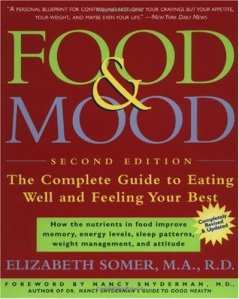
Click image to read reviews
Another theory is that chocolate consumption contributes to depression or that some physiological mechanism, such as stress, drives both depression and chocolate cravings.
“It’s unlikely that chocolate makes people depressed,” said Marcia Levin Pelchat, a psychologist who studies food cravings at the Monell Chemical Senses Center in Philadelphia. She was not involved in the new study. “Most people believe the beneficial effects of chocolate are on mood and that they are learned. You eat chocolate; it makes you feel good, and sometime when you’re feeling badly it occurs to you, ‘Gee, if I eat some chocolate I might feel better.’ ”
Chocolate is popular in North America and Britain, she said. But in other cultures, different foods are considered pleasure-inducing pick-me-ups.
“In the United States, people consider chocolate really tasty,” Pelchat said. “It has a high cultural value. It’s an appropriate gift for Valentine’s Day. But in China, you might give stuffed snails to someone you really like.”
Source: LA Times
Related articles by Zemanta
- Depressed? You must like chocolate (msnbc.msn.com)
- Compulsive Collecting: Finding Hope In The Misunderstood Mess of Hoarding (peterhbrown.wordpress.com)
- Anxiety & Depression: Self-Help Internet Interventions Work! (peterhbrown.wordpress.com)
All By Myself…The Tyranny of The Loneliness Epidemic
 Credit Dr Ronald Pies, M.D. via psychcentral.com
The recent controversy over the still-developing DSM-5 — that compendium of mental disorders the media love to call, inappropriately, “The Bible of Psychiatry” –has gotten me thinking about loneliness. Now, thankfully, nobody has seriously proposed including loneliness in the DSM-5. Indeed, loneliness is usually thought of as simply an unpleasant part of life — one of the “slings and arrows” that pierce almost all of us from time to time. Loneliness, in some ways, remains enmeshed in a web of literary and cultural clichés, born of such works as Nathaniel West’s darkly comic novel, Miss Lonelyhearts, and the Beatles’ whimsical anthem, “Sgt. Pepper’s Lonely Hearts Club Band.”
But loneliness turns out to be a serious matter. And as psychiatry debates the diagnostic minutiae of DSM-5, all of us may need to remind ourselves that millions in this country struggle against the downward tug of loneliness. Yet even among health care professionals, few seem aware that loneliness is closely linked with numerous emotional and physical ills, particular among the elderly and infirm.
It’s easy to assume that loneliness is simply a matter of mind and mood. Yet recent evidence suggests that loneliness may injure the body in surprising ways. Researchers at the University of Pittsburgh School of Medicine studied the risk of coronary heart disease over a 19-year period, in a community sample of men and women. The study found that among women, high degrees of loneliness were associated with increased risk of heart disease, even after controlling for age, race, marital status, depression and several other confounding variables. (In an email message to me, the lead author, Dr. Rebecca C. Thurston, PhD, speculated that the male subjects might have been more reluctant to acknowledge their feelings of loneliness).
Similarly, Dr. Dara Sorkin and her colleagues at the University of California, Irvine, found that for every increase in the level of loneliness in a sample of 180 older adults, there was a threefold increase in the odds of having heart disease. Conversely, among individuals who felt they had companionship or social support, the likelihood of having heart disease decreased.
The young, of course, are far from immune to loneliness. Researchers at Aarhus University in Denmark studied loneliness in a population of adolescent boys with autism spectrum disorders (an area of great controversy in the proposed DSM-5 criteria). More than a fifth of the sample described themselves as “often or always” feeling lonely—a finding that seems to run counter to the notion that those with autism are emotionally disconnected from other people. Furthermore, the study found that the more social support these boys received, the lower their degree of loneliness. We have no cure for autism in adolescents–but the remedy for loneliness in these kids may be as close as the nearest friend.
And lest there be any doubt that loneliness has far ranging effects on the health of the body, consider the intriguing findings from Dr. S.W. Cole and colleagues, at the UCLA School of Medicine. These researchers looked at levels of gene activity in the white blood cells of individuals with either high or low levels of loneliness. Subjects with high levels of subjective social isolation—basically, loneliness — showed evidence of an over-active inflammatory response. These same lonely subjects showed reduced activity in genes that normally suppress inflammation. Such gene effects could explain reports of higher rates of inflammatory disease in those experiencing loneliness.

Click image to read reviews
Could inflammatory changes, in turn, explain the correlation between loneliness and heart disease? Inflammation is known to play an important role in coronary artery disease. But loneliness by itself may be just one domino in the chain of causation. According to Dr. Heather S. Lett and colleagues at Duke University Medical Center, the perception of poor social support — in effect, loneliness — is a risk factor for development, or worsening, of clinical depression. Depression may in turn bring about inflammatory changes in the heart that lead to frank heart disease. This complicated pathway is still speculative, but plausible.
Loneliness, of course, is not synonymous with “being alone.” Many individuals who live alone do not feel “lonely.” Indeed, some seem to revel in their aloneness. Perhaps this is what theologian Paul Tillich had in mind when he observed that language “… has created the word “loneliness” to express the pain of being alone. And it has created the word “solitude” to express the glory of being alone.” Conversely, some people feel “alone” or disconnected from others, even when surrounded with people.
Let’s admit that not everybody is capable of experiencing the “glory of being alone” or of transforming loneliness into “solitude.” So what can a socially-isolated person do to avoid loneliness and its associated health problems? Joining a local support group can help decrease isolation; allow friendships to form; and give the lonely person an opportunity both to receive and to provide help. This reciprocity can bolster the lonely person’s ego and improve overall well-being. Support groups geared to particular medical conditions can also help reduce disease-related complications. Although there are always risks in going “on line” to find support, Daily Strength appears to be a legitimate and helpful website for locating support groups of all types, including those for loneliness. Psych Central also provides opportunities to exchange ideas and “connect” with many individuals who feel isolated or alone. For those who feel lonely even in the midst of friends, individual psychotherapy may be helpful, since this paradoxical feeling often stems from a fear of “getting close” to others.
No, loneliness is not a disease or disorder. It certainly shouldn’t appear in the DSM-5 — but it should be on our minds, as a serious public health problem. Fortunately, the “treatment” may be as simple as reaching out to another human being, with compassion and understanding.
Related articles by Zemanta
- “I Saw It Happen”: Children Who Witness Bullying Can Be Traumatized Too (peterhbrown.wordpress.com)
- Sticks & Stones AND Words Can Hurt You: How Words Can Cause Physical Pain (peterhbrown.wordpress.com)
- Anxiety & Depression: Self-Help Internet Interventions Work! (peterhbrown.wordpress.com)
- How true is the one-in-four mental health statistic? | Jamie Horder (guardian.co.uk)
Families, Alcohol, Recovery & ‘The Limits Of Love’
 I have re-posted this article from psych central as it is a thorough, well written and balanced view of the impact of alcoholism in families, the hope for recovery and the role of families and the community in helping those with substance over-use illnesses: Please read!
Gredit: psychcentral.com
On April 25th, Hallmark Hall of Fame will broadcast the movie “When Love Is Not Enough — The Lois Wilson Story,” starring Winona Ryder and Barry Pepper (CBS, 9:00 pm ET). The movie, which portrays the life of Lois Wilson, co-founder of Al-Anon Family Groups and wife of Alcoholics Anonymous co-founder Bill Wilson, is based on William G. Borchert’s 2005 book, The Lois Wilson Story: When Love Is Not Enough.
Borchert’s earlier screenplay was the basis of the acclaimed movie My Name is Bill W. which starred James Woods, James Garner, and JoBeth Williams. The premiere of the movie also falls during the National Council on Alcoholism and Drug Dependence, Inc.’s (NCADD) 24th Annual Alcohol Awareness Month with its theme, “When Love Is Not Enough: Helping Families Coping With Alcoholism.”
Lois Wilson fell in love with a man whose alcoholism brought his life and their relationship to the brink before he began his personal recovery and helped found Alcoholics Anonymous. Lois and many of the other wives of early AA members also began to band together for mutual support, formalizing these meetings into Al-Anon Family Groups in 1951.
When Love is Not Enough is the story of Lois Wilson and her life with Bill Wilson. The reach of her and their stories is unfathomable and inseparable from the larger stories of AA and Al-Anon and the influence their lives would exert on the larger story of the professional treatment and recovery of individuals and families affected by addiction to alcohol and other drugs. As William Borchert suggests:
“In the end, Bill Wilson’s alcoholism proved not to be the tragic undoing of this brilliant and loving couple, but rather the beginning of two of the twentieth century’s most important social and spiritual movements- Alcoholics Anonymous and Al-Anon Family Groups.”
There are presently more than 114,500 Alcoholics Anonymous groups (with a combined membership of more than 2 million) and more than 25,000 Al-Anon/Alateen groups (with a combined membership estimated at more than 340,000) hosting local meetings worldwide.
When Love is Not Enough is clearly more than a love story, though it is surely that. Readers of Psych Central and the people they serve will discover in this movie six profound lessons about the impact of alcoholism and alcoholism recovery on intimate relationships and the family.
1. Prolonged cultural misunderstandings about the nature of alcoholism have left a legacy of family shame and secrecy. Centuries of debates between those advocating religious, moral, criminal, psychiatric, psychological, medical and sociological theories of alcoholism failed to offer clear guidance to individuals and families affected by alcoholism. When Love is Not Enough is in part a poignant history of the hidden desperation many families experienced before the birth of Alcoholics Anonymous, Al-Anon, and modern alcoholism treatment. Lois Wilson and Anne Bingham helped change that history in 1951 when they organized 87 groups of wives of AA members into the Al-Anon Family Groups.
2. Alcoholism is a family disease in the sense that it also wounds those closest to the alcohol dependent person; transforms family relationships, roles, rules, and rituals; and isolates the family from potential sources of extended family, social, and community support. And, it has far reaching, long-lasting effects on the physical and emotional health of the family and children. When Love is Not Enough conveys the physical and emotional distress of those struggling to understand a loved one who has lost control of drinking and its consequences.
It vividly portrays the disappointment, confusion, frustration, anger, resentment, jealousy, fear, guilt, shame, anxiety and depression family members experience in the face of alcoholism. The recognition that significant others and their children become as sick as the person addicted and are in need of a parallel pathway of recovery were the seeds from which Al-Anon and Alateen grew.
3. The family experience of alcoholism is often one of extreme duality. When Love is Not Enough poignantly conveys this duality: brief hope-inspiring interludes of abstinence or moderated drinking, periods of peacefulness, moments of love and shared dreams for the future — all relentlessly violated by explosive bouts of drinking and their devastating aftereffects. Memories of that lost person and those moments and dreams co-exist even in the face of the worst effects of alcoholism on the family.
It is only in recognizing this duality of experience and the character duality of the alcoholic that one can answer the enigmatic question that is so often posed about Lois Wilson’s contemporary counterparts, “Why does she/he stay with him/her?” As clinicians, we can too often forget that these family stories contain much more than the pathology of alcohol or drug dependence (White, 2006).

Click image to read reviews
4. Family recovery from alcoholism is a turbulent, threatening and life-changing experience. The hope of all families and children wounded by alcoholism is that the drinking will stop and with it, the arrival of an idyllic family life. Lois Wilson’s story confirms what research on family recovery from addiction is revealing: recovery from alcoholism can destabilize intimate and family relationships. Stephanie Brown and Virginia Lewis (1999), in their studies of the impact of alcoholism recovery on the family, speak of this as the “trauma of recovery.”
People recovering from alcoholism, their families, and their children can and often do achieve optimum levels of health and functioning, but this achievement is best measured in years rather than days, weeks, or months. That recognition in the life of Lois Wilson underscored the need for sustained support for families as they went through this process.
5. We cannot change another person, only ourselves. If there is a central, singular message from Lois Wilson’s life and from the Al-Anon Family Groups program, this may well be it. Al-Anon’s defining moments came when family members stopped focusing on how they could change and control their addicted family member and focused instead on their own need for regeneration and spiritual growth, the overall health of their families and the comfort and help they could offer each other and other families similarly affected.
Their further discovery that AA’s twelve step program of recovery could also guide the healing of family members marks the birth of the modern conceptualization of family recovery. The 2009 Al-Anon Membership Survey confirms the wide and enduring benefits members report experiencing as a result of their sustained involvement in Al-Anon—irrespective of the drinking status of their family members.
6. The wonder of family recovery. As a direct result of Lois’s groundbreaking work in co-founding Al-Anon and the impact it has had on the field of alcohol and drug treatment, family recovery from alcoholism is a reality for millions of Americans today, and the hope, help, and healing of family recovery has become the most powerful way to break the intergenerational cycle of alcoholism and addiction in the family.
The growing interest in the lives of Bill and Lois Wilson — as indicated by a stream of memoirs, biographies, plays, and films — is testimony to the contributions that Alcoholics Anonymous and Al-Anon Family Groups have made to personal and family recovery from alcoholism and to the ever-widening adaptation of the Twelve Steps to other problems of living (Wilson, 1994).
Psych Central readers will find much of value in “When Love Is Not Enough — The Lois Wilson Story,” including the power of Al-Anon as a tool of support for clients living with someone else’s alcoholism. A DVD of the movie and a Viewer’s Guide, for use as a tool in family and community education, will be available at www.hallmarkhalloffame.com on April 25th, the day of the movie’s premiere.
References
Al-Anon membership survey. (Fall, 2009). Virginia Beach, VA: Al-Anon Family Headquarters, Inc.
Borchert, W.G. (2005). The Lois Wilson story: When love is not enough. Center City, MN: Hazelden.
Brown, S., & Lewis, V. (1999). The alcoholic family in recovery: A developmental model. New York & London: Guilford Press.
White, W. (2006). [Review of the book The Lois Wilson Story: When Love is Not Enough, by W. G. Borchert]. Alcoholism Treatment Quarterly, 24(4), 159-162.
Wilson, L. (1979). Lois remembers: Memoir of the co-founder of Al-Anon and wife of the co-founder of Alcoholics Anonymous. New York: Al-Anon Family Group Headquarters, Inc.
Additional Resources
Al-Anon Family Group Headquarters, 800-4AL-ANON (888-425-2666), Monday-Friday, 8 a.m. to 6 p.m., ET.
National Council on Alcoholism and Drug Dependence (NCADD).
Related articles by Zemanta
- Characteristics Of Alcholics Anonymous (stepbysteptips.com)
- Jackie K. Cooper: When Love Is Not Enough Explores the Story of the Founder of Al-Anon (huffingtonpost.com)
- Compulsive Collecting: Finding Hope In The Misunderstood Mess of Hoarding (peterhbrown.wordpress.com)
Anxiety & Depression: Self-Help Internet Interventions Work!
 A little while ago I posted a list of free interactive self-help web sites, all research based, which have been shown to effective in the treatment of anxiety & depression. A recent study adds to the body of evidence which supports web based intervention as a viable treatment option or adjunct.
Cognitive behaviour therapy (CBT) via the internet is just as effective in treating panic disorder (recurring panic attacks) as traditional group-based CBT. It is also efficacious in the treatment of mild and moderate depression. This according to a new doctoral thesis soon to be presented at Karolinska Institutet.
Read the original research thesis here (PDF)
It is estimated that depression affects some 15 per cent and panic disorder 4 per cent of all people during their lifetime. Depression can include a number of symptoms, such as low mood, lack of joy, guilt, lethargy, concentration difficulties, insomnia and a low zest for life. Panic disorder involves debilitating panic attacks that deter a person from entering places or situations previously associated with panic. Common symptoms include palpitations, shaking, nausea and a sense that something dangerous is about to happen (e.g. a heart attack or that one is going mad ).
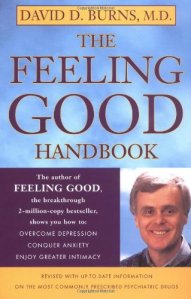
Click image to read reviews
It is known from previous studies that CBT is an effective treatment for both panic disorder and depression. However, there is a lack of psychologists and psychotherapists that use CBT methods, and access to them varies greatly in Sweden as well as in many other countries. Internet-based CBT has therefore been developed, in which the patient undergoes an Internet-based self-help programme and has contact with a therapist by email.
The present doctoral thesis includes a randomised clinical trial of 104 patients with panic disorder and compares the effectiveness of Internet-based CBT and group CBT within a regular healthcare service. The study shows that both treatments worked very well and that there was no significant difference between them, either immediately after treatment or at a six-month follow-up. Analyses of the results for the treatment of depression show that Internet-based CBT is most effective if it is administered as early as possible. Patients with a higher severity of depression and/or a history of more frequent depressive episodes benefited less well from the Internet treatment.
Jan Bergström works as a clinical psychologist at the Anxiety Disorders Unit of the Psychiatry Northwest division of the Stockholm County Council. This research was also financed by the Stockholm County Council.
“Thanks to our research, Internet treatment is now implemented within regular healthcare in Stockholm, at the unit Internetpsykiatri.se of Psychiatry Southwest, which probably makes the Stockholm County Council the first in the world to offer such treatment in its regular psychiatric services,” says Jan Bergström.
Read the original research thesis here (PDF)
Credit: Adapted from materials provided by Karolinska Institutet.
Related articles by Zemanta
- CBT Via the URLs – Treatment for Depression Online May Be as Effective as Group-Based Therapy IRL (healthmgmtrx.blogspot.com)
- Study: Treating panic disorder works as well online (news.cnet.com)
Bipolar Mood Disorder: How Long Does An Episode Last?
 Credit:John M Grohol PsyD PsychCentral
Bipolar disorder is characterized by a cycling from depression to mania, and back again over time (hence the reason it used to be called manic depression, because it includes both mania and depression). One of the commonly asked questions […] is, “How long does a typical bipolar episode last?”
Credit:John M Grohol PsyD PsychCentral
Bipolar disorder is characterized by a cycling from depression to mania, and back again over time (hence the reason it used to be called manic depression, because it includes both mania and depression). One of the commonly asked questions […] is, “How long does a typical bipolar episode last?”
The answer has traditionally been, “Well, it varies considerably from person to person. Some may have rapid cycling bipolar disorder where that person can cycle back and forth between depression and mania in the course of a day or multiple times a week. Others may be stuck in one mood or the other for weeks or months at a time.”
New research (Solomon et al., 2010) published in The Archives of General Psychiatry sheds a little more empirical light onto this question.
In a study of 219 patients with bipolar I disorder (the more serious kind of bipolar disorder), researchers asked patients to fill out an evaluation every 6 months for five years. The evaluation survey asked a number of questions to determine the length, type and severity of the person’s mood episodes.
They discovered that for patients with Bipolar I disorder, the median duration for any type of mood episode — either mania or depression — was 13 weeks.
They also found that “more than 75% of the subjects recovered from their mood episodes within 1 year of onset. The probability of recovery was significantly less for an episode with severe onset” and for those who had a greater number of years spent ill with a mood episode.
The researchers also discovered that manic episodes or mild depressive episodes were easier to recover from than severe depressive episodes for people with Bipolar I disorder in this study. They also found that those who have a cycling episode — switching from depression to mania or vice-a-versa without an intervening period of recovery — fared worse.
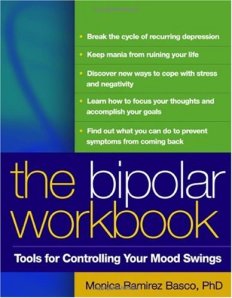
Click image to read reviews
So there you have it. The average length of time someone with Bipolar I disorder spends either depressed or manic is about 13 weeks. Of course, as always, your mileage may vary and individual differences will mean that very few people will actually have this exact average. But it’s a good, rough yardstick in which to measure your own mood episode lengths.
Reference:
Solomon, DA, Andrew C. Leon; William H. Coryell; Jean Endicott; Chunshan Li; Jess G. Fiedorowicz; Lara Boyken; Martin B. Keller. (2010). Arch Gen Psychiatry — Abstract: Longitudinal Course of Bipolar I Disorder: Duration of Mood Episodes. Arch Gen Psychiatry, 67, 339-347.
//
Related articles by Zemanta
- Fry urges help for bipolar study (news.bbc.co.uk)
- Is It Bipolar Disorder or Depression? Learn the Signs (untreatableonline.com)
Why Your Job Doesn’t Make You Happy
Information supplied by T he British Psychological Society
Read the original research paper here (PDF)
People who are unhappy in life are unlikely to find satisfaction at work. This is the finding of a study published online last thursday, 1st April 2010, in the Journal of Occupational and Organizational Psychology.
Assistant Professor Nathan Bowling of Wright State University, USA, and colleagues Kevin Eschleman and Qiang Wang undertook a meta-analysis on the results of 223 studies carried out between 1967 and 2008. All of the studies had investigated some combination of job satisfaction and life satisfaction (or subjective well-being).
Assistant Professor Nathan Bowling said: “We used studies that assessed these factors at two time points so that we could better understand the causal links between job satisfaction and life satisfaction. If people are satisfied at work, does this mean they will be more satisfied and happier in life overall? Or is the causal effect the opposite way around?”

Click image to read reviews
The causal link between subjective well-being and subsequent levels of job satisfaction was found to be stronger than the link between job satisfaction and subsequent levels of subjective well-being.
“These results suggest that if people are, or are predisposed to be, happy and satisfied in life generally, then they will be likely to be happy and satisfied in their work,” said Nathan Bowling.
“However, the flipside of this finding could be that those people who are dissatisfied generally and who seek happiness through their work, may not find job satisfaction. Nor might they increase their levels of overall happiness by pursuing it.”
Read the original research paper here (PDF)
Related articles by Zemanta
- Those Who Enjoy Life More Likely to Be Happy at Work (nlm.nih.gov)
Mid Life – What’s The Crisis?: Why Self Esteem Peaks In The Middle-Aged
Credit: LiveScience
Read the original research article HERE (PDF)
Bad vision and other physical ailmen ts aren’t the only things that seem to get worse as people grow old. Self-esteem also declines around the age of retirement, a new study finds.
The study involved 3,617 American men and women ranging in age from 25 to 104. Self-esteem was lowest among young adults, but increased throughout adulthood, peaking at age 60, before it started to decline.
Several factors might explain this trend, the researchers say.
“Midlife is a time of highly stable work, family and romantic relationships. People increasingly occupy positions of power and status, which might promote feelings of self-esteem,” said study author Richard Robins of the University of California, Davis. “In contrast, older adults may be experiencing a change in roles such as an empty nest, retirement and obsolete work skills in addition to declining health.”
Measuring self-esteem
The participants were surveyed four times between 1986 and 2002. They were asked to rate their level of agreement with statements such as: “I take a positive attitude toward myself,” which suggests high self-esteem; “At times I think I am no good at all,” and “All in all, I am inclined to feel that I am a failure,” which both suggest low self-esteem.
Subjects also indicated their demographics, relationship satisfaction, and whether they had experienced stressful life events, including suddenly losing a job, being the victim of a violent crime, or experiencing the death of a parent or child.
On average, women had lower self-esteem than men throughout most of adulthood, but self-esteem levels converged as men and women reached their 80s and 90s. Blacks and whites had similar self-esteem levels throughout young adulthood and middle age. In old age, average self-esteem among blacks dropped much more sharply than self-esteem among whites. This result held even after accounting for differences in income and health.
Future research should further explore these ethnic differences, which might lead to better interventions aimed at improving self-esteem, the study authors say.
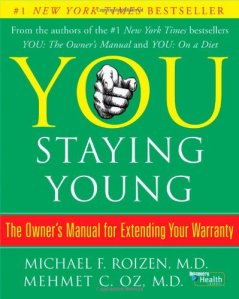
Click on image to read reviews
More self-esteem factors
Education, income, health and employment status all had some effect on the self-esteem trajectories, especially as people aged.
“People who have higher incomes and better health in later life tend to maintain their self-esteem as they age,” Orth said.
“We cannot know for certain that more wealth and better health directly lead to higher self-esteem, but it does appear to be linked in some way. For example, it is possible that wealth and health are related to feeling more independent and better able to contribute to one’s family and society, which in turn bolsters self-esteem.”
People of all ages in satisfying and supportive relationships tend to have higher self-esteem, according to the findings.
However, despite maintaining higher self-esteem throughout their lives, people in happy relationships experienced the same drop in self-esteem during old age as people in unhappy relationships.
“Thus, being in a happy relationship does not protect a person against the decline in self-esteem that typically occurs in old age,” said study author Kali H. Trzesniewski of the University of Western Ontario.
With medical advances, the drop in self-esteem might occur later for baby boomers, Orth said. Boomers might be healthier for longer and, therefore, able to work and earn money longer.
Read the original research article HERE (PDF)
Related articles by Zemanta
- Self-Esteem And Self-Respect (andrewsullivan.theatlantic.com)
- Aging Health Strongly Affected by How You Feel About Aging (seniormemorysource.com)
- Parenting: Signs of Low Self-Esteem in Children (abcnews.go.com)
Exercise DOES Help Improve Mood! And Just 25 Minutes Worth Will Decrease Stress & Increase Energy
Having an Honors degree in Human Movement Studies and working in gyms in a former life while studying for my Clinical Masters degree, I have seen this to be true. Of course it seems self evident, but these researchers have used great science with an excellent and now research-proven written program and workbook. These, along with their recent meta-analytic research review, show just how effective exercise can be in improving mood.
 Credit: PhysOrg.com) — Exercise is a magic drug for many people with depression and anxiety disorders, according to researchers who analyzed numerous studies, and it should be more widely prescribed by mental health care providers.
“Exercise has been shown to have tremendous benefits for mental health,” says Jasper Smits, director of the Anxiety Research and Treatment Program at Southern Methodist University in Dallas. “The more therapists who are trained in exercise therapy, the better off patients will be.”
The traditional treatments of cognitive behavioral therapy and pharmacotherapy don’t reach everyone who needs them, says Smits, an associate professor of psychology.
“Exercise can fill the gap for people who can’t receive traditional therapies because of cost or lack of access, or who don’t want to because of the perceived social stigma associated with these treatments,” he says. “Exercise also can supplement traditional treatments, helping patients become more focused and engaged.”
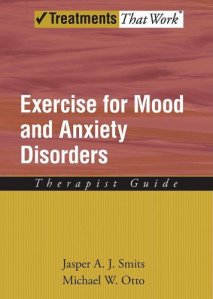
The Program used in the study is available from bookstores-Click Image to view description
Smits and Michael Otto, psychology professor at Boston University, presented their findings to researchers and mental health care providers March 6 at the Anxiety Disorder Association of America’s annual conference in Baltimore.
Their workshop was based on their therapist guide “Exercise for Mood and Anxiety Disorders,” with accompanying patient workbook (Oxford University Press, September 2009).
The guide draws on dozens of population-based studies, clinical studies and meta-analytic reviews that demonstrate the efficacy of exercise programs, including the authors’ meta-analysis of exercise interventions for mental health and study on reducing anxiety sensitivity with exercise.
“Individuals who exercise report fewer symptoms of anxiety and depression, and lower levels of stress and anger,” Smits says. “Exercise appears to affect, like an antidepressant, particular neurotransmitter systems in the brain, and it helps patients with depression re-establish positive behaviors. For patients with anxiety disorders, exercise reduces their fears of fear and related bodily sensations such as a racing heart and rapid breathing.”
After patients have passed a health assessment, Smits says, they should work up to the public health dose, which is 150 minutes a week of moderate-intensity activity or 75 minutes a week of vigorous-intensity activity.
At a time when 40 percent of Americans are sedentary, he says, mental health care providers can serve as their patients’ exercise guides and motivators.
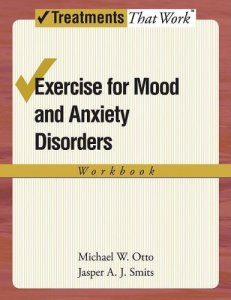
The patient workbook which accompanies the program - Click image to view description
“Rather than emphasize the long-term health benefits of an exercise program — which can be difficult to sustain — we urge providers to focus with their patients on the immediate benefits,” he says. “After just 25 minutes, your mood improves, you are less stressed, you have more energy — and you’ll be motivated to exercise again tomorrow. A bad mood is no longer a barrier to exercise; it is the very reason to exercise.”
Smits says health care providers who prescribe exercise also must give their patients the tools they need to succeed, such as the daily schedules, problem-solving strategies and goal-setting featured in his guide for therapists.
“Therapists can help their patients take specific, achievable steps,” he says. “This isn’t about working out five times a week for the next year. It’s about exercising for 20 or 30 minutes and feeling better today.”
Related articles by Zemanta
- Personal Health: Research Is Starting to Shed Light on Body Dysmorphic Disorder (nytimes.com)
- Music Soothes Anxiety as Well as Massage Does (nlm.nih.gov)
About Peter
Peter Brown BHMS (Hons) MPsychClin MAPS
I’m a Clinical Psychologist and have a private practice and consultancy in Brisbane Australia. I have 24 years experience in child, adult and family clinical psychology. I have a wonderful wife and three kids.
I am co-founder of Christian Wholeness Counselling Services.
I like researching issues of the brain & mind, reading and seeking out new books and resources for myself and my clients. I thought that others might be interested in some of what I have found also, hence this blog…

Subscribe to My Blog Posts & Updates
-

Blog Surfer
Alphainventions


Recent Comments


 Peter H Brown Clinical Psychologist