A Tired Woman’s Guide to Passionate Sex: Research Shows 6 Step Program To Be Effective
 http://www.medicalnewstoday.com
According to the Journal of Sexual Medicine, people who engage in regular sexual activity gain several health benefits, such as longer lives, healthier hearts, lower blood pressure, and lower risk of breast cancer. However, approximately 33 percent of women may not receive these benefits due to low sexual desire. Also, the marriages of women with low sexual desire may also be at risk, given a recent statistic that 25 percent of divorce is due to sexual dissatisfaction.
Some doctors are prescribing testosterone patches for women with low sexual desire. However, research shows that testosterone patches might increase the risk of breast cancer when used for just a year. Researchers are currently testing a new drug, flibanserin, which was developed as an antidepressant and affects neurotransmitters in the brain, to treat women with low sexual desire. However, experts are concerned about the side effects of this possible treatment. Now, a University of Missouri researcher has found evidence that a low-cost, risk-free psychological treatment is effective and may be a better alternative to drugs that have adverse side effects.
 “Low sexual desire is the number one problem women bring to sex therapists,” said Laurie Mintz, associate professor of educational, school and counseling psychology in the MU College of Education. “Drugs to treat low sexual desire may take the focus away from the most common culprits of diminished desire in women, including lack of information on how our own bodies work, body image issues, relationship issues and a stressful lifestyle. Indeed, research demonstrates that relationship issues are far more important in predicting women’s sexual desire than are hormone levels. Before women seek medical treatments, they should consider psychological treatment.”
Mintz has authored a book, A Tired Woman’s Guide to Passionate Sex: Reclaim Your Desire and Reignite Your Relationship
In a study demonstrating the effectiveness of her treatment, Mintz recruited married women between the ages of 28 to 65, who said they were uninterested in sexual activity. All the women were employed and a majority had children. All participants completed an online survey that measured sexual desire and sexual functioning. Then half of the participants were selected randomly to read her book and perform the exercises outlined in her book. After six weeks, they were emailed the same survey again. The control group did not read the book. Mintz found that the intervention group who read the book made significant gains in sexual desire and sexual functioning, compared to the control group who did not read the book. On average, women who read the book increased their level of sexual desire by almost 30 percent.
“This finding is especially exciting because low sexual desire among women has been not only the most common, but the least successfully treated of all the sexual problems brought to therapists” Mintz said. “Also, although other books have been written on the topic, this is the first to be tested for its effectiveness. In addition, unlike medical treatments such as testosterone, there are certainly no known negative medical side effects associated with the treatment strategies in my book.”
Mintz will present her findings at the American Association of Sexuality Educators, Counselors and Therapists (AASECT) annual conference.
Source:
Laurie Mintz, A Tired Woman’s Guide to Passionate Sex: Reclaim Your Desire and Reignite Your Relationship
University of Missouri-Columbia

Happiness: Why It’s Harder to Find in Depression’s “Shrinking World”
http://www.PsychologicalScience.org via http://www.psychcentral.comA new research study investigated whether happy and unhappy people differ in the types of conversations they tend to engage in.
For a four-day period, psychological scientists from the University of Arizona and Washington University in St. Louis had volunteers equipped with an unobtrusive recording device called the Electronically Activated Recorder (EAR).
 This device periodically records snippets of sounds as participants go about their lives. For this experiment, the EAR sampled 30 seconds of sounds every 12.5 minutes yielding a total of more than 20,000 recordings.
Researchers then listened to the recordings and identified the conversations as trivial small talk or substantive discussions. In addition, the volunteers completed personality and well-being assessments.
An analysis of the recordings revealed some very interesting findings.
Greater well-being was related to spending less time alone and more time talking to others: The happiest participants spent 25 percent less time alone and 70 percent more time talking than the unhappiest participants.
In addition to the difference in the amount of social interactions happy and unhappy people had, there was also a difference in the types of conversations they took part in: The happiest participants had twice as many substantive conversations and one third as much small talk as the unhappiest participants.
These findings suggest that the happy life is social and conversationally deep rather than solitary and superficial.
The researchers surmise that — though the current findings cannot identify the causal direction — deep conversations may have the potential to make people happier.
They note, “Just as self-disclosure can instill a sense of intimacy in a relationship, deep conversations may instill a sense of meaning in the interaction partners.”
The findings are reported in the latest issue of Psychological Science, http://www.psychologicalscience.org
The Smile: A Super-Powered Facial Expression
John M Grohol PsyD http://www.psychcentral.com
 What’s In a Smile? For decades, psychology and its researchers have focused on the negative side of humanity — the things that bring dysfunction into our lives. Depression, sadness, anxiety, you name it. More recently, psychologists have also begun to better understand the value of positive emotions too. This understanding has resulted in a new field of research called “positive psychology” or “happiness research.”
So how do we recognize a positive emotion? Or put more simply, “What’s in a smile?”
A new paper just published by Disa Sauter (2010) helps us answer this question.
Happiness is In Your Smile
Psychological research into happiness has, for the most part, focused on facial expressions. It’s no wonder: most of our communication — both verbal and nonverbal — comes from our face. People across cultures understand the value of a smile and other facial expressions that point toward the emotion we call “being happy” or happiness. And we know that smiling itself can help increase positive, pro-social behaviors.
But how much research has examined more specific positive emotions in facial expressions? Surprisingly, only one study has been conducted that examined how the face displays specific positive emotions. The researchers in that study found:
[…] that displays of amusement and pride were signaled by smiles, but that amused smiles tended to be open-mouthed, whereas smiles of pride had compressed lips. In contrast, awe was typically expressed with raised eyebrows and a slightly open mouth, but not with smiles.
This study highlights that there is likely more than one kind of smile and that different smile configurations may communicate different affective states.
Smiles are more complicated that the simple communication of happiness. They can communicate a wide range of positive emotions, depending upon their specific makeup.
Pride
What about expressions of pride? Pride is considered a “secondary emotion” behind more basic emotions such as happiness and fear. Surprisingly, expressions of pride across cultures shares some specific characteristics:
Using photographs of participants from over 30 nations, Tracy and Matsumoto showed that individuals who won a fight produced a number of behaviors typically associated with pride expressions, including raising their arms, tilting their head back, smiling, and expanding their chest. This configuration of cues is recognized by observers as communicating pride.
Happy Noises & Touching
Just as with pride, there are apparently a number of universally recognized human sounds that express positive emotion. Research has shown that specific emotions recognized from sounds alone include amusement, triumph, sensual pleasure (the one we’re all most familiar with!) and relief.
You’d think that touch would be a sense that has been well-studied, given how important touch is to our emotional needs. But there has been very little research conducted examining the effects of human touch. What little research that has been done has found that certain positive emotions can sometimes be detected through touch:
They found that participants from two cultures (USA and Spain) could decode affective states from tactile stimulation on the arm. Emotions that were well recognized included several positive states, such as love, gratitude, and sympathy. Hertenstein et al. also showed that love was typically signaled with stroking, gratitude was communicated with a handshake, and sympathy was expressed with a patting movement.
Of course, some positive emotions are not well communicated through touch, including the general sense of “happiness.” Notice that only specific positive emotions — and only certain ones — are well-communicated through touch. Pride is an example of a positive emotion that has no equivalent touch sense.
Conclusions
What’s in a smile? A lot of information, telling the receiver of the smile whether you meant you were happy, amused, or proud. Research into human expression of positive emotions is ongoing and will explore more of these areas in years to come.
What we have found so far is that not every specific positive emotion — for instance, pride — is expressed through every type of sense.
As the researcher notes, “It will be interesting to consider whether ease of communication via different types of signals may relate to different “families” of emotions, such as self-conscious emotions including pride, and prosocial emotions like love.” If happiness can only be communicated through facial expressions, and not through touch, that’s good information to know when we think we’re communicating our happiness to a loved one through a specific gesture.
Happiness is a core component of life and living, and is associated with helping protect us against heart disease and enhancing our overall health. We also know that gratitude tends to lead to more happiness. The better we understand how happiness is expressed to others, perhaps the more clearly we’ll be able to communicate such emotions in the future.
Reference:
Sauter, D. (2010). More Than Happy: The Need for Disentangling Positive Emotions. Current Directions in Psychological Science, 19.Original paper can be found HERE
Dr. John Grohol is the CEO and founder of Psych Central. He has been writing about online behavior, mental health and psychology issues, and the intersection of technology and psychology since 1992.//
Sex: Is that all that men want?…NOPE!
A study from the Kinsey Institute strongly challenges the myth that men value sex more highly than other things. The findings relating to what men value and how they rate their sense of masculinity are robust across age, nationality and erectile function. Diana KirschnerPhD. has summarised the findings on the Psychology Today site (http://psychologytoday.com ) as follows:
View The Original Research Paper HERE (Free PDF -internal link)
“(The) data … came out of an eight country random survey of 27,839 men ages 20-752. Using a questionnaire called the Men’s Attitudes to Life Events and Sexuality(MALES), the authors found men’s attitudes towards two key areas, masculinity and quality of life, differed markedly from the cultural stereotypes of guys as shallow creatures who are driven primarily by lust.
In the masculinity section of the study and across all countries, being seen as a “man of honor” was the single highest ideal for men, far more important than “being physically attractive,” “having success with women,” or “having an active sex life.” Together with “being in control of your own life” these two attributes accounted for about 60% of the responses. These findings held across all nationalities and across all age groups.
In the MALES section called Quality of Life, men were asked to rate the following seven
• Being in good health
• Satisfying sex life
• Harmonious family life
• Good relationship with partner/wife
• Enjoying life to the fullest
• Satisfying
• Having a nice home
Again, the findings were quite surprising. The top three answers were: “being in good health”; “a harmonious family life”; and “good relationship with partner/wife.” “A satisfying sex life” was last, tied with “a nice home.” While there was definitely variability in the top answersdepending on country, “a satisfying sex life” always came last. Even more astonishing were the findings in regard to age and marital/partner status. Younger men, age 20-39 still rated the same three goals as most important. When comparing single vs. married men, the only difference was that singles rated “enjoying live to the fullest” in second placealong with “a harmonious family life”-while “a good relationship with their partner” was ranked fourth. Again “a satisfying sex life” was rated last.
Amazingly enough men who had erectile dysfunction (ED) as well as those who did not, still rated “a satisfying sex life” the same way-dead last. Understandably, men with ED reported having a less satisfying sexual life than those without ED.”
View The Original Research Paper HERE (Free PDF -internal link)
Here’s the abstract:

Sex God: Exploring the Endless Connections Between Sexuality and Spirituality
Introduction. The Men’s Attitudes to Life Events and Sexuality (MALES) study assessed the prevalence of erectile dysfunction, and examined men’s attitudes and behavior in relation to this dysfunction.
Aim. To report on the attitudes of men, with and without self-reported erectile dysfunction, concerning masculine identity and quality of life.
Methods. The MALES Phase I study included 27,839 randomly selected men (aged 20–75 years) from eight countries (United States, United Kingdom, Germany, France, Italy, Spain, Mexico, and Brazil) who responded to a standardized computer-assisted telephone interview.Main Outcome Measure. Perceptions of masculinity and quality of life in men with and without erectile dysfunction.
Results. Men’s perceptions of masculinity differed substantially from stereotypes in the literature. Men reported that being seen as honorable, self-reliant, and respected by friends were important determinants of self-perceived masculinity. In contrast, factors stereotypically associated with masculinity, such as being physically attractive,sexually active, and successful with women, were deemed to be less important to men’s sense of masculinity. These findings appeared consistently across all nationalities and all age groups studied. For quality of life, factors that men deemed of significant importance included good health, harmonious family life, and a good relationship with their wife/partner. Such factors had significantly greater importance to quality of life than concerns such as having a good job, having a nice home, living life to the full, or having a satisfying sex life. Of note, rankings of constructs of masculinity and quality of life did not meaningfully differ in men with or without erectile dysfunction, and men with erectile dysfunction who did or did not seek treatment for their sexual dysfunction.
Conclusions. The present findings highlight the significance of partnered relationships and interpersonal factors in the management of erectile dysfunction, and empirically challenge a number of widely held stereotypes concerning men, masculinity, sex, and quality of life.
Sand MS, Fisher W, Rosen R, Heiman J, and Eardley I. Erectile dysfunction and constructs of masculinity and quality of life in the multinational Men’s Attitudes to Life Events and Sexuality (MALES) study. J Sex Med 2008;5:583–594.Key Words. Erectile Dysfunction; Quality of Life; Masculinity; Gender Identity
Viva La Siesta!: A Nap Significantly Boosts the Brain’s Learning Capacity
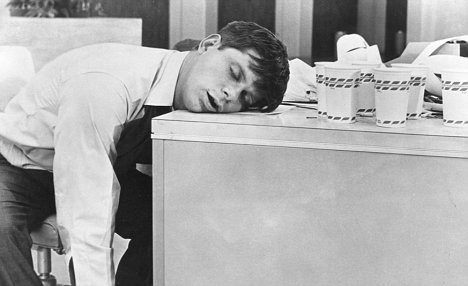 BERKELEY — If you see a student dozing in the library or a co-worker catching 40 winks in her cubicle, don’t roll your eyes. New research from the University of California, Berkeley, shows that an hour’s nap can dramatically boost and restore your brain power. Indeed, the findings suggest that a biphasic sleep schedule not only refreshes the mind, but can make you smarter.
Conversely, the more hours we spend awake, the more sluggish our minds become, according to the findings. The results support previous data from the same research team that pulling an all-nighter — a common practice at college during midterms and finals — decreases the ability to cram in new facts by nearly 40 percent, due to a shutdown of brain regions during sleep deprivation.
“Sleep not only rights the wrong of prolonged wakefulness but, at a neurocognitive level, it moves you beyond where you were before you took a nap,” said Matthew Walker, an assistant professor of psychology at UC Berkeley and the lead investigator of these studies.
In the recent UC Berkeley sleep study, 39 healthy young adults were divided into two groups — nap and no-nap. At noon, all the participants were subjected to a rigorous learning task intended to tax the hippocampus, a region of the brain that helps store fact-based memories. Both groups performed at comparable levels.
At 2 p.m., the nap group took a 90-minute siesta while the no-nap group stayed awake. Later that day, at 6 p.m., participants performed a new round of learning exercises. Those who remained awake throughout the day became worse at learning. In contrast, those who napped did markedly better and actually improved in their capacity to learn.
Matthew Walker, assistant psychology professor, has found that a nap clears the brain to absorb new information.
These findings reinforce the researchers’ hypothesis that sleep is needed to clear the brain’s shor
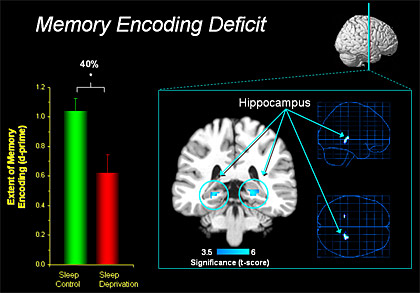
- Students who napped (green column) did markedly better in memorizing tests than their no-nap counterparts. (Courtesy of Matthew Walker)

t-term memory storage and make room for new information, said Walker, who presented his preliminary findings on Sunday, Feb. 21, at the annual meeting of the American Association of the Advancement of Science (AAAS) in San Diego, Calif.
Since 2007, Walker and other sleep researchers have established that fact-based memories are temporarily stored in the hippocampus before being sent to the brain’s prefrontal cortex, which may have more storage space.
“It’s as though the e-mail inbox in your hippocampus is full and, until you sleep and clear out those fact e-mails, you’re not going to receive any more mail. It’s just going to bounce until you sleep and move it into another folder,” Walker said.
In the late st study, Walker and his team have broken new ground in discovering that this memory-refreshing process occurs when nappers are engaged in a specific stage of sleep. Electroencephalogram tests, which measure electrical activity in the brain, indicated that this refreshing of memory capacity is related to Stage 2 non-REM sleep, which takes place between deep sleep (non-REM) and the dream state known as Rapid Eye Movement (REM). Previously, the purpose of this stage was unclear, but the new results offer evidence as to why humans spend at least half their sleeping hours in Stage 2, non-REM, Walker said.
“I can’t imagine Mother Nature would have us spend 50 percent of the night going from one sleep stage to another for no reason,” Walker said. “Sleep is sophisticated. It acts locally to give us what we need.”
Walker and his team will go on to investigate whether the reduction of sleep experienced by people as they get older is related to the documented decrease in our ability to learn as we age. Finding that link may be helpful in understanding such neurodegenerative conditions as Alzheimer’s disease, Walker said.
In addition to Walker, co-investigators of these new findings are Bryce A. Mander and psychology undergraduate Sangeetha Santhanam.
Related articles
- Be Active, Sleep Better! Aerobic Exercise Helps Beat Insomnia (peterhbrown.wordpress.com)
- Do Big People Need “Blankies” Too ? (peterhbrown.wordpress.com)

More than Words: The Importance of Physical Touch
 Psychologists have long studied the grunts and winks of nonverbal communication, the vocal tones and facial expressions that carry emotion. A warm tone of voice, a hostile stare — both have the same meaning in Terre Haute or Timbuktu, and are among dozens of signals that form a universal human vocabulary.
But in recent years some researchers have begun to focus on a different, often more subtle kind of wordless communication: physical contact. Momentary touches, they say — whether an exuberant high five, a warm hand on the shoulder, or a creepy touch to the arm — can communicate an even wider range of emotion than gestures or expressions, and sometimes do so more quickly and accurately than words.
 “It is the first language we learn,” said Dacher Keltner, a professor of psychology at the University of California, Berkeley, and the author of “Born to Be Good: The Science of a Meaningful Life” (Norton, 2009), and remains, he said, “our richest means of emotional expression” throughout life.
The evidence that such messages can lead to clear, almost immediate changes in how people think and behave is accumulating fast. Students who received a supportive touch on the back or arm from a teacher were nearly twice as likely to volunteer in class as those who did not, studies have found. A sympathetic touch from a doctor leaves people with the impression that the visit lasted twice as long, compared with estimates from people who were untouched. Research by Tiffany Field of the Touch Research Institute in Miami has found that a massage from a loved one can not only ease pain but also soothe depression and strengthen a relationship.
In a series of experiments led by Matthew Hertenstein, a psychologist at DePauw University in Indiana, volunteers tried to communicate a list of emotions by touching a blindfolded stranger. The participants were able to communicate eight distinct emotions, from gratitude to disgust to love, some with about 70 percent accuracy.
“We used to think that touch only served to intensify communicated emotions,” Dr. Hertenstein said. Now it turns out to be “a much more differentiated signaling system than we had imagined.”
To see whether a rich vocabulary of supportive touch is in fact related to performance, scientists at Berkeley recently analyzed interactions in one of the most physically expressive arenas on earth: professional basketball. Michael W. Kraus led a research team that coded every bump, hug and high five in a single game played by each team in the National Basketball Association early last season.
In a paper due out this year in the journal Emotion, Mr. Kraus and his co-authors, Cassy Huang and Dr. Keltner, report that with a few exceptions, good teams tended to be touchier than bad ones. The most touch-bonded teams were the Boston Celtics and the Los Angeles Lakers, currently two of the league’s top teams; at the bottom were the mediocre Sacramento Kings and Charlotte Bobcats.
The same was true, more or less, for players. The touchiest player was Kevin Garnett, the Celtics’ star big man, followed by star forwards Chris Bosh of the Toronto Raptors and Carlos Boozer of the Utah Jazz. “Within 600 milliseconds of shooting a free throw, Garnett has reached out and touched four guys,” Dr. Keltner said.
To correct for the possibility that the better teams touch more often simply because they are winning, the researchers rated performance based not on points or victories but on a sophisticated measure of how efficiently players and teams managed the ball — their ratio of assists to giveaways, for example. And even after the high expectations surrounding the more talented teams were taken into account, the correlation persisted. Players who made contact with teammates most consistently and longest tended to rate highest on measures of performance, and the teams with those players seemed to get the most out of their talent.
The study fell short of showing that touch caused the better performance, Dr. Kraus acknowledged. “We still have to test this in a controlled lab environment,” he said.
If a high five or an equivalent can in fact enhance performance, on the field or in the office, that may be because it reduces stress. A warm touch seems to set off the release of oxytocin, a hormone that helps create a sensation of trust, and to reduce levels of the stress hormone cortisol.
In the brain, prefrontal areas, which help regulate emotion, can relax, freeing them for another of their primary purposes: problem solving. In effect, the body interprets a supportive touch as “I’ll share the load.”
“We think that humans build relationships precisely for this reason, to distribute problem solving across brains,” said James A. Coan, a a psychologist at the University of Virginia. “We are wired to literally share the processing load, and this is the signal we’re getting when we receive support through touch.”
The same is certainly true of partnerships, and especially the romantic kind, psychologists say. In a recent experiment, researchers led by Christopher Oveis of Harvard conducted five-minute interviews with 69 couples, prompting each pair to discuss difficult periods in their relationship.
The investigators scored the frequency and length of touching that each couple, seated side by side, engaged in. In an interview, Dr. Oveis said that the results were preliminary.
“But it looks so far like the couples who touch more are reporting more satisfaction in the relationship,” he said. Again, it’s not clear which came first, the touching or the satisfaction. But in romantic relationships, one has been known to lead to the other. Or at least, so the anecdotal evidence suggests.
It Takes HOW Long to Form a Habit?: Research Shows a Curved Relationship Between Practice and Automaticity.
Say you want to create a new habit, whether it’s taking more exercise, eating more healthily or writing a blog post every day, how often does it need to be performed before it no longer requires Herculean self control?
Clearly it’s going to depend on the type of habit you’re trying to form and how single-minded you are in pursuing your goal. But are there any general guidelines for how long it takes before behaviours become automatic?
Ask Google and you’ll get a figure of somewhere between 21 and 28 days. In fact there’s no solid evidence for this number at all. The 21 day myth may well come from a book published in 1960 by a plastic surgeon. Dr Maxwell Maltz noticed that amputees took, on average, 21 days to adjust to the loss of a limb and he argued that people take 21 days to adjust to any major life changes.
Unless you’re in the habit of sawing off your own arm, this is not particularly relevant.
Doing without thinking
Now, however, there is some psychological research on this question in a paper recently published in the European Journal of Social Psychology. Phillippa Lally and colleagues from University College London recruited 96 people who were interested in forming a new habit such as eating a piece of fruit with lunch or doing a 15 minute run each day Lally et al. (2009). Participants were then asked daily how automatic their chosen behaviours felt. These questions included things like whether the behaviour was ‘hard not to do’ and could be done ‘without thinking’.
When the researchers examined the different habits, many of the participants showed a curved relationship between practice and automaticity of the form depicted below (solid line). On average a plateau in automaticity was reached after 66 days. In other words it had become as much of a habit as it was ever going to become.

This graph shows that early practice was rewarded with greater increases in automaticity and gains tailed off as participants reached their maximum automaticity for that behaviour.
Although the average was 66 days, there was marked variation in how long habits took to form, anywhere from 18 days up to 254 days in the habits examined in this study. As you’d imagine, drinking a daily glass of water became automatic very quickly but doing 50 sit-ups before breakfast required more dedication (above, dotted lines). The researchers also noted that:
- Missing a single day did not reduce the chance of forming a habit.
- A sub-group took much longer than the others to form their habits, perhaps suggesting some people are ‘habit-resistant’.
- Other types of habits may well take much longer.
No small change
What this study reveals is that when we want to develop a relatively simple habit like eating a piece of fruit each day or taking a 10 minute walk, it could take us over two months of daily repetitions before the behaviour becomes a habit. And, while this research suggests that skipping single days isn’t detrimental in the long-term, it’s those early repetitions that give us the greatest boost in automaticity.
Unfortunately it seems there’s no such thing as small change: the much-repeated 21 days to form a habit is a considerable underestimation unless your only goal in life is drinking glasses of water.
Faking Orgasm: Women AND Men do it! WHY?
Chances are that if you’ve been in a relationship, and you’re a woman, you’ve probably faked an orgasm. But did you know that men fake them too?
The research that brings us this important sexual discovery was conducted at the University of Kansas on 180 male and 101 female college students. The students completed an anonymous survey about their sexual habits.
Not surprisingly, some of the college students were still virgins — 15 percent of men and 32 percent of women surveyed had not yet had intercourse.
Of the students who had had sex, nearly 30 percent of men reported faking an orgasm, compared to 67 percent of women. Some of the participants admitted they also faked orgasm not only during regular sex, but during oral sex, manual stimulation and phone sex as well. The 67 percent number is comparable to past research, that has reported a similar percentage among women.
So why do we do it? Why fake an orgasm during intimacy, a time when you’d think we be putting our social masks aside
The researchers asked these college students that question, and the most frequently reported reasons were:
* Orgasm was unlikely. — Sometimes it’s just not going to happen, and although this seems to be a more common issue amongst women, it can also happen with men. Especially if alcohol is involved.
* They wanted sex to end. — Closely linked to an orgasm is unlikely, sometimes a partner will want to keep having sex until their partner finishes. A fake orgasm brings sex to an end quickly.
* They wanted to avoid negative consequences. — Most people don’t want to hurt another person’s feelings, and that’s no more the case than with our romantic partner. A fake orgasm avoids the negative consequences of having another person feel badly that they didn’t perform “well enough” to bring the other person to climax.
* They wanted to please their partner. — Faking an orgasm shows that you care about your partner’s feelings of performance and self-esteem. Or so said the people who filled out the survey.
Why would an orgasm be unlikely or why would one want sex to end more quickly? Well, sometimes we’re not always in the same place sexually as our partner. So we agree to sex because we feel guilty or to put an end to the nagging. Or perhaps we agreed to have sex to help relieve stress, only to find it didn’t quite help in the way we had hoped. An orgasm is unlikely if your partner is stressed, not turned on, feels tired, or is put off by you or the relationship in some way. A faked orgasm during such times helps end the sex more quickly, without making your partner feel bad.
The researchers found that the responses suggested a sexual “script” that most of us follow, or would like to follow. Boy meets girl, girl takes boy to bed, girl has an orgasm before the boy. And the boy is response for the girl’s orgasm (although not as much, vice-a-versa). Faking an orgasm is a predictable response to this set of expectations, to ensure the “script” goes as smoothly as possible.
Reference:
Muehlenhard CL. & Shippee SK. (2009). Men’s and Women’s Reports of Pretending Orgasm. J Sex Res, 5, 1-16.
Related articles by Zemanta
- Cerebral Orgasm Dr. Shriniwas Kashalikar (slideshare.net)
- Avoid These 7 Mistakes In Bed (slideshare.net)
![Reblog this post [with Zemanta]](https://i0.wp.com/img.zemanta.com/reblog_e.png)
Be Grateful and Be Happy!
The best way to achieve happiness according to several new studies conducted by Todd Kashdan, associate professor of psychology at George Mason University, is to be grateful.
Gratitude, the emotion of thankfulness and joy in response to receiving a gift, is one of the essential ingredients for living a good life, Kashdan says. Kashdan’s most recent paper, which was published online in March at the Journal of Personality, reveals that when it comes to achieving well-being, gender plays a role. He found that men are much less likely to feel and express gratitude than women.
 “Previous studies on gratitude have suggested that there might be a difference in gender, and so we wanted to explore this further – and find out why. Even if it is a small effect, it could make a huge difference in the long run,” says Kashdan.
In one study, Kashdan interviewed college-aged students and older adults, asking them to describe and evaluate a recent episode in which they received a gift. He found that women compared with men reported feeling less burden and obligation and greater levels of gratitude when presented with gifts. In addition, older men reported greater negative emotions when the gift giver was another man.
“The way that we get socialized as children affects what we do with our emotions as adults,” says Kashdan. “Because men are generally taught to control and conceal their softer emotions, this may be limiting their well-being.”
As director of the Laboratory for the Study of Social Anxiety, Character Strengths, and Related Phenomena at Mason, Kashdan is interested in the assessment and cultivation of well-being, curiosity, gratitude and meaning and purpose in life. He has been active in the positive psychology movement since 2000, when he taught one of the first college courses on the science of happiness.
Kashdan says that if he had to name three elements that are essential for creating happiness and meaning in life it would be meaningful relationships, gratitude, and living in the present moment with an attitude of openness and curiosity. His book “Curious?,” which outlines ways people can enhance and maintain the various shades of well-being, was released in April 2009 with HarperCollins.
Source: Tara Laskowski
George Mason University
About Peter
Peter Brown BHMS (Hons) MPsychClin MAPS
I’m a Clinical Psychologist and have a private practice and consultancy in Brisbane Australia. I have 24 years experience in child, adult and family clinical psychology. I have a wonderful wife and three kids.
I am co-founder of Christian Wholeness Counselling Services.
I like researching issues of the brain & mind, reading and seeking out new books and resources for myself and my clients. I thought that others might be interested in some of what I have found also, hence this blog…

Subscribe to My Blog Posts & Updates
-

Blog Surfer
Alphainventions


Recent Comments


 Peter H Brown Clinical Psychologist