Helicopter Parenting? Why There Are No Medals In The Parenting Olympics
 The following is re-posted from Psychcentral’s Dr John M Grohol, and poses some interesting questions about some trends towards over-parenting or “Helicopter Parenting” and it’s possible impacts on our kids. While there are many children who come from situations of parental neglect and laxity, there are also concerns regarding over protection. See what you think about what he has to say…
Let Your Children Be Children
Everyday, the same scene plays itself out across American neighborhoods across the United States. Mothers pull up in their Suburbans and Lexus SUVs at the entrance to their housing development. Even though the families live in perfectly safe, middle-class (or better) neighborhoods, parents feel the need to chauffeur their children the few blocks from the bus stop to home. Why?
This behavior may be understandable if the child is 5 or 6. But at 8 or 10, this behavior is ludicrous and symptomatic of a dangerous infection that has spread throughout this country in the latest generation of parents.
If not stopped, we may end up raising a whole generation or two of children who have little effective life coping skills and no connection or understanding to the world around them.
If you’re around 30 or older, think back to your own childhood. How much time was scheduled by your parents, and how much free time did you have on your own, to do with as you please? You may be surprised at the contrast between the scripted lives you as a parent plan for your children versus your own unscripted, imagination-driven childhood.
Here’s another scene from modern parenting. A child holds their 8th birthday party at a local birthday party place. All the parents not only arrive to drop off their child to attend the party, but also stay to supervise the child during the entire time they are at the party.
This isn’t just one or two worried parents — this appears to be very much the norm in many towns throughout middle-class America now. When it’s time to eat the cake, the birthday song is sung, the cake is cut, and then all the kids sit down at long rows of tables and begin eating. Their parents stand, like a prison lineup, along the outside walls of the room, keeping a close eye on their child.
At the first sign of a child’s conflict, parents are quick to intervene nowadays. “I just want everyone to play nicely,” they may explain. But they’re depriving their child of the opportunity to learn invaluable problem-solving skills. Especially if a child has no siblings, how else are they going to learn such skills except through trial-and-error interaction with their peers?

Click image to read reviews
There are many rationales for these kinds of parenting behaviors. But if we look at some of the most common ones, they all don’t stand up to tests of data, reasoning or logic.
One rationale is safety. “I’ll do anything to protect my child!” Okay, then why are you driving them home from the bus stop a few blocks away? Because statistics show that your child (age 15 years or younger) is 5 to 7 times more likely to die in your car than they are to be abducted by a stranger. And put into perspective, both are highly unlikely occurrences to begin with. With approximately 78 million children in the U.S., only 1,638 children died in car accidents in 2008, compared with only 200 who were abducted by a stranger.
Still another excuse for this behavior is a sense that there’s no reason not to help out our children or placate them with this thing or that. Why not buy them that toy while we’re out shopping for some new clothes? Why not pick them up at the entrance to our housing development?
Because it teaches our children that every outing is a chance for a reward. So much like a mouse in a cage pressing a button to receive a pellet of food, our children can inadvertently learn that any type of outing results in a toy and all of life is just another opportunity for a reward. When a reward isn’t granted, it’s an excuse to act out or punish those who grant the rewards.
Another rationale is wanting to provide our children with all the benefits we didn’t have. If our parents seemed uninterested or didn’t spend as much time with us as we may have wished, we’re going to ensure we’re there every minute for our children.
But somehow this has become twisted to trying to smooth over every life bump our child experiences, so that they experience virtually none at all. By the time they go off to college, they have had only this womb-like protected life that little prepares them for the realities of life — people who treat us badly, failure at something we want to be good at, rejection by others, and honest hardship.
Understandably, there may be times where a parent has good reason to need to pick up their child at their bus-stop, or attend a birthday party with them. But these should be exceptions, not the rule.
Click image to read reviews
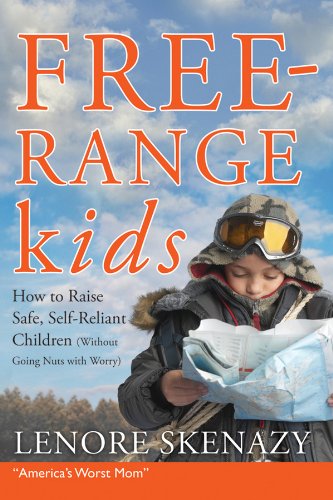
If you see yourself in this entry, it’s not too late. I highly recommend one of the following books, either Richard Weissbourd’s The Parents We Mean To Be: How Well-Intentioned Adults Undermine Children’s Moral and Emotional Development or Free Range Kids by Lenore Skenazy. These books talk about the importance of letting children be children, exploring their imagination on their own, on their own unscripted and unscheduled time. The research we have on child development suggests this results not only in happier children, but children who grow up to be more well-adjusted adults.
There is no “right way” to parent (contrary to what the hundreds of parenting books suggest). The right way is to find the way that works for you and your partner, while respecting the needs of your child. Those needs include the need to be connected with nature, to be connected and learn how to interact with other children who aren’t their siblings, with no adults around.
What if your child doesn’t want to play outside or walk from the bus stop? Well, they often don’t want to learn arithmetic or do their chores, and yet we still find a way to have them understand the value of each. And if you’re feeling pressure from other moms, well, now’s the time to take a stand for what you believe in and what the research shows. Your child will thank you in the end.
Children — like adults — learn by doing, as much as they learn through formal teaching. If we take those informal learning opportunities away from our children, we ultimately hurt them while ironically trying to help them. We hurt their ability to learn the way they were intrinsically built to learn — through natural experiences, through interactive experiences with their peers, and through unscripted, unstructured play time.
If you want to help your child today, give them time to be a child.

Related articles
- Look Both Ways: Keeping Your Kids Safe On Facebook (peterhbrown.wordpress.com)
- Why do so many parents put their kids’ lives online? Study reveals disturbing statistics (techvibes.com)

Under Pressure: Why We “Choke” At The Critical Moment
 A star golfer misses a critical putt; a brilliant student fails to ace a test; a savvy salesperson blows a key presentation. Each of these people has suffered the same bump in mental processing: They have just choked under pressure.
Credit: and Source: ScienceDaily
It’s tempting to dismiss such failures as “just nerves.” But to University of Chicago psychologist Sian Beilock, they are preventable results of information logjams in the brain. By studying how the brain works when we are doing our best — and when we choke — Beilock has formulated practical ideas about how to overcome performance lapses at critical moments.
“Choking is suboptimal performance, not just poor performance. It’s a performance that is inferior to what you can do and have done in the past and occurs when you feel pressure to get everything right,” said Beilock, an associate professor in psychology.
Preventing choking in sports Some of the most spectacular and memorable moments of choking occur in sports when the whole world is watching. Many remember golfer Greg Norman’s choke at the 1996 U.S. Masters. Norman had played brilliantly for the first three days of the tournament, taking a huge lead. But on the final day, his performance took a dive, and he ended the Masters five shots out of first place.
Choking in such cases happens when the polished programs executed by the brains of extremely accomplished athletes go awry. In “Choke,” Beilock recounts famous examples of these malfunctions in the context of brain science to tell the story of why people choke and what can be done to alleviate it.
Thinking too much about what you are doing, because you are worried about losing the lead (as in Norman’s case) or worrying about failing in general, can lead to “paralysis by analysis.” In a nutshell, paralysis by analysis occurs when people try to control every aspect of what they are doing in an attempt to ensure success.
Unfortunately, this increased control can backfire, disrupting what was once a fluid, flawless performance.
“My research team and I have found that highly skilled golfers are more likely to hole a simple 3-foot putt when we give them the tools to stop analyzing their shot, to stop thinking,” Beilock said. “Highly practiced putts run better when you don’t try to control every aspect of performance.” Even a simple trick of singing helps prevent portions of the brain that might interfere with performance from taking over, Beilock’s research shows.
Preventing choking on tests and in business The brain also can work to sabotage performance in ways other than paralysis by analysis. For instance, pressure-filled situations can deplete a part of the brain’s processing power known as working memory, which is critical to many everyday activities.
Beilock’s work has shown the importance of working memory in helping people perform their best, in academics and in business. Working memory is lodged in the prefrontal cortex and is a sort of mental scratch pad that is temporary storage for information relevant to the task at hand, whether that task is doing a math problem at the board or responding to tough, on-the-spot questions from a client. Talented people often have the most working memory, but when worries creep up, the working memory they normally use to succeed becomes overburdened. People lose the brain power necessary to excel.
One example is the phenomenon of “stereotype threat.” This is when otherwise talented people don’t perform up to their abilities because they are worried about confirming popular cultural myths that contend, for instance, that boys and girls naturally perform differently in math or that a person’s race determines his or her test performance.
Beilock’s research is the basis of her new book, “Choke: What the Secrets of the Brain Reveal About Getting it Right When You Have To,” published Sept. 21 by Simon and Schuster, Free Press.
In Choke, Beilock describes research demonstrating that high-achieving people underperform when they are worried about confirming a stereotype about the racial group or gender to which they belong. These worries deplete the working memory necessary for success. The perceptions take hold early in schooling and can be either reinforced or abolished by powerful role models.
In one study, researchers gave standardized tests to black and white students, both before and after President Obama was elected. Black test takers performed worse than white test takers before the election. Immediately after Obama’s election, however, blacks’ performance improved so much that their scores were nearly equal with whites. When black students can overcome the worries brought on by stereotypes, because they see someone like President Obama who directly counters myths about racial variation in intelligence, their performance improves.
Beilock and her colleagues also have shown that when first-grade girls believe that boys are better than girls at math, they perform more poorly on math tests. One big source of this belief? The girls’ female teachers. It turns out that elementary school teachers are often highly anxious about their own math abilities, and this anxiety is modeled from teacher to student. When the teachers serve as positive role models in math, their male and female students perform equally well.

click image to read reviews
Meditation and practice can help Even when a student is not a member of a stereotyped group, tests can be challenging for the brightest people, who can clutch if anxiety taps out their mental resources. In that instance, relaxation techniques can help.
In tests in her lab, Beilock and her research team gave people with no meditation experience 10 minutes of meditation training before they took a high-stakes test. Students with meditation preparation scored 87, or B+, versus the 82 or B- score of those without meditation training. This difference in performance occurred despite the fact that all students were of equal ability.
Stress can undermine performance in the world of business, where competition for sales, giving high-stakes presentations or even meeting your boss in the elevator are occasions when choking can squander opportunities.
Practice helps people navigate through these tosses on life’s ocean. But, more importantly, practicing under stress — even a moderate amount — helps a person feel comfortable when they find themselves standing in the line of fire, Beilock said. The experience of having dealt with stress makes those situations seem like old hat. The goal is to close the gap between practice and performance.
A person also can overcome anxiety by thinking about what to say, not what not to say, said Beilock, who added that staying positive is always a good idea.
“Think about the journey, not the outcome,” Beilock advised. “Remind yourself that you have the background to succeed and that you are in control of the situation. This can be the confidence boost you need to ace your pitch or to succeed in other ways when facing life’s challenges.”
Related articles by Zemanta
- Feeling Stuck? 10 Important Tips For Changing Your Life (peterhbrown.wordpress.com)
- The Type A B C’s Of How Your Personality Effects Your Health (peterhbrown.wordpress.com)
- What Happens Under Pressure (online.wsj.com)
People Vs Possessions: What Matters The Most?
 Credit: Sciencedaily.com
In the first study of its kind, researchers have found compelling evidence that our best and worst experiences in life are likely to involve not individual accomplishments, but interaction with other people and the fulfillment of an urge for social connection.
The findings, which run contrary to implications of previous research, are reported in “What Makes Us Feel the Best Also Makes Us Feel the Worst: The Emotional Impact of Independent and Interdependent Experiences.” The study reports on research conducted at the University at Buffalo and will appear in the forthcoming print issue of Self and Identity.
Co-author Shira Gabriel, PhD, associate professor of psychology at UB, says, “Most of us spend much of our time and effort focused on individual achievements such as work, hobbies and schooling.
“However this research suggests that the events that end up being most important in our lives, the events that bring us the most happiness and also carry the potential for the most pain, are social events — moments of connecting to others and feeling their connections to us.”
Gabriel says that much research in social psychology has explicitly or implicitly implied that events experienced independent of other individuals are central to explaining our most intense emotional experiences.
“We found, however, “she says, “that it was not independent events or individual achievements like winning awards or completing tasks that affected participants the most, but the moments when close relationships began or ended; when people fell in love or found a new friend; when a loved one died or broke their hearts. In short, it was the moments of connecting to others that that touched peoples’ lives the most.”
The researchers included principal author Lisa Jaremka, a doctoral student in psychology at the University of California, Santa Barbara, and Mauricio Cavallo, PhD, assistant professor of psychology at the University of Oklahoma, Norman, both graduates of UB.
A total of 376 subjects participated in the four studies that formed the basis of the researchers’ conclusions.
Study 1 involved college students who were asked to describe the most positive and negative emotional experiences of their lives. Overwhelmingly, and without regard for the sex of participants, they were much more likely to describe social events as the most positive and negative thing they had ever experienced (as compared to independent events).

Click image to read reviews
Study 2, replicated and extended Study 1, with similar results, and focused on middle-aged participants who were asked to report on a recent intense emotional experience.
Study 3 provided evidence that the strong emotional impact of interdependent (i.e., social) events reported in the first two studies was not due to the fact that social events were more salient than independent events.
Study 4 demonstrated that when thinking about both social and independent events, participants rate the social events as far more impactful than independent events. Study 4 also demonstrated that social events gain their emotional punch from our need to belong.
Gabriel’s research and expertise focuses on the social nature of the self, including social aspects of self-construal, the social functions of the self, the need to belong and gender differences in strategies for connecting to others.
Related articles by Zemanta
- Why Do Some Friends Disappear When The Going Gets Tough? (peterhbrown.wordpress.com)
- What Were You Thinking? The Causes Of Online Disinhibition (peterhbrown.wordpress.com)
Helicopter Parenting? New Book Advocates That Firmer But Fair Is The Way To Go
There are times when parents have to stay tough and Nigel Latta explains how best to do it
A COMMON question among parents of young children is: ‘‘ When does raising children start to get better?’’ The answer could be that it doesn’t get any better, it just gets different.
MADE TO ORDER: Keeping a firm hand but not rule by fear is the recommended way to go.It’s a theme Nigel Latta explores in his new book, Politically Incorrect Parenting. Latta will soon present a show of the same name on Channel 9.
While the issues he explores are hardly new, this is not your average parenting book. It doesn’t trade on a parent’s fear but on the reassurance that there are ways you can survive, keep a semblance of sanity and still enjoy the company of your little home-grown terrorist.
It’s battlefield wisdom from a therapist who’s seen more than most of us could handle and has some commonsense tools to help ordinary parents who need a hand.
Some of the chapter headings might give you a clue to his approach.
The preface ‘‘Never Mind the Kids . . . Save Yourself’’ is a pretty good hint, but there are also gems such as ‘‘How to Make Time Out and Sticker Charts Actually Work’’. Then there’s ‘‘Why You Should Never Negotiate with a Terrorist’’.
‘‘I just think parenting is such bloody hard work and the last thing you want to do is read a book on raising your children that’s boring and just makes you feel worse,’’ Latta says.
‘‘You want to read something that feels like a bit of time off.
‘‘What I try to do in the TV show and the book is to give people useful things that they can actually use to make things better but also just reassure people that life is not that complicated.
‘‘We all worry about damaging our children if we say the wrong thing, or send them to the wrong school, or don’t read them enough stories. It’s not about any of that stuff because it’s not stuff that matters.’’
Latta fears the modern world has done away with a lot of common sense. ‘‘I understand common sense as wise thinking,’’ he says. ‘‘If people have a problem with their children most will Google it and they come up with 26 million different opinions . . . and a lot of scare tactics.
‘‘Scaring people is a way to sell books because it works, but I just think it sucks. You don’t need to make parents any more afraid because as soon as you have children you start to worry and it never stops.’’

Click Image to read reviews
After helping thousands of people crawl out of what they feared were bottomless pits, Latta has found a common theme running through the vast majority of cases.
‘‘By far the biggest issue is that people just need to toughen up and that invariably gets it sorted,’’ he says.
‘‘People come to me and say they have a four-year-old they just can’t control and I’m wondering if he’s a mutant six foot high fouryear-old.
‘‘And they become paralysed with all this modern doubt stuff that makes them wonder if they’re doing the right thing when really it’s pretty straightforward.’’
For example, what to do with a fussy eater.
Hungry children eat, Latta says, it’s as simple as that.
He has a key message for parents who are doing it tough. ‘‘Get tough on the behaviours you don’t like and praise them for stuff you do.
‘‘Do that and it fixes anything – a few simple things and it’ll all be fine.’’
Source: Tony Bartlett: The Courier Mail news.com.au
Related articles by Zemanta
- Learning To Love: The Importance Of Empathy & How To Teach It To Your Kids (peterhbrown.wordpress.com)
- Spank Now, Pay Later? Children Spanked At 3yrs More Likely To Be Aggressive At 5 (peterhbrown.wordpress.com)
- TV For Toddlers: “The Wiggles” Or The Wobbles? (peterhbrown.wordpress.com)
![Reblog this post [with Zemanta]](https://i0.wp.com/img.zemanta.com/reblog_e.png)
A Spoonful Of Sugar DOES Makes The Medicine Go Down! Sweet Solutions Reduce Kids Experience Of Pain From Needles
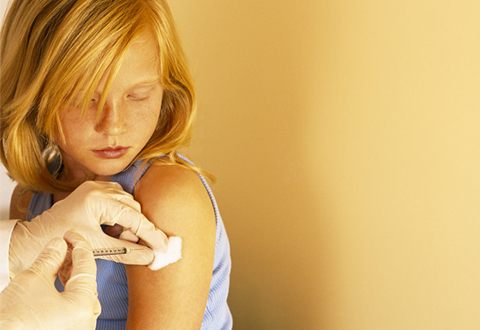 Infants who receive sweet solutions before being immunised experience less pain and are more comfortable, reveals research published ahead of print in the Archives of Disease in Childhood.
Healthcare professionals should consider giving infants aged 1–12 months a sweet solution of sucrose or glucose before immunising a child, the international team of researchers recommended, because of the child’s improved reaction to injections.
Existing research shows the effectiveness of giving newborn infants and those beyond the newborn period, a small amount (e.g. a few drops to about half a teaspoon) of sucrose and glucose as analgesics during minor painful procedures.
Little is known, however, about the effect of such solutions on pain, so a team of researchers from Toronto in Canada, Melbourne in Australia and Sao Paulo in Brazil, funded by a Canadian Institutes of Health Research Knowledge Synthesis grant, collected the findings from 14 relevant trials involving 1,674 injections given to children aged 1–12 months.
They found that giving a child a small amount of sweet solution, compared to water or no treatment moderately decreased crying in the child during or following immunisation in 13 of the 14 studies (92.9%).
The authors conclude that infants aged 1–12 months given sucrose or glucose before immunisation had cried less often and for less time.
The amount of glucose or sucrose given made a difference and the researchers found that infants receiving 30% glucose in some trials were almost half as likely to cry following immunisation.
Click Image to read reviews
The researchers could not identify the ideal dose of sucrose or glucose because of the variety of volumes and concentrations used in the various trials.
Analgesic effects of sweet solutions given to older infants were more moderate than those in newborn infants.
They conclude: “Healthcare professionals responsible for administering immunisations should consider using sucrose or glucose during painful procedures.
“This information is important for healthcare professionals working with infants in both inpatient and out-patient settings, as sweet solutions are readily available, have a very short onset of time to analgesia, are inexpensive and are easy to administer.”
Source: Eurekalert
Related articles by Zemanta
- TV For Toddlers: “The Wiggles” Or The Wobbles? (peterhbrown.wordpress.com)
- Sticks & Stones AND Words Can Hurt You: How Words Can Cause Physical Pain (peterhbrown.wordpress.com)
- Cool School Where Peace Rules: FREE Downloadable PC Video Game Teaches Kids Conflict Resolution Skills (peterhbrown.wordpress.com)
Regular Exercise Is Important For The Health Of Those Who Have Schizophrenia
 Regular exercise can play an important a role in improving the physical and mental wellbeing of individuals with schizophrenia, according to a review published in The Cochrane Library. Following a systematic review of the most up-to-date research on exercise in schizophrenia, researchers concluded that the current guidelines for exercise should be followed by people with schizophrenia just as they should by the general population.
“Current guidelines for exercise appear to be just as acceptable to individuals with schizophrenia in terms of potential physical and mental health benefit,” says lead researcher Guy Faulkner of the Faculty of Physical Education and Health at the University of Toronto, Canada. “So thirty minutes of moderate physical activity on most or all days of the week is a good goal to aim for. Start slowly and build up.”
Schizophrenia is a serious mental illness affecting four in every 1,000 people. It is already known that exercise can improve mental health, but so far there has been only limited evidence of effects in schizophrenia. The new review focused on three recent small studies that compared the effects of 12–16 week exercise programmes, including components such as jogging, walking and strength training, to standard care or yoga.
The researchers found that exercise programmes improved mental state for measures including anxiety and depression, particularly when compared to standard care. Changes in physical health outcomes were seen but they were not significant overall. However, the researchers suggest this may be due to the short timescale of the trials.

Click image to read reviews
Two previous reviews have found exercise therapy to be beneficial in schizophrenia, but called for more rigorous research. “This new review suggests that such calls are starting to be addressed,” says Faulkner. “But we still need more research that will help us learn how we can get individuals with schizophrenia engaged in exercise programmes in the first place, and how such programmes can be developed and implemented within mental health services. That’s one of the biggest challenges for this type of intervention.”
Source: Eurekalert
Related articles by Zemanta
- Emotional Intelligence: Learning To Roll With The Punches (peterhbrown.wordpress.com)
- Should I Tell Or Not? Mood Disorders & The Workplace (peterhbrown.wordpress.com)
- Blood test for schizophrenia could be ready this year (scienceblog.com)
Cool School Where Peace Rules: FREE Downloadable PC Video Game Teaches Kids Conflict Resolution Skills
Human development scientists and computer game developers designed a video game that teaches kids how to resolve conflicts peacefully amongst themselves. Inanimate objects, such as pencils and erasers, come to life to lead players through a series of common scenarios in which arguments are about to occur. The player is prompted for the non-violent solution and is rewarded for choosing correctly
Amid growing concern surrounding the effects violent video games have on children, a new computer game could be the alternative parents have been waiting for.
You can download it HERE for free
Kids who play together also argue together. Fights over games, toys and friendships are common, but when arguments heat up, it’s time to solve them before things get out of hand. A new computer game teaches kids how to solve playground and classroom quarrels that kids face every day in a positive way — without fists and fights.
“It helps them resolve conflicts by giving them a chance to think about what happens in the course of an actual conflict episode,” said Melanie Killen, Ph.D., a human development expert at the University of Maryland in College Park, Md.
The game, called “Cool School: Where Peace Rules” — designed by a team of human development scientists, teachers, government mediators, computer game developers and animators — helps kids solve school violence and bullying while still having fun.
“You’re learning things, but at the same time it’s having fun with it,” said student Ellen Yaffe.
Animated objects come to life and depict common conflicts. Kids experiment on how to settle each argument. Players have the option of threatening the peer, telling the teacher, forgetting about it or talking things through.
Players are rewarded for choosing positive solutions to resolve conflicts with letters they collect to win.
“What this game is doing is it’s empowering children to make choices and decisions and to see what unfolds based on their own decisions,” Dr. Killen said.
Parents and teachers praise the new game, and kids love it for their own reasons.
“I think they make it very realistic with like the names and how the school looks,” student Jacob Tycko told Ivanhoe.
The best part is the game is totally free. You can download it HERE for free
Source: Sciencedaily
Related articles by Zemanta
- Violent Video Games & Kids: Definitive Study Shows Both Short & Long Term Harmful Effects (peterhbrown.wordpress.com)
- Brain Training Or Just Brain Straining?: The Benefits Of Brain Exercise Software Are Unclear (peterhbrown.wordpress.com)
- And They All Lived Together In a Little Row Boat…Clap! Clap!: How Clapping Games Improve Cognition And Motor Skills In Children (peterhbrown.wordpress.com)
TV For Toddlers: “The Wiggles” Or The Wobbles?
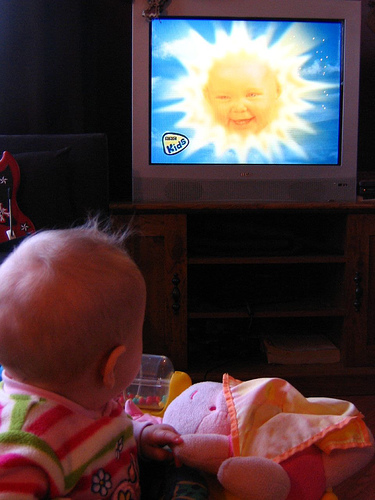 Want kids who are smarter and thinner? Keep them away from the television set as toddlers. A shocking study from child experts at the Université de Montréal, the Sainte-Justine University Hospital Research Center and the University of Michigan, published in the Archives of Pediatrics & Adolescent Medicine, has found that television exposure at age two forecasts negative consequences for kids, ranging from poor school adjustment to unhealthy habits.
“We found every additional hour of TV exposure among toddlers corresponded to a future decrease in classroom engagement and success at math, increased victimization by classmates, have a more sedentary lifestyle, higher consumption of junk food and, ultimately, higher body mass index,” says lead author Dr. Linda S. Pagani, a psychosocial professor at the Université de Montréal and researcher at the Sainte-Justine University Hospital Research Center.
The goal of the study was to determine the impact of TV exposure at age 2 on future academic success, lifestyle choices and general well being among children. “Between the ages of two and four, even incremental exposure to television delayed development,” says Dr. Pagani.
A total of 1,314 kids took part in the investigation, which was part of the Quebec Longitudinal Study of Child Development Main Exposure. Parents were asked to report how much TV their kids watched at 29 months and at 53 months in age. Teachers were asked to evaluate academic, psychosocial and health habits, while body mass index (BMI) was measured at 10 years old.
“Early childhood is a critical period for brain development and formation of behaviour,” warns Dr. Pagani. “High levels of TV consumption during this period can lead to future unhealthy habits. Despite clear recommendations from the American Academy of Pediatrics suggesting less than two hours of TV per day — beyond the age of two — parents show poor factual knowledge and awareness of such existing guidelines.”
According to the investigation, watching too much TV as toddlers later forecasted:
- a seven percent decrease in classroom engagement;
- a six percent decrease in math achievement (with no harmful effects on later reading);
- a 10 percent increase in victimization by classmates (peer rejection, being teased, assaulted or insulted by other students);
- a 13 percent decrease in weekend physical activity;
- a nine percent decrease in general physical activity;
- a none percent higher consumption of soft drinks;
- a 10 percent peak in snacks intake;
- a five percent increase in BMI.
“Although we expected the impact of early TV viewing to disappear after seven and a half years of childhood, the fact that negative outcomes remained is quite daunting,” says Dr. Pagani. “Our findings make a compelling public health argument against excessive TV viewing in early childhood and for parents to heed guidelines on TV exposure from the American Academy of Pediatrics.”

Click Image to read reviews
Since TV exposure encourages a sedentary lifestyle, Dr. Pagani says, television viewing must be curbed for toddlers to avoid the maintenance of passive mental and physical habits in later childhood: “Common sense would have it that TV exposure replaces time that could be spent engaging in other developmentally enriching activities and tasks which foster cognitive, behavioral, and motor development.”
“What’s special about this study is how it confirms suspicions that have been out there and shown by smaller projects on one outcome or another. This study takes a comprehensive approach and considers many parental, pediatric and societal factors simultaneously,” she adds.
This research was funded by the Social Science and Humanities Research Council of Canada.
The article, published in the Archives of Pediatrics & Adolescent Medicine, was authored by Linda S. Pagani, Caroline Fitzpatrick and Tracie A. Barnett of the Université de Montréal and its affiliated Sainte-Justine University Hospital Research Center in Canada in collaboration with Eric Dubow of the University of Michigan in the United States.
Source: Sciencedaily
Related articles by Zemanta
- Violent Video Games & Kids: Definitive Study Shows Both Short & Long Term Harmful Effects (peterhbrown.wordpress.com)
- And They All Lived Together In a Little Row Boat…Clap! Clap!: How Clapping Games Improve Cognition And Motor Skills In Children (peterhbrown.wordpress.com)
- Too Sexy Too Soon! PART I – Should Girls As Young As 9 Be Taken To Get Their Legs Waxed? (peterhbrown.wordpress.com)
Emotional Intelligence: Learning To Roll With The Punches
 It’s a hot-buzz topic that covers everything from improving workplace performance and successfully climbing the corporate ladder to building the happiest of marriages to ending school bullying. But what exactly is Emotional Intelligence (EI)? If we lack it, can we learn it? And how do we know if our EI is high or low? Is it only high if we’re really, really nice?
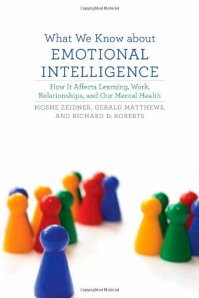
Three scholarly researchers – including University of Cincinnati Psychology Professor Gerry Matthews – delved into the science of EI and published “What We Know About Emotional Intelligence: How it Affects Learning, Work, Relationships, and Our Mental Health.”
Published by MIT Press (2009), the book was recently awarded the American Publishers Award for Professional and Scholarly Excellence – the PROSE Awards – in the biological and life sciences category of biomedicine and neuroscience. The book, co-authored by Matthews, Moshe Zeidner (University of Haifa) and Richard D. Roberts (Center for New Constructs, Educational Testing Service, Princeton, N.J.), was also on display at the UC Libraries’ Authors, Editors and Composers Reception and Program from 3:30-5 p.m., Thursday, April 22, in the Russell C. Myers Alumni Center.
MIT Press promotions describe EI as the “ability to perceive, regulate and communicate emotions – to understand emotions in ourselves and others.” Workplaces want to test for it to find the most EI-talented employees, and consultants are touting training and EI tests to improve productivity. “In the popular writings, EI tends to be defined very broadly and one can’t proceed with scientific research with such a vague and broad definition,” Matthews says.
Matthews’ research interests have explored how stress, mood and coping ability can affect performance on tests, in the workplace and on the highway. He adds that amid the grim economy, even the people who have jobs are feeling high levels of stress in the workplace and are feeling more challenged by workplace demands and concerns about job security. In general terms, those who can roll with the punches – with a shrug and a smile – may have higher Emotional Intelligence.
Click image to read reviews
Then again, “The intimate association of personality and emotion sets a trap for researchers interested in Emotional Intelligence,” writes Matthews. “It might seem that happy, calm states of mind should be seen as the person imbued with high Emotional Intelligence. However, such emotional tendencies may be no more than a consequence of biases in brain functioning or information-processing routines operating without insight or ‘intelligence.’ Some individuals – in part because of their DNA – are simply fortunate in being prone to pleasant moods, so it follows that emotional states do not alone provide an index of Emotional Intelligence,” Matthews states in the book.
In fact, Matthews says he’s skeptical that people who are better at managing stress hold higher Emotional Intelligence, but as the researchers found as they tried to narrow down the science of Emotional Intelligence, more research is needed. For instance, is someone with higher EI in the workplace more productive, or are they just better at self-promotion and forming positive relationships with co-workers? Matthews says he believes EI appears to be very modestly related to workplace performance, and could turn out to be nothing more than a business fad.
He adds the researchers are also skeptical about all of those EI tests, particularly those self-assessments. After all, people could be rating themselves the way they see themselves or the way they would like to be seen, and not like they actually are.
Currently, authors Matthews and Roberts are researching the testing of EI through video scenarios. The situation judgment test involves watching the videos unfold a challenging situation, and then the video comes to a stop and offers different options for resolving the problem. Matthews is building on his earlier research which explored whether negative moods affected good decision making abilities. “Through the video project, the idea is to see if emotionally intelligent people are better able to make rational decisions under stress,” he says.
The researchers are also examining the link between EI and school social and emotional learning programs.
Source:
Dawn Fuller
University of Cincinnati
Related articles by Zemanta
- Learning beyond the classroom (boston.com)
- “The Importance of Emotional Intelligence in Small Business Owners” :The Cross-cultural Connector (translatorpower.wordpress.com)
- Brain Training Or Just Brain Straining?: The Benefits Of Brain Exercise Software Are Unclear (peterhbrown.wordpress.com)
- Winners Are Grinners: Even If There’s Nothing to Win! (peterhbrown.wordpress.com)
“I Saw It Happen”: Children Who Witness Bullying Can Be Traumatized Too
 Students who witness bullying of their peers may suffer more psychologically than the victim or the bullies.
Read The Original Research Paper (PDF)
2002 students ages 12 to 16 were surveyed at public schools in England. The survey asked them whether they’d committed, witnessed, or been the victim of several types of bullying behavior (e.g., kicking, name-calling, threatening, etc.) and whether they had experienced psychological stress symptoms such as anxiety, depression, or hostility.
Why bystanders suffer more than victims of bullying
As reported in the article, previous research shows that children who witness bullying feel guilty, presumably for not doing anything to help the victim.
In addition, they may have felt more stressed by vacillating between doing what they thought they should do (i.e., help the victim) on the one hand, and being afraid of being victimized themselves, on the other. Being in this type of “approach/avoidance” conflict has been shown in numerous studies to create high levels of stress.
The combination of guilt and fear among witnesses that they will experience the same thing may be another reason why they are more affected by bullying than the actual victims.

Click image to read reviews
Uncertainty, especially combined with feelings of fear or guilt, contributes to stress. Stress leads to depression, anxiety, and other mental disorders.
Sitting down and discussing feelings of fear and guilt with your child may help to minimize the destructive force and ultimate impact of those emotions on mental health. Practical “survival” tips about how to avoid, distract, or other means of handling bullies would help, too, giving kids options if they are cornered by or are a witness to bullies in action.
Read The Original Research Paper (PDF)
Source: Psychological Association (2009, December 15). Witnesses to bullying may face more mental health risks than bullies and victims. ScienceDaily.
Related articles by Zemanta
- Online help for victims of bullying (guardian.co.uk)
- Witnesses to Bullying May Suffer Most of All (nlm.nih.gov)
About Peter
Peter Brown BHMS (Hons) MPsychClin MAPS
I’m a Clinical Psychologist and have a private practice and consultancy in Brisbane Australia. I have 24 years experience in child, adult and family clinical psychology. I have a wonderful wife and three kids.
I am co-founder of Christian Wholeness Counselling Services.
I like researching issues of the brain & mind, reading and seeking out new books and resources for myself and my clients. I thought that others might be interested in some of what I have found also, hence this blog…

Subscribe to My Blog Posts & Updates
-

Blog Surfer
Alphainventions


Recent Comments


 Peter H Brown Clinical Psychologist