Viva La Siesta!: A Nap Significantly Boosts the Brain’s Learning Capacity
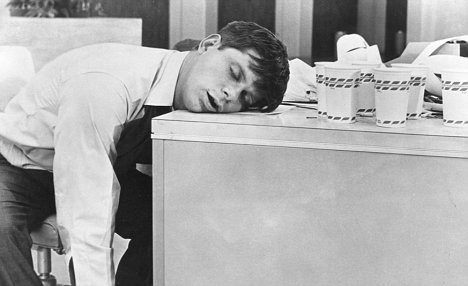 BERKELEY — If you see a student dozing in the library or a co-worker catching 40 winks in her cubicle, don’t roll your eyes. New research from the University of California, Berkeley, shows that an hour’s nap can dramatically boost and restore your brain power. Indeed, the findings suggest that a biphasic sleep schedule not only refreshes the mind, but can make you smarter.
Conversely, the more hours we spend awake, the more sluggish our minds become, according to the findings. The results support previous data from the same research team that pulling an all-nighter — a common practice at college during midterms and finals — decreases the ability to cram in new facts by nearly 40 percent, due to a shutdown of brain regions during sleep deprivation.
“Sleep not only rights the wrong of prolonged wakefulness but, at a neurocognitive level, it moves you beyond where you were before you took a nap,” said Matthew Walker, an assistant professor of psychology at UC Berkeley and the lead investigator of these studies.
In the recent UC Berkeley sleep study, 39 healthy young adults were divided into two groups — nap and no-nap. At noon, all the participants were subjected to a rigorous learning task intended to tax the hippocampus, a region of the brain that helps store fact-based memories. Both groups performed at comparable levels.
At 2 p.m., the nap group took a 90-minute siesta while the no-nap group stayed awake. Later that day, at 6 p.m., participants performed a new round of learning exercises. Those who remained awake throughout the day became worse at learning. In contrast, those who napped did markedly better and actually improved in their capacity to learn.
Matthew Walker, assistant psychology professor, has found that a nap clears the brain to absorb new information.
These findings reinforce the researchers’ hypothesis that sleep is needed to clear the brain’s shor
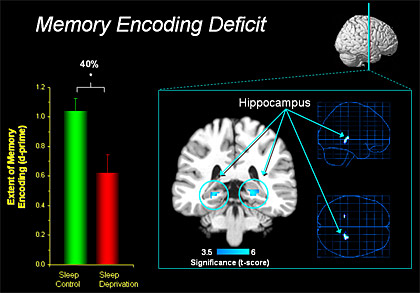
- Students who napped (green column) did markedly better in memorizing tests than their no-nap counterparts. (Courtesy of Matthew Walker)

t-term memory storage and make room for new information, said Walker, who presented his preliminary findings on Sunday, Feb. 21, at the annual meeting of the American Association of the Advancement of Science (AAAS) in San Diego, Calif.
Since 2007, Walker and other sleep researchers have established that fact-based memories are temporarily stored in the hippocampus before being sent to the brain’s prefrontal cortex, which may have more storage space.
“It’s as though the e-mail inbox in your hippocampus is full and, until you sleep and clear out those fact e-mails, you’re not going to receive any more mail. It’s just going to bounce until you sleep and move it into another folder,” Walker said.
In the late st study, Walker and his team have broken new ground in discovering that this memory-refreshing process occurs when nappers are engaged in a specific stage of sleep. Electroencephalogram tests, which measure electrical activity in the brain, indicated that this refreshing of memory capacity is related to Stage 2 non-REM sleep, which takes place between deep sleep (non-REM) and the dream state known as Rapid Eye Movement (REM). Previously, the purpose of this stage was unclear, but the new results offer evidence as to why humans spend at least half their sleeping hours in Stage 2, non-REM, Walker said.
“I can’t imagine Mother Nature would have us spend 50 percent of the night going from one sleep stage to another for no reason,” Walker said. “Sleep is sophisticated. It acts locally to give us what we need.”
Walker and his team will go on to investigate whether the reduction of sleep experienced by people as they get older is related to the documented decrease in our ability to learn as we age. Finding that link may be helpful in understanding such neurodegenerative conditions as Alzheimer’s disease, Walker said.
In addition to Walker, co-investigators of these new findings are Bryce A. Mander and psychology undergraduate Sangeetha Santhanam.

Related articles
- Be Active, Sleep Better! Aerobic Exercise Helps Beat Insomnia (peterhbrown.wordpress.com)
- Do Big People Need “Blankies” Too ? (peterhbrown.wordpress.com)

More than Words: The Importance of Physical Touch
 Psychologists have long studied the grunts and winks of nonverbal communication, the vocal tones and facial expressions that carry emotion. A warm tone of voice, a hostile stare — both have the same meaning in Terre Haute or Timbuktu, and are among dozens of signals that form a universal human vocabulary.
But in recent years some researchers have begun to focus on a different, often more subtle kind of wordless communication: physical contact. Momentary touches, they say — whether an exuberant high five, a warm hand on the shoulder, or a creepy touch to the arm — can communicate an even wider range of emotion than gestures or expressions, and sometimes do so more quickly and accurately than words.
 “It is the first language we learn,” said Dacher Keltner, a professor of psychology at the University of California, Berkeley, and the author of “Born to Be Good: The Science of a Meaningful Life” (Norton, 2009), and remains, he said, “our richest means of emotional expression” throughout life.
The evidence that such messages can lead to clear, almost immediate changes in how people think and behave is accumulating fast. Students who received a supportive touch on the back or arm from a teacher were nearly twice as likely to volunteer in class as those who did not, studies have found. A sympathetic touch from a doctor leaves people with the impression that the visit lasted twice as long, compared with estimates from people who were untouched. Research by Tiffany Field of the Touch Research Institute in Miami has found that a massage from a loved one can not only ease pain but also soothe depression and strengthen a relationship.
In a series of experiments led by Matthew Hertenstein, a psychologist at DePauw University in Indiana, volunteers tried to communicate a list of emotions by touching a blindfolded stranger. The participants were able to communicate eight distinct emotions, from gratitude to disgust to love, some with about 70 percent accuracy.
“We used to think that touch only served to intensify communicated emotions,” Dr. Hertenstein said. Now it turns out to be “a much more differentiated signaling system than we had imagined.”
To see whether a rich vocabulary of supportive touch is in fact related to performance, scientists at Berkeley recently analyzed interactions in one of the most physically expressive arenas on earth: professional basketball. Michael W. Kraus led a research team that coded every bump, hug and high five in a single game played by each team in the National Basketball Association early last season.
In a paper due out this year in the journal Emotion, Mr. Kraus and his co-authors, Cassy Huang and Dr. Keltner, report that with a few exceptions, good teams tended to be touchier than bad ones. The most touch-bonded teams were the Boston Celtics and the Los Angeles Lakers, currently two of the league’s top teams; at the bottom were the mediocre Sacramento Kings and Charlotte Bobcats.
The same was true, more or less, for players. The touchiest player was Kevin Garnett, the Celtics’ star big man, followed by star forwards Chris Bosh of the Toronto Raptors and Carlos Boozer of the Utah Jazz. “Within 600 milliseconds of shooting a free throw, Garnett has reached out and touched four guys,” Dr. Keltner said.
To correct for the possibility that the better teams touch more often simply because they are winning, the researchers rated performance based not on points or victories but on a sophisticated measure of how efficiently players and teams managed the ball — their ratio of assists to giveaways, for example. And even after the high expectations surrounding the more talented teams were taken into account, the correlation persisted. Players who made contact with teammates most consistently and longest tended to rate highest on measures of performance, and the teams with those players seemed to get the most out of their talent.
The study fell short of showing that touch caused the better performance, Dr. Kraus acknowledged. “We still have to test this in a controlled lab environment,” he said.
If a high five or an equivalent can in fact enhance performance, on the field or in the office, that may be because it reduces stress. A warm touch seems to set off the release of oxytocin, a hormone that helps create a sensation of trust, and to reduce levels of the stress hormone cortisol.
In the brain, prefrontal areas, which help regulate emotion, can relax, freeing them for another of their primary purposes: problem solving. In effect, the body interprets a supportive touch as “I’ll share the load.”
“We think that humans build relationships precisely for this reason, to distribute problem solving across brains,” said James A. Coan, a a psychologist at the University of Virginia. “We are wired to literally share the processing load, and this is the signal we’re getting when we receive support through touch.”
The same is certainly true of partnerships, and especially the romantic kind, psychologists say. In a recent experiment, researchers led by Christopher Oveis of Harvard conducted five-minute interviews with 69 couples, prompting each pair to discuss difficult periods in their relationship.
The investigators scored the frequency and length of touching that each couple, seated side by side, engaged in. In an interview, Dr. Oveis said that the results were preliminary.
“But it looks so far like the couples who touch more are reporting more satisfaction in the relationship,” he said. Again, it’s not clear which came first, the touching or the satisfaction. But in romantic relationships, one has been known to lead to the other. Or at least, so the anecdotal evidence suggests.
Be Grateful and Be Happy!
The best way to achieve happiness according to several new studies conducted by Todd Kashdan, associate professor of psychology at George Mason University, is to be grateful.
Gratitude, the emotion of thankfulness and joy in response to receiving a gift, is one of the essential ingredients for living a good life, Kashdan says. Kashdan’s most recent paper, which was published online in March at the Journal of Personality, reveals that when it comes to achieving well-being, gender plays a role. He found that men are much less likely to feel and express gratitude than women.
 “Previous studies on gratitude have suggested that there might be a difference in gender, and so we wanted to explore this further – and find out why. Even if it is a small effect, it could make a huge difference in the long run,” says Kashdan.
In one study, Kashdan interviewed college-aged students and older adults, asking them to describe and evaluate a recent episode in which they received a gift. He found that women compared with men reported feeling less burden and obligation and greater levels of gratitude when presented with gifts. In addition, older men reported greater negative emotions when the gift giver was another man.
“The way that we get socialized as children affects what we do with our emotions as adults,” says Kashdan. “Because men are generally taught to control and conceal their softer emotions, this may be limiting their well-being.”
As director of the Laboratory for the Study of Social Anxiety, Character Strengths, and Related Phenomena at Mason, Kashdan is interested in the assessment and cultivation of well-being, curiosity, gratitude and meaning and purpose in life. He has been active in the positive psychology movement since 2000, when he taught one of the first college courses on the science of happiness.
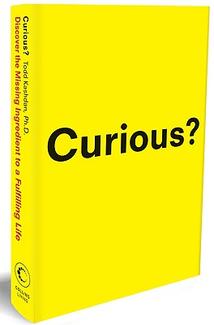
Kashdan says that if he had to name three elements that are essential for creating happiness and meaning in life it would be meaningful relationships, gratitude, and living in the present moment with an attitude of openness and curiosity. His book “Curious?,” which outlines ways people can enhance and maintain the various shades of well-being, was released in April 2009 with HarperCollins.
Source: Tara Laskowski
George Mason University
A Change by Itself is NOT as Good as a Proper Holiday: Don’t Just Sit There…Go Somewhere!
Just having a break from work is not enough suggests new research, it is activities in the open air which have the strongest restorative effects on our mental states.
Everyone gets down sometimes – it’s only natural. It would be more unusual never to be depressed. The idea that depression is an on-off condition with a purely chemical foundation is a myth no psychologist would endorse. The causes of depression can be many and widespread. But one cause many of us have to cope with is work.
One of the main weapons against stress building up from work is going on vacation. Holidays are a firmly established way of allowing the mind and body to recuperate. In research, however, published in the Journal of Environmental Psychology, Hartig, Catalano and Ong (2007) find that all holidays are not created equal.
Getting out in the open
The lead author of this paper, Terry Hartig, lives and works in Sweden, a country well known for its long, dark winters. As such, the Swedes know the importance of getting out in the sunshine, when it finally arrives. There is even a law requiring employers to provide four consecutive weeks of holiday in the summer. And it’s actually this law that is crucial to Hartig et al’s findings.
Hartig and colleagues suggest that being stuck indoors on vacation can limit mental recuperation. On the other hand, when able to roam outdoors, we can exert ourselves at a favourite sport or simply linger in the park. Psychologically, beautiful scenery can distract us from our troubles, help us forget our normal stressful environments and reconnect us to nature.
This is a nice theory that is intuitively attractive and plausible. The problem is how to test it scientifically.
Anti-depressant prescriptions and the weather
Hartig et al. decided to use the number of SSRI anti-depressants prescribed between 1991 and 1998 as a proxy for the general level of depression in the population of Sweden. They then looked for correlations between the weather and the amount of anti-depressants prescribed, which they duly found.
Wait, though, there’s a problem with this. Perhaps people are simply happier when the weather is warmer? It would then follow there would be an association between anti-depressant prescriptions and temperature.
Hartig et al. anticipated this problem. They remove the variation in anti-depressant prescriptions associated with the general change in monthly mean temperature from the equation. Then they get a really interesting finding. Now there’s only a correlation between temperature and anti-depressant medications in one month: July. There’s no similar effect even for the adjacent months of June or August.
How can that be explained? Why would the relationship only occur in July?
Why July is unusual
Here is the authors’ reasoning. In Sweden people take most of their holiday in July at the centre of the period stipulated by law (from 1 June to 31 August). A survey found it is over 90%. This means that during July they have the highest likelihood of being free to enjoy outdoor pursuits. On average, the rest of the year they will be working, so even if the weather is unseasonably warm in May, for example, they won’t be able to take advantage of it.
The reasoning goes, then, that if the weather is bad in July people are stuck indoors. This means they are unable to fully recuperate mentally before returning to work. Alternately, if the weather is good in July people are, on average, mentally rested and have less need for medication.
Remember that this explanation relies on averaging out many people’s behaviour across nine years. Obviously not everyone requires anti-depressants to get through a spell of bad weather. Similarly some people require them whatever the weather. But think about it in terms of the people who are slipping across the boundary of requiring/asking for medication. Then the authors’ explanation makes sense.
Happiness is…
I know this study falls into the category of telling us something we already know. But it does so in rather an ingenious way that takes advantage of Swedish vacation patterns. Also, we can’t be reminded often enough that we should take every opportunity to get out in the open air.
Truly, happiness is looking out across fresh fields, gazing at a distant tree, feeling the sun on your back and the wind brushing your skin.
Sourced from Psyblog.com
Related articles
- Sleep Well: Why You Need To Fight For Good Sleep (peterhbrown.wordpress.com)
- The Type A B C’s Of How Your Personality Effects Your Health (peterhbrown.wordpress.com)
Clinical Health Psychology: Mind over Matter?
Because I work so closely with medical practitioners and specialists, I continue to be fascinated by the relationship between physiology and psychology. I came across a recent interview in Psychology Today with Ronald Levant, Dean of the Center for Psychological Studies at Nova Southeastern University in Fort Lauderdale, Florida, about the field of clinical health psychology. The link to the article can be found below. I hope you find it interesting too.
Click here to go to the interview.
//
About Peter
Peter Brown BHMS (Hons) MPsychClin MAPS
I’m a Clinical Psychologist and have a private practice and consultancy in Brisbane Australia. I have 24 years experience in child, adult and family clinical psychology. I have a wonderful wife and three kids.
I am co-founder of Christian Wholeness Counselling Services.
I like researching issues of the brain & mind, reading and seeking out new books and resources for myself and my clients. I thought that others might be interested in some of what I have found also, hence this blog…

Subscribe to My Blog Posts & Updates
-

Blog Surfer
Alphainventions


Recent Comments


 Peter H Brown Clinical Psychologist