iPhone Addiction: Does Smart Phone = Dumber You?

It’s not much of a leap to extrapolate from the GPS to the smartphone. A normal cellphone can remember numbers for you so that you no longer have to do so. Confess– can you remember the actual cellphone number of the people you call most frequently? We used to rely on our neurons to hold onto these crucial bits of information. Now they reside somewhere out there in the ether. What’s worse is that most people don’t even take the time to write down a new phone number anymore. You call your new acquaintance and your new acquaintance calls you, and the information is automatically stored in your contacts. It’s great for efficiency’s sake, but you’ve now given your working memory one less important exercise. Memory benefits from practice, especially in the crucial stage of encoding. Let’s move from phone numbers to information in general. People with smartphones no longer have to remember important facts because when in doubt, they can just tap into Google. When was the last time St. Louis was in the World Series, you wonder? Easy! Just enter a few letters (not even the whole city name) into your “smart” search engine. Your fingers, much less your mind, don’t have to walk very far at all. Trying to give your brain a workout with a crossword puzzle? What’s to stop you from taking a few shortcuts when the answers are right there on your phone? No mental gymnastics necessary. This leads us to Siri, that seductress of the smartphone. With your iPhone slave on constant standby, you don’t even have to key in your questions. Just say the question, and Siri conjures up the answer in an instant. With a robot at your fingertips, why even bother to look the information up yourself? The irony is that smartphones have the potential to make our brains sharper, not dumber. Researchers are finding that videogame play involving rapid decision-making can hone your cognitive resources. Older adults, in particular, seem to be able to improve their attentional and decision-making speeded task performance when they play certain games. People with a form of amnesia in which they can’t learn new information can also be helped by smartphones, according to a study conducted by Canadian researchers (Svobodo & Richards, 2009). The problem is not the use of the smartphone itself; the problem comes when the smartphone takes over a function that your brain is perfectly capable of performing. It’s like taking the elevator instead of the stairs; the ride may be quicker but your muscles won’t get a workout. Smartphones are like mental elevators. Psychologists have known for years that the “use it or lose it” principle is key to keeping your brain functioning in its peak condition throughout your life. As we become more and more drawn to these sleeker and sexier gadgets, the trick will be learning how to “use it.” So take advantage of these 5 tips to help your smartphone keep you smart: 1. Don’t substitute your smartphone for your brain. Force yourself to memorize a phone number before you store it, and dial your frequently called numbers from memory whenever possible. If there’s a fact or word definition you can infer, give your brain the job before consulting your electronic helper. 2. Turn off the GPS app when you’re going to familiar places. Just like the GPS-hippocampus study showed, you need to keep your spatial memory as active as possible by relying on your brain, not your phone, when you’re navigating well-known turf. If you are using the GPS to get around a new location, study a map first. Your GPS may not really know the best route to take (as any proper Bostonian can tell you!). 3. Use your smartphone to keep up with current events. Most people use their smartphones in their leisure time for entertainment. However, with just a few easy clicks, you can just as easily check the headlines, op-eds, and featured stories from respected news outlets around the world. This knowledge will build your mental storehouse of information, and make you a better conversationalist as well. 4. Build your social skills with pro-social apps. Some videogames can actually make you a nicer person by strengthening your empathic tendencies. Twitter and Facebook can build social bonds. Staying connected is easier than ever, and keeping those social bonds active provides you with social support. Just make sure you avoid some of the social media traps of over-sharing and FOMO (fear of missing out) syndrome. 5. Turn off your smartphone while you’re driving. No matter how clever you are at multitasking under ordinary circumstances, all experts agree that you need to give your undivided attention to driving when behind the wheel. This is another reason to look at and memorize your route before going someplace new. Fiddling with your GPS can create a significant distraction if you find that it’s given you the wrong information. Smartphones have their place, and can make your life infinitely more productive as long as you use yours to supplement, not replace, your brain. Reference: Svoboda, E., & Richards, B. (2009). Compensating for anterograde amnesia: A new training method that capitalizes on emerging smartphone technologies. Journal of the International Neuropsychological Society, 15(4), 629-638. doi:10.1017/S1355617709090791 Follow Susan Krauss Whitbourne, Ph.D. on Twitter @swhitbo for daily updates on psychology, health, and aging and please check out my website,www.searchforfulfillment.com where you can read this week’s Weekly Focus to get additional information, self-tests, and psychology-related links.

Related articles
- Why Do So Many Robots Have A Woman’s Voice? [Technology] (jezebel.com)
- Siri lets strangers control some iPhone functions (redtape.msnbc.msn.com)

The Type A B C’s Of How Your Personality Effects Your Health
 Could your personality kill you—or might it make you live longer? Could it give you heart disease, or protect you from illness? Could it push you toward or away from doctor appointments?
Credit: Angela Haupt , health.usnews.com
Personality traits play a distinct role in determining how healthy we are, psychologists say. “Everything is related to everything else. How stressed or angry you are, and how you interact with the world, is contingent in large part on your personality style,” says Michael Miller, editor in chief of the Harvard Mental Health Letter. “And that is going to have an enormous impact on your health.”
Here’s a look at common personality types and traits and how each can help or hurt your health (sometimes both):
Hostile
One of the aspects of the impatient, hard-charging Type A personality that is known to increase heart disease risk is hostility. Hostile people eat and smoke more and exercise less than other personality types, says Redford Williams, head of behavioral medicine at Duke University Medical Center and author of Anger Kills. They’re likelier to be overweight in middle age and have higher cholesterol and blood pressure. Williams’s past research suggests hostile people are also more likely to develop irregular heart rhythms, and to die before reaching their 50s. Most of these problems can be traced back to elevated levels of the stress hormone cortisol, as well as increased inflammation in the walls of the coronary arteries, which leads to a greater risk of heart attack.
No personality is set in stone, however, and Type A’s can be taught how to take the edge off their hostility. Hostile heart patients who attend workshops that teach coping skills, for instance, have a lower incidence of depression and healthier blood pressure than Type A’s who don’t go. The key, Williams says, is learning how to communicate more clearly and how to control anger and other negative emotions. He suggests asking yourself four questions when you get angry: Is this issue truly important? Is what I’m feeling appropriate to the facts? Can I modify the situation in a positive way? Is taking such action worth it? Meditation, deep breathing, and yoga can damp hostility with a layer of calm.
Impulsive
Because Type A personalities are defined by competitiveness, a drive to succeed, and a sense of urgency, they are prone to take risks and act without thinking, neither of which is likely to improve health. Non-Type A’s can be impulsive, too. Such people are often not as well-grounded as others, says Robin Belamaric, a clinical psychologist in Bethesda, Md.: “They’ll look at an opportunity that comes along and say, ‘Hmm, that sounds like fun,’ whereas another, more thoughtful person, will say, ‘I’m going to pass, because I’m not sure it’s the best idea.’ ”
Relaxed
If you’re a Type B, you roll with the punches. You’re relaxed, take life a day a time, and handle stress without cracking. That translates to a higher quality of life and lower likelihood of heart disease—less anxiety strengthens the immune system. The more we chill, the better off we are, says Miller: “You don’t want to get locked into a stressful, tense state of mind.” Over the long term, he adds, relaxing and managing stress effectively will lengthen your life, help your heart and gastrointestinal system, and just make you feel better overall.
Extrovert
People who are outgoing, involved in their communities, and have strong social connections reap health benefits. An analysis of 148 studies published in the online journal PLoS medicine in July found that on average, adults enrolled in a study with many close friendships were 50 percent likelier to survive until their study ended than were those with few friendships. And a 2009 study published in Perspectives in Psychological Science suggests that social support leads to improved coping skills, healthy behavior, and adherence to medical regimens. Bonding with others also reduces stress and improves the immune system—so making friends and getting involved becomes, in effect, a well-being tonic.
What drives at least some of the health benefits goes beyond biology, Miller says. “It may have to do with the fact that when you’re around people, you think, ‘Oh, Martha has gone for her mammogram—that reminds me, I should, too.’ ”
Eager to please
People-pleasers—Type C’s—are conforming, passive, and want to accommodate. That can be a good thing when it comes to patient compliance: They’re more likely to take the right medicines in the right doses at the right times, for instance—once they see a doctor, that is. Making and following through on appointments can be challenging for Type C’s, who tend to accept their fate as inevitable and fall readily into hopelessness and helplessness. That means others must push them to take care of themselves. “They may be less likely to maintain their health on their own,” Belamaric says. “If they develop a problem, they may just complain about it, hoping somebody says, ‘I have a good doctor, I’ll make you an appointment.’ ”
Some Type C’s may be so mired that they don’t seek medical attention—even when it’s clearly necessary—and slough off preventive behaviors, like watching what they eat. “If they get a serious diagnosis, they may be passive, throw their hands up, and say, ‘Well, there’s nothing I can do about it, anyway. If it’s my time, it’s my time,’ ” Belamaric says.

Click image to read reviews
Stressed and distressed
Type D’s—D is for distressed—dwell on negative emotions and are afraid to express themselves in social situations. Compared to more optimistic sorts, a Type D may face three times the risk for future heart problems, according to a recent study in the journal Circulation: Cardiovascular Quality and Outcomes. Type D’s also face a higher likelihood of compulsive overeating and substance abuse. “If you’re a person who is prone to depression or anxiety, or if you’re overly self-critical, there’s more of a chance of turning to gratifying behavior to feel better,” Miller says.
Optimistic versus pessimistic
Optimism “heavily influences physical and mental health,” concluded a study published in May in the journal Clinical Practice & Epidemiology in Mental Health after researchers followed more than 500 males for 15 years. The rate of heart-related deaths was 50 percent lower among optimists than among pessimists. “Optimists have a higher quality of life, and they may be more resilient in the way they deal with stress,” Miller says. “So if a problem comes along, they’re able to handle it better, and they become less symptomatic.” Glass-half-empty types harbor little hope for the future and tend more toward depression and anxiety disorders.
But there’s a catch for those at the extreme end of the optimism spectrum: They think of themselves as impervious to risks. Extreme optimists who smoke are the best examples. They believe they won’t develop lung cancer. Why give up smoking to prevent a nonexistent risk?
The “self-healing personality”
That is the name Howard Friedman, a professor of psychology at the University of California-Riverside, attaches to people who are curious, secure, constructive, responsive, and conscientious. These traits translate to enthusiasm for life, emotional balance, and strong social relationships. “Positive emotions buffer hormonal responses to stress,” says Friedman, who studies the relationship between personality and longevity. Self-healers, he says, “have healthier behavior patterns: more physical activity, a better diet, and less smoking and substance abuse.”
Related articles by Zemanta
- Be Active, Sleep Better! Aerobic Exercise Helps Beat Insomnia (peterhbrown.wordpress.com)
- What Were You Thinking? The Causes Of Online Disinhibition (peterhbrown.wordpress.com)
Don’t Say “Don’t Panic”: How To Help Someone With A Panic Disorder
 Credit: From Sheryl Ankrom, former About.com Guide
The Experience of Recurring Panic Attacks
To understand panic disorder with agoraphobia, we must first talk about panic attacks. Sudden and recurring panic attacks are the hallmark symptoms of panic disorder. If you have never had recurring panic attacks, it may be hard to understand the difficulties your friend or loved one is going through. During a panic attack, the body’s alarm system is triggered without the presence of actual danger. The exact cause of why this happens is not known, but it is believed that there is a genetic and/or biological component.
Sufferers often use the terms fear, terror and horror to describe the frightening symptoms of a full-blown panic attack. But even these frightening words can’t convey the magnitude of the consuming nature of panic disorder. The fear becomes so intense that the thought of having another panic attack is never far from conscious thought. Incessant worry and feelings of overwhelming anxiety may become part of your loved one’s daily existence.
These Intense Symptoms Must Mean Something…Something Terrible
At the onset of panic disorder, your loved one may be quite certain they are suffering from a heart condition or other life-threatening illness. This may mean trips to the nearest emergency room and intensive testing to rule out physical disease. But, even when he or she is assured that these symptoms are not life-threatening, it does little to put his or her mind at ease. The feelings experienced during panic attacks are so overwhelming and uncontrollable, sufferers are convinced they are going to die or are going crazy.
A New Way of Life Emerges: Fear and Avoidance
So frightening are the symptoms of panic disorder, that your loved one may go to any and all lengths to avoid another attack from occurring. This may include many avoidant types of behavior and the development of agoraphobia. But, despite the efforts to avoid another panic episode, the attacks continue without rhyme or reason. There is no place to escape, and the sufferer becomes a prisoner of an insidious and illogical fear. Without appropriate treatment, your loved one may become so disabled that he or she is unable to leave his or her home at all.

click image to read reviews
click image to read reviews
Self Image Is Redefined
At times, we’ve all experienced nervousness, anxiousness, fear and, perhaps, even terror or horror. But in the midst of a catastrophic event, we understand these symptoms. Once the event is over, so, too, are the symptoms. But, imagine reliving these symptoms over and over again, without any warning or explanation.
This type of fear is life-changing. As abilities become inabilities, things once taken for granted, like going to into a store, become anxiety-filled events. Some enjoyable activities, like going to concerts or movies, may be avoided altogether. It is not uncommon for sufferers to experience a sense of shame, weakness and embarrassment as their self-image is redefined by fear.
Panic disorder is not just being nervous or anxious. Panic disorder is not just about the fear, terror and horror experienced during a full-blown panic attack because it does not end when the panic subsides. It is a disorder that is quick to invade and can alter one’s very essence, redefine one’s abilities and take over every aspect of one’s life.
Your Role As A Support Person
As a support person, you can play an important role in your loved one’s recovery process. Understanding what panic disorder is, and what it is not, will help you on this journey. Author Ken Strong provides a lot of information for supporting a person with panic disorder in his book, Anxiety:The Caregivers, Third Edition.
Related articles by Zemanta
- Sleep Well: Why You Need To Fight For Good Sleep (peterhbrown.wordpress.com)
- Sugar & Spite: Bullying and Young Girls (peterhbrown.wordpress.com)
Online Shopping: Is “Drink Buying” A Problem for You?

When she hasn’t been drinking, the 26-year-old New Yorker says that she rarely does more than browse online retail sites. But give her some booze and the buying begins.
“Get some drinks in me and I’m more likely to bite the bullet and figure out where to store the crap later on,” she said.
Andrea, who asked to withhold her name to protect her privacy, said she’s shopped under the influence more than a dozen times, but the habit comes and goes.
“I’ll do it several times over a month and then forget about it for a while,” she said. “Luckily, I haven’t bought or won anything terribly extravagant. Generally, I am pleasantly surprised about my purchases.”
After her latest late-night spree, she said awoke to the whole Doc Savage comic book series, the movie “Popeye,” with Robin Williams, the children’s book “Mouse Tails,” and (her favorite) the book “Statistics for the Utterly Confused.”
Along with her list of drunken purchases, she posted on her Facebook page, “Can we PLEASE get a breathalyzer on these things?”
While inebriated Internet buying may not be be an epidemic, it’s also not that unusual. A spokesperson for an online retail site, who asked to speak on condition of anonymity, said that intoxicated-sounding shoppers regularly call the site’s customer service asking for help placing orders.
“They’re trying to get a little roadside assistance on the shopping piece,” the spokesperson said, adding that sometimes the customers need technical guidance, while other times it sounds like they just want to hear a friendly voice.
Andrea said she’s partial to things that remind her of childhood memories (her very first drunk purchases were the book “The Phantom Tollbooth” and a whittling kit), but, occasionally, she said she wakes up to the just plain bizarre. “I [bid] on a plaster casting kit, which is rather surprising as I have no idea what I was thinking of doing with it,” she said.

Click Image to read reviews
But no matter what her sober self finds in the morning, she said she never thinks of returning anything. Why? “[I’m] way too embarrassed,” she said. Psychologists say the habit is fairly harmless as long as people don’t take it to extremes or spend extravagantly. “Normally, when we haven’t had a drink or two, our rational selves intercede between the emotion and the action and we say, ‘Oh, I don’t really need that’ or ‘Oh, I don’t have the money right now,'” said John Grohol, a clinical psychologist and founder of the online mental health resource PsychCentral.com. “But alcohol takes that one step away, that rational voice away, and we go directly to the emotion and the behavior.” Source: ABC news
Related articles by Zemanta
- Compulsive Collecting: Finding Hope In The Misunderstood Mess of Hoarding (peterhbrown.wordpress.com)
- “Willy Wonky & The Chocolate Fetish”: Why Do Depressed People Eat More Chocolate? (peterhbrown.wordpress.com)
- If You Need a Breathalyzer on Your Keyring, It Probably Means You Shouldn’t Be Driving (DUH!) (geardiary.com)
![Reblog this post [with Zemanta]](https://i0.wp.com/img.zemanta.com/reblog_e.png)
Bullying: Why Do Girls Tend To Become Violent & Agressive Later Than Boys?
 Girls appear to be “protected” from showing antisocial behaviour until their teenage years, new research from the University of Cambridge has found.
The study sheds new light on antisocial behaviour in girls compared with boys and suggests that rather than violence or antisocial behaviour simply reflecting bad choices, the brains of people with antisocial behaviour may work differently from those who behave normally.
Until now, little research has been done on antisocial behaviour (Conduct Disorder) in girls. According to Cambridge Neuroscientist Dr Graeme Fairchild of the Department of Psychiatry, lead author of the study:
“Almost nothing is known about the neuropsychology of severe antisocial behaviour in girls. Although less common in girls than boys, UK crime figures show that serious violence is increasing sharply in female adolescents.”
The study, published online this month in Biological Psychiatry, compared a group of 25 girls, aged 14–18 years-old, with high levels of antisocial and/or violent behaviour with a group of 30 healthy controls.
“Most of our participants had major difficulties controlling their temper, lashing out and breaking things around their homes when they got angry, and had often been involved in serious fights. Several had convictions for violent offences and some had been to prison for assault,” Dr Fairchild explains.
Dr Fairchild and colleagues measured the girls’ ability to recognise the six primary facial expressions – anger, disgust, sadness, fear, surprise and happiness. They found that girls with antisocial behaviour made a large number of errors when asked to recognise anger and disgust, but had no problems recognising other facial expressions.
According to Dr Fairchild: “Our findings suggest that antisocial behaviour or violence may not simply reflect bad choices but that, at some level, the brains of individuals with antisocial behaviour may work differently. This might make it harder for them to read emotions in others – particularly to realise that someone is angry with them – and to learn from punishment.”

Click Image to read reviews
The study also shows that although girls and boys with severe antisocial behaviour have the same problems recognising emotions, the girls – whose problems began when they were teenagers – more closely resembled boys whose antisocial behaviour began in childhood.
Boys with childhood-onset Conduct Disorder have difficulties recognising anger and disgust, but those with adolescence-onset Conduct Disorder do not.
“This suggests that there are interesting differences in antisocial behaviour between girls and boys, with girls being protected from showing antisocial behaviour until their teenage years for reasons we don’t yet understand,” Dr Fairchild says.
The next phase of the research involves a brain scanning study. “As far as we know, this will be the first functional neuroimaging study ever carried out in girls with severe antisocial behaviour,” Dr Fairchild says.
Around five percent of school-age children would meet criteria for Conduct Disorder, but it is approximately three to four times more common in boys than girls. A range of factors – ranging from physical abuse in childhood to being diagnosed with Attention-Deficit/Hyperactivity Disorder – make it more likely that someone will develop Conduct Disorder.
It is difficult to treat using psychological therapy, and there are no effective drug treatments, but a new form of therapy called Multi-Systemic Therapy is currently being trialled in the UK and shows promise in treating antisocial behaviour.
The research was funded by the Wellcome Trust.
Source: the University of Cambridge
Research Article: Facial Expression Recognition, Fear Conditioning, and Startle Modulation in Female Subjects with Conduct Disorder.
Fairchild G, Stobbe Y, van Goozen SH, Calder AJ, Goodyer IM.
Biol Psychiatry. 2010 May 4.
Related articles by Zemanta
- “My Kid Wouldn’t Go There”: Teens & Teen Sexuality (peterhbrown.wordpress.com)
- Teen Myths Busted: New Science Reveals That Common Assumptions Are Wrong (peterhbrown.wordpress.com)
- Bad behaviour among boys linked to early or late puberty (telegraph.co.uk)
Regular Exercise Is Important For The Health Of Those Who Have Schizophrenia
 Regular exercise can play an important a role in improving the physical and mental wellbeing of individuals with schizophrenia, according to a review published in The Cochrane Library. Following a systematic review of the most up-to-date research on exercise in schizophrenia, researchers concluded that the current guidelines for exercise should be followed by people with schizophrenia just as they should by the general population.
“Current guidelines for exercise appear to be just as acceptable to individuals with schizophrenia in terms of potential physical and mental health benefit,” says lead researcher Guy Faulkner of the Faculty of Physical Education and Health at the University of Toronto, Canada. “So thirty minutes of moderate physical activity on most or all days of the week is a good goal to aim for. Start slowly and build up.”
Schizophrenia is a serious mental illness affecting four in every 1,000 people. It is already known that exercise can improve mental health, but so far there has been only limited evidence of effects in schizophrenia. The new review focused on three recent small studies that compared the effects of 12–16 week exercise programmes, including components such as jogging, walking and strength training, to standard care or yoga.
The researchers found that exercise programmes improved mental state for measures including anxiety and depression, particularly when compared to standard care. Changes in physical health outcomes were seen but they were not significant overall. However, the researchers suggest this may be due to the short timescale of the trials.

Click image to read reviews
Two previous reviews have found exercise therapy to be beneficial in schizophrenia, but called for more rigorous research. “This new review suggests that such calls are starting to be addressed,” says Faulkner. “But we still need more research that will help us learn how we can get individuals with schizophrenia engaged in exercise programmes in the first place, and how such programmes can be developed and implemented within mental health services. That’s one of the biggest challenges for this type of intervention.”
Source: Eurekalert
Related articles by Zemanta
- Emotional Intelligence: Learning To Roll With The Punches (peterhbrown.wordpress.com)
- Should I Tell Or Not? Mood Disorders & The Workplace (peterhbrown.wordpress.com)
- Blood test for schizophrenia could be ready this year (scienceblog.com)
Down By The River: 5 Minutes Of “Green Exercise” Boosts Your Mood
 Just five minutes of exercise a day in the great outdoors can improve mental health, according to a new study, and policymakers should encourage more people to spend time in parks and gardens.
Read The Original Article (PDF)
Researchers from the University of Essex found that as little as five minutes of a “green activity” such as walking, gardening, cycling or farming can boost mood and self esteem.
“We believe that there would be a large potential benefit to individuals, society and to the costs of the health service if all groups of people were to self-medicate more with green exercise,” Barton said in a statement about the study, which was published in the journal Environmental Science & Technology.
Barton and Pretty looked at data from 1,252 people of different ages, genders and mental health status taken from 10 existing studies in Britain.
They analyzed activities such as walking, gardening, cycling, fishing, boating, horse-riding and farming.
They found that the greatest health changes occurred in the young and the mentally ill, although people of all ages and social groups benefited. The largest positive effect on self-esteem came from a five-minute dose of “green exercise.”
All natural environments were beneficial, including parks in towns or cities, they said, but green areas with water appeared to have a more positive effect.
Read The Original Article (PDF)
Source: msnbc
Preventing Child Bullying: The Important Role Of Parents
 Getting to know friends, helping with homework are among the things parents can do to decrease the likelihood that their child will become a bully
Communities across the United States are developing programs to address child bullying. New research shows that parents can play an important role in preventing their children from becoming bullies in the first place.
“Improving parent-child communication and parental involvement with their children could have a substantial impact on child bullying,” said Rashmi Shetgiri, MD, MSHS, lead author of a study to be presented Monday, May 3 at the Pediatric Academic Societies (PAS) annual meeting in Vancouver, British Columbia, Canada.
Dr. Shetgiri, a pediatrician and researcher at the University of Texas Southwestern Medical Center and Children’s Medical Center Dallas, and colleagues analyzed data from the 2007 National Survey of Children’s Health. Among the questions asked of 45,897 parents with children 10-17 years old was whether their child bullies or is cruel or mean to others. Researchers then identified factors that increased or reduced the risk of a child being a bully.
Results showed the prevalence of bullying was 15 percent. Factors increasing the risk included race, emotional/behavioral problems and mothers’ mental health.
African-American and Latino children had a higher likelihood of being bullies compared to white children. In addition, children with emotional, developmental or behavioral problems and those whose mothers reported having less than “very good” mental health also were more likely to be bullies. Other parental characteristics that increased the likelihood of child bullying were getting angry with their child frequently and feeling that their child often did things to bother them.

Click image to view reviews
There also were factors that decreased the likelihood that a child will become a bully. Older children, those living in a home where the primary language spoken is not English and those who consistently did their homework were less likely to be bullies.
Parents also played a protective role. Those who shared ideas and talked with their child, and those who met most of their child’s friends were less likely to have children who bully.
“Parents can also work with health care providers to make sure any emotional or behavioral concerns they have about their child, as well as their own mental health, are addressed,” Dr. Shetgiri said. “Lastly, parents can take advantage of parenting programs that can help them become aware of and manage negative feelings, such as anger, and respond to their child in a non-aggressive manner.
Source: Eurekalert
Related articles by Zemanta
- Bullying can be a red flag for depression (msnbc.msn.com)
- “I Saw It Happen”: Children Who Witness Bullying Can Be Traumatized Too (peterhbrown.wordpress.com)
- Violent Video Games & Kids: Definitive Study Shows Both Short & Long Term Harmful Effects (peterhbrown.wordpress.com)
Should I Tell Or Not? Mood Disorders & The Workplace
 Credit: Therese J. Borchard via psychcentral
Just when I think our world has moved a baby step in the right direction regarding our understanding of mental illness, I get another blow that tells me otherwise. For example, awhile back I quoted an intelligent woman who wrote an article in a popular women’s magazine about dating a bipolar guy when she was bipolar herself. She recently discovered that she had jeopardized a job prospect because the article came up — as well as all those who referenced it, like Beyond Blue — when you Googled her name. So she requested everyone who picked up that article to go back and change her real name to a pseudonym.
Because talking about bipolar disorder in the workplace is pretty much like singing about AIDS at the office a hundred years ago or maybe championing civil rights in the 60s.
I totally get why this woman created a pseudonym. Trust me, I entertained that possibility when I decided to throw out my psychiatric chart to the public. It’s risky. Extremely risky. Each person’s situation is unique, so I can’t advise a general “yes ” or “no.” As much as I would love to say corporate America will embrace the person struggling with a mood disorder and wrap him around a set of loving hands, I know the reality is more like a bipolar or depressive being spit upon, blamed, and made fun of by his boss and co-workers. Because the majority of professionals today simply don’t get it.
Not at all.
They don’t get it even though the World Health Organization predicts that by 2020, mental illness will be the second leading cause of disability worldwide, after heart disease; that major mental disorders cost the nation at least $193 billion annually in lost earnings alone, according to a new study funded by the National Institute of Mental Health; that the direct cost of depression to the United States in terms of lost time at work is estimated at 172 million days yearly.
I realize every time I publish a personal blog post — one in which I describe my severe ruminations, death thoughts, and difficulty using the rational part of my brain — I jeopardize my possibilities for gainful employment in the future. I can pretty much write off all government work because, from what I’ve been told, you have to get a gaggle of people to testify that you have no history of psychiatric illnesses (and, again, all it takes is one Google search to prove I’m crazy).
It’s totally unfair.
Do we penalize diabetics for needing insulin or tell people with disabling arthritis to get over it? Do we advise cancer victims to use a pseudonym if they write about their chemo, for fear of being labeled as weak and pathetic? That they really should be able to pull themselves up by their bootstraps and heal themselves because it’s all in their heads?
But I don’t want to hide behind a pseudonym. I use my real name because, for me, the benefit of comforting someone who thinks they are all alone outweighs the risk of unemployment in the future. Kay Redfield Jamison did it. She’s okay. So is Robin Williams. And Kitty Dukasis. And Carrie Fisher. Granted all four of those people have talent agents ready to book them as speakers for a nice fee.
In their book, Living with Someone Who’s Living with Bipolar Disorder Chelsea Lowe and Bruce M. Cohen, MD, Ph.D., list the pros and the cons of going public with a mood disorder. I’m paraphrasing a little bit, but here are the pros:
- There’s nothing disgraceful about the condition, any more than there would be about cancer or heart disease.
- Carrying a secret is an enormous burden. Sharing it lightens it.
- The more people who know and are looking out for you, the more likely you’ll be able to get help before the problems turn serious.
- Sharing the information lessons the burden on your partner.
- Lots of people have psychiatric issues; maybe your boss or family member does too.
- Taking about the diagnosis is an opportunity to educate others.

Click image to read reviews
The authors suggest telling your employer under these circumstances:
- If you are taking a new medication and may need time for adjustment.
- If your schedule doesn’t allow for regular, restful sleep–which is an important factor in controlling the disorder–or if you need to request certain adjustments to your schedule, like telecommuting.
- If you need to be hospitalized or take a leave of absence.
- If the disorder is affecting your behavior or job performance.
- If you need to submit benefit claims through your employer rather than the insurance company, or if your employer requires medical forms for extended absences.
And the cons:
- Prejudice and stigma about psychiatric disorders are still common in our society. A disclosure of bipolar disorder [or any mental illness] will inevitably color your employer’s and coworkers’ perceptions of his job performance: “Did Jerry miss that meeting because the bus was late, or because he was off his meds?” Potential problems include discrimination, stigmatization, fear and actual job loss.
- You can’t un-tell a secret.
- Your chances for promotion could be hurt.
- The employer is under no obligation to keep your condition secret.
- Discrimination is illegal but difficult to prove.
- You could be written off as “crazy.”
It’s Tricky! What are your thoughts?
Related articles by Zemanta
- Kids of Bipolar Parents at Risk for Mental Woes (nlm.nih.gov)
- Bipolar Mood Disorder: How Long Does An Episode Last? (peterhbrown.wordpress.com)
- Anxiety & Depression: Self-Help Internet Interventions Work! (peterhbrown.wordpress.com)
Emotional Intelligence: Learning To Roll With The Punches
 It’s a hot-buzz topic that covers everything from improving workplace performance and successfully climbing the corporate ladder to building the happiest of marriages to ending school bullying. But what exactly is Emotional Intelligence (EI)? If we lack it, can we learn it? And how do we know if our EI is high or low? Is it only high if we’re really, really nice?
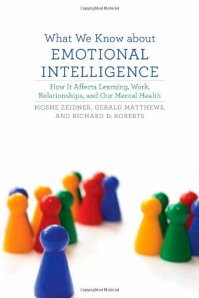
Three scholarly researchers – including University of Cincinnati Psychology Professor Gerry Matthews – delved into the science of EI and published “What We Know About Emotional Intelligence: How it Affects Learning, Work, Relationships, and Our Mental Health.”
Published by MIT Press (2009), the book was recently awarded the American Publishers Award for Professional and Scholarly Excellence – the PROSE Awards – in the biological and life sciences category of biomedicine and neuroscience. The book, co-authored by Matthews, Moshe Zeidner (University of Haifa) and Richard D. Roberts (Center for New Constructs, Educational Testing Service, Princeton, N.J.), was also on display at the UC Libraries’ Authors, Editors and Composers Reception and Program from 3:30-5 p.m., Thursday, April 22, in the Russell C. Myers Alumni Center.
MIT Press promotions describe EI as the “ability to perceive, regulate and communicate emotions – to understand emotions in ourselves and others.” Workplaces want to test for it to find the most EI-talented employees, and consultants are touting training and EI tests to improve productivity. “In the popular writings, EI tends to be defined very broadly and one can’t proceed with scientific research with such a vague and broad definition,” Matthews says.
Matthews’ research interests have explored how stress, mood and coping ability can affect performance on tests, in the workplace and on the highway. He adds that amid the grim economy, even the people who have jobs are feeling high levels of stress in the workplace and are feeling more challenged by workplace demands and concerns about job security. In general terms, those who can roll with the punches – with a shrug and a smile – may have higher Emotional Intelligence.
Click image to read reviews
Then again, “The intimate association of personality and emotion sets a trap for researchers interested in Emotional Intelligence,” writes Matthews. “It might seem that happy, calm states of mind should be seen as the person imbued with high Emotional Intelligence. However, such emotional tendencies may be no more than a consequence of biases in brain functioning or information-processing routines operating without insight or ‘intelligence.’ Some individuals – in part because of their DNA – are simply fortunate in being prone to pleasant moods, so it follows that emotional states do not alone provide an index of Emotional Intelligence,” Matthews states in the book.
In fact, Matthews says he’s skeptical that people who are better at managing stress hold higher Emotional Intelligence, but as the researchers found as they tried to narrow down the science of Emotional Intelligence, more research is needed. For instance, is someone with higher EI in the workplace more productive, or are they just better at self-promotion and forming positive relationships with co-workers? Matthews says he believes EI appears to be very modestly related to workplace performance, and could turn out to be nothing more than a business fad.
He adds the researchers are also skeptical about all of those EI tests, particularly those self-assessments. After all, people could be rating themselves the way they see themselves or the way they would like to be seen, and not like they actually are.
Currently, authors Matthews and Roberts are researching the testing of EI through video scenarios. The situation judgment test involves watching the videos unfold a challenging situation, and then the video comes to a stop and offers different options for resolving the problem. Matthews is building on his earlier research which explored whether negative moods affected good decision making abilities. “Through the video project, the idea is to see if emotionally intelligent people are better able to make rational decisions under stress,” he says.
The researchers are also examining the link between EI and school social and emotional learning programs.
Source:
Dawn Fuller
University of Cincinnati
Related articles by Zemanta
- Learning beyond the classroom (boston.com)
- “The Importance of Emotional Intelligence in Small Business Owners” :The Cross-cultural Connector (translatorpower.wordpress.com)
- Brain Training Or Just Brain Straining?: The Benefits Of Brain Exercise Software Are Unclear (peterhbrown.wordpress.com)
- Winners Are Grinners: Even If There’s Nothing to Win! (peterhbrown.wordpress.com)
About Peter
Peter Brown BHMS (Hons) MPsychClin MAPS
I’m a Clinical Psychologist and have a private practice and consultancy in Brisbane Australia. I have 24 years experience in child, adult and family clinical psychology. I have a wonderful wife and three kids.
I am co-founder of Christian Wholeness Counselling Services.
I like researching issues of the brain & mind, reading and seeking out new books and resources for myself and my clients. I thought that others might be interested in some of what I have found also, hence this blog…

Subscribe to My Blog Posts & Updates
-

Blog Surfer
Alphainventions


Recent Comments


 Peter H Brown Clinical Psychologist