Men Are From Earth, Women are from Earth: Do Studies Show That Gender Has Little Or No Bearing on Personality, Cognition and Leadership?
From American Psychogical Association http://www.apa.orgThe Truth about Gender “Differences”
Mars-Venus sex differences appear to be as mythical as the Man in the Moon. A 2005 analysis of 46 meta-analyses that were conducted during the last two decades of the 20th century underscores that men and women are basically alike in terms of personality, cognitive ability and leadership. Psychologist Janet Shibley Hyde, PhD, of the University of Wisconsin in Madison, discovered that males and females from childhood to adulthood are more alike than different on most psychological variables, resulting in what she calls a gender similarities hypothesis. Using meta-analytical techniques that revolutionized the study of gender differences starting in the 1980s, she analyzed how prior research assessed the impact of gender on many psychological traits and abilities, including cognitive abilities, verbal and nonverbal communication, aggression, leadership, self-esteem, moral reasoning and motor behaviors.
Hyde observed that across the dozens of studies, consistent with the gender similarities hypothesis, gender differences had either no or a very small effect on most of the psychological variables examined. Only a few main differences appeared: Compared with women, men could throw farther, were more physically aggressive, masturbated more, and held more positive attitudes about sex in uncommitted relationships.
Furthermore, Hyde found that gender differences seem to depend on the context in which they were measured. In studies designed to eliminate gender norms, researchers demonstrated that gender roles and social context strongly determined a person’s actions. For example, after participants in one experiment were told that they would not be identified as male or female, nor did they wear any identification, none conformed to stereotypes about their sex when given the chance to be aggressive. In fact, they did the opposite of what would be expected – women were more aggressive and men were more passive.
Finally, Hyde’s 2005 report looked into the developmental course of possible gender differences – how any apparent gap may open or close over time. The analysis presented evidence that gender differences fluctuate with age, growing smaller or larger at different times in the life span. This fluctuation indicates again that any differences are not stable.
 Learning Gender-Difference Myths
Media depictions of men and women as fundamentally “different” appear to perpetuate misconceptions – despite the lack of evidence. The resulting “urban legends” of gender difference can affect men and women at work and at home, as parents and as partners. As an example, workplace studies show that women who go against the caring, nurturing feminine stereotype may pay dearly for it when being hired or evaluated. And when it comes to personal relationships, best-selling books and popular magazines often claim that women and men don’t get along because they communicate too differently. Hyde suggests instead that men and women stop talking prematurely because they have been led to believe that they can’t change supposedly “innate” sex-based traits.
Hyde has observed that children also suffer the consequences of exaggerated claims of gender difference — for example, the widespread belief that boys are better than girls in math. However, according to her meta-analysis, boys and girls perform equally well in math until high school, at which point boys do gain a small advantage. That may not reflect biology as much as social expectations, many psychologists believe. For example, the original Teen Talk Barbie ™, before she was pulled from the market after consumer protest, said, “Math class is tough.”
As a result of stereotyped thinking, mathematically talented elementary-school girls may be overlooked by parents who have lower expectations for a daughter’s success in math. Hyde cites prior research showing that parents’ expectations of their children’s success in math relate strongly to the children’s self-confidence and performance.
Moving Past Myth
Hyde and her colleagues hope that people use the consistent evidence that males and females are basically alike to alleviate misunderstanding and correct unequal treatment. Hyde is far from alone in her observation that the clear misrepresentation of sex differences, given the lack of evidence, harms men and women of all ages. In a September 2005 press release on her research issued by the American Psychological Association (APA), she said, “The claims [of gender difference] can hurt women’s opportunities in the workplace, dissuade couples from trying to resolve conflict and communication problems and cause unnecessary obstacles that hurt children and adolescents’ self-esteem.”
Psychologist Diane Halpern, PhD, a professor at Claremont College and past-president (2005) of the American Psychological Association, points out that even where there are patterns of cognitive differences between males and females, “differences are not deficiencies.” She continues, “Even when differences are found, we cannot conclude that they are immutable because the continuous interplay of biological and environmental influences can change the size and direction of the effects some time in the future.”
The differences that are supported by the evidence cause concern, she believes, because they are sometimes used to support prejudicial beliefs and discriminatory actions against girls and women. She suggests that anyone reading about gender differences consider whether the size of the differences are large enough to be meaningful, recognize that biological and environmental variables interact and influence one other, and remember that the conclusions that we accept today could change in the future.
Cited Research
Archer, J. (2004). Sex differences in aggression in real-world settings: A meta-analytic review. Review of General Psychology, 8, 291-322.
Barnett, R. & Rivers, C. (2004). Same difference: How gender myths are hurting our relationships, our children, and our jobs. New York: Basic Books.
Eaton, W. O., & Enns, L. R. (1986). Sex differences in human motor activity level. Psychological Bulletin, 100, 19-28.
Feingold, A. (1994). Gender differences in personality: A meta-analysis. Psychological Bulletin, 116, 429-456.
Halpern, D. F. (2000). Sex Differences in Cognitive Abilities (3rd Edition). Mahwah, NJ: Lawrence Erlbaum, Associates, Inc. Publishers.
Halpern, D. F. (2004). A cognitive-process taxonomy for sex differences in cognitive abilities. Current Directions in Psychological Science, 13 (4), 135-139.
Hyde, J. S., Fennema, E., & Lamon, S. (1990). Gender differences in mathematics performance: A meta-analysis. Psychological Bulletin, 107, 139-155.
Hyde, J. S. (2005). The Gender Similarities Hypothesis. American Psychologist, Vol. 60, No. 6.
Leaper, C. & Smith, T. E. (2004). A meta-analytic review of gender variations in children’s language use: Talkativeness, affiliative speech, and assertive speech. Developmental Psychology, 40, 993-1027.
Oliver, M. B. & Hyde, J. S. (1993). Gender differences in sexuality: A meta-analysis. Psychological Bulletin, 114, 29-51.
Spencer, S. J., Steele, C. M. & Quinn, D. M. (1999). Stereotype threat and women’s math performance. Journal of Experimental Social Psychology, 35, 4-28.
Voyer, D., Voyer, S., & Bryden, M. P., (1995). Magnitude of sex differences in spatial abilities: A meta-analysis and consideration of critical variables. Psychological Bulletin, 117, 250-270.

A Tired Woman’s Guide to Passionate Sex: Research Shows 6 Step Program To Be Effective
 http://www.medicalnewstoday.com
According to the Journal of Sexual Medicine, people who engage in regular sexual activity gain several health benefits, such as longer lives, healthier hearts, lower blood pressure, and lower risk of breast cancer. However, approximately 33 percent of women may not receive these benefits due to low sexual desire. Also, the marriages of women with low sexual desire may also be at risk, given a recent statistic that 25 percent of divorce is due to sexual dissatisfaction.
Some doctors are prescribing testosterone patches for women with low sexual desire. However, research shows that testosterone patches might increase the risk of breast cancer when used for just a year. Researchers are currently testing a new drug, flibanserin, which was developed as an antidepressant and affects neurotransmitters in the brain, to treat women with low sexual desire. However, experts are concerned about the side effects of this possible treatment. Now, a University of Missouri researcher has found evidence that a low-cost, risk-free psychological treatment is effective and may be a better alternative to drugs that have adverse side effects.
 “Low sexual desire is the number one problem women bring to sex therapists,” said Laurie Mintz, associate professor of educational, school and counseling psychology in the MU College of Education. “Drugs to treat low sexual desire may take the focus away from the most common culprits of diminished desire in women, including lack of information on how our own bodies work, body image issues, relationship issues and a stressful lifestyle. Indeed, research demonstrates that relationship issues are far more important in predicting women’s sexual desire than are hormone levels. Before women seek medical treatments, they should consider psychological treatment.”
Mintz has authored a book, A Tired Woman’s Guide to Passionate Sex: Reclaim Your Desire and Reignite Your Relationship
In a study demonstrating the effectiveness of her treatment, Mintz recruited married women between the ages of 28 to 65, who said they were uninterested in sexual activity. All the women were employed and a majority had children. All participants completed an online survey that measured sexual desire and sexual functioning. Then half of the participants were selected randomly to read her book and perform the exercises outlined in her book. After six weeks, they were emailed the same survey again. The control group did not read the book. Mintz found that the intervention group who read the book made significant gains in sexual desire and sexual functioning, compared to the control group who did not read the book. On average, women who read the book increased their level of sexual desire by almost 30 percent.
“This finding is especially exciting because low sexual desire among women has been not only the most common, but the least successfully treated of all the sexual problems brought to therapists” Mintz said. “Also, although other books have been written on the topic, this is the first to be tested for its effectiveness. In addition, unlike medical treatments such as testosterone, there are certainly no known negative medical side effects associated with the treatment strategies in my book.”
Mintz will present her findings at the American Association of Sexuality Educators, Counselors and Therapists (AASECT) annual conference.
Source:
Laurie Mintz, A Tired Woman’s Guide to Passionate Sex: Reclaim Your Desire and Reignite Your Relationship
University of Missouri-Columbia
The Smile: A Super-Powered Facial Expression
John M Grohol PsyD http://www.psychcentral.com
 What’s In a Smile? For decades, psychology and its researchers have focused on the negative side of humanity — the things that bring dysfunction into our lives. Depression, sadness, anxiety, you name it. More recently, psychologists have also begun to better understand the value of positive emotions too. This understanding has resulted in a new field of research called “positive psychology” or “happiness research.”
So how do we recognize a positive emotion? Or put more simply, “What’s in a smile?”
A new paper just published by Disa Sauter (2010) helps us answer this question.
Happiness is In Your Smile
Psychological research into happiness has, for the most part, focused on facial expressions. It’s no wonder: most of our communication — both verbal and nonverbal — comes from our face. People across cultures understand the value of a smile and other facial expressions that point toward the emotion we call “being happy” or happiness. And we know that smiling itself can help increase positive, pro-social behaviors.
But how much research has examined more specific positive emotions in facial expressions? Surprisingly, only one study has been conducted that examined how the face displays specific positive emotions. The researchers in that study found:
[…] that displays of amusement and pride were signaled by smiles, but that amused smiles tended to be open-mouthed, whereas smiles of pride had compressed lips. In contrast, awe was typically expressed with raised eyebrows and a slightly open mouth, but not with smiles.
This study highlights that there is likely more than one kind of smile and that different smile configurations may communicate different affective states.
Smiles are more complicated that the simple communication of happiness. They can communicate a wide range of positive emotions, depending upon their specific makeup.
Pride
What about expressions of pride? Pride is considered a “secondary emotion” behind more basic emotions such as happiness and fear. Surprisingly, expressions of pride across cultures shares some specific characteristics:
Using photographs of participants from over 30 nations, Tracy and Matsumoto showed that individuals who won a fight produced a number of behaviors typically associated with pride expressions, including raising their arms, tilting their head back, smiling, and expanding their chest. This configuration of cues is recognized by observers as communicating pride.
Happy Noises & Touching
Just as with pride, there are apparently a number of universally recognized human sounds that express positive emotion. Research has shown that specific emotions recognized from sounds alone include amusement, triumph, sensual pleasure (the one we’re all most familiar with!) and relief.
You’d think that touch would be a sense that has been well-studied, given how important touch is to our emotional needs. But there has been very little research conducted examining the effects of human touch. What little research that has been done has found that certain positive emotions can sometimes be detected through touch:
They found that participants from two cultures (USA and Spain) could decode affective states from tactile stimulation on the arm. Emotions that were well recognized included several positive states, such as love, gratitude, and sympathy. Hertenstein et al. also showed that love was typically signaled with stroking, gratitude was communicated with a handshake, and sympathy was expressed with a patting movement.
Of course, some positive emotions are not well communicated through touch, including the general sense of “happiness.” Notice that only specific positive emotions — and only certain ones — are well-communicated through touch. Pride is an example of a positive emotion that has no equivalent touch sense.
Conclusions
What’s in a smile? A lot of information, telling the receiver of the smile whether you meant you were happy, amused, or proud. Research into human expression of positive emotions is ongoing and will explore more of these areas in years to come.
What we have found so far is that not every specific positive emotion — for instance, pride — is expressed through every type of sense.
As the researcher notes, “It will be interesting to consider whether ease of communication via different types of signals may relate to different “families” of emotions, such as self-conscious emotions including pride, and prosocial emotions like love.” If happiness can only be communicated through facial expressions, and not through touch, that’s good information to know when we think we’re communicating our happiness to a loved one through a specific gesture.
Happiness is a core component of life and living, and is associated with helping protect us against heart disease and enhancing our overall health. We also know that gratitude tends to lead to more happiness. The better we understand how happiness is expressed to others, perhaps the more clearly we’ll be able to communicate such emotions in the future.
Reference:
Sauter, D. (2010). More Than Happy: The Need for Disentangling Positive Emotions. Current Directions in Psychological Science, 19.Original paper can be found HERE
Dr. John Grohol is the CEO and founder of Psych Central. He has been writing about online behavior, mental health and psychology issues, and the intersection of technology and psychology since 1992.//
Sex: Is that all that men want?…NOPE!
A study from the Kinsey Institute strongly challenges the myth that men value sex more highly than other things. The findings relating to what men value and how they rate their sense of masculinity are robust across age, nationality and erectile function. Diana KirschnerPhD. has summarised the findings on the Psychology Today site (http://psychologytoday.com ) as follows:
View The Original Research Paper HERE (Free PDF -internal link)
“(The) data … came out of an eight country random survey of 27,839 men ages 20-752. Using a questionnaire called the Men’s Attitudes to Life Events and Sexuality(MALES), the authors found men’s attitudes towards two key areas, masculinity and quality of life, differed markedly from the cultural stereotypes of guys as shallow creatures who are driven primarily by lust.
In the masculinity section of the study and across all countries, being seen as a “man of honor” was the single highest ideal for men, far more important than “being physically attractive,” “having success with women,” or “having an active sex life.” Together with “being in control of your own life” these two attributes accounted for about 60% of the responses. These findings held across all nationalities and across all age groups.
In the MALES section called Quality of Life, men were asked to rate the following seven
• Being in good health
• Satisfying sex life
• Harmonious family life
• Good relationship with partner/wife
• Enjoying life to the fullest
• Satisfying
• Having a nice home
Again, the findings were quite surprising. The top three answers were: “being in good health”; “a harmonious family life”; and “good relationship with partner/wife.” “A satisfying sex life” was last, tied with “a nice home.” While there was definitely variability in the top answersdepending on country, “a satisfying sex life” always came last. Even more astonishing were the findings in regard to age and marital/partner status. Younger men, age 20-39 still rated the same three goals as most important. When comparing single vs. married men, the only difference was that singles rated “enjoying live to the fullest” in second placealong with “a harmonious family life”-while “a good relationship with their partner” was ranked fourth. Again “a satisfying sex life” was rated last.
Amazingly enough men who had erectile dysfunction (ED) as well as those who did not, still rated “a satisfying sex life” the same way-dead last. Understandably, men with ED reported having a less satisfying sexual life than those without ED.”
View The Original Research Paper HERE (Free PDF -internal link)
Here’s the abstract:

Sex God: Exploring the Endless Connections Between Sexuality and Spirituality
Introduction. The Men’s Attitudes to Life Events and Sexuality (MALES) study assessed the prevalence of erectile dysfunction, and examined men’s attitudes and behavior in relation to this dysfunction.
Aim. To report on the attitudes of men, with and without self-reported erectile dysfunction, concerning masculine identity and quality of life.
Methods. The MALES Phase I study included 27,839 randomly selected men (aged 20–75 years) from eight countries (United States, United Kingdom, Germany, France, Italy, Spain, Mexico, and Brazil) who responded to a standardized computer-assisted telephone interview.Main Outcome Measure. Perceptions of masculinity and quality of life in men with and without erectile dysfunction.
Results. Men’s perceptions of masculinity differed substantially from stereotypes in the literature. Men reported that being seen as honorable, self-reliant, and respected by friends were important determinants of self-perceived masculinity. In contrast, factors stereotypically associated with masculinity, such as being physically attractive,sexually active, and successful with women, were deemed to be less important to men’s sense of masculinity. These findings appeared consistently across all nationalities and all age groups studied. For quality of life, factors that men deemed of significant importance included good health, harmonious family life, and a good relationship with their wife/partner. Such factors had significantly greater importance to quality of life than concerns such as having a good job, having a nice home, living life to the full, or having a satisfying sex life. Of note, rankings of constructs of masculinity and quality of life did not meaningfully differ in men with or without erectile dysfunction, and men with erectile dysfunction who did or did not seek treatment for their sexual dysfunction.
Conclusions. The present findings highlight the significance of partnered relationships and interpersonal factors in the management of erectile dysfunction, and empirically challenge a number of widely held stereotypes concerning men, masculinity, sex, and quality of life.
Sand MS, Fisher W, Rosen R, Heiman J, and Eardley I. Erectile dysfunction and constructs of masculinity and quality of life in the multinational Men’s Attitudes to Life Events and Sexuality (MALES) study. J Sex Med 2008;5:583–594.Key Words. Erectile Dysfunction; Quality of Life; Masculinity; Gender Identity
Facebook: Is it Really your Face or Someone Else’s?
Do people display their actual or idealised personalities on social networking sites? This interesting article from PsyBlog reports that recent research addressed this issue with surprising results. I wonder if similar research on role playing and avatar based environments like World of Warcraft and Second Life would yield different findings…
There are now over 700 million people around the world with profiles on social networking sites like Facebook and MySpace. In the US 75% of those between 18 and 24 who have access to the internet use social networking sites. And over the past four years, across all adult age-groups, their use has quadrupled.
 But do these profiles tell us anything about people’s real-life personalities? Online it is very easy to display an idealised version of the self to others so surely the temptation to exaggerate or even give a completely misleading impression is just too great?
Actual versus idealised personality
To find out psychologists recruited 236 US and German students who use social networking sites and had them complete personality measures (Back et al., 2010).
These measured first their actual personalities on what psychologists call the ‘Big 5‘ personality traits (extraversion, agreeableness, conscientiousness, neuroticism and openness to experience).
Secondly it measured their idealised personalities: who they would like to be. Then independent observers were shown their real social networking profiles and asked to rate participants’ personalities.
The surprising truth
After comparing the actual personalities with the idealised and observed, the researchers found that, on average, people were much more likely to display their real personality on the social networking sites rather than their idealised selves.
Overall people were remarkably honest in representing themselves. People were honest—we don’t read those words often enough.
In line with other findings, this study found that, when looking at a stranger’s profile for the first time, some aspects of personality are more difficult to discern. Neuroticism in others is particularly difficult to gauge, whereas people find extraversion and openness to experience relatively easily to assess, even in strangers.

Todd Kashdan's Book "Curious?: Discover the Missing Ingredient to a Fulfilling Life"
Lying online?
This study is another blow for that old stereotype that the web is some kind of scary hinterland, an untrustworthy place where anything goes and nothing is what it appears, peopled by adolescent boys pretending to be anything but adolescent boys.
Contrary to the received wisdom, as well as academic theorising that the internet encourages people to project an idealised self, this research suggests that people are remarkably honest in displaying their true personalities online.
Whatever the cause, this fact may help to explain the phenomenal popularity of social networking sites: the truth draws people in.
Source: http://www.PsyBlog.com
Related articles by Zemanta
- The Psychology of Facebook Profiles (wellness.blogs.time.com)
- Self-Reporting (ezrasf.com)
![Reblog this post [with Zemanta]](https://i0.wp.com/img.zemanta.com/reblog_e.png)
Viva La Siesta!: A Nap Significantly Boosts the Brain’s Learning Capacity
 BERKELEY — If you see a student dozing in the library or a co-worker catching 40 winks in her cubicle, don’t roll your eyes. New research from the University of California, Berkeley, shows that an hour’s nap can dramatically boost and restore your brain power. Indeed, the findings suggest that a biphasic sleep schedule not only refreshes the mind, but can make you smarter.
Conversely, the more hours we spend awake, the more sluggish our minds become, according to the findings. The results support previous data from the same research team that pulling an all-nighter — a common practice at college during midterms and finals — decreases the ability to cram in new facts by nearly 40 percent, due to a shutdown of brain regions during sleep deprivation.
“Sleep not only rights the wrong of prolonged wakefulness but, at a neurocognitive level, it moves you beyond where you were before you took a nap,” said Matthew Walker, an assistant professor of psychology at UC Berkeley and the lead investigator of these studies.
In the recent UC Berkeley sleep study, 39 healthy young adults were divided into two groups — nap and no-nap. At noon, all the participants were subjected to a rigorous learning task intended to tax the hippocampus, a region of the brain that helps store fact-based memories. Both groups performed at comparable levels.
At 2 p.m., the nap group took a 90-minute siesta while the no-nap group stayed awake. Later that day, at 6 p.m., participants performed a new round of learning exercises. Those who remained awake throughout the day became worse at learning. In contrast, those who napped did markedly better and actually improved in their capacity to learn.
Matthew Walker, assistant psychology professor, has found that a nap clears the brain to absorb new information.
These findings reinforce the researchers’ hypothesis that sleep is needed to clear the brain’s shor
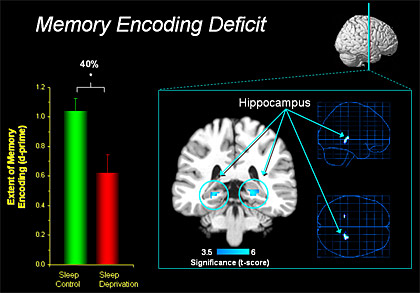
- Students who napped (green column) did markedly better in memorizing tests than their no-nap counterparts. (Courtesy of Matthew Walker)

t-term memory storage and make room for new information, said Walker, who presented his preliminary findings on Sunday, Feb. 21, at the annual meeting of the American Association of the Advancement of Science (AAAS) in San Diego, Calif.
Since 2007, Walker and other sleep researchers have established that fact-based memories are temporarily stored in the hippocampus before being sent to the brain’s prefrontal cortex, which may have more storage space.
“It’s as though the e-mail inbox in your hippocampus is full and, until you sleep and clear out those fact e-mails, you’re not going to receive any more mail. It’s just going to bounce until you sleep and move it into another folder,” Walker said.
In the late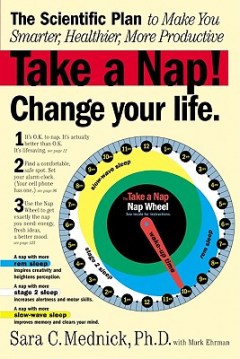 st study, Walker and his team have broken new ground in discovering that this memory-refreshing process occurs when nappers are engaged in a specific stage of sleep. Electroencephalogram tests, which measure electrical activity in the brain, indicated that this refreshing of memory capacity is related to Stage 2 non-REM sleep, which takes place between deep sleep (non-REM) and the dream state known as Rapid Eye Movement (REM). Previously, the purpose of this stage was unclear, but the new results offer evidence as to why humans spend at least half their sleeping hours in Stage 2, non-REM, Walker said.
“I can’t imagine Mother Nature would have us spend 50 percent of the night going from one sleep stage to another for no reason,” Walker said. “Sleep is sophisticated. It acts locally to give us what we need.”
Walker and his team will go on to investigate whether the reduction of sleep experienced by people as they get older is related to the documented decrease in our ability to learn as we age. Finding that link may be helpful in understanding such neurodegenerative conditions as Alzheimer’s disease, Walker said.
In addition to Walker, co-investigators of these new findings are Bryce A. Mander and psychology undergraduate Sangeetha Santhanam.
Related articles
- Be Active, Sleep Better! Aerobic Exercise Helps Beat Insomnia (peterhbrown.wordpress.com)
- Do Big People Need “Blankies” Too ? (peterhbrown.wordpress.com)

Asperger’s, PDD-NOS may no longer receive separate diagnoses in DSM-V
Recently, the American Psychiatric Association released some preliminary draft changes to the Diagnostic and  Statistical Manual of Mental Disorders (DSM-V) that may affect those diagnosed on the autism spectrum. There are several significant changes proposed that are now posted for public view, including: Asperger’s Syndrome and Pervasive Developmental Disorder-Not Otherwise Specified (PDD-NOS) would both be subsumed into the Autistic Disorder category, meaning that they would no longer be considered a separate diagnosis from autism, and the inclusion of potential co-morbidities with ADHD and other medical conditions.
The Autism Society is currently investigating the implications this change could have for the service and support systems currently in place for those with autism spectrum disorders. We will also be holding a town hall meeting at the Autism Society’s National Conference on Autism Spectrum Disorders in Dallas July 7–10, 2010 (learn more about the conference or register at www.autism-society.org/conference). You can also give your feedback on the changes at the Web site www.DSM5.org – look for the diagnoses on the autism spectrum under “Disorders Usually First Diagnosed in Infancy, Childhood, or Adolescence.”
These changes are not yet official – they are proposed for the update to the manual, which is expected to be published in May 2013. Whatever changes do go into effect surrounding autism spectrum disorders, the Autism Society will continue to work as we have always done to improve the lives of people across the entire spectrum of autism.
Spare the Rod & Spare your Child’s IQ: Can Spanking Cause Intellectual Harm?
SMACKING or spanking, long used by parents to discipline naughty children, could cause more than tears.
Research revealed it can also lower a child’s IQ, with those smacked up to three times a week having a lower IQ due to psychological stress.
US-based sociologist Professor Murray Straus, who studied the impact of smacking for 40 years, likened the effects of corporal punishment to post-traumatic stress, affecting a child’s mental development.
He called on governments to outlaw corporal punishment
After studying 800 toddlers aged between two and four over a four-year period, he found those who were subjected to smacking had an IQ five points lower than that of a child who wasn’t physically disciplined.
“The results of this research have major implications for the well-being of children across the globe,” he said.
 “All parents want smart children. This research shows that avoiding smacking and correcting misbehaviour in other ways can help that.”
Children aged five to nine years who were smacked regularly had an IQ 2.8 points lower. Dr Straus said children who constantly faced physical punishment lived in fear and suffered stress, which was associated with poorer academic performance.
While not an advocate of smacking, Sydney psychologist Dr Judith Kennedy said parents who gave an occasional tap on the bottom should not fear damaging their child.
“But a child who is suppressed through physical punishment regularly is going to behave differently,” Dr Kennedy said.
Melbourne child psychologist Michael Carr-Gregg said many factors contributed to intelligence and he found it hard to believe that spanking was one, the Herald Sun reports.
Dr Carr-Gregg said hitting children should never be the main disciplinary tool – giving them time out was the best option.
“But while parents should never whack their kids on the head, I don’t believe the odd tap on the bum traumatises them,” he said.
“I can’t come at this politically correct stuff that says that a little smack on the bum makes parents child abusers.”
Father of three Con Zoumis said spanking should be used only as a last resort.
“It’s not to hurt them, it’s just to make them snap out of a tantrum or stubborn behaviour,” he said. “And if you threaten to spank someone you have to carry it through.”
Related articles by Zemanta
- Spank Your Kids, Make Them Dumb (blisstree.com)
- A spanked child may be a better adult: study (nationalpost.com)
- Should Parents Spank Their Kids? (scientificamerican.com)
Borderline Personality Disorder: What’s with the Name & Just What Is It?
I have had a number of requests by email and on Twitter about Borderline Personality Disorder, its name, its presentation, its treatment and its psycho-genesis. Below is a brief post which I think covers most of these questions in outline form. I am open to suggestions as to which, if any areas readers would like to discuss in more detail. A small collection of books on BPD which I recommend to patients, carers, significant others and counsellors can be found here, most with reader reviews. I would be happy to hear of others, and I will also add a few more over the next few days.
What’s with the name?
The term “borderline” was first used by early psychiatrists to describe people who were thought to be on the “border” between diagnoses. At the time, the system for diagnosing mental illness was far less sophisticated than it is today, and “borderline” referred to individuals who did not fit neatly into the two broad categories of mental disorder: psychosis or neurosis.
Today, far more is known about BPD, and it is no longer thought of as being related to psychotic disorders (and the term “neurosis” is no longer used in our diagnostic system). Instead, BPD is recognized as a disorder characterized by intense emotional experiences and instability in relationships and behavior.
Many experts are now calling for BPD to be renamed, because the term “borderline” is outdated and because, unfortunately, the name has been used in a stigmatizing way in the past. Suggestions for the new name have included: “Emotion Dysregulation Disorder,” Unstable Personality Disorder,” and “Complex Posttraumatic Stress Disorder.”
Borderline personality disorder (BPD) is a serious mental illness characterized by pervasive instability in moods, interpersonal relationships, self-image, and behavior. This instability often disrupts family and work life, long-term planning, and the individual’s sense of self-identity. Originally thought to be at the “borderline” of psychosis, people with BPD suffer from a disorder of emotion regulation. While less well known than schizophrenia or bipolar disorder (manic-depressive illness), BPD is more common, affecting 2 percent of adults, mostly young women.1 There is a high rate of self-injury without suicide intent, as well as a significant rate of suicide attempts and completed suicide in severe cases.2,3 Patients often need extensive mental health services, and account for 20 percent of psychiatric hospitalizations.4 Yet, with help, many improve over time and are eventually able to lead productive lives.
Symptoms
While a person with depression or bipolar disorder typically endures the same mood for weeks, a person with BPD may experience intense bouts of anger, depression, and anxiety that may last only hours, or at most a day.5 These may be associated with episodes of impulsive aggression, self-injury, and drug or alcohol abuse. Distortions in cognition and sense of self can lead to frequent changes in long-term goals, career plans, jobs, friendships, gender identity, and values. Sometimes people with BPD view themselves as fundamentally bad, or unworthy. They may feel unfairly misunderstood or mistreated, bored, empty, and have little idea who they are. Such symptoms are most acute when people with BPD feel isolated and lacking in social support, and may result in frantic efforts to avoid being alone.
 People with BPD often have highly unstable patterns of social relationships. While they can develop intense but stormy attachments, their attitudes towards family, friends, and loved ones may suddenly shift from idealization (great admiration and love) to devaluation (intense anger and dislike). Thus, they may form an immediate attachment and idealize the other person, but when a slight separation or conflict occurs, they switch unexpectedly to the other extreme and angrily accuse the other person of not caring for them at all. Even with family members, individuals with BPD are highly sensitive to rejection, reacting with anger and distress to such mild separations as a vacation, a business trip, or a sudden change in plans. These fears of abandonment seem to be related to difficulties feeling emotionally connected to important persons when they are physically absent, leaving the individual with BPD feeling lost and perhaps worthless. Suicide threats and attempts may occur along with anger at perceived abandonment and disappointments.
People with BPD exhibit other impulsive behaviors, such as excessive spending, binge eating and risky sex. BPD often occurs together with other psychiatric problems, particularly bipolar disorder, depression, anxiety disorders, substance abuse, and other personality disorders.
Treatment
Treatments for BPD have improved in recent years. Group and individual psychotherapy are at least partially effective for many patients. Within the past 15 years, a new psychosocial treatment termed dialectical behavior therapy (DBT) was developed specifically to treat BPD, and this technique has looked promising in treatment studies.6 Pharmacological treatments are often prescribed based on specific target symptoms shown by the individual patient. Antidepressant drugs and mood stabilizers may be helpful for depressed and/or labile mood. Antipsychotic drugs may also be used when there are distortions in thinking.7
Recent Research Findings
Although the cause of BPD is unknown, both environmental and genetic factors are thought to play a role in predisposing patients to BPD symptoms and traits. Studies show that many, but not all individuals with BPD report a history of abuse, neglect, or separation as young children.8 Forty to 71 percent of BPD patients report having been sexually abused, usually by a non-caregiver.9 Researchers believe that BPD results from a combination of individual vulnerability to environmental stress, neglect or abuse as young children, and a series of events that trigger the onset of the disorder as young adults. Adults with BPD are also considerably more likely to be the victim of violence, including rape and other crimes. This may result from both harmful environments as well as impulsivity and poor judgement in choosing partners and lifestyles.
NIMH-funded neuroscience research is revealing brain mechanisms underlying the impulsivity, mood instability, aggression, anger, and negative emotion seen in BPD. Studies suggest that people predisposed to impulsive aggression have impaired regulation of the neural circuits that modulate emotion.10 The amygdala, a small almond-shaped structure deep inside the brain, is an important component of the circuit that regulates negative emotion. In response to signals from other brain centers indicating a perceived threat, it marshals fear and arousal. This might be more pronounced under the influence of drugs like alcohol, or stress. Areas in the front of the brain (pre-frontal area) act to dampen the activity of this circuit. Recent brain imaging studies show that individual differences in the ability to activate regions of the prefrontal cerebral cortex thought to be involved in inhibitory activity predict the ability to suppress negative emotion.11
Serotonin, norepinephrine and acetylcholine are among the chemical messengers in these circuits that play a role in the regulation of emotions, including sadness, anger, anxiety, and irritability. Drugs that enhance brain serotonin function may improve emotional symptoms in BPD. Likewise, mood-stabilizing drugs that are known to enhance the activity of GABA, the brain’s major inhibitory neurotransmitter, may help people who experience BPD-like mood swings. Such brain-based vulnerabilities can be managed with help from behavioral interventions and medications, much like people manage susceptibility to diabetes or high blood pressure.7
Future Progress
Studies that translate basic findings about the neural basis of temperament, mood regulation, and cognition into clinically relevant insights which bear directly on BPD represent a growing area of NIMH-supported research. Research is also underway to test the efficacy of combining medications with behavioral treatments like DBT, and gauging the effect of childhood abuse and other stress in BPD on brain hormones. Data from the first prospective, longitudinal study of BPD, which began in the early 1990s, is expected to reveal how treatment affects the course of the illness. It will also pinpoint specific environmental factors and personality traits that predict a more favorable outcome. The Institute is also collaborating with a private foundation to help attract new researchers to develop a better understanding and better treatment for BPD.
References
1Swartz M, Blazer D, George L, Winfield I. Estimating the prevalence of borderline personality disorder in the community. Journal of Personality Disorders, 1990; 4(3): 257-72.
2Soloff PH, Lis JA, Kelly T, Cornelius J, Ulrich R. Self-mutilation and suicidal behavior in borderline personality disorder. Journal of Personality Disorders, 1994; 8(4): 257-67.
3Gardner DL, Cowdry RW. Suicidal and parasuicidal behavior in borderline personality disorder. Psychiatric Clinics of North America, 1985; 8(2): 389-403.
4Zanarini MC, Frankenburg FR. Treatment histories of borderline inpatients. Comprehensive Psychiatry, in press.
5Zanarini MC, Frankenburg FR, DeLuca CJ, Hennen J, Khera GS, Gunderson JG. The pain of being borderline: dysphoric states specific to borderline personality disorder. Harvard Review of Psychiatry, 1998; 6(4): 201-7.
6Koerner K, Linehan MM. Research on dialectical behavior therapy for patients with borderline personality disorder. Psychiatric Clinics of North America, 2000; 23(1): 151-67.
7Siever LJ, Koenigsberg HW. The frustrating no-mans-land of borderline personality disorder. Cerebrum, The Dana Forum on Brain Science, 2000; 2(4).
8Zanarini MC, Frankenburg. Pathways to the development of borderline personality disorder. Journal of Personality Disorders, 1997; 11(1): 93-104.
9Zanarini MC. Childhood experiences associated with the development of borderline personality disorder. Psychiatric Clinics of North America, 2000; 23(1): 89-101.
10Davidson RJ, Jackson DC, Kalin NH. Emotion, plasticity, context and regulation: perspectives from affective neuroscience. Psychological Bulletin, 2000; 126(6): 873-89.
11Davidson RJ, Putnam KM, Larson CL. Dysfunction in the neural circuitry of emotion regulation – a possible prelude to violence. Science, 2000; 289(5479): 591-4.
Bernstein, PhD, David P., Iscan, MD, Cuneyt, Maser, PhD, Jack, Board of Directors, Association for Research in Personality Disorder, & Board of Directors, International Society for the Study of Personality Disorders. “Opinions of personality disorder experts regarding the DSM-IV Personality Disorders classification system.” Journal of Personality Disorders, 21: 536-551, October 2007.
Sources: about.com and nimh.gov.org
Just Do It: Asking For Help & Why People Are Twice as Likely to Assist as You Think!
In everyday life asking others for help can be embarrassing, perhaps even a painful experience. Requesting help potentially show s our own weakness and also opens us up to rejection. It’s a relief when people say yes.
Perhaps this explains the conclusion of new research published in the Journal of Personality and Social Psychology that finds we grossly underestimate just how willing others are to help us out.
In a series of studies Francis Flynn and Vanessa Lake of Columbia University tested people’s estimation of how likely others were to help them out. They got people to ask others to fill in questionnaires, to borrow cell phones and to escort them to the gym.
Across these studies they found that people underestimated how likely others were to help them by as much as 100%.
This is such a high figure that it demands an explanation – what’s going on here?
Part of the answer is our egocentric bias – we find it difficult to understand what others are thinking and feeling because we are stuck inside our own heads.
But it’s more than just that, argue Flynn and Lake, it’s also the fact that we underestimate just how much social pressure there is on other people to say yes. In effect, when you ask someone to help you, it’s much more awkward and embarrassing for them to say ‘no’ than you might think.
In two further studies Flynn and Lake supported this intuition by asking participants to put themselves in either the role of someone asking for help, or someone being asked for help.
They found that when people were help-seekers they reliably played down the social costs of saying no. But when they were the potential helper they realised how difficult it was to say no.
There’s two very practical messages coming out of this research:
- If you want help, just ask. People are much more likely to help than you think, especially if the request is relatively small. Most people take pleasure in helping others out from time-to-time.
- Make it easy for others to say no. The other side of the coin is that most of us don’t realise just how hard it is to say no to a request for help. Other people feel much more pressure to say yes to our requests than we realise. If the help you need is likely to be burdensome then think about ways of making it easier to say no.
//
Related articles by Zemanta
- Want to buy happiness? Book a plane ticket (msnbc.msn.com)
- Brain Training Centers Bring Miracles to South Florida (eon.businesswire.com)
About Peter
Peter Brown BHMS (Hons) MPsychClin MAPS
I’m a Clinical Psychologist and have a private practice and consultancy in Brisbane Australia. I have 24 years experience in child, adult and family clinical psychology. I have a wonderful wife and three kids.
I am co-founder of Christian Wholeness Counselling Services.
I like researching issues of the brain & mind, reading and seeking out new books and resources for myself and my clients. I thought that others might be interested in some of what I have found also, hence this blog…

Subscribe to My Blog Posts & Updates
-

Blog Surfer
Alphainventions


Recent Comments


 Peter H Brown Clinical Psychologist