It had been nearly 40 years since Linn Holt lost her mother, but some days, the pain was as unbearable as the day she died. Family gatherings were heartbreaking, Mother’s Days were miserable. And on every anniversary of her mother’s death, Holt would stay home in bed, hibernating from the world, swelling with grief.
It wasn’t normal, she thought. She needed help.
Three years ago, Holt attended a seminar on Mother’s Day weekend for people struggling with the loss of their mothers. She realized she wasn’t alone.
For more than a decade, the workshop at the Stella Maris Center for Grief and Loss in Timonium has been helping people confront and cope with the loss of their mothers during a trying time of year. From faith services honoring mothers to the endless loop of TV ads pushing “that special gift for Mom,” it’s a day most people can’t avoid if they tried.
Instead of trying to escape it, workshops like the one at Stella Maris encourage people to embrace the day as a way to honor and celebrate their mothers’ memories.
“We hope they can begin to face Mother’s Day head on and find that it can be joyful; it can be a day to honor with love,” said Doreen Horan, manager of bereavement services at Stella Maris, who has led the workshop for six years.
It doesn’t matter whether it’s the first Mother’s Day since a mother died or the 40th; there is no expiration date on grief, say grief counselors.
“People tend to think you get through all the first anniversaries and you’re healed,” said Robin Stocksdale, bereavement services manager at Gilchrist Hospice Care. “But anything can kick up those memories and those feelings. It does tend to get a little easier with time, but you don’t get over it. You learn to get through it.”
Holt, 58, of Baltimore, was 15 when her mother died of Hodgkin’s disease. As the only daughter left at home, Holt inherited the cooking, cleaning and responsibilities of caring for the household. Her father shut down emotionally, and her brother was just 7 years old. Holt had to stay strong and keep everyone together, she said.
“My whole world came to a crushing end,” she said. “And I couldn’t talk about it. It was done, it was over, and I was expected to move on.”
At her first workshop three years ago, Holt was asked to do things that were foreign to her: write in a journal about her feelings; listen to classical music; and use colored pencils to draw recollections of her mother.
“I thought, ‘What, are you crazy? I don’t just sit down and write. What do you want me to say?’ ” she said. “But I tried it. I realized I had a lot of anger and frustration. And I left feeling that it’s OK to feel this way. It’s OK to be 56 years old and ticked off that your mother isn’t here.”
During Horan’s workshop, participants spend half the time writing in journals and drawing, and the rest listening to classical music designed to evoke warm memories. Attendees can share their reflections, but they don’t have to.
“The point is for us to realize that life will not go on in the same way without our mothers — if it did, it would conclude their lives meant nothing and had no contribution,” she said. “It’s for us to talk about that, process that and move forward.”
Channeling hurt feelings into something positive is key to coping with grief, said Penny Graf, a social worker at the cancer institute at St. Joseph Medical Center. People should try to honor their mothers on Mother’s Day, either with an activity that their mother would have enjoyed or by spending time with family.

Click on image to read reviews
Even so, there’s no quick way to “get over it” said Stocksdale. Sharing feelings with someone who will listen is a start, she said.
Holt thinks that has helped her enormously. After therapy and two years of Mother’s Day workshops, she’s looking forward to helping others during this year’s event.
“I have learned to look at the things my mother taught me in the short years I was blessed to have her in my life and not the loss of not having her,” she said. When she’s down, Holt listens to music, writes in her journal or pulls out a photo of her mother.
“These are things I learned to do that have helped,” she said. “Maybe I can pass this on to somebody who is going through this for the first time.”

May 7, 2010
Posted by peterhbrown |
Age & Ageing, depression, mood, Seniors | Add new tag, Baltimore, Death, Family, Grief Loss and Bereavement, Home, Mother, Mothers Day, St. Joseph Medical Center |
1 Comment
 This article highlights how Acceptance and Commitment Therapy (ACT) is being integrated into weight loss programs for emotional eaters.
How many times have you, after a particularly hard day, reached for some chocolate or ice cream? It’s common for many people, but for those trying to lose weight, it can be detrimental to their long term success, and most weight-loss programs never even address it.
They focus on choosing healthier foods and exercising more, but they never answer a key question: how can people who have eaten to cope with emotions change their eating habits, when they haven’t learned other ways of coping with emotions?
Researchers at Temple’s Center for Obesity Research are trying to figure out the answer as part of a new, NIH-funded weight loss study. The new treatment incorporates skills that directly address the emotional eating, and essentially adds those skills to a state-of-the art behavioral weight loss treatment.
“The problem that we’re trying to address is that the success rates for long-term weight loss are not as good as we would like them to be,” said Edie Goldbacher, a postdoctoral fellow at CORE. “Emotional eating may be one reason why people don’t do as well in behavioral weight loss groups, because these groups don’t address emotional eating or any of its contributing factors.”
The study has already had one wave of participants come through, and many participants have seen some success in the short term, but have also learned the skills to help them achieve long term success.

Click Image to read reviews
Janet Williams, part of that first cohort, said she lost about 17 pounds over 22 weeks, and still uses some of the techniques she learned in the study to help maintain her weight, which has not fluctuated.
“The program doesn’t just help you identify when you eat,” said Williams. “It helps you recognize triggers that make you eat, to help you break that cycle of reaching for food every time you feel bored, or frustrated, or sad.”
Williams said that the program teaches various techniques to help break that cycle, such as the “conveyor belt,” in which participants, when overcome with a specific emotion, can recognize it and take a step back, before reaching for chips or cookies, and put those feelings on their mental “conveyor belt” and watch them go away.
“I still use the skills I learned in the study,” she said. “I’ve learned to say, ‘I will not allow this emotional episode to control my eating habits.'”
Source:eurekalert
May 6, 2010
Posted by peterhbrown |
Acceptance and Commitment Therapy, Addiction, Books, Cognitive Behavior Therapy, depression, Eating Disorder, Health Psychology, Mindfulness, mood, stress | binge eating, bulimia, Chocolate, Eating, Emotion, emotional, Health, National Institutes Health, shopping, Support Groups, weight loss |
1 Comment
 It can be difficult for parents of teenagers to come to terms with the fact their kids may have sex, particularly given widespread concerns about the consequences of teen sexual activity. In fact, a new study from North Carolina State University shows that many parents think that their children aren’t interested in sex – but that everyone else’s kids are.
“Parents I interviewed had a very hard time thinking about their own teen children as sexually desiring subjects,” says Dr. Sinikka Elliott, an assistant professor of sociology at NC State and author of the study. In other words, parents find it difficult to think that their teenagers want to have sex.
“At the same time,” Elliott says, “parents view their teens’ peers as highly sexual, even sexually predatory.” By taking this stance, the parents shift the responsibility for potential sexual activity to others – attributing any such behavior to peer pressure, coercion or even entrapment.
For example, Elliott says, parents of teenage boys were often concerned that their sons may be lured into sexual situations by teenage girls who, the parents felt, may use sex in an effort to solidify a relationship. The parents of teenage girls, meanwhile, expressed fears that their daughters would be taken advantage of by sexually driven teenage boys.
These beliefs contribute to stereotypes of sexual behavior that aren’t helpful to parents or kids.

Click image to read reviews
“By using sexual stereotypes to absolve their children of responsibility for sexual activity, the parents effectively reinforce those same stereotypes,” Elliott says.
Parents’ use of these stereotypes also paints teen heterosexual relationships in an unflattering, adversarial light, Elliott says and notes the irony of this: “Although parents assume their kids are heterosexual, they don’t make heterosexual relationships sound very appealing.”
A paper describing the study is published in the May issue of Symbolic Interaction. Elliott is also the author of the forthcoming book, Not My Kid: Parents and Teen Sexuality, which will by published by New York University Press.
Source: ScienceDaily (May 3, 2010)
May 5, 2010
Posted by peterhbrown |
Adolescence, Books, Child Behavior, Girls, Identity, Intimate Relationshps, Parenting, Sex & Sexuality | Adolescence, child, development, Human sexual behavior, Identity, North Carolina State University, Professor, Science Daily, sex, sex education, sexuality, teen |
1 Comment
 Getting to know friends, helping with homework are among the things parents can do to decrease the likelihood that their child will become a bully
View Abstract Here
Communities across the United States are developing programs to address child bullying. New research shows that parents can play an important role in preventing their children from becoming bullies in the first place.
“Improving parent-child communication and parental involvement with their children could have a substantial impact on child bullying,” said Rashmi Shetgiri, MD, MSHS, lead author of a study to be presented Monday, May 3 at the Pediatric Academic Societies (PAS) annual meeting in Vancouver, British Columbia, Canada.
Dr. Shetgiri, a pediatrician and researcher at the University of Texas Southwestern Medical Center and Children’s Medical Center Dallas, and colleagues analyzed data from the 2007 National Survey of Children’s Health. Among the questions asked of 45,897 parents with children 10-17 years old was whether their child bullies or is cruel or mean to others. Researchers then identified factors that increased or reduced the risk of a child being a bully.
Results showed the prevalence of bullying was 15 percent. Factors increasing the risk included race, emotional/behavioral problems and mothers’ mental health.
African-American and Latino children had a higher likelihood of being bullies compared to white children. In addition, children with emotional, developmental or behavioral problems and those whose mothers reported having less than “very good” mental health also were more likely to be bullies. Other parental characteristics that increased the likelihood of child bullying were getting angry with their child frequently and feeling that their child often did things to bother them.

Click image to view reviews
There also were factors that decreased the likelihood that a child will become a bully. Older children, those living in a home where the primary language spoken is not English and those who consistently did their homework were less likely to be bullies.
Parents also played a protective role. Those who shared ideas and talked with their child, and those who met most of their child’s friends were less likely to have children who bully.
“Parents can also work with health care providers to make sure any emotional or behavioral concerns they have about their child, as well as their own mental health, are addressed,” Dr. Shetgiri said. “Lastly, parents can take advantage of parenting programs that can help them become aware of and manage negative feelings, such as anger, and respond to their child in a non-aggressive manner.
View Abstract Here
Source: Eurekalert
May 4, 2010
Posted by peterhbrown |
Bullying, Child Behavior, Parenting, research | British Columbia, bullies, Bullying, Canada, children, cyber, Mental health, Parenting, Rashmi Shetgiri, school, United States, University of Texas Southwestern Medical Center, Vancouver |
2 Comments
 Credit: Therese J. Borchard via psychcentral
Just when I think our world has moved a baby step in the right direction regarding our understanding of mental illness, I get another blow that tells me otherwise. For example, awhile back I quoted an intelligent woman who wrote an article in a popular women’s magazine about dating a bipolar guy when she was bipolar herself. She recently discovered that she had jeopardized a job prospect because the article came up — as well as all those who referenced it, like Beyond Blue — when you Googled her name. So she requested everyone who picked up that article to go back and change her real name to a pseudonym.
Because talking about bipolar disorder in the workplace is pretty much like singing about AIDS at the office a hundred years ago or maybe championing civil rights in the 60s.
I totally get why this woman created a pseudonym. Trust me, I entertained that possibility when I decided to throw out my psychiatric chart to the public. It’s risky. Extremely risky. Each person’s situation is unique, so I can’t advise a general “yes ” or “no.” As much as I would love to say corporate America will embrace the person struggling with a mood disorder and wrap him around a set of loving hands, I know the reality is more like a bipolar or depressive being spit upon, blamed, and made fun of by his boss and co-workers. Because the majority of professionals today simply don’t get it.
Not at all.
They don’t get it even though the World Health Organization predicts that by 2020, mental illness will be the second leading cause of disability worldwide, after heart disease; that major mental disorders cost the nation at least $193 billion annually in lost earnings alone, according to a new study funded by the National Institute of Mental Health; that the direct cost of depression to the United States in terms of lost time at work is estimated at 172 million days yearly.
I realize every time I publish a personal blog post — one in which I describe my severe ruminations, death thoughts, and difficulty using the rational part of my brain — I jeopardize my possibilities for gainful employment in the future. I can pretty much write off all government work because, from what I’ve been told, you have to get a gaggle of people to testify that you have no history of psychiatric illnesses (and, again, all it takes is one Google search to prove I’m crazy).
It’s totally unfair.
Do we penalize diabetics for needing insulin or tell people with disabling arthritis to get over it? Do we advise cancer victims to use a pseudonym if they write about their chemo, for fear of being labeled as weak and pathetic? That they really should be able to pull themselves up by their bootstraps and heal themselves because it’s all in their heads?
But I don’t want to hide behind a pseudonym. I use my real name because, for me, the benefit of comforting someone who thinks they are all alone outweighs the risk of unemployment in the future. Kay Redfield Jamison did it. She’s okay. So is Robin Williams. And Kitty Dukasis. And Carrie Fisher. Granted all four of those people have talent agents ready to book them as speakers for a nice fee.
In their book, Living with Someone Who’s Living with Bipolar Disorder Chelsea Lowe and Bruce M. Cohen, MD, Ph.D., list the pros and the cons of going public with a mood disorder. I’m paraphrasing a little bit, but here are the pros:
- There’s nothing disgraceful about the condition, any more than there would be about cancer or heart disease.
- Carrying a secret is an enormous burden. Sharing it lightens it.
- The more people who know and are looking out for you, the more likely you’ll be able to get help before the problems turn serious.
- Sharing the information lessons the burden on your partner.
- Lots of people have psychiatric issues; maybe your boss or family member does too.
- Taking about the diagnosis is an opportunity to educate others.

Click image to read reviews
The authors suggest telling your employer under these circumstances:
- If you are taking a new medication and may need time for adjustment.
- If your schedule doesn’t allow for regular, restful sleep–which is an important factor in controlling the disorder–or if you need to request certain adjustments to your schedule, like telecommuting.
- If you need to be hospitalized or take a leave of absence.
- If the disorder is affecting your behavior or job performance.
- If you need to submit benefit claims through your employer rather than the insurance company, or if your employer requires medical forms for extended absences.
And the cons:
- Prejudice and stigma about psychiatric disorders are still common in our society. A disclosure of bipolar disorder [or any mental illness] will inevitably color your employer’s and coworkers’ perceptions of his job performance: “Did Jerry miss that meeting because the bus was late, or because he was off his meds?” Potential problems include discrimination, stigmatization, fear and actual job loss.
- You can’t un-tell a secret.
- Your chances for promotion could be hurt.
- The employer is under no obligation to keep your condition secret.
- Discrimination is illegal but difficult to prove.
- You could be written off as “crazy.”
It’s Tricky! What are your thoughts?
May 3, 2010
Posted by peterhbrown |
anxiety, Books, depression, Education, General, mood | anxiety, Bipolar disorder, boss, Carrie Fisher, depression, disclosure, Employment, Kay Redfield Jamison, Mental disorder, Mental health, Mood disorder, self help, United States, workplace |
2 Comments
 It’s a hot-buzz topic that covers everything from improving workplace performance and successfully climbing the corporate ladder to building the happiest of marriages to ending school bullying. But what exactly is Emotional Intelligence (EI)? If we lack it, can we learn it? And how do we know if our EI is high or low? Is it only high if we’re really, really nice?
Three scholarly researchers – including University of Cincinnati Psychology Professor Gerry Matthews – delved into the science of EI and published “What We Know About Emotional Intelligence: How it Affects Learning, Work, Relationships, and Our Mental Health.”
Published by MIT Press (2009), the book was recently awarded the American Publishers Award for Professional and Scholarly Excellence – the PROSE Awards – in the biological and life sciences category of biomedicine and neuroscience. The book, co-authored by Matthews, Moshe Zeidner (University of Haifa) and Richard D. Roberts (Center for New Constructs, Educational Testing Service, Princeton, N.J.), was also on display at the UC Libraries’ Authors, Editors and Composers Reception and Program from 3:30-5 p.m., Thursday, April 22, in the Russell C. Myers Alumni Center.
MIT Press promotions describe EI as the “ability to perceive, regulate and communicate emotions – to understand emotions in ourselves and others.” Workplaces want to test for it to find the most EI-talented employees, and consultants are touting training and EI tests to improve productivity. “In the popular writings, EI tends to be defined very broadly and one can’t proceed with scientific research with such a vague and broad definition,” Matthews says.
Matthews’ research interests have explored how stress, mood and coping ability can affect performance on tests, in the workplace and on the highway. He adds that amid the grim economy, even the people who have jobs are feeling high levels of stress in the workplace and are feeling more challenged by workplace demands and concerns about job security. In general terms, those who can roll with the punches – with a shrug and a smile – may have higher Emotional Intelligence.

Click image to read reviews
Then again, “The intimate association of personality and emotion sets a trap for researchers interested in Emotional Intelligence,” writes Matthews. “It might seem that happy, calm states of mind should be seen as the person imbued with high Emotional Intelligence. However, such emotional tendencies may be no more than a consequence of biases in brain functioning or information-processing routines operating without insight or ‘intelligence.’ Some individuals – in part because of their DNA – are simply fortunate in being prone to pleasant moods, so it follows that emotional states do not alone provide an index of Emotional Intelligence,” Matthews states in the book.
In fact, Matthews says he’s skeptical that people who are better at managing stress hold higher Emotional Intelligence, but as the researchers found as they tried to narrow down the science of Emotional Intelligence, more research is needed. For instance, is someone with higher EI in the workplace more productive, or are they just better at self-promotion and forming positive relationships with co-workers? Matthews says he believes EI appears to be very modestly related to workplace performance, and could turn out to be nothing more than a business fad.
He adds the researchers are also skeptical about all of those EI tests, particularly those self-assessments. After all, people could be rating themselves the way they see themselves or the way they would like to be seen, and not like they actually are.
Currently, authors Matthews and Roberts are researching the testing of EI through video scenarios. The situation judgment test involves watching the videos unfold a challenging situation, and then the video comes to a stop and offers different options for resolving the problem. Matthews is building on his earlier research which explored whether negative moods affected good decision making abilities. “Through the video project, the idea is to see if emotionally intelligent people are better able to make rational decisions under stress,” he says.
The researchers are also examining the link between EI and school social and emotional learning programs.
Source:
Dawn Fuller
University of Cincinnati
May 2, 2010
Posted by peterhbrown |
anxiety, Books, Cognition, Health Psychology, Identity, Positive Psychology, research, Resilience | Cognition, Educational Testing Service, EI, Emotional Intelligence, intelligence, Mental health, personality, psychology, research, Resilience, Social Sciences, University of Haifa |
4 Comments
 BEER-SHEVA, ISRAEL, April 28, 2010 – A researcher at Ben-Gurion University of the Negev (BGU) conducted the first study of hand-clapping songs, revealing a direct link between those activities and the development of important skills in children and young adults, including university students.
“We found that children in the first, second and third grades who sing these songs demonstrate skills absent in children who don’t take part in similar activities,” explains Dr. Idit Sulkin a member of BGU’s Music Science Lab in the Department of the Arts.
“We also found that children who spontaneously perform hand-clapping songs in the yard during recess have neater handwriting, write better and make fewer spelling errors.”
Dr. Warren Brodsky, the music psychologist who supervised her doctoral dissertation, said Sulkin’s findings lead to the presumption that “children who don’t participate in such games may be more at risk for developmental learning problems like dyslexia and dyscalculia.
“There’s no doubt such activities train the brain and influence development in other areas. The children’s teachers also believe that social integration is better for these children than those who don’t take part in these songs.”
As part of the study, Sulkin went to several elementary school classrooms and engaged the children in either a board of education sanctioned music appreciation program or hand-clapping songs training – each lasting a period of 10 weeks.
“Within a very short period of time, the children who until then hadn’t taken part in such activities caught up in their cognitive abilities to those who did,” she said. But this finding only surfaced for the group of children undergoing hand-clapping songs training. The result led Sulkin to conclude that hand-clapping songs should be made an integral part of education for children aged six to 10, for the purpose of motor and cognitive training.
During the study, “Impact of Hand-clapping Songs on Cognitive and Motor Tasks,” Dr. Sulkin interviewed school and kindergarten teachers, visited their classrooms and joined the children in singing. Her original goal, as part of her thesis, was to figure out why children are fascinated by singing and clapping up until the end of third grade, when these pastimes are abruptly abandoned and replaced with sports.
“This fact explains a developmental process the children are going through,” Dr. Sulkin observes. “The hand-clapping songs appear naturally in children’s lives around the age of seven, and disappear around the age of 10. In this narrow window, these activities serve as a developmental platform to enhance children’s needs — emotional, sociological, physiological and cognitive. It’s a transition stage that leads them to the next phases of growing up.”
Sulkin says that no in-depth, long-term study has been conducted on the effects that hand-clapping songs have on children’s motor and cognitive skills. However, the relationship between music and intellectual development in children has been studied extensively, prompting countless parents to obtain a “Baby Mozart” CD for their children.
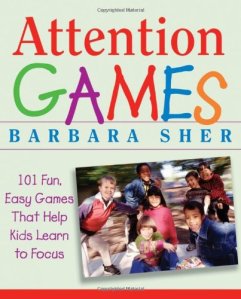
Click image to read reviews
Nevertheless, the BGU study demonstrates that listening to 10 minutes of Mozart music (.i.e., the ‘Mozart Effect’) does not improve spatial task performance compared to 10 minutes of hand-clapping songs training or 10 minutes of exposure to silence.
Lastly, Sulkin discovered that hand-clapping song activity has a positive effect on adults: University students who filled out her questionnaires reported that after taking up such games, they became more focused and less tense.
“These techniques are associated with childhood, and many adults treat them as a joke,” she said. “But once they start clapping, they report feeling more alert and in a better mood.”
Sulkin grew up in a musical home. Her father, Dr. Adi Sulkin, is a well-known music educator who, in the 1970s and 1980s, recorded and published over 50 cassettes and videos depicting Israeli children’s play-songs, street-songs, holiday and seasonal songs, and singing games targeting academic skills.
“So quite apart from the research experience, working on this was like a second childhood,” she noted.
Source: American Associates, Ben-Gurion University of the Negev
May 1, 2010
Posted by peterhbrown |
ADHD /ADD, brain, Child Behavior, Cognition, Education, Exercise, Parenting, research | attention, Ben-Gurion University, Ben-Gurion University of the Negev, BGU, clapping, Cognition, Education, Elementary school, focus, games, ISRAEL, kids, learning, motor skills, research, self-regulation |
1 Comment


![Reblog this post [with Zemanta]](https://i0.wp.com/img.zemanta.com/reblog_e.png)






 Peter H Brown Clinical Psychologist