Weight Loss Goes Sci-Fi: Using Virtual Reality To Lose Weight?
The University of Houston’s Tracey Ledoux, assistant professor of health and human performance, is using an innovative approach to studying food addictions in hopes of finding strategies to assess and treat them.
 “There is a growing body of research that shows that consumption of palatable food stimulates the same reward and motivation centers of the brain that recognized addictive drugs do,” Ledoux said. “These cravings are related to overeating, unsuccessful weight loss and obesity.”
Ledoux and Professor Patrick Bordnick, director of the UH Graduate College of Social Work‘s Virtual Reality Lab, will use virtual environments to try to induce food cravings. Bordnick’s body of research has focused on addictive behaviors and phobias and has used virtual reality as a tool to assess and treat them.
In this new investigation, participants will wear a virtual reality helmet to enter a “real -world” restaurant, complete with all the sights, sounds and smells. A joystick will allow them to walk to a buffet, encounter waitstaff and other patrons.
“Virtual reality will allow us to identify food and food-related stimuli of the built, home, school and social environment that cue food cravings, which has public policy, public health and clinical treatment implications,” Ledoux said. “Our study is innovative because it provides a very effective, cost-efficient tool that can be used to increase our understanding of food cravings.”
 Ledoux is recruiting normal-weight women who do not have dietary restrictions or are trying to lose weight. Participants will be invited to two appointments, which may last between 30 minutes and an hour, and will receive a small compensation plus a chance to win a Kindle e-reader. For more information contact Tracey Ledoux at 713-743-1870 or TALedoux@uh.edu.
“Obesity is a pervasive and intractable problem with significant public health and economic costs in our society,” she said. “Finding the elements that promote overeating is critical for reversing the dangerous obesity trend.”
Source: Medicalnewstoday

Related articles
- How can you learn what it feels like to be pregnant? (fatherinastrangeland.wordpress.com)
- Virtual Reality Video Games Really Do Work As A Painkiller (businessinsider.com)

Now That I’ve Got Your Attention: What Gets Your Attention?
Source: Association for Psychological Science.
Once we learn the relationship between a cue and its consequences—say, the sound of a bell and the appearance of the white ice cream truck bearing our favorite chocolate cone—do we turn our attention to that bell whenever we hear it? Or do we tuck the information away and marshal our resources to learning other, novel cues—a recorded jingle, or a blue truck?
 Psychologists observing “attentional allocation” now agree that the answer is both, and they have arrived at two principles to describe the phenomena. The “predictive” principle says we search for meaningful—important—cues amid the “noise” of our environments. The “uncertainty” principle says we pay most attention to unfamiliar or unpredictable cues, which may yield useful information or surprise us with pleasant or perilous consequences.
Animal studies have supplied evidence for both, and research on humans has showed how predictiveness operates, but not uncertainty. “There was a clear gap in the research,” says Oren Griffiths, a research fellow at the University of New South Wales, in Australia. So he, along with Ameika M. Johnson and Chris J. Mitchell, set out to demonstrate the uncertainty principle in humans.
“We showed that people will pay more attention to a stimulus or a cue if its status as a predictor is unreliable,” he says. The study will be published in an upcoming issue of Psychological Science, a journal of the Association for Psychological Science.
The researchers investigated what is called “negative transfer”—a cognitive process by which a learned association between cue and outcome inhibits any further learning about that cue. We think we know what to expect, so we aren’t paying attention when a different outcome shows up—and we learn that new association more slowly than if the cue or outcome were unpredictable. Negative transfer is a good example of the uncertainty principle at work.
Participants were divided into three groups, and administered the “allergist test.” They observed “Mrs. X” receiving a small piece of fruit—say, apple. Using a scroll bar they predicted her allergic reaction, from none to critical. They then learned that her reaction to the apple was “mild.” Later, when Mrs. X ate the apple, she had a severe reaction which participants also had to learn to predict.
The critical question was how quickly people learned about the severe reaction. Unsurprisingly, if apple was only ever paired with a severe reaction, learning was fast. But what about if apple had previously been shown to be dangerous (i.e. produce a mild allergic reaction)? In this case, learning about the new severe reaction was slow. This is termed the “negative transfer” effect. This effect did not occur, however, when the initial relationship between apple and allergy was uncertain — if, say, apple was sometimes safe to eat. Under these circumstances, the later association between apple and severe allergic reaction was learned rapidly.
Why? “They didn’t know what to expect from the cue, so they had to pay more attention to it,” says Griffiths. “That’s because of the uncertainty principle.”
Related articles
- iThink therefore iAm (if iPaid attention) (brobrubel.wordpress.com)
I Am Old But I Am Happy: Why Happiness And Emotional Stability Might Improve With Age
 ScienceDaily (Oct. 28, 2010) — It’s a prediction often met with worry: In 20 years, there will be more Americans over 60 than under 15. Some fear that will mean an aging society with an increasing number of decrepit, impaired people and fewer youngsters to care for them while also keeping the country’s productivity going.
The concerns are valid, but a new Stanford study shows there’s a silver lining to the graying of our nation. As we grow older, we tend to become more emotionally stable. And that translates into longer, more productive lives that offer more benefits than problems, said Laura Carstensen, the study’s lead author.
“As people age, they’re more emotionally balanced and better able to solve highly emotional problems,” said Carstensen, a psychology professor and director of the Stanford Center on Longevity. “We may be seeing a larger group of people who can get along with a greater number of people. They care more and are more compassionate about problems, and that may lead to a more stable world.”
Between 1993 and 2005, Carstensen and her colleagues tracked about 180 Americans between the ages of 18 and 94. Over the years, some participants died and others aged out of the younger groups, so additional participants were included.
For one week every five years, the study participants carried pagers and were required to immediately respond to a series of questions whenever the devices buzzed. The periodic quizzes were intended to chart how happy, satisfied and comfortable they were at any given time.
Carstensen’s study — which was published online in the journal Psychology and Aging — was coauthored by postdoctoral fellows Bulent Turan and Susanne Scheibe as well as Stanford doctoral students and researchers at Pennsylvania State, Northwestern, the University of Virginia and the University of California’s campuses in San Francisco and Los Angeles.

Click Image to Read Reviews
While previous research has established a correlation between aging and happiness, Carstensen’s study is the first to track the same people over a long period of time to examine how they changed.
The undertaking was an effort to answer questions asked over and over again by social scientists: Are seniors today who say they’re happy simply part of a socioeconomic era that predisposed them to good cheer? Or do most people — whether born and reared in boom times or busts — have it within themselves to reach their golden years with a smile? The answer has important implications for future aging societies.
“Our findings suggest that it doesn’t matter when you were born,” Carstensen said. “In general, people get happier as they get older.”
Over the years, the older subjects reported having fewer negative emotions and more positive ones compared with their younger days. But even with the good outweighing the bad, older people were inclined to report a mix of positive and negative emotions more often than younger test subjects.
“As people get older, they’re more aware of mortality,” Carstensen said. “So when they see or experience moments of wonderful things, that often comes with the realization that life is fragile and will come to an end. But that’s a good thing. It’s a signal of strong emotional health and balance.”
Carstensen (who is 56 and says she’s happier now than she was a few decades ago) attributes the change in older people to her theory of “socio-emotional selectivity” — a scientific way of saying that people invest in what’s most important to them when time is limited.
While teenagers and young adults experience more frustration, anxiety and disappointment over things like test scores, career goals and finding a soul mate, older people typically have made their peace with life’s accomplishments and failures. In other words, they have less ambiguity to stress about.
“This all suggests that as our society is aging, we will have a greater resource,” Carstensen said. “If people become more even-keeled as they age, older societies could be wiser and kinder societies.”
So what, then, do we make of the “grumpy old man” stereotype?
“Most of the grumpy old men out there are grumpy young men who grew old,” Carstensen said. “Aging isn’t going to turn someone grumpy into someone who’s happy-go-lucky. But most people will gradually feel better as they grow older.”
Related articles
- Be glad you’re getting older (holykaw.alltop.com)
- As we age, shifting priorities can have surprising effect on emotional health (southcoasttoday.com)
Bucket List Or Boredom?: Building Your “Experience Resume”
 If sleeping on a bed of ice or eating bacon-flavored ice cream doesn’t sound too appealing, consider the tale you’ll have to tell about it later. According to a new study in the Journal of Consumer Research, some people can’t resist a chance to collect experiences.
“Recent marketing trends suggest that many consumers are attracted to unusual and novel consumption experiences and choose vacations, leisure activities, and celebrations that are predicted to be less pleasurable and enjoyable,” write authors Anat Keinan (Harvard Business School) and Ran Kivetz (Columbia Business School).
“A fascinating example is the increasing popularity of Ice Hotels, where visitors sleep on beds made of ice in frigid temperatures of 25° F. A similar trend is observed in consumers’ dining preferences: many restaurants are trying to attract consumers by offering unusual entrees and desserts. Such gastronomic innovations include tequila-mustard sorbet, bacon-flavored ice cream, and chocolate truffles with vinegar and anchovies.”
Consumers are attracted to these activities and products because they view them as opportunities to collect new experiences and build their “experiential CV,” the authors write. And this desire is connected to people’s continual striving to use time efficiently and productively.
“This desire to accomplish more in less time is so powerful that it not only affects consumers’ performance in vocational (or “production”) settings, but can also influence their leisure preferences and consumption choices,” the authors write.

Click on image to read reviews
In a series of experiments, the researchers found that a “productivity orientation” made participants more inclined to desire collectible experiences. They examined revelers celebrating New Year’s Eve in New York City’s Times Square, AARP members attending conferences on retirement and aging, park visitors, train and airport travelers, and people who are trying to visit all 50 states.
“Our findings suggest that marketers of unusual consumption experiences and innovative products should target consumers who are concerned with being productive (and collecting experiences),” the authors write.
Anat Keinan and Ran Kivetz. “Productivity Orientation and the Consumption of
Collectable Experiences.” Journal of Consumer Research. Contact
JCR@bus.wisc.edu to receive a preprint of this study. See http://ejcr.org for
further information.
Related articles
- Feeling Stuck? 10 Important Tips For Changing Your Life (peterhbrown.wordpress.com)
- What Were You Thinking? The Causes Of Online Disinhibition (peterhbrown.wordpress.com)
- People Vs Possessions: What Matters The Most? (peterhbrown.wordpress.com)
Do Big People Need “Blankies” Too ?
 Who is willing to admit that they still have what some psychological theories call a “transitional object“. Think it over after reading this and you will probably be surprised…
Source: Stephanie Pappas, LiveScience Senior Writer
When Kaitlin Lipe was 6 months old, someone gave her a Puffalump. The stuffed pink cow is more than two decades old now, but Lipe, 24, a social media manager in New York, can’t part with Puff. She gets comfort wrapping her arms around the childhood toy without all the meowing that comes from her real cat or the sassy comments she might get from her boyfriend.
“She is a reminder of my childhood, has always been a comfort to me, and is in every way a symbol for the happier times in life,” Lipe told LiveScience.
Lipe isn’t alone in her affection for what psychologists call a “security” or “transitional” object. These are objects that people feel a bond with, despite the fact that the relationship is, by definition, one-sided.
And while it may not be the social norm for grown-ups to lug around teddy bears, adults regularly become attached to inanimate objects in a manner similar to a child’s grip on a security blanket, researchers say.
Plush security
There are no precise numbers on how many people carry a love for their childhood blankie into adulthood, but a survey of 6,000 British adults by the hotel chain Travelodge in August found that 35 percent admitted to sleeping with stuffed animals.
The survey is perhaps not the most scientific, but the phenomenon of adults with security objects is “a lot more common than people realize,” University of Bristol psychologist Bruce Hood told LiveScience. Hood has studied people’s sentimental attachments to objects, and he said the studies never lack for participants.
“We’ve had no problem finding adults, especially females, who have their child sentimental objects with them,” Hood said.
A 1979 study by psychologist and security object expert Richard Passman, now retired from the University of Wisconsin at Milwaukee, found that around 60 percent of kids are attached to a toy, blanket, or pacifier during the first three years of life. Until kids reach school age, there is no gender difference in attachment, but girls tend to pull ahead around age 5 or 6, probably because of social pressure on boys to put away soft toys, Hood said.
Until the 1970s, psychologists believed that these attachments were bad, reflecting a failing by the child’s mother.
But research by Passman and others began to contradict that notion. One study published in the Journal of Consulting and Clinical Psychology in 2000, for example, found that kids who had their beloved blankets with them at the doctor’s office experienced less distress, as measured by blood pressure and heart rate. Apparently, security blankets really do live up to their name.
Even as the need for a security object fades, the attachment may linger. One small study of 230 middle-school students, published in the Journal of the American Academy of Child Psychiatry in 1986, found that while 21 percent of girls and 12 percent of boys still used their security object at age 13 or 14, 73 percent of the girls and 45 percent of the boys still knew where the object was.
The essence of an object
Click on image to read reviews
So why might grown-ups harbor affection for a ratty old blanket or well-worn stuffed dog? Part of the reason is probably nostalgia, Hood said, but there seems to be a deep emotional attachment to the objects as well.
It’s called “essentialism,” or the idea that objects are more than just their physical properties.
Consider: If someone offered to replace a cherished item, like your wedding ring, with an exact, indistinguishable replica, would you accept? Most people refuse, Hood said, because they believe there is something special about their particular ring. It’s the same reason we might feel revulsion at wearing a shirt owned by a murderer. Objects are emotional.
Belief in essentialism starts early. In a 2007 study published in the journal Cognition, Hood and his colleagues told 3– to 6-year-old children that they could put their toys in a “copy box” that would exchange them for duplicates. The kids didn’t care whether they played with originals or duplicates of most toys, but when offered the chance to duplicate their most cherished item, 25 percent refused. Most of those who did agree to duplicate their beloved toy wanted the original back right away, Hood reported. The kids had an emotional connection to that blanket, or that teddy bear, not one that looked just like it.
Even in adulthood, those emotions don’t fade. In a study published in August 2010 in the Journal of Cognition and Culture, Hood and his fellow researchers asked people to cut up photographs of a cherished item. While the participants cut, the researchers recorded their galvanic skin response, a measure of tiny changes in sweat production on the skin. The more sweat, the more agitated the person.
The results showed that participants had a significant stress response to cutting up pictures of their beloved item compared with cutting up a picture of a valuable or neutral item. People even became distressed when researchers had them cut up a picture of their cherished item that was blurred past recognition.
Mine, mine, mine
Researchers know little about what’s going on in the brain to bond us to certain objects. Hood is now using brain imaging to investigate what goes on when people watch videos of what looks like their cherished objects being destroyed.
However, studies on marketing and purchasing decisions suggest that our tendency to love objects goes beyond the soft and cuddly. [World’s Cutest Baby Animals]
A 2008 study in the Journal of Judgment and Decision Making revealed that people who held onto a mug for 30 seconds before bidding for it in an auction offered an average of 83 cents more for it than people who held the mug for 10 seconds.
The effect is even greater when the item is fun to touch, said Suzanne Shu, a professor of behavioral sciences in the school of management at the University of California, Los Angeles. She’s done studies finding that people get more attached to a pen with a “nice, smooshy grip” than an identical, gripless pen.
The findings seem to be an extension of what’s called the “endowment effect,” or people’s tendency to value things more when they feel ownership over it, Shu said.
“Part of the story of what happens with touch is it almost becomes an extension of yourself,” she said. “You feel like it’s more a part of you, and you just have this deeper attachment to it.”
Whether this touch-based attachment might relate to the love people feel for snuggly childhood teddy bears, no one yet knows. But human relationships to objects can certainly be long-running and deep.
“She’s been there for me when I’ve been sick, when I’ve been lonely and when I really needed a hug and no one was around,” Lipe said of her stuffed cow, citing the characters from Pixar’s Toy Story movies: “She’s the Woody and Buzz to my adulthood, really, a reminder of my past and definitely a connection to my family.”
Related articles
“That’s One Small Step…”: Up To 92% Of Parents Plant Their Child’s First Digital Footprint Before They Are 2 Years Old
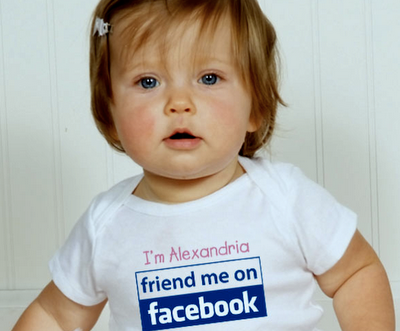 It seems like many of our children will no longer have to worry about those embarrassing photos popping up at 16,18th or 21st birthdays anymore. Many of them will have their lives broadcast as they grow via the internet, some before they are even born! The following article, based on research undertaken by internet security company AVG raises some interesting and concerning questions about how we publicly share our childrens’ lives, beginning before they are even old enough to speak, let alone protest…
Digital Birth: Welcome to the Online World
AVG Study Finds a Quarter of Children Have Online Births Before Their Actual Birth Dates
Source:AMSTERDAM–(BUSINESS WIRE)
Uploading prenatal sonogram photographs, tweeting pregnancy experiences, making online photo albums of children from birth, and even creating email addresses for babies – today’s parents are increasingly building digital footprints for their children prior to and from the moment they are born.
“Secondly, it reinforces the need for parents to be aware of the privacy settings they have set on their social network and other profiles. Otherwise, sharing a baby’s picture and specific information may not only be shared with friends and family but with the whole online world.”
Internet security company AVG surveyed mothers in North America (USA and Canada), the EU5 (UK, France, Germany, Italy and Spain), Australia/New Zealand and Japan, and found that 81 percent of children under the age of two currently have some kind of digital profile or footprint, with images of them posted online. In the US, 92 percent of children have an online presence by the time they are two compared to 73 percent of children in the EU5.
According to the research, the average digital birth of children happens at around six months with a third (33%) of children’s photos and information posted online within weeks of being born. In the UK, 37 percent of newborns have an online life from birth, whereas in Australia and New Zealand the figure is 41 percent.
Almost a quarter (23%) of children begin their digital lives when parents upload their prenatal sonogram scans to the Internet. This figure is higher in the US, where 34 percent have posted sonograms online, while in Canada the figure is even higher at 37 percent. Fewer parents share sonograms of their children in France (13%), Italy (14%) and Germany (15%). Likewise only 14 percent of parents share these online in Japan.
Seven percent of babies and toddlers have an email address created for them by their parents, and five percent have a social network profile.
When asked what motivates parents to post images of their babies on the Internet, more than 70 percent of all mothers surveyed said it was to share with friends and family. However, more than a fifth (22%) of mothers in the US said they wanted to add more content to their social network profiles, while 18 percent of US mothers said they were simply following their peers.
Lastly, AVG asked mothers how concerned they are (on a scale of one to five with five being very concerned) about the amount of online information available on their children in future years. Mothers were moderately concerned (average 3.5), with Spanish mothers being the most concerned.

Click image to read reviews
According to AVG CEO JR Smith, “It’s shocking to think that a 30-year-old has an online footprint stretching back 10–15 years at most, while the vast majority of children today will have online presence by the time they are two-years-old – a presence that will continue to build throughout their whole lives.
“Our research shows that the trend is increasing for a child’s digital birth to coincide with and in many cases pre-date their real birth date. A quarter of babies have sonogram photos posted online before they have even physically entered into the world.
“It’s completely understandable why proud parents would want to upload and share images of very young children with friends and families. At the same time, we urge parents to think about two things:
“First, you are creating a digital history for a human being that will follow him or her for the rest of their life. What kind of footprint do you actually want to start for your child, and what will they think about the information you’ve uploaded in future?
“Secondly, it reinforces the need for parents to be aware of the privacy settings they have set on their social network and other profiles. Otherwise, sharing a baby’s picture and specific information may not only be shared with friends and family but with the whole online world.”
The research was conducted by Research Now among 2200 mothers with young (under two) children during the week of 27 September. Mothers in the EU5 (UK, Germany, France, Italy, Spain), Canada, the USA, Australia, New Zealand and Japan were polled.
Key results
1 – Mothers with children aged under two that have uploaded images of their child
Overall – 81%
USA – 92%
Canada – 84%
UK – 81%
France – 74%
Italy – 68%
Germany – 71%
Spain – 71%
(EU5 – 73%)
Australia – 84%
New Zealand – 91%
Japan – 43%
2 – Mothers that uploaded images of their newborn
Overall – 33%
USA – 33%
Canada – 37%
UK – 37%
France – 26%
Italy – 26%
Germany – 30%
Spain – 24%
(EU5 – 28.6%)
Australia – 41%
New Zealand – 41%
Japan – 19%
3 – Mothers that have uploaded antenatal scans online
Overall – 23%
USA – 34%
Canada – 37%
UK – 23%
France – 13%
Italy – 14%
Germany – 15%
Spain – 24%
(EU5 – 20%)
Australia – 26%
New Zealand – 30%
Japan – 14%
4 – Mothers that gave their baby an email address
Overall – 7%
USA – 6%
Canada – 9%
UK – 4%
France – 7%
Italy – 7%
Germany – 7%
Spain – 12%
(EU5 – 7%)
Australia – 7%
New Zealand – 4%
Japan – 7%
5 – Mothers that gave their baby a social network profile
Overall – 5%
USA – 6%
Canada – 8%
UK – 4%
France – 2%
Italy – 5%
Germany – 5%
Spain – 7%
(EU5 – 5%)
Australia – 5%
New Zealand – 6%
Japan – 8%
Related articles
- Good Parenting? Thousands of Babies Are on Facebook (bettyconfidential.com)
- Look Both Ways: Keeping Your Kids Safe On Facebook (peterhbrown.wordpress.com)
Look Both Ways: Keeping Your Kids Safe On Facebook
 With a bit of strategic parental guidance, you can educate your kids about the potential hazards of social media and give them the tools they need to protect themselves from online predators, guard their personal information, preserve their online reputation, and avoid suspicious downloads that could harm your PC.
Source: http://www.pcworld.com
Facebook and Kids
An iStrategyLabs study documents the growth rates of Facebook profiles in the United States based on age, gender, location, education level, and interests. The study shows that from January 2009 to January 2010, the 13-to-17-year-old age group grew about 88 percent in the U.S., jumping from about 5.7 million teenage Facebook users to almost 10.7 million. Those figures, of course, don’t include minors who lied about their age upon creating their profile.
Despite a legal requirement that kids must be 13 or older to sign up for Facebook, many younger children are using the service. Because no perfect age-verification system exists, younger kids are able to slip by unnoticed through falsifying their age. (For instance, I have one friend whose 12-year-old daughter listed her birth year as 1991 on Facebook, thereby claiming that she was 19 years old.)
The safety and public-policy teams at Facebook are aware of their young audience, and the site has rolled out privacy settings specifically for the under-18 set. Users between the ages of 13 and 17 get what Facebook’s privacy policy calls a “slightly different experience.” Minors do not have public search listings created for them when they sign up for Facebook, meaning their accounts cannot be found on general search engines outside of Facebook.
The “Everyone” setting is not quite as open for minors as it is for adults. If a minor’s privacy settings are set to “Everyone,” that includes only friends, friends of friends, and people within the child’s verified school or work network. However, the “Everyone” setting still allows adults to search for minors by name and send them friend requests (and vice versa), unless the account owner manually changes that. Also, only people within a minor’s “Friends of Friends” network can message them.
Facebook recently premiered a new location-based service called Places, which has some restrictions for minors as well. Minors can share their location through Places only with people on their Friends lists, even if their privacy settings are set to “Everyone.”
As for the teens who lie about how old they are, Facebook does have a way of verifying age. If, for instance, a 19-year-old is mostly friends with 13- and 14-year-olds, and they seem to be taking lots of photos together, then Facebook might suspect that the user is actually 12 or 13–and then it may flag the user’s page for removal or give the user a warning.
The Basics: Protecting Personal Information
Even with Facebook’s privacy policy for minors, a child’s personal information is still widely on display. A young person’s Facebook account is just the beginning of their online footprint, and they need to take that fact seriously, since it can affect their reputation today and potentially come into play later in life when they’re applying for college and for jobs.
Facebook public-policy representative Nicky Jackson Colaco advises parents to sit down with their kids and talk about the importance of protecting one’s online identity. Maintaining open communication with your children is the key to understanding exactly how they’re using Facebook.
“I’d never send my son onto the football field without pads and knowledge of the game,” Colaco says, “and it’s exactly the same with Facebook.”
If you have a Facebook profile, consider sending your child a friend request–not necessarily as a spying tool, but to remind your child of your own online presence. If you don’t have a Facebook account, ask your child to show you their profile. It helps to familiarize yourself as much as possible with the site’s privacy controls and other settings, because the more you know about Facebook, the better equipped you can be if something serious ever arises.
It’s also a good idea to take a look at your child’s photos and wall posts to make sure they are age appropriate. Remind your child that the Internet in general, but especially Facebook, is not a kids-only zone, and that adults can see what’s on their profile as well. Maintaining an appropriate online presence as a teenager will help your child build a respectable online footprint. Remember: The Internet never forgets.
If your kid really has something to hide, they might make a Facebook profile behind your back, or have one account that’s parent-friendly and a separate account for their friends. If they show you a profile that seems skimpy on content, that could be a red flag. That’s where PC and Web-monitoring tools could come into play (see the “Monitoring Behavior” section on the next page).
Finally, go over Facebook’s privacy settings with your child, and show them how to activate the highest level of security. Emphasize that Facebook is a place for friends and not strangers, and then change their profile to “friends only.” Again, remind your child to be wary of what they post in their status updates, since oversharing online can lead to consequences in the real world.
“As the site gets bigger, it’s important to have everyone working together–us, parents, kids, our safety advisory board–to make sure the site remains a safe place,” Colaco says.
Cyberbullying
The suicides of 13-year-old Megan Meier and 15-year-old Phoebe Prince have brought media attention to the potentially devastating effects of cyberbullying. A study performed as part of the Pew Internet & American Life Project, a division of the Pew Research center, reports that “32 percent of online teens have experienced some sort of harassment via the Internet,” including private material being forwarded without permission, threatening messages, and embarrassing photos posted without their consent.

Click image to read reviews
The best way to deal with a cyberbully is to report them and block them from your kid’s Facebook profile.
Research performed at the Massachusetts Aggression Reduction Center shows that, while adults are inclined to moderate their online behavior, children and teens are “significantly more willing to ‘go further’ and to type very shocking things that they would never say in person… Kids believe that online statements simply ‘don’t count’ because they’re not being said to someone’s face.”
Because young people tend to believe that they aren’t accountable for their online actions, Facebook becomes a convenient place to target victims for bullying. Although you can’t do much to prevent your child from being bullied online, you can help them end the harassment if it starts.
The MARC Center has several guides offering tips on how to handle cyberbullying, and all of them start with communicating directly with your child–don’t be afraid to get involved. If you think your child is being bullied, advise your child to spend less time on the site in question, or flag the bully by notifying the Website. If the behavior is also happening at school, notify the school’s administrators so that they, too, can get involved.
Facebook also makes it easy to report harassment issues, and encourages users to do so. But what if you find out that your child is the one doing the bullying? Both scenarios are possible, and both should be dealt with.
In a New York Times Q&A session on cyberbullying, expert Elizabeth K. Englander of the MARC Center addresses an approach that parents should take if they discover that their child is the bully. She first recommends that you discuss with your child why cyberbullying is hurtful, and bring up some of the tragic cases of teen suicide related to online harassment. Try to understand that your child could be reacting to pressure from friends, or that your child may be retaliating against someone who hurt their feelings in a similar manner. Although such circumstances don’t excuse the behavior, learning about them could bring a larger issue to your attention.
Finally, establish a set of rules for your teen to follow when using Facebook and other social networking sites, and monitor your child’s usage, perhaps even placing a daily time limit.
Stranger Danger
Earlier this year, 33-year-old Peter Chapman was sentenced to life in prison for kidnapping, raping, and murdering a 17-year-old girl he met through Facebook. Chapman, a registered sex offender, had created a fake profile and pretended to be 17 years old to gain the victim’s trust.

Despite Facebook’s valiant efforts to rid its site of online predators, the system isn’t foolproof. The site has banned convicted sex offenders from joining, and in 2008 all of the known sex offenders already on the site were removed. However, considering the case of Peter Chapman, predators are still finding ways to cheat the system.
As mentioned earlier, you can limit privacy settings so that your child is directly interacting only with people they know–and more important, you can hide information such as your child’s age, school, and full name from people who are not direct friends.
Stress to your child the importance of avoiding people they do not know in real life. Even if the stranger’s profile says that they are the same age as your child and that they go to a nearby school, the profile could be a decoy. Your child can report to Facebook any stranger who tries to contact them or engage in inappropriate activity.
Third-Party Applications
Many third-party applications on Facebook are aimed directly at teens–often they involve games, establishing crushes, or sprucing up profiles. But many kids don’t quite grasp that these Facebook components are not actually created by Facebook, and that therefore they have different terms of service.

Even worse, some of these external downloads could contain malware. Sunbelt Software has reported several suspicious Facebook scams, from a Texas Hold’em poker app containing adware to various phishing scams under similar disguises.
Make sure you have an up-to-date antivirus program and ad-blocking software that could catch these threats. Talk to your kids about skimming through the terms of service and privacy policies for applications before they accept the download. Also advise them never to open a link posted on their wall from someone they don’t know–it could point to a malicious site.
Monitoring Behavior
If you want to keep a more watchful eye on your kids’ online behavior, you can use any of several effective tools.
SafetyWeb is an online service geared toward parents who wish to keep tabs on what their kids are doing online. It checks across 45 different social networking sites to see if your child has a registered public profile, and it monitors those accounts for any potentially threatening activities. Monitored platforms include Facebook, Flickr, MySpace, Twitter, and YouTube. It also recognizes LiveJournal as a social network and will monitor that site, but it has yet to include other blogging platforms such as Tumblr.

The service will notify you, the parent, if your child has posted anything potentially unsafe or inappropriate, within categories related to drugs and alcohol, sex, depression, profanity, and cyberbullying. That way, you can check your child’s public activity without having to join every site or read every post they make.
McGruff Safeguard software takes online monitoring a step further: It can record every move your child makes on the Internet, covering everything from instant-message logs to search terms on Google. Parents can keep a close eye on their children and discuss any behavior found to be dangerous or inappropriate.
Whether you use a software monitoring tool or not, experts agree that having regular conversations with your children about their online usage is the most important element to keeping them safe and aware of the dangers of the Web.
Related articles by Zemanta
- Sugar & Spite: Bullying and Young Girls (peterhbrown.wordpress.com)
- Six Facebook, Twitter mistakes that can get you fired (macworld.com)
The Type A B C’s Of How Your Personality Effects Your Health
 Could your personality kill you—or might it make you live longer? Could it give you heart disease, or protect you from illness? Could it push you toward or away from doctor appointments?
Credit: Angela Haupt , health.usnews.com
Personality traits play a distinct role in determining how healthy we are, psychologists say. “Everything is related to everything else. How stressed or angry you are, and how you interact with the world, is contingent in large part on your personality style,” says Michael Miller, editor in chief of the Harvard Mental Health Letter. “And that is going to have an enormous impact on your health.”
Here’s a look at common personality types and traits and how each can help or hurt your health (sometimes both):
Hostile
One of the aspects of the impatient, hard-charging Type A personality that is known to increase heart disease risk is hostility. Hostile people eat and smoke more and exercise less than other personality types, says Redford Williams, head of behavioral medicine at Duke University Medical Center and author of Anger Kills. They’re likelier to be overweight in middle age and have higher cholesterol and blood pressure. Williams’s past research suggests hostile people are also more likely to develop irregular heart rhythms, and to die before reaching their 50s. Most of these problems can be traced back to elevated levels of the stress hormone cortisol, as well as increased inflammation in the walls of the coronary arteries, which leads to a greater risk of heart attack.
No personality is set in stone, however, and Type A’s can be taught how to take the edge off their hostility. Hostile heart patients who attend workshops that teach coping skills, for instance, have a lower incidence of depression and healthier blood pressure than Type A’s who don’t go. The key, Williams says, is learning how to communicate more clearly and how to control anger and other negative emotions. He suggests asking yourself four questions when you get angry: Is this issue truly important? Is what I’m feeling appropriate to the facts? Can I modify the situation in a positive way? Is taking such action worth it? Meditation, deep breathing, and yoga can damp hostility with a layer of calm.
Impulsive
Because Type A personalities are defined by competitiveness, a drive to succeed, and a sense of urgency, they are prone to take risks and act without thinking, neither of which is likely to improve health. Non-Type A’s can be impulsive, too. Such people are often not as well-grounded as others, says Robin Belamaric, a clinical psychologist in Bethesda, Md.: “They’ll look at an opportunity that comes along and say, ‘Hmm, that sounds like fun,’ whereas another, more thoughtful person, will say, ‘I’m going to pass, because I’m not sure it’s the best idea.’ ”
Relaxed
If you’re a Type B, you roll with the punches. You’re relaxed, take life a day a time, and handle stress without cracking. That translates to a higher quality of life and lower likelihood of heart disease—less anxiety strengthens the immune system. The more we chill, the better off we are, says Miller: “You don’t want to get locked into a stressful, tense state of mind.” Over the long term, he adds, relaxing and managing stress effectively will lengthen your life, help your heart and gastrointestinal system, and just make you feel better overall.
Extrovert
People who are outgoing, involved in their communities, and have strong social connections reap health benefits. An analysis of 148 studies published in the online journal PLoS medicine in July found that on average, adults enrolled in a study with many close friendships were 50 percent likelier to survive until their study ended than were those with few friendships. And a 2009 study published in Perspectives in Psychological Science suggests that social support leads to improved coping skills, healthy behavior, and adherence to medical regimens. Bonding with others also reduces stress and improves the immune system—so making friends and getting involved becomes, in effect, a well-being tonic.
What drives at least some of the health benefits goes beyond biology, Miller says. “It may have to do with the fact that when you’re around people, you think, ‘Oh, Martha has gone for her mammogram—that reminds me, I should, too.’ ”
Eager to please
People-pleasers—Type C’s—are conforming, passive, and want to accommodate. That can be a good thing when it comes to patient compliance: They’re more likely to take the right medicines in the right doses at the right times, for instance—once they see a doctor, that is. Making and following through on appointments can be challenging for Type C’s, who tend to accept their fate as inevitable and fall readily into hopelessness and helplessness. That means others must push them to take care of themselves. “They may be less likely to maintain their health on their own,” Belamaric says. “If they develop a problem, they may just complain about it, hoping somebody says, ‘I have a good doctor, I’ll make you an appointment.’ ”
Some Type C’s may be so mired that they don’t seek medical attention—even when it’s clearly necessary—and slough off preventive behaviors, like watching what they eat. “If they get a serious diagnosis, they may be passive, throw their hands up, and say, ‘Well, there’s nothing I can do about it, anyway. If it’s my time, it’s my time,’ ” Belamaric says.

Click image to read reviews
Stressed and distressed
Type D’s—D is for distressed—dwell on negative emotions and are afraid to express themselves in social situations. Compared to more optimistic sorts, a Type D may face three times the risk for future heart problems, according to a recent study in the journal Circulation: Cardiovascular Quality and Outcomes. Type D’s also face a higher likelihood of compulsive overeating and substance abuse. “If you’re a person who is prone to depression or anxiety, or if you’re overly self-critical, there’s more of a chance of turning to gratifying behavior to feel better,” Miller says.
Optimistic versus pessimistic
Optimism “heavily influences physical and mental health,” concluded a study published in May in the journal Clinical Practice & Epidemiology in Mental Health after researchers followed more than 500 males for 15 years. The rate of heart-related deaths was 50 percent lower among optimists than among pessimists. “Optimists have a higher quality of life, and they may be more resilient in the way they deal with stress,” Miller says. “So if a problem comes along, they’re able to handle it better, and they become less symptomatic.” Glass-half-empty types harbor little hope for the future and tend more toward depression and anxiety disorders.
But there’s a catch for those at the extreme end of the optimism spectrum: They think of themselves as impervious to risks. Extreme optimists who smoke are the best examples. They believe they won’t develop lung cancer. Why give up smoking to prevent a nonexistent risk?
The “self-healing personality”
That is the name Howard Friedman, a professor of psychology at the University of California-Riverside, attaches to people who are curious, secure, constructive, responsive, and conscientious. These traits translate to enthusiasm for life, emotional balance, and strong social relationships. “Positive emotions buffer hormonal responses to stress,” says Friedman, who studies the relationship between personality and longevity. Self-healers, he says, “have healthier behavior patterns: more physical activity, a better diet, and less smoking and substance abuse.”
Related articles by Zemanta
- Be Active, Sleep Better! Aerobic Exercise Helps Beat Insomnia (peterhbrown.wordpress.com)
- What Were You Thinking? The Causes Of Online Disinhibition (peterhbrown.wordpress.com)
Narcissism, Self-Esteem & Facebook
 Following on from yesterday’s post on disinhibition and social networking, I came across this post from Dr Shock MD’s blog commenting on THIS RESEARCH PAPER (pdf) Credit to Dr Shock (excerpted). Interesting?
In normal every day life with face to face contact the physical characteristics and knowledge about social background form the identity of your contact. It’s stable and three dimensional. You know that person, it’s therefor very difficult for the other to claim another identity or create impressions inconsistent with how you know him or her. Online identity is a different topic. You can create ideal identities not necessarily overlapping your real identity. It’s a controlled setting in which you can create different identities from the person you really are. Moreover, from research it has been shown that people act differently in social networking environments when compared to those interacting in anonymous settings. Online self representation can vary according to the nature of the setting.
What is the relationship between offline personality and online self representation on facebook?
A recent study looked at the effects of narcissism and self esteem on online social activity and self promotion. The researchers included 50 male and 50 female facebook owners, they were randomly recruited at York university, their age ranged from 18 to 25 years. The facebook pages were rated and the participants took 4 questionnaires about demographic information, facebook activity, self esteem (the Rosenberg Self-Esteem Scale) and narcissism (the Narcissism Personality Inventory).
Five features of the Facebook page were coded for the extent to which they were self-promoting: (a) the About Me section, (b) the Main Photo, (c) the first 20 pictures on the View Photos of Me section, (d) the Notes section, and (e) the Status Updates section.

Click image to read reviews
Self promotion was distinguished as any descriptive or visual information that appeared to attempt to persuade others about one’s own positive qualities. For instance posting ‘‘My Celebrity Look-alikes”. Use of picture enhancement etc.
They found a strong relationship between narcissism and lower self esteem with greater facebook activity as well as more promotional self content. Gender did not influence these relationships.
This is another study implying that narcissism can be detected in facebook, the previous study is also discussed on this blog: The Dangers of Facebook. Gender differences were found in another study but on risk taking attitudes. Men with profiles on social networking sites are higher in risk taking behavior and less worried about privacy issues compared to women.
In research looking at other personality factors, the Big Five was used amongst facebook users. As discussed in a previous post on this blog: personality factors are not as influential as expected on using Facebook. The Big Five is probably not a very good instrument to investigate personality traits and facebook use.
Mehdizadeh, S. (2010). Self-Presentation 2.0: Narcissism and Self-Esteem on Facebook Cyberpsychology, Behavior, and Social Networking, 13 (4), 357–364
Related articles by Zemanta
- What Were You Thinking? The Causes Of Online Disinhibition (peterhbrown.wordpress.com)
- Twitter: 10 Psychological Insights (spring.org.uk)
Bullying: Why Do Girls Tend To Become Violent & Agressive Later Than Boys?
 Girls appear to be “protected” from showing antisocial behaviour until their teenage years, new research from the University of Cambridge has found.
The study sheds new light on antisocial behaviour in girls compared with boys and suggests that rather than violence or antisocial behaviour simply reflecting bad choices, the brains of people with antisocial behaviour may work differently from those who behave normally.
Until now, little research has been done on antisocial behaviour (Conduct Disorder) in girls. According to Cambridge Neuroscientist Dr Graeme Fairchild of the Department of Psychiatry, lead author of the study:
“Almost nothing is known about the neuropsychology of severe antisocial behaviour in girls. Although less common in girls than boys, UK crime figures show that serious violence is increasing sharply in female adolescents.”
The study, published online this month in Biological Psychiatry, compared a group of 25 girls, aged 14–18 years-old, with high levels of antisocial and/or violent behaviour with a group of 30 healthy controls.
“Most of our participants had major difficulties controlling their temper, lashing out and breaking things around their homes when they got angry, and had often been involved in serious fights. Several had convictions for violent offences and some had been to prison for assault,” Dr Fairchild explains.
Dr Fairchild and colleagues measured the girls’ ability to recognise the six primary facial expressions – anger, disgust, sadness, fear, surprise and happiness. They found that girls with antisocial behaviour made a large number of errors when asked to recognise anger and disgust, but had no problems recognising other facial expressions.
According to Dr Fairchild: “Our findings suggest that antisocial behaviour or violence may not simply reflect bad choices but that, at some level, the brains of individuals with antisocial behaviour may work differently. This might make it harder for them to read emotions in others – particularly to realise that someone is angry with them – and to learn from punishment.”

Click Image to read reviews
The study also shows that although girls and boys with severe antisocial behaviour have the same problems recognising emotions, the girls – whose problems began when they were teenagers – more closely resembled boys whose antisocial behaviour began in childhood.
Boys with childhood-onset Conduct Disorder have difficulties recognising anger and disgust, but those with adolescence-onset Conduct Disorder do not.
“This suggests that there are interesting differences in antisocial behaviour between girls and boys, with girls being protected from showing antisocial behaviour until their teenage years for reasons we don’t yet understand,” Dr Fairchild says.
The next phase of the research involves a brain scanning study. “As far as we know, this will be the first functional neuroimaging study ever carried out in girls with severe antisocial behaviour,” Dr Fairchild says.
Around five percent of school-age children would meet criteria for Conduct Disorder, but it is approximately three to four times more common in boys than girls. A range of factors – ranging from physical abuse in childhood to being diagnosed with Attention-Deficit/Hyperactivity Disorder – make it more likely that someone will develop Conduct Disorder.
It is difficult to treat using psychological therapy, and there are no effective drug treatments, but a new form of therapy called Multi-Systemic Therapy is currently being trialled in the UK and shows promise in treating antisocial behaviour.
The research was funded by the Wellcome Trust.
Source: the University of Cambridge
Research Article: Facial Expression Recognition, Fear Conditioning, and Startle Modulation in Female Subjects with Conduct Disorder.
Fairchild G, Stobbe Y, van Goozen SH, Calder AJ, Goodyer IM.
Biol Psychiatry. 2010 May 4.
Related articles by Zemanta
- “My Kid Wouldn’t Go There”: Teens & Teen Sexuality (peterhbrown.wordpress.com)
- Teen Myths Busted: New Science Reveals That Common Assumptions Are Wrong (peterhbrown.wordpress.com)
- Bad behaviour among boys linked to early or late puberty (telegraph.co.uk)
![Reblog this post [with Zemanta]](https://i0.wp.com/img.zemanta.com/reblog_e.png)
About Peter
Peter Brown BHMS (Hons) MPsychClin MAPS
I’m a Clinical Psychologist and have a private practice and consultancy in Brisbane Australia. I have 24 years experience in child, adult and family clinical psychology. I have a wonderful wife and three kids.
I am co-founder of Christian Wholeness Counselling Services.
I like researching issues of the brain & mind, reading and seeking out new books and resources for myself and my clients. I thought that others might be interested in some of what I have found also, hence this blog…

Subscribe to My Blog Posts & Updates
-

Blog Surfer
Alphainventions


Recent Comments


 Peter H Brown Clinical Psychologist