Dads And Kids: How Do Fathers Relate Best With Younger Children
 With Father’s Day coming up on Sunday in Australia, I thought I’d post some topical articles. Here’s the first.
Source: Brigham Young University:
Dad’s task: Draw a sailboat with an Etch A Sketch in five minutes or less.
The twist (pun intended): Sketch the sailboat with your 6-year-old child controlling one of the toy’s two dials.
While it sounds like playtime, it’s really an extensive experiment on the relationship quality between fathers and children. Social scientists observed almost 600 dads in 10 cities attempt the joint sketch with their first graders.
But instead of awarding points for artistic quality, the researchers judged how well the pair worked with each other in a battery of team-play exercises including the Etch A Sketch challenge.
“By design, these tasks are too hard for first-graders to do on their own,” said Erin Holmes, a professor in Brigham Young University’s School of Family Life. “When a little conflict or stress occurred, we looked at dads’ ability to respond to their children’s feelings – negative or positive.”
The main conclusion of Holmes’ study? Children who had the best experience can thank their father’s child-centered parenting beliefs, which a statistical analysis showed to be among the most predictive factors of quality relationships. Child-centered parenting includes beliefs such as “Children learn best by doing things themselves” and “A child’s ideas should be seriously considered when making family decisions.”
More telling were factors that didn’t seem to matter: fathers’ income level, education, even the number of diapers they changed.* While these attributes have merit in other contexts, they didn’t influence fathers’ ability to engage their children in productive and positive ways.
Holmes is the lead author of the new study to be published by the academic journal Fathering. Aletha Huston of the University of Texas at Austin is a co-author.
The fathers who did not fare so well in the experiments hold more adult-centered parenting beliefs. These attitudes were measured by a questionnaire asking how strongly they agree with statements like “Preparing for the future is more important for a child than enjoying today” and “Children should be doing something useful at all times.”

Click image to read reviews
If adult-centered fathers perceived their child to possess strong social skills, however, the pair scored well on relationship quality in the playtime experiment.
Being a child-centered father doesn’t mean giving up notions of obedience and accountability, Holmes notes.
“Even though teaching your child to be obedient is an important part of parenting, you need to be willing to listen to your child, too,” Holmes said. “When parents pay attention to their children’s cues about how children feel and what they like to do, it produces better quality relationships.”
The data for this study come from a 15-year longitudinal study funded by The Eunice Kennedy Shriver National Institute of Child Health and Human Development.
* Though not addressed by this particular study, avoiding nappy duty is suspected to impact dad’s relationship with mum.

Related articles by Zemanta
- Feeling Stuck? 10 Important Tips For Changing Your Life (peterhbrown.wordpress.com)
- Why Dads Matter (beliefnet.com)

Why Lucky Charms Sometimes Work: The Powerful Positive Performance Psychology Of Superstition
 Can luck really influence the outcome of events? That question has captivated otherwise rational people for centuries—and challenged scientists to somehow prove whether lucky charms, special shirts or ritualistic behaviors hold special powers.

Read The Original Research Dissertation
They do. (Sometimes.) New research coming out in June suggests that a belief in good luck can affect performance.
In a test conducted by researchers from the University of Cologne, participants on a putting green who were told they were playing with a “lucky ball” sank 6.4 putts out of 10, nearly two more putts, on average, than those who weren’t told the ball was lucky. That is a 35% improvement. The results suggest new thinking in how to view luck and are intriguing to behavorial psychologists.
“Our results suggest that the activation of a superstition can indeed yield performance-improving effects,” says Lysann Damisch, co-author of the Cologne study, set to be published in the journal Psychological Science. The sample size, just 28 university students, was small, but the effect was big enough to be statistically significant.
Believing in their own good fortune can help people only in situations where they can affect the outcome. It can’t, say, help people watching a horse race they have bet on.
While the findings have not been published, this study could prompt psychologists to explore ways to tap into people’s belief in good luck. “Simply being told this is a lucky ball is sufficient to affect performance,” Stuart Vyse, professor of psychology at Connecticut College and author of “Believing in Magic: The Psychology of Superstition,” says of the new study.
More Accuracy: Participants who were handed a golf ball and told, ‘Here is your ball. So far it has turned out to be a lucky ball,’ were 35% more likely to make a golf putt than participants who were told, ‘This is the ball everyone has used so far.’.
When Anthony Overfield rides his motorcycle, he carries two passengers on board: so-called gremlin bells. The 46-year-old runs a Web site, New York Biker, and sells merchandise at bike shows statewide. Gremlin bells are his best sellers. Many bikers believe these small brass bells, mounted near the back of his bike, help ward off accidents. “My bike’s in good shape,” he says. “I’m healthy. I haven’t been involved with any altercations with vehicles.” In short, his good-luck charms seem to be working.
Still, people often overestimate how much control they have over a situation. For a 2003 paper, researchers in the U.K. enlisted 107 traders at London investment banks to play a computer game simulating a live stock index. They were told that pressing the letters Z, X and C on the keyboard “may have some effect on the index,” when in fact it didn’t.
Nonetheless, many traders had an illusion of control. This characteristic could have detracted from their job performance. Traders in the study who held the strongest false belief in control had lower salaries in real life, suggesting that excessive belief in their own control of “luck” may have hurt their trading decisions.
“The idea that wearing a red shirt, saying some sort of incantation or prayer or carrying a lucky charm will bring good luck is very appealing because it gives people the illusion that they have some degree of control over future events in their lives,” says Peter Thall, a biostatistician at the University of Texas. “The painful truth is that we have little or no control over the most important events in our lives.”
Better Memory: with their ‘lucky charms’ on hand performed significantly better than those separated from their charms. Moreover, participants with their lucky charms reported that they felt 30% more capable than participants without the charms.
Mathematicians have demonstrated the role that randomness plays in life—”there are no long-term successful craps players,” says Harvey Mudd College mathematician Arthur Benjamin.
But don’t tell that to the people who believe they can shape their own luck. They’re well represented in games of chance, such as lotteries and casinos, and will be out in force at Saturday’s Kentucky Derby, in which a favorite is named, what else, Lookin At Lucky.
On a recent rainy Sunday afternoon at Aqueduct Race Track in Queens, N.Y., Dennis Canetty was wearing a brown suit. Not an everyday, run-of-the-mill, ordinary brown suit. The retired Wall Street trader, age 61, was sporting his lucky brown suit to help the horse he co-owns, Always a Party, win the second race. The power of the suit is real and proven: Mr. Canetty was wearing it at the Preakness Stakes two years ago when Macho Again, another horse he co-owns, finished second as a 40-to-1 long shot.
“It’s silly,” he said a few minutes before race time. “My wife thinks I’m nuts.”
Even some otherwise calculating mathematicians hold irrational beliefs about luck. “I tell my class, ‘Don’t bother entering sweepstakes; it’s so unlikely you’re going to win,” says Joseph Mazur, a mathematician at Marlboro College and author of the book “What’s Luck Got to Do with It?” coming out in July. But then his wife entered him in a sweepstakes and he won $20,000.
More Persistence: In an anagram game, in which participants had to make as many words as possible from a string of eight letters, participants with their lucky charms set higher goals (16 more words) and persisted longer (nearly 5½-minutes longer) than participants whose lucky charms had been removed.
“There I was for months afterwards, entering every sweepstakes contest I could find,” he says. It was futile—he never repeated.
Investors also are prone to superstitions. For example, during an eclipse, which many cultures view as a bad omen, major U.S. stock-market indexes typically fall, according to research conducted by Gabriele Lepori, assistant professor of finance at Copenhagen Business School in Denmark. This effect persists even after controlling for economic news and long-term trends. And the indexes usually bounce back soon afterward.
Dallas Mavericks owner Mark Cuban, known for basing personnel decisions on statistics, notes with bemusement the superstition of some of his highest-paid employees. “Every locker room has a comical procession of superstitions,” he said in an email. “We have things based on time, on speech intonations and on specific conversation exchanges. If you look at the introductions of any NBA team and what the players do, you have an anthropologist’s dream.”
But at Times False Confidence: In a stock-market simulation, 107 traders were told that pressing the letters Z, X and C on a keyboard ‘may have some effect on the index,’ when in fact it didn’t. Traders in the study who held the strongest belief that the keys made a difference had lower salaries in real life, suggesting that ‘luck’ may hurt their trading decisions.
But Mr. Cuban is sticking with his stats. “When it’s all said and done, it’s about performance and data,” he said. “Guys will change their superstitions, but the numbers don’t lie.”
Still, he says he has some superstitions of his own to give his Mavs a boost, “but there is no chance I tell you; that kills them.” These may not have helped his team in the playoffs: Dallas trails San Antonio, three games to two.
And did Mr. Canetty’s lucky brown suit prove to be lucky? His horse, Always a Party, was bumped early in the race and jockey Channing Hill went flying. “I threw the suit away,” Mr. Canetty said on Tuesday. “I’m not wearing that suit anymore.” For the next race, “I’ll try out a new suit, and see if it brings better luck.”
Read The Original Research Dissertation
Credit: CARL BIALIK : The Wall Street Journal
Related articles by Zemanta
- Winners Are Grinners: Even If There’s Nothing to Win! (peterhbrown.wordpress.com)
- How to Increase Your Self-Control Without Really Trying (spring.org.uk)
- The Trust Gap: Why People Are So Cynical (spring.org.uk)
- Brain Training Or Just Brain Straining?: The Benefits Of Brain Exercise Software Are Unclear (peterhbrown.wordpress.com)
![Reblog this post [with Zemanta]](https://i0.wp.com/img.zemanta.com/reblog_e.png)
Preventing Child Bullying: The Important Role Of Parents
 Getting to know friends, helping with homework are among the things parents can do to decrease the likelihood that their child will become a bully
Communities across the United States are developing programs to address child bullying. New research shows that parents can play an important role in preventing their children from becoming bullies in the first place.
“Improving parent-child communication and parental involvement with their children could have a substantial impact on child bullying,” said Rashmi Shetgiri, MD, MSHS, lead author of a study to be presented Monday, May 3 at the Pediatric Academic Societies (PAS) annual meeting in Vancouver, British Columbia, Canada.
Dr. Shetgiri, a pediatrician and researcher at the University of Texas Southwestern Medical Center and Children’s Medical Center Dallas, and colleagues analyzed data from the 2007 National Survey of Children’s Health. Among the questions asked of 45,897 parents with children 10-17 years old was whether their child bullies or is cruel or mean to others. Researchers then identified factors that increased or reduced the risk of a child being a bully.
Results showed the prevalence of bullying was 15 percent. Factors increasing the risk included race, emotional/behavioral problems and mothers’ mental health.
African-American and Latino children had a higher likelihood of being bullies compared to white children. In addition, children with emotional, developmental or behavioral problems and those whose mothers reported having less than “very good” mental health also were more likely to be bullies. Other parental characteristics that increased the likelihood of child bullying were getting angry with their child frequently and feeling that their child often did things to bother them.

Click image to view reviews
There also were factors that decreased the likelihood that a child will become a bully. Older children, those living in a home where the primary language spoken is not English and those who consistently did their homework were less likely to be bullies.
Parents also played a protective role. Those who shared ideas and talked with their child, and those who met most of their child’s friends were less likely to have children who bully.
“Parents can also work with health care providers to make sure any emotional or behavioral concerns they have about their child, as well as their own mental health, are addressed,” Dr. Shetgiri said. “Lastly, parents can take advantage of parenting programs that can help them become aware of and manage negative feelings, such as anger, and respond to their child in a non-aggressive manner.
Source: Eurekalert
Related articles by Zemanta
- Bullying can be a red flag for depression (msnbc.msn.com)
- “I Saw It Happen”: Children Who Witness Bullying Can Be Traumatized Too (peterhbrown.wordpress.com)
- Violent Video Games & Kids: Definitive Study Shows Both Short & Long Term Harmful Effects (peterhbrown.wordpress.com)
Emotional Intelligence: Learning To Roll With The Punches
 It’s a hot-buzz topic that covers everything from improving workplace performance and successfully climbing the corporate ladder to building the happiest of marriages to ending school bullying. But what exactly is Emotional Intelligence (EI)? If we lack it, can we learn it? And how do we know if our EI is high or low? Is it only high if we’re really, really nice?
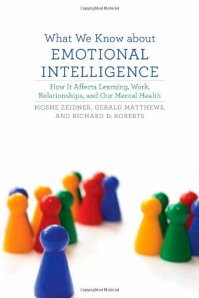
Three scholarly researchers – including University of Cincinnati Psychology Professor Gerry Matthews – delved into the science of EI and published “What We Know About Emotional Intelligence: How it Affects Learning, Work, Relationships, and Our Mental Health.”
Published by MIT Press (2009), the book was recently awarded the American Publishers Award for Professional and Scholarly Excellence – the PROSE Awards – in the biological and life sciences category of biomedicine and neuroscience. The book, co-authored by Matthews, Moshe Zeidner (University of Haifa) and Richard D. Roberts (Center for New Constructs, Educational Testing Service, Princeton, N.J.), was also on display at the UC Libraries’ Authors, Editors and Composers Reception and Program from 3:30-5 p.m., Thursday, April 22, in the Russell C. Myers Alumni Center.
MIT Press promotions describe EI as the “ability to perceive, regulate and communicate emotions – to understand emotions in ourselves and others.” Workplaces want to test for it to find the most EI-talented employees, and consultants are touting training and EI tests to improve productivity. “In the popular writings, EI tends to be defined very broadly and one can’t proceed with scientific research with such a vague and broad definition,” Matthews says.
Matthews’ research interests have explored how stress, mood and coping ability can affect performance on tests, in the workplace and on the highway. He adds that amid the grim economy, even the people who have jobs are feeling high levels of stress in the workplace and are feeling more challenged by workplace demands and concerns about job security. In general terms, those who can roll with the punches – with a shrug and a smile – may have higher Emotional Intelligence.
Click image to read reviews
Then again, “The intimate association of personality and emotion sets a trap for researchers interested in Emotional Intelligence,” writes Matthews. “It might seem that happy, calm states of mind should be seen as the person imbued with high Emotional Intelligence. However, such emotional tendencies may be no more than a consequence of biases in brain functioning or information-processing routines operating without insight or ‘intelligence.’ Some individuals – in part because of their DNA – are simply fortunate in being prone to pleasant moods, so it follows that emotional states do not alone provide an index of Emotional Intelligence,” Matthews states in the book.
In fact, Matthews says he’s skeptical that people who are better at managing stress hold higher Emotional Intelligence, but as the researchers found as they tried to narrow down the science of Emotional Intelligence, more research is needed. For instance, is someone with higher EI in the workplace more productive, or are they just better at self-promotion and forming positive relationships with co-workers? Matthews says he believes EI appears to be very modestly related to workplace performance, and could turn out to be nothing more than a business fad.
He adds the researchers are also skeptical about all of those EI tests, particularly those self-assessments. After all, people could be rating themselves the way they see themselves or the way they would like to be seen, and not like they actually are.
Currently, authors Matthews and Roberts are researching the testing of EI through video scenarios. The situation judgment test involves watching the videos unfold a challenging situation, and then the video comes to a stop and offers different options for resolving the problem. Matthews is building on his earlier research which explored whether negative moods affected good decision making abilities. “Through the video project, the idea is to see if emotionally intelligent people are better able to make rational decisions under stress,” he says.
The researchers are also examining the link between EI and school social and emotional learning programs.
Source:
Dawn Fuller
University of Cincinnati
Related articles by Zemanta
- Learning beyond the classroom (boston.com)
- “The Importance of Emotional Intelligence in Small Business Owners” :The Cross-cultural Connector (translatorpower.wordpress.com)
- Brain Training Or Just Brain Straining?: The Benefits Of Brain Exercise Software Are Unclear (peterhbrown.wordpress.com)
- Winners Are Grinners: Even If There’s Nothing to Win! (peterhbrown.wordpress.com)
And They All Lived Together In a Little Row Boat…Clap! Clap!: How Clapping Games Improve Cognition And Motor Skills In Children
 BEER-SHEVA, ISRAEL, April 28, 2010 – A researcher at Ben-Gurion University of the Negev (BGU) conducted the first study of hand-clapping songs, revealing a direct link between those activities and the development of important skills in children and young adults, including university students.
“We found that children in the first, second and third grades who sing these songs demonstrate skills absent in children who don’t take part in similar activities,” explains Dr. Idit Sulkin a member of BGU’s Music Science Lab in the Department of the Arts.
“We also found that children who spontaneously perform hand-clapping songs in the yard during recess have neater handwriting, write better and make fewer spelling errors.”
Dr. Warren Brodsky, the music psychologist who supervised her doctoral dissertation, said Sulkin’s findings lead to the presumption that “children who don’t participate in such games may be more at risk for developmental learning problems like dyslexia and dyscalculia.
“There’s no doubt such activities train the brain and influence development in other areas. The children’s teachers also believe that social integration is better for these children than those who don’t take part in these songs.”
As part of the study, Sulkin went to several elementary school classrooms and engaged the children in either a board of education sanctioned music appreciation program or hand-clapping songs training – each lasting a period of 10 weeks.
“Within a very short period of time, the children who until then hadn’t taken part in such activities caught up in their cognitive abilities to those who did,” she said. But this finding only surfaced for the group of children undergoing hand-clapping songs training. The result led Sulkin to conclude that hand-clapping songs should be made an integral part of education for children aged six to 10, for the purpose of motor and cognitive training.
During the study, “Impact of Hand-clapping Songs on Cognitive and Motor Tasks,” Dr. Sulkin interviewed school and kindergarten teachers, visited their classrooms and joined the children in singing. Her original goal, as part of her thesis, was to figure out why children are fascinated by singing and clapping up until the end of third grade, when these pastimes are abruptly abandoned and replaced with sports.
“This fact explains a developmental process the children are going through,” Dr. Sulkin observes. “The hand-clapping songs appear naturally in children’s lives around the age of seven, and disappear around the age of 10. In this narrow window, these activities serve as a developmental platform to enhance children’s needs — emotional, sociological, physiological and cognitive. It’s a transition stage that leads them to the next phases of growing up.”
Sulkin says that no in-depth, long-term study has been conducted on the effects that hand-clapping songs have on children’s motor and cognitive skills. However, the relationship between music and intellectual development in children has been studied extensively, prompting countless parents to obtain a “Baby Mozart” CD for their children.
Click image to read reviews
Nevertheless, the BGU study demonstrates that listening to 10 minutes of Mozart music (.i.e., the ‘Mozart Effect’) does not improve spatial task performance compared to 10 minutes of hand-clapping songs training or 10 minutes of exposure to silence.
Lastly, Sulkin discovered that hand-clapping song activity has a positive effect on adults: University students who filled out her questionnaires reported that after taking up such games, they became more focused and less tense.
“These techniques are associated with childhood, and many adults treat them as a joke,” she said. “But once they start clapping, they report feeling more alert and in a better mood.”
Sulkin grew up in a musical home. Her father, Dr. Adi Sulkin, is a well-known music educator who, in the 1970s and 1980s, recorded and published over 50 cassettes and videos depicting Israeli children’s play-songs, street-songs, holiday and seasonal songs, and singing games targeting academic skills.
“So quite apart from the research experience, working on this was like a second childhood,” she noted.
Source: American Associates, Ben-Gurion University of the Negev
Related articles by Zemanta
- Brain Training Or Just Brain Straining?: The Benefits Of Brain Exercise Software Are Unclear (peterhbrown.wordpress.com)
- Sticks & Stones AND Words Can Hurt You: How Words Can Cause Physical Pain (peterhbrown.wordpress.com)
- Classroom Creativity [The Frontal Cortex] (scienceblogs.com)
Winners Are Grinners: Even If There’s Nothing to Win!
 Whether it’s for money, marbles or chalk, the brains of reward-driven people keep their game faces on, helping them win at every step of the way. Surprisingly, they win most often when there is no reward.
That’s the finding of neuroscientists at Washington University in St. Louis, who tested 31 randomly selected subjects with word games, some of which had monetary rewards of either 25 or 75 cents per correct answer, others of which had no money attached.
Subjects were given a short list of five words to memorize in a matter of seconds, then a 3.5-second interval or pause, then a few seconds to respond to a solitary word that either had been on the list or had not. Test performance had no consequence in some trials, but in others, a computer graded the responses, providing an opportunity to win either 25 cent or 75 cents for quick and accurate answers. Even during these periods, subjects were sometimes alerted that their performance would not be rewarded on that trial.
Prior to testing, subjects were submitted to a battery of personality tests that rated their degree of competitiveness and their sensitivity to monetary rewards.
Designed to test the hypothesis that excitement in the brains of the most monetary-reward-sensitive subjects would slacken during trials that did not pay, the study is co-authored by Koji Jimura, PhD, a post-doctoral researcher, and Todd Braver, PhD, a professor, both based in psychology in Arts & Sciences. Braver is also a member of the neuroscience program and radiology department in the university’s School of Medicine.
But the researchers found a paradoxical result: the performance of the most reward-driven individuals was actually most improved – relative to the less reward-driven – in the trials that paid nothing, not the ones in which there was money at stake.
Even more striking was that the brain scans taken using functional Magnetic Resonance Imaging (fMRI) showed a change in the pattern of activity during the non-rewarded trials within the lateral prefrontal cortex (PFC), located right behind the outer corner of the eyebrow, an area that is strongly linked to intelligence, goal-driven behavior and cognitive strategies. The change in lateral PFC activity was statistically linked to the extra behavioral benefits observed in the reward-driven individuals.
The researchers suggest that this change in lateral PFC activity patterns represents a flexible shift in response to the motivational importance of the task, translating this into a superior task strategy that the researchers term “proactive cognitive control.” In other words, once the rewarding motivational context is established in the brain indicating there is a goal-driven contest at hand, the brain actually rallies its neuronal troops and readies itself for the next trial, whether it’s for money or not.
“It sounds reasonable now, but when I happened upon this result, I couldn’t believe it because we expected the opposite results,” says Jimura, first author of the paper. “I had to analyze the data thoroughly to persuade myself. The important finding of our study is that the brains of these reward- sensitive individuals do not respond to the reward information on individual trials. Instead, it shows that they have persistent motivation, even in the absence of a reward. You’d think you’d have to reward them on every trial to do well. But it seems that their brains recognized the rewarding motivational context that carried over across all the trials.”
Click image to read reviews
The finding sheds more light on the workings of the lateral PFC and provides potential behavioral clues about personality, motivation, goals and cognitive strategies. The research has important implications for understanding the nature of persistent motivation, how the brain creates such states, and why some people seem to be able to use motivation more effectively than others. By understanding the brain circuitry involved, it might be possible to create motivational situations that are more effective for all individuals, not just the most reward-driven ones, or to develop drug therapies for individuals that suffer from chronic motivational problems.Their results are published April 26 in the early online edition of the Proceedings of the National Academy of Science.
Everyone knows of competitive people who have to win, whether in a game of HORSE, golf or the office NCAA basketball tournament pool. The findings might tell researchers something about the competitive drive.
The researchers are interested in the signaling chain that ignites the prefrontal cortex when it acts on reward-driven impulses, and they speculate that the brain chemical dopamine could be involved. That could be a potential direction of future studies. Dopamine neurons, once thought to be involved in a host of pleasurable situations, but now considered more of learning or predictive signal, might respond to cues that let the lateral PFC know that it’s in for something good. This signal might help to keep information about the goals, rules or best strategies for the task active in mind to increase the chances of obtaining the desired outcome.
In the context of this study, when a 75-cent reward is available for a trial, the dopamine-releasing neurons could be sending signals to the lateral PFC that “jump start” it to do the right procedures to get a reward.
“It would be like the dopamine neurons recognize a cup of Ben and Jerry’s ice cream, and tell the lateral PFC the right action strategy to get the reward – to grab a spoon and bring the ice cream to your mouth,” says Braver. “We think that the dopamine neurons fires to the cue rather than the reward itself, especially after the brain learns the relationship between the two. We’d like to explore that some more.”
They also are interested in the “reward carryover state,” or the proactive cognitive strategy that keeps the brain excited even in gaps, such as pauses between trials or trials without rewards. They might consider a study in which rewards are far fewer.
“It’s possible we’d see more slackers with less rewards,” Braver says. “That might have an effect on the reward carryover state. There are a host of interesting further questions that this work brings up which we plan to pursue.”
Source: Washington University in St. Louis,
Related articles by Zemanta
- Multitasking Splits the Brain (news.sciencemag.org)
- Why Humans Believe That Better Things Come To Those Who Wait (lockergnome.com)
Remember What Happened? Only In Your Dreams!
 It is by now well established that sleep can be an important tool when it comes to enhancing memory and learning skills. And now, a new study sheds light on the role that dreams play in this important process.
Led by scientists at Beth Israel Deaconess Medical Center (BIDMC), the new findings suggest that dreams may be the sleeping brain’s way of telling us that it is hard at work on the process of memory consolidation, integrating our recent experiences to help us with performance-related tasks in the short run and, in the long run, translating this material into information that will have widespread application to our lives. The study is reported in the April 22 On-line issue of Current Biology.
“What’s got us really excited, is that after nearly 100 years of debate about the function of dreams, this study tells us that dreams are the brain’s way of processing, integrating and really understanding new information,” explains senior author Robert Stickgold, PhD, Director of the Center for Sleep and Cognition at BIDMC and Associate Professor of Psychiatry at Harvard Medical School. “Dreams are a clear indication that the sleeping brain is working on memories at multiple levels, including ways that will directly improve performance.”
At the outset, the authors hypothesized that dreaming about a learning experience during nonrapid eye movement (NREM) sleep would lead to improved performance on a hippocampus-dependent spatial memory task. (The hippocampus is a region of the brain responsible for storing spatial memory.)
To test this hypothesis, the investigators had 99 subjects spend an hour training on a “virtual maze task,” a computer exercise in which they were asked to navigate through and learn the layout of a complex 3D maze with the goal of reaching an endpoint as quickly as possible. Following this initial training, participants were assigned to either take a 90-minute nap or to engage in quiet activities but remain awake. At various times, subjects were also asked to describe what was going through their minds, or in the case of the nappers, what they had been dreaming about. Five hours after the initial exercise, the subjects were retested on the maze task.
The results were striking.
The non-nappers showed no signs of improvement on the second test – even if they had reported thinking about the maze during their rest period. Similarly, the subjects who napped, but who did not report experiencing any maze-related dreams or thoughts during their sleep period, showed little, if any, improvement. But, the nappers who described dreaming about the task showed dramatic improvement, 10 times more than that shown by those nappers who reported having no maze-related dreams.
“These dreamers described various scenarios – seeing people at checkpoints in a maze, being lost in a bat cave, or even just hearing the background music from the computer game,” explains first author Erin Wamsley, PhD, a postdoctoral fellow at BIDMC and Harvard Medical School. These interpretations suggest that not only was sleep necessary to “consolidate” the information, but that the dreams were an outward reflection that the brain had been busy at work on this very task.
Of particular note, say the authors, the subjects who performed better were not more interested or motivated than the other subjects. But, they say, there was one distinct difference that was noted.
“The subjects who dreamed about the maze had done relatively poorly during training,” explains Wamsley. “Our findings suggest that if something is difficult for you, it’s more meaningful to you and the sleeping brain therefore focuses on that subject – it ‘knows’ you need to work on it to get better, and this seems to be where dreaming can be of most benefit.”
Furthermore, this memory processing was dependent on being in a sleeping state. Even when a waking subject “rehearsed and reviewed” the path of the maze in his mind, if he did not sleep, then he did not see any improvement, suggesting that there is something unique about the brain’s physiology during sleep that permits this memory processing.
“In fact,” says Stickgold, “this may be one of the main goals that led to the evolution of sleep. If you remain awake [following the test] you perform worse on the subsequent task. Your memory actually decays, no matter how much you might think about the maze.
“We’re not saying that when you learn something it is dreaming that causes you to remember it,” he adds. “Rather, it appears that when you have a new experience it sets in motion a series of parallel events that allow the brain to consolidate and process memories.”
Ultimately, say the authors, the sleeping brain seems to be accomplishing two separate functions: While the hippocampus is processing information that is readily understandable (i.e. navigating the maze), at the same time, the brain’s higher cortical areas are applying this information to an issue that is more complex and less concrete (i.e. how to navigate through a maze of job application forms).

Click image to read reviews
“Our [nonconscious] brain works on the things that it deems are most important,” adds Wamsley. “Every day, we are gathering and encountering tremendous amounts of information and new experiences,” she adds. “It would seem that our dreams are asking the question, ‘How do I use this information to inform my life?’”
Study coauthors include BIDMC investigators Matthew Tucker, Joseph Benavides and Jessica Payne (currently of the University of Notre Dame).
This study was supported by grants from the National Institutes of Health.
BIDMC is a patient care, teaching and research affiliate of Harvard Medical School, and consistently ranks in the top four in National Institutes of Health funding among independent hospitals nationwide. BIDMC is a clinical partner of the Joslin Diabetes Center and a research partner of the Dana-Farber/Harvard Cancer Center. BIDMC is the official hospital of the Boston Red Sox.
Source: BIDMC
Related articles by Zemanta
- Study: Naps Greatly Boost Memory If You Dream (shoppingblog.com)
- Sticks & Stones AND Words Can Hurt You: How Words Can Cause Physical Pain (peterhbrown.wordpress.com)
- Brain Training Or Just Brain Straining?: The Benefits Of Brain Exercise Software Are Unclear (peterhbrown.wordpress.com)
Violent Video Games & Kids: Definitive Study Shows Both Short & Long Term Harmful Effects
 Iowa State University Distinguished Professor of Psychology Craig Anderson has made much of his life’s work studying how violent video game play affects youth behavior. And he says a new study he led, analyzing 130 research reports on more than 130,000 subjects worldwide, proves conclusively that exposure to violent video games makes more aggressive, less caring kids — regardless of their age, sex or culture.
Read the original research paper (PDF)
“We can now say with utmost confidence that regardless of research method — that is experimental, correlational, or longitudinal — and regardless of the cultures tested in this study [East and West], you get the same effects,” said Anderson, who is also director of Iowa State’s Center for the Study of Violence. “And the effects are that exposure to violent video games increases the likelihood of aggressive behavior in both short-term and long-term contexts. Such exposure also increases aggressive thinking and aggressive affect, and decreases prosocial behavior.”
The study was conducted by a team of eight researchers, including ISU psychology graduate students Edward Swing and Muniba Saleem; and Brad Bushman, a former Iowa State psychology professor who now is on the faculty at the University of Michigan. Also on the team were the top video game researchers from Japan — Akiko Shibuya from Keio University and Nobuko Ihori from Ochanomizu University — and Hannah Rothstein, a noted scholar on meta-analytic review from the City University of New York.
Meta-analytic procedure used in research
The team used meta-analytic procedures — the statistical methods used to analyze and combine results from previous, related literature — to test the effects of violent video game play on the behaviors, thoughts and feelings of the individuals, ranging from elementary school-aged children to college undergraduates.
The research also included new longitudinal data which provided further confirmation that playing violent video games is a causal risk factor for long-term harmful outcomes.
“These are not huge effects — not on the order of joining a gang vs. not joining a gang,” said Anderson. “But these effects are also not trivial in size. It is one risk factor for future aggression and other sort of negative outcomes. And it’s a risk factor that’s easy for an individual parent to deal with — at least, easier than changing most other known risk factors for aggression and violence, such as poverty or one’s genetic structure.”
The analysis found that violent video game effects are significant in both Eastern and Western cultures, in males and females, and in all age groups. Although there are good theoretical reasons to expect the long-term harmful effects to be higher in younger, pre-teen youths, there was only weak evidence of such age effects.
Time to refocus the public policy debate
The researchers conclude that the study has important implications for public policy debates, including development and testing of potential intervention strategies designed to reduce the harmful effects of playing violent video games.
“From a public policy standpoint, it’s time to get off the question of, ‘Are there real and serious effects?’ That’s been answered and answered repeatedly,” Anderson said. “It’s now time to move on to a more constructive question like, ‘How do we make it easier for parents — within the limits of culture, society and law — to provide a healthier childhood for their kids?'”

Click Image To Read Reviews
But Anderson knows it will take time for the creation and implementation of effective new policies. And until then, there is plenty parents can do to protect their kids at home.
“Just like your child’s diet and the foods you have available for them to eat in the house, you should be able to control the content of the video games they have available to play in your home,” he said. “And you should be able to explain to them why certain kinds of games are not allowed in the house — conveying your own values. You should convey the message that one should always be looking for more constructive solutions to disagreements and conflict.”
Anderson says the new study may be his last meta-analysis on violent video games because of its definitive findings. Largely because of his extensive work on violent video game effects, Anderson was chosen as one of the three 2010 American Psychological Association Distinguished Scientist Lecturers
Read the original research paper (PDF)
Source: Iowa State University
Related articles by Zemanta
- Study: Violent Video Game Play Makes More Aggressive Kids (usnews.com)
- Metastudy: Violent video games raise aggression (news.cnet.com)
- “I Saw It Happen”: Children Who Witness Bullying Can Be Traumatized Too (peterhbrown.wordpress.com)
The Internet, Facebook, Pornography & Affairs: A Talkback Podcast Of Real-Life Stories
On Sunday 12th March I took part in an amazing talk-back discussion on Peter Jan etzki’s “Talking Life” radio program on which I am a regular guest. The discussion, which involved a number of stories from listeners calling in, was about the darker side of the internet and social networking. A number of people spoke of the tragic circumstances of losing their relationships through affairs, in which Facebook and other social networking sites where involved. We explored with callers what their experiences had been, what they had learned and advice which they would give to others about realationships and social networking. If you use Facebook, social networking or online gaming or your partner does, this is well worth a listen.
You can now listen to the entire podcast (four parts) by selecting the links below. These files are now stored in my library internally for easy access: (Free – mp3-internal links) click to play or right click on the links and “save link /target as” to download.
Affairs on the Internet part 1
Affairs on the Internet part 2
Affairs on the Internet part 3
Affairs on the Internet part 4
OR

Peter Janetzki
A podcast of the entire show in easy to listen parts, and podcasts of recent shows can be found here or by clicking on the 96.5 logo.You can listen to the podcast from your browser or with iTunes, Talking Life streams live every Sunday night from from 8-10pm Australian Eastern Standard Time (GMT+10) and you can listen by going to the 96.5 website @ 96five.com and clicking on the home page media player.
Brain Training Or Just Brain Straining?: The Benefits Of Brain Exercise Software Are Unclear
 You’ve probably heard it before: the brain is a muscle that can be strengthened. It’s an assumption that has spawned a multimillion-dollar computer game industry of electronic brain-teasers and memory games. But in the largest study of such brain games to date, a team of British researchers has found that healthy adults who undertake computer-based “brain-training” do not improve their mental fitness in any significant way.
Read The Original Research Paper (Draft POF)
The study, published online Tuesday by the journal Nature, tracked 11,430 participants through a six-week online study. The participants were divided into three groups: the first group undertook basic reasoning, planning and problem-solving activities (such as choosing the “odd one out” of a group of four objects); the second completed more complex exercises of memory, attention, math and visual-spatial processing, which were designed to mimic popular “brain-training” computer games and programs; and the control group was asked to use the Internet to research answers to trivia questions.
All participants were given a battery of unrelated “benchmark” cognitive-assessment tests before and after the six-week program. These tests, designed to measure overall mental fitness, were adapted from reasoning and memory tests that are commonly used to gauge brain function in patients with brain injury or dementia. All three study groups showed marginal — and identical — improvement on these benchmark exams.
But the improvement had nothing to do with the interim brain-training, says study co-author Jessica Grahn of the Cognition and Brain Sciences Unit in Cambridge. Grahn says the results confirm what she and other neuroscientists have long suspected: people who practice a certain mental task — for instance, remembering a series of numbers in sequence, a popular brain-teaser used by many video games — improve dramatically on that task, but the improvement does not carry over to cognitive function in general. (Indeed, all the study participants improved in the tasks they were given; even the control group got better at looking up answers to obscure questions.) The “practice makes perfect” phenomenon probably explains why the study participants improved on the benchmark exams, says Grahn — they had all had taken it once before. “People who practiced a certain test improved at that test, but improvement does not translate beyond anything other than that specific test,” she says.
The authors believe the study, which was run in conjuction with a BBC television program called “Bang Goes the Theory,” undermines the sometimes outlandish claims of many brain-boosting websites and digital games. According to a past TIME.com article by Anita Hamilton, HAPPYneuron, an example not cited by Grahn, is a $100 Web-based brain-training site that invites visitors to “give the gift of brain fitness” and claims its users saw “16%+ improvement” through exercises such as learning to associate a bird’s song with its species and shooting basketballs through virtual hoops. Hamilton also notes Nintendo’s best-selling Brain Age game, which promises to “give your brain the workout it needs” through exercises like solving math problems and playing rock, paper, scissors on the handheld DS. “The widely held belief that commercially available computerized brain-training programs improve general cognitive function in the wider population lacks empirical support,” the paper concludes.

Click on image to read reviews
Not all neuroscientists agree with that conclusion, however. In 2005, Torkel Klingberg, a professor of cognitive neuroscience at the Karolinska Institute in Sweden, used brain imaging to show that brain-training can alter the number of dopamine receptors in the brain — dopamine is a neurotransmitter involved in learning and other important cognitive functions. Other studies have suggested that brain-training can help improve cognitive function in elderly patients and those in the early stages of Alzheimer’s disease, but the literature is contradictory.
Klingberg has developed a brain-training program called Cogmed Working Memory Training, and owns shares in the company that distributes it. He tells TIME that the Nature study “draws a large conclusion from a single negative finding” and that it is “incorrect to generalize from one specific training study to cognitive training in general.” He also criticizes the design of the study and points to two factors that may have skewed the results.
On average the study volunteers completed 24 training sessions, each about 10 minutes long — for a total of three hours spent on different tasks over six weeks. “The amount of training was low,” says Klingberg. “Ours and others’ research suggests that 8 to 12 hours of training on one specific test is needed to get a [general improvement in cognition].”
Second, he notes that the participants were asked to complete their training by logging onto the BBC Lab UK website from home. “There was no quality control. Asking subjects to sit at home and do tests online, perhaps with the TV on or other distractions around, is likely to result in bad quality of the training and unreliable outcome measures. Noisy data often gives negative findings,” Klingberg says.
Brain-training research has received generous funding in recent years — and not just from computer game companies — as a result of the proven effect of neuroplasticity, the brain’s ability to remodel its nerve connections after experience. The stakes are high. If humans could control that process and bolster cognition, it could have a transformative effect on society, says Nick Bostrom of Oxford University‘s Future of Humanity Institute. “Even a small enhancement in human cognition could have a profound effect,” he says. “There are approximately 10 million scientists in the world. If you could improve their cognition by 1%, the gain would hardly be noticeable in a single individual. But it could be equivalent to instantly creating 100,000 new scientists.”
For now, there is no nifty computer game that will turn you into Einstein, Grahn says. But there are other proven ways to improve cognition, albeit only by small margins. Consistently getting a good night’s sleep, exercising vigorously, eating right and maintaining healthy social activity have all been shown to help maximize a brain’s potential over the long term.
What’s more, says Grahn, neuroscientists and psychologists have yet to even agree on what constitutes high mental aptitude. Some experts argue that physical skill, which stems from neural pathways, should be considered a form of intelligence — so, masterful ballet dancers and basketball players would be considered geniuses.
Jason Allaire, co-director of the Games through Gaming lab at North Carolina State University says the Nature study makes sense; rather than finding a silver bullet for brain enhancement, he says, “it’s really time for researchers to think about a broad or holistic approach that exercises or trains the mind in general in order to start to improve cognition more broadly.”
Or, as Grahn puts it, when it comes to mental fitness, “there are no shortcuts.”
Credit: Time.com
Related articles by Zemanta
- Brain games don’t make you smarter, study finds (healthzone.ca)
- Brain training ‘boost’ questioned (news.bbc.co.uk)
About Peter
Peter Brown BHMS (Hons) MPsychClin MAPS
I’m a Clinical Psychologist and have a private practice and consultancy in Brisbane Australia. I have 24 years experience in child, adult and family clinical psychology. I have a wonderful wife and three kids.
I am co-founder of Christian Wholeness Counselling Services.
I like researching issues of the brain & mind, reading and seeking out new books and resources for myself and my clients. I thought that others might be interested in some of what I have found also, hence this blog…

Subscribe to My Blog Posts & Updates
-

Blog Surfer
Alphainventions


Recent Comments


 Peter H Brown Clinical Psychologist