Martin Seligman: Author Of “Learned Optimism” Speaks About Positive Psychology And Authentic Happiness
Martin Seligman was originally best known for his classic psychology studies and theory of “Learned Helplessness” (1967) and it’s relationship to depression.
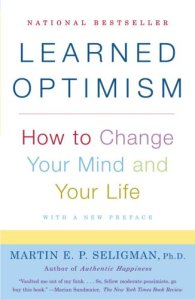
These days he is considered to be a founder of positive psychology, a field of study that examines healthy states, such as authentic happiness, strength of character and optimism, and is the author of “Learned Optimism”.
This is a terrific talk on Positive Psychology and what it means to be happy. It’s about 20 mins. long but definitely worth a watch!

Pack Up Your Troubles And (Apparently) Smile: Physical Enclosure Helps Psychological Closure
Read the original research paper HERE (Free PDF-internal link)
ScienceDaily (Mar. 25, 2010) — Finding it hard to get over a failed love interest? Just can’t get details of a bad financial move out of your head.
A new study from the Rotman School of Management suggests you might want to stick something related to your disappointment in a box or envelope if you want to feel better. In four separate experiments researchers found that the physical act of enclosing materials related to an unpleasant experience, such as a written recollection about it, improved people’s negative feelings towards the event and created psychological closure. Enclosing materials unrelated to the experience did not work as well.

Click image to read reviews
“If you tell people, ‘You’ve got to move on,’ that doesn’t work,” said Dilip Soman, who holds the Corus Chair in Communication Strategy at the Rotman School and is also a professor of marketing, who co-wrote the paper with colleagues Xiuping Li from the National University of Singapore and Liyuan Wei from City University of Hong Kong. “What works is when people enclose materials that are relevant to the negative memories they have. It works because people aren’t trying to explicitly control their emotions.”
While the market implications might not be immediately obvious, Prof. Soman believes the findings point to new angles on such things as fast pick-up courier services and pre-paid mortgage deals that relieve people’s sense of debt burden. If people realize that the memory of past events or tasks can be distracting, perhaps there is a market for products and services that can enclose or take away memories of that task.
The paper is to be published in Psychological Science.
Read the original research paper HERE (Free PDF-internal link)
Self Help For Anxiety & Depression: A List Of FREE Interactive Self Help Websites
Today I wanted to get around to doing what I have been meaning to do for a while and post a list of free access interactive and/or educational websites which I have come across. These sites are fantastic resources and each one offers a different way to get involved with your recovery. Please note I am not affiliated with any of these sites and they are not affiliate sites. I hope you find one or more useful as I know many of my clients have.
Click Image to Read Reviews
Click Image to Read Reviews
Self Help / Educational Websites
Updated 27th March 2010
- Anxiety Online
- Beyond Blue
- Depnet
- Bipolar Disorder Education Program
- Blackdoginstitute
- BlueBoard
- BluePages
- CRUfAD – Self Help
- Depression Education Program
- e-couch
- Feardrop – online exposure therapy for phobias
- Living Well Working Well
- MoodSwings
- Multicultural Information on Depression online (MIDonline)
- Virtual Clinic
- Added 27th March 2010
- Depressioncenter.net
- Beatingtheblues (UK)
There you have it! Check them out and let me know what you think. Know of any others? (No affiliate sites please).
Money & Happiness: Higher Income Only Increases Contentment If You’re ‘Keeping Up With The Jones’s’
Read the original research paper HERE (Free PDF internal link)
Source :ScienceDaily (Mar. 22, 2010)
A study by researchers at the University of Warwick and Cardiff University has found that money only makes people happier if it improves their social rank. The researchers found that simply being highly paid wasn’t enough — to be happy, people must perceive themselves as being more highly paid than their friends and work colleagues.
The researchers were seeking to explain why people in rich nations have not become any happier on average over the last 40 years even though economic growth has led to substantial increases in average incomes.

Click image to read reviews
Lead researcher on the paper Chris Boyce from the University of Warwick’s Department of Psychology said: “Our study found that the ranked position of an individual’s income best predicted general life satisfaction, while the actual amount of income and the average income of others appear to have no significant effect. Earning a million pounds a year appears to be not enough to make you happy if you know your friends all earn 2 million a year.”
The study entitled “Money and Happiness: Rank of Income, Not Income, Affects Life Satisfaction” will be published in the journal Psychological Science. The researchers looked at data on earnings and life satisfaction from seven years of the British Household Panel Survey (BHPS), which is a representative longitudinal sample of British households.
First they examined how life satisfaction was related to how much money each person earned. They found however that satisfaction was much more strongly related to the ranked position of the person’s income (compared to people of the same gender, age, level of education, or from the same geographical area).
The results explain why making everybody in society richer will not necessarily increase overall happiness — because it is only having a higher income than other people that matters.
The three authors of the paper were Chris Boyce, Gordon Brown (both of the University of Warwick’s Department of Psychology), and Simon Moore of Cardiff University.
Read the original research paper HERE (Free PDF internal link)
Happiness: Why It’s Harder to Find in Depression’s “Shrinking World”
http://www.PsychologicalScience.org via http://www.psychcentral.comA new research study investigated whether happy and unhappy people differ in the types of conversations they tend to engage in.
For a four-day period, psychological scientists from the University of Arizona and Washington University in St. Louis had volunteers equipped with an unobtrusive recording device called the Electronically Activated Recorder (EAR).
 This device periodically records snippets of sounds as participants go about their lives. For this experiment, the EAR sampled 30 seconds of sounds every 12.5 minutes yielding a total of more than 20,000 recordings.
Researchers then listened to the recordings and identified the conversations as trivial small talk or substantive discussions. In addition, the volunteers completed personality and well-being assessments.
An analysis of the recordings revealed some very interesting findings.
Greater well-being was related to spending less time alone and more time talking to others: The happiest participants spent 25 percent less time alone and 70 percent more time talking than the unhappiest participants.
In addition to the difference in the amount of social interactions happy and unhappy people had, there was also a difference in the types of conversations they took part in: The happiest participants had twice as many substantive conversations and one third as much small talk as the unhappiest participants.
These findings suggest that the happy life is social and conversationally deep rather than solitary and superficial.
The researchers surmise that — though the current findings cannot identify the causal direction — deep conversations may have the potential to make people happier.
They note, “Just as self-disclosure can instill a sense of intimacy in a relationship, deep conversations may instill a sense of meaning in the interaction partners.”
The findings are reported in the latest issue of Psychological Science, http://www.psychologicalscience.org
School Related Issues: Guest apearance on 96.5 FM’s “Talking Life”
On Sunday 14th February I took part in a discussion on School related issues from preschool to Secondary school as a guest on Peter Jan etzki’s terrific “Talking Life” radio program on which I have been a regular guest over its nine year history. It was a great discussion with some interesting content and phone calls.

Peter Janetzki
A podcast of the entire show and recent shows can be found here or by clicking on the 96.5 logo.You can listen to the podcast from your browser or with iTunes, The show streams live every Sunday night from from 8-10pm Australian Eastern Standard Time (GMT+10) and you can listen by going to the 96.5 website @ 96five.com and clicking on the home page media player.
Be Grateful and Be Happy!
The best way to achieve happiness according to several new studies conducted by Todd Kashdan, associate professor of psychology at George Mason University, is to be grateful.
Gratitude, the emotion of thankfulness and joy in response to receiving a gift, is one of the essential ingredients for living a good life, Kashdan says. Kashdan’s most recent paper, which was published online in March at the Journal of Personality, reveals that when it comes to achieving well-being, gender plays a role. He found that men are much less likely to feel and express gratitude than women.
 “Previous studies on gratitude have suggested that there might be a difference in gender, and so we wanted to explore this further – and find out why. Even if it is a small effect, it could make a huge difference in the long run,” says Kashdan.
In one study, Kashdan interviewed college-aged students and older adults, asking them to describe and evaluate a recent episode in which they received a gift. He found that women compared with men reported feeling less burden and obligation and greater levels of gratitude when presented with gifts. In addition, older men reported greater negative emotions when the gift giver was another man.
“The way that we get socialized as children affects what we do with our emotions as adults,” says Kashdan. “Because men are generally taught to control and conceal their softer emotions, this may be limiting their well-being.”
As director of the Laboratory for the Study of Social Anxiety, Character Strengths, and Related Phenomena at Mason, Kashdan is interested in the assessment and cultivation of well-being, curiosity, gratitude and meaning and purpose in life. He has been active in the positive psychology movement since 2000, when he taught one of the first college courses on the science of happiness.
Kashdan says that if he had to name three elements that are essential for creating happiness and meaning in life it would be meaningful relationships, gratitude, and living in the present moment with an attitude of openness and curiosity. His book “Curious?,” which outlines ways people can enhance and maintain the various shades of well-being, was released in April 2009 with HarperCollins.
Source: Tara Laskowski
George Mason University
A Change by Itself is NOT as Good as a Proper Holiday: Don’t Just Sit There…Go Somewhere!
Just having a break from work is not enough suggests new research, it is activities in the open air which have the strongest restorative effects on our mental states.
Everyone gets down sometimes – it’s only natural. It would be more unusual never to be depressed. The idea that depression is an on-off condition with a purely chemical foundation is a myth no psychologist would endorse. The causes of depression can be many and widespread. But one cause many of us have to cope with is work.
One of the main weapons against stress building up from work is going on vacation. Holidays are a firmly established way of allowing the mind and body to recuperate. In research, however, published in the Journal of Environmental Psychology, Hartig, Catalano and Ong (2007) find that all holidays are not created equal.
Getting out in the open
The lead author of this paper, Terry Hartig, lives and works in Sweden, a country well known for its long, dark winters. As such, the Swedes know the importance of getting out in the sunshine, when it finally arrives. There is even a law requiring employers to provide four consecutive weeks of holiday in the summer. And it’s actually this law that is crucial to Hartig et al’s findings.
Hartig and colleagues suggest that being stuck indoors on vacation can limit mental recuperation. On the other hand, when able to roam outdoors, we can exert ourselves at a favourite sport or simply linger in the park. Psychologically, beautiful scenery can distract us from our troubles, help us forget our normal stressful environments and reconnect us to nature.
This is a nice theory that is intuitively attractive and plausible. The problem is how to test it scientifically.
Anti-depressant prescriptions and the weather
Hartig et al. decided to use the number of SSRI anti-depressants prescribed between 1991 and 1998 as a proxy for the general level of depression in the population of Sweden. They then looked for correlations between the weather and the amount of anti-depressants prescribed, which they duly found.
Wait, though, there’s a problem with this. Perhaps people are simply happier when the weather is warmer? It would then follow there would be an association between anti-depressant prescriptions and temperature.
Hartig et al. anticipated this problem. They remove the variation in anti-depressant prescriptions associated with the general change in monthly mean temperature from the equation. Then they get a really interesting finding. Now there’s only a correlation between temperature and anti-depressant medications in one month: July. There’s no similar effect even for the adjacent months of June or August.
How can that be explained? Why would the relationship only occur in July?
Why July is unusual
Here is the authors’ reasoning. In Sweden people take most of their holiday in July at the centre of the period stipulated by law (from 1 June to 31 August). A survey found it is over 90%. This means that during July they have the highest likelihood of being free to enjoy outdoor pursuits. On average, the rest of the year they will be working, so even if the weather is unseasonably warm in May, for example, they won’t be able to take advantage of it.
The reasoning goes, then, that if the weather is bad in July people are stuck indoors. This means they are unable to fully recuperate mentally before returning to work. Alternately, if the weather is good in July people are, on average, mentally rested and have less need for medication.
Remember that this explanation relies on averaging out many people’s behaviour across nine years. Obviously not everyone requires anti-depressants to get through a spell of bad weather. Similarly some people require them whatever the weather. But think about it in terms of the people who are slipping across the boundary of requiring/asking for medication. Then the authors’ explanation makes sense.
Happiness is…
I know this study falls into the category of telling us something we already know. But it does so in rather an ingenious way that takes advantage of Swedish vacation patterns. Also, we can’t be reminded often enough that we should take every opportunity to get out in the open air.
Truly, happiness is looking out across fresh fields, gazing at a distant tree, feeling the sun on your back and the wind brushing your skin.
Sourced from Psyblog.com
Related articles
- Sleep Well: Why You Need To Fight For Good Sleep (peterhbrown.wordpress.com)
- The Type A B C’s Of How Your Personality Effects Your Health (peterhbrown.wordpress.com)

Exercise and Mood: Healthy Activity Can Help Beat Depression and Anxiety
 es appear to have significant effects in terms of elevating mood,” says Dr. Andrew Leuchter, professor of psychiatry at the UCLA Semel Institute for Neuroscience and Human Behavior. Physical activity, he adds, is often used to augment treatments such as medication and cognitive behavioral therapy. “If people are on medication or in treatment and haven’t had a complete recovery from depression, exercise is useful in getting them all the way there.” Exercise affects the brain in several ways. “People with depression tend to become somewhat inert, and they don’t engage in their usual activities, and exercise gets people back to their usual level of activity,” Leuchter says. That can prompt an upward cycle, inspiring people to return to work and connect again with friends and family, ultimately providing motivation to stay on course. Such connections are crucial for depressed people.
“The psychological benefits make a big difference from my perspective,” says James Blumenthal, professor of medical psychology at Duke University in Durham, N.C. “People have a greater sense of being in control. They feel better about themselves and have more self-confidence.”
A physical change can instigate a mental change, says Vaccaro, director of development at Moonview Sanctuary, a psychological treatment center in Santa Monica. “When you’re getting somebody to move and getting them to change a pattern in their life, just that little bit of pattern change can relate to a mood change, and they start to see themselves as a person who is active, not just a couch potato. They change their perception.” There may be direct physical effects on the brain as well. The treatment center encourages exercise — yoga in particular — as a way to manage many types of mood disorders. Besides having a strong mind-body connection, “yoga is something that can be modified to someone’s activity level and is something they can do throughout their life,” Vaccaro says.
Mood elevation
Several studies illustrate the benefits of exercise.In one, published in the journal Psychosomatic Medicine in 2007, 202 men and women with major depression were randomly assigned to participate in a supervised exercise program in a group setting, do home-based exercise, take an antidepressant medication or take a placebo pill. After 16 weeks, 41% were in remission, meaning they no longer had major depressive disorder. Those who were in the exercise and medication groups tended to have higher remission rates than the placebo group.
Another study examined how much cardiovascular exercise was needed to see changes in mood among those with mild to moderate major depressive disorder. The 80 men and women who took part in the research were randomly placed in four exercise groups that varied in the number of calories burned and the frequency of the activity. A placebo group did flexibility exercises three days a week. Those in the group that exercised at moderate intensity three to five days a week for about 40 minutes (consistent with public health recommendations) showed the biggest decrease in depressive symptoms compared with those who exercised less, or just did stretching.
The 2005 study appeared in the American Journal of Preventive Medicine. Other pieces of the puzzle are still missing, however. Scientists aren’t sure what changes happen in the brain — and why — when people exercise. Many scientists and physicians believe that exercise increases levels of serotonin, a neurotransmitter thought to be linked to mood regulation. However, most of the studies supporting this have been done on animals. “It’s hard to quantify it in humans for a number of reasons,” Leuchter says. “We don’t entirely understand exactly why patients get depressed in the first place. We have theories, but it’s hard to know in individual cases. And we don’t have a good way of looking at [changes] in the brain.” Scientists do know that exercise causes an increase in blood flow to the brain and raises the amount of energy the brain uses. And even though the link between blood flow and mood isn’t known, Leuchter says, “the brain in general seems to be in a healthier state.”
Activity is key
Exercise may be key in fighting depression, but no generic prescription fits everyone. Overall health and exercise history factor into what kind of regimen might be prescribed. “If someone was a runner, I’d get them back to running,” Leuchter says. “If not, I’m not going to have the goal of turning someone into a major athlete. I’d simply want to get them active, and even walking around the block might be good.” Those who aren’t currently in treatment for depression should consult with a physician before exercising to make sure they have no underlying health problems. Patients who are on medication or in therapy for depression shouldn’t consider exercise a substitute for either treatment. “The key,” Blumenthal says, “is really maintenance. You have to do it on an ongoing basis. You should find something you enjoy, but doing something is better than nothing.”
“I Just Want to be Happy!” The Struggle for Happiness PART 1: The Complete First Chapter of “The Happiness Trap”
If you’ve read some previous posts, you’ll be aware that I’m a huge fan of Australian MD Dr Russell Harris’ book “The Happiness Trap”. “The Happiness Trap” is a book which outlines the key principles of Acceptance and Commitment Therapy (ACT). I have said previously that I would come back to this topic so here goes!
 ACT is a relatively new (mid to late 1990’s) approach to cognitive therapy, based around the principles of “mindfulness” and acceptance of the difference between the realities of what is going on around you as opposed to your evaluation or judgment of what is going on around you. These evaluations and judgments are often dependent on how your thoughts and assumptions are attached to or “fused” to your emotions and perceptions of yourself and others. It is a well researched model which is widely becoming more and more accepted as an effective intervention for anxiety,depression and other mental health and wellness issues.
Sound complicated and confusing? Well actually it’s not. And to prove it I am providing a link here to The full first Chapter of Dr Harris’ book in PDF format. You will need acrobat reader (free) or another free PDF reader to access this chapter which you can find by clicking on the link below.
I will be coming back to the principle of ACT and mindulness hopefully once or twice a week, and my aim is to walk you through the rationale of this approach and show you some tools,worksheets and strategies to help you to explore and implement some of basics of ACT, so subscribe to my RSS or come back regularly to keep up!
Here’s the link!
Chapter 1 of “The Happiness Trap” – Dr Russell Harris (No catches or tricks..it’s free!)
You will probably find a copy of The Happiness Trap and other ACT Books in your local library. You can also purchase a copy Here, and if you are in Australasia, Here. You can read more about it at Dr Harris’ website and there are customer reviews in My Highly Recommended Books.
Enjoy
Part Two coming soon!
//
About Peter
Peter Brown BHMS (Hons) MPsychClin MAPS
I’m a Clinical Psychologist and have a private practice and consultancy in Brisbane Australia. I have 24 years experience in child, adult and family clinical psychology. I have a wonderful wife and three kids.
I am co-founder of Christian Wholeness Counselling Services.
I like researching issues of the brain & mind, reading and seeking out new books and resources for myself and my clients. I thought that others might be interested in some of what I have found also, hence this blog…

Subscribe to My Blog Posts & Updates
-

Blog Surfer
Alphainventions


Recent Comments


 Peter H Brown Clinical Psychologist