Emotional Intelligence: Learning To Roll With The Punches
 It’s a hot-buzz topic that covers everything from improving workplace performance and successfully climbing the corporate ladder to building the happiest of marriages to ending school bullying. But what exactly is Emotional Intelligence (EI)? If we lack it, can we learn it? And how do we know if our EI is high or low? Is it only high if we’re really, really nice?
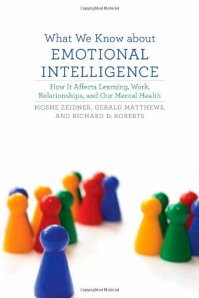
Three scholarly researchers – including University of Cincinnati Psychology Professor Gerry Matthews – delved into the science of EI and published “What We Know About Emotional Intelligence: How it Affects Learning, Work, Relationships, and Our Mental Health.”
Published by MIT Press (2009), the book was recently awarded the American Publishers Award for Professional and Scholarly Excellence – the PROSE Awards – in the biological and life sciences category of biomedicine and neuroscience. The book, co-authored by Matthews, Moshe Zeidner (University of Haifa) and Richard D. Roberts (Center for New Constructs, Educational Testing Service, Princeton, N.J.), was also on display at the UC Libraries’ Authors, Editors and Composers Reception and Program from 3:30-5 p.m., Thursday, April 22, in the Russell C. Myers Alumni Center.
MIT Press promotions describe EI as the “ability to perceive, regulate and communicate emotions – to understand emotions in ourselves and others.” Workplaces want to test for it to find the most EI-talented employees, and consultants are touting training and EI tests to improve productivity. “In the popular writings, EI tends to be defined very broadly and one can’t proceed with scientific research with such a vague and broad definition,” Matthews says.
Matthews’ research interests have explored how stress, mood and coping ability can affect performance on tests, in the workplace and on the highway. He adds that amid the grim economy, even the people who have jobs are feeling high levels of stress in the workplace and are feeling more challenged by workplace demands and concerns about job security. In general terms, those who can roll with the punches – with a shrug and a smile – may have higher Emotional Intelligence.
Click image to read reviews
Then again, “The intimate association of personality and emotion sets a trap for researchers interested in Emotional Intelligence,” writes Matthews. “It might seem that happy, calm states of mind should be seen as the person imbued with high Emotional Intelligence. However, such emotional tendencies may be no more than a consequence of biases in brain functioning or information-processing routines operating without insight or ‘intelligence.’ Some individuals – in part because of their DNA – are simply fortunate in being prone to pleasant moods, so it follows that emotional states do not alone provide an index of Emotional Intelligence,” Matthews states in the book.
In fact, Matthews says he’s skeptical that people who are better at managing stress hold higher Emotional Intelligence, but as the researchers found as they tried to narrow down the science of Emotional Intelligence, more research is needed. For instance, is someone with higher EI in the workplace more productive, or are they just better at self-promotion and forming positive relationships with co-workers? Matthews says he believes EI appears to be very modestly related to workplace performance, and could turn out to be nothing more than a business fad.
He adds the researchers are also skeptical about all of those EI tests, particularly those self-assessments. After all, people could be rating themselves the way they see themselves or the way they would like to be seen, and not like they actually are.
Currently, authors Matthews and Roberts are researching the testing of EI through video scenarios. The situation judgment test involves watching the videos unfold a challenging situation, and then the video comes to a stop and offers different options for resolving the problem. Matthews is building on his earlier research which explored whether negative moods affected good decision making abilities. “Through the video project, the idea is to see if emotionally intelligent people are better able to make rational decisions under stress,” he says.
The researchers are also examining the link between EI and school social and emotional learning programs.
Source:
Dawn Fuller
University of Cincinnati
Related articles by Zemanta
- Learning beyond the classroom (boston.com)
- “The Importance of Emotional Intelligence in Small Business Owners” :The Cross-cultural Connector (translatorpower.wordpress.com)
- Brain Training Or Just Brain Straining?: The Benefits Of Brain Exercise Software Are Unclear (peterhbrown.wordpress.com)
- Winners Are Grinners: Even If There’s Nothing to Win! (peterhbrown.wordpress.com)
![Reblog this post [with Zemanta]](https://i0.wp.com/img.zemanta.com/reblog_e.png)
Learning To Love: The Importance Of Empathy & How To Teach It To Your Kids
Credit: Maia Szalavitz: neuroscience journalist The Huffington Post 29 March 2010
 One of the least-praised pleasures in life — and yet one that is probably most likely to bring lasting happiness — is the ability to be happy for others. When we think about empathy, we tend to think of feeling other people’s pain — but feeling other people’s joy gets short shrift That must change if we want to have a more empathetic society.
While working on our forthcoming book, Born for Love: Why Empathy Is Essential — and Endangered (my co-author is leading child trauma expert Bruce Perry, MD, PhD), one of the most common questions I’ve gotten is, “What can parents do to raise more empathetic children?”
And, as I talked about sharing joy with a friend last week, I thought again about just how important the pleasurable part of empathy is in parenting. Sharing pleasure is actually one of our earliest experiences: consider the way a baby’s smile lights up a room and all the silly things adults will do to elicit these little expressions of happiness and connection. Videos of laughing babies delight us for the same reason. [I dare you to resist the laughing quads!]
Cuteness is nature’s way of getting us through the most difficult and demanding parts of parenting: if babies weren’t so darn cute, few people would be able to take the dirty diapers and other drudgery of caring for them. But their smiles and laughs are overwhelmingly infectious.
It’s this same early dance between parent and child that instills empathy in the first place. We all have the natural capacity (in the absence of some brain disorders) for empathy. However, like language, empathy requires particular experiences to promote learning. The ‘words” and “grammar” of empathy are taught first via early nurturing experiences.
Without responsive parenting, though, babies don’t learn to connect people with pleasure. If your smiles aren’t returned with joy, it’s as though you are being asked to learn to speak without anyone ever talking to you. The brain expects certain experiences to guide its development — if these don’t occur at the right time, the capacity to learn them can be reduced or even lost.
So, most of us come into the world and receive parenting that implicitly teaches us that joy is shared. Babies don’t just smile spontaneously — they also smile radiantly back when people smile at them. The back and forth of these smiles, the connection, disconnection, reconnection and its rhythm teaches us that your happiness is mine, too.
Over time, unfortunately, we learn that we are separate beings and sometimes come to see other people’s happiness as a threat or a sign that we’ve lost a competition, rather than something we can share.
This, of course, is natural, too: we are also normally born with an acute sense of fairness and justice that makes us sensitive to say, whether our older brother’s toys are nicer than ours. While cries of “that’s not fair” are the bane of many parents’ existence, they’re not just selfish. They’re part of a social sense that we should

Click image to read reviews
receive equal treatment.
How, then, can we help kids to develop both their sense of justice and the ability to share joy?
One key is making the implicit explicit. When we see kids smiling in response to others, point out how seeing someone else smile made them feel good; when we see that they enjoy our reaction to their artwork and gifts, praise them for being happy for us. Saying that “it’s better to give than receive,” may ring hollow — pointing out when children are actually experiencing the feeling of taking joy in giving is much more powerful.
Allowing children to own this ability and recognize it in themselves will also encourage it — helping them to define themselves as the kind of people who are happy for other people will make them feel like good people, too. Encouraging such an identity will reinforce other positive behaviors as well. Changing behavior to suit an identity you prefer is actually one of the easiest ways to make changes.
Further, rather than calling kids selfish or self-interested when they protest about someone else getting what seems like something better, reframe this as a concern for justice and ask them to look out for when what seems unfair is unfair in their own favor, too. Children who see themselves as being “bad” or “selfish” will unfortunately take on that identity, too — if they don’t recognize their own prosocial behavior, they can’t enhance it and may embrace a very negative view of their own desires and drives.
Sadly, as a society, for centuries we have embraced a view of human nature that is selfish and competitive — with evolution being described as a contest in which the most ruthless are always likely to be the winners. In fact, research is now showing that, at least in humans, kindness is also a critical part of fitness.
For one, both men and women typically describe kindness as one of the top three characteristics they seek in a mate (sense of humor and intelligence are the other top two picks; gender differences in valuing attractiveness and resources come lower on the list).
Second, the ability to nurture and connect is critical for the survival of human children: in hunter/gatherer societies, the presence of older siblings and grandmothers can be even more important to child survival than the presence of fathers according to Sarah Hrdy’s research, suggesting that cooperation in childrearing made genetic survival more likely — not competition.
This means that human nature isn’t the selfish, sociopathic murk we’ve been told it is. While we are certainly no angels, our altruistic side is equally real. To create a more empathetic world, we need to own this as adults as we teach it to our kids.

Related articles by Zemanta
- The Little Hearts Project (digitalphilanthropy.blogspot.com)
- Personal Health: Empathy’s Natural, but Nurturing It Helps (nytimes.com)
Why Your Job Doesn’t Make You Happy
Information supplied by T he British Psychological Society
Read the original research paper here (PDF)
People who are unhappy in life are unlikely to find satisfaction at work. This is the finding of a study published online last thursday, 1st April 2010, in the Journal of Occupational and Organizational Psychology.
Assistant Professor Nathan Bowling of Wright State University, USA, and colleagues Kevin Eschleman and Qiang Wang undertook a meta-analysis on the results of 223 studies carried out between 1967 and 2008. All of the studies had investigated some combination of job satisfaction and life satisfaction (or subjective well-being).
Assistant Professor Nathan Bowling said: “We used studies that assessed these factors at two time points so that we could better understand the causal links between job satisfaction and life satisfaction. If people are satisfied at work, does this mean they will be more satisfied and happier in life overall? Or is the causal effect the opposite way around?”

Click image to read reviews
The causal link between subjective well-being and subsequent levels of job satisfaction was found to be stronger than the link between job satisfaction and subsequent levels of subjective well-being.
“These results suggest that if people are, or are predisposed to be, happy and satisfied in life generally, then they will be likely to be happy and satisfied in their work,” said Nathan Bowling.
“However, the flipside of this finding could be that those people who are dissatisfied generally and who seek happiness through their work, may not find job satisfaction. Nor might they increase their levels of overall happiness by pursuing it.”
Read the original research paper here (PDF)
Related articles by Zemanta
- Those Who Enjoy Life More Likely to Be Happy at Work (nlm.nih.gov)
Exercise DOES Help Improve Mood! And Just 25 Minutes Worth Will Decrease Stress & Increase Energy
Having an Honors degree in Human Movement Studies and working in gyms in a former life while studying for my Clinical Masters degree, I have seen this to be true. Of course it seems self evident, but these researchers have used great science with an excellent and now research-proven written program and workbook. These, along with their recent meta-analytic research review, show just how effective exercise can be in improving mood.
 Credit: PhysOrg.com) — Exercise is a magic drug for many people with depression and anxiety disorders, according to researchers who analyzed numerous studies, and it should be more widely prescribed by mental health care providers.
“Exercise has been shown to have tremendous benefits for mental health,” says Jasper Smits, director of the Anxiety Research and Treatment Program at Southern Methodist University in Dallas. “The more therapists who are trained in exercise therapy, the better off patients will be.”
The traditional treatments of cognitive behavioral therapy and pharmacotherapy don’t reach everyone who needs them, says Smits, an associate professor of psychology.
“Exercise can fill the gap for people who can’t receive traditional therapies because of cost or lack of access, or who don’t want to because of the perceived social stigma associated with these treatments,” he says. “Exercise also can supplement traditional treatments, helping patients become more focused and engaged.”
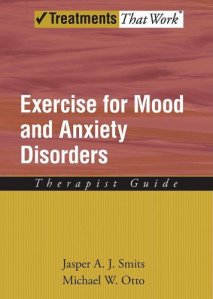
The Program used in the study is available from bookstores-Click Image to view description
Smits and Michael Otto, psychology professor at Boston University, presented their findings to researchers and mental health care providers March 6 at the Anxiety Disorder Association of America’s annual conference in Baltimore.
Their workshop was based on their therapist guide “Exercise for Mood and Anxiety Disorders,” with accompanying patient workbook (Oxford University Press, September 2009).
The guide draws on dozens of population-based studies, clinical studies and meta-analytic reviews that demonstrate the efficacy of exercise programs, including the authors’ meta-analysis of exercise interventions for mental health and study on reducing anxiety sensitivity with exercise.
“Individuals who exercise report fewer symptoms of anxiety and depression, and lower levels of stress and anger,” Smits says. “Exercise appears to affect, like an antidepressant, particular neurotransmitter systems in the brain, and it helps patients with depression re-establish positive behaviors. For patients with anxiety disorders, exercise reduces their fears of fear and related bodily sensations such as a racing heart and rapid breathing.”
After patients have passed a health assessment, Smits says, they should work up to the public health dose, which is 150 minutes a week of moderate-intensity activity or 75 minutes a week of vigorous-intensity activity.
At a time when 40 percent of Americans are sedentary, he says, mental health care providers can serve as their patients’ exercise guides and motivators.
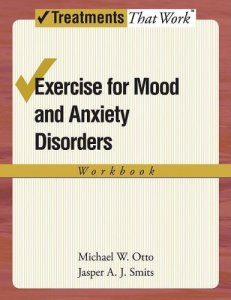
The patient workbook which accompanies the program - Click image to view description
“Rather than emphasize the long-term health benefits of an exercise program — which can be difficult to sustain — we urge providers to focus with their patients on the immediate benefits,” he says. “After just 25 minutes, your mood improves, you are less stressed, you have more energy — and you’ll be motivated to exercise again tomorrow. A bad mood is no longer a barrier to exercise; it is the very reason to exercise.”
Smits says health care providers who prescribe exercise also must give their patients the tools they need to succeed, such as the daily schedules, problem-solving strategies and goal-setting featured in his guide for therapists.
“Therapists can help their patients take specific, achievable steps,” he says. “This isn’t about working out five times a week for the next year. It’s about exercising for 20 or 30 minutes and feeling better today.”
Related articles by Zemanta
- Personal Health: Research Is Starting to Shed Light on Body Dysmorphic Disorder (nytimes.com)
- Music Soothes Anxiety as Well as Massage Does (nlm.nih.gov)
Pack Up Your Troubles And (Apparently) Smile: Physical Enclosure Helps Psychological Closure
Read the original research paper HERE (Free PDF-internal link)
ScienceDaily (Mar. 25, 2010) — Finding it hard to get over a failed love interest? Just can’t get details of a bad financial move out of your head.
A new study from the Rotman School of Management suggests you might want to stick something related to your disappointment in a box or envelope if you want to feel better. In four separate experiments researchers found that the physical act of enclosing materials related to an unpleasant experience, such as a written recollection about it, improved people’s negative feelings towards the event and created psychological closure. Enclosing materials unrelated to the experience did not work as well.

Click image to read reviews
“If you tell people, ‘You’ve got to move on,’ that doesn’t work,” said Dilip Soman, who holds the Corus Chair in Communication Strategy at the Rotman School and is also a professor of marketing, who co-wrote the paper with colleagues Xiuping Li from the National University of Singapore and Liyuan Wei from City University of Hong Kong. “What works is when people enclose materials that are relevant to the negative memories they have. It works because people aren’t trying to explicitly control their emotions.”
While the market implications might not be immediately obvious, Prof. Soman believes the findings point to new angles on such things as fast pick-up courier services and pre-paid mortgage deals that relieve people’s sense of debt burden. If people realize that the memory of past events or tasks can be distracting, perhaps there is a market for products and services that can enclose or take away memories of that task.
The paper is to be published in Psychological Science.
Read the original research paper HERE (Free PDF-internal link)
Self Help For Anxiety & Depression: A List Of FREE Interactive Self Help Websites
Today I wanted to get around to doing what I have been meaning to do for a while and post a list of free access interactive and/or educational websites which I have come across. These sites are fantastic resources and each one offers a different way to get involved with your recovery. Please note I am not affiliated with any of these sites and they are not affiliate sites. I hope you find one or more useful as I know many of my clients have.
Click Image to Read Reviews
Click Image to Read Reviews
Self Help / Educational Websites
Updated 27th March 2010
- Anxiety Online
- Beyond Blue
- Depnet
- Bipolar Disorder Education Program
- Blackdoginstitute
- BlueBoard
- BluePages
- CRUfAD – Self Help
- Depression Education Program
- e-couch
- Feardrop – online exposure therapy for phobias
- Living Well Working Well
- MoodSwings
- Multicultural Information on Depression online (MIDonline)
- Virtual Clinic
- Added 27th March 2010
- Depressioncenter.net
- Beatingtheblues (UK)
There you have it! Check them out and let me know what you think. Know of any others? (No affiliate sites please).
Improve Self Control and Impulsivity Through Abstract Thinking
Read Original Research Paper HERE (Free PDF internal link)
[A] New study shows that self-control can be automatically, unconsciously bolstered by abstract thinking.
Wouldn’t it be great if we could just spontaneously and automatically exercise self-control, without all that painful back-and-forth battle with ourselves?
Just automatically resist that cake and choose the apple; or suddenly find ourselves out jogging without resorting to self-blackmail […]
Unfortunately so often temptation wins. And experiments show that when we are run down from exercising self-discipline all day, we become even more likely to give in to temptation.
Apple or candy bar?
[Previous studies suggest ]that self-control can be increased by thinking abstractly about our goals. This suggests we should see our actions as just one part of a larger plan, rather than focusing on the details of what we’re doing. The power of abstract thinking may offer a way for us to increase our self-control without really trying.
But how does thinking abstractly about our goals increase our self-control? In a recent article published in Psychological Science, Fujita and Han (2009) wondered if our unconscious mind is somehow pitching in to help out. They used an implicit association test as a way of measuring people’s unconscious thoughts about eating either an apple or a tempting candy bar.
Before taking this test people were put into either an abstract or concrete mode of thinking. Participants were split into two groups with each asked to think about maintaining good personal relationships, but in different ways. One group thought about why we need to maintain good relationships (abstract, high-level) while the other focused on how we maintain good relationships (concrete, low-level).
As you can see, for the purposes of this experiment, the reason participants were thinking abstractly didn’t matter so much. That’s because when we think abstractly about one thing, we tend to carry on thinking in an abstract mode about anything else that’s put in front of us, including the choice between an apple and a candy bar.
Automatic, unconscious self-control
The results showed that, when participants were thinking concretely, they tended to unconsciously see candy bars in a positive light and apples in a negative light. But this was reversed when participants were thinking abstractly. Just as predicted, abstract thinking automatically made people unconsciously think of candy bars as the devil’s own food.
To back this up they asked participants in the two conditions whether they would like an apple or a candy bar, right now. They found that when participants were thinking in a concrete low-level way, they chose the apple over the candy bar only 50% of the time. But when they were thinking abstractly this percentage shot up to 76%. Not bad for such a simple manipulation.
So it seems you can bolster resistance to temptation by thinking abstractly about the goal you want to obtain because it causes your mind to automatically associate temptations with negativity. Hey presto, more self-control and thank you unconscious mind.
Why not try applying this to whatever you are finding difficult to achieve?
Read Original Research Paper HERE (Free PDF internal link)
Adapted from an article posted at PsyBlog 03/10
Pay It Forward: Research Proves That Acts Of Kindness From A Few Cascade On To Dozens
Read The Original Research Paper HERE (Free PDF)
ScienceDaily (Mar. 10, 2010) — For all those dismayed by scenes of looting in disaster-struck zones, whether Haiti or Chile or elsewhere, take heart: Good acts — acts of kindness, generosity and cooperation — spread just as easily as bad. And it takes only a handful of individuals to really make a difference.

This diagram illustrates how a single act of kindness can spread between individuals and across time. Cooperative behavior spreads three degrees of separation
In a study published in the March 8 early online edition of the Proceedings of the National Academy of Sciences, researchers from the University of California, San Diego and Harvard provide the first laboratory evidence that cooperative behavior is contagious and that it spreads from person to person to person. When people benefit from kindness they “pay it forward” by helping others who were not originally involved, and this creates a cascade of cooperation that influences dozens more in a social network.
The research was conducted by James Fowler, associate professor at UC San Diego in the Department of Political Science and Calit2’s Center for Wireless and Population Health Systems, and Nicholas Christakis of Harvard, who is professor of sociology in the Faculty of Arts and Sciences and professor of medicine and medical sociology at Harvard Medical School. Fowler and Christakis are coauthors of the recently published book Connected: The Surprising Power of Our Social Networks and How They Shape Our Lives.
In the current study, Fowler and Christakis show that when one person gives money to help others in a “public-goods game,” where people have the opportunity to cooperate with each other, the recipients are more likely to give their own money away to other people in future games. This creates a domino effect in which one person’s generosity spreads first to three people and then to the nine people that those three people interact with in the future, and then to still other individuals in subsequent waves of the experiment.
The effect persists, Fowler said: “You don’t go back to being your ‘old selfish self.”’ As a result, the money a person gives in the first round of the experiment is ultimately tripled by others who are subsequently (directly or indirectly) influenced to give more. “The network functions like a matching grant,” Christakis said.
“Though the multiplier in the real world may be higher or lower than what we’ve found in the lab,” Fowler said, “personally it’s very exciting to learn that kindness spreads to people I don’t know or have never met. We have direct experience of giving and seeing people’s immediate reactions, but we don’t typically see how our generosity cascades through the social network to affect the lives of dozens or maybe hundreds of other people.”
The study participants were strangers to each other and never played twice with the same person, a study design that eliminates direct reciprocity and reputation management as possible causes.
 In previous work demonstrating the contagious spread of behaviors, emotions and ideas — including obesity, happiness, smoking cessation and loneliness — Fowler and Christakis examined social networks re-created from the records of the Framingham Heart Study. But like all observational studies, those findings could also have partially reflected the fact that people were choosing to interact with people like themselves or that people were exposed to the same environment. The experimental method used here eliminates such factors.
The study is the first work to document experimentally Fowler and Christakis’s earlier findings that social contagion travels in networks up to three degrees of separation, and the first to corroborate evidence from others’ observational studies on the spread of cooperation.
The contagious effect in the study was symmetric; uncooperative behavior also spread, but there was nothing to suggest that it spread any more or any less robustly than cooperative behavior, Fowler said.
From a scientific perspective, Fowler added, these findings suggest the fascinating possibility that the process of contagion may have contributed to the evolution of cooperation: Groups with altruists in them will be more altruistic as a whole and more likely to survive than selfish groups.
“Our work over the past few years, examining the function of human social networks and their genetic origins, has led us to conclude that there is a deep and fundamental connection between social networks and goodness,” said Christakis. “The flow of good and desirable properties like ideas, love and kindness is required for human social networks to endure, and, in turn, networks are required for such properties to spread. Humans form social networks because the benefits of a connected life outweigh the costs.”
The research was funded by the National Institute on Aging, the John Templeton Foundation, and a Pioneer Grant from the Robert Wood Johnson Foundation.
Read The Original Research Paper HERE (Free PDF)
Related articles by Zemanta
- How Social Networks Impact Drinking Habits (wellness.blogs.time.com)
- A new way of thinking about social networks and the world (boston.com)
- Loneliness May Be Contagious (wired.com)
A Tired Woman’s Guide to Passionate Sex: Research Shows 6 Step Program To Be Effective
 http://www.medicalnewstoday.com
According to the Journal of Sexual Medicine, people who engage in regular sexual activity gain several health benefits, such as longer lives, healthier hearts, lower blood pressure, and lower risk of breast cancer. However, approximately 33 percent of women may not receive these benefits due to low sexual desire. Also, the marriages of women with low sexual desire may also be at risk, given a recent statistic that 25 percent of divorce is due to sexual dissatisfaction.
Some doctors are prescribing testosterone patches for women with low sexual desire. However, research shows that testosterone patches might increase the risk of breast cancer when used for just a year. Researchers are currently testing a new drug, flibanserin, which was developed as an antidepressant and affects neurotransmitters in the brain, to treat women with low sexual desire. However, experts are concerned about the side effects of this possible treatment. Now, a University of Missouri researcher has found evidence that a low-cost, risk-free psychological treatment is effective and may be a better alternative to drugs that have adverse side effects.
 “Low sexual desire is the number one problem women bring to sex therapists,” said Laurie Mintz, associate professor of educational, school and counseling psychology in the MU College of Education. “Drugs to treat low sexual desire may take the focus away from the most common culprits of diminished desire in women, including lack of information on how our own bodies work, body image issues, relationship issues and a stressful lifestyle. Indeed, research demonstrates that relationship issues are far more important in predicting women’s sexual desire than are hormone levels. Before women seek medical treatments, they should consider psychological treatment.”
Mintz has authored a book, A Tired Woman’s Guide to Passionate Sex: Reclaim Your Desire and Reignite Your Relationship
In a study demonstrating the effectiveness of her treatment, Mintz recruited married women between the ages of 28 to 65, who said they were uninterested in sexual activity. All the women were employed and a majority had children. All participants completed an online survey that measured sexual desire and sexual functioning. Then half of the participants were selected randomly to read her book and perform the exercises outlined in her book. After six weeks, they were emailed the same survey again. The control group did not read the book. Mintz found that the intervention group who read the book made significant gains in sexual desire and sexual functioning, compared to the control group who did not read the book. On average, women who read the book increased their level of sexual desire by almost 30 percent.
“This finding is especially exciting because low sexual desire among women has been not only the most common, but the least successfully treated of all the sexual problems brought to therapists” Mintz said. “Also, although other books have been written on the topic, this is the first to be tested for its effectiveness. In addition, unlike medical treatments such as testosterone, there are certainly no known negative medical side effects associated with the treatment strategies in my book.”
Mintz will present her findings at the American Association of Sexuality Educators, Counselors and Therapists (AASECT) annual conference.
Source:
Laurie Mintz, A Tired Woman’s Guide to Passionate Sex: Reclaim Your Desire and Reignite Your Relationship
University of Missouri-Columbia
Happiness: Why It’s Harder to Find in Depression’s “Shrinking World”
http://www.PsychologicalScience.org via http://www.psychcentral.comA new research study investigated whether happy and unhappy people differ in the types of conversations they tend to engage in.
For a four-day period, psychological scientists from the University of Arizona and Washington University in St. Louis had volunteers equipped with an unobtrusive recording device called the Electronically Activated Recorder (EAR).
 This device periodically records snippets of sounds as participants go about their lives. For this experiment, the EAR sampled 30 seconds of sounds every 12.5 minutes yielding a total of more than 20,000 recordings.
Researchers then listened to the recordings and identified the conversations as trivial small talk or substantive discussions. In addition, the volunteers completed personality and well-being assessments.
An analysis of the recordings revealed some very interesting findings.
Greater well-being was related to spending less time alone and more time talking to others: The happiest participants spent 25 percent less time alone and 70 percent more time talking than the unhappiest participants.
In addition to the difference in the amount of social interactions happy and unhappy people had, there was also a difference in the types of conversations they took part in: The happiest participants had twice as many substantive conversations and one third as much small talk as the unhappiest participants.
These findings suggest that the happy life is social and conversationally deep rather than solitary and superficial.
The researchers surmise that — though the current findings cannot identify the causal direction — deep conversations may have the potential to make people happier.
They note, “Just as self-disclosure can instill a sense of intimacy in a relationship, deep conversations may instill a sense of meaning in the interaction partners.”
The findings are reported in the latest issue of Psychological Science, http://www.psychologicalscience.org
About Peter
Peter Brown BHMS (Hons) MPsychClin MAPS
I’m a Clinical Psychologist and have a private practice and consultancy in Brisbane Australia. I have 24 years experience in child, adult and family clinical psychology. I have a wonderful wife and three kids.
I am co-founder of Christian Wholeness Counselling Services.
I like researching issues of the brain & mind, reading and seeking out new books and resources for myself and my clients. I thought that others might be interested in some of what I have found also, hence this blog…

Subscribe to My Blog Posts & Updates
-

Blog Surfer
Alphainventions


Recent Comments


 Peter H Brown Clinical Psychologist